Eastern Red Cedar

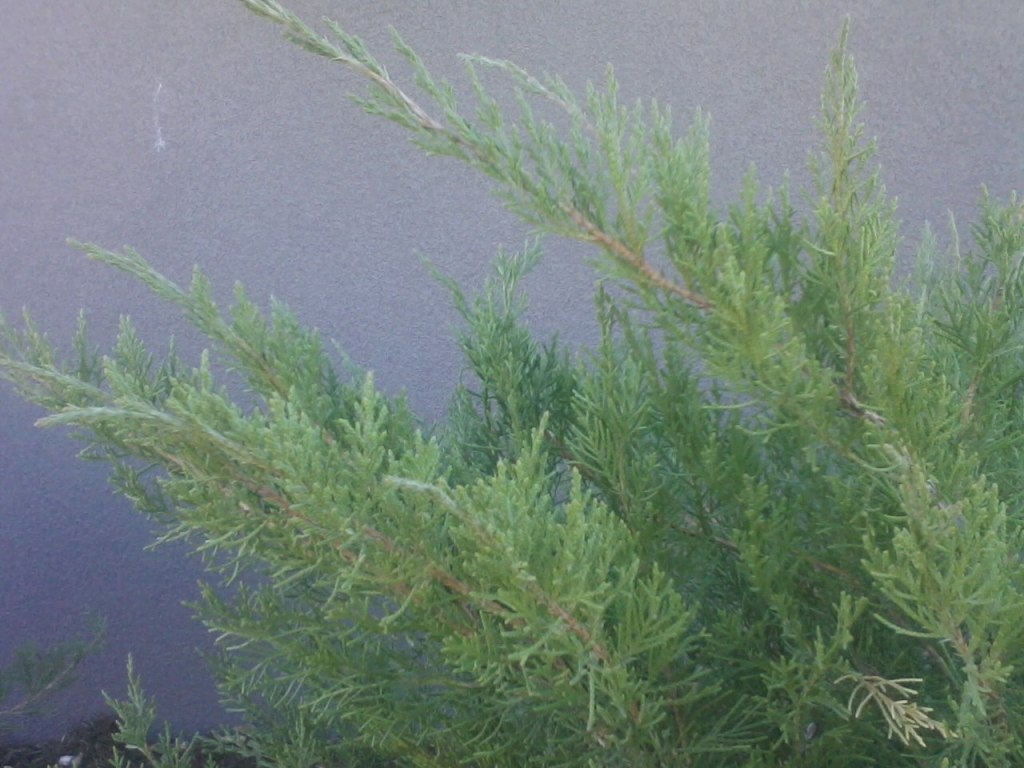
Eastern red cedar is actually a juniper.

One of the less common and certainly least familiar of junipers happens to be the most culturally and environmental significant juniper in North America, even though it is not even known as a juniper. Juniperus virginiana is instead known as the Eastern red cedar. It has a vast range, including every state east of Colorado, as well as Quebec, Ontario and even Oregon to the west. In some areas within and near the natural range, fire suppression has allowed Eastern red cedar to become invasive.

Mature trees are mostly less than fifty feet tall, but are the biggest evergreen trees in Kansas nonetheless. The largest Eastern red cedars can get almost ninety feet tall. Most are well branched from top to bottom unless pruned for clearance. The fibrous bark is ruddy brown, but not often seed from the outside.

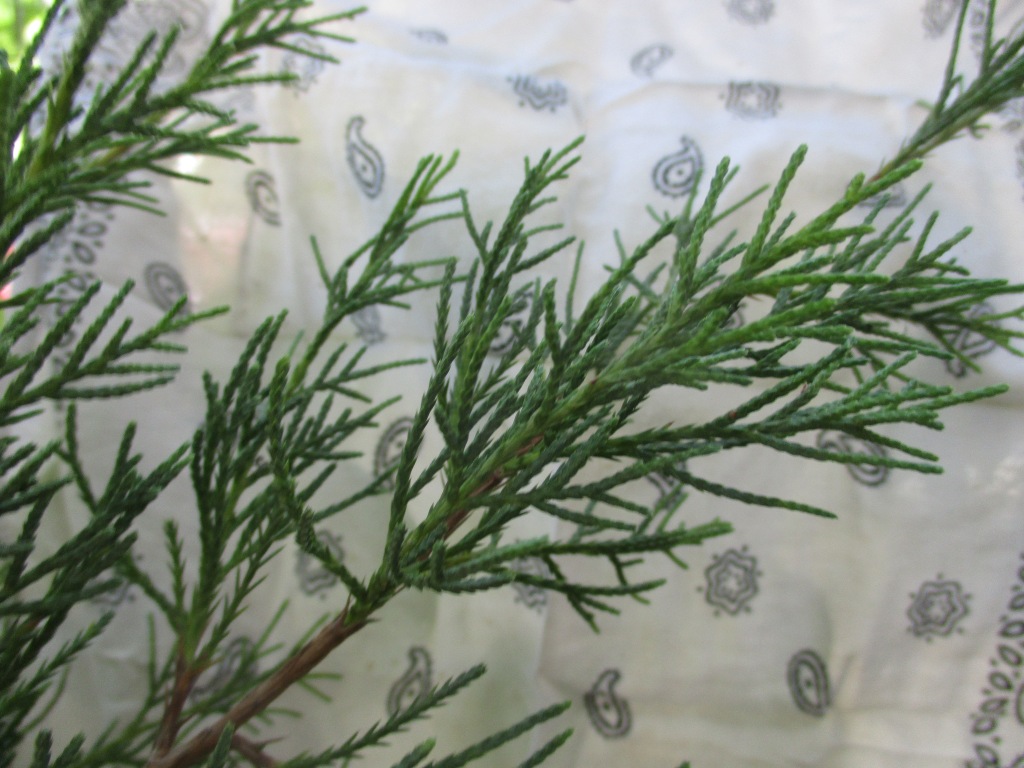
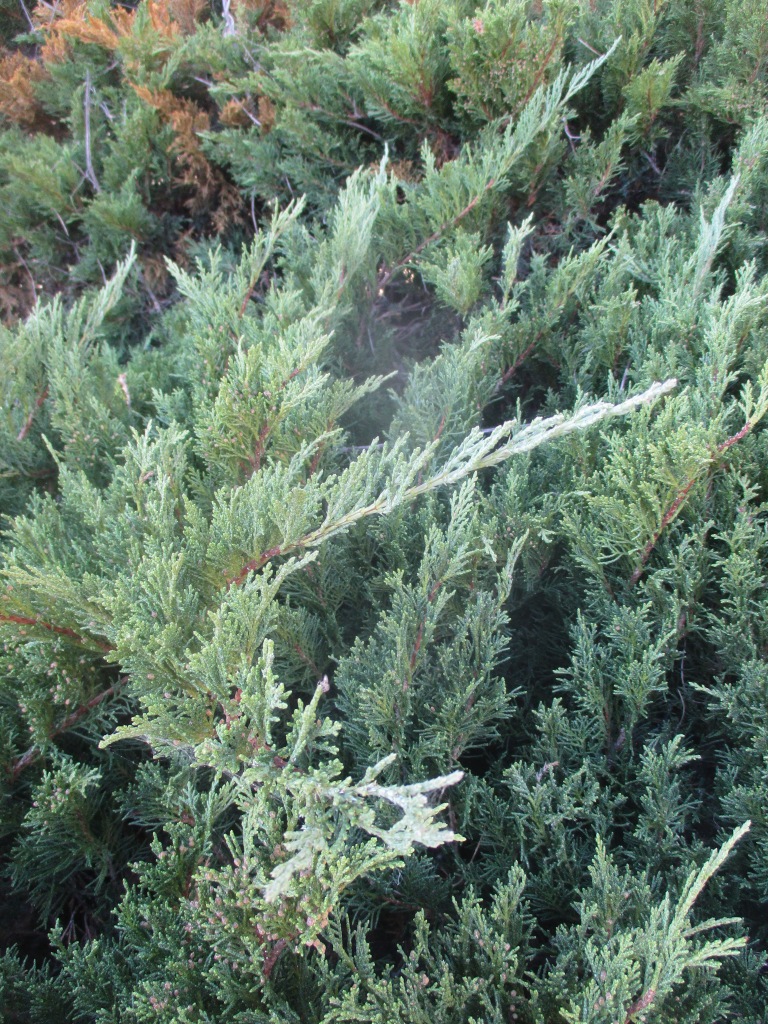
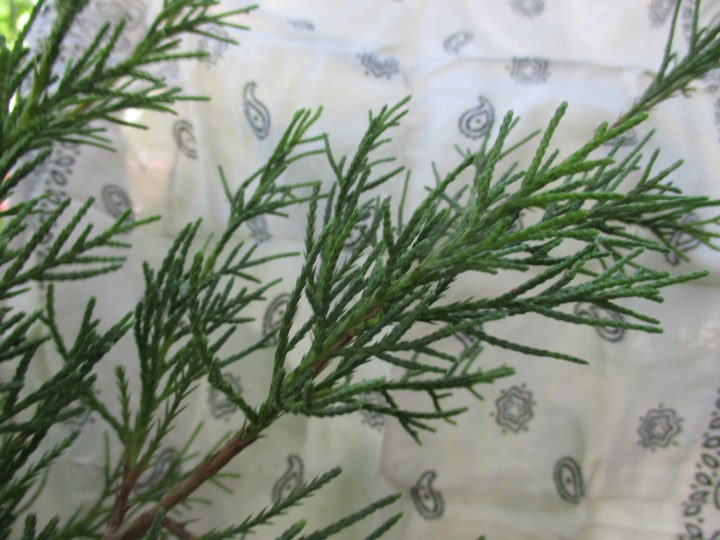
Foliage and fruit are rather variable. The prickly juvenile leaves of young plants and interior stems of mature plants can be rather annoying. The scale-like adult leaves are more typical of junipers. Male trees produce pollen that can be a significant allergen. Female trees produce sporadic, small berries in blue or purplish black, that are quite popular with certain birds through winter.

Prior to the discovery of the incense cedar in the west, Eastern red cedar was the common aromatic cedar that was used to make pencils and to laminate cedar chests and closets to protect woolens and natural fibers from moths. Since it is so repellent to insects and decay, it is commonly used as fence posts. Native American Indians also used posts of Eastern red cedar, painted red with blood of the animals they hunted, to mark the boundaries of their hunting ranges. The name of Baton Rouge, which means ‘red stick’, was actually derived from such marking posts.

During the Dust Bowl drought of the 1930s, and before becoming known as a potentially invasive species, Eastern red cedar was promoted by the Prairie States Forest Project as a resilient wind break. They tolerate drought, harsh exposure and inferior soil. They can be planted close together to fill out and gain height more efficiently. More information about Eastern red cedar can be found where I got much of this information, at the Great Plains Nature Center.

Home Garden Conifers

Dwarf Alberts spruce is more like a conical shrub than a tree.

Most of the familiar conifers, or ‘cone-bearing’ plants, are large trees like pines, spruces, cedars and cypresses. They are practical trees only with sufficient space, and where their debris and constant evergreen shade will not interfere with lawns or other plants below. Their less familiar compact specie and cultivars (cultivated varieties) that grow as smaller trees or large shrubbery are actually more proportionate, and therefore more useful for refined landscapes.

There are actually several small specie of pine, like Scots, Austrian black, dwarf Swiss stone, mugo, and the various Japanese red, black and white pines. Some of the most compact cultivars grow as dense shrubbery. Others grow as small to mid sized trees with the personalities of larger pines.

There are fewer compact spruce to choose from. Dwarf Alberta spruce, which is a very compact cultivar of white spruce, is perhaps the smallest and most symmetrical, growing as a dense and strictly conical shrub.  Columnar and pendulous cultivars of blue spruce grow in opposite directions, upright and downward, but stay compact enough to be grown as sculptural specimens or shrubbery. There are also pendulous white and Norway spruce.

Several compact cultivars of western red cedar and northern white cedar (Thuja spp.) are popularly grown as tall hedges. They are not actually cedars (Cedrus spp.) and are more often known by the common name of ‘arborvitae’. There are even more Asian arborvitaes (Platycladus spp.) to choose from; many of which have bright golden foliage. ‘Swane’s Golden’ Italian cypress is narrower and denser than the arborvitaes, but not as brightly colored.

Despite the bad reputation of certain cultivars that were planted too extensively decades ago, many junipers are very practical and sculptural coniferous shrubs, as well as ground covers and even small specimen trees. Some ground cover types stay less than a foot deep. Shrubby and small tree types are at their best where they have room to grow without pruning. If ‘Hollywood’ juniper is too old fashioned, the various Rocky Mountain junipers and Eastern red cedar (again, not really a cedar) are worth investigating for their distinctively picturesque forms.

Chamaecyparis are perhaps the most variable of the evergreen coniferous shrubs and trees. Although there are naturally only a few specie which grow into substantial timber trees, there are countless cultivars that are compact enough for residential gardens. Most stay less than thirty feet tall. Many stay less than half as tall. Most have rich deep green foliage; and many have bluish, greyish or golden foliage.

Chamaecyparis are known by a few different but inaccurate common names, including ‘cypress’, ‘false cypress’ and ‘cedar’. (Although the Alaskan cedar is now classified as a cypress, Cupressus or Callitropsis nootkatensis.) Like almost all other conifers, they are best where they can grow naturally without major pruning or shearing to compromise their naturally appealing forms and textures. The most diminutive cultivars are excellent for bonsai and rock gardens, or even in urns of mixed perennials.

Eastern Redcedar

Eastern redcedar is actually a juniper.

Like the majority of cedars, Eastern redcedar, Juniperus virginiana, is not really a ‘cedar’. According to its genus name, it is a juniper. That may be why it is less common here than within its native range. Even in its native range, most grow wild rather than in cultivation. Junipers gained an unfavorable reputation after becoming overly common decades ago.

Eastern redcedar has traditionally been more utilitarian than merely aesthetic. It can be a delightful Christmas tree, either cut or potted. While old cedar closets are native incense cedar, cedar chests are Eastern redcedar. Baton Rouge derived its name from a red stick demarcation pole. Indigenous people traditionally used Eastern redcedar for such poles.

Wild Eastern redcedar trees are variable and range in height from fifteen to fifty feet high. Cultivars develop compact conical or columnar form. Some are grayish or golden green. The small evergreen foliar scales, particularly juvenile foliage, can be somewhat prickly. The rusty red to grayish brown bark can display a handsomely fibrous or shaggy texture. The ‘silicicola‘ variety of Eastern redcedar is rare.

Tam

The juniper that gives other junipers a bad name.

As much as I like junipers, even I have my limits. The tamarix juniper or tam, Juniperus sabina ‘Tamariscifolia’, is the juniper that gave junipers a bad name decades ago by being too common in too many of the wrong situations, and remains one of the most commonly planted junipers. What I do not like about it is that it is classified as a ‘ground cover’ juniper and can sprawl more than eight feet wide, but actually piles up more than two feet deep! However, I have noticed that it can be practical for certain situations as a ‘sprawling shrub’ instead.

Even without the foliar color or sculptural branch structure of other shrubby junipers, the dense dark green foliage and compact branch structure give the tam its own appeal and practicality. It can be shorn into low informal hedges as frequently as annually. It readily recovers its feathery texture if shorn as the weather starts to get warm in spring. All it wants is sunlight and infrequent but deep watering in summer. 

Eastern Red Cedar

Eastern red cedar is rare in the West.

One of the less common and certainly least familiar of junipers happens to be the most culturally and environmental significant juniper in North America, even though it is not even known as a juniper. Juniperus virginiana is instead known as the Eastern red cedar. It has a vast range, including every state east of Colorado, as well as Quebec, Ontario and even Oregon to the west. In some areas within and near the natural range, fire suppression has allowed Eastern red cedar to become invasive.

Mature trees are mostly less than fifty feet tall, but are the biggest evergreen trees in Kansas nonetheless. The largest Eastern red cedars can get almost ninety feet tall. Most are well branched from top to bottom unless pruned for clearance. The fibrous bark is ruddy brown, but not often seed from the outside.

Foliage and fruit are rather variable. The prickly juvenile leaves of young plants and interior stems of mature plants can be rather annoying. The scale-like adult leaves are more typical of junipers. Male trees produce pollen that can be a significant allergen. Female trees produce sporadic, small berries in blue or purplish black, that are quite popular with certain birds through winter.

Prior to the discovery of the incense cedar in the west, Eastern red cedar was the common aromatic cedar that was used to make pencils and to laminate cedar chests and closets to protect woolens and natural fibers from moths. Since it is so repellent to insects and decay, it is commonly used as fence posts. Native American Indians also used posts of Eastern red cedar, painted red with blood of the animals they hunted, to mark the boundaries of their hunting ranges. The name of Baton Rouge, which means ‘red stick’, was actually derived from such marking posts.

During the Dust Bowl drought of the 1930s, and before becoming known as a potentially invasive species, Eastern red cedar was promoted by the Prairie States Forest Project as a resilient wind break. They tolerate drought, harsh exposure and inferior soil. They can be planted close together to fill out and gain height more efficiently. More information about Eastern red cedar can be found where I got much of this information, at the Great Plains Nature Center.
Six on Saturday: Vacation Is Over

Vacation has been over for quite a while. I returned two weeks ago. It continues to be the topic for my Six on Saturday because I took too many pictures to share within only a few episodes. The sixth picture here is from the Tomeo Residence. All of the others are from the farm nearby, where my Pa grows bonsai stock, and where I pruned several neglected apple trees. Like last year, I left late, but managed to prune the apple trees before bloom. Because of the delay though, my trip to Southern California and Arizona is also delayed. Now, if I do not go soon, that trip will need to be delayed even more, until after summer.

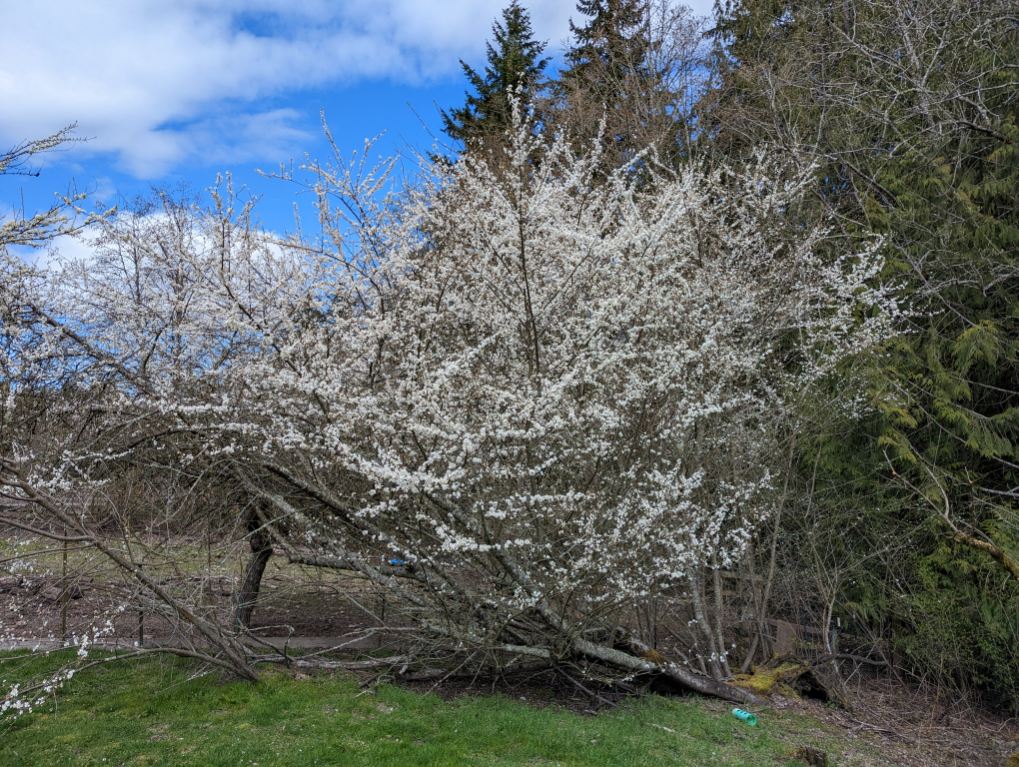
1. Bloom was what I was trying to avoid. Fortunately, this is merely an abandoned plum tree that I did not prune. I managed to prune the designated apple trees prior to bloom.

2. Vegetation management does not get out much. They and the swine next door control vegetation where they live, but lack access to the orchard or other vulnerable vegetation.

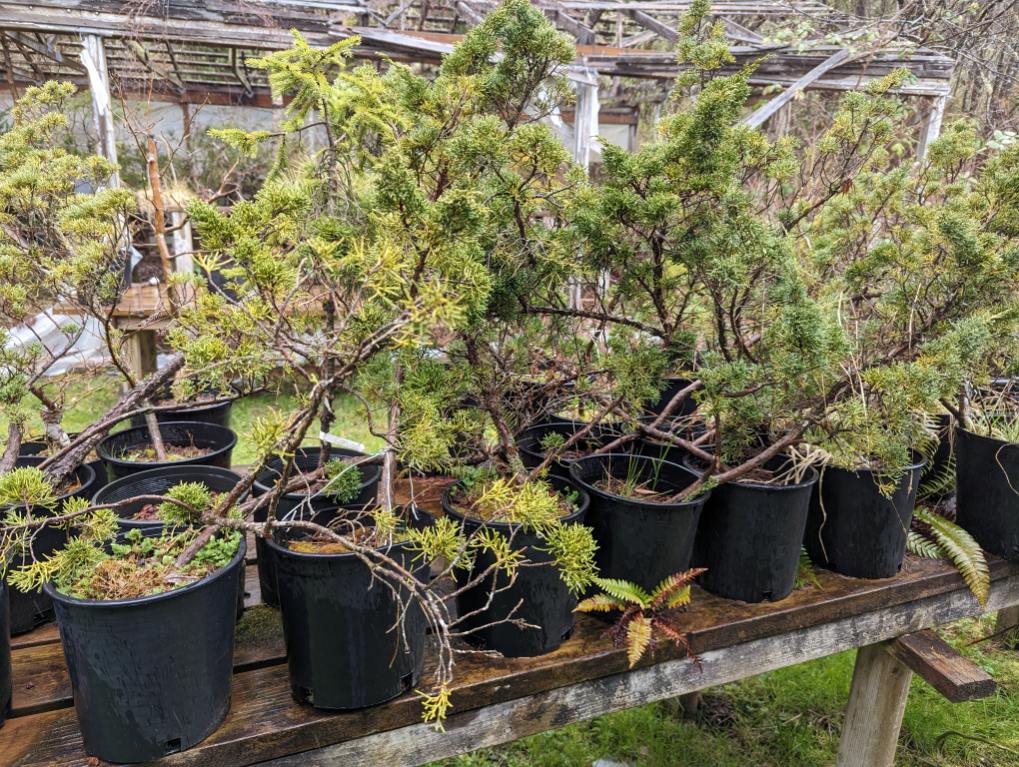
3. Bonsai stock is safe from vegetation management. Unlike the unvarying horticultural commodities that I am accustomed to, each of these bonsai stock specimens are unique.

4. Junipers might be the most common of the bonsai stock. This one might be Tolleson’s blue weeping juniper. It was certainly blue and weeping. I did not seem familiar though.

5. Larch is also popular for bonsai, at least in the Pacific Northwest. However, because I am unfamiliar with this genus, I have no idea what species this is, or if it is even a larch.

6. Rhubarb that my paternal paternal great grandfather gave to me when I was five years old inhabits a garden of the Tomeo Residence near the farm. I brought it here last April.

This is the link for Six on Saturday, for anyone else who would like to participate: https://thepropagatorblog.wordpress.com/2017/09/18/six-on-saturday-a-participant-guide/

Rocky Mountain Juniper

Rocky Mountain junipers get rather large.

Hollywood juniper had formerly been the only popular juniper of tree form. As it became less popular during the past few decades, cultivars of the once obscure Rocky Mountain juniper, Juniperus scopulorum, became more popular. Also, a few more modern cultivars became available. Now, the once overly common Hollywood juniper is quite uncommon.

Rocky Mountain juniper is naturally rather grayish for protection from the harsh exposure of the high elevations which it inhabits. Cultivars are grayer, bluish or silvery, and mostly develop symmetrically conical form. Old specimens that were initially conical eventually grow as small trees with rounded and relatively dense canopies, perhaps on bare trunks.

‘Skyrocket’ and ‘Blue Arrow’ are very narrow like Italian cypress that grow only fifteen feet tall. ‘Wichita Blue’ and ‘Moonglow’ are stoutly conical. ‘Blue Arrow’ and ‘Wichita Blue’ are bluish green. ‘Skyrocket’ and ‘Moonglow’ are silvery gray. Established specimens do not require much water, but develop better foliar color with warmth and occasional watering.

Juniper Cultivars Deserve More Consideration

Evergreen juniper foliage has distinctive texture.

Fads come and go. Many can be good, even if only briefly. A few might be bad enough to later stigmatize the object of the fad. For example, the formerly esteemed crape myrtle is now familiar as a mundanely common tree. Flashy bloom and complaisance contributed to its excessive popularity. Most sorts of juniper are similarly victims of their previous fad.

A few cultivars of juniper suddenly became overly popular during suburbanization of the 1950s. They were remarkably reliable and resilient. Most were shrubbery or low hedges. A few were groundcover. Hollywood juniper grew as a compact sculptural tree. However, most junipers grew too big. They became difficult to maintain, or impossible to renovate.

As many outgrew suburban gardens, few junipers outgrew their reputation. Even modern cultivars that were unavailable during the fad of the 1950s are perhaps less popular than they should be. Realistically, many old and new cultivars of juniper are quite practical for refined home gardens. They merely need to be appropriate to their particular application.

Many cultivars of several species of Juniperus are commonly available. Straight species are very rare from nurseries, although a few are native nearby. All junipers are evergreen with tiny awl or scale leaves. Foliar color ranges from forest green to silvery gray. Bloom is unremarkable. Some junipers produce pretty and aromatic blue, gray or black berries.

Junipers generally do not respond favorably to pruning that damages their natural forms. Those that grow as groundcovers, with stems that sprawl over the surface of the soil, are not offended by pruning to contain their edges. However, most groundcover junipers are actually just low shrubbery. Pruning might leave holes within their dense foliar canopies.

Junipers that grow as small trees do not mind removal of lower limbs at their main trunks, but object to partial pruning or ‘stubbing’ of such limbs. Regardless of their natural forms, all junipers should be proportionate to their particular applications. With sufficient space, they can mature and develop their naturally distinguished forms with minimal altercation. Maintenance could really be quite minimal.

Sea Green Juniper

It may seem to grow slowly, but ‘Sea Green’ juniper outgrew the stigma that has followed junipers since the 1950’s.

No one can deny that junipers are useful, sustainable and resilient. They tolerate cold, heat and harsh exposure. Once established, they do not need much water.

Sea green juniper, Juniperus chinensis ‘Sea Green’, is a bit lighter green than more traditional dark green junipers. It can grow somewhat slowly, eventually getting to about five feet tall, and a foot or two wider. Like all junipers, it should never be indiscriminately shorn, but should instead be selectively pruned to exploit its distinctive ‘fountain’ shaped branch structure that points up and outward from the base.

Golden Pfitzer Juniper

Fresh new shoots are most colorful.

Of the several junipers that were too common decades ago, the golden pfitzer juniper, Juniperus X pfitzeriana ‘Area’, was the one outfitted with cheery, bright yellow new foliage each spring. Similar but more compact varieties that are more popular now were rare back then, or simply not yet invented. Contrary to the stigma, golden pfitzer juniper is a very tough shrub, which is why so many from decades ago remain in older gardens, and new plants can sometimes be found in nurseries. Once established, they need very little water, or none at all. A bit of partial shade is tolerable, but inhibits color. Angular branches radiate outward, with the finely textured foliage drooping only slightly at the tips. Mature plants get wider than six feet, and taller than four feet. Crowded plants can stand taller than six feet. Golden pfitzer juniper can technically be shorn as hedges, but are so much more appealing if selectively pruned to maintain their natural form. They are at their best where they have space to spread out naturally without pruning.