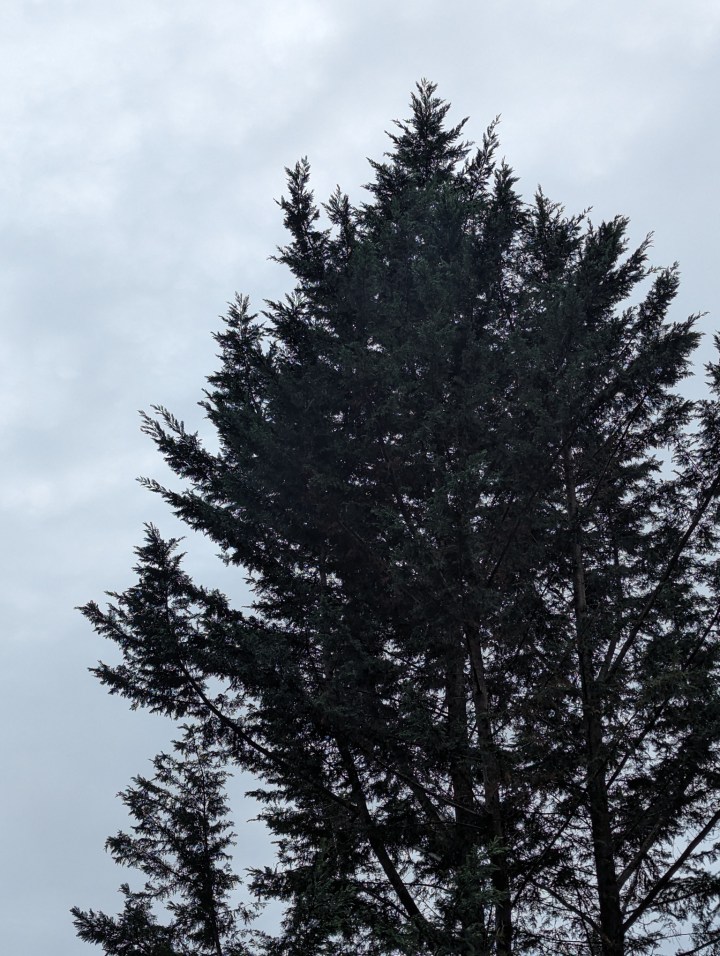
They appear to be so simple and innocent now, shorn strictly into conical form and perhaps adorned with any remnants of their Christmas time employment, but living Christmas trees can potentially become big problems. Italian stone pine, which is one of the most popular living Christmas trees, can get nearly eighty feet tall and sixty feet wide, with massive trunks and limbs! Regardless, they often get planted in small gardens and tight situations after Christmas because they do not seem like they would do any harm.
Most living Christmas trees can eventually become large trees. Canary Island pine, Aleppo pine, Monterey pine and Afghan pine are the most notorious since they are the most common, and also because they are not so easily recognized while they are young Christmas trees. Their juvenile foliage is more softly textured and often lighter colored than their more substantial adult foliage.
These most common living Christmas trees do not like to stay potted for very long, and are not very conducive to subsequent shearing. Consequently, many do not survive through their first summer, and those that do often get planted in the garden without much thought. Until recent years, they were seldom labeled; so few people knew how big they could get.
Coastal redwood, giant redwood, deodar cedar and Arizona cypress as living Christmas trees are neither as common, nor as likely to not get recognized as trees that eventually get quite large. They need their space nonetheless. Fortunately, they are generally somewhat more practical for some spacious gardens than the large pines are.
Scotts pine, Austrian black pine (rare), Japanese black pine, Eastern red cedar (juniper), Rocky Mountain juniper, some arborvitae and the various spruce are some of the best living Christmas trees. They grow somewhat slowly, are more cooperative with pruning and can live in tubs long enough to function as Christmas trees for a few years. When they eventually get too large for their pots, they are not so likely to get too large for the garden.
Whether a Colorado blue spruce being retired after ten years of service or an Italian stone pine being retired after only a single Christmas, a living Christmas tree needs some help with the transition from pot to garden. Any circling roots should be severed when the pot gets removed. Otherwise, roots become constricted as the circling roots grow and expand.
Much of the dense foliar canopy should be thinned out to compensate for confinement of roots. Besides, much of the shorn growth is actually disfigured and will eventually get replaced and shed as new growth develops above the original canopy. Formerly pruned spruce, redwood, deodar cedar and most pines may need minor trimming of the upper new growth to promote a single leader (that will develop into the main trunk).
It is best to plant living Christmas trees rather soon after Christmas so that they can loiter in the garden through winter. Rain and cool temperatures keep them from desiccating as their roots start to disperse before new foliage starts to emerge in spring. Newly planted living Christmas trees should be watered somewhat regularly during their first year because their roots take some time to disperse adequately.


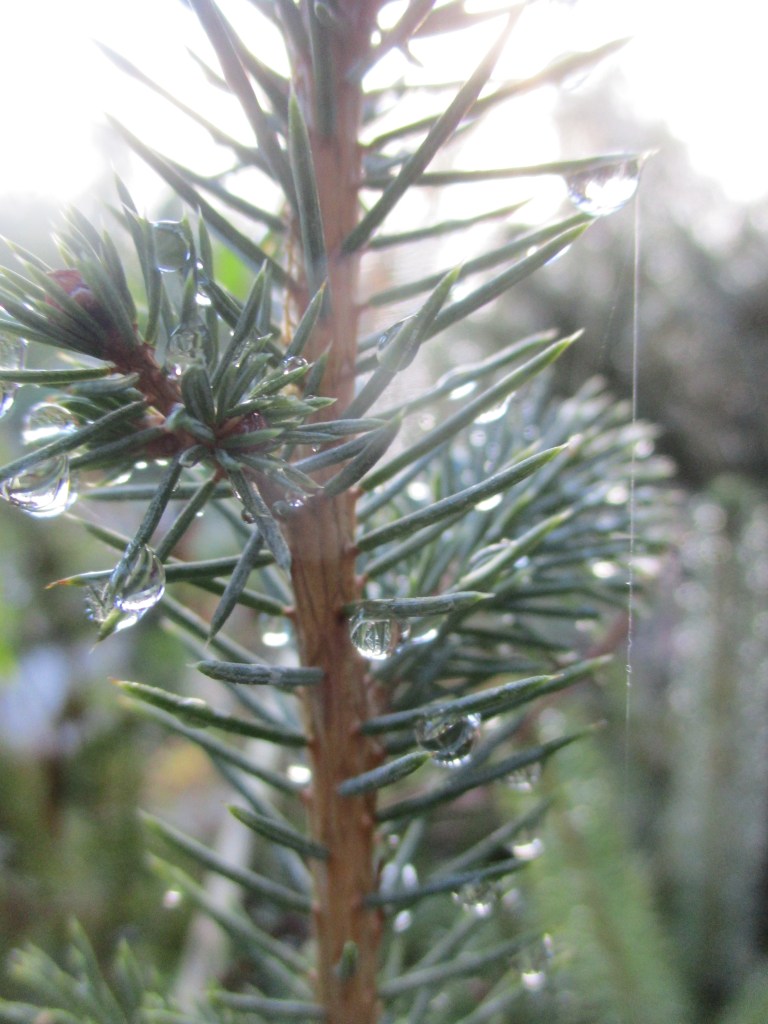
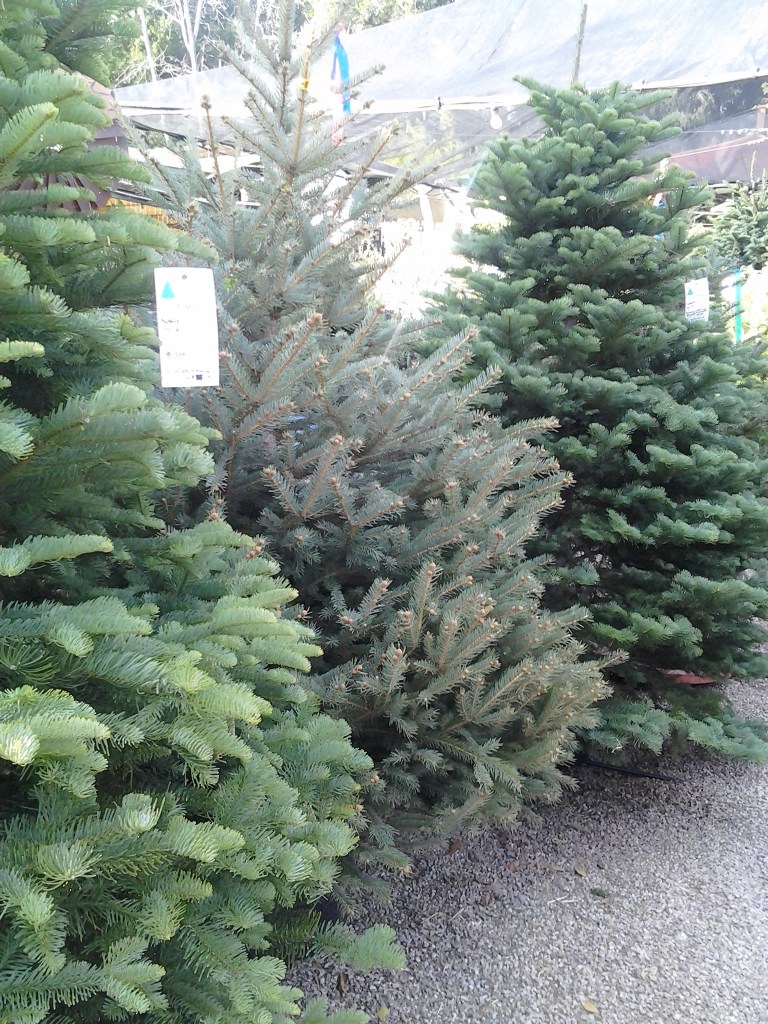
 Christmas trees are like vegetables. Really, they are like big vegetables that do not get eaten. They are grown on farms, and then harvested and sent off to consumers. Although they smell like a forest, and they are descendents of trees that naturally grow in the wild somewhere, there is nothing natural about their cultivation. In fact, most are grown a very long way from where their kind are from. Therefore, bringing a cut Christmas tree into the home takes nothing from the wild, and does not interfere with nature any more than eating vegetables does.
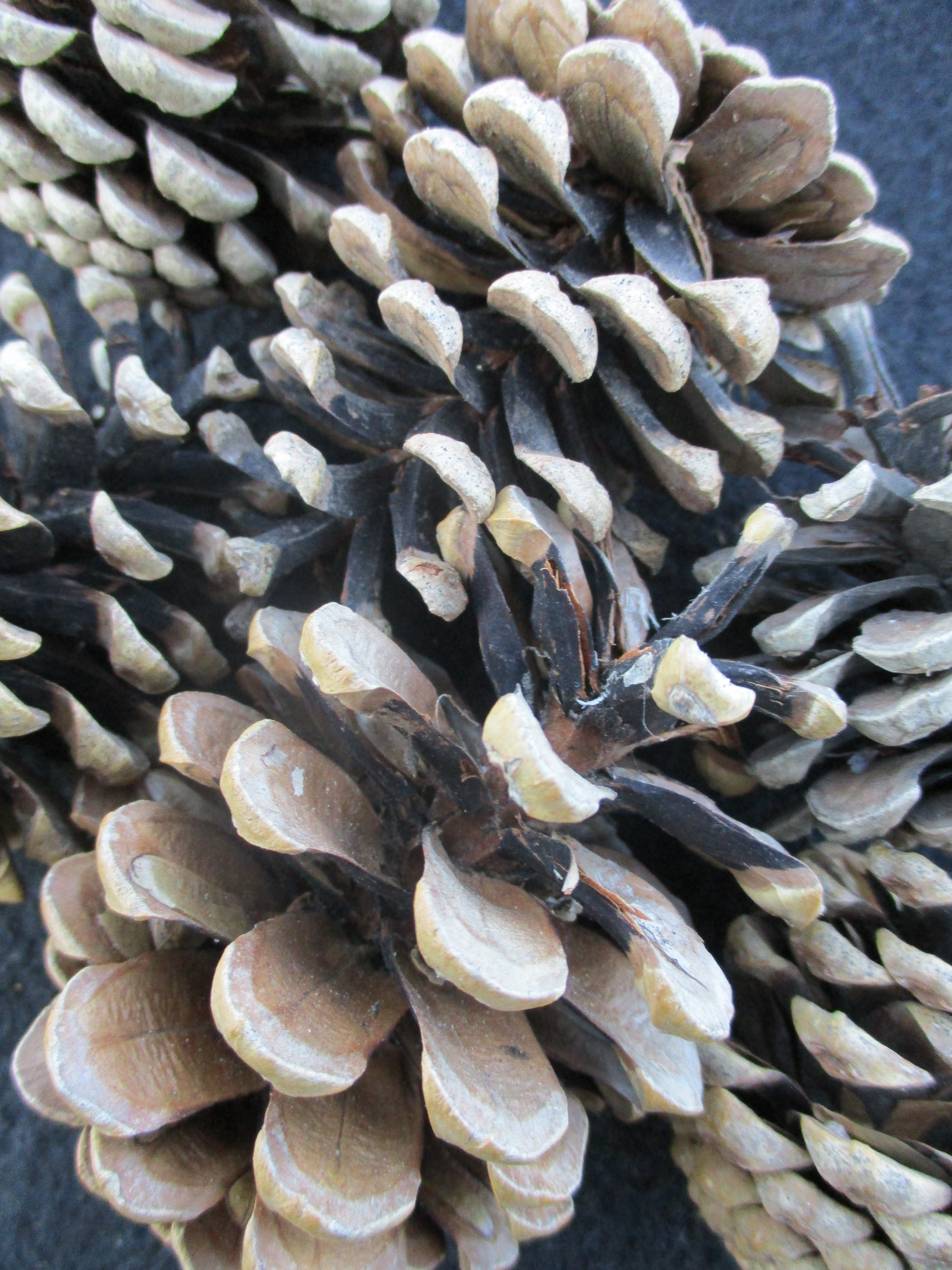 Relative to other pines and evergreens that are commonly grown as living Christmas trees, the uncommon and even rare Austrian pine, Pinus nigra, would be a better option. If it gets planted too close to the home, as Christmas trees often do, it does not get big enough to cause major problems. Although much bigger in the wild, local trees may take decades to reach second story eaves.
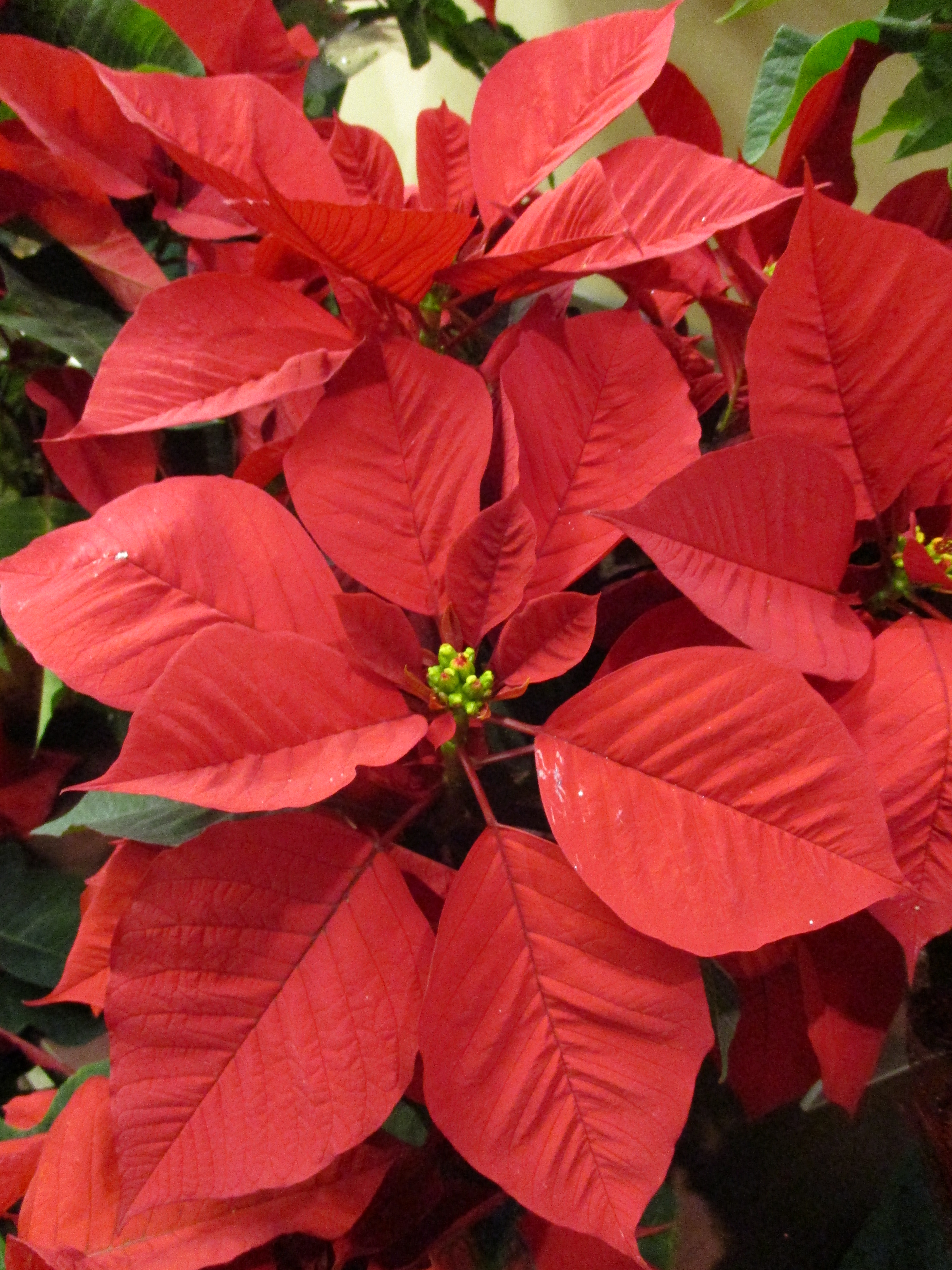 After all the Christmas decorations get put away for next year, and the Christmas tree eventually gets undressed from all its ornaments, and retired to the compost pile or greenwaste, all the pretty seasonal potted plants remain. Some will bloom, or at least maintain their current bloom, for months. Some might eventually get planted out in the garden. Others might stay potted in the home.
 Tony Tomeo