Six on Saturday: Late Bloomers

Winter is brief here. There is no snow, and only occasional mild frost. Chill is insufficient for many plants that need it. Rain can be copious during storms; but storms are not as frequent as in other climates. Many flowers typically bloom slightly earlier than they do in other regions. Of course, every season is unique.

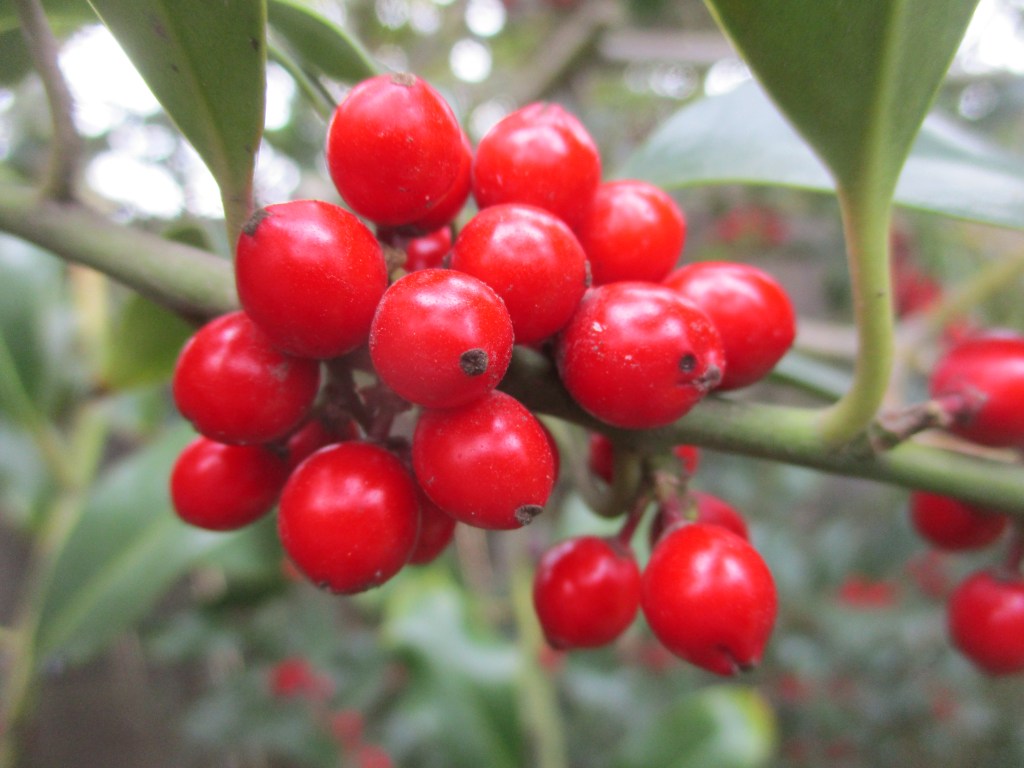
1. English holly may have bloomed on time last year, but the berries are lingering late this year. The birds who eat them must have found something else to be more appealing. This is an odd cultivar that is neither as prickly nor as dense as common English holly elsewhere in its garden. Incidentally, it resides in the Santa Clara Valley, not here. I have no idea who the pollinator is.
2. Winter daphne should bloom in . . . well, winter. What I mean is that is should have bloomed a bit earlier in winter. Surprisingly, the foliage lacks variegation. All daphne here is variegated!

3. Calla should bloom in summer. This one is so late that that it is early. I mean that it is closer to next summer than it is to last summer. Really though, it blooms whenever it wants to here.

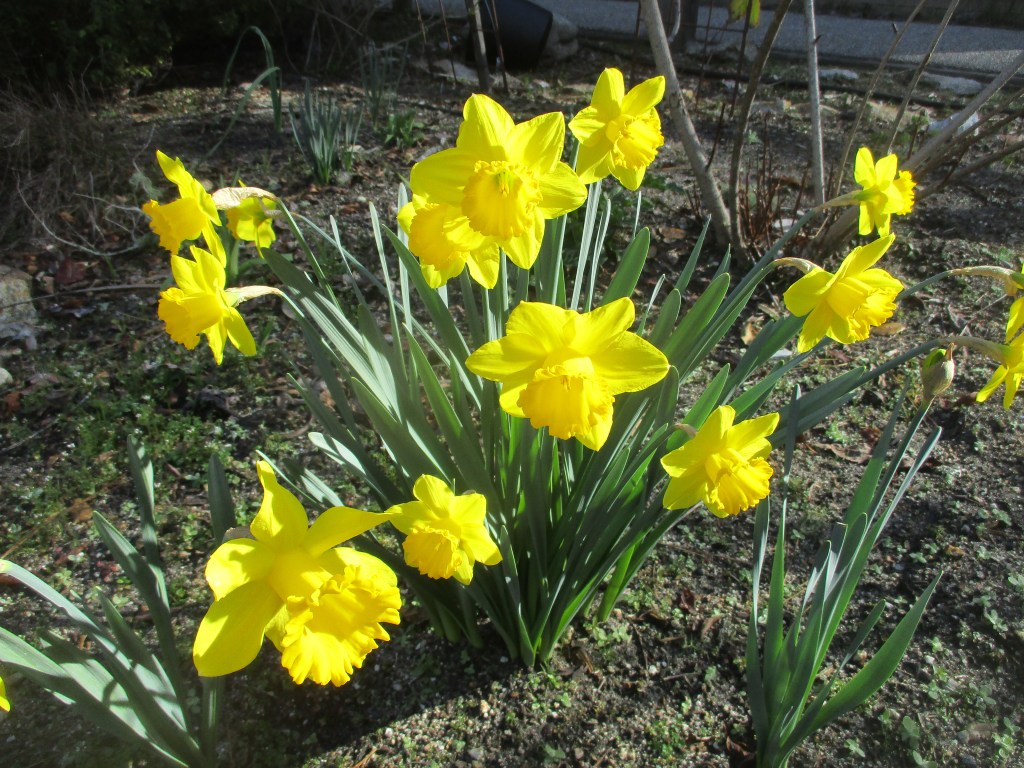
4. Daffodil continues to bloom in some locations. There are actually a few varieties blooming in this same area, with at least one colony that is only beginning to bloom. This late bloom is nice.
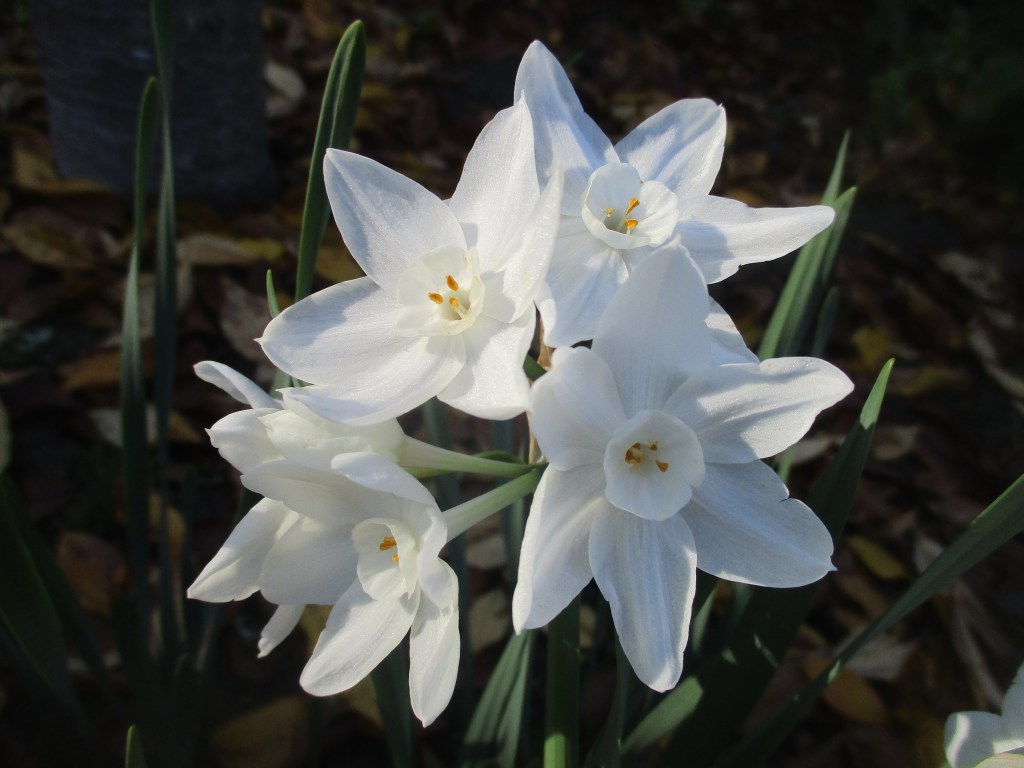
5. Narcissus continue to bloom late also! I believe that this is the only colony of paperwhite narcissus here. It is my favorite though, both because it is white, and also because it is so fragrant.

6. Rhody is always the most popular topic of my Six on Saturday. I do not know why he took a momentary interest in the camera. I just quickly exploited the opportunity to take his picture.

This is the link for Six on Saturday, for anyone else who would like to participate:

https://thepropagatorblog.wordpress.com/2017/09/18/six-on-saturday-a-participant-guide/

Six on Saturday: Do you know the way to San Jose?

Rhody and I needed to go to San Jose for the past three days, and will be going there again at least until April. We had not been there or even into the Santa Clara Valley for a very long time. I did not realize how long we had been gone until I collected my accumulation of mail on the way through town, and found Christmas cards!

1. Tecoma stans is the second most important topic of my Six for this week! The Shrub Queen sent me these seed from wild plants that are native to Southern Florida! It is so rare here that I had seen it only a few times prior. A compact cultivar became available only a few years ago. I wanted the straight species. Embarrassingly, these seed were in my mailbox since December.

2. Camellia japonica is still blooming, with buds that will continue even longer. Technically, it is not late. Some bloom as late as March. I do not remember the name of this particular cultivar.

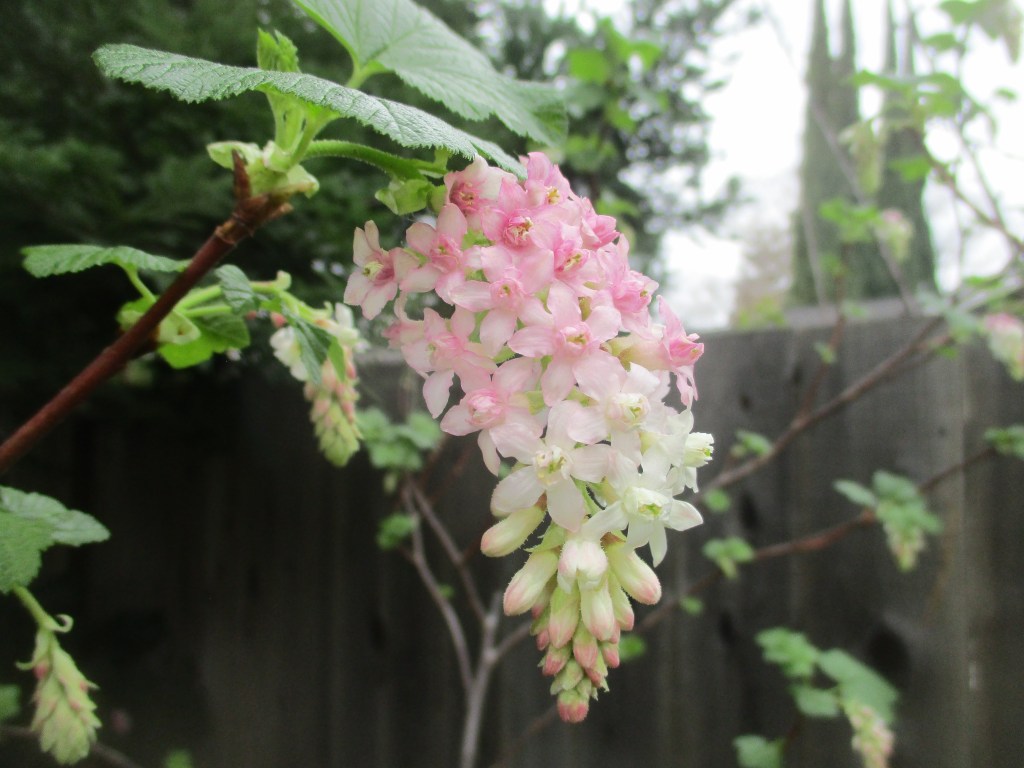
3. Ribes sanguineum is native to the forests only a few miles from here. This one and another like it were planted here a few years ago. Two others that bloomed white did not last very long.

4. Narcissus pseudonarcissus, or simply ‘daffodil’, bloom sporadically in the oddest of situations. Their bulbs remained where they got planted years ago, as the landscape changed over them.

5. Spirea prunifolia ‘Plena’ is sparsely branched, but perhaps delightfully so. I am surely no expert in regard to aesthetics, but it seems to me that more profuse bloom would be less delicate.

6. Rhody is the most important topic of my Six for this week. This was the moment immediately prior to his realization that I was aiming the camera at him, and his spry reaction to avoid it.

This is the link for Six on Saturday, for anyone else who would like to participate:

https://thepropagatorblog.wordpress.com/2017/09/18/six-on-saturday-a-participant-guide/

Six on Saturday: After (And Before) The Storm

Rhody and something flowery are lacking from my Six on Saturday again. We got some good rain though, after the horrid wind that I wrote about earlier. That is worth bragging about. Prior to rain, I try to plant what needs to be planted, so that it can get soaked in by the rain. This technique is particularly important where there is no irrigation.

1. Banana slug, mascot of the University of California at Santa Cruz, magically appear as the annual rainy season begins. I do not know where they go for summer, but they do not go quickly.

2. Mud also arrives with rain. This mud was formerly a baseball field. It is now where we dump storm debris. Others of our crew thought it was fun to do donuts, . . . which is why I got stuck.

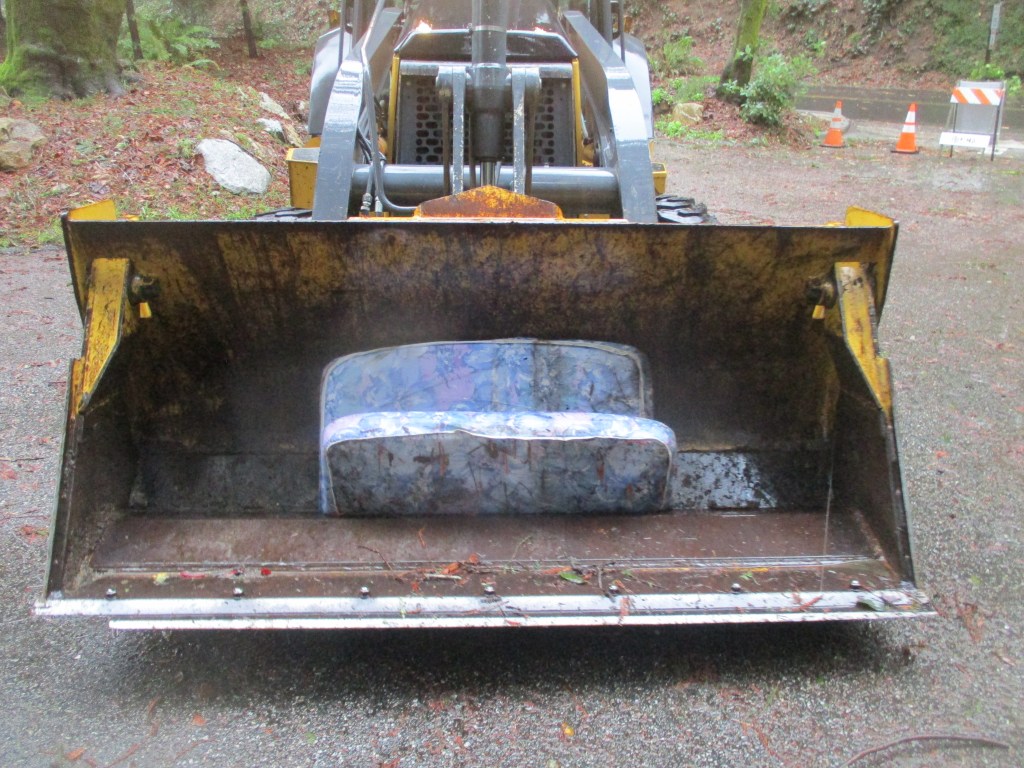
3. Sweeping storm debris from so much pavement here takes ingenuity. The bare tractor bucket damages old asphalt. This mattress was surprisingly effective, but difficult to sleep on later.

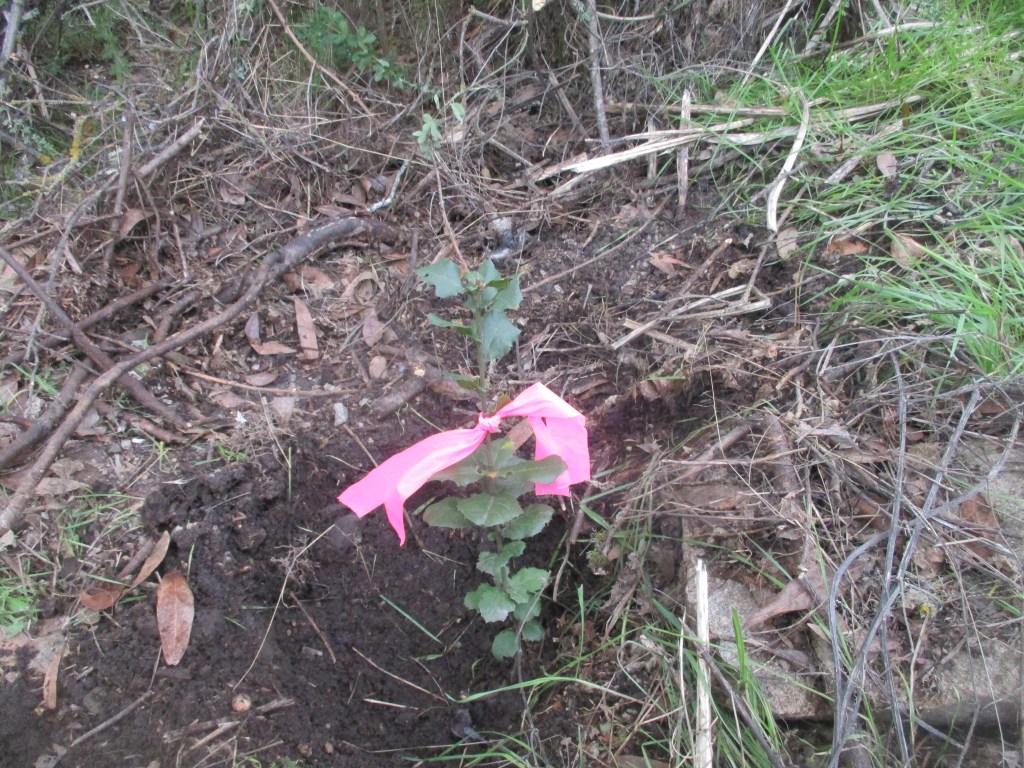
4. Coast live oak seedling grew where a squirrel buried an acorn with a potted epiphyllum. I pulled the seedling out, and plugged it by the roadside, where a new coast live oak would be nice.

5. Deodar cedar seedlings are abundant under a few mature trees here. Several have been plugged into landscapes. This one got plugged by the roadside with the coast live oak and cypress.

6. Arizona cypress seedlings are finally installed as an informal hedge on the roadside, with the coast live oak at one end, and two deodar cedars and the Steven Michael Ralls Memorial Tree at the other end. These five cypress had been canned for too long, so will be much happier in the ground where they can now disperse their roots. I am pleased with this new informal hedge.

This is the link for Six on Saturday, for anyone else who would like to participate:

https://thepropagatorblog.wordpress.com/2017/09/18/six-on-saturday-a-participant-guide/
Six on Saturday: Old, New, Borrowed, Blue

No matrimony is involved. These are merely six random pictures that could not conform to a sensible topic. I realize that I should feature more flowery pictures, but some of these were just too cool to omit. Well, perhaps #3 could have been omitted and replaced with something flowery, and less objectionable. #2 actually happens to be flowery, but is the only one. #6 is the best!

Seriously!

Winter seems to be going so fast. It is naturally brief here anyway. There is so much to do before spring, and none of it involved flowers. Besides, flowers are merely a byproduct of our work.

1. Old and rotten ponderosa pine trunk has been popular with woodpeckers. Some of the holes seem to be carved out neatly enough for nesting; although grubbing was probably the priority.

2. New camellia flower blooms among many unopened buds. There are many camellias of unknown cultivars here. They bloom when they want, and maybe in different chronology annually.

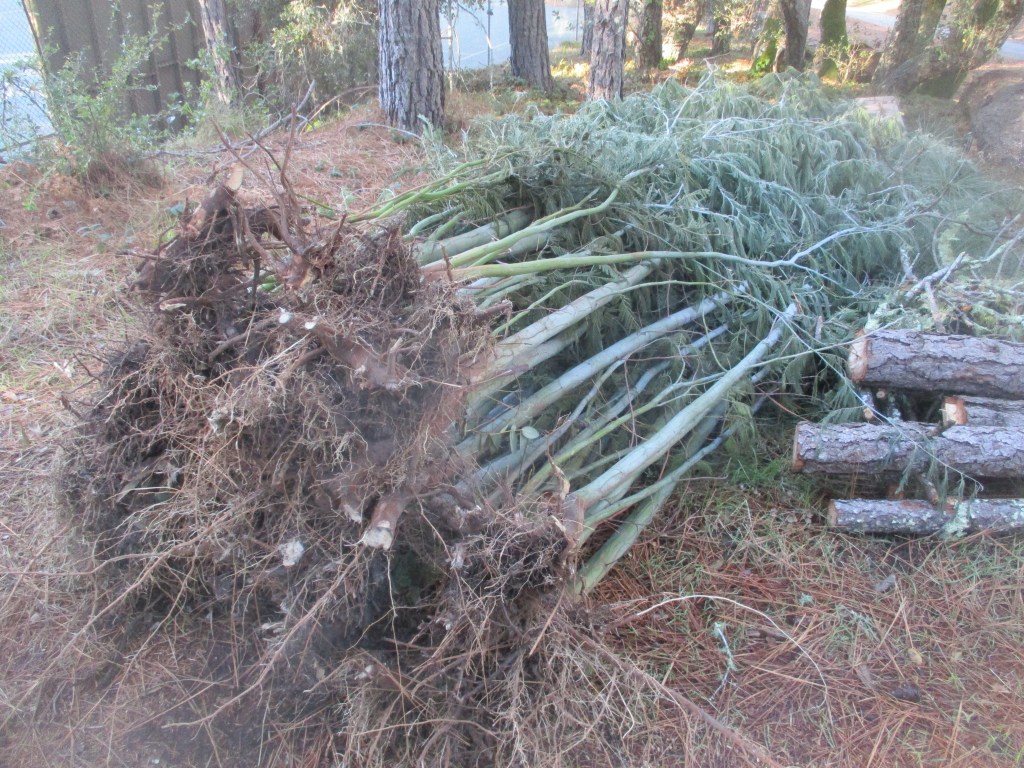
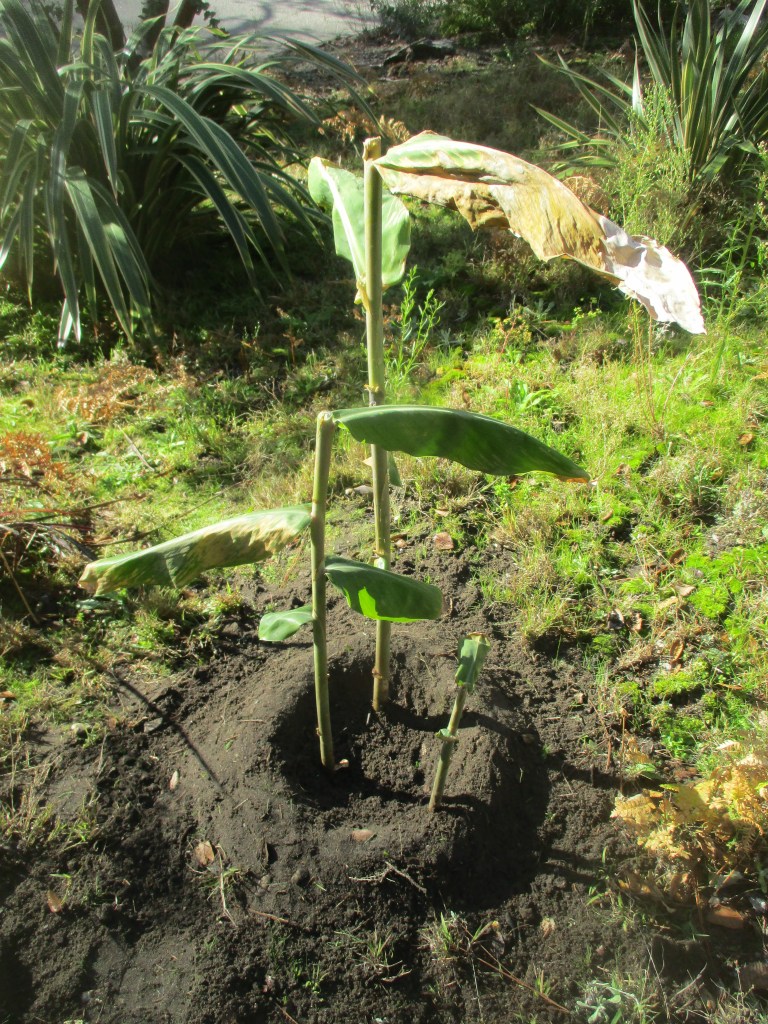
3. Borrowed bamboo was removed from where it grew from seed in one of the landscapes, but has no permanent home yet. Most was already discarded. This is golden bamboo, a ‘bad’ type.

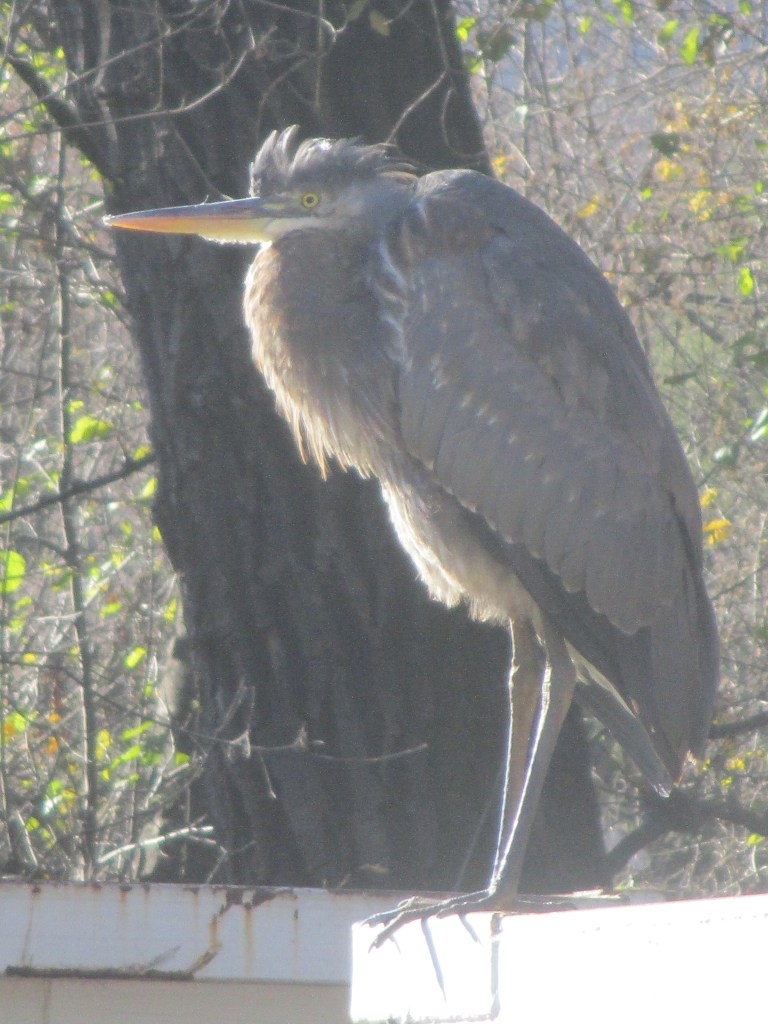
4. Blue heron sometimes visits the lawns during rainy weather. It sometimes catches gophers! I do not know why it came by without rain. Maybe Big Bird needs directions to Sesame Street.

5. Rock on! This is no more relevant to horticulture than Big Bird or a rotten pine trunk. I just happen to like finding this familiar rock again. It moves around somewhat, but does not get far.

6. Rhody does not cooperate for pictures. Nonetheless, everyone loves Rhody, and wants to see his pictures. It was not easy, but I managed to get this one before he realized I had a camera.

This is the link for Six on Saturday, for anyone else who would like to participate:

https://thepropagatorblog.wordpress.com/2017/09/18/six-on-saturday-a-participant-guide/

Six on Saturday: No Flowers – Again

These pictures seemed to be interesting when I took them. Only now I notice that there are no flowers here. Actually, there are not many flowers in the landscape where these pictures were taken anyway. Until last year, the facility associated with the landscape was used mostly during summer; so most flowers were selected to bloom during summer. Winter can be quite bland.

Also, for such a mild climate, winter can be surprisingly cool in some cooler exposed locales. Mild frost is normal. On rare occasion, if the weather is just so, puddles can get a thin layer of ice.

1. Lemon ripens this time of year. This pale greenish yellow color will become brighter yellow soon. I suspect that these are ‘Eureka’ lemon, but they crop very heavily in season, like ‘Lisbon’.

2. Flowering cherry will be spectacular in spring, but looks horrid now. This particular tree does not defoliate completely until just prior to bloom. It does this annually. This tree is ‘Kwanzan’.

3. Silver wattle is an an aggressively invasive exotic species locally. Fortunately, there is not much within the landscapes here. Now there is even less. I know it will regenerate from its roots.

4. Argyle apple is a silly name for this Eucalyptus cinerea. It grew from the lignotuber of an overgrown tree that was discarded from a retail nursery in Los Osos. The silver foliage is striking.

5. Lawson cypress also has strikingly silvery foliage. It is not as silvery as that of Argyle apple, but is slightly more bluish. The color of both species seems to be more striking through winter.

6. Ice is rare here, but possible. Of course, it is not as bad as it looks. It is very thin. Winter weather is innately mild here, which limits cultivation of apples and pears than require more chill.

This is the link for Six on Saturday, for anyone else who would like to participate:

https://thepropagatorblog.wordpress.com/2017/09/18/six-on-saturday-a-participant-guide/

Six on Saturday: HAPPY NEW YEAR!

2021 was already a popular year before it got started. Many wanted 2020 to end, as if all the unpleasantries of last year would end with it. To me, the first day of this year seemed to be just like any of the few last days of last year. That is not necessarily bad. There was quite a bit of good last year, even with all of the unpleasantries. Many of us see examples of it in our gardens.

Well, these pictures happen to be from yesterday, the first day of January and 2021.

1. Eucalyptus sideroxylon, red ironbark, is the first tree I planted in 2021, on New Year’s Day. It died back last spring, and regenerated with shrubby growth, so got pruned to a single trunk.

2. It should be glad to be out of its can, and into a new home. It originated as a root sucker of a tree that had been cut down. It came up with roots when I pulled it, so could not be discarded.

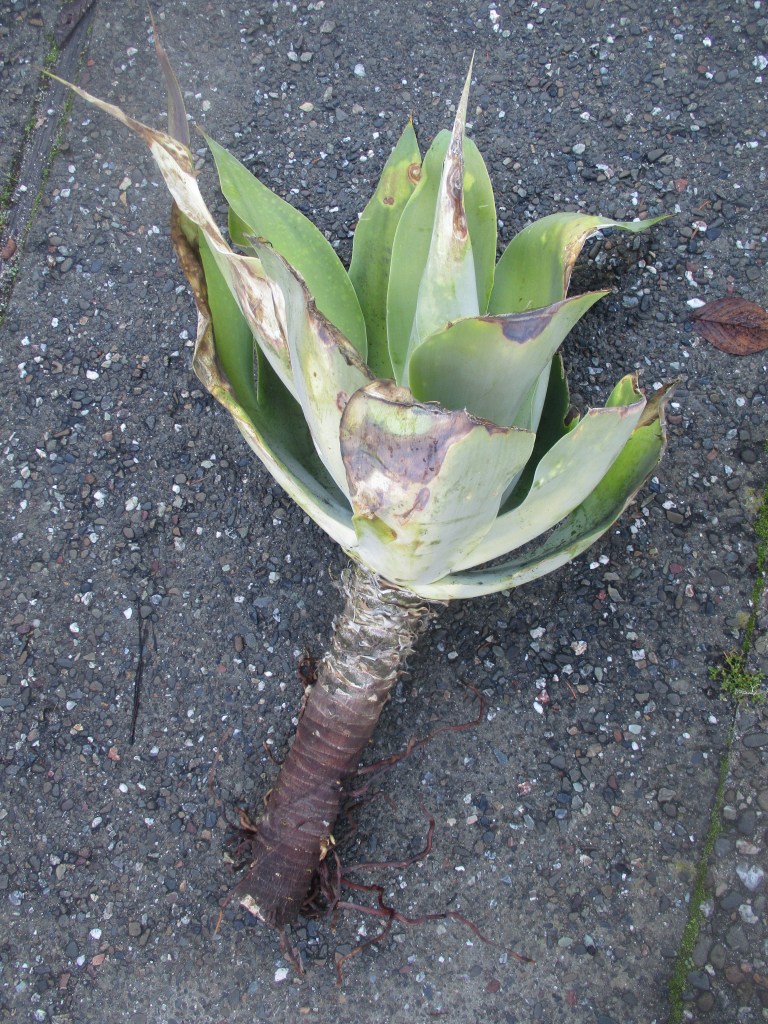
3. Agave attenuata, foxtail agave, got run over on Pacific Avenue in Santa Cruz. It was not crossing the road, but just minding its own business in a median. I could not leave it there like that.

4. It should be happy here. Adventitious roots are already developing on the trunk. A small section of the base of the trunk was cut off and canned so that new pups could mature separately.

5. Hedychium gardnerianum, Kahili ginger, originated from a neglected landscape near where the red ironbark eucalyptus originated from. Foliage from last year will shrivel through winter.

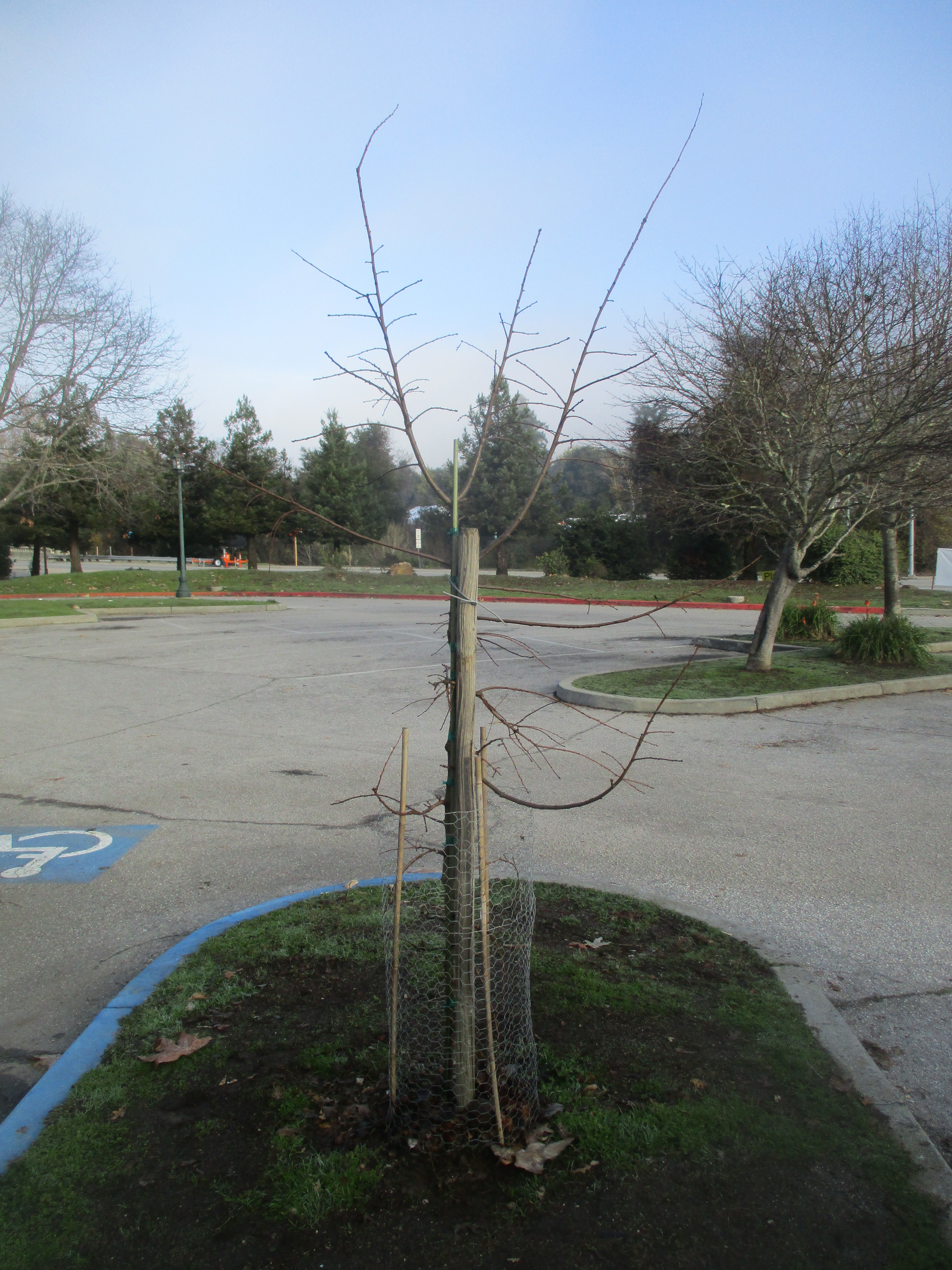
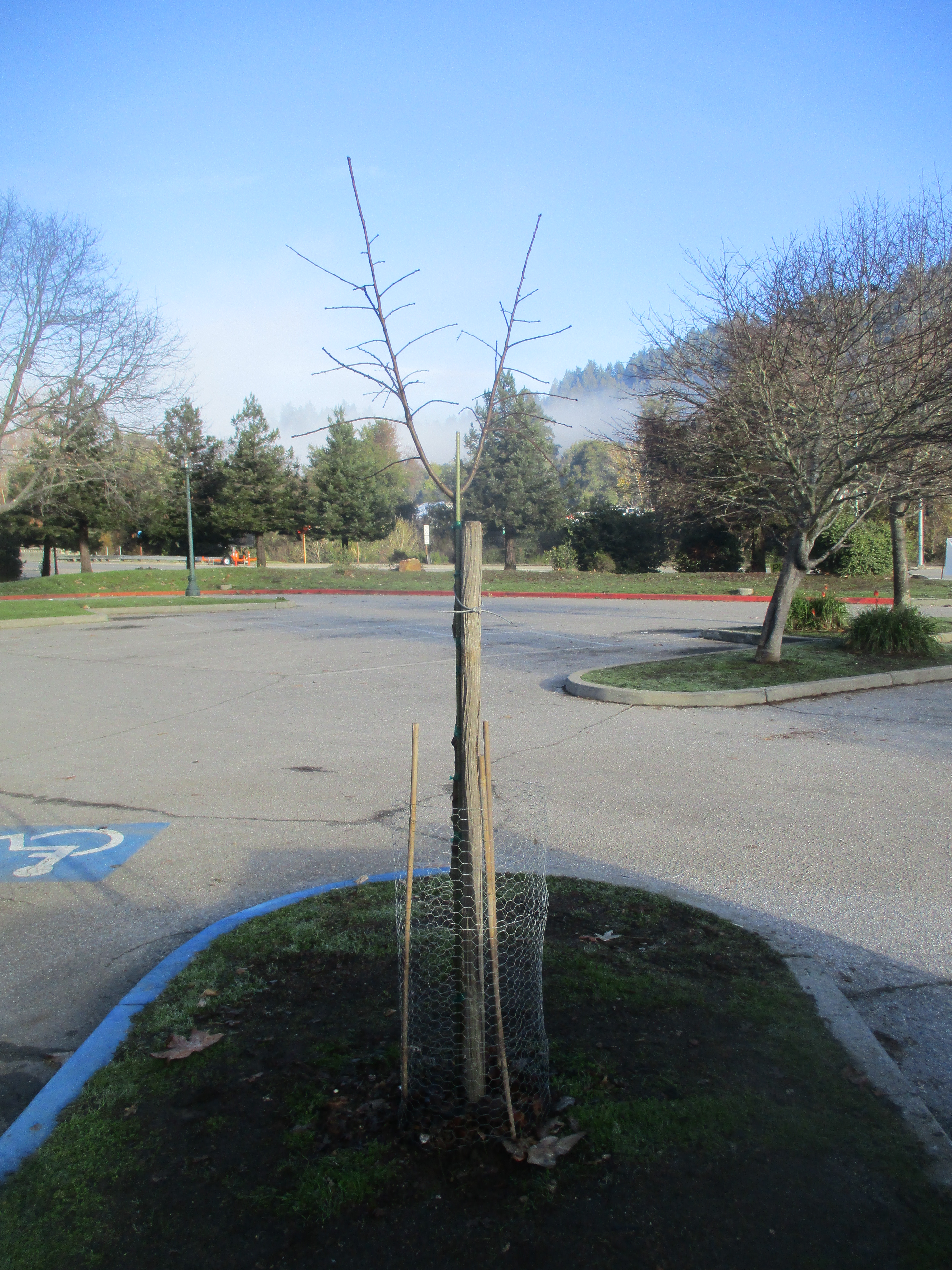
6. Quercus lobata, valley oak, is the Memorial Tree, and is the first tree that I pruned in 2021. It is developing well. I will return to stabilize the lodgepole stake, and adjust the binding stake.

This is the link for Six on Saturday, for anyone else who would like to participate:

https://thepropagatorblog.wordpress.com/2017/09/18/six-on-saturday-a-participant-guide/

Six on Saturday: Flowery Bits III

Merry Christmas! Okay, perhaps not. This posted at midnight, precisely as Christmas Day ended. These are not exactly Christmas flowers anyway. They are not even Christmas colors. The pictures are actually from the previous week. I knew then that I would not likely want to go out to get pictures last week. Until now, Christmas was the priority. There was no work to go to.

My six are very limited this week. There are only two genera and three species. There could be more if the Osteospermum have species designations. I know them only as ‘hybrids’. If there are any cultivar names, I do not know what any of them are.

1. Lantana montevidensis – grows as a ground cover. The color range of the bloom is limited. This color is common, but I thought that individual flowers more commonly have white centers.

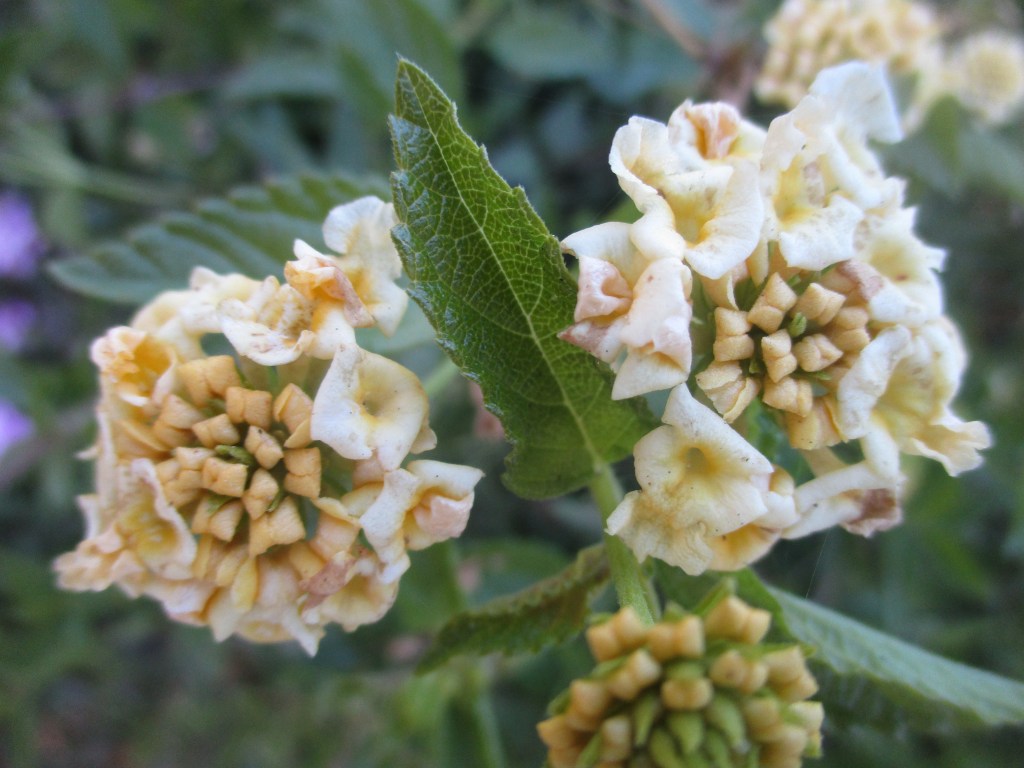
2. Lantana camara – is the ‘other’ lantana. It is shrubbier and better foliated. Floral color is more variable and generally more brightly colored. Bloom is not as extensive, but is more prolific.

3. Lantana camara – likes this particular landscape where I got these pictures. Another solitary specimen down the road and at a lower elevation already looks shabby from cooling weather.

4. Osteospermum – within this landscape are all modern hybrids. If anyone knows who their parents are, they do not share such information anymore. I think this color might be ‘lavender’.

5. Osteospermum – looks more purplish than the previous picture. I am no good with colors. Despite the attributes of modern hybrids, I still prefer old fashioned Osteospermum fruticosum.

6. Osteospermum – colors are not easy to describe. Is this one light burgundy red or ruddy pink? There might be six or so cultivars here. This unidentifiable color happens to be my favorite.

This is the link for Six on Saturday, for anyone else who would like to participate:

https://thepropagatorblog.wordpress.com/2017/09/18/six-on-saturday-a-participant-guide/

Six on Saturday: Flowery Bits II

Rhody did not make the cut this week. There are too many minor flowers blooming. Only six can be shared here. Besides, flowers are more cooperative with getting their pictures taken than Rhody is. I should get six more flower pictures for next week as well, since I am trying to avoid the sort of dreary pictures I had been sharing, and the weather has not yet gotten interesting.

The botanical names of some of these flowers have changed over the years. The names I use may be outdated or updated. I can not be sure anymore. I am not certain about the identity of the hebe.

1. Hebe buxifolia, perhaps ‘Patty’s Purple’ hebe, is now beginning to succumb to cool winter weather. I am not certain if it has a definite bloom season. It seems to bloom randomly until frost.

2. Lobularia maritima, alyssum, is a warm season annual that finishes in winter, but replaces itself with seedlings that perform as cool season annuals for winter until warmer spring weather.

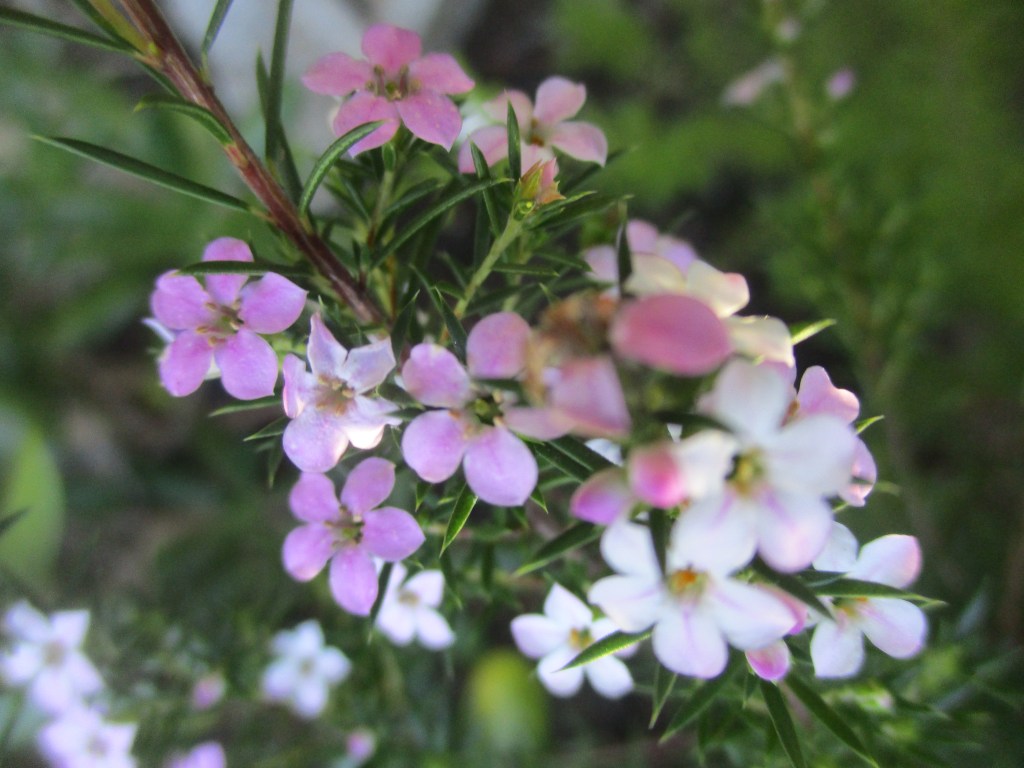
3. Diosma pulchrum, pink breath of Heaven, also seems to bloom whenever it wants to, although not quite as colorfully as hebe. This cultivar has lime green foliage instead of yellowish green.

4. Morea bicolor, butterfly iris, could be dug, divided, and shared with other landscapes. However, we can not adequately maintain the mature colonies that are already out in the landscapes.

5. Salvia greggii, autumn sage, is not just for autumn. Like the others, it blooms whenever it wants to. I like this one because it is only red. The flowers are too small to be both red and white.

6. Senecio X hybrida, cineraria, is leftover from when a few bedding plants were still added seasonally to a few prominent parts of the landscape. This one happens to be potted on a pedestal.

This is the link for Six on Saturday, for anyone else who would like to participate:

https://thepropagatorblog.wordpress.com/2017/09/18/six-on-saturday-a-participant-guide/

Six on Saturday: Flowery Bits

After so many pictures of fallen leaves, firewood and frost, I should probably share a few floral pictures like everyone else does. All those pictures of ash from the fire did not help much. I can expound a bit excessively on autumn and winter topics because they are not as mundane as they are in other climates. For example, I would not notice frost so much if it were common here.

Some flowers continue to bloom later than they would in other climates. Some bloom too early here. Some can not decide when they should bloom. The fifth picture is not even a bloom at all.

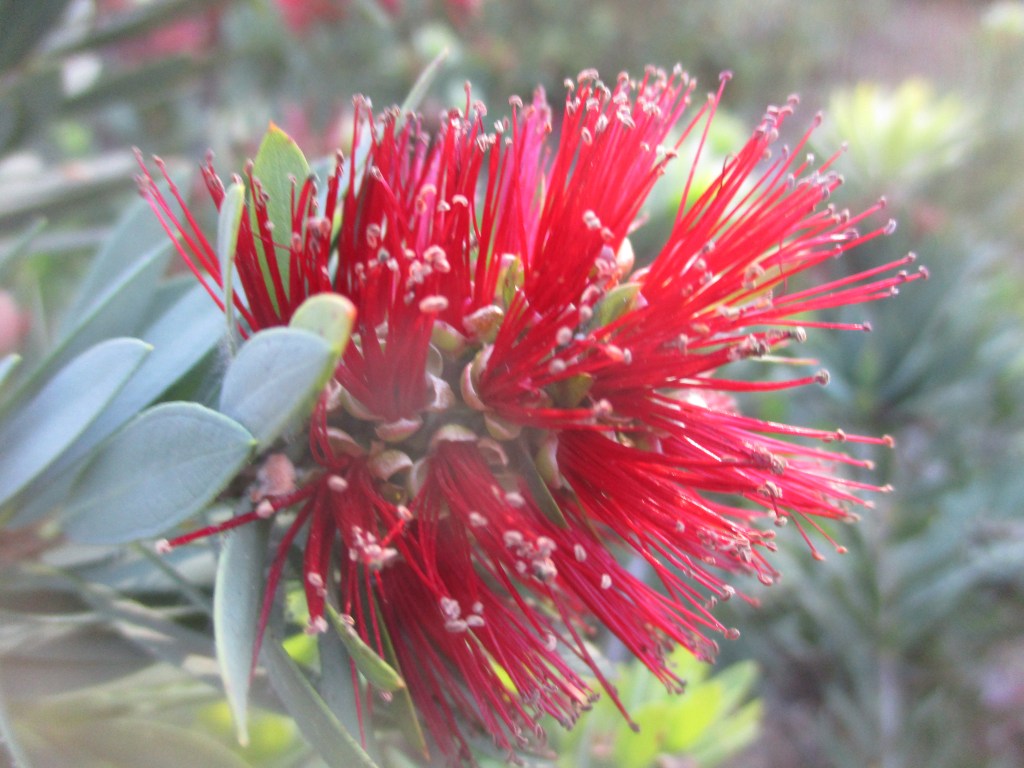
1. Callistemon viminalis ‘Little John’ is a bottlebrush for those who dislike bottlebrush . . . or just lack the space. I hate to say it, but I sort of prefer the formerly common Callistemon citrinus.

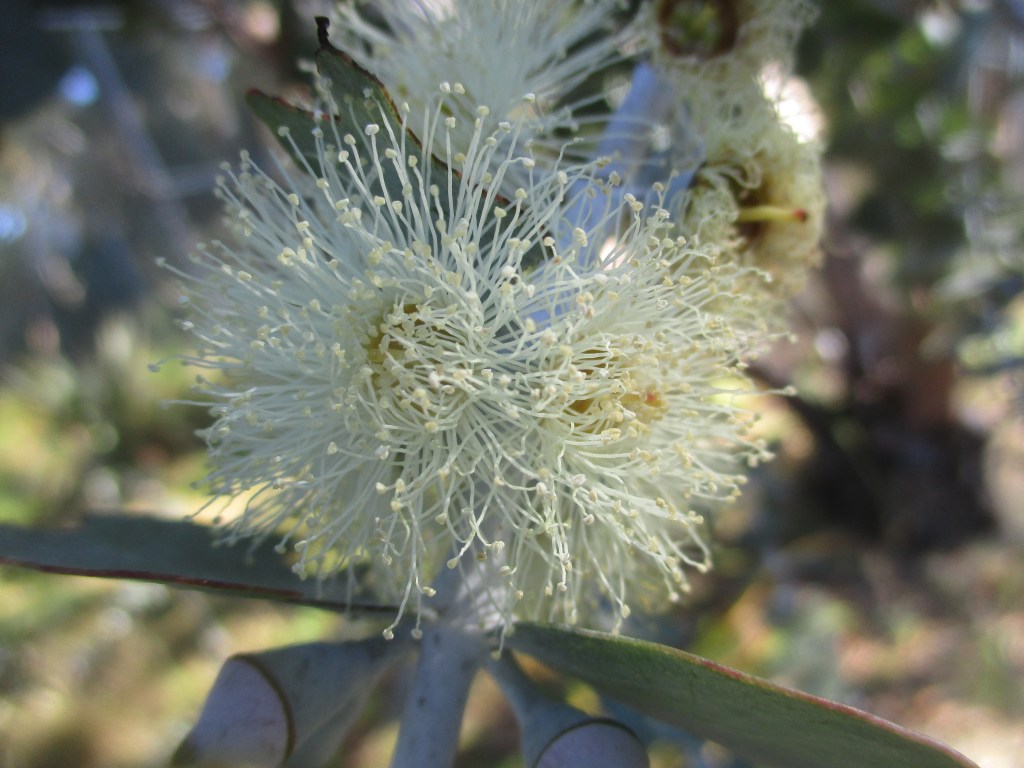
2. Eucalyptus pulverulenta foliage is prettier without bloom. Nonetheless, for those who get close enough to see them, these small white flowers are pretty too. Bees appreciate them as well.

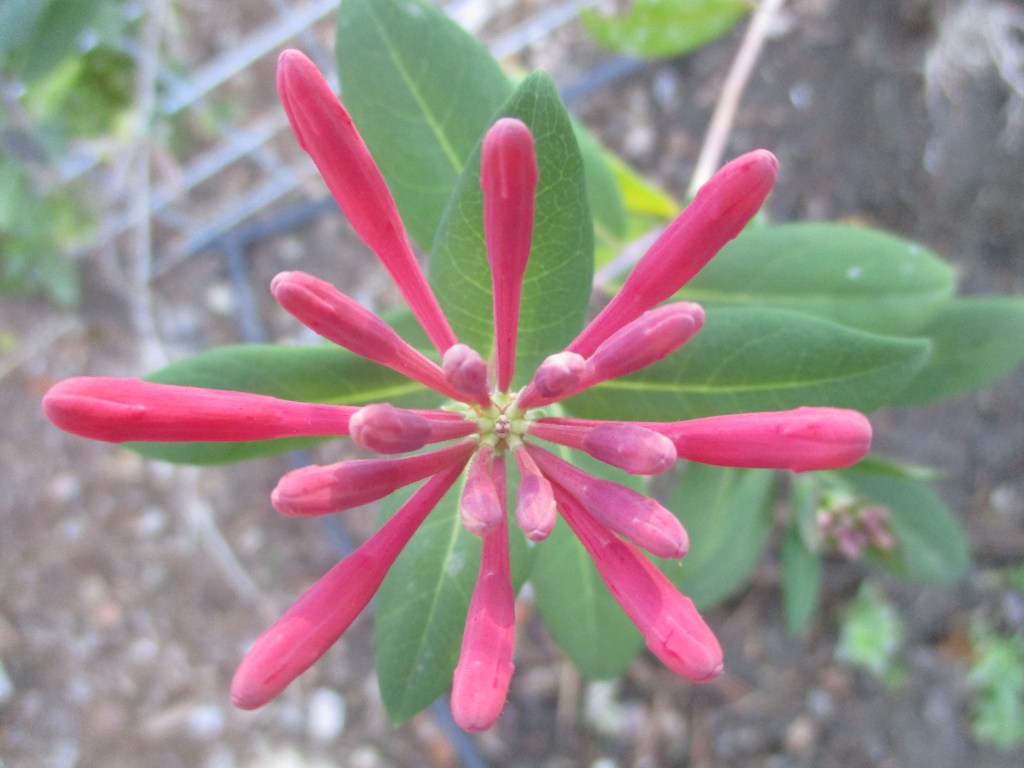
3. Lonicera periclymenum ‘Peaches and Cream’ has yet to bloom profusely here. Summer bloom is adequate at best. Bigger trusses of buds develop too late into autumn to bloom completely.

4. Narcissus does not wait for spring to bloom. I do not know what cultivar it is, or if it is a cultivar. Some might know it simply as ‘paperwhite’. Daffodils will bloom later, but are not fragrant.

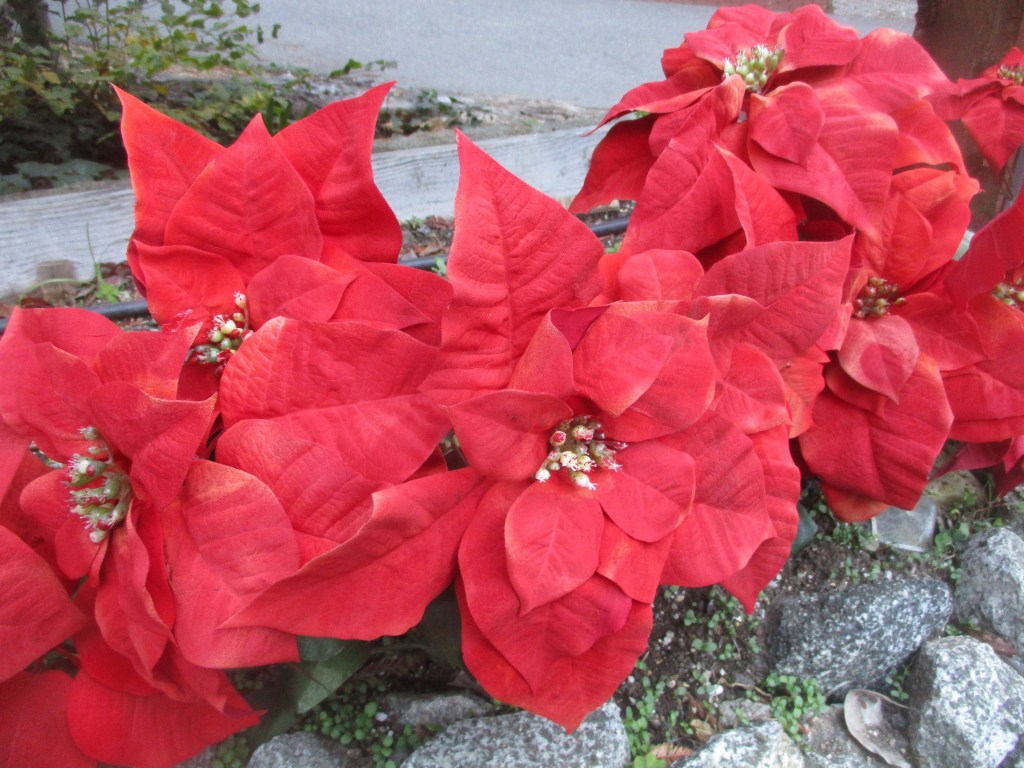
5. Pseudoflora seem to bloom annually here prior to Christmas. Afterward, they will return to the barn for storage for almost another year. Some people believe that they are real poinsettia.

6. Rhody simply will not cooperate for a picture if he knows I am taking one. I included this picture anyway because, no matter what, or how bad his picture is, everyone always loves Rhody.

This is the link for Six on Saturday, for anyone else who would like to participate:

https://thepropagatorblog.wordpress.com/2017/09/18/six-on-saturday-a-participant-guide/
Six on Saturday: Frozen

It was unusually cool yesterday morning. Deciduous trees are a bit more colorful. Some are defoliating. It is looking more like autumn. The soil is still damp from a little bit of rain more than a week ago. Although there is no more rain in the forecast, this rainy season could start at any time now. This is the time for autumn planting, and will soon be the time for dormant pruning.

As much as I like enjoy this weather and this time of year, I can understand why people get annoyed by it in climates where it starts sooner, lasts longer, and gets significantly cooler.

1. Frost on the windshield is not uncommon during winter. It is uncommon prior to winter though. It is also uncommon in the relatively warm (less cool) area where this vehicle was parked.

2. Frost on the roofs is a bit unexpected so early as well. It had covered this roof thoroughly, but is melting now that the sun is coming up. The weather really did not ‘feel’ as cold as it looked.

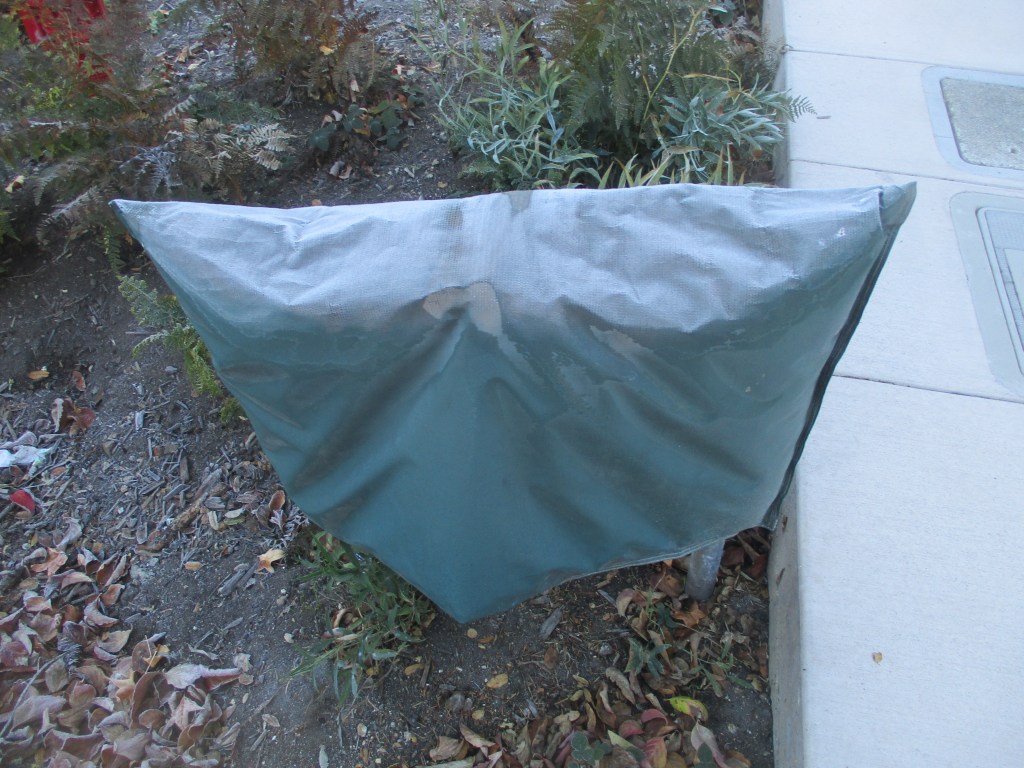
3. This contraption does not seem so ridiculous now. It insulates an exposed water main, to hopefully protect it from freezing. Water pipes seldom freeze here. Nonetheless, it is a possibility.

4. Dogwood colors well for autumn, even when the weather is not so cool. The species does not perform so well in the Santa Clara Valley, just a few miles north. Notice the frosty roof beyond.

5. This young birch is already defoliated! Actually, it is a formerly canned specimen that is a bit distressed from planting on November 8. Other birches are still wearing bright yellow foliage.

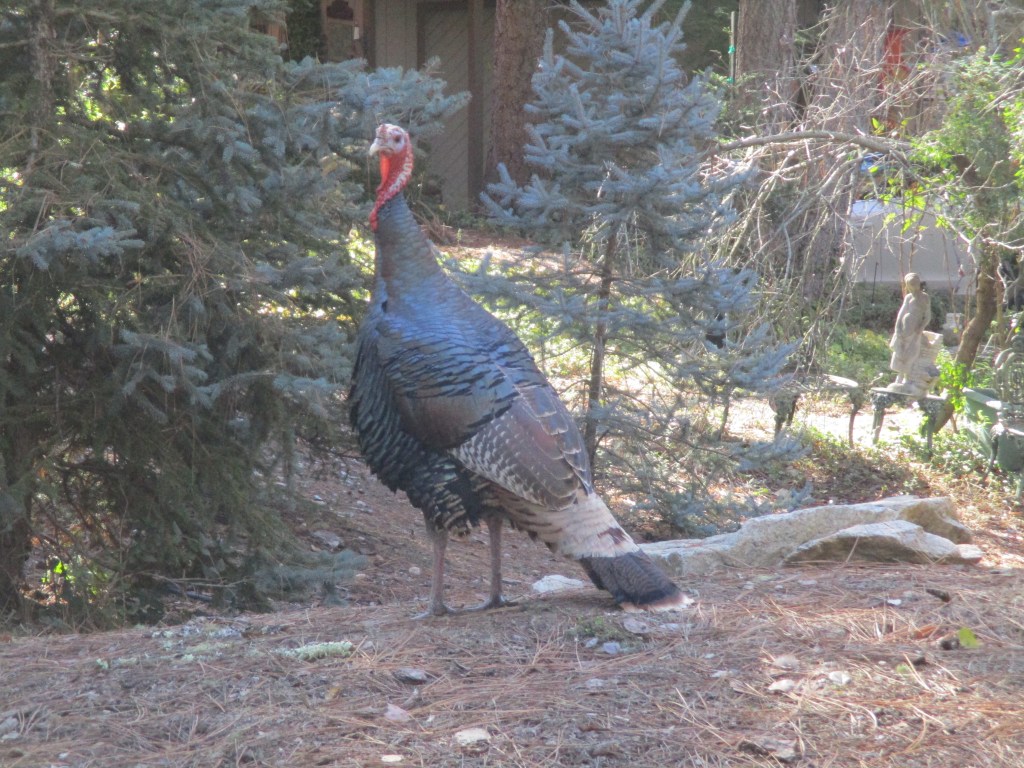
6. Turkeys return annually, precisely on the morning after Thanksgiving, after disappearing for about two or three weeks. Who knows where they go? Their stupidity might be exaggerated.

This is the link for Six on Saturday, for anyone else who would like to participate:

https://thepropagatorblog.wordpress.com/2017/09/18/six-on-saturday-a-participant-guide/