Horridculture – Halloween

P91009Halloween is a topic that I could rant about for days. Seriously. I loathe it. I dislike any formerly respectable holiday that has been ruined by excessive commercialization. We all know what happened to Christmas. For me, Halloween, in some regards, is even worse. Christmas is at least pretty. Halloween is intended to be morbid and grotesque and creepy and . . . just plain bad.

This should be about gardening though. Yes, there is always that guy who gets too drunk at the Halloween party down the road, but manages to stagger just far enough to vomit on my lawn. Then, I need to figure out how to get all the toilet paper out of the redwoods. The nasturtiums that get trampled by hasty brats who are too old for trick-or-treating will eventually recover.

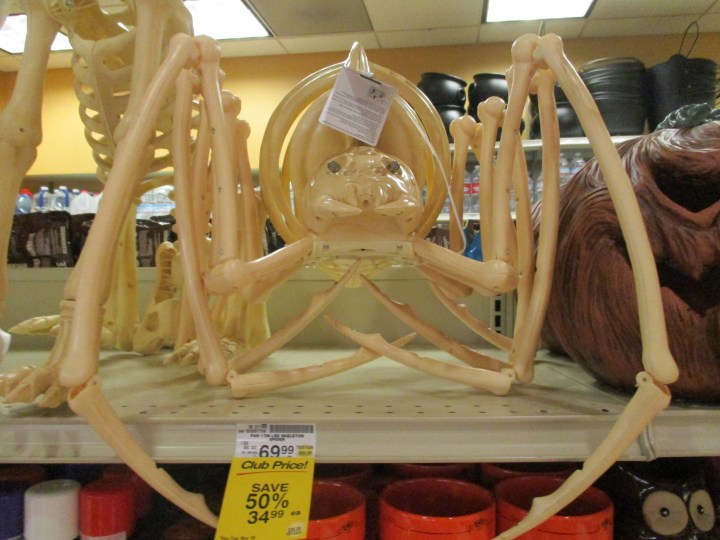
The worst, though, are the Halloween ‘decorations’ in the front yard! We put too much work into maintaining our gardens in good condition to make them look so bad. I do not care if it is just for one day out of the year. Seriously, it is just wrong, on so many levels. Why on Earth should I want my garden to look as cheap and trashy as young ladies dressed up as naughty nurses?!

Pumpkins and even Jack-O’-lanterns are tolerable, and even appealing in a traditional sort of way, but spiderwebs make me think that the witches could put their brooms to better use than frequent flier miles. All those angry black cats should more efficiently control all the spiders and bats. Tombstones?! – Corpses in various degrees of decay?! – There goes the neighborhood!!P91009+

What about the effigies concealed by white sheets, and the other effigies hanging from trees and porches? Whoever thought those were good ideas?! Perhaps Brent can share some insight.

P90330+++++

Six on Saturday: Souvenirs


My first rhubarb was given to my by my paternal-paternal great grandfather before I was in kindergarten. My Iris pallida also goes back four generations. I got one of my two favorite zonal geraniums from a compost pile in Montara, and snuck it back on the train when I was in the seventh grade. Some of the plants I grow have been with me for a remarkably long time.

Well, I did not get pictures of my rhubarb, Iris pallida or zonal geranium for today. Instead, these are five plants with whom I became acquainted more recently, and my first yucca whom I met three decades ago. They all have their respective stories that are more interesting than what I mentioned here. None are directly from nurseries, although #2 and #4 are from cultivars.

I sort of suspect that these plants and others of such significance to me will be with me for a very long time. I know that blue gum is nearly impossible to tame, and that windmill palm can’t be pruned down like the others. I will not force them to comply. The others can give me more cuttings to replace themselves indefinitely. The place names designate where I acquired them.

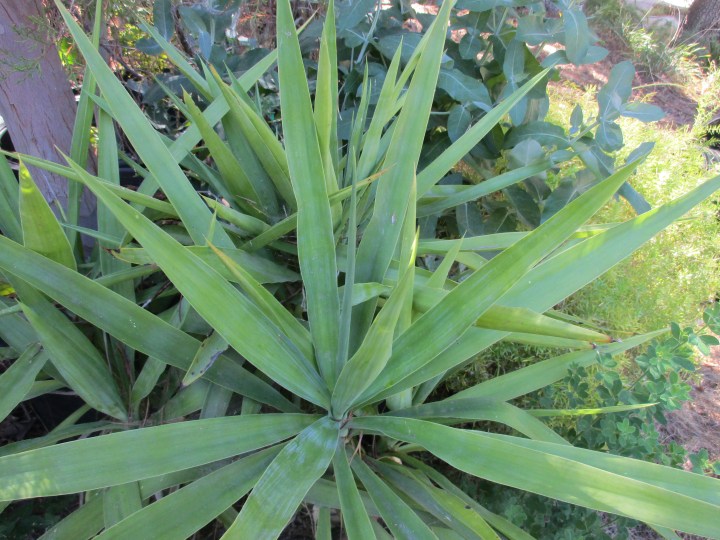
1. Holmby Hills ~ Los Angeles – Yucca elephantipes – This was my very first Yucca. My colleague, Brent Green, removed it from a project he was working on back in about 1988. It lived as a houseplant next to my desk for many years, and produced a few pups.P91095

2. Mid City ~ Los Angeles – Brugmansia suaveolens – Brent got me cuttings for this angels’ trumpet from another of his landscapes a few years ago because I really wanted a single white to add to the four more complicated cultivars that I already accumulated.P91095+

3. Reno ~ Nevada – Salix laevigata – I know that there is nothing special about the all too common red willow. I like this one anyway, because it grew from a broken twig I happened to grab on the Truckee Riverwalk through Reno. I should be more discriminating.P91095++

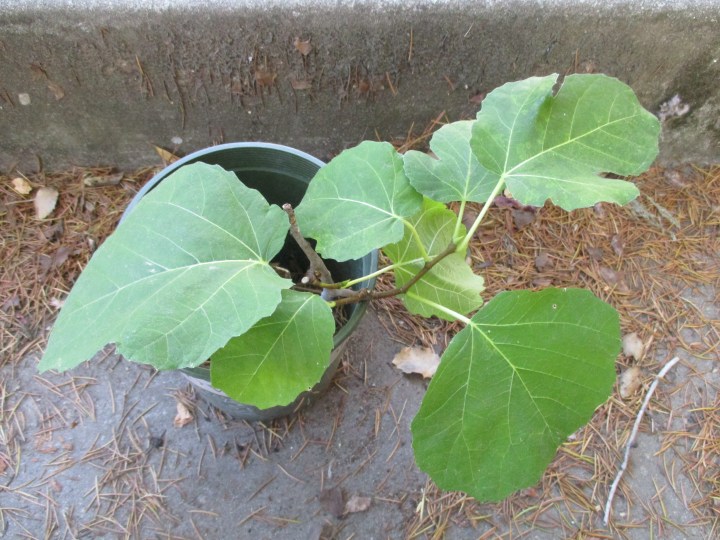
4. Murphys – Ficus carica – A few of these little fig trees were grown from pruning scraps. A friend wanted copies of the original tree before selling the home where the tree lived. We do not now what cultivar it is, but we sort of suspect it is the common ‘Mission’.P91095+++

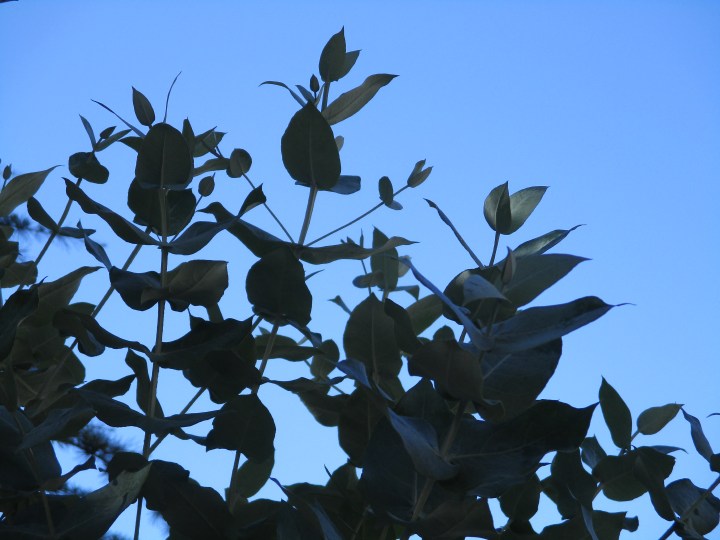
5. Santa Cruz – Eucalyptus globulus – While waiting for a friend who needed a ride, and pacing outside, I started plucking a few tiny weeds from planter. One of the weeds happened to be a tiny blue gum seedling. Against my better judgment, I did not discard it.P91095++++

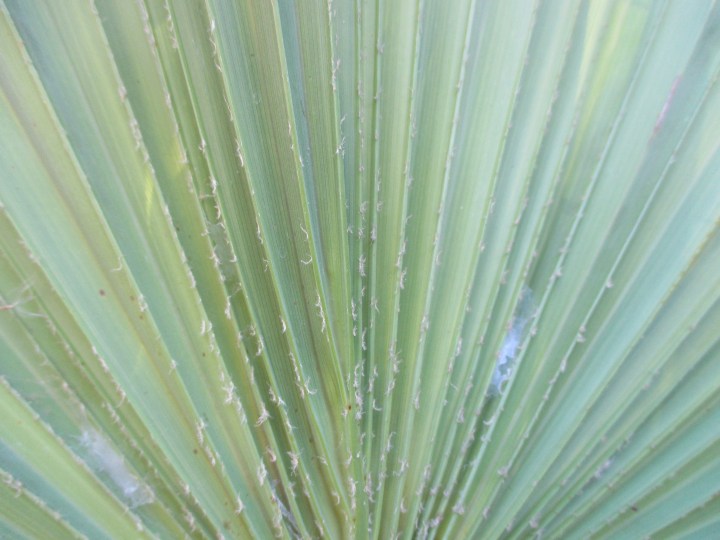
6. West San Jose – Trachycarpus fortunei – An old friend’s mother grew flowery annuals and perennials in pots on the porch. This windmill palm grew from seed in one of the pots, and was happy there for a few years, but eventually got too big. It lives here now.P91095+++++

This is the link for Six on Saturday, for anyone else who would like to participate:

https://thepropagatorblog.wordpress.com/2017/09/18/six-on-saturday-a-participant-guide/

Horridculture – PPE

P91002Personal Protective Equipment. That is what PPE is for. Acronyms can be so vague. PPE could be for Purple People Eater for all we know. That movie just happened to be released to cinema at the end of 1988, just a few months after my summer internship with an exemplary crew of arborists who instructed be about the importance of PPE. I am glad to have missed the movie.

In 1988, the machinery used by arborists as well as lumberjacks was more dangerous, and PPE was more primitive. Hearing protection was only beginning to be standardized. Many of us were not even using it back then, even though the chippers were terrifyingly loud. For some of us, cheap sunglasses sufficed as eye protection. Chaps had been available, but were quite rare.

From the beginnings of their respective careers, younger arborists and lumberjacks learn to use safer machinery and standardized PPE that was still being developed in 1988. Nonetheless, their work is potentially very dangerous. They still work with machines that are designed cut cut down big trees and shred the resulting debris! PPE is just as important now as it ever was.

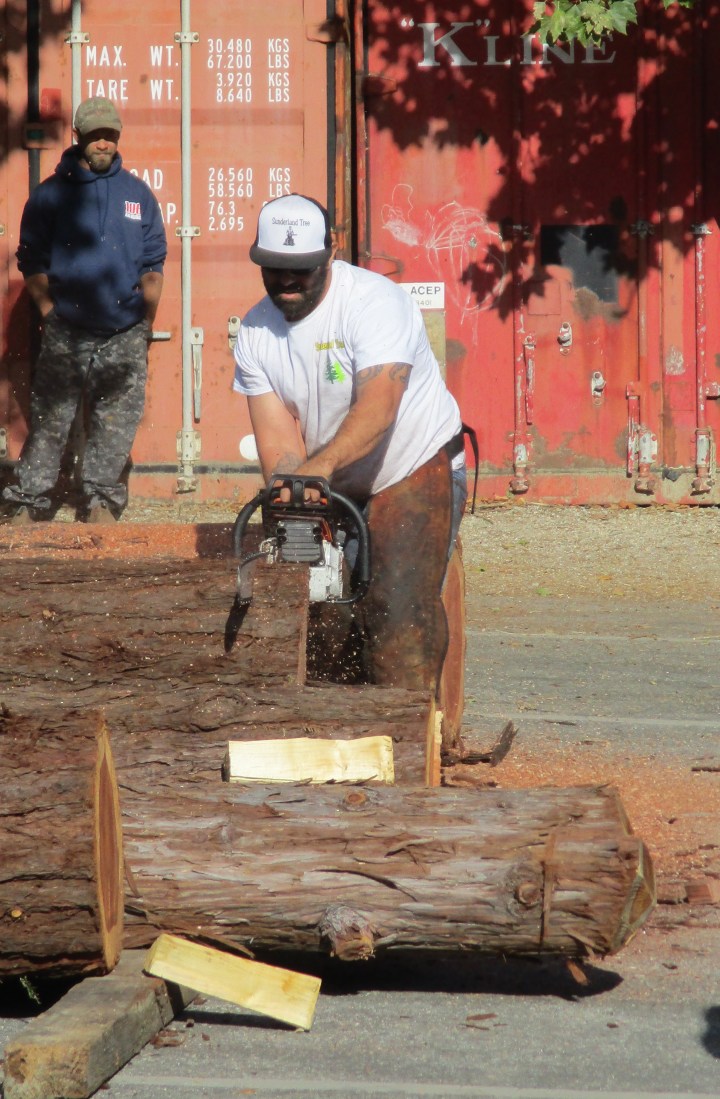
A notable lack of some of most basic of PPE at a local Lumberjack Contest was difficult to ignore. Even PPE that was unnecessary would have been appropriate for demonstration purposes.

In this picture, a few items of PPE are in order. Chaps were appropriate for bucking, and more than I had access to back in 1988. Boots, which can not be seen in this picture, were adequate. Stylish sunglasses that are also obscured, were likely rated as sufficient for eye protection. There is no need to tuck the shirt in for bucking logs that are stripped of branches that might snag.

What is lacking? Gloves, even for those who do not wear them at work, would have been proper attire for this contest. A hard hat, which is for protection from falling debris, could potentially deflect a kickbacked saw. Hearing protection might have been unnecessary with the fancy and remarkably efficient muffler on this saw; but I actually do not know, (and I saw no earplugs).

Six on Saturday: Still NO Blue Ribbon


That could change later today, at the Jam, Pie and Chili Contest of the Santa Cruz Mountains Harvest Festival. My jams or jellies have won second place every year for the past few years, except for only one year when my mother’s peach jam won second place. How embarrassing! Anyway, for some of the past few years, my entries have won both second and third place.

However, none of my jams or jellies have won a first place blue ribbon!

This could be the year!

Will it be? Well, that is doubtful.

Blue elderberry jelly is what most often wins second place, except only when blackberry jelly . . . or my mother’s peach jam . . . is better. Unfortunately, blue elderberries were rather scarce this year, and what I got were not very good. In fact, they were downright bad. Other fruits, such as currants and gooseberries, were too scarce. Dogwood berries did not ripen soon enough.

For this year:

Peach jam looks and tastes great, but is about as chewy as a gummy bear.

Plum jelly is a sloppy mess that tastes sort of burnt.

Elderberry jelly is a bit sloppier, and, as mentioned above, is made with inferior fruit.

Blueberry jam is sort of like preserves. It is not bad. However, it is made from surplus ‘store-bought’ blueberries from a neighbor, instead of from locally grown or collected fruit.

Blackberry jam tastes great, but the seeds are weirdly tough this year, like wooden gravel.

Blackberry jelly is probably the best of the six, but tastes more like sugar than berries.

1. Do you notice anything missing among these few of the several ribbons that have been awarded to our jams and jellies in the past? There is not a single blue ribbon . . . yet. It will be mine!90928

2. Do you see what else is missing? Of course not. If you could see it, then it would not be missing. It would also be blue; as in the blue elderberries that normally make the ‘second’ best jelly!90928+

3. The native currants were no better. They are never abundant like blue elderberries are, but there are normally more than there were this year. I did not bother looking for gooseberries.90928++

4. Kousa dogwood made plenty of fruit, but it is not ripe yet! Oh well. Ironically, this particular tree might get cut down this winter. The abundant fruit is too messy on the pavement below.90928+++

5. Tomatoes are insultingly abundant where they grow wild around the compost piles and on roadsides. I do not need any more stoopid tomatoes! They will not help me win my blue ribbon!90928++++

6. Six submissions are ready for the Jam Contest later today: peach jam, plum jelly, elderberry jelly, blueberry jam, blackberry jam, blackberry jelly. I will write about the results tomorrow.90928+++++

This is the link for Six on Saturday, for anyone else who would like to participate:

https://thepropagatorblog.wordpress.com/2017/09/18/six-on-saturday-a-participant-guide/

Horridculture – Watersprouts or Suckers?!

90501thumbDo we really know the differences between watersprouts and suckers? It seems simple enough. The definitions of each should be rather distinct.

When I grew citrus, I knew what sort of sucker that I had to contend with. Suckers were any unwanted stem and foliar growth from the understock below the graft union. In the picture of the trunk of the young plum tree above, the graft union is clearly visible between the scion to the upper left and the understock to the lower right. Suckers would be below such a graft union.

This sort of sucker is known as such because it sucks resources that should be directed to the more desirable but often weaker scion. A sucker that is more vigorous than its associated scion is likely to overwhelm and replace it if not removed. Scions are expected on freshly grafted plants, but should become less prevalent as they mature, and the scion dominates the understock.

Suckers might develop either on the short section of understock trunk between the graft union and the ground, or on the roots below the ground. They only need to be below the graft union.

Okay; that definition is simple enough. Here is another.

Watersprouts, as far as I am (still) concerned, are unusually vigorous and typically adventitious stem growth that can resemble suckers, but develops above a graft union. They should likely be removed, but might just be pruned back a bit if they happen to be where a new branch is desired. After all, they are genetically identical to the desired plant, whether it is grafted or not.

Because watersprouts grow above a graft union, they occur only among the branches and main trunks above the ground. They do not grow from the roots of understock below the ground.P90921+++

The picture above shows watersprouts on (VERY badly) pollarded bay trees.

Okay; that is another simple definition.

What about vigorous stems that grow from the roots of ungrafted trees? Can they be suckers if they are not sucking resources from a scion above a graft union? Can they be watersprouts if they are not growing from stems or trunks? It seems that the simple distinction between watersprout and sucker was the location relative to a graft union. What if there is no graft union?!

The vigorous black locust stems in the picture below are growing from the roots of ungrafted black locust trees (which, incidentally, were cut down last winter). Some might say that they are root suckers, which is a third and accurately descriptive designation for such vigorous stem growth. Otherwise, they could be either (or both) suckers or (and) watersprouts. Both work.

I know that many arborists refer to such root suckers from ungrafted trees as watersprouts, which is not at all inaccurate. I am also aware that many arborists refer to watersprouts like those on the bay trees above as suckers, . . . which is sort of inaccurate. I will not argue. I know what they mean.P90921+

Six on Saturday – II: Six More


Six on Saturday‘ is a popular popular gardening meme that many of us garden bloggers participate in on Saturdays. The link explains how it works. Simply, we post six pictures of what is happening in our gardens or landscapes at the time, along with brief explanations. Mine just posted at midnight. I know I should be done, but I happened to find a few more pictures to share.

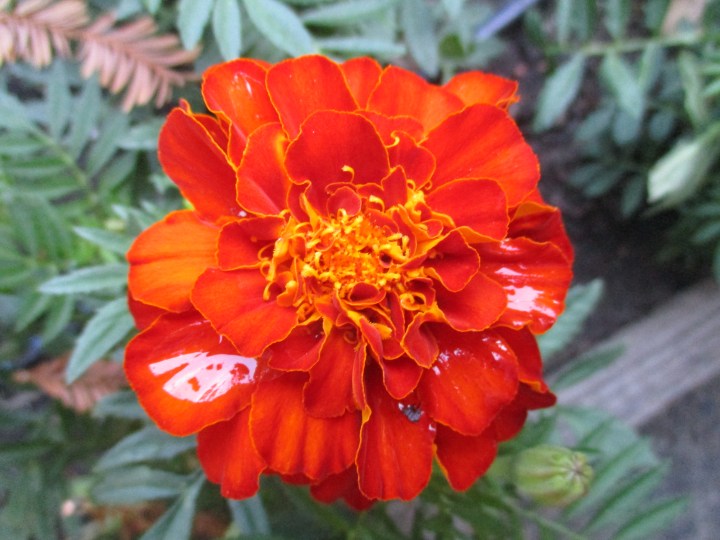
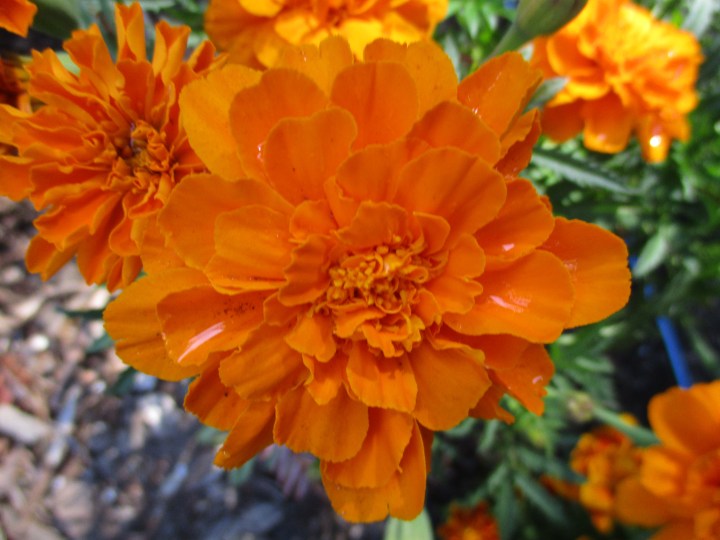
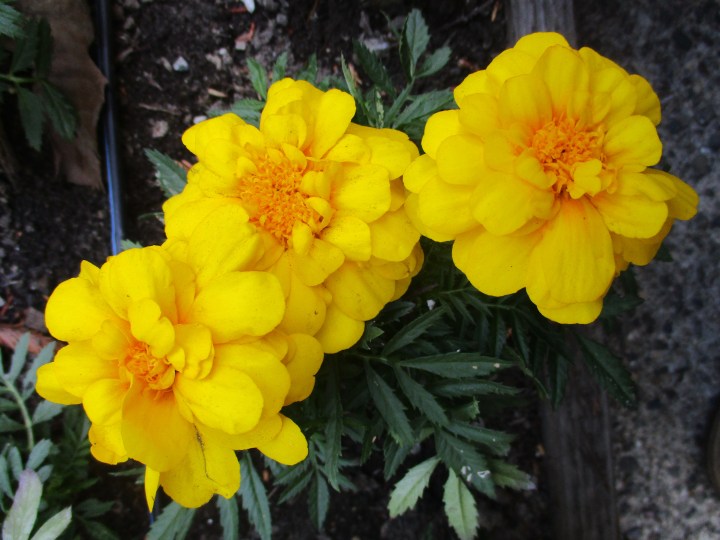
These six pictures of marigolds that were just installed at work are not as interesting as the topic I wrote about earlier, but are just too pretty to be discarded before I show them off. The second and third pictures, as well as the fourth and the fifth pictures, might be redundant to each other if they show the same varieties of marigolds, but I do not care. They are all so pretty.

Marigold will not likely be featured in my weekly gardening column this year, because the bigger but related African marigold was featured last October. These here are the smaller and more traditional French marigold. Their bright yellows, bright oranges and rusty reds suit late summer and autumn like miniature chrysanthemums. Their foliage is so delightfully aromatic.

Although I am none too keen on annual bedding plants, I happen to like marigold. They were more popular when I was a kid. They were not so variable back then; and there were certainly none of those pathetic fake white sorts that are really just pale yellow. They were plain and simple orange, yellow and rusty red, in blends or uniform. We could easily grow them from seed.

Unfortunately, marigolds will not be with us for long. They were planted to replace petunias that did not last long enough. At the end of autumn, they will be replaced by cyclamen for winter.

P90921KP90921K+P90921K++P90921K+++P90921K++++P90921K+++++

This is the link for Six on Saturday, for anyone else who would like to participate:

https://thepropagatorblog.wordpress.com/2017/09/18/six-on-saturday-a-participant-guide/

Six on Saturday: Locust


John the Baptist did not really eat orthopteran insects out in the desert. The locust he ate were the beans of the carob tree, Ceratonia siliqua. They are actually quite nutritious. Supposedly, they are known as locust because they resemble the elongated abdomens of the insects with the same name. A few other related trees that also produce beans are collective known as such.

Robinia pseudoacacia happens to be known as black locust, even though there is nothing black about it, and the tiny and papery beans do not even remotely resemble insects. Supposedly, it arrived with Gold Rush prospectors who wanted something of their homes in Eastern North America. It naturalized aggressively, and is now an invasive exotic species in much of the West.

We tolerate a few at work. They are too pretty to cut down without a good excuse. However, one gave us a good excuse when it fell last winter. It was notably polite about it, by falling into a gap between two roofs that a cat could jump across. Damage was very minimal. Nonetheless, the tree and its destabilizing associates needed to be removed. They are gone but not forgotten.

1. Thorns of black locust only look blurry in this picture. They are wickedly sharp! The sharpest are on the most vigorous stems, which is exactly what the freshly cut stumps here generate.P90921

2. Thickets of suckers (or watersprouts) like these developed where black locust trees were cut down last winter. Most developed on freshly cut stumps. Many emerged from random roots.P90921+

3. More than half of the suckers from the formerly impenetrable thicket around the stump at the center of the picture were removed to relinquish space for the lauristinus in the foreground.P90921++

4. A few bay trees got cut down with the black locust trees. I wanted them coppiced, but was away when they instead got VERY badly pollarded. Oh, the shame! (I will coppice them later.)P90921+++

5. As nasty as black locust is, it has a few attributes. Spring bloom resembles that of white wisteria, and is almost as fragrant. This finely textured pinnately compound foliage is quite elegant.P90921++++

6. Their high and open canopies provide nice shade too. It is just enough for warm summer weather, but not too much to exclude turf grass and understory plants that tolerate partial shade.P90921+++++

This is the link for Six on Saturday, for anyone else who would like to participate:

https://thepropagatorblog.wordpress.com/2017/09/18/six-on-saturday-a-participant-guide/

Horridculture – On The Fence

P90522Where I lived in town, the backyard was surrounded on three sides by fences, with the house on the only unfenced fourth side. These were the sort of fences that were common in suburban neighborhoods. They kept children and dogs in or out of adjacent gardens, and probably provided some sense of privacy, although I never understood why we all needed such privacy there.
I mean, if I really wanted significant privacy, I would not have lived in town, where the homes and gardens were all so close together. I enjoyed living there, and I enjoyed my neighbors. We could hear some of each others conversations and televisions, but no one seemed to mind. It was worth living in such an excellent neighborhood so close to everything we could want in town.

Years ago, suburban fences were not too obtrusive. They were only about four feet high. Some of the older homes were still outfitted with picket fences that were only about three feet high. We could still talk to neighbors over them, and sometimes pass over a bag of extra fruit or vegetables, or even flowers, from the garden. Dogs and young children were effectively contained.

Then everyone became obsessed with privacy. At the same time, many of us added onto our homes or replaced them with new homes that occupied more of the allowable space within their compact formerly suburban, but now urban parcels. Smaller remaining garden spaces became more shaded by bigger houses and taller fences. Gardening, as we once knew it, became passe.

What are all these big fences for? What are they keeping out? . . . or . . . What are they keeping in? Why do so many who want so much privacy live so close to so many who crave the same?!

Six on Saturday: Recycling Weeds


A weed is a plant where it is not wanted. There are plenty here. There are also a few situations that could use some of the plants that are considered to be weeds in their present situations. Since we are not a ‘landscape’ company that earns more by needlessly disposing of, and installing, as much plant material as possible, we sometimes get to recycle some of our useful weeds.

Laurustinus, Viburnum tinus, which I refer to simply as ‘viburnum’, has politely naturalized here. It is not prolific enough to be invasive. It just has a sneaky way of getting around, mostly in irrigated landscaped areas. It lives in the wild too. It sometimes grows into situations where it is an asset. It sometimes becomes a problem. I don’t mind removing it. I am none to keen on it.

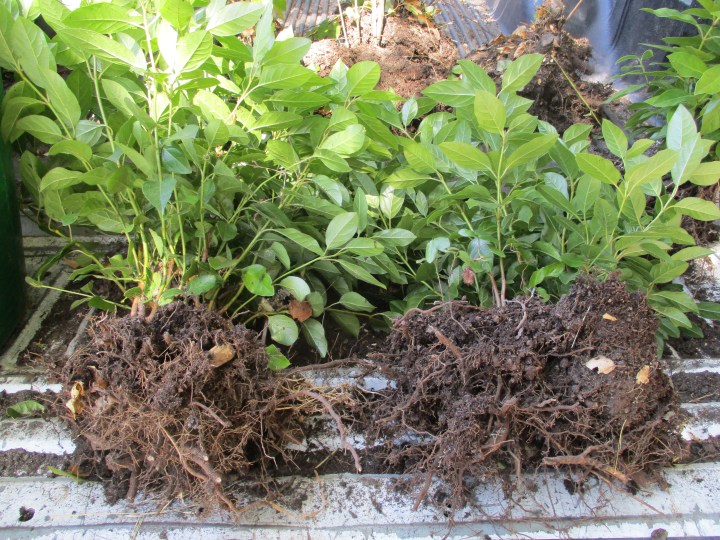
A thicket of viburnum is in the process of being removed from an area that will soon be outfitted with a new and more appropriate landscape. Rather than merely removing and disposing of all of the viburnum, we are relocating it into other landscapes where it will be more useful as informal screening hedges. I would prefer to wait until autumn, but the new landscape is waiting.

For the informal screening hedges that we want, these viburnums will work splendidly. They will fit right into the unrefined and unlandscaped areas as if they belong there. Prettier species that I would prefer would be more conspicuous, and look like something that was planted. I know that these recycled plants will initially not be as uniform as nursery stock, but I do not care.

1. This thicket of viburnum has been here as long as anyone can remember. It gets cut down when it gets too high, and takes a few years to regenerate. A new landscape will be going in here.P90914

2. The biggest and gnarliest specimens get discarded. It would not be practical to salvage them. These mid-sized specimens with relatively compact root systems should be easily relocated.P90914+

3. They clean up nicely, with most of their foliage pruned away, and their long stems pruned back. Some of their roots get pruned to facilitate planting, and also to stimulate new root growth.P90914++

4. Once planted and soaked in, many of the relocated specimens seem to be comparable to what might have been purchased from a nursery. Even with the warm weather, wilting is minimal.P90914+++

5. With two more that are out of view beyond the right margin of this picture, these five make a nice hedge of seven newly relocated viburnum. They are nothing fancy, but should work well.P90914++++

6. This is the view that they are intended to obscure, featuring seven dumpsters and various utilitarian unpleasantries. That’s them in a neat row across the lower right corner of the picture.P90914+++++

This is the link for Six on Saturday, for anyone else who would like to participate:

https://thepropagatorblog.wordpress.com/2017/09/18/six-on-saturday-a-participant-guide/

Six on Saturday: White (but not) Trash


That is, of course, a matter of perspective. Some of us might find some of the six species represented here to be trashy. Some of us might find all six to be appealing. After a slight expression of disapproval of my insensitive designation of my six pictures as ‘White Trash’ last week, I considered that I should perhaps be more tactful with my opinions this week. Then, I got over it.

These six just happen to be rather innocuous, so I have nothing too objectionable to say about them. I am actually rather fond of them. The last comment about #5 refers to the 2-in-1 graft.

1. Oregano, Oringamum vulgare, is civilly naturalized in a few spots. I let it bloom because it is rather pretty. There are plenty of unbloomed stems for anyone who wants a bit of the foliage.P90907

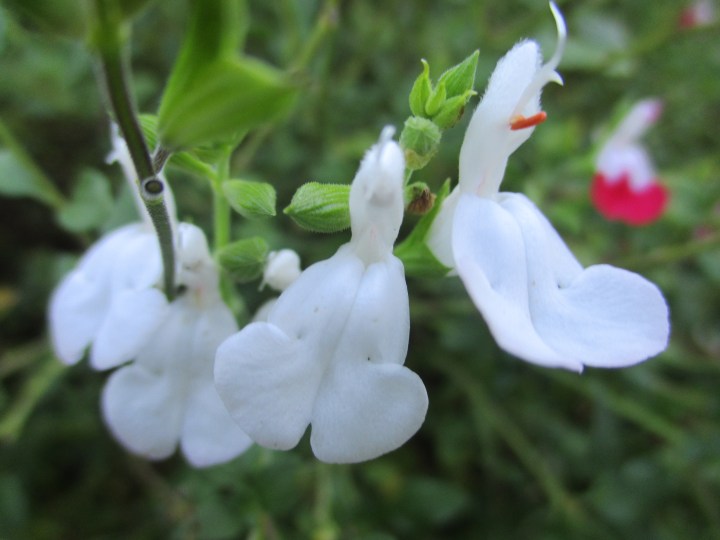
2. Autumn sage, Salvia greggii, with white flowers, developed within a colony that was originally of the cultivar ‘Hot Lips’. The more typical flower is blurred in the upper right background.P90907+

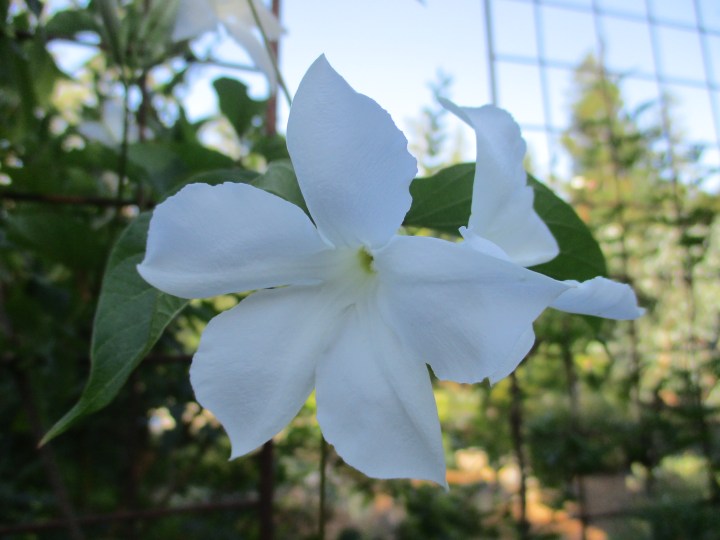
3. Chilean jasmine, Mandevilla laxa, is a mildly fragrant mandevilla. The fragrance is barely perceptible here. I am impressed anyway. I do not expect any fragrance at all from a mandevilla.P90907++

4. Star jasmine, Trachelospermum jasminoides, is much more fragrant, especially in abundance. I know it is common, but I like it anyway, as much for the foliage as for the fragrant bloom.P90907+++

5. Rose, Rosa spp., seems to be the all too common floribunda cultivar, ‘Iceberg’. It is grafted together with what seems to be ‘Burgundy Iceberg’, onto standards (rose trees). 2-in-1 = tacky!P90907++++

6. Oleander, Nerium oleander, to many, is even tackier. I really like it. Besides, it does so well without irrigation in the rustic or unrefined landscapes. It might be the cultivar, ‘Sister Agnes’.P90907+++++

This is the link for Six on Saturday, for anyone else who would like to participate:

https://thepropagatorblog.wordpress.com/2017/09/18/six-on-saturday-a-participant-guide/