Six on Saturday: Untimely Death


One of the more unpleasant parts of my work is condemning elderly trees. Redwood and oaks in our region can live for centuries, but none last forever. It is sometimes my job to determine if some of the oldest of oaks have deteriorated to such an extent that they have become unsalvageably dangerous to those around them.

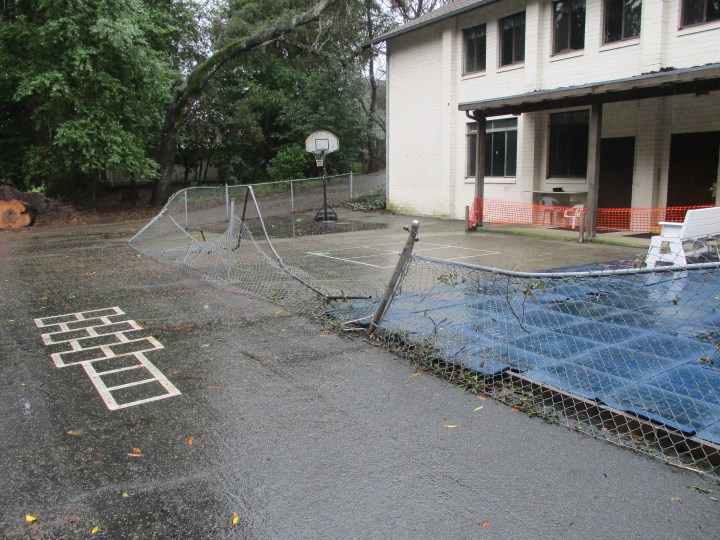
What is worse than that is that there are so many dangerously deteriorated oaks and other trees that collapse before they get removed, and many do so before anyone notices how dangerous they are. Some structural deficiencies and instabilities are concealed to the most thorough of arborists. That is what happened with this big coast live oak, Quercus agrifolia, with a five foot wide trunk, that fell behind Felton Presbyterian Church. I had known for some time that the healthy canopy was heavy and exposed to wind. What I did not know is that the root systems was insufficient to maintain stability when strong wind blew against the healthy canopy while the soil was saturated. The insufficiency of the root system became apparent not only because the tree destabilized, but also because the minimal root system became exposed by the destabilization. There was no evidence of decay or damage within the root system, which are what typically contributes to destabilization.

1. It is amazing that this tree stood for as long as it did with such minimal roots.P90209
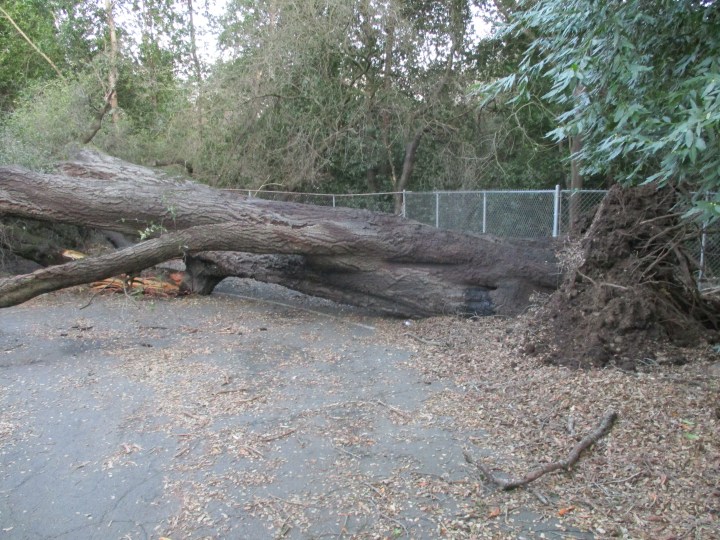
2. This is what those minimal roots supported for so long.P90209+
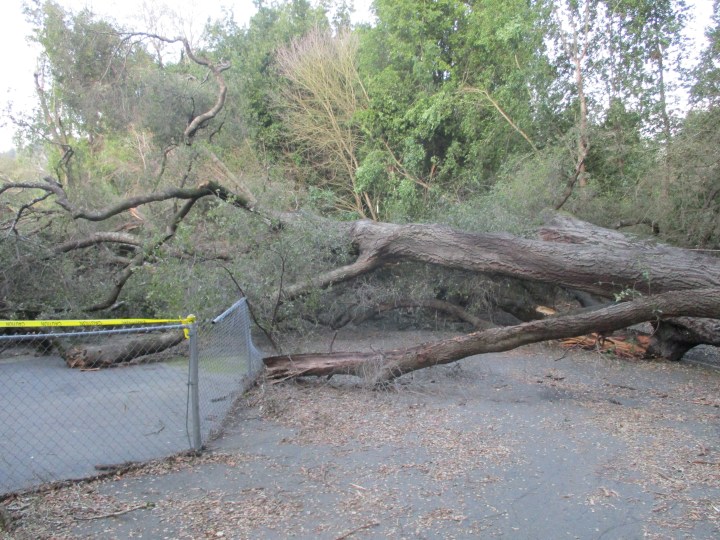
3. Healthy foliar growth on top of the canopy enhanced weight and wind resistance.P90209++
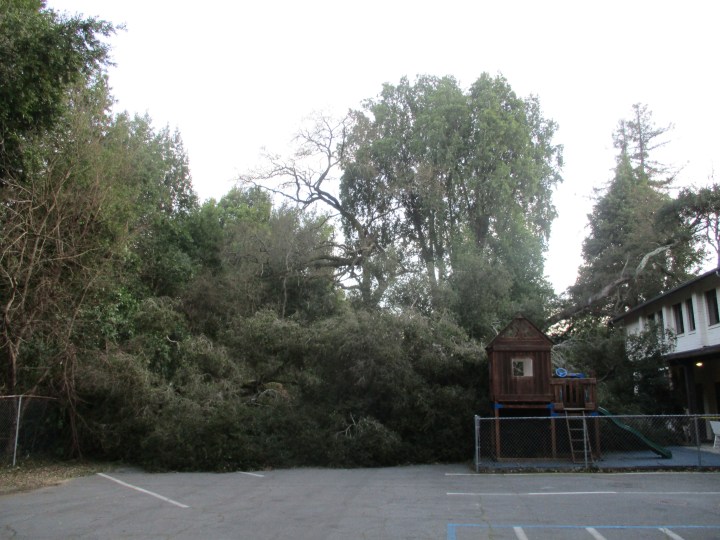
4. Damage was surprisingly minimal.P90209+++

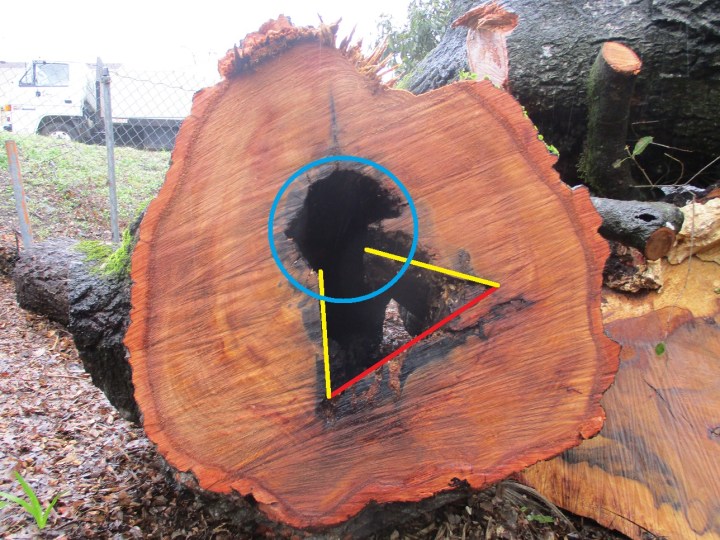
5. This decay within one of the main limbs was a structural deficiency that did not contribute to the destabilization.P90209++++P90209+++++
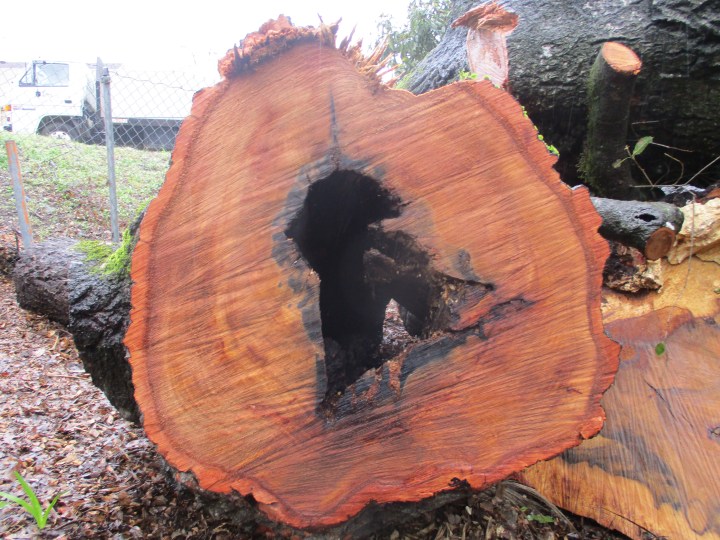
6. (above) This is the same picture as #5. The red line is at the cross section of where a limb broke or was cut away many years or decades ago. Although the straightness of the zone suggest that it was made by a pruning cut, it is unlikely that the tree was pruned up as high as this section of limb was located, particularly so long ago. As the tree compartmentalized the wound, decay spread inward toward the center from the wound, in a typical pattern that resembles a section of a pie chart, which is marked by the yellow lines. Once it reached the center, decay radiated outward from the center, in a typical circular patter, which is marked by the blue circle. As the center of the trunk rotted and deteriorated, the necrotic zone between it at the original wound continued to rot and deteriorate. By that time this cavity developed, the exterior of the wound had already been compartmentalized by viable wood that did not decay.

This is the link for Six on Saturday, for anyone else who would like to participate:

https://thepropagatorblog.wordpress.com/2017/09/18/six-on-saturday-a-participant-guide/
Six on Saturday: Right Here – Right Now


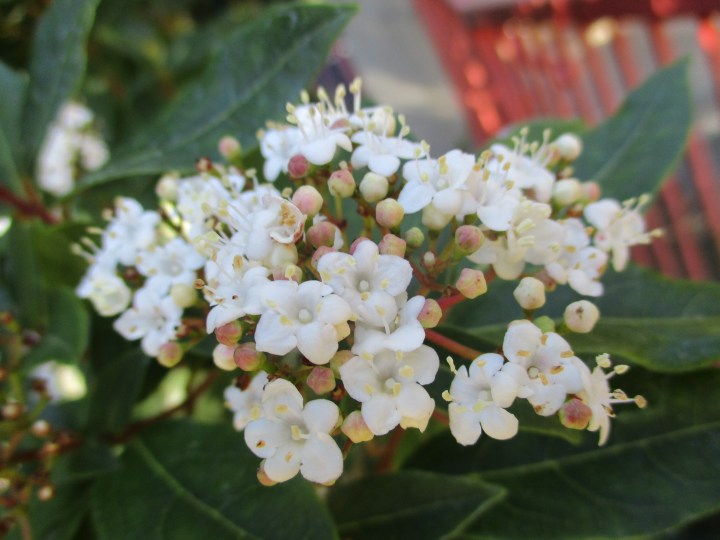
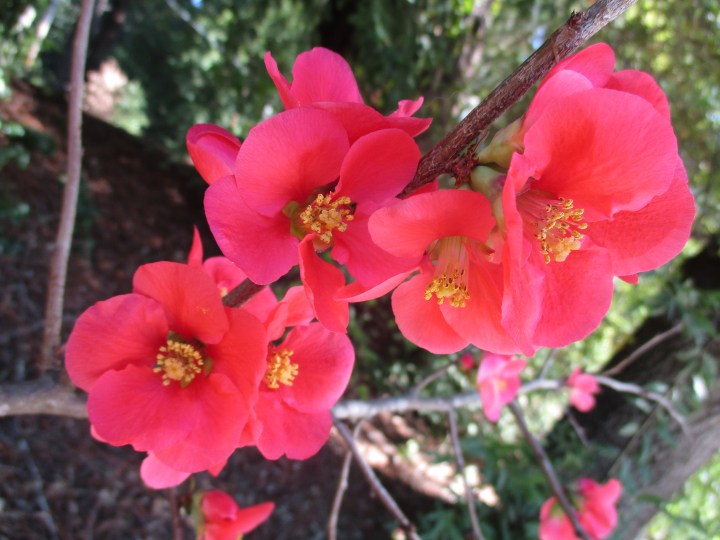
There are certainly more impressive flowers at work. I suppose I should have gotten pictures of them. Instead, I just took these six pictures within minimal proximity to a where I happened to be working on Wednesday. I thought they would be more interesting than they are. I wanted to get a picture of the laurustinus #4 because others have been posting pictures of the same as if it is something important. Flowering quince #6 is my favorite here, and the only one that was not planted into the landscape. It grew from the roots of an old specimen that was in front of an old home that was demolished to redevelop the site. Because of it’s resiliency, we want to pull up some of the layered stems (that rooted where they lay on the soil) to plant in elsewhere.

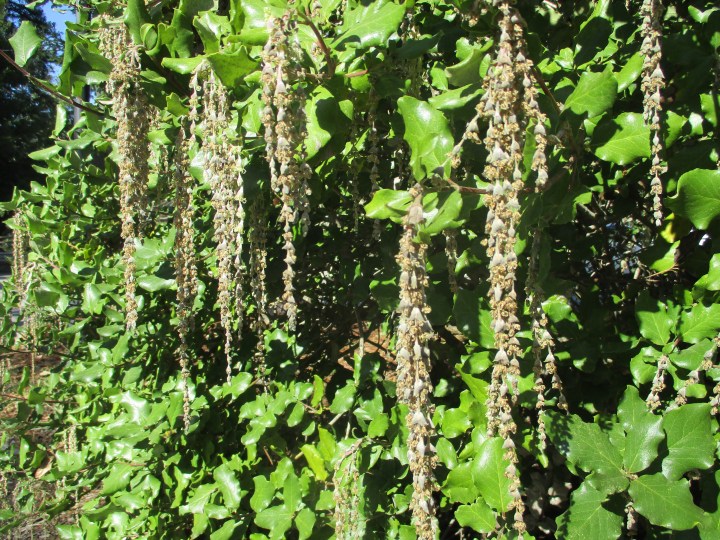
1. Garrya elliptica – silktassel bloomed with very pendulous light beige blooms quite some time ago. These lasted longer than others in partial shade, but are now turning tan and getting dry. Silktassel is native here.P90202

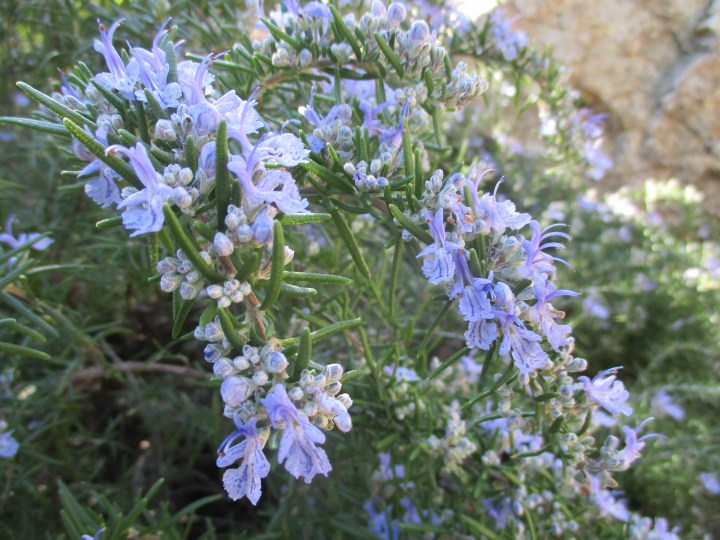
2. Rosmarinus officinalis ‘Prostratus’ – trailing rosemary seems to bloom continually. I do not remember it without bloom here. Bees, which are active in all but the coolest of weather, like how it always here for them.P90202+

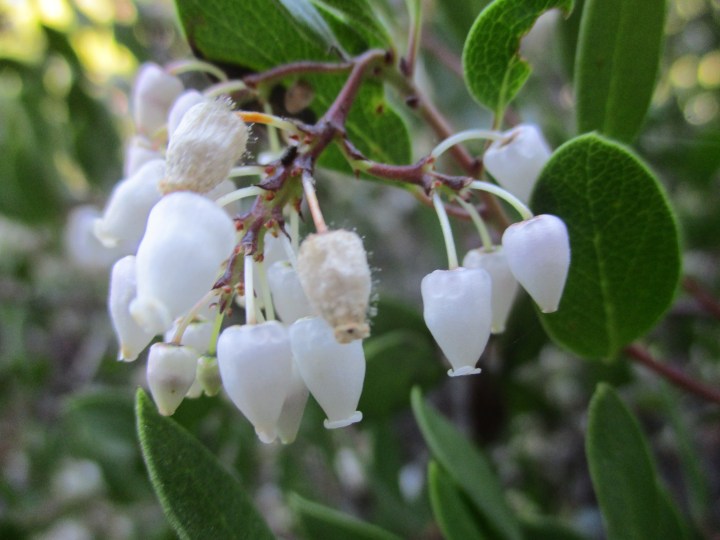
3. Arctostaphylos densiflora ‘Howard McMinn’ – Howard McMinn manzanita is a garden variety or cultivar of a species that is native not far north of here. I sort of think these waxy white flowers are too tiny to impress.P90202++

4. Vibrunum tinus ‘Spring Bouquet’ – laurustinus is actually blooming later here than where winters are colder. It naturalizes here. I suppose that those that grow from seed would not be of the same cultivar as the originals.P90202+++

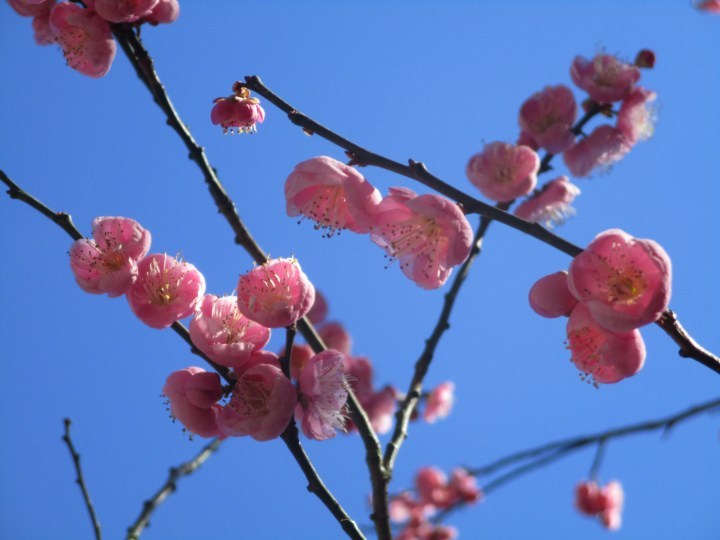
5. Prunus cerasifera – flowering plum is rather sparse here because of the partial shade of larger trees. I do not know what cultivar this one is. I am not even sure if it is Prunus cerasifera. It does not look familiar to me.P90202++++

6. Chaenomeles speciosa – flowering quince is another one that I can not identify, although it seems to be the most common sort that I see about town.. I guessed the species, but will not even bother to guess a cultivar.P90202+++++

This is the link for Six on Saturday, for anyone else who would like to participate:

https://thepropagatorblog.wordpress.com/2017/09/18/six-on-saturday-a-participant-guide/
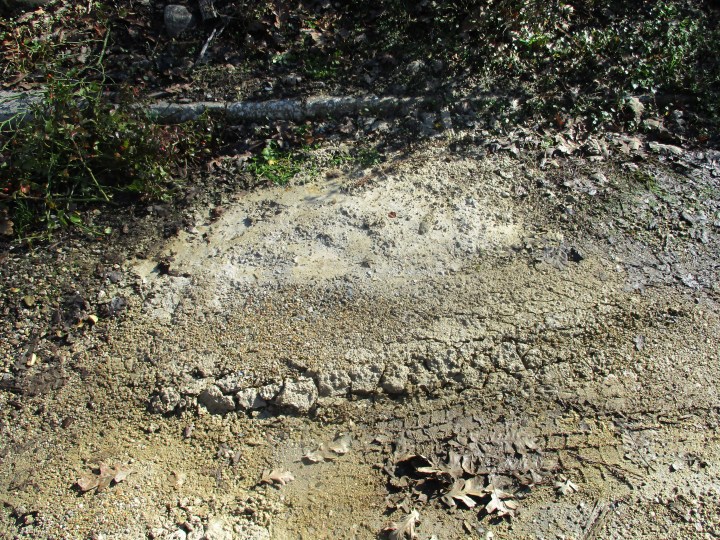
Horridculture – Slurry

p90130This is likely the worst illustration that I have ever used. It is sort of what it looks like; a mud puddle. What I mean by ‘sort of’ is that this is no ordinary mud. It is a now solidified slurry that was rinsed from a concrete delivery truck. Yes, solidified, right there next to an embankment covered with carpet roses. The curb near the top of the picture is where the embankment starts. The small pile of debris to the upper left is some of what I was pruning from the roses. There was another solidified puddle of slurry just a few yards away. They were just dumped there as if no one would notice.

What makes this even more infuriating is that there is a sign on the main gate into the site, as well as a few others throughout the site, explaining to everyone coming and going that they must wash mud or other crud from their vehicles before leaving the site, so that they leave nothing on the roadway outside. This refers mainly to mud on the tires, but really includes anything that makes a mess. There are washing stations within the site for those who must wash their tires before leaving. There is also a site for slurry such as this, that can not be rinsed into culverts that drain into the adjacent creeks. The management of the project did everything necessary to prevent this sort of thing from happening. Yet, here it is.

A smaller but more destructive puddle of slurry was dumped into my downtown planter box by tile setters working in an adjacent shop. https://tonytomeo.com/2017/11/04/my-tiny-downtown-garden/ That mess needed to be broken apart and removed, but could not be separated from the perennials that is flowed around before solidifying. All of the canna foliage, some nasturtiums and some of the aloes were destroyed.

The insensitivity is ridiculous. I could not imagine leaving debris from pruning roses where the new concrete was installed, as if no one would notice. Yet, such disregard for landscaped areas is quite common. That is why trees that are to be salvaged on a construction site need to be fenced. Even with fencing, they are very often damaged or ruined by those operating machinery. Wouldn’t that be comparable to an arborist cutting a tree down in the most efficient manner, even if it fell onto an adjacent house?

Six on Saturday: Wrath Of Grapes


Racial profiling was not likely the reason I was asked to prune a big overgrown grapevine at work. I just happen to be more proficient with dormant pruning of dago wisteria than my colleagues are. My proficiency is more cultural than racial. I am from the Santa Clara Valley, and sadly, they are not.

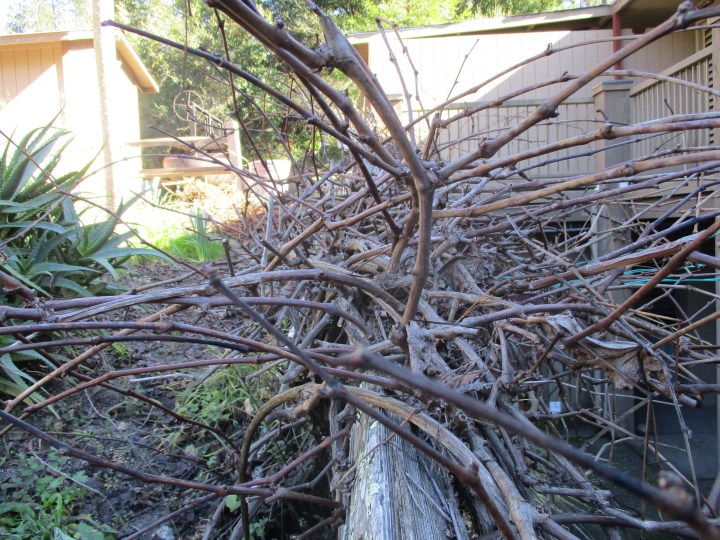
1. Before pruning, the grapevine was a tangled mess on a split rain fence, which is not even visible in this picture. Incidentally, the forsythia that was featured in ‘Six on Saturday’ two seeks ago is located just beyond the upper left margin of the picture.p90126

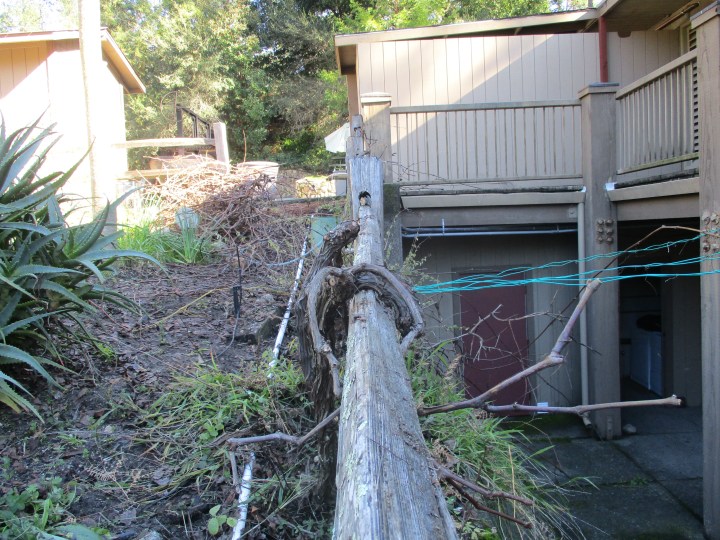
2. After pruning, the top rail of the fence is visible, extending away from where the picture was taken. Some of the debris is still piled to the left in the background. Green wires to the right are there for new vines to climb on. The few remaining unpruned vines are layers (stems that lay on the ground long enough to develop roots of their own) that will be dug and removed. I wanted to prune to just spurs, but there were no new canes on the main trunk. Instead, I left stubs of canes from the previous season, with a few extra buds.p90126+

3. This lineup of what seems to be the usual suspects is really seven well rooted layers (the stems that lay on the ground long enough to develop roots of their own that I mentioned earlier) The smallest one on the left is easy to miss.p90126++

4. Most of the layers are very well rooted. We really do not know what to do with the original grapevine. We certainly do not need seven more! Friends and neighbors will likely find good homes for them.p90126+++

5. The weather was so nice for this project, that the ceanothus nearby started to bloom. There are so many other dormant plants to prune before winter ends!p90126++++

6. Just prior to such nice spring weather, we got eight inches of rain from a series of a few storms. This would have been two thirds of the average annual rainfall of twelve inches in my former neighborhood in town! This bucket of rainwater is nine inches deep because it is flared toward the top, and narrower at the bottom.p90126+++++

This is the link for Six on Saturday, for anyone else who would like to participate:

https://thepropagatorblog.wordpress.com/2017/09/18/six-on-saturday-a-participant-guide/
Six on Saturday: Rhody


Everyone loves Rhody. Regardless of how interesting I like to believe my articles are, nothing gets as much attention as the few illustrations that are photo bombed by Rhody. There are not many good pictures of Rhody, and it is difficult to get good pictures of him. He is too active, and when I try to get him to be still for the camera, he looks sad. I suppose that part of the problem is that I am not very proficient with taking pictures of him in action, rather than while he is trying to cooperate for a posed picture. These pictures are not exactly horticulturally oriented. Except for a few background bits, the only horticultural subjects are a big California sycamore that does not fit into the picture, a dead box elder that is mostly gone, and an uninteresting lawn.

1. Rhody is an expert of meteorology. He is looking to the gray sky and predicting rain. He will want to get inside before it arrives.p90119

2. Rhody is also an expert of arboriculture. After inspecting this big California sycamore, he concluded that the ‘bark’ is ‘ruff’. He happens to be particularly fond of dogwoods.p90119+

3. Rhody is stumped. He is wondering where all the firewood from this dead box elder went. It is within a protected riparian zone where deteriorating trees were to be cut down and made safe, but otherwise left on site.p90119++

4. Rhody occasionally inspects his big lawns to evaluate their maintenance, and perhaps find sticks or balls left by trespassing dogs.p90119+++

5. Rhody found the maintenance of this lawn to be satisfactory.p90119++++

6. Rhody is finished with his work and is getting ready for the incoming storm.p90119+++++

This is the link for Six on Saturday, for anyone else who would like to participate:

https://thepropagatorblog.wordpress.com/2017/09/18/six-on-saturday-a-participant-guide/
Six on Saturday: Forsythia Division


Stems that develop roots to grow into new plants as they lay on the ground are known as ‘layers’. Because cane berries develop tall vertical canes that seem to leap as they arch over to touch the ground and root in, the new plants that develop where they do so are known as ‘leapers’. I sort of think that ‘layers’ sounds more like reliable hens than self propagating plants. I also sort of think that ‘leapers’ just sounds funny.

A big forsythia at work had become overgrown with several layers or leapers. I am not really sure which they are, but there was quite a mess of them. We needed to remove the superfluous plants. Also, we wanted a few forsythias in other parts of the landscape. Well, you can figure this out. We decided to kill two layers with one stone . . . or something like that. We decided to pull up the unwanted layers or leapers in one area, and plant them where they were actually desired. We decided to get it all done just prior to a big storm that would help settle the new plants in.

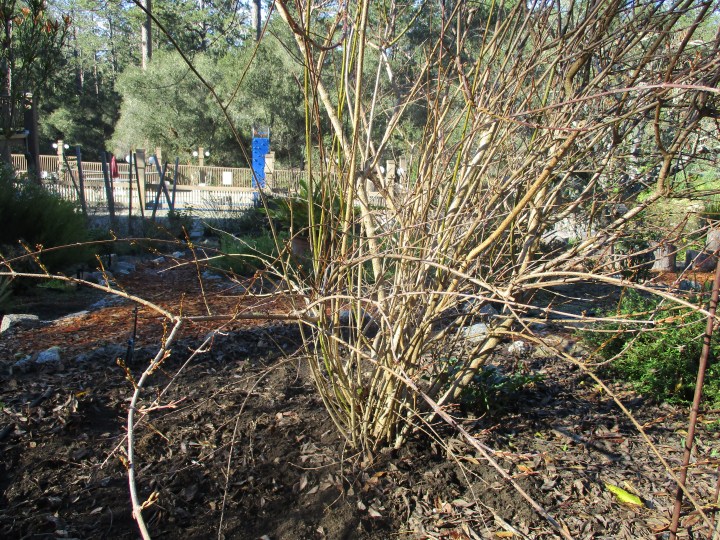
1. Forsythia before division.p90112

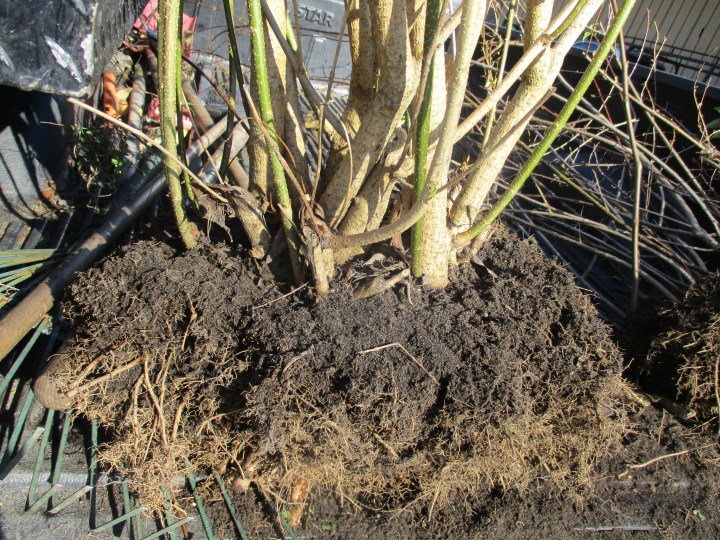
2. Forsythia after division. The entire left half of the original clump, which happens to be the original plant, as well as a few small layers or leapers, were removed. This remaining portion of the clump was not pruned yet. It will be pruned after later winter or very early spring bloom. This picture is approximately in the same position as the previous picture #1.p90112+

3. This largest of the new plants to be divided from the main plant was actually the original plant. The label was found on one of the old canes. Four smaller layers or leapers are to the right. The four smallest that are shown in picture #5 are not visible here. Because they needed to be pruned back to compensate for the root damage associated with the process, these plants were pruned almost as they would have been after bloom, which will unfortunately limit bloom in their first season.p90112++

4. This is the same largest clump in picture #3 after getting pruned and installed into another part of the landscape just before the rain. If it does not get pruned after bloom this year, the big older caned will be cut to the ground after bloom next year. By that time, there will be plenty of basal stems to replace them. Ideally, it will be pruned annually after bloom by a process known as ‘alternating canes’, which involved removing old canes to favor newer canes. Individual canes last no more than a few years before getting pruned out.p90112+++

5. After the largest of the freshly divided plants were installed directly into the landscape, the four smallest layers or leapers were canned and put into the nursery, just because we could not think of a place to plant them directly right away. A layer in the hand is worth two in the bush, and four in the nursery is even better.p90112++++

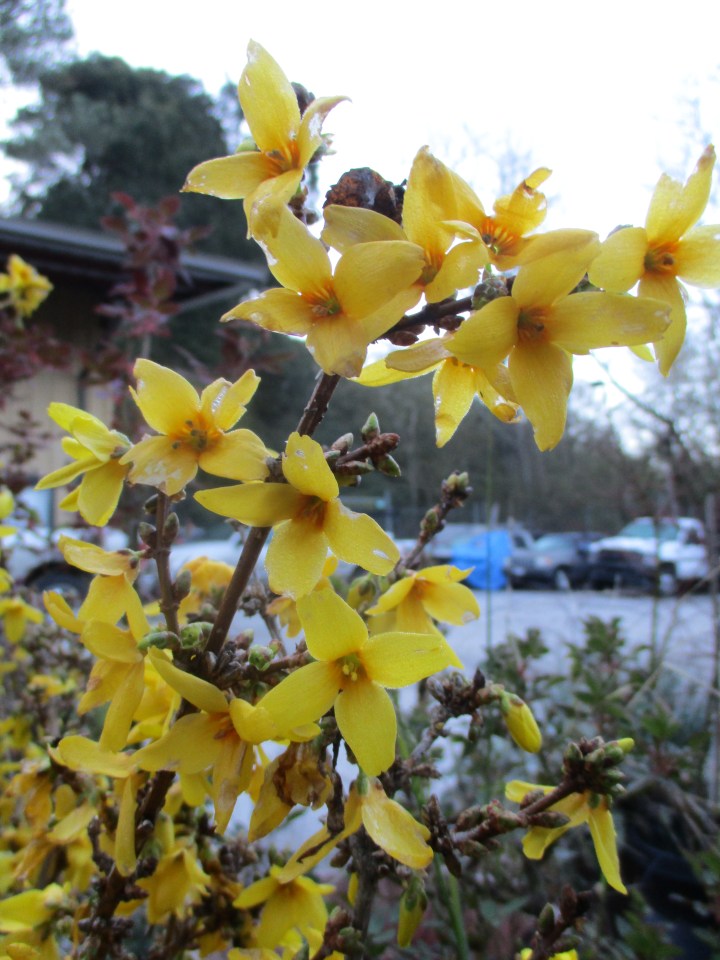
6. Another unassociated forsythia bloomed in the nursery at the shops early last year.4bd2

This is the link for Six on Saturday, for anyone else who would like to participate:

https://thepropagatorblog.wordpress.com/2017/09/18/six-on-saturday-a-participant-guide/
Six on Saturday: Cabin Fever


Seriously! The flu!, or something like it. I was totally sick for days, with an awful fever. As if that were not bad enough, it happened while I was supposed to be relaxing and on vacation!

Neither was planned. Getting sick never is. The vacation was a total surprise too; a Christmas gift from one of the guys at work! It was totally rad, even if I was sick for it.

You see, we work at one of the most excellent places in the entire universe, where people come from all over for restorative retreats. That by itself is totally rad. What is radder is that we can rent unused rooms or cabins for out-of-town guests or for ourselves if we like. It is very affordable, and like vacationing at work. That may not seem like much fun for those who do not enjoy their work like we do, but like I said, this is one of the most excellent places to work in the entire universe.

So, my colleague got me nine nights in what is classified as an ‘economy’ cabin, but by my standards was very luxurious. I had stayed in a smaller newly remodeled cabin for two nights, and a hotel like room for a night, but had done nothing like this; nine nights in secluded luxury! If one must get sick, this is the way to do it!

Anyway, this is where my six pictures for this week came from.

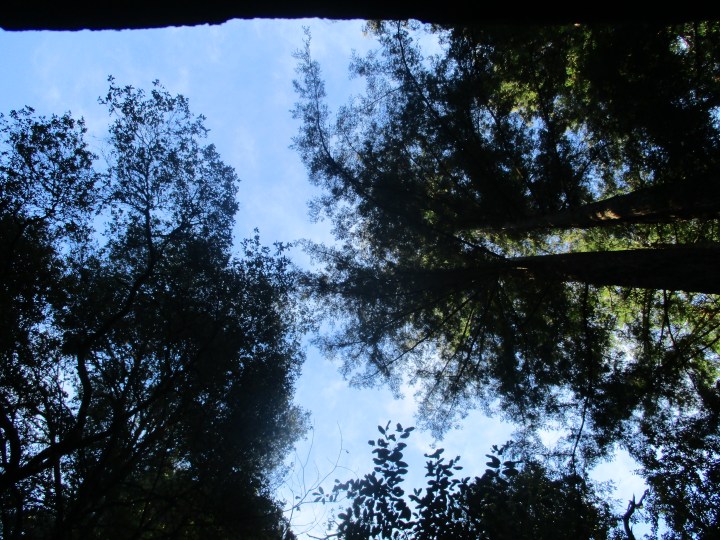
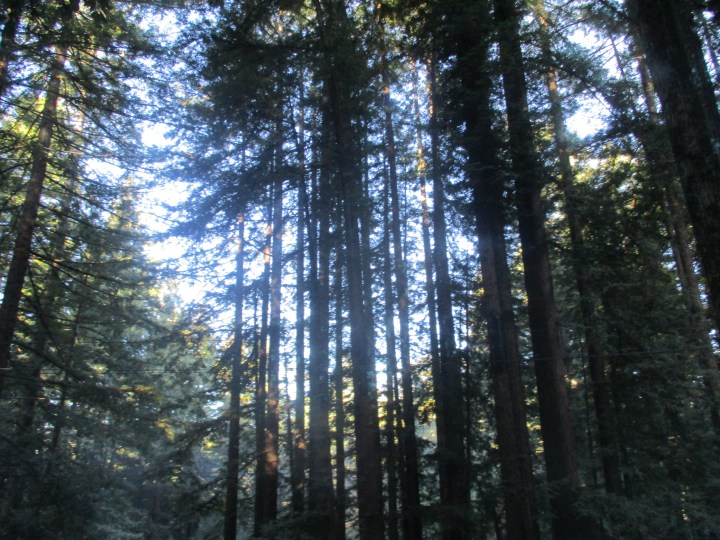
1. This is the upward view from the front door. The black margin at the top of the picture is the edge of the eave. The trees to the left are canyon live oaks and a tan oak. The trees to the right are towering coastal redwoods.p90105

2. This is the same spot. Instead of looking straight up, this is looking outward from the front door. There is no refined landscaping here; only the native trees with the exotic English ivy that is cascading slightly over the old stone wall.p90105+

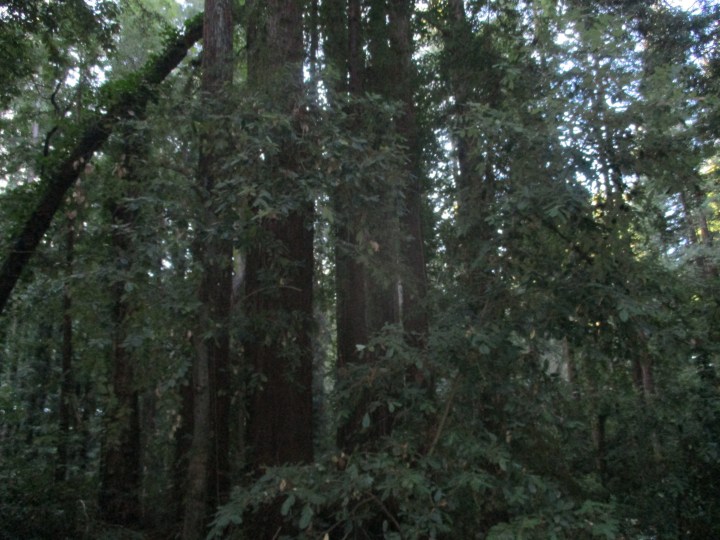
3. These towering coastal redwoods are outside a bedroom window.p90105++

4. These towering and somewhat darker coastal redwoods are outside the bathroom window.p90105+++

5. The artwork on the interior walls are mostly pictures of the local flora and wildlife. Most are rather artistic. Some are pictures of common but exotic flora that, although probably appealing to those who do not recognize them, are not the sort of subject matter that I would have selected. For example, one of the big framed photographs in the bedroom is a closeup of the summery foliage of London planetree, Platanus X acerifolia. Ick! I took this picture of three pictures that I found to be amusing. On the left, we have some interesting lichens and a bit of moss on what seems to be an apple tree. Okay. In the middle, we have foliage of California bay tree, Umbellularia californica. Odd, but again . . . okay. On the right, we have maces from the exotic sweetgum, Liquidambar styraciflua. Now, I would say that is weird, but it really is a cool picture!p90105++++

6. Rhody was not supposed to be on the bed.p90105+++++

This is the link for Six on Saturday, for anyone else who would like to participate:

https://thepropagatorblog.wordpress.com/2017/09/18/six-on-saturday-a-participant-guide/
Six on Saturday: Shrooms


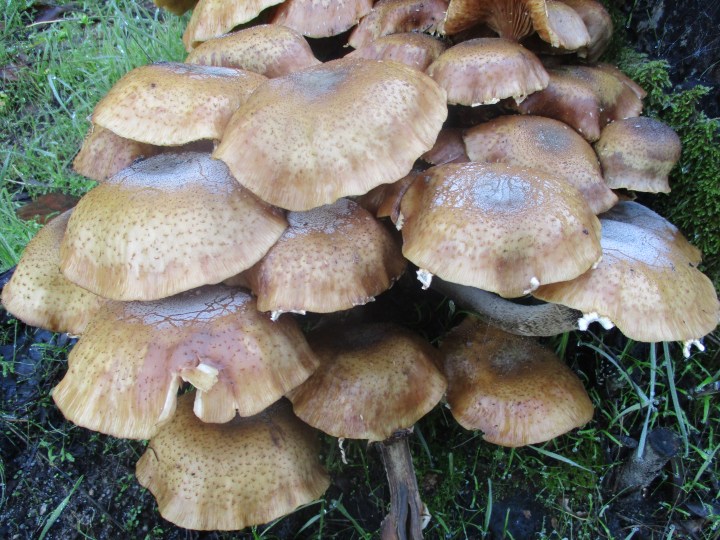
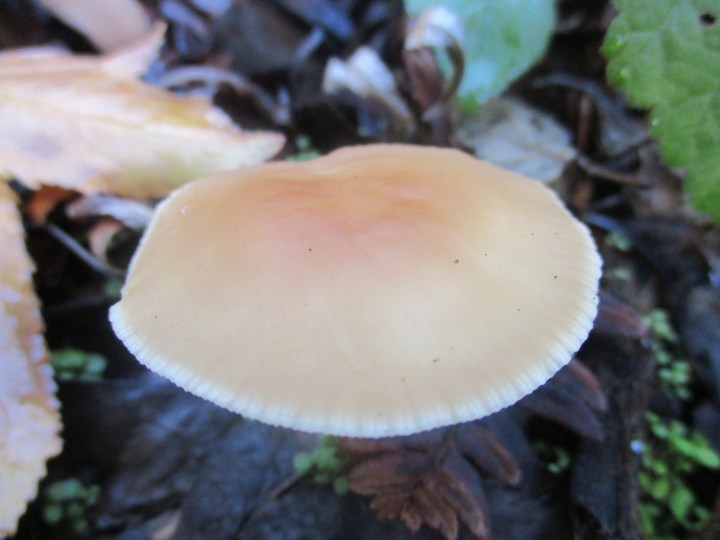
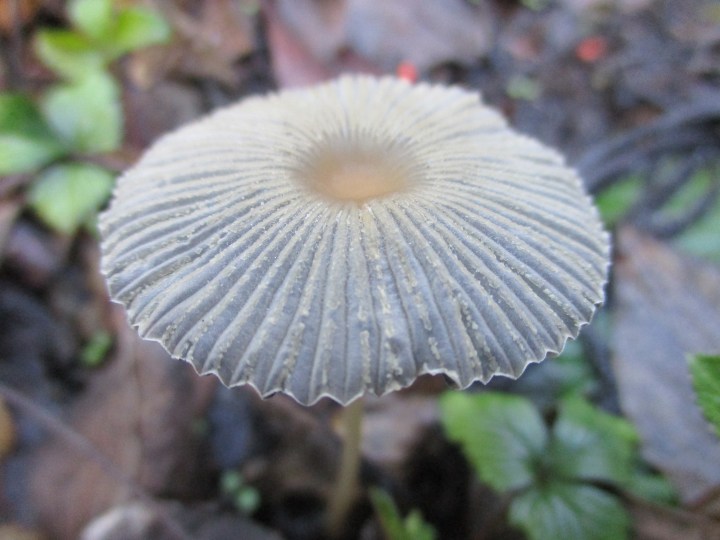
It is unlikely than any of these are related to ‘shrooms’ or ‘magic mushrooms’, the psychedelic mushrooms Psilocybe cubensis; but this is Santa Cruz County. I would not know one if I saw one. I think that #4 looks like pancake; and #6 looks like a strawberry. All except #1 were found within only a few feet of each other. They showed up immediately after the rain, in spot that had been dry all summer.

If #1 looks familiar, it is because it is the dreaded oak root rot fungus, Armillaria mellea. It was was at an adjacent building where another less developed colony of the same was featured in ‘The Humungous Fungus Among Us’, https://tonytomeo.com/2018/12/02/the-humongous-fungus-among-us/ . The colony that was featured earlier developed into mushrooms just like those shown here, but by the time these pictures were taken, had deteriorated into a sloppy puddle of chunky goo from a bad 1980s horror movie. It looked like someone ate a bucket of chocolate covered olives, and threw up. To make matters worse, the whole mess was shimmering with the squirming of maggots, and exuded an aroma that was appropriate to visual aspects of the situation. Wow! I am grossing myself out, and I experienced it already.

When I compare picture #1 of the more developed colony of oak root rot to the earlier picture of the less developed colony. I sort of wonder if some of these other pictures are redundant to each other. Could #4 be a more developed form of #3? Could #5 be the deteriorating phase of #2? Well, I don’t know. I am just a horticulturist, not a mycologist.

1.)81229

2.)81229+

3.)81229++

4.)81229+++

5.)81229++++

6.)81229+++++

This is the link for Six on Saturday, for anyone else who would like to participate:

https://thepropagatorblog.wordpress.com/2017/09/18/six-on-saturday-a-participant-guide/
Six on Saturday: Rain On My Parade


Actually, this rain ‘is’ the parade. In parts of California, we do not get much of it, so when rain happens, it is worth celebrating. Although this side of the Santa Cruz Mountains gets significantly more rainfall than the chaparral on the other side in the Santa Clara Valley, there are not many more rainy days here. What that means is that when it rains here, it does so with more volume than in the Santa Clara Valley.

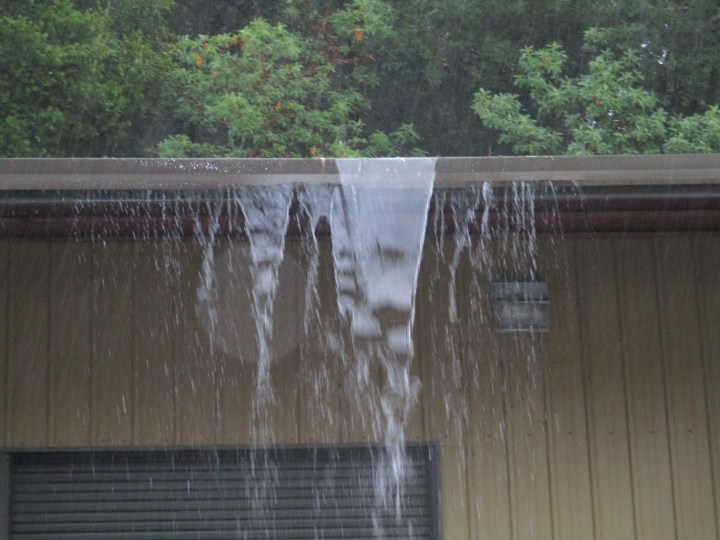
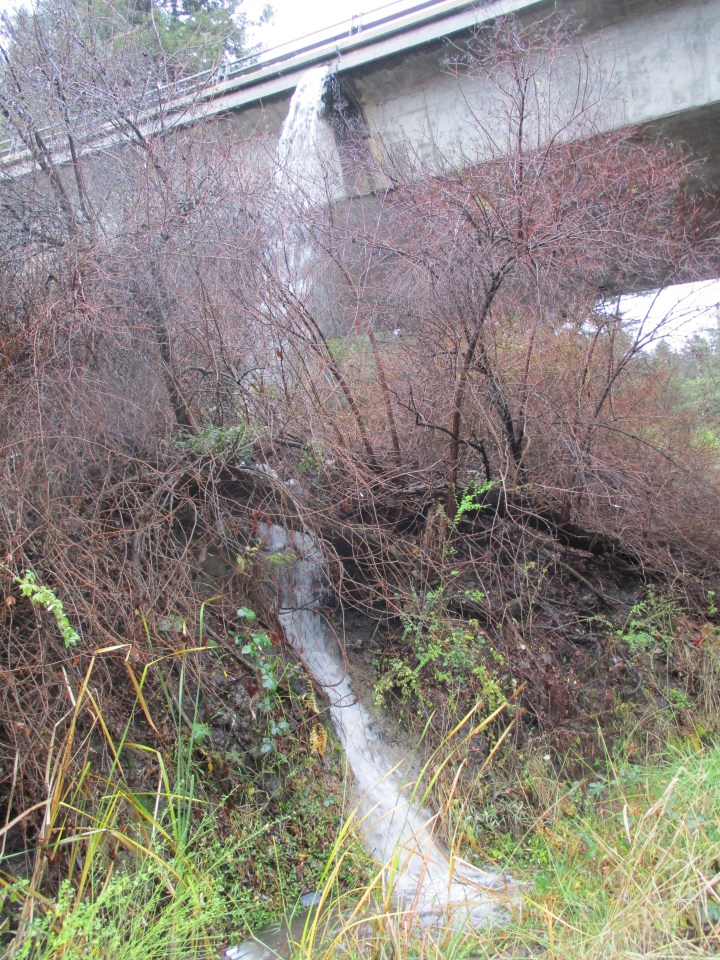
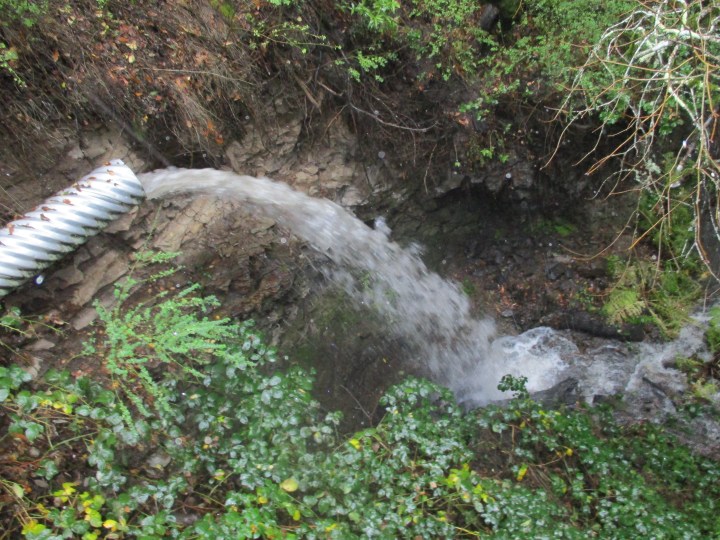
Rain is not easy to get pictures of. The first four picture just show water from one of our first major storms of the season. The fifth pictures does not even show that much. The sixth picture is from the most recent storm that came through Sunday night and finished on Monday morning.

1. This waterfall was flowing both through and over the deteriorated and also clogged gutter on the roof of the shop building across the driveway from the gardening shop at work. The gutter is so deteriorated that I would have expected all of the water to just flow through it. Incidentally, the big roll-up door to the lower left of the picture happens to be that of the plumbing shop.P81222

2. This waterfall was flowing through a storm drain on the Mount Hermon Road bridge over Zayante Creek, East Zayante Road, and the railroad tracks in between them.. This section of Mount Hermon Road is known to some as ‘the Bypass’ because it bypassed the older Conference Drive in picture #5. What is not visible in this picture is that the upper part of the waterfall lands in the ditch on the side of East Zayante Road below. It might have seemed like a good idea when the bridge was built, but so much water falls from so high up that it erodes the ditch, and splatters gravel onto cars driving by. The lower part of the waterfall flows into a ditch on the edge of the railroad tracks, and then under the tracks towards picture #3 below.P81222+

3. This waterfall was flowing out into Zayante Creek from a culvert just downhill from the culvert under the railroad tracks mentioned in #2 above. It is the same water that was falling from the Mount Hermon Road bridge.P81222++

4. These two waterfalls were flowing from the roofs of the local supermarket and adjacent drug store and pharmacy, and onto the newsstand below. What is disturbing about this picture is these drains are merely back up drains that do not allow the flat roofs surrounded by parapet walls to fill with too much water if the main drains get clogged. The main drains are likely at the rear of the building where they can drain discretely and out of the way. These back up drains are on the front of the building so that they get noticed if they start to flow. All this water flowing out of them indicates that the main drains are clogged, and that the roofs are flooded.P81222+++

5. This is the Conference Drive bridge over Zayante Creek, East Zayante Road, and the railroad tracks in between them. It is the bridge that was bypassed by the Mount Hermon Road bridge in picture #2. The big greenwaste pile where I dump debris from the landscapes is directly below the southern edge of this bridge, which is to the left in this picture. You can not see it in this picture that was taken before the rain started, but a bit of water drains from this bridge onto the greenwaste pile. It is not much, but it is enough to be a bother when I am unloading debris in the rain. It falls from so high up, that even if I am avoiding the spot where the falling water lands, the wind can blow it all over me. From that height, any bit of road gravel that falls with it can give me quite a sting.P81222++++

6. The most recent storm finished early Monday morning, after dropping two and a half inches of rain.P81222+++++

This is the link for Six on Saturday, for anyone else who would like to participate:

https://thepropagatorblog.wordpress.com/2017/09/18/six-on-saturday-a-participant-guide/

Six on Saturday: Deodar Cedar Migration


Deodar cedars that were featured in the gardening column about two weeks ago, https://tonytomeo.com/2018/11/27/deodar-cedar/ , live in a small grove adjacent to a building that I work out of. They need a bit of pruning for clearance from the roof, but are otherwise rather nice and healthy specimens.

They are also prolific. Quite a herd of seedlings is developing on the ground below. None of the individual seedlings are more than just a few years old, which suggests that the area was cleared of seedlings a few years ago. The area needs to be cleared of seedlings again, before they grow big enough to become a messy thicket.

Part of another landscape in another area happened to be in need of a few deodar cedars. There were two established specimens there already. They suit the situation so well that more are desired. However, new trees are expensive, and because there is no irrigation system in that particular site, they would need to be watered very regularly by hose until they get established.

Well, you can guess what happened. We pulled up several of the seedlings that needed to be pulled up anyway, and simply plugged them into the site where more deodar cedars are desired. It was done just prior to rain, so the relocated seedlings did not even need to be soaked in. They were pruned so that they would not desiccate so readily. We planted way more than necessary because there were plenty to spare, and also because we expect that several will not survive the process. We also expect that we will likely need to cut down a few later because, although some will not survive, too many probably will. Because they are just tiny seedlings, they will get established more efficiently than canned nursery stock, and will not be so sensitive to lapses of irrigation.

Although way more than necessary were relocated, they were not even a quarter of what was available in the original herd. More than three quarters of the herd remain available to be planted elsewhere. More will likely be relocated to other parts of other landscapes before the rainy season is half way finished. A few will be canned and put into the nursery. Whatever we do to them should be done in the early part of the rainy season to take advantage of the weather while they get established. We prefer to relocate the larger seedlings first, so that those that remain will be the smaller seedlings that will take longer to get too big to move if they must wait until next year to be relocated.

This is actually old technology, and how tree seedlings were pulled and plugged to enhance the production of woodlots since ancient history. While undesirable seedlings were pulled and discarded, more desirable seedlings that happened to be crowded around the parent trees were pulled up and plugged in more uniformly over a larger area.

1. seedlings in the ground below the parent treesP81215

2. parent treesP81215+

3. bundle of seedlingsP81215++

4. unpruned seedlingP81215+++

5. same seedling prunedP81215++++

6. seedling in new locationP81215+++++

This is the link for Six on Saturday, for anyone else who would like to participate:

https://thepropagatorblog.wordpress.com/2017/09/18/six-on-saturday-a-participant-guide/