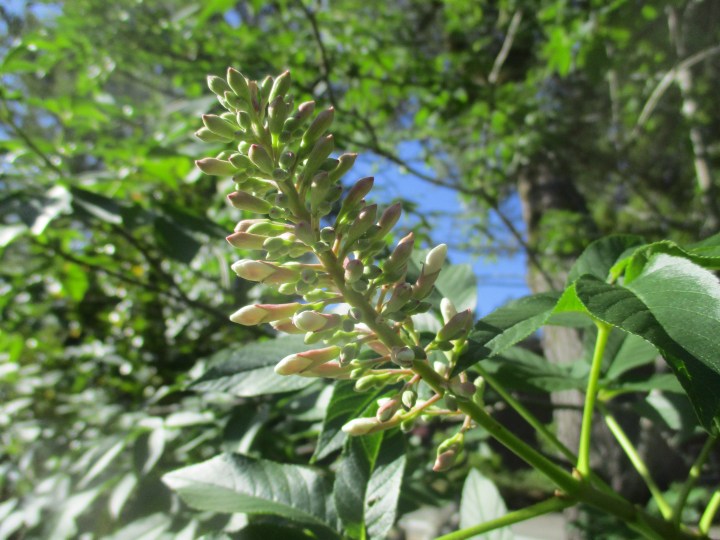
Ohio is the Buckeye State. The Ohio buckeye that is native there must be very special. Perhaps all other trees that are native to Ohio are just not very uninteresting. Whatever the situation, I sort of believe that the Ohio buckeye is more appealing in some regards than the California buckeye that is native here. However, the California buckeye might be more weirdly interesting.
The main reason that California buckeye is not popularly used in landscapes is that it is ‘twice deciduous’. That means exactly what it sounds like. Just like other deciduous trees, it defoliates in response to cooling autumn weather, and refoliates in response to warming spring weather. Unlike other deciduous trees, it repeats the process through the warmest weather of summer.
When summer weather gets too warm and arid, the foliage of California buckeye shrivels and sort of defoliates. Without rain to dislodge the shedding foliage, it can linger and look shabby for quite a while and maybe until it is replaced by secondary foliage that develops as the weather mellows. The secondary foliage does not last long before it is time to defoliate again for autumn!
California buckeye is not often planted into landscapes because it really does look like the living dead through summer. It provides no shade when shade is most desirable. Those that I work with are only here in the landscapes because they grew from self sown seed that sneaked in on its own. Some will be subordinated to more desirable adjacent trees, although there is no rush.
I happen to like California buckeye. Except for the rarely seen red horsechestnut, it is the only species of buckeye that I am familiar with. Bloom is neither colorful nor reliably profuse, but is delightfully fragrant in close proximity. Not many natives are fragrant.
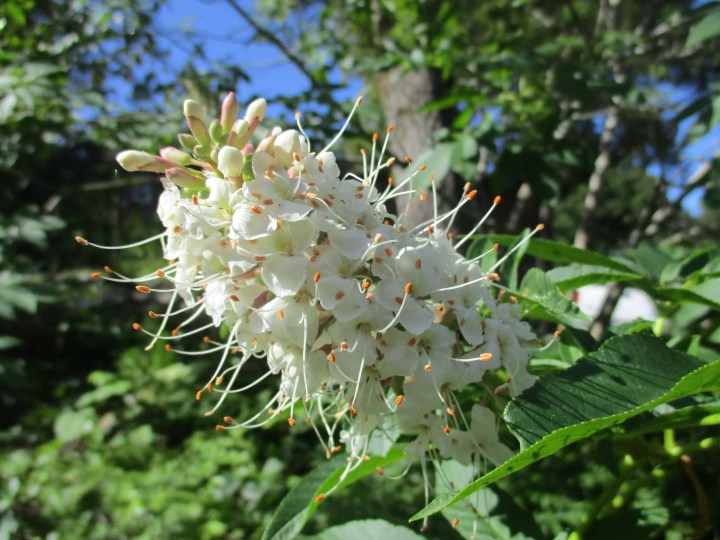
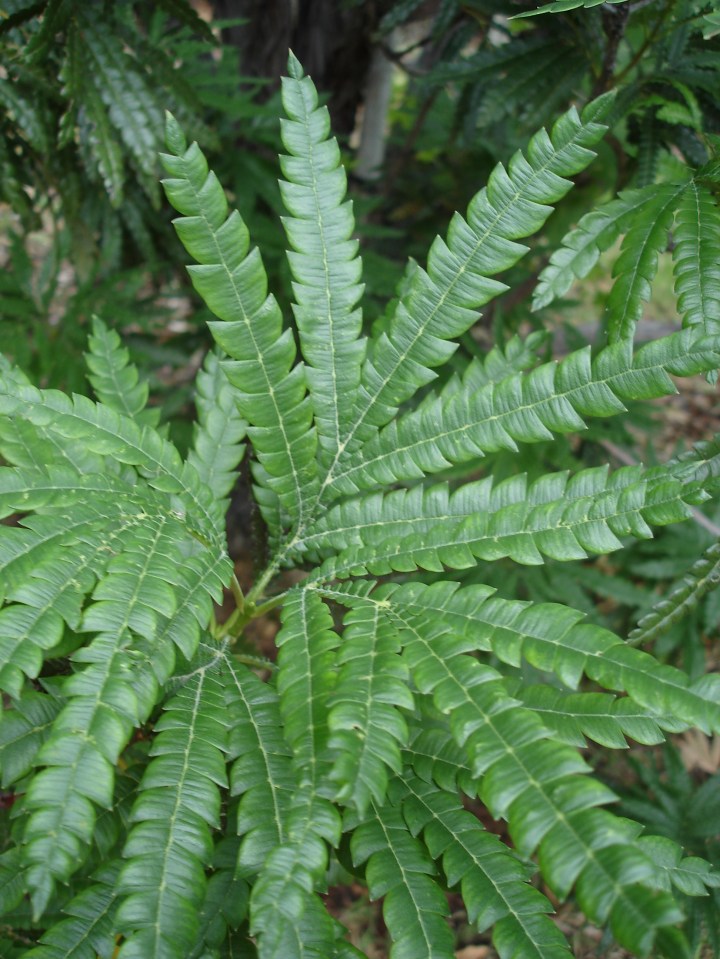 A few years ago, it was known as Santa Catalina Island ironwood. However, the rare subspecies native to Santa Catalina Island lacks the distinctively angular foliar lobes of the Santa Cruz Island ironwood, Lyonothamnus floribundus ‘aspleniifolius’. The evergreen compound leaves are about five inches long and four inches wide with three or five narrow leaflets, and look like chicken feet.
 Native plants should be the most sensible options for local landscapes and home gardens. It seems natural that they would be the most sustainable, since they survive in the wild without watering, soil amendment or fertilizer. Once established in landscapes, they should be satisfied with the moisture they get from annual rainfall. Plants that are not native are considerably more demanding.
 California poppies are like no other wildflower. They are so perfectly bright orange, and look almost synthetically uniform in profusion, as if painted onto coastal plains and hillsides. They may be a bit more yellowish in some regions, or a bit deeper orange in others, but they are always bright and strikingly uniform.
 Other species must be more interesting than what is native here. There are supposedly as many species of Trillium as there are of Yucca; forty-nine. All but ten are native to North America. The others are in eastern Asia. They are desirable and respected perennials to those who are familiar with them. White trillium is the official wildflower of Ohio, as well as the official floral emblem of Ontario. Ours would not likely qualify for such status.
 Gardening is unnatural. Yes; quite unnatural. So is landscaping. It all involves planting exotic plants from all over the World that would not otherwise be here, including many that are too extensively and unnaturally bred and hybridized to survive for long even in the natural ecosystems from which their ancestors were derived.
 This sort of weather pattern does not happen very often. Late spring is normally pleasantly warm, and the weather gets progressively warmer through summer, which typically includes a few unpleasantly warm days. It rarely gets too hot here, and when it does, it does not last for more than a few days, and tends to cool off at least somewhat at night. The air is normally arid. Humidity is uncommon in a chaparral climate.



 There really is a bearded iris that happens to be named ‘San Francisco’. It is related to ‘Los Angeles’, but not ‘San Jose’. (I really want to find a copy of ‘San Jose’ for my own garden!) Both ‘San Francisco’ and ‘Los Angeles’ are white with a slight blue highlight, and an even slighter reddish edge that is easy to miss. I can not remember which one of the two is whiter than the other, but the whiter one may lack the reddish edge altogether.
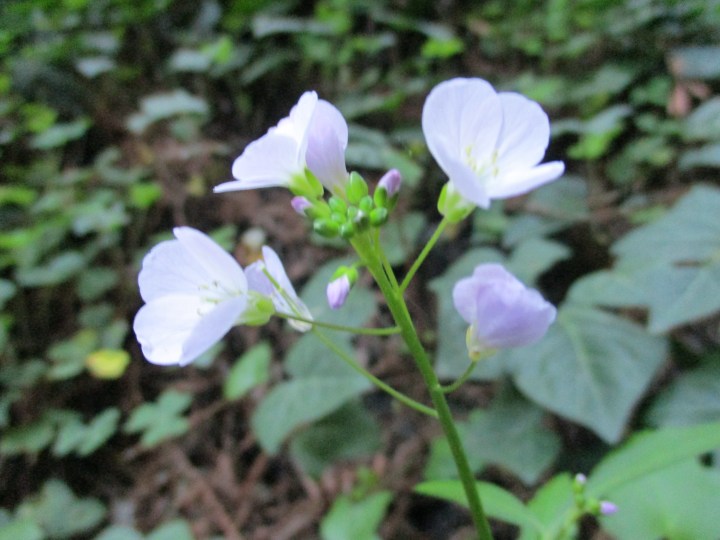 There are so many big trees in the Santa Cruz Mountains that keep most of us looking up. It is easy to miss much of the understory plants that grow on the forest floor.
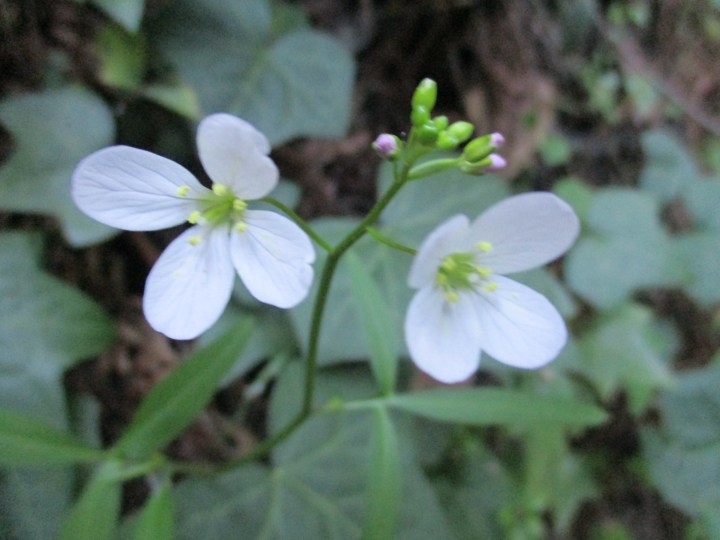 The flowers were not completely white. They were very pale hues of pink. The wood sorrel in the last picture was slightly more pinkish than the unidentified cruciferous (of the family Cruciferae) flowers of the first two pictures. Pale flowers, particularly those that seem to be adorned with barely perceptible patterns, are typically those that use infrared and ultraviolet color to attract pollinators that can see such color. If that was their intention, they would not look so bland to the pollinators whom they prefer to attract.
 Tony Tomeo