 Those of us who grew up with the old fashioned stone fruit orchards or vineyards might remember some of the traditional methods for protecting the ripening fruit from birds. Mulberry trees were grown on the corners of some orchards to keep birds well fed and less hungry for the ripe orchard fruit. Mulberry cultivars were selected to ripen just prior to the fruit within the particular orchards.
The trees were not there to produce fruit to be harvested like the fruit within the orchards was. Most, but not all of what the birds did not consume fell to the ground and rotted. Only small quantities of the overly abundant fruit was taken by a few neighbors who made jam or syrup with with it. Mulberries were a byproduct of the orchards that some put to good use just because it was available.
Decades ago, it was much easier to get a bit of fruit from neglected or naturalized fruit trees in rural regions and on roadsides without offending anyone. Isolated remnants of the old fruit orchards were common. American plum, which had been used as understock for orchard trees, had naturalized in some regions. For those daring enough to harvest them, so had Himalayan blackberry.
Even now, we can find a bit of fruit where do not expect it to be. A few plants that are grown more for their visual appeal can be surprisingly generous with their fruit production. Pineapple guava, which is now popularly grown as a simple evergreen hedge, used to be grown instead for its small tart guavas. Purple leaf plum, as it matures, may not be quite as fruitless as it is purported to be.
The difficulty with the more unfamiliar types of fruit is finding practical uses for it. The native blue elderberry makes excellent jelly or syrup, like black elderberry, but not many of us even know it is edible once cooked. Australian brush cherry, strawberry tree, English hawthorn and ‘Majestic Beauty’ Indian hawthorn, are never overly productive, but might sometimes make enough fruit for jelly.
Of course, no unfamiliar fruit or nut should be eaten prior to confirmation that it is safe for consumption.
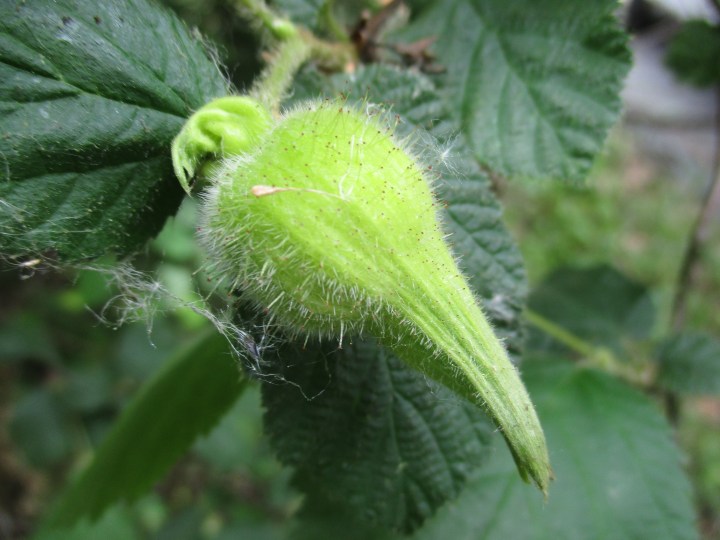 Not just any nuts, but precisely the sort that I recently discussed with a colleague, as I explained how they do not grow here. The nuts that is. The big thicket forming shrubs that are supposed to produce them not only grow here, but are a relatively common native. I just rarely see even a single nut on them. I sort of wondered how they mange to procreate with such rare seeds that invariably get taken by unconcerned rodents or birds.
 It is no more in season now than the other stone fruits like apricot, cherry, plum and such, but this is the time of year that almond, Prunus dulcis, needs work. Established trees get pruned while bare and dormant. New trees, preferably bare root, get planted. The most popular modern cultivars available are self pollinating, and labeled as such. Old traditional cultivars require pollinators.
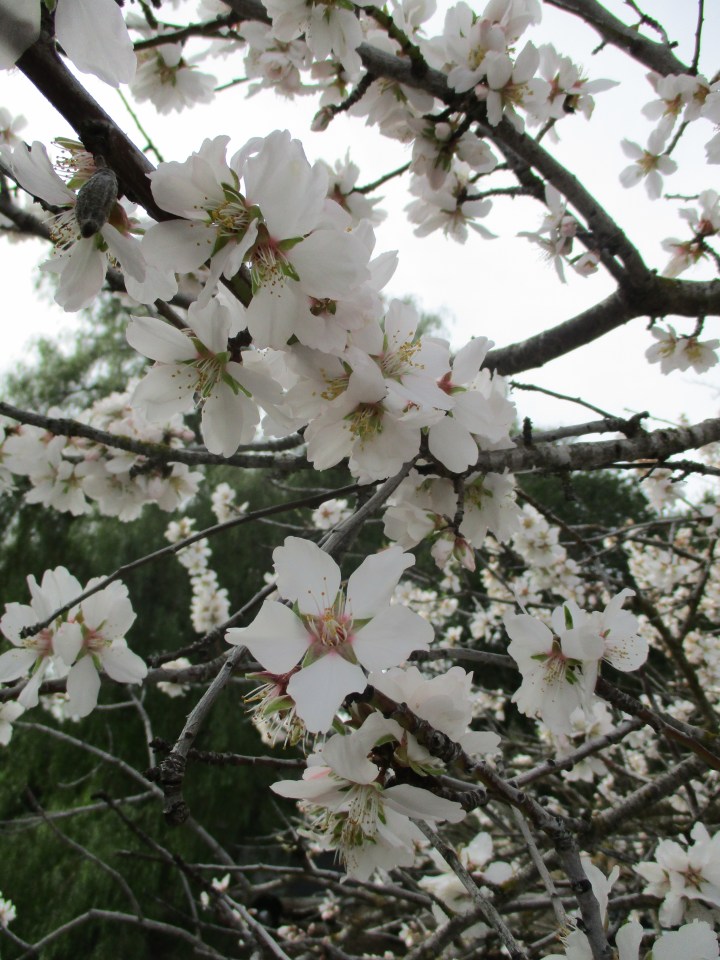 It is known more as a small to mid-sized shade tree that produces edible nuts, but almond, Prunus dulcis, also blooms magnificently as soon as the weather allows. Actually, it often blooms a bit earlier than it should. Nut production can be ruined if rain dislodges blossoms or developing nuts. The profuse white flowers are small but slightly larger than those of other related stone fruit trees.
 Tony Tomeo