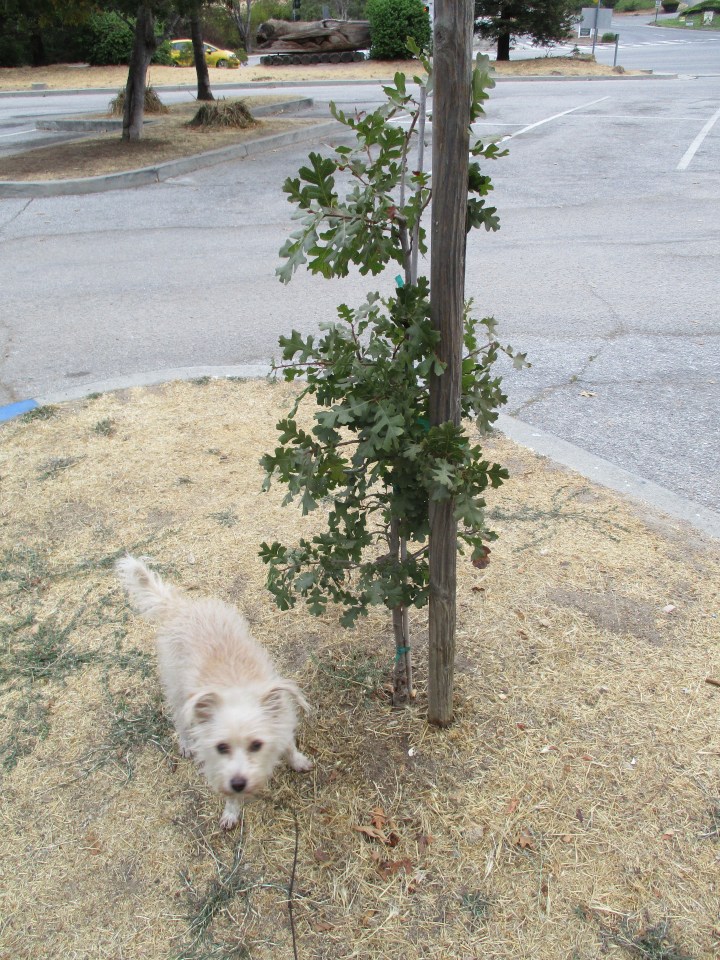
 “ . . . others illegally planting whatever they wish . . . illegally.” Someone actually said that about the installation of our little Memorial Tree in Felton Covered Bridge Park. It was within the context of a review of the Park on Facebook, written by someone who has not stopped complaining about Felton since she moved here. It was forwarded to me quite some time ago by someone who documents and files such information that is relevant to hate crimes, and what is now known as ‘hate speech’, which is another completely different topic that we can not get involved with here.
Technically, it is accurate. The tree was planted without a permit, and does not comply with the standards of Santa Cruz County Parks. Compliance would have been quite an expensive imposition. It would have required an expensive #15 (15 gallon) tree, outfitted with lodgepole stakes and straps. The overworked gardener would have needed to take time from his busy schedule to install it. Because the irrigation system to the site is now defunct, the gardener would have needed to irrigate the tree until it got established. It was easier, much less expensive, more horticulturally correct, and socially responsible for us install the tree and maintain it on our own. Call 911 if you must.
There are of course reasons why we should not plant trees or other plant material in parks and public places. We do not want to make more work for gardeners, interfere with the landscape plan, or add plants that are inappropriate to the situation. This Memorial Tree happened to have been planted with the supervision of a horticulturist and arborist (me), on the exact spot where another oak that was installed with the original landscape had been knocked down by a car. Otherwise, in most places in Felton Covered Park, vegetation management, including the removal of large volumes of biomass and invasive exotic specie, should be the priority. (Unfortunately, the overgrowth of invasive exotics is mostly within a protected environmentally sensitive riparian zone.)
The little Memorial Tree has quite a history, even though it is still a baby. I do not want to post links to all the other updates about it, but I can post this link to another article that contains another link to others . . . Oh, you can figure it out if you like: https://tonytomeo.com/2018/04/15/memorial-tree-update-to-the-updated-update-etc-the-sequel-to-all-those-other-sequels/ .
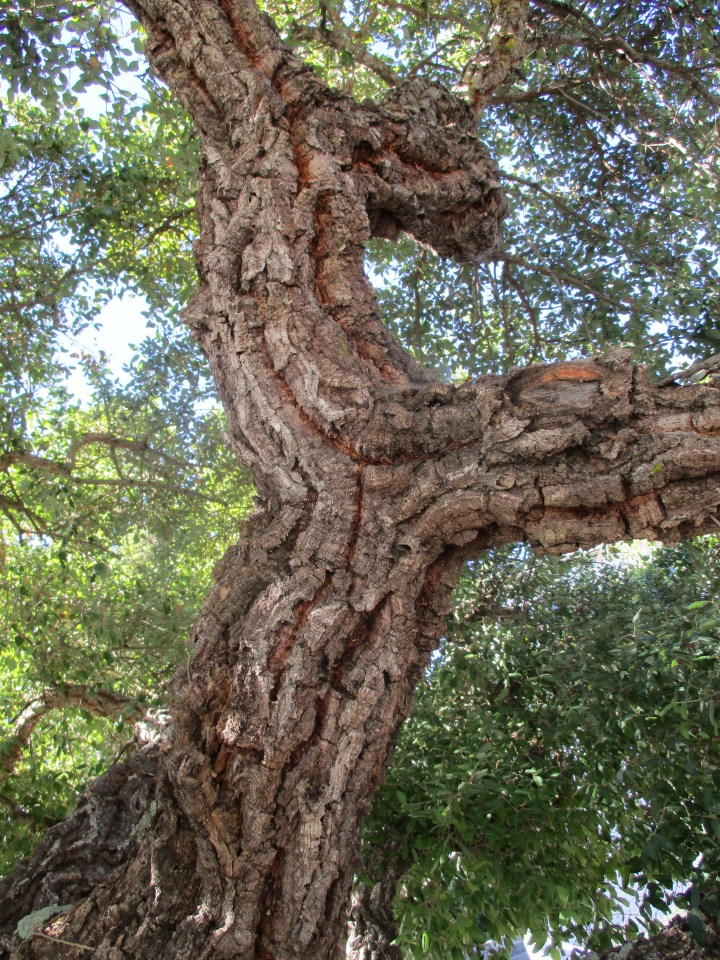 Like redwoods, the cork oak, Quercus suber, is a ‘pyrophyte’, which means that it survives forest fires that burn off competing vegetation. The trunks and main limbs are insulated with a very thick bark. Only the foliage and smaller stems burn off. After a fire, the upper limbs of cork oak regenerate new foliage while other less fortunate plants start over from their roots or seed at ground level.
