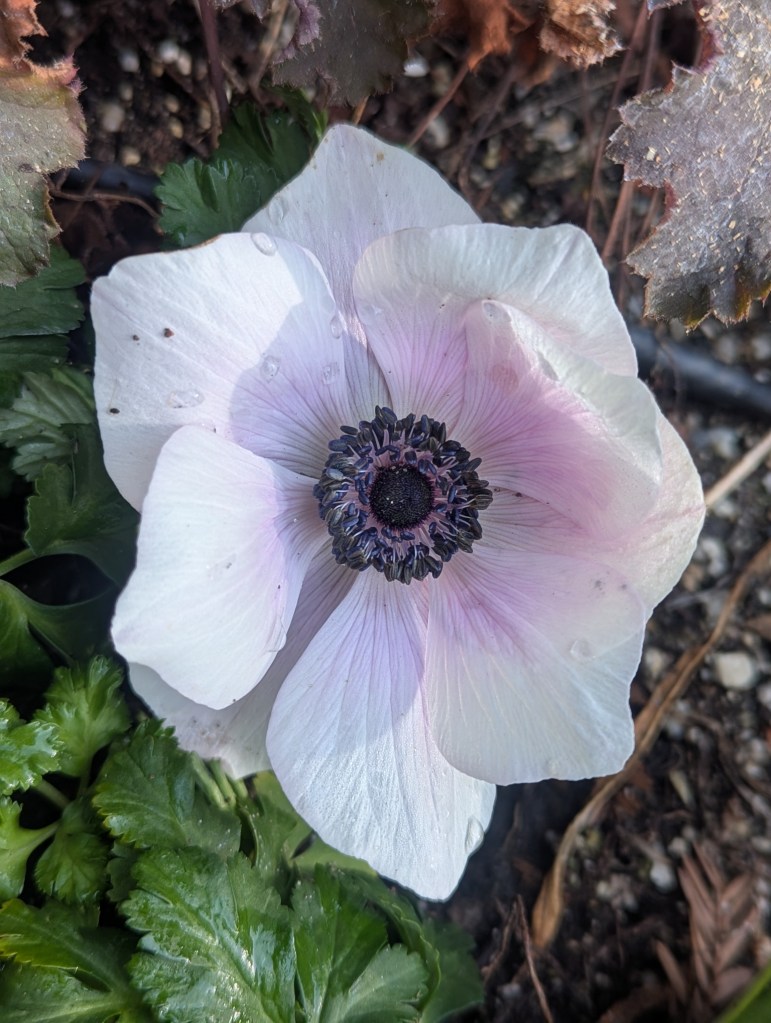
This is not a typical warm season annual. Nor is it a typical cool season annual. Actually, there really is nothing typical about Anemone, Anemone coronaria. It is a spring bulb that is really a tuber that goes into the ground in autumn. Yet, it is more available blooming in four inch pots in spring. It functions as a spring annual because it blooms as winter ends.
Anemone are quite diminutive. Basal rosettes of only a few deeply lobed leaves are less than eight inches tall. Flowers of taller sorts stand above their foliage, but less than a foot high. They can bloom between March and May. Nursery stock blooms earlier than plants that grow from bulbs in a garden. Growth eventually slows as weather warms in summer.
Floral color ranges through red, white, blue, pink and purple. Flowers mostly have black centers. White flowers may have green centers. Some varieties bloom with semi-double or double flowers, or flowers with two colors. Most flowers are about three inches wide or slightly wider. Anemones are good cut flowers; but cutting deprives the garden of bloom.
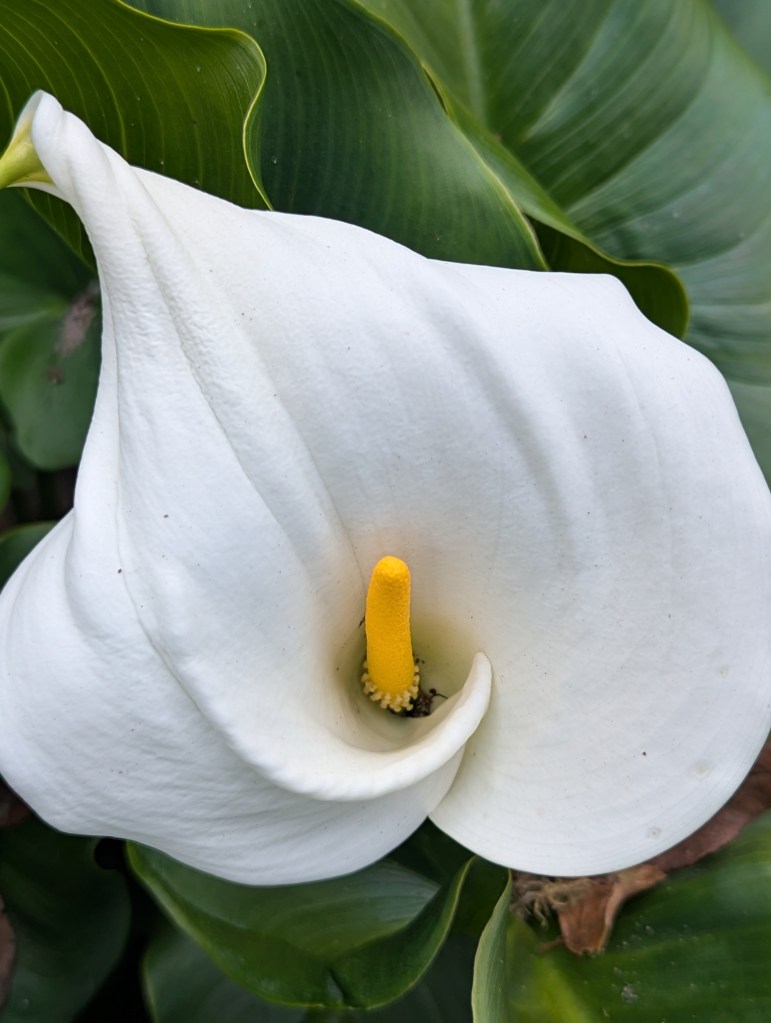
With few exceptions, common calla, Zantedeschia aethiopica, blooms exclusively white. ‘Green Goddess’ blooms with green stripes on bigger and more open blooms. ‘Pink Mist’ blooms with a pale pink blush at the bases of its blooms. More colorful summer calla are Zantedeschia elliotiana, which is a different species. Cultivars of common calla are rare.
Calla is an herbaceous perennial that grows from thick rhizomes. It can be invasive, and difficult to eradicate once it gets established. Its basal leaves stand two or three feet high or a bit higher if shaded. More than the lower half of their height is petiole. The upper leaf portion is broad and arrow shaped. All growth is rather spongy and soft, and tears easily.
Callas bloom mostly sporadically for spring, summer and autumn. Mature colonies often bloom with more profuse phases. New rhizomes do not bloom for a few months, though. Individual blooms consist of a solitary flaring spathe surrounding a spike shaped spadix. Compressed flowers adhere tightly to the yellow spadix. Callas are splendid cut flowers.
Spring bulbs go into their gardens through autumn because they enjoy the chill of winter. Summer bulbs do not. They instead prefer to wait until after the coolest of winter weather. If they start too early, some might decay in cool and damp soil before they begin to grow. Some may grow while the weather is warm only to incur damage from later cool weather.
However, they should not wait for too long. Summer bulbs dislike winter but enjoy spring. Those that start about now will be ready for it. By the time their new growth emerges from the soil, there will be no concern of frost. Although most generate only vegetative growth through spring, they bloom for summer. Many continue until frost or the following autumn.
Summer bulbs, like spring bulbs, are merely dormant perennials. Only a few are actually bulbs, though. Most are corms, rhizomes or tubers. They produce new foliage and bloom while the weather is warm. Then, they go dormant as the weather cools for the following autumn or winter. Once in the garden, several types can stay and perpetuate indefinitely.
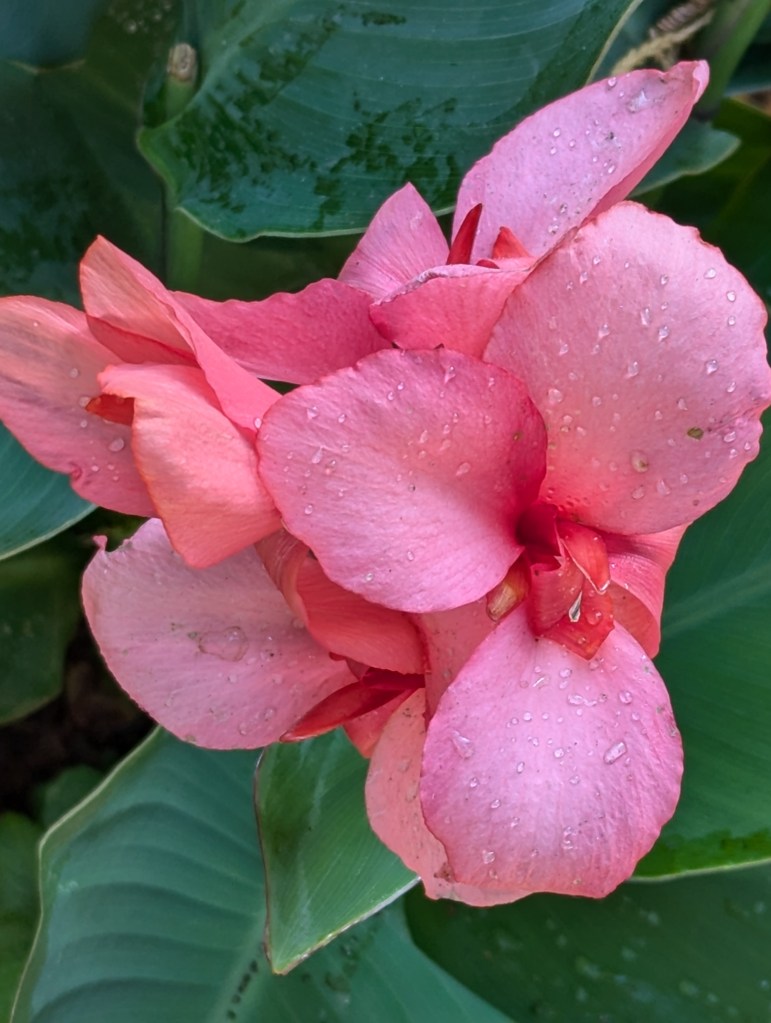
For example, new canna rhizomes might rot if they go into the garden too early in winter. However, after their first summer, they can survive in the garden through their next winter. Dahlias might also survive winter dormancy in the garden. However, they are more likely to survive if dug and stored for winter. Their tubers might return to the garden about now.
Summer bulbs that are actually bulbs or corms, such as gladiolus, generally bloom once. Dahlias grow from tubers, so bloom for a more extensive season. Summer bulbs that are rhizomes, such as gingers, may bloom once or sporadically. Gingers and crocosmia can eventually become invasive. However, gladiolus is rarely as sustainable as it should be.
Summer bulbs become available from nurseries as it becomes time to plant them. Some are available now, and more will become available as their season progresses. Dahlias, cannas and callas should be available growing in pots after early spring. Summer bulbs that proliferate a bit too much are easy to share. Many propagate very easily by division. Most perform as well within large pots and planters as they do in the soil.
The thick clumps of evergreen grass-like foliage of mondo grass, Ophiopogon japonicas, make a nice lumpy ground cover for small spaces. Because it is rather tolerant of shade, and actually prefers partial shade to full sun, it works nicely under Japanese maples or highly branched overgrown rhododendrons. It gets only about half a foot deep. Narrow stems with small pale purplish blue flowers that bloom in summer are not too abundant, and are generally obscured below the foliage, but can actually get taller. ‘Silver Mist’ is variegated with white.
New plants are easily produced by division of large clumps. Overgrown or tired looking clumps can be shorn down at the end of winter, before new growth begins. Slugs and snails can be problematic.
Candelabra tree resembles cacti, but is not related.
The weirdly sculptural succulent stems of candelabra tree, Euphorbia ingens, dark green but devoid of any real foliage, are striking in the right situation. These stems resemble those of unrelated cactus, with longitudinal ridges topped with spines. Although botanically interesting, the minute greenish yellow flowers that bloom in autumn and winter on the ridges of the upper portions of the upper segments are not much to look at. Deep red seed capsules that turn purple as they ripen sometimes develop in milder climates after the flowers are gone, but are almost never seen locally. Good exposure is preferred. Candelabra tree are better structured and more prominent standing alone away from other larger trees and shrubs. Cool winters and occasional frosts limit their height to not much more than fifteen feet; and unusually cold frost can actually kill big specimens back severely. However, in sheltered areas and milder climates, candelabra tree can get twice as tall. Soil should drain very well and get dry between watering. Regular watering can cause rot, particularly in dense or rich soil. The main problem with candelabra tree is the remarkably caustic latex sap, which can be dangerous to children, chewing dogs or even those who need to prune the stems. Fortunately, candelabra tree needs very little attention, and only needs to be pruned where the stems get in the way or start to lean against fences or roofs. The caustic sap prevents insect problems.
Some of the most familiar flowers to bloom in the earliest of spring get planted now as bulbs. They sit and wait in the garden to finish their dormancy, perhaps get a bit of a chill through winter, and get an early start to their bloom cycles as soon as weather permits. Because winters are so mild here in the Santa Clara Valley, some do not even bother to wait for spring, but are instead happy to start bloom before winter ends.
Bulbs become available in nurseries when they can be planted. Those that are not available yet will become available when it is time to plant them for later spring or summer bloom. The first to become available are generally the first to bloom; although bearded iris seem to know when they want to bloom, regardless of when they get planted.
As long as they do not get stored too long or get planted too late, bulbs do not need to be planted immediately, and actually extend their performance if planted in phases. The earliest phases to get planted will bloom earliest. Phases of the same bulbs planted a few or many days later should bloom about the same amount of time later.
With proper planning, later phases bloom as earlier phases finish. For example, because crocus flowers do not last very long, different phases of bulbs can be planted only a few days or a week apart, so that more flowers start to bloom in time for earlier flowers to fade. Freesia flowers last a bit longer, so different phases can be planted two weeks or so apart.
Narcissus and daffodil bulbs are not so discriminating about how deeply they get planted, so various phases can be put in the same spots. As long as they do not get planted too deep, the earliest phases can be planted deep and covered with only a bit of soil, so that later phases can be planted above. If similarly covered with only a shallow bit of soil, later phases of the same bulbs can be stacked, as long as the last and shallowest phase still gets planted deep enough.
Not many bulbs are actually real bulbs. Most are corms, tubers, rhizomes or tuberous roots. They all do the same thing though; store resources through dormancy to sustain quick bloom as weather allows. Although many bloom reliably only once in their first season, some naturalize to bloom at about the same time each year. Tulips are capable of naturalizing, but rarely get enough chill in winter to bloom after their first season.
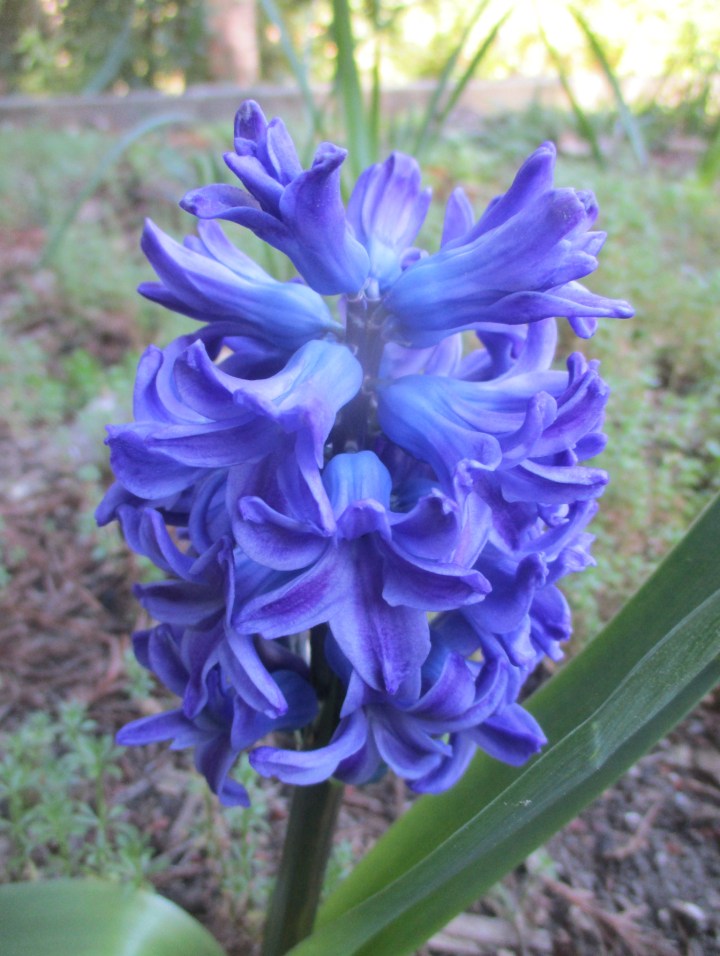
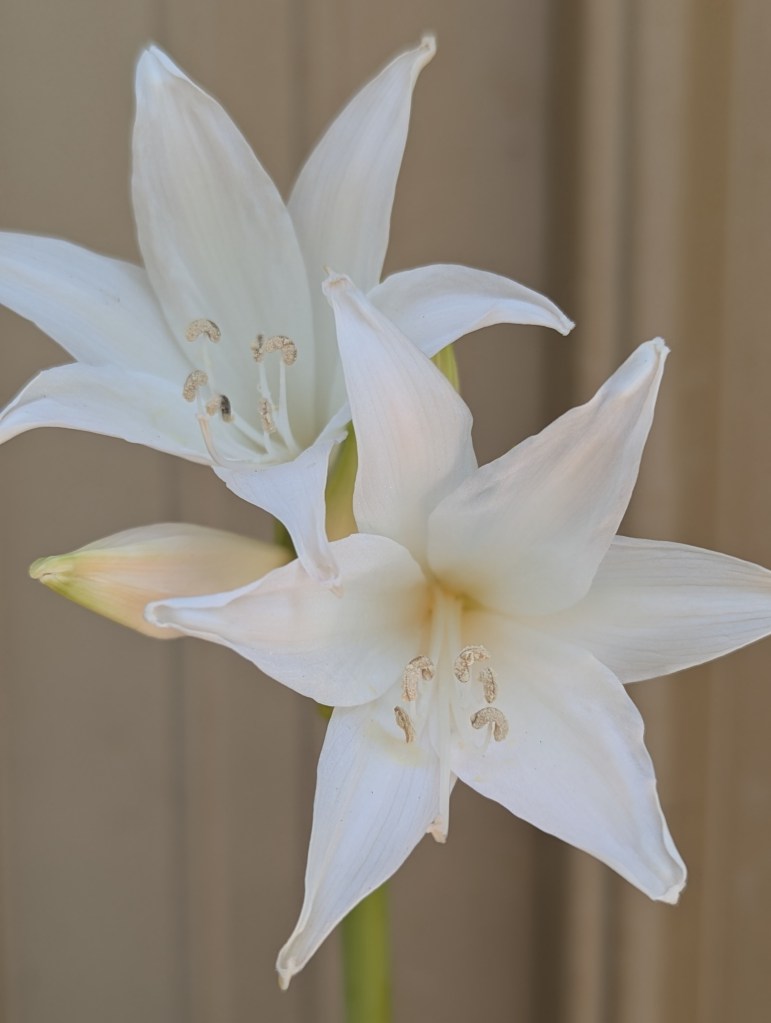
Anemone (windflower), hyacinth, lily, rananculus, tulip and small colorful callas are the less reliable of spring bulbs after their first year. Crocus, freesia, hymenocallis and harlequin flower can be more reliable if they get what they want. Grape hyacinth, narcissus, daffodil, watsonia, bearded iris and the old fashioned white callas are the most reliable of bulbs that get planted about now.
Once it gets established in a garden, it will likely always thrive there. Torch lily, Kniphofia uvaria, is as reliable and resilient as lily of the Nile and African iris. It is as easy to divide for propagation too. Mature specimens can survive without any more water than they get from annual rainfall. They might appreciate some through the middle of summer, though.
Old fashioned torch lily blooms for summer or early autumn, so some are blooming now. Modern cultivars are more likely to bloom earlier. Densely conical floral trusses suspend many narrow and tubular flowers. They stand as high as five feet on otherwise bare floral stalks. Dense mounds of grassy basal foliage should grow no more than three feet high.
Flower buds are orange as they begin to bloom, and then fade with age to pastel yellow. Because floral spikes bloom upwards from the bottom, they turn yellow at the base while orange on top. They resemble candy corn. Some cultivars are paler white at the base, or more reddish orange at the tip. Others are uniformly orange, yellow or soft creamy white.
Wax begonia, Begonia X semperflorens–cultorum, exemplifies simplicity. Its floral color is white, pink or red. Its foliage is green, bronze or dark bronze. Each floral color combines with each foliar color for a total of only nine combinations. That must be enough, though. Variants of these nine simple options, including some with fluffier double bloom, are rare.
Wax begonia is most familiar as a common warm season annual. However, it is probably at least as popular as a cool season annual. Actually though, it is a short term perennial. Except for during the coolest winter weather, established specimens may bloom all year. After minor frost damage, most regenerate efficiently. They need only minimal grooming.
Mature wax begonia should not grow any higher or wider than a foot. As bedding plants, they blend together. Individually, they develop densely ovoid form. Flowers are small but abundant. Foliage and stems are succulent, with a waxy sheen. New plants grow easily from cuttings or division. Wax begonia prefers rich medium and very consistent watering. A bit of partial shade should be no problem, but a bit too much can inhibit bloom.
From scarcely exposed tops of seemingly dead bulbs, floral stalks unexpectedly appear. Foliage only appears after bloom finishes. This is why Amaryllis belladonna is known as naked lady. It blooms unfoliated. Various varieties of the same species bloom with about the same vivid pink color. White variants are very rare. Floral fragrance is mild but sweet.
Naked lady flowers are about two feet tall on simple brown or green stalks. Fleshy seeds that develop after bloom are viable only while fresh and plump. Foliage begins to appear by later summer, and grows more with autumn rain. It resembles foliage of lily of the Nile, but is more fragile, and shrivels by late spring. Then, bulbs lay dormant through summer.
Naked lady bulbs are impressively resilient, but also quite sensitive. If possible, the best time to relocate them is supposedly between bloom and foliation. However, relocation is likely easiest during complete summer dormancy. Unfortunately, though, such relocation can interfere with subsequent bloom. Naked lady needs full sun exposure to bloom well, but requires no water.




 Tony Tomeo