Autumn Planting Of Spring Bulbs

Spring bulbs start now.

Some of the most familiar flowers to bloom in the earliest of spring get planted now as bulbs. They sit and wait in the garden to finish their dormancy, perhaps get a bit of a chill through winter, and get an early start to their bloom cycles as soon as weather permits. Because winters are so mild here in the Santa Clara Valley, some do not even bother to wait for spring, but are instead happy to start bloom before winter ends.

Bulbs become available in nurseries when they can be planted. Those that are not available yet will become available when it is time to plant them for later spring or summer bloom. The first to become available are generally the first to bloom; although bearded iris seem to know when they want to bloom, regardless of when they get planted.

As long as they do not get stored too long or get planted too late, bulbs do not need to be planted immediately, and actually extend their performance if planted in phases. The earliest phases to get planted will bloom earliest. Phases of the same bulbs planted a few or many days later should bloom about the same amount of time later.

With proper planning, later phases bloom as earlier phases finish. For example, because crocus flowers do not last very long, different phases of bulbs can be planted only a few days or a week apart, so that more flowers start to bloom in time for earlier flowers to fade. Freesia flowers last a bit longer, so different phases can be planted two weeks or so apart.

Narcissus and daffodil bulbs are not so discriminating about how deeply they get planted, so various phases can be put in the same spots. As long as they do not get planted too deep, the earliest phases can be planted deep and covered with only a bit of soil, so that later phases can be planted above. If similarly covered with only a shallow bit of soil, later phases of the same bulbs can be stacked, as long as the last and shallowest phase still gets planted deep enough.

Not many bulbs are actually real bulbs. Most are corms, tubers, rhizomes or tuberous roots. They all do the same thing though; store resources through dormancy to sustain quick bloom as weather allows. Although many bloom reliably only once in their first season, some naturalize to bloom at about the same time each year. Tulips are capable of naturalizing, but rarely get enough chill in winter to bloom after their first season.

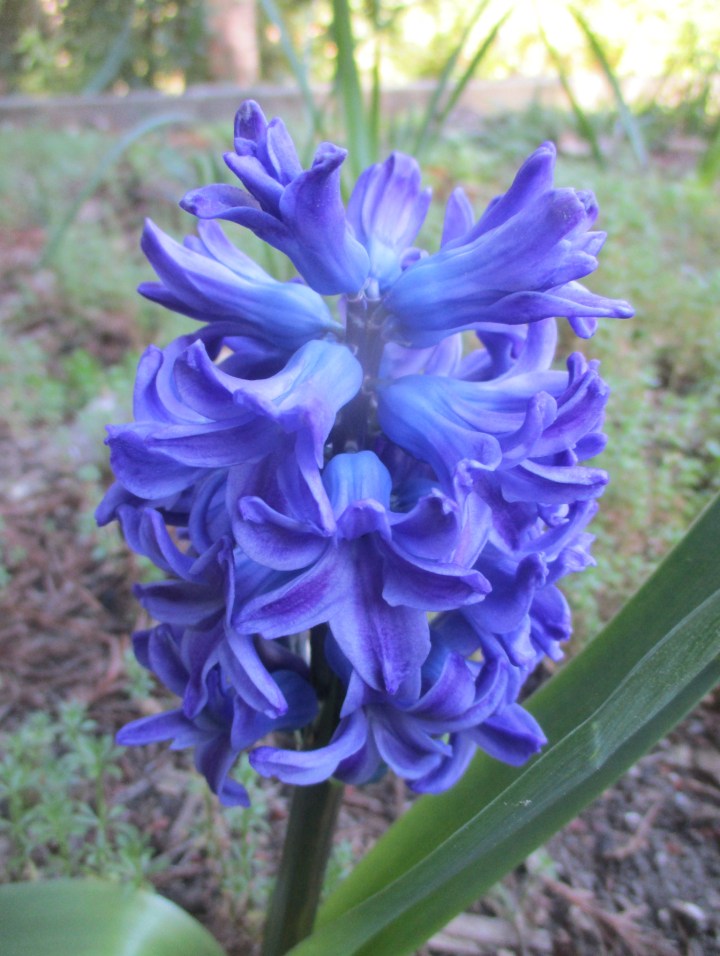
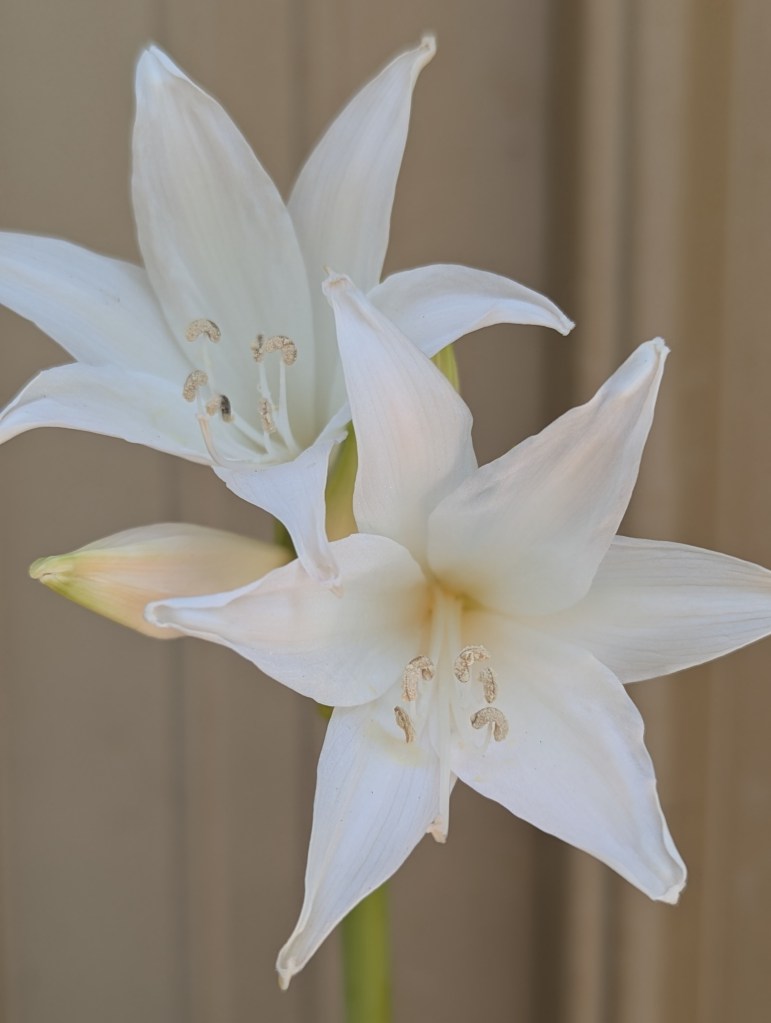
Anemone (windflower), hyacinth, lily, rananculus, tulip and small colorful callas are the less reliable of spring bulbs after their first year. Crocus, freesia, hymenocallis and harlequin flower can be more reliable if they get what they want. Grape hyacinth, narcissus, daffodil, watsonia, bearded iris and the old fashioned white callas are the most reliable of bulbs that get planted about now.

Torch Lily

Torch lily might still be blooming.

Once it gets established in a garden, it will likely always thrive there. Torch lily, Kniphofia uvaria, is as reliable and resilient as lily of the Nile and African iris. It is as easy to divide for propagation too. Mature specimens can survive without any more water than they get from annual rainfall. They might appreciate some through the middle of summer, though.

Old fashioned torch lily blooms for summer or early autumn, so some are blooming now. Modern cultivars are more likely to bloom earlier. Densely conical floral trusses suspend many narrow and tubular flowers. They stand as high as five feet on otherwise bare floral stalks. Dense mounds of grassy basal foliage should grow no more than three feet high.

Flower buds are orange as they begin to bloom, and then fade with age to pastel yellow. Because floral spikes bloom upwards from the bottom, they turn yellow at the base while orange on top. They resemble candy corn. Some cultivars are paler white at the base, or more reddish orange at the tip. Others are uniformly orange, yellow or soft creamy white.

Wax Begonia

Wax begonia is actually a perennial.

Wax begonia, Begonia X semperflorenscultorum, exemplifies simplicity. Its floral color is white, pink or red. Its foliage is green, bronze or dark bronze. Each floral color combines with each foliar color for a total of only nine combinations. That must be enough, though. Variants of these nine simple options, including some with fluffier double bloom, are rare.

Wax begonia is most familiar as a common warm season annual. However, it is probably at least as popular as a cool season annual. Actually though, it is a short term perennial. Except for during the coolest winter weather, established specimens may bloom all year. After minor frost damage, most regenerate efficiently. They need only minimal grooming.

Mature wax begonia should not grow any higher or wider than a foot. As bedding plants, they blend together. Individually, they develop densely ovoid form. Flowers are small but abundant. Foliage and stems are succulent, with a waxy sheen. New plants grow easily from cuttings or division. Wax begonia prefers rich medium and very consistent watering. A bit of partial shade should be no problem, but a bit too much can inhibit bloom.

Naked Lady

Naked lady is only rarely white.

From scarcely exposed tops of seemingly dead bulbs, floral stalks unexpectedly appear. Foliage only appears after bloom finishes. This is why Amaryllis belladonna is known as naked lady. It blooms unfoliated. Various varieties of the same species bloom with about the same vivid pink color. White variants are very rare. Floral fragrance is mild but sweet.

Naked lady flowers are about two feet tall on simple brown or green stalks. Fleshy seeds that develop after bloom are viable only while fresh and plump. Foliage begins to appear by later summer, and grows more with autumn rain. It resembles foliage of lily of the Nile, but is more fragile, and shrivels by late spring. Then, bulbs lay dormant through summer.

Naked lady bulbs are impressively resilient, but also quite sensitive. If possible, the best time to relocate them is supposedly between bloom and foliation. However, relocation is likely easiest during complete summer dormancy. Unfortunately, though, such relocation can interfere with subsequent bloom. Naked lady needs full sun exposure to bloom well, but requires no water.

Aeonium arboreum

Aeonium arboreum will grow about anywhere.

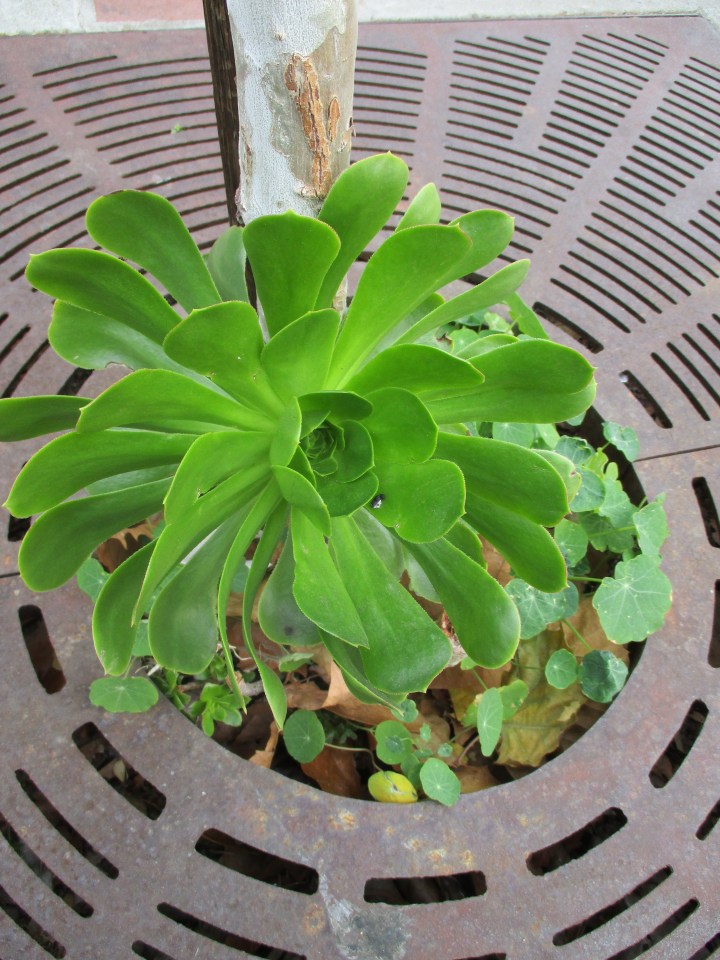
The once traditional Aeonium arboreum, with round, dense rosettes of slightly serrate, olive green leaves has become less popular than its more colorful varieties that have become more available over the years. ‘Atropurpureum’ has rich purplish brown foliage. ‘Zwartkop’ is even darker and stays more compact. Long and sometimes unkempt clusters of tiny yellow flowers that bloom in spring or summer are not much to look at against green foliage, but contrast nicely against dark foliage. Larger plants can get to three feet tall and wide, with foliar rosettes wider than six inches.

Like many succulents, Aeonium arboreum is so easy to propagate from cuttings, that small pieces that need to be pruned from established plants can be plugged into the garden wherever more of the same plants are desired. New cuttings like to be watered until they develop roots. Established plants are a bit happier with occasional watering, but can survive neglect just fine. After all, they are native to similar climates in the Mediterranean and northern Africa.

Canna Virus

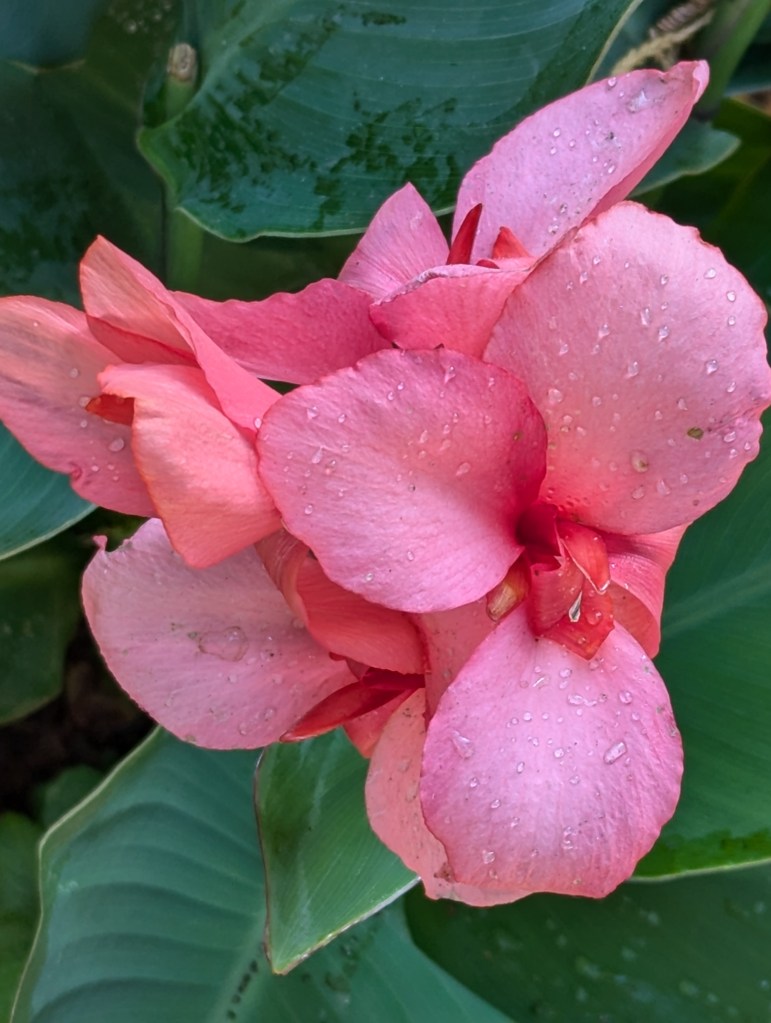
This is not a new problem, but it is infuriating nonetheless. ‘Cleopatra’ canna expressed symptoms of at least one virus about two years ago. A few other nearby cannas expressed similar symptoms shortly afterward. ‘Australia’ canna is particularly expressive of foliar streaking caused by virus. Isolation and disposal of obviously infected specimens seems to have prevented dispersion of the virus or viruses; but I really am uncertain. Three cultivars of Canna musifolia have suspiciously avoided any infection from adjacent infected cultivars. I can not help but wonder if they are actually infected but merely asymptomatic, and possibly able to transmit viruses to cultivars that are more expressive of symptoms. The canna in this picture is an important cultivar because it is one of only two remaining original cultivars that could have inhabited the landscapes here since about 1968. Because of gophers, very little of it remain, and some of what remains succumbed to virus already. I am quite protective of these few specimens that have not been infected, but would also like them to be able to inhabit the landscapes with the questionable Canna musifolia cultivars. For now, I must wait until they proliferate enough for some to be expendable.

Sneezeweed

Sneezeweed typically blooms for late summer.

Contrary to its silly name, sneezeweed, Helenium autumnale, does not cause sneezing. Its flowers produce heavy pollen that relies more on pollinators for dispersion than wind. Its vibrant yellow, orange or red floral color attracts all sorts of bees, butterflies and such. Bloom may begin as early as the middle of summer, or continue as late as early autumn.

Sneezeweed is a perennial like black eyed Susan, but with a somewhat shrubbier form. It can grow three or four feet tall without growing any wider than two or three feet. Foliage has a rather fine texture with lanceolate and somewhat serrate leaves. Individual flowers are about two or three inches wide, and delightfully abundant. They are nice cut flowers.

Sneezeweed may self sow, but some cultivars are not true to type. For them, division is a more reliable method of propagation. ‘Pumilum Magnificum’ provides vivid yellow bloom. ‘Chippersfield Orange’ provides vivid orange and yellow flowers. ‘Kupfersprudel’ blooms with a bit more yellow than orange. ‘Bruno’ blooms with deeply rich ruddy brown flowers. ‘Butterpat’ provides rich golden bloom. Several cultivars are compact.

Bear’s Breech

Bear’s breech can be a bit too sustainable, and difficult to get rid of.

Like some other Victorian perennials that are still happy after a century, bear’s breech, Acanthus mollis, can get to be too much of a good thing. It can become invasive where not contained. Once established, it is difficult to eradicate. The bold coarse foliage looks great while the weather is favorable, but then dies back after bloom when summer weather gets warm, leaving obvious voids where other plants were crowded out.

The good news is that bear’s breech does not require much attention at all. It is very easy to propagate by division or simply by digging a few thick roots while dormant or just as new foliage appears in autumn. Well watered plants can keep their foliage all year, so that they only need to be groomed of older foliage and spent flower stalks. Partial shade is not a problem; although snails can be.

Big arching leaves form bold mounds of glossy foliage about three feet wide. The distinctively lobed and toothed foliage has an appealing texture and deep green color. Elegant mostly white flower spikes stand nearly five feet tall late in spring into summer. Acanthus balcanicus (illustrated) is more compact, with more intricately textured foliage.

Garden Phlox

Garden phlox can be surprisingly fragrant.

Several species of Phlox are native California wildflowers. Yet, the more popular garden phlox, Phlox paniculata, is native only east of Kansas. It can self sow where it gets water, and is naturalized in the Pacific Northwest. It prefers rather rich soil and sunny exposure but is not very discriminating. A bit of partial shade might promote taller stems for cutting.

Mature garden phlox can be as tall and wide as three feet. Some modern cultivars stay a bit more compact. Dense panicles of small flowers may be as wide as six inches. Bloom is most commonly white, but may be pink, red, lavender or pastel orange. It is a splendid cut flower, with an alluringly rich fragrance. Bloom might continue for a month of summer.

Garden phlox is deciduous, so all canes die to the ground for winter. Mature colonies are then easy to propagate by division. Similarly, feral specimens that appear where they are unwanted are easy to relocate. Garden phlox can perform nicely in proportionately large pots and planters. It is uncommonly available from nurseries, but grows easily from seed.