Ivy Geranium

Ivy geranium cascades splendidly from planters.

Venice in Italy is an ideal situation in which to demonstrate the potential of ivy geranium, Pelargonium peltatum. Because garden space is so minimal, potted plants that cascade from balconies above the canals are quite popular. Ivy geranium cascades so splendidly that some eventually reach the tops of downstairs windows from their upstairs balconies.

Ivy geranium can sprawl over shrubbery to seemingly climb a few feet high. Otherwise, it is unlikely to stand much more than a foot and a half high on the ground without support. If cascading over the edge of a planter, upward growth may be only several inches high. In window boxes, it obstructs minimal sunlight. However, it may hang six feet downward!

Ivy geranium propagates somewhat easily by cuttings of the almost succulent stems, but not as easily as zonal geranium. Its lobed, rounded and quite fragile leaves are about an inch long and two inches wide. Sporadic but continual bloom becomes more profuse for late summer and autumn. Flowers might be white, pink, red, lavender, purplish or striped.
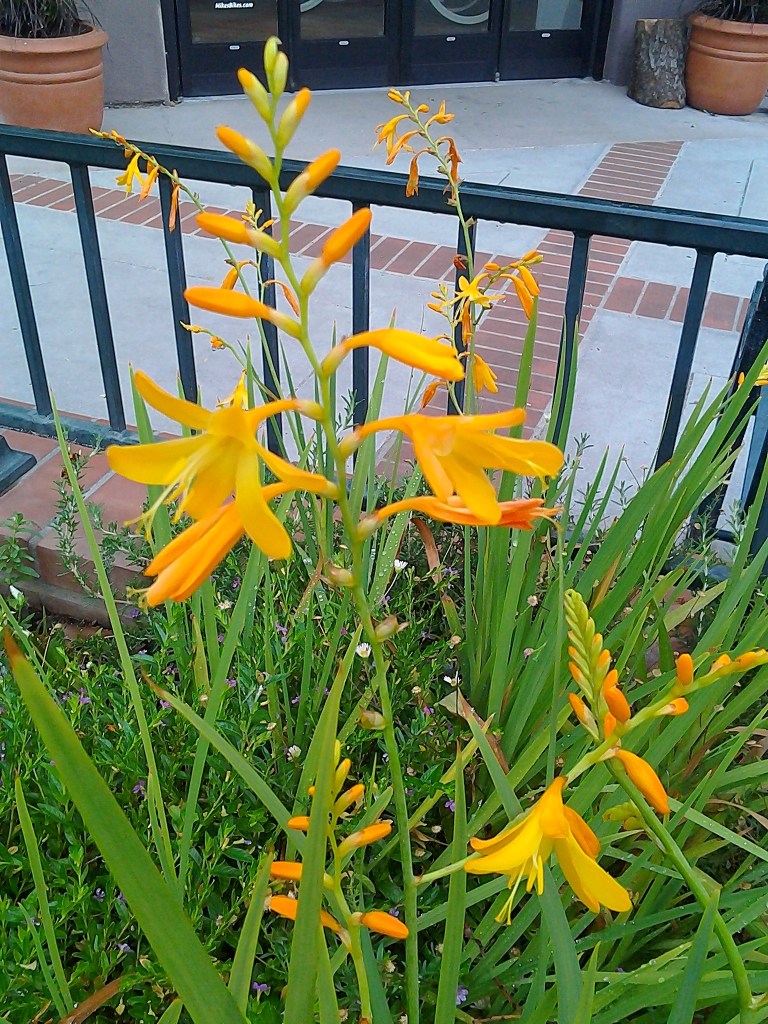
Montbretia

Bright orange montbretia is quite reliable and resilient, but can easily become a weed if not groomed of fading flowers.

Once they get into the garden, montbretia, Crocosmia X crocosmiiflora, may never leave. They sometimes survive the demolition of their original garden to emerge and bloom in the garden of a new home built on the same site. Bulbs (actually corms) multiply surprisingly efficiently to form large colonies that should eventually be divided if they get too crowded to bloom. Ungroomed plants sow seeds that may be invasive.

The one or two inch wide flowers are almost always bright orange, but can sometimes be reddish orange, yellow or pale yellow. The branched flower stems are two or three feet tall or a bit taller, and stand nicely above the grassy foliage. The narrow leaves are about half and inch to an inch wide.

Sweet Flag

Sweet flag might enjoy wasteful watering.

If unpaved drainage ditches and collection ponds were more common locally, sweet flag, Acorus gramineus, might be also. It can provide a nicely neat border for such waterways, where the ground is too steep and damp for mowing. It can migrate into muddy situations and even into shallow water. Its dense network of fibrosus rhizomes helps to retain mud.

‘Variegatus’, with elegantly elongated and variegated leaves, is the most popular cultivar locally. It is rare in nurseries, but occasionally shared by friends and neighbors who grow it. Propagation by division is very easy. Single shoots or clumps of shoots grow if merely plugged into damp soil or mud. ‘Pusillus’ lacks variegation, and develops stouter leaves.

Sweet flag aggressively excludes other herbaceous vegetation, but does not migrate too rapidly. Plucking shoots and plugging them elsewhere accelerates migration. The dense foliage might get a foot deep. Individual leaves are very narrow, like grass. The mundane bloom is easy to ignore and is uncommon where the soil is not often saturated or muddy.

Six on Saturday: Agave Surprise

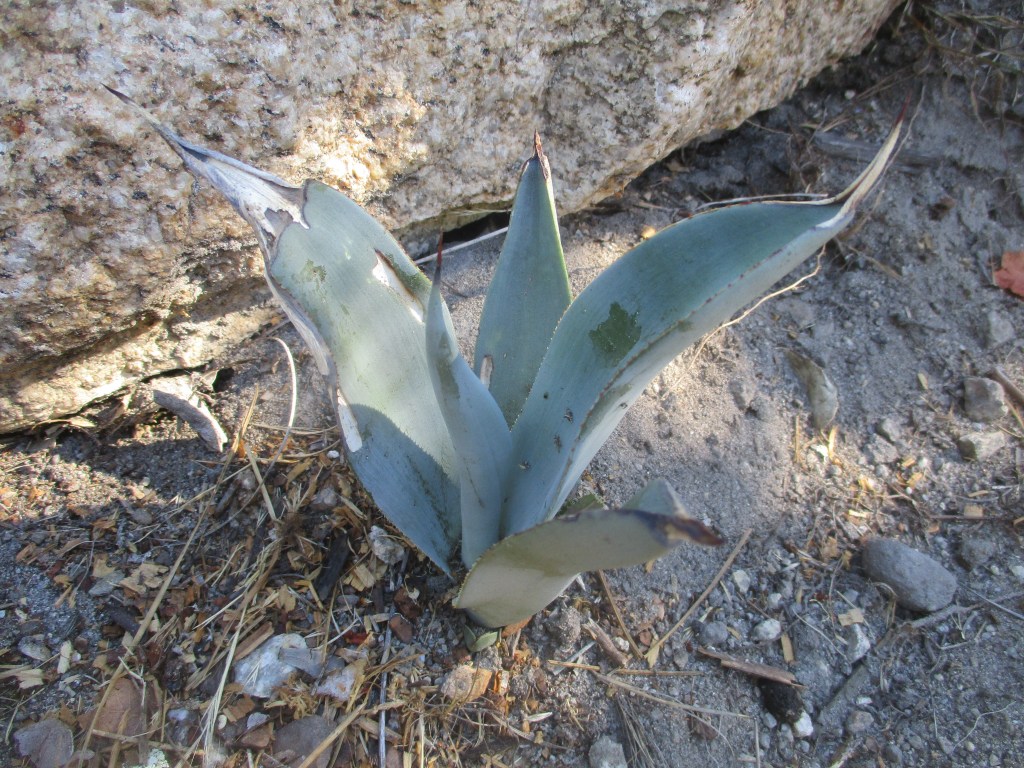
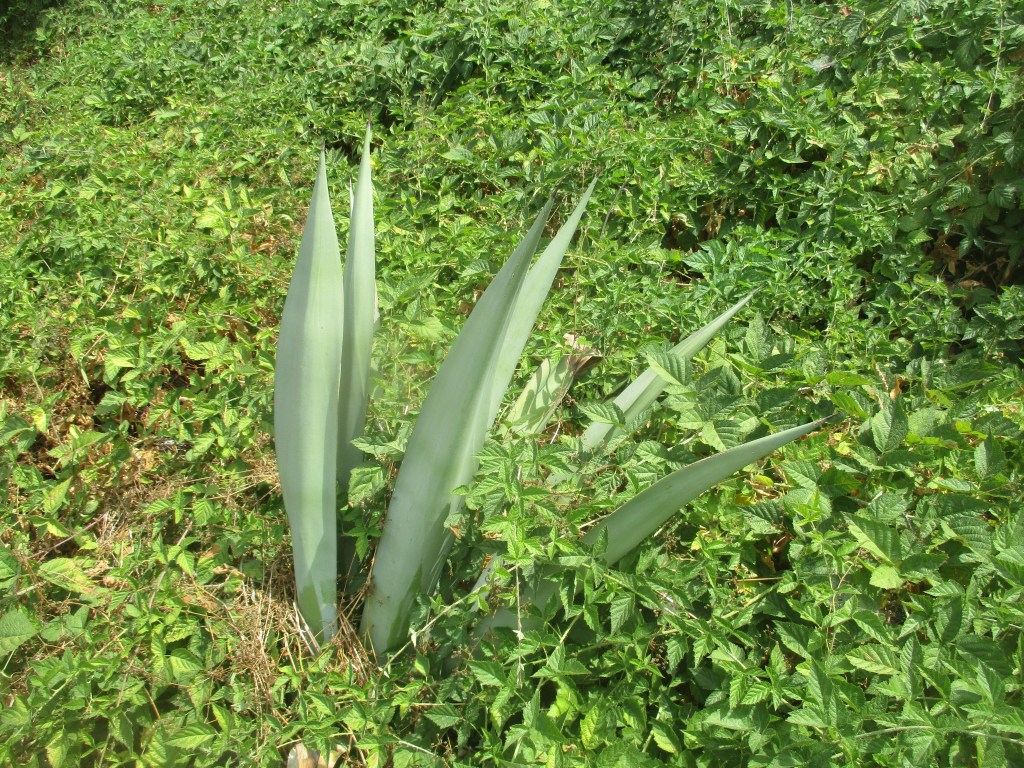
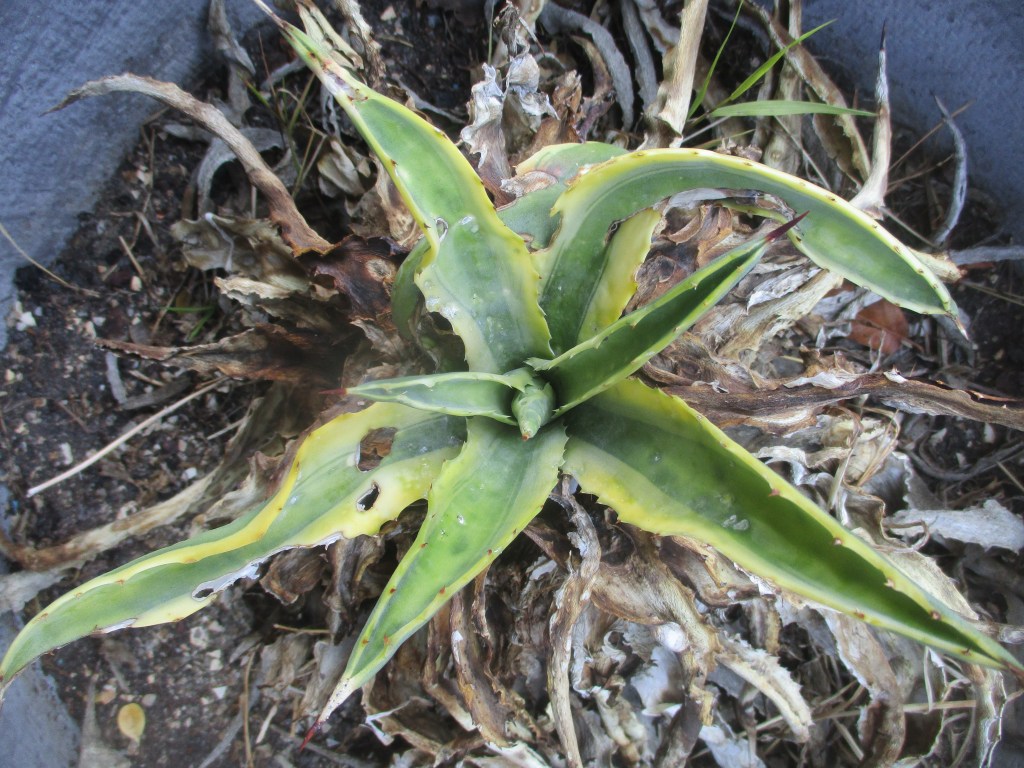
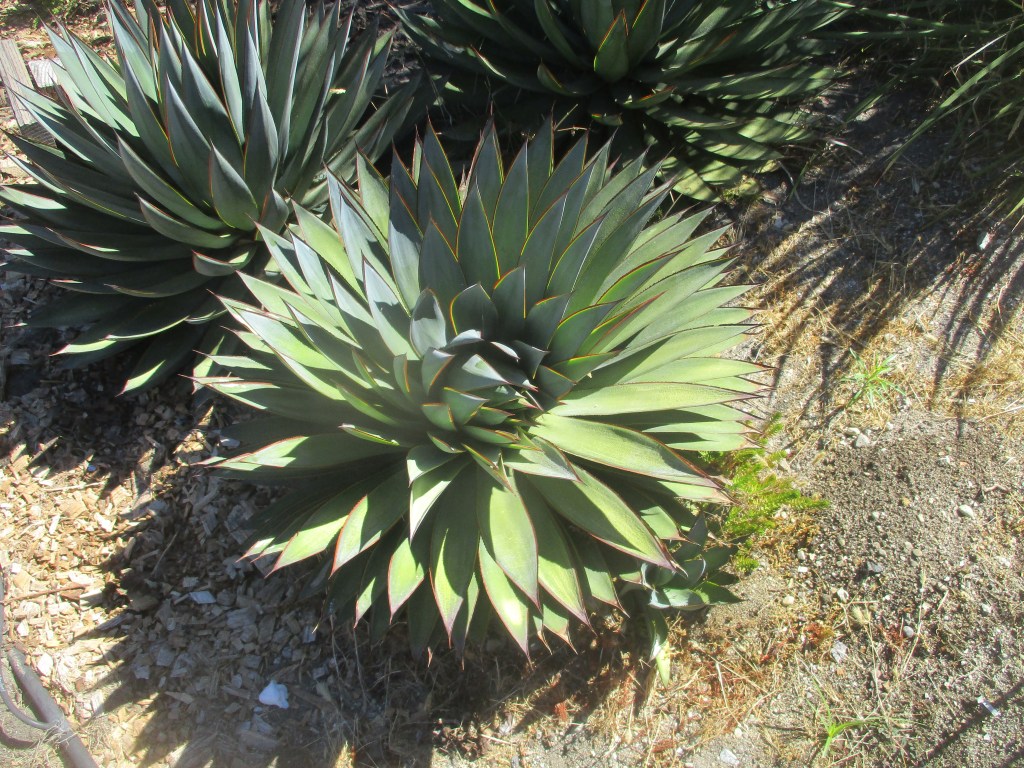
Several species of Agave inhabit the landscapes here. Only a few are identified. Some of those that are unidentified could likely be identified if their identities were important to us. For some, identification would be as simple as researching our records. I know what Agave attenuata is only because there is nothing else like it. #3 is likely a variegated and dwarf cultivar of Agave americana. #6 is the surprise of these Six. It is a familiar species that was formerly identified as another genus. Although its relation to the Family should be obvious in regard to physiology, it is not visually similar to others of the Agave genus. I still know it by its older and perhaps less accurate designation. It works for me.

1. Pups of an unidentified agave that was removed last year are a concern because others just like this continue to develop where the agave was relocated from a few years earlier!

2. The parent agave got removed and dumped next to a greenwaste pile after gophers ate its base, but somehow survived. It fell over only recently. Maybe other gophers found it.

3. Gophers also ate the base of this other unidentified agave, which, like the other agave, seems to have survived somehow. Fortunately, it did not leave undesirable pups behind.

4. Agave attenuata arrived as a big cutting with a long stem, and by odd circumstances. The severed stem generated a big secondary rosette, which is now generating four pups.

5. The pup to the lower right of this unidentified agave indicates that its primary rosette may be about bolt and bloom. Although most agaves are monocarpic, their pups survive.

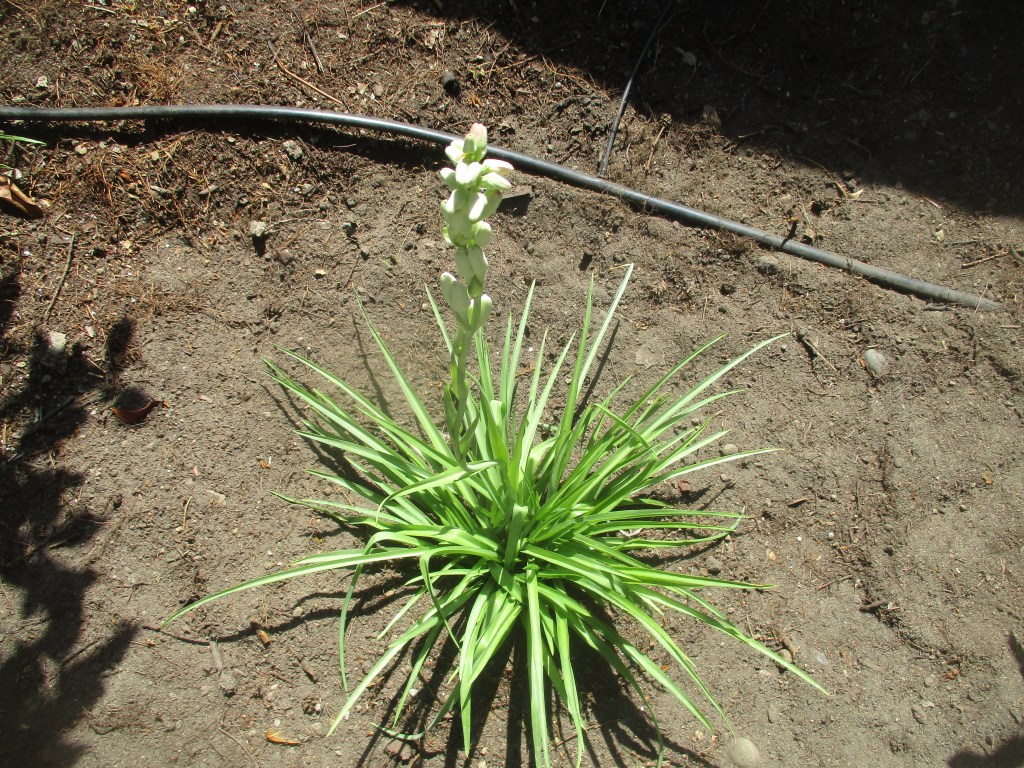
6. Surprise! Fresh from 1985, tuberose, which was formerly Polianthes tuberosa, is now Agave amica. We just installed three, with two more still canned. I hope for many pups.

This is the link for Six on Saturday, for anyone else who would like to participate: https://thepropagatorblog.wordpress.com/2017/09/18/six-on-saturday-a-participant-guide/

Six on Saturday: BIG News II!

Yes, this is a sequel to the BIG News of my previous Six on Saturday, which could qualify as a sequel to other Six on Saturday posts that were in regard to the original topic of the Gladiolus papilio. Well, at least there are fewer sequels about this topic than there are in regard to Rocky. No, not ‘that’ Rocky; although he has too many sequels also. Rocky is a raccoon. Actually, he or she is not a specific raccoon, but is any raccoon who necessitates relocation, and is unlikely the same more than once. Rocky likely return from relocation, but avoid areas in which they were trapped.

1. Rocky VI, or VII, or maybe VIII or more. I can not count them all. Heck, I do not know when we started counting. They might have been quite fashionable nearly a century ago.

2. African daisy may not seem special, but to me, they seem to be atypically colorful. The color range was limited to white and eerie shades of purple while we were still in school.

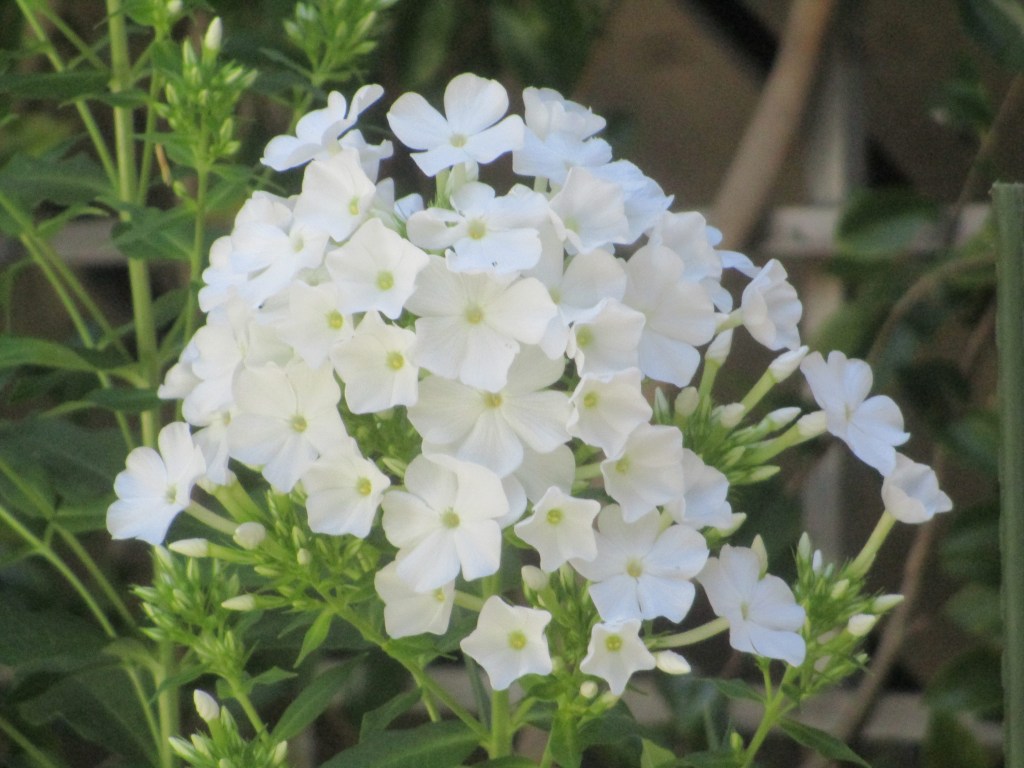
3. Phlox arrived in one of the more colorful landscapes just a few years ago, and politely proliferated. No one knows how it got here. It is perfectly white, and alluringly fragrant.

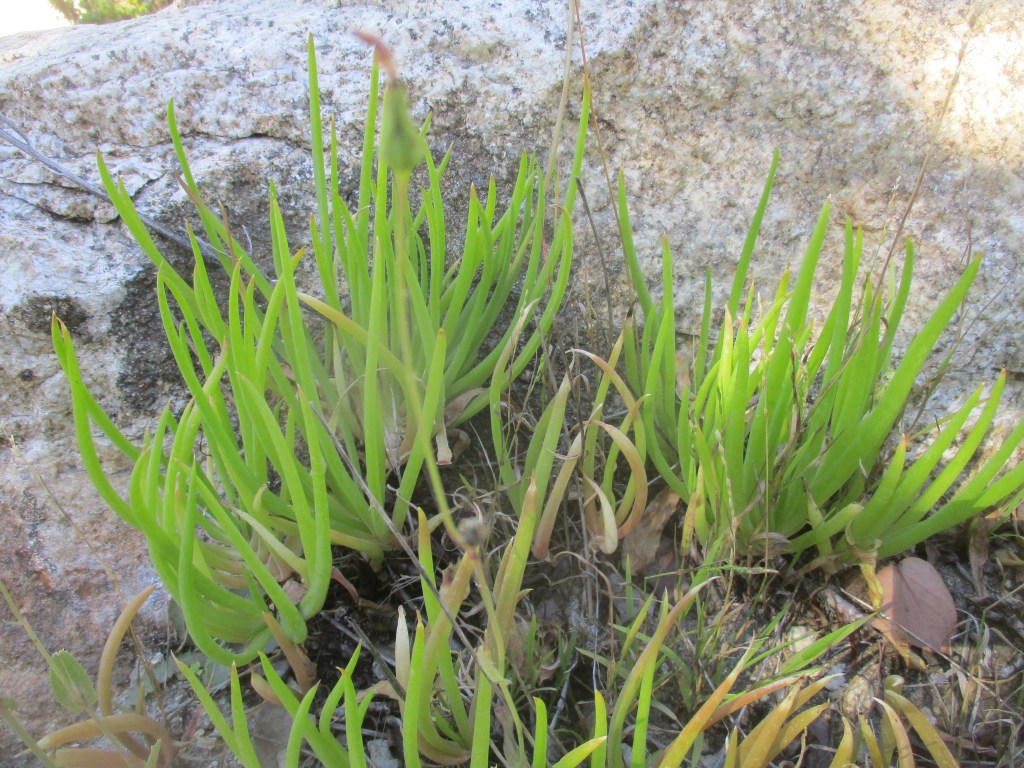
4. Bulbine caulescens, which lacks a common name, may seem to be no more interesting than African daisy, but is very special to me, because of who procured it a few years ago.

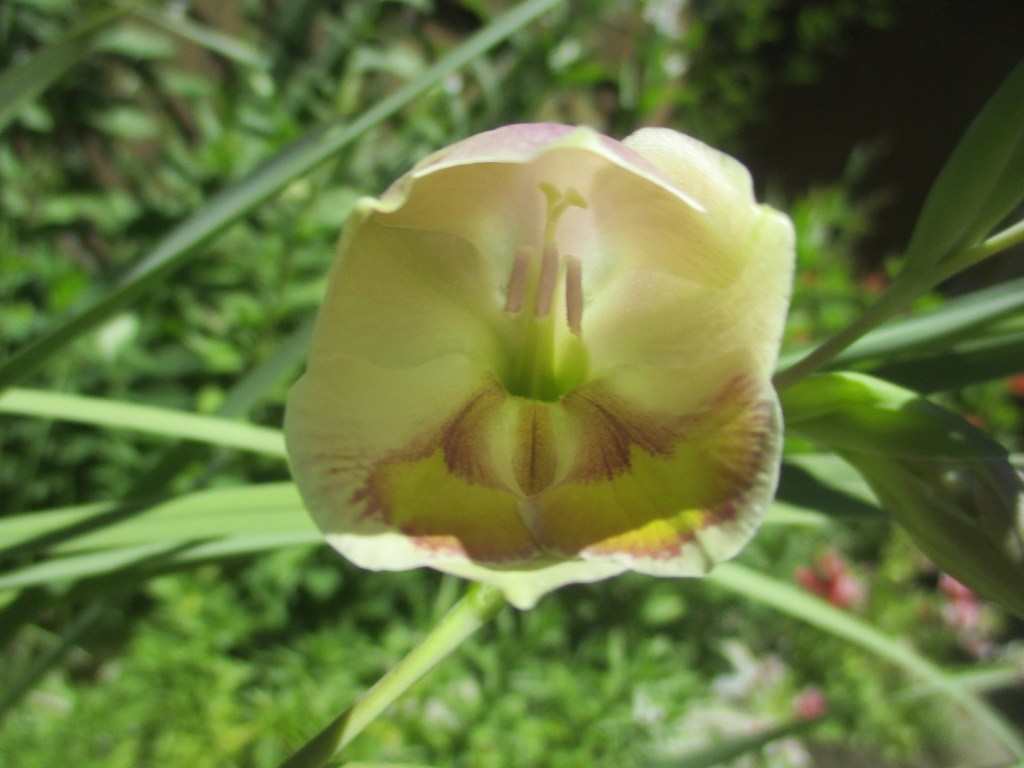
5. Gladiolus papilio from Tangly Cottage Gardening is, of course, the BIG news for these Six on Saturday. I noticed well budded floral spikes a week ago. They are now blooming!

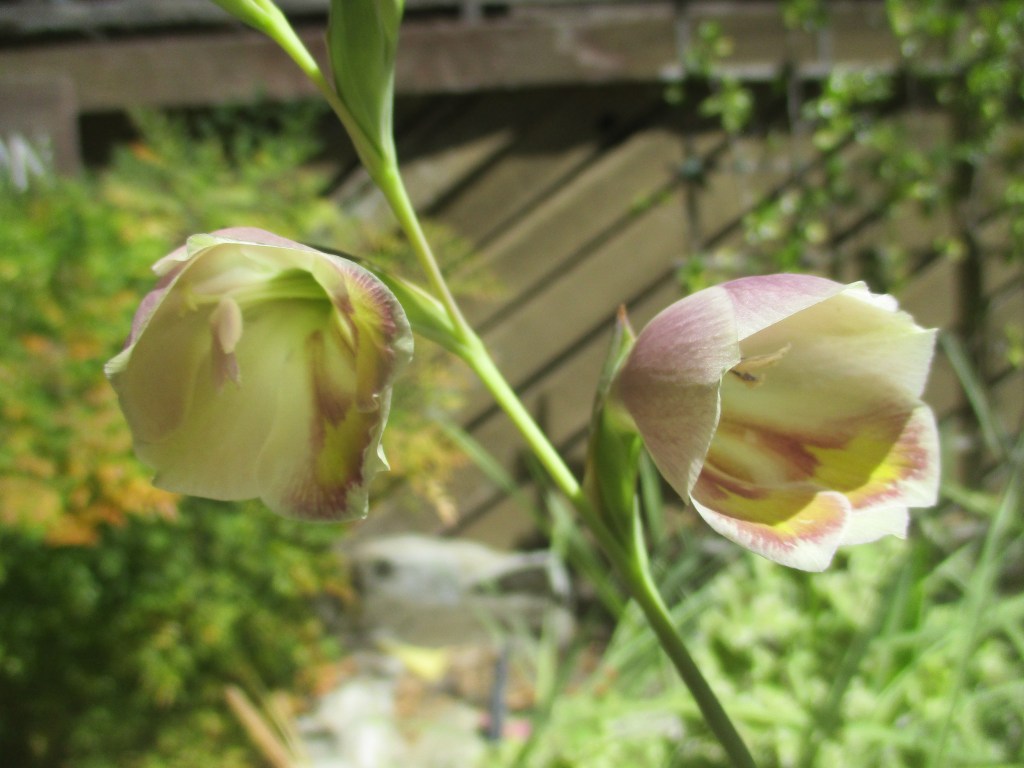
6. Only a single new floral spike was observed last week. I should have investigated more thoroughly. There are actually several! A few are in full bloom like this. They are so rad!

This is the link for Six on Saturday, for anyone else who would like to participate: https://thepropagatorblog.wordpress.com/2017/09/18/six-on-saturday-a-participant-guide/

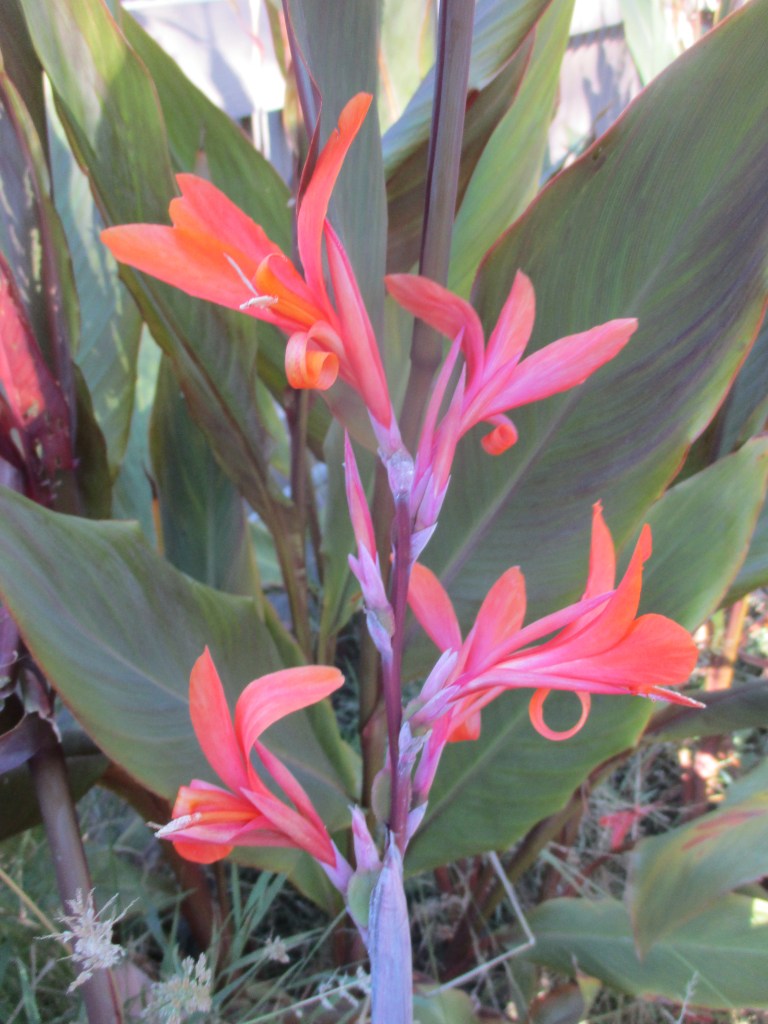
Canna

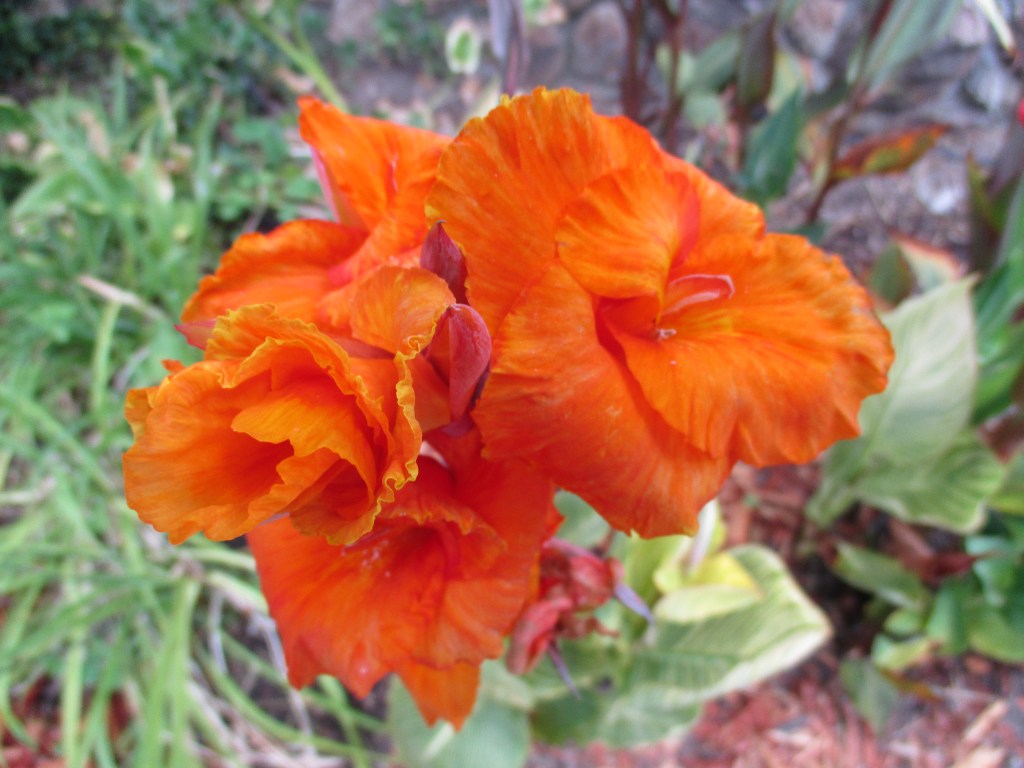
Canna excels at orange.

Although not directly toxic, canna has a unique reputation of lethality. Its spherical seeds are so hard that they were historically used as shot. Many victims are now pushing up daisies. Those who survived were pulling out cannas.

Old fashioned varieties that get up to six feet tall seem to be at least as popular as shorter modern varieties that get less than half as tall, probably because their bold foliage is as appealing as their colorful but awkwardly structured flowers. The big leaves can be cool green, rich reddish bronze or variegated. Red, orange, yellow, pink or rarely white flowers that bloom from summer to autumn are striking amongst the lush foliage, but are too perishable to be good cut flowers.

Stems that have finished blooming should be cut to the ground to promote more colorful new foliage and bloom. Mature colonies (of rhizomes) can be divided while dormant through winter if they get crowded enough to inhibit bloom every few years.

Canna bloom as well as foliage seem to be so tropical.

Six on Saturday: BIG News!

The BIG NEWS for this ‘Six on Saturday’ was only discovered yesterday morning. It does not look like much yet. I suppose that anyone who witnessed my exuberant reaction to it likely wondered what all the fuss was about. I suppose that I should be embarrassed. Oh well, I am not. I know how totally awesomely excellent it is! Furthermore, it is approved by both Skooter and Rhody! (That is ‘the’ famous Skooter of Tangly Cottage Gardening.) The fifth of these Six is also important news, although the first four are rather mundane.

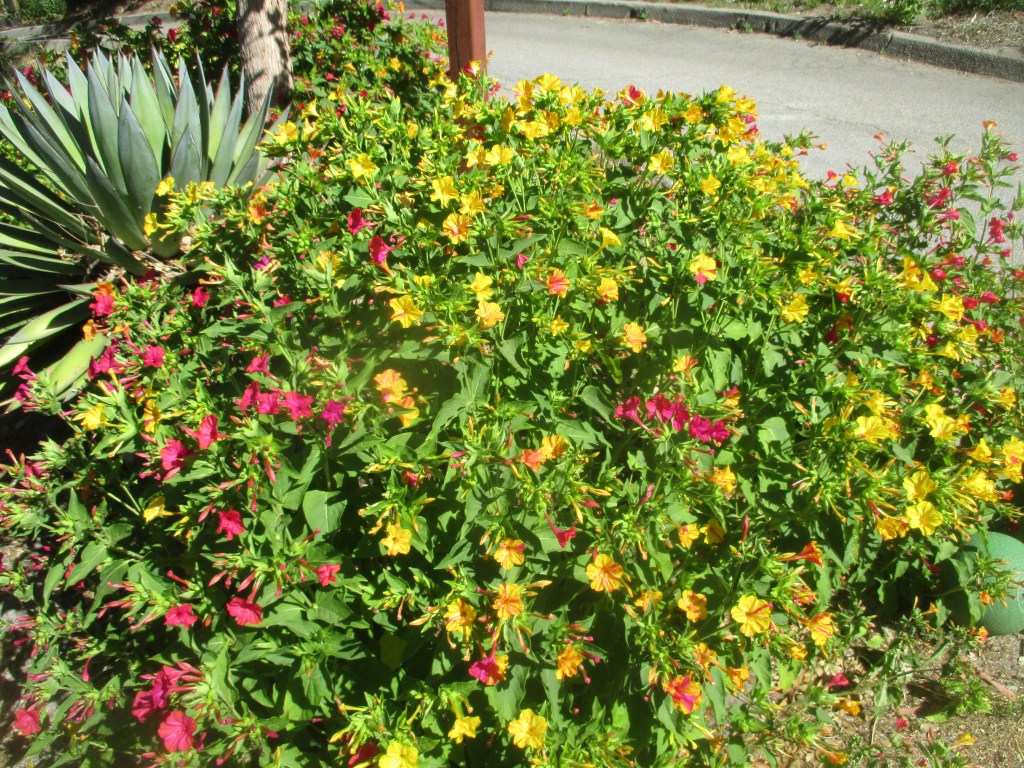
1. Four O’ clock with a five O’ clock shadow is not big news. It is actually rather mundane folly that is included here merely because I like bragging about shabby but pretty weeds.

2. Lily of the Nile fasciation does not classify as big news either, although it is intriguing. This entire colony blooms like this or worse, and after all the other lily of the Nile finish.

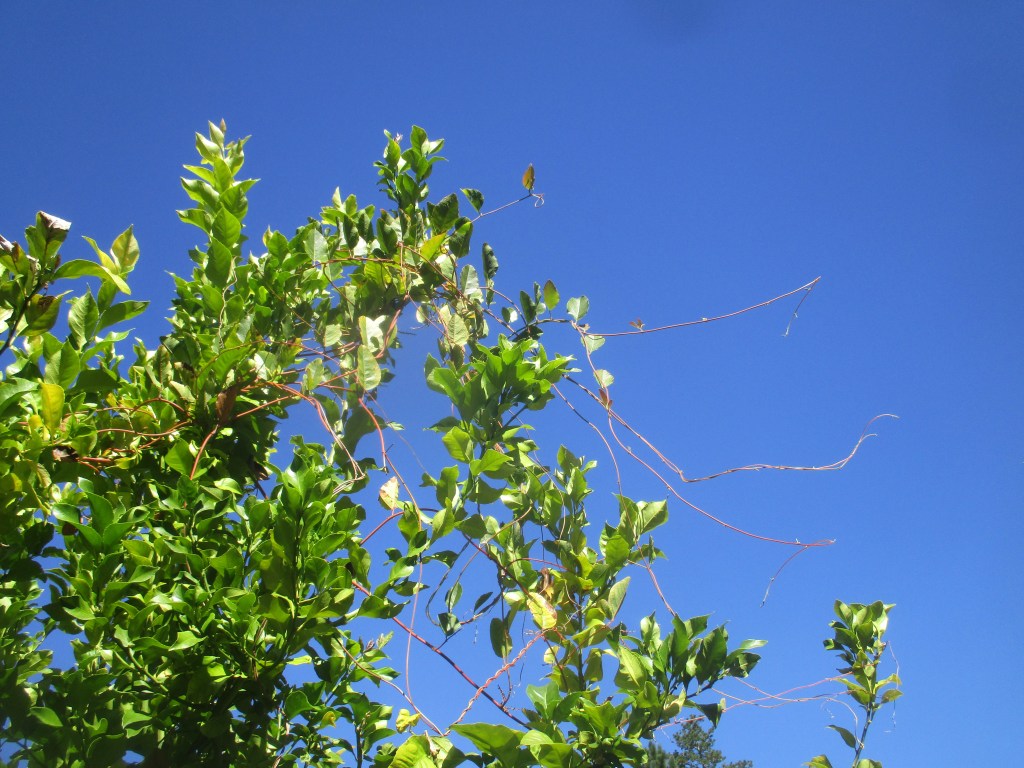
3. Black coral pea climbing over the Eureka lemon tree is more of an annoyance than big news. I should have known this would happen while I was not looking. Vines are sneaky.

4. Grapevines, although sneaky, are at least productive. These are suspended more than ten feet above the courtyard below. Unfortunately, opossums typically get the fruit first.

5. Koi are rather big news, but are not the big news. Seven moved into the drainage pond last Saturday just after Six on Saturday. Cheeto is below the middle. Shiro is to the right.

6. Gladiolus papilio from Tangly Cottage Gardening is finally THE BIG NEWS this week! It has been here for a few years, but bloomed only once last year, after major tribulation. I noticed this floral stalk today. I do not know how long it will take to mature and bloom.

This is the link for Six on Saturday, for anyone else who would like to participate: https://thepropagatorblog.wordpress.com/2017/09/18/six-on-saturday-a-participant-guide/

Lily Of The Nile

Blue fireworks bloom for Independence Day.

The Nile River Valley is a region of extremes. It floods at times, but is hot and dry at other times. Lily of the Nile, Agapanthus orientalis, naturally survives it all. It can easily survive here. However, it survives arid heat by shedding a bit of foliage. Therefore, it is generally healthier here with at least occasional watering through the warmest weather of summer.

The almost spherical floral umbels of lily of the Nile explode into bloom like blue or white fireworks, just in time for Independence Day. They are about six to eight inches wide, on elegantly bare and slightly leaning stalks that stand about four feet tall. Individual flowers are only about an inch or two long. Flowers bloom only once annually, but last for weeks.

With or without bloom, the dense and evergreen foliage of lily of Nile is always lush. The soft and strap shaped leaves are about a foot and a half long, and flare outward from low basal rosettes. New foliage obscures deteriorated old foliage. Fleshy roots firmly secure plump rhizomes. Division relieves crowded rhizomes, and contains their slow migration.

Perennial Plants Keep On Giving

Can a canna be too perennial?

Many popular annual bedding plants have potential to be perennial if they get a chance. Cyclamen commonly perform as a cool season annual, only until replacement with warm season annuals. However, after summer dormancy, their tubers can generate foliage and bloom again for several following winters. Replacement is just easier than maintenance.

Real annuals complete their entire life cycles, from germination to dispersal of seed and finally death, within a single year. Biennials generate vegetative growth through their first year, and then disperse seed and die during their second year. Perennials perform for at least two years, whether or not they get any opportunities to do so within home gardens.

Home garden culture complicates this classification though. Those who enjoy gardening expect perennial plants to reliably perform for many years or indefinitely. Many perennial plants do so with only minimal intervention. Some are self-sustaining, and might seem to naturalize. That may be why so many smaller or less vigorous types classify as annuals.

Another qualification of perennial plants is that they lack woody stems and roots. In other words, they are herbaceous. Palms and species of Yucca that develop trunks classify as perennial plants also, but for simplicity, the larger types are herbaceous trees. Generally, perennials are terrestrial. A few are epiphytic (live in trees) or lithophytic (live on stones).

Although several perennial plants can survive indefinitely here without intervention, most perform better with some degree of attention. Most ferns are neater if groomed to remove deteriorated fronds. Many grasses benefit from severe shearing during winter. African iris blooms better in response to regular deadheading to remove developing seed capsules.

Perennial plants are very diverse. It is impossible to generalize about their maintenance. One commonality among many is that they multiply. Lily of the Nile can produce so many individual shoots that it can eventually become too congested to bloom. Division of such shoots every several years or so promotes bloom, as well as propagates more plants for elsewhere in the landscape.

Zonal Geranium

Zonal geraniums bloom colorfully through summer.

Where winters are cooler, zonal geranium, Pelargonium X hortorum, performs as a warm season annual. It is perennial only with shelter from frost. Locally, traditional cultivars are so reliably perennial that they can get congested without thorough pruning and grooming after winter. Frost occasionally ruins outer growth, but rarely kills entire plants with roots.

Modern cultivars bloom more profusely and more colorfully than old cultivars, but are not quite as resilient. They are more likely to rot during the damp and cool weather of winter. They bloom exquisitely from spring through autumn though, with bright hues of red, pink, peach, salmon and white. They stay lower and more compact, so require less grooming.

The more popular modern zonal geraniums should not get much more than two feet high and wide. Their small flowers bloom on globular floral trusses that can get as wide as six inches. Traditional zonal geraniums get bigger, with smaller floral trusses. Nearly circular and aromatic leaves generally exhibit darker halos between lighter centers and margins.