Six on Saturday: BIG News!

The BIG NEWS for this ‘Six on Saturday’ was only discovered yesterday morning. It does not look like much yet. I suppose that anyone who witnessed my exuberant reaction to it likely wondered what all the fuss was about. I suppose that I should be embarrassed. Oh well, I am not. I know how totally awesomely excellent it is! Furthermore, it is approved by both Skooter and Rhody! (That is ‘the’ famous Skooter of Tangly Cottage Gardening.) The fifth of these Six is also important news, although the first four are rather mundane.

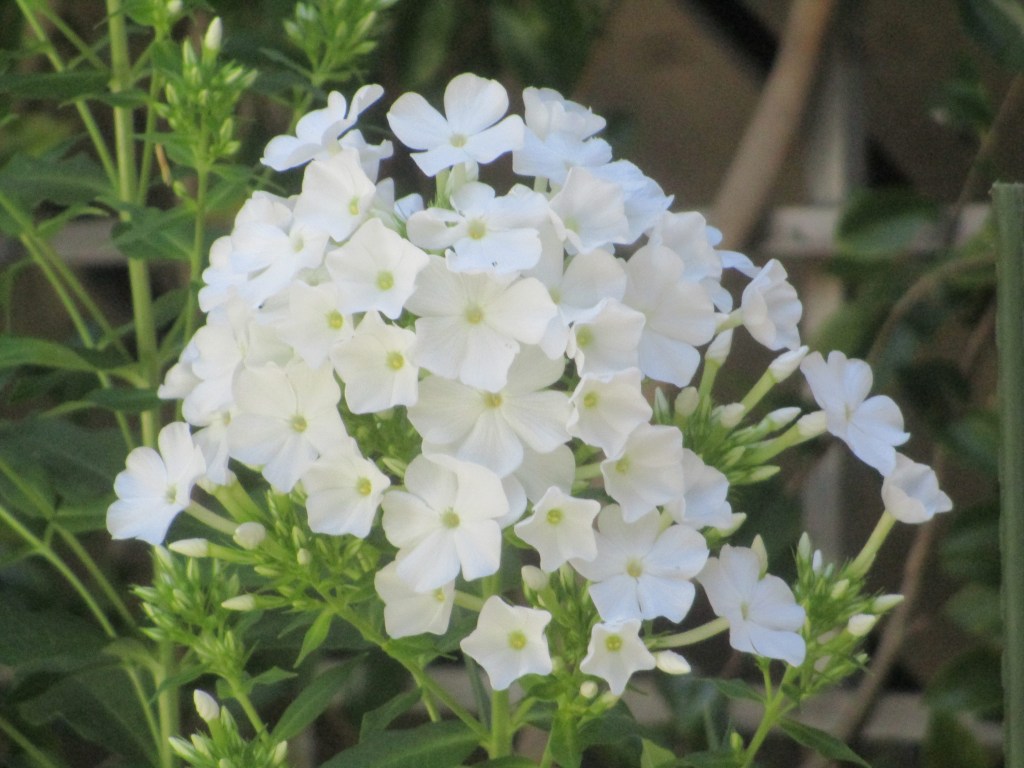
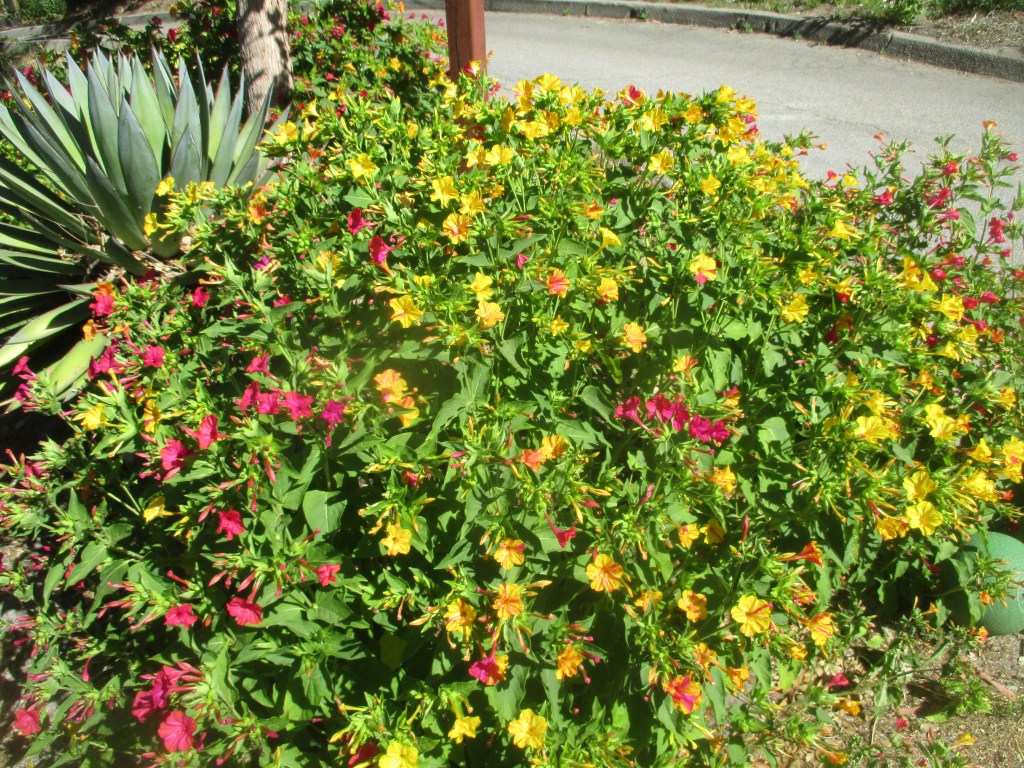
1. Four O’ clock with a five O’ clock shadow is not big news. It is actually rather mundane folly that is included here merely because I like bragging about shabby but pretty weeds.

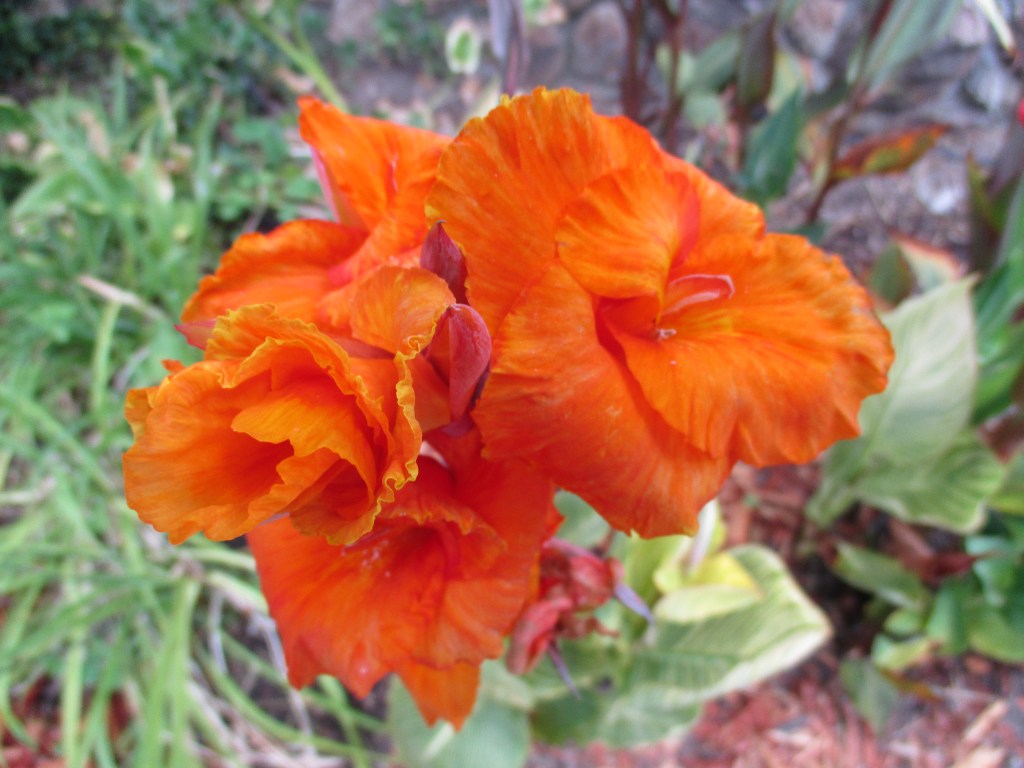
2. Lily of the Nile fasciation does not classify as big news either, although it is intriguing. This entire colony blooms like this or worse, and after all the other lily of the Nile finish.

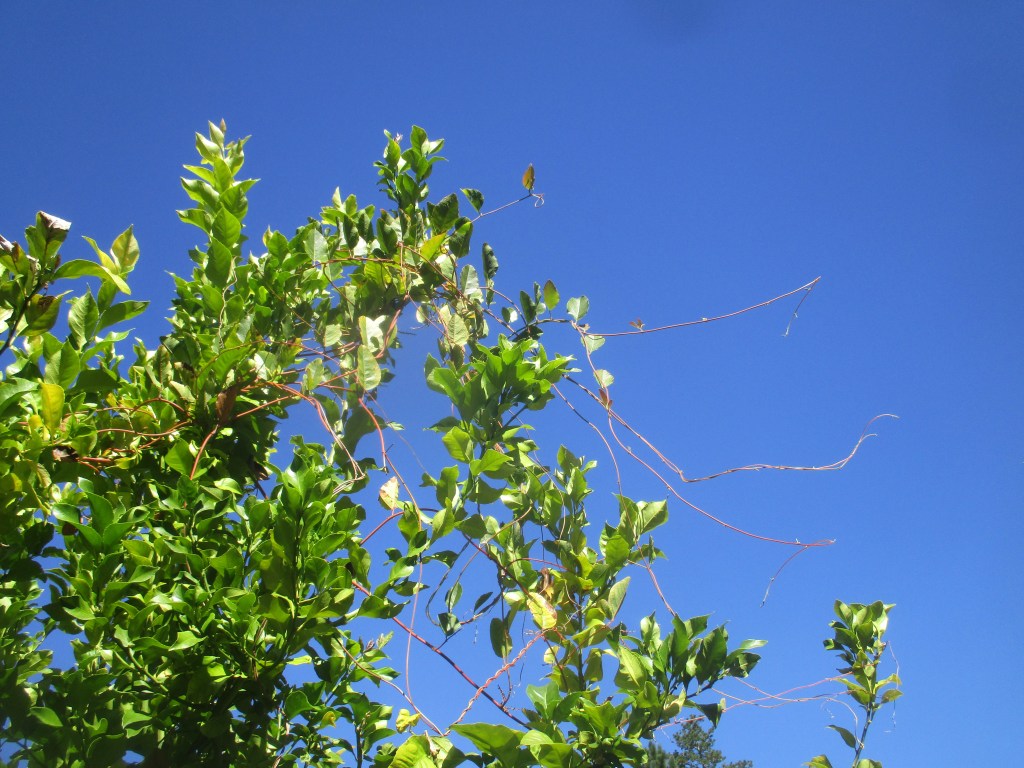
3. Black coral pea climbing over the Eureka lemon tree is more of an annoyance than big news. I should have known this would happen while I was not looking. Vines are sneaky.

4. Grapevines, although sneaky, are at least productive. These are suspended more than ten feet above the courtyard below. Unfortunately, opossums typically get the fruit first.

5. Koi are rather big news, but are not the big news. Seven moved into the drainage pond last Saturday just after Six on Saturday. Cheeto is below the middle. Shiro is to the right.

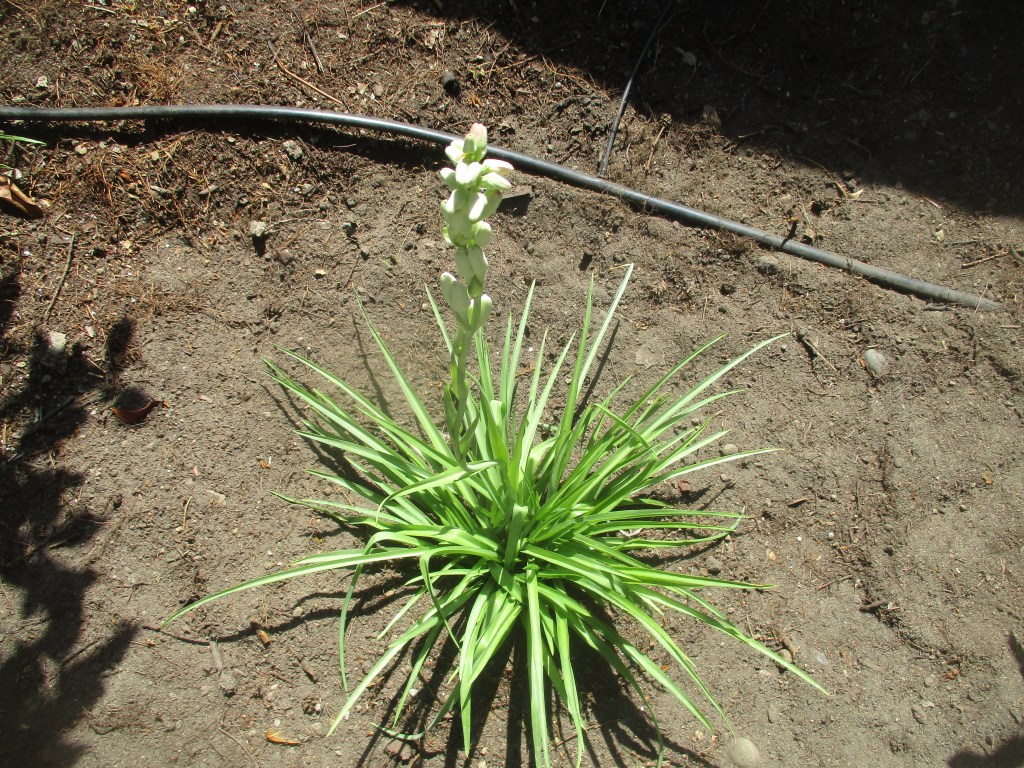
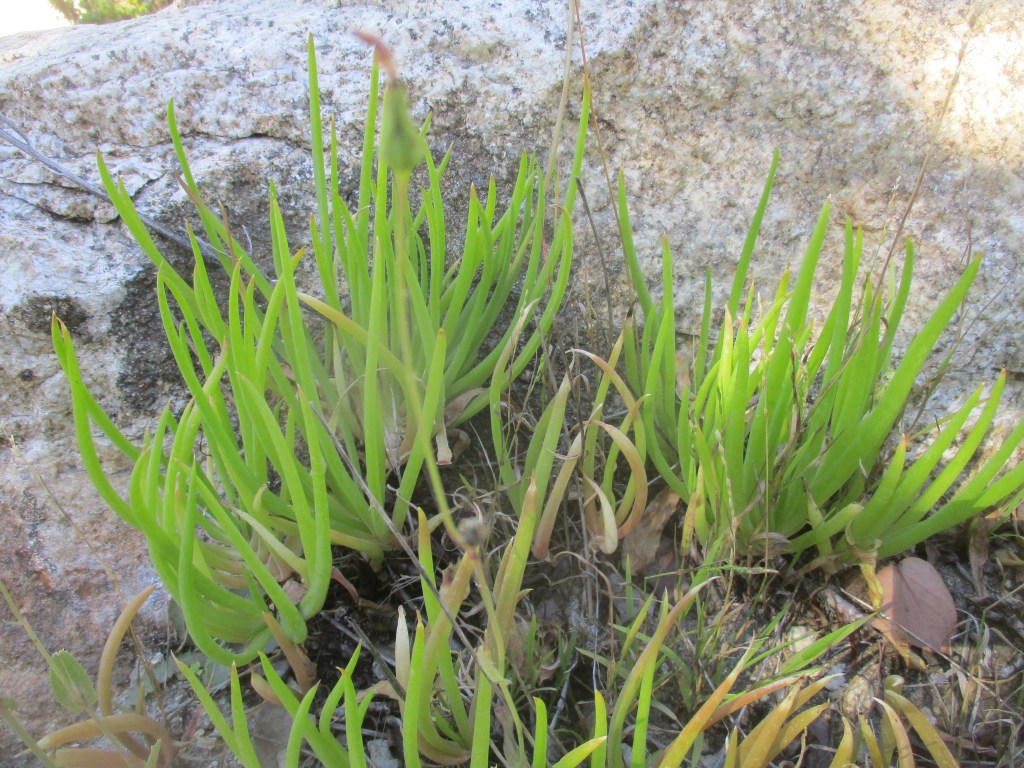
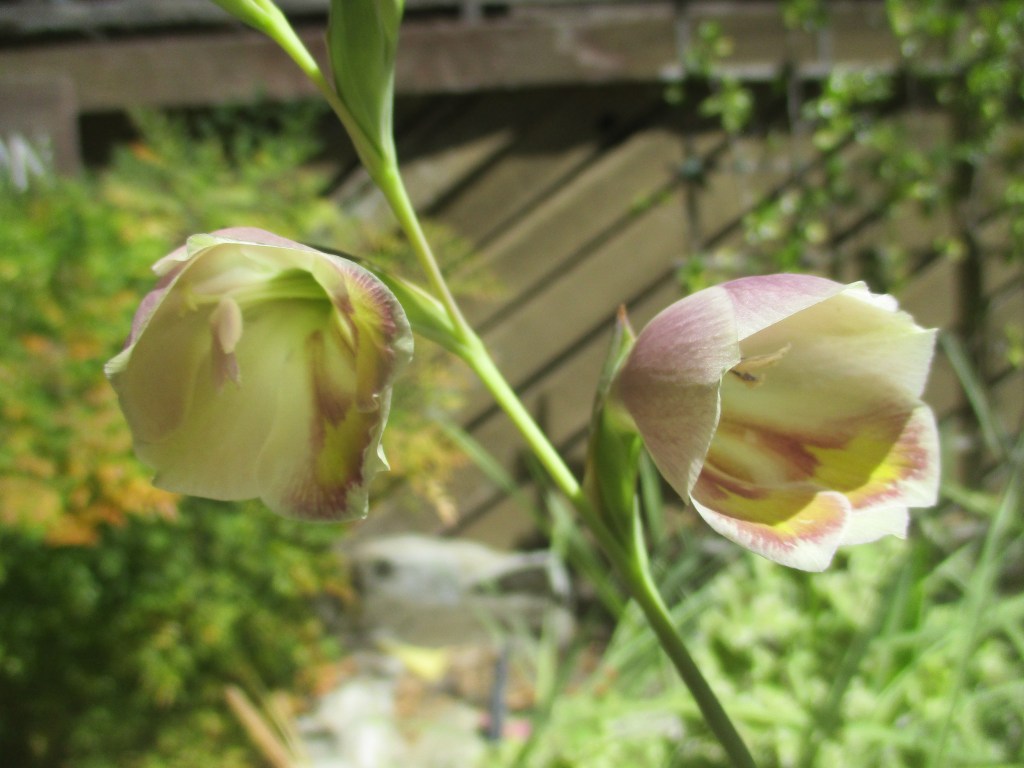
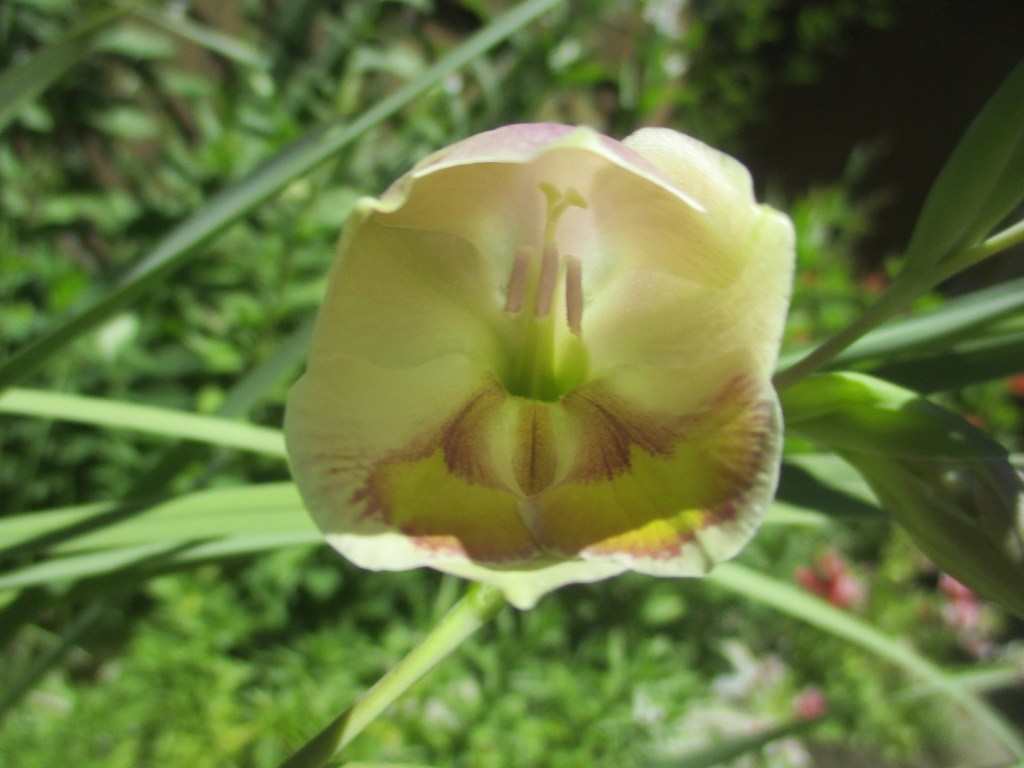
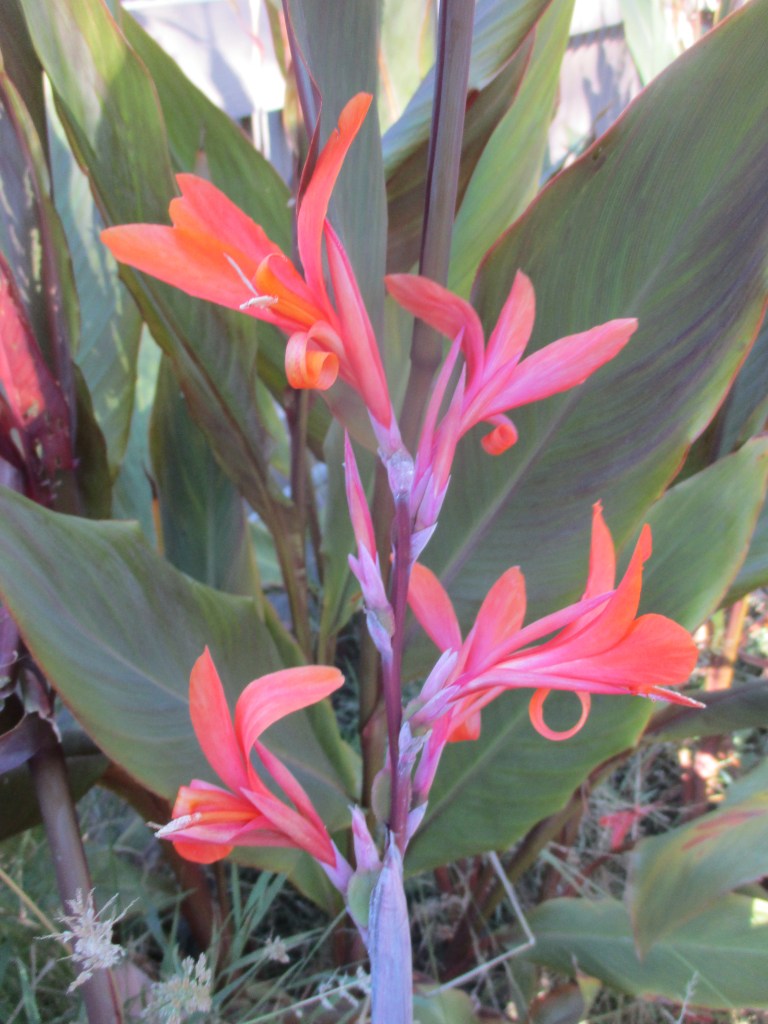
6. Gladiolus papilio from Tangly Cottage Gardening is finally THE BIG NEWS this week! It has been here for a few years, but bloomed only once last year, after major tribulation. I noticed this floral stalk today. I do not know how long it will take to mature and bloom.

This is the link for Six on Saturday, for anyone else who would like to participate: https://thepropagatorblog.wordpress.com/2017/09/18/six-on-saturday-a-participant-guide/

Lily Of The Nile

Blue fireworks bloom for Independence Day.

The Nile River Valley is a region of extremes. It floods at times, but is hot and dry at other times. Lily of the Nile, Agapanthus orientalis, naturally survives it all. It can easily survive here. However, it survives arid heat by shedding a bit of foliage. Therefore, it is generally healthier here with at least occasional watering through the warmest weather of summer.

The almost spherical floral umbels of lily of the Nile explode into bloom like blue or white fireworks, just in time for Independence Day. They are about six to eight inches wide, on elegantly bare and slightly leaning stalks that stand about four feet tall. Individual flowers are only about an inch or two long. Flowers bloom only once annually, but last for weeks.

With or without bloom, the dense and evergreen foliage of lily of Nile is always lush. The soft and strap shaped leaves are about a foot and a half long, and flare outward from low basal rosettes. New foliage obscures deteriorated old foliage. Fleshy roots firmly secure plump rhizomes. Division relieves crowded rhizomes, and contains their slow migration.

Perennial Plants Keep On Giving

Can a canna be too perennial?

Many popular annual bedding plants have potential to be perennial if they get a chance. Cyclamen commonly perform as a cool season annual, only until replacement with warm season annuals. However, after summer dormancy, their tubers can generate foliage and bloom again for several following winters. Replacement is just easier than maintenance.

Real annuals complete their entire life cycles, from germination to dispersal of seed and finally death, within a single year. Biennials generate vegetative growth through their first year, and then disperse seed and die during their second year. Perennials perform for at least two years, whether or not they get any opportunities to do so within home gardens.

Home garden culture complicates this classification though. Those who enjoy gardening expect perennial plants to reliably perform for many years or indefinitely. Many perennial plants do so with only minimal intervention. Some are self-sustaining, and might seem to naturalize. That may be why so many smaller or less vigorous types classify as annuals.

Another qualification of perennial plants is that they lack woody stems and roots. In other words, they are herbaceous. Palms and species of Yucca that develop trunks classify as perennial plants also, but for simplicity, the larger types are herbaceous trees. Generally, perennials are terrestrial. A few are epiphytic (live in trees) or lithophytic (live on stones).

Although several perennial plants can survive indefinitely here without intervention, most perform better with some degree of attention. Most ferns are neater if groomed to remove deteriorated fronds. Many grasses benefit from severe shearing during winter. African iris blooms better in response to regular deadheading to remove developing seed capsules.

Perennial plants are very diverse. It is impossible to generalize about their maintenance. One commonality among many is that they multiply. Lily of the Nile can produce so many individual shoots that it can eventually become too congested to bloom. Division of such shoots every several years or so promotes bloom, as well as propagates more plants for elsewhere in the landscape.

Zonal Geranium

Zonal geraniums bloom colorfully through summer.

Where winters are cooler, zonal geranium, Pelargonium X hortorum, performs as a warm season annual. It is perennial only with shelter from frost. Locally, traditional cultivars are so reliably perennial that they can get congested without thorough pruning and grooming after winter. Frost occasionally ruins outer growth, but rarely kills entire plants with roots.

Modern cultivars bloom more profusely and more colorfully than old cultivars, but are not quite as resilient. They are more likely to rot during the damp and cool weather of winter. They bloom exquisitely from spring through autumn though, with bright hues of red, pink, peach, salmon and white. They stay lower and more compact, so require less grooming.

The more popular modern zonal geraniums should not get much more than two feet high and wide. Their small flowers bloom on globular floral trusses that can get as wide as six inches. Traditional zonal geraniums get bigger, with smaller floral trusses. Nearly circular and aromatic leaves generally exhibit darker halos between lighter centers and margins.

Curve Leaf Yucca

Curve leaf yucca resembles other yuccas.

Several of the fifty or so species of Yucca are difficult to distinguish from similar species. Some are varieties of species, rather than distinct species. Some are naturally occurring hybrids. Curve leaf yucca, Yucca recurvifolia, is supposedly a naturally occurring variety of mound lily, Yucca gloriosa var. recurvifolia (or tristis). Alternatively, it could be a hybrid.

As if that is not confusing enough, its physical characteristics are variable. Foliar color is typically grayish, but might be simple olive drab like that of many other species of Yucca. Its typically pliable evergreen leaves that curve downward as they mature can be almost as rigid as those of common mound lily. Stout but upright trunks may or may not develop.

Curve leaf yucca is remarkably resilient. Actually, unwanted specimens can be difficult to eradicate. Small bits of rhizome can generate pups for many years after the removal of a primary plant. Occasional watering is appreciated through the warmest summer weather, but may not be necessary. Old colonies can get ten feet tall, and occupy significant area, but quite slowly.

Six on Saturday: My First Allium!

Allium species have been somewhat elusive. I had seen only pictures of them from other gardens. By the time I finally decided to try them in my own garden, they were no longer available from local nurseries. When I found them online, there were too many cultivars to choose from. It was baffling. Tangly Cottage Gardening sorted it all out for me by giving me my first two, Allium schumbertii and Allium christophii. They are exquisite, and are now generating seed. I should have gotten better pictures of them while they were in the middle of bloom, rather than before and after bloom. Since there are only three pictures of them here, three pictures from work were added, for a total of Six on Saturday.

1. Robinia pseudoacacia, black locust, is a horrible weed. This one had been falling for a long time before it landed in this motorpool yard. At least it warned us to avoid damage.

2. Gunnera tinctoria, Chilean rhubarb, regenerates efficiently after winter dormancy. It was completely bare only a few weeks ago. It should get much grander through summer.

3. Lilium asiaticum, Asiatic lily, was a gift from a neighbor two winters ago. Its dormant bulbs were unimpressive at the time. They were splendid last year, and are more so now!

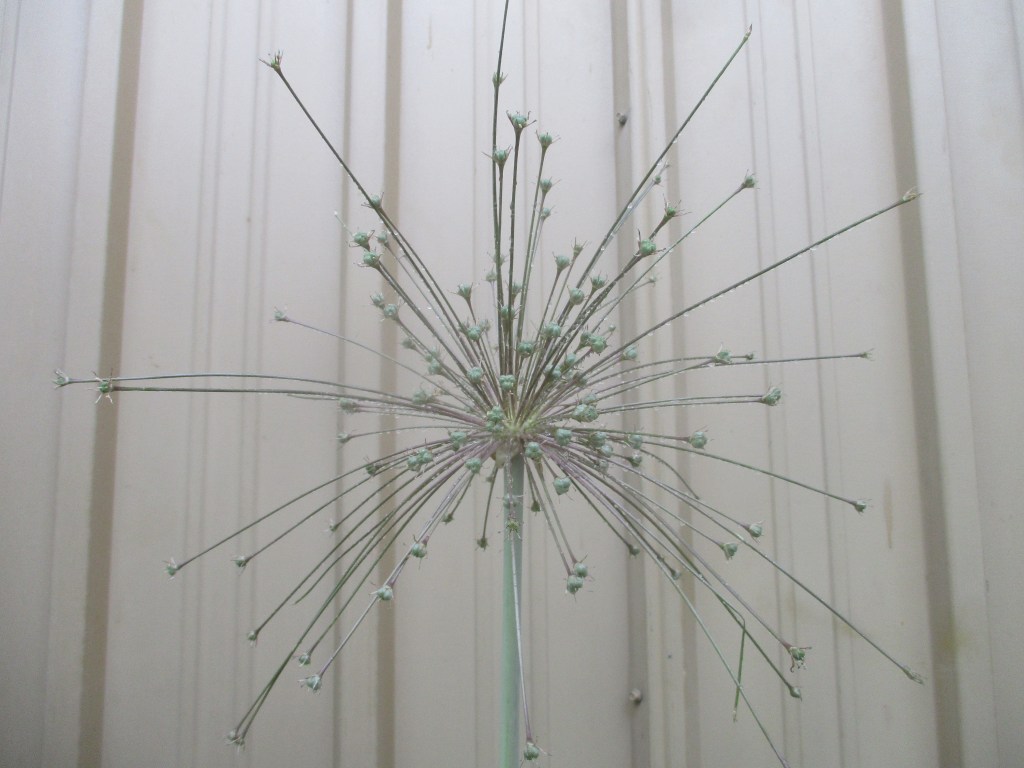
4. Allium schumbertii, Persian onion, is one of two species of Allium that were gifts from Tangly Cottage Gardening! This unfinished bloom was more than a foot and a half wide!

5. Allium schumbertii, Persian onion, is also known as tumbleweed onion because these seeded trusses break off to disperse seed as they tumble about the deserts they inhabit.

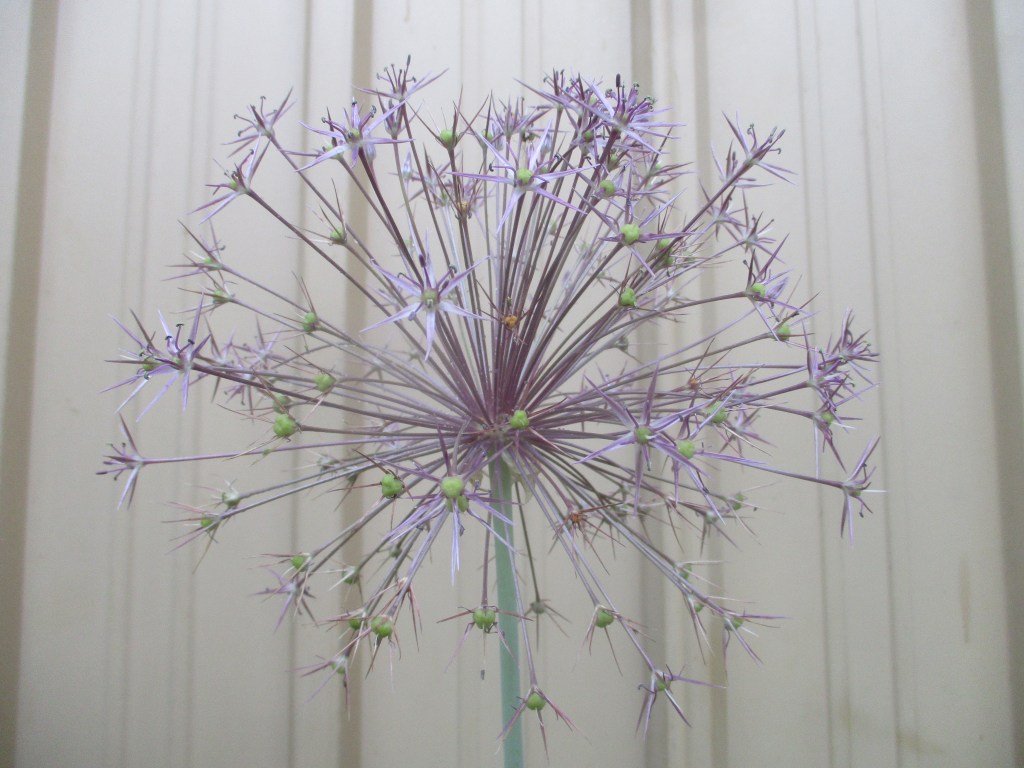
6. Allium christophii, star of Persia, is the other of the two species of Allium from Tangly Cottage Gardening. I hope that both species are reliably perennial, and their bulbs multiply.

This is the link for Six on Saturday, for anyone else who would like to participate: https://thepropagatorblog.wordpress.com/2017/09/18/six-on-saturday-a-participant-guide/

Blanket Flower

Blanket flower covers a flower bed.

The bright colors and patterns of blanket flower, Gaillardia, resemble those of blankets made by native American Indians. The daisy flowers are typically two different shades of red, orange, yellow, brown or yellowish white. Not many varieties bloom with single colors. Taller varieties can get almost two feet tall, with slender but sturdy stems that are good for cutting. The narrow leaves are mostly basal, so do not crowd bloom.

The more popular varieties of blanket flower are perennial. Healthy plants can slowly get quite broad, and can self sow their seed to spread a bit farther. Annual varieties can not get as broad, but often self sow more efficiently than perennial types do. Once it gets growing, blanket flower does not need much water. However, regularly watered plants are already blooming. Modestly watered plants wait until summer.

African Daisy

Modern African daisies are surprisingly colorful.

Only a few decades ago, the only familiar African daisies, Osteospermum spp., were the sprawling and often sparsely branched ‘freeway daisies’ with blue-eyed white or rarely light purple flowers. They made nice blooming ground cover that could be planted in drifts for a bit of color among the deep green of Algerian ivy on expansive freeway embankments.

Modern varieties are shrubbier perennials with more profuse bloom of white, cream, pink, purple, pale yellow or pale orange flowers, mostly with blue or purple centers. Some yellow flowers have yellow or cream centers. Some of the fancy types have spooned petals like some types of cosmos or chrysanthemums. After the primary bloom phase in spring, a few sporadic flowers may continue to bloom through summer until the secondary light bloom phase late in summer. However, the old fashioned ‘freeway daisy’ types do not always display a second bloom phase. Varieties with variegated foliage are still rather rare.

Even though African daisies can survive in inferior soil with minimal watering, they perform best with good soil and regular watering. Plants in containers can not disperse their roots like they want to, so are are more dependent on regular watering. Fertilizer prolongs bloom.

Calla

Few flowers are as elegant as callas.

If only it did not like such regular watering, the common white calla, Zantedeschia aethiopica, would be quite a sustainable perennial. Once established, it can be difficult to get rid of, particularly in well watered gardens. Even unwatered plants that die to the ground through dry summer weather are merely dormant and waiting for rain to regenerate and bloom.

The remarkably elegant blooms stand about two or three feet tall, each with a single spathe loosely wrapped as a flaring cone around a spadix that supports the indistinguishable diminutive flowers. The bright white spathe is often more than four inches wide, and can be twice as wide in shade. The spadix is only about three or four inches long, and as yellow as Big Bird. The spongy dark green leaves are about a foot or two tall.

‘Green Goddess’ blooms with a longer and recurved spathe with a green tip and margins. Colorful callas are actually different specie. All parts of all types of callas are incidentally toxic.

Gazania

Gazania is colorful until cool autumn weather.

The most familiar of the gazanias are the ‘trailing’ types commonly appreciated as ground cover. They are rather shallow, but dense enough to prevent most weeds from getting through. Their yellow or orange composite (daisy like) flowers bloom initially in spring, and then continue to bloom sporadically as long as the weather stays warm into autumn. Some trailing gazanias have interesting silvery foliage.

‘Clumping’ gazanias do not spread efficiently or thoroughly enough to be practical as ground cover over large areas, but bloom a bit more profusely with bigger flowers in shades of yellowish white, light yellow, bright yellow, orange, brownish orange and brownish red. The foliage gets a bit deeper to form irregular but dense low mounds. Clumping gazanias can be lined up as an informal border around blooming annuals or perennials, or incorporated individually into mixed urns or vertical gardens.

Gazanias are not too discriminating about soil quality or frequency of irrigation. They only need good sun exposure. Trailing gazanias are rather easy to propagate by cuttings made from scraps from pruning around the edges. Clumping gazanias do not get pruned as much, but are easy to propagate by division from dense clumps.