 Black-eyed Susan, sunflowers and a few of the late warm season annuals and perennials are still blooming, and a few will continue into autumn. By that time, cool season annuals can move in; and some of the deciduous trees, shrubs and vines that turn color for autumn will be doing so. Realistically though, this can be the leanest time of year for color in the garden. Even some of the foliage that is colorful through spring and summer has faded.
There are certainly plenty of flowers in season now. However, not many are colorful. Honeysuckle vine is pleasantly fragrant as it bloom in random phases until the weather gets cooler, but the flowers are only pale yellowish white. Some melaleuca trees bloom profusely enough to make a mess, but are just as pale, and do not even provide fragrance; although some have pretty light pink flowers. Abelia flowers are pink and abundant, but are really not all that flashy against their bronzy foliage.
Some of the more colorful flowers are not quite as reliable. Princess flower, hibiscus, blue hibiscus and mandevilla certainly can bloom in late summer or autumn, but sometimes bloom earlier than expected, so have nothing left for later. The bright red flowers of blood red trumpet vine are quite impressive, but only if they are not obscured by the accompanying foliage. Some roses bloom in phases as late as the weather will allow, but actually, most are done by now.
Fuchsia and angel’s trumpet likewise bloom in a few phases once they get started, but unlike the many cultivars of roses, they are much more reliable for a late bloom phase. Escallonia blooms late with small but colorful flowers, but only if they have not been shorn in the past few months. Shearing deprives them of the blooming stem tips that they had worked most of the year for.
Butterfly bush, tree mallow, cape plumbago, bee balm and several varieties of sage and salvia are among the most reliable plants for late summer or autumn bloom. Even without multiple bloom phases, they just naturally bloom at the end of their growing season, before winter dormancy.
 If you’re going to San Francisco, be sure to wear some flowers in your hair. In the 1960s and 1970s, such accessorizing with Paris daisy, Argyranthemum frutescens (which was at the time, Chrysanthemum frutescens), was a fad. The white flowers with yellow centers were about two or three inches wide. Modern cultivars have smaller flowers that might be light pink or pastel yellow.
 Many of the most popular plants are expected to bloom to add color and fragrance to the garden. Many others are grown to produce fruit or vegetables. Some are appreciated for their foliar color in autumn. Big trees are grown for shade. Turf grasses are grown as lawn. Evergreen shrubbery makes hedges. It seems that all plants perform particular tasks in the gardens which they inhabit.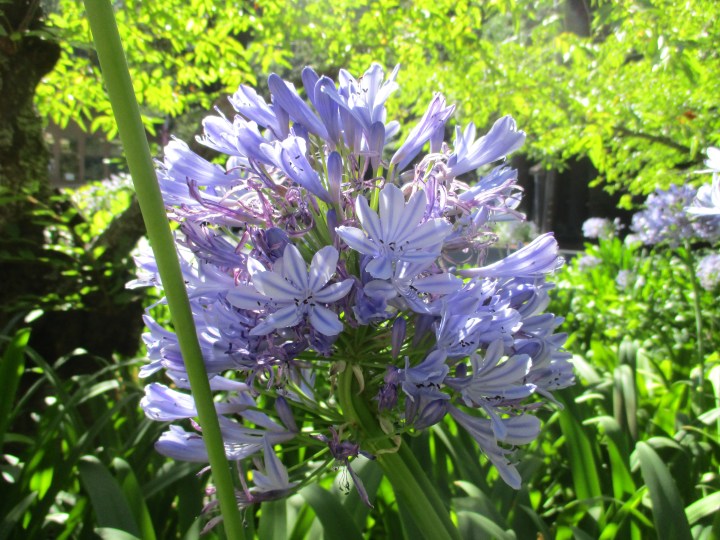

 From formerly dormant bulbs just below where their foliage shriveled in the warmth of last spring, the naked brown floral stalks of naked lady, Amaryllis belladonna, grow fast to about two feet tall. They bloom suddenly with a few or several garish pink lily flowers about three inches long. They are sneaky about it too. Without foliage, and prior to flashy bloom, the bare stalks are easy to miss.
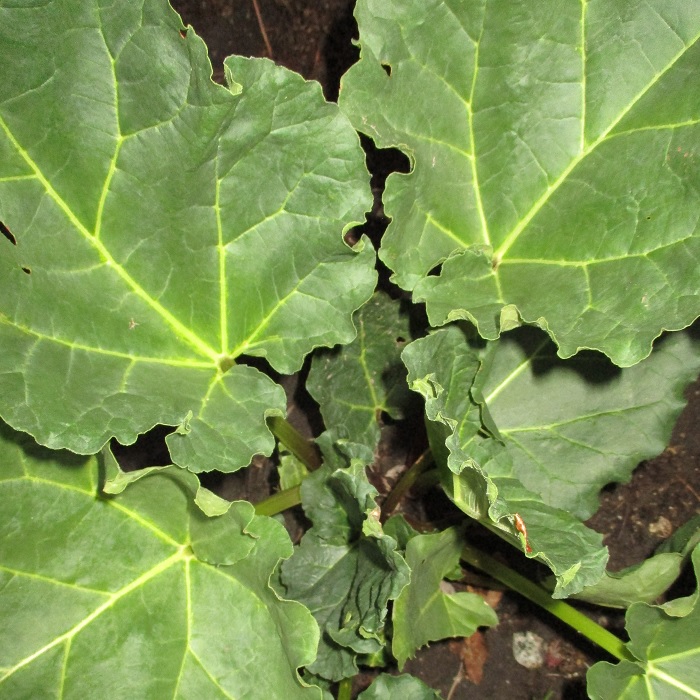 It is not easy to get a pretty picture of rhubarb, Rheum rhabarbarum. The big and sometimes flabby leaves are only impressive to those who know about the succulent petioles (leaf stalks) below. The petioles do not look like much either, until they are cooked into pies or garnet colored preserves. Shabby stalks of tiny flowers rarely bloom, and should get cut out to favor more foliar growth.
 Most of the familiar vines really are exploitative bullies. They shade the same trees and shrubs that they climb for support. Some will even strangle and kill those who make it possible to get where they want to be. If they do not find trees or shrubs to victimize, they are likely to climb walls and ruin the paint, stucco or siding. Their aggressive nature can be a problem in landscape situations.
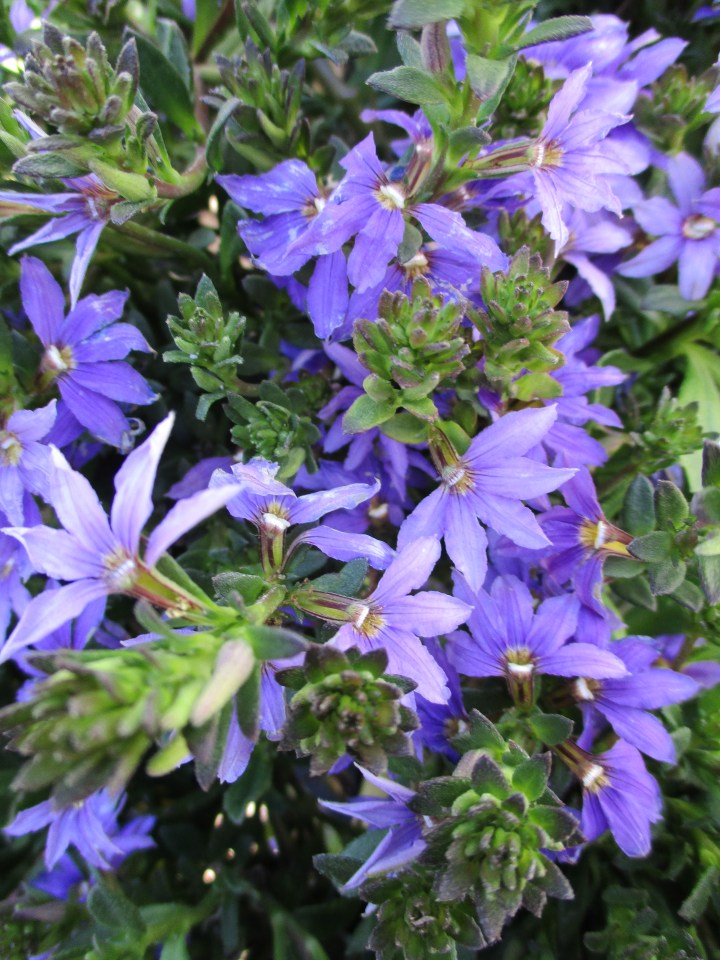 Only a few flowers are true blue. A few more are nearly blue, but slightly blushed with lavender. Of the latter group, fan flower, Scaevola albida, which is usually more lavender than blue, can be quite convincingly blue if conditions are just so. The semi-circular flowers (which are actually wide bilateral flowers) are most abundant in spring and summer, but can bloom sporadically all year.
 It is gratifying to see renewed interest in this old fashioned flower. Naturally occurring varieties of some of the nearly three dozen species of Iochroma were popular decades ago. Some might actually be naturally occurring hybrids that have yet to be identified. Many modern cultivars (cultivated varieties) were intentionally bred or hybridized for more compact growth and profuse bloom.
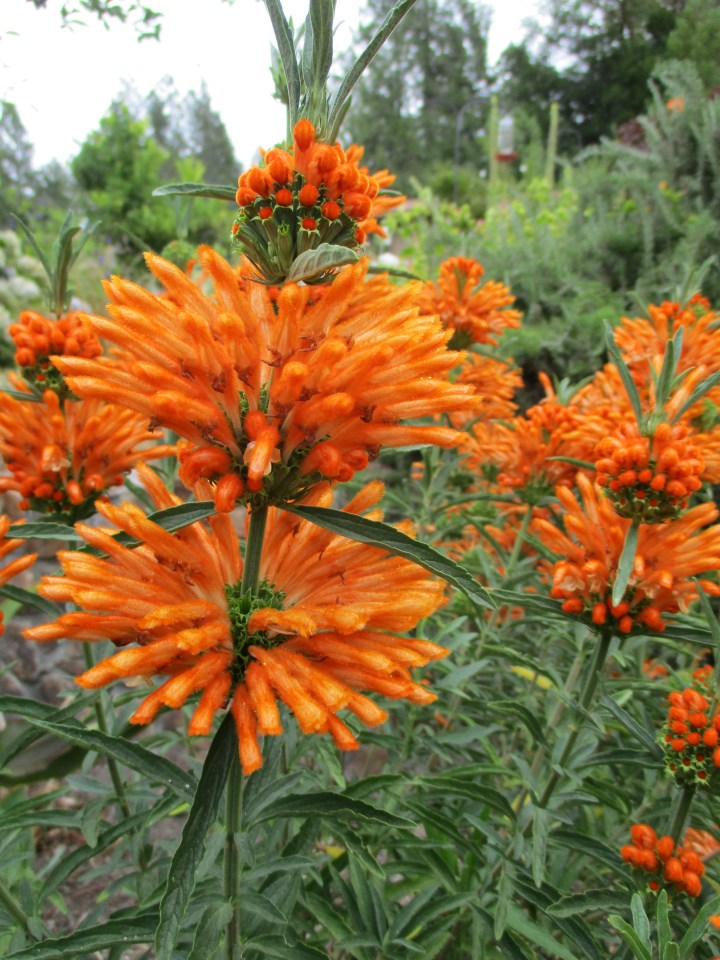 Are warm season annuals really the most colorful flowers for summer? Perhaps. They have their limits though. They are also very demanding. They need to be watered very regularly, and should probably be fertilized too. Many need to be deadheaded frequently. After all that, they are only temporary, and will get replaced with cool season annuals in autumn. Perennials are more practical.
