 Along with all the bare root fruit trees, roses and cane berries, nurseries also stock bare root perennials like strawberries, asparagus, horseradish and rhubarb. They are so easy to plant while dormant. They recover from transplant through spring, and by summer, should be growing as if they had always been there. Although, if they had always been there, they might be crowded by now.
Yes, many but not all perennials eventually get crowded. Strawberries spread by runners, so are easily plucked and transplanted to avoid overcrowding, as well as to propagate more productive plants. Asparagus are variable, so may not get crowded for decades. Horseradish and rhubarb may not mind getting crowded, but could be more productive if individual plants have their space.
For example, crowded horseradish plants produce many small roots. If dug, split apart, and replanted with more space between individual plants, the individual roots get much larger. Separating the roots, which is known as ‘division’, also produces many more new plants. Mature rhubarb plants may not mind being crowded, but are often divided simply to propagate new productive plants.
Division of these sorts of perennials is typically done while they are dormant through winter. If that sounds familiar, it because it is the same reason why these sorts of perennials are available as bare root stock. They get processed while they are unaware of what is happening, and wake up in their new and better situations. Many defoliate while dormant. However, most are evergreen.
Ornamental perennials like lily-of-the-Nile, African iris, New Zealand flax, society garlic, torch lily, lily turf and acorus grass are all good candidates for division if and when they become overgrown. So are most aloes, some terrestrial yuccas, several ferns and some of the more resilient clumping grasses. Agave pups can be dangerous, but really should not be allowed to get too crowded.
Division might be as simple as taking a few pups or sideshoots from a large clumping plant, or as involved as digging an entire large plant to divide each individual shoot. More often, large plants get dug and split into a few smaller clumps of many shoots. New plants should be groomed of deteriorating foliage. The long leaves of New Zealand flax should be cut in half to avoid desiccation.
 There is some controversy about the identity of the flowers that Micky Mouse picks at the porch to present to Minnie Mouse when she answers the door. Some insist that they are Transvaal daisy, Gerbera hybrida. When they are not in black and white, the substantial daisy flowers are cartoon hues of yellow, orange, red, pink and white, sometimes with chocolatey brown or black centers.
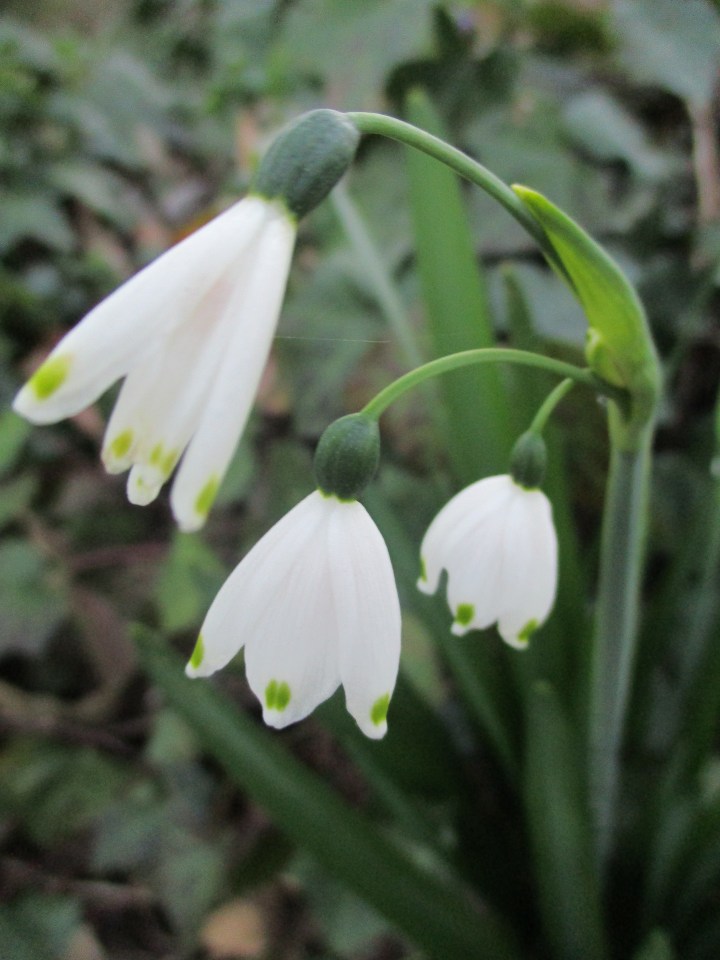 Where winters are more wintry, garden enthusiasts get to brag about their snowdrops as they emerge and bloom through melting snow. Diminutive white flowers against a backdrop of white snow may not look like much to us. We have more colorful flowers through winter, without the snow. Their kind of snowdrops, Galanthus specie, need more winter chill than they would get here anyway.
 As a group, aloes really deserve more respect. Many will naturalize and thrive with only occasional watering through summer. Candelabra aloe, Aloe arborescens, wants a bit more water than most other aloes, but not much. It looks like a sensitive jungle plant, but is surprisingly durable, and very easy to propagate. Any pruning scraps can be plugged wherever new plants are desired.
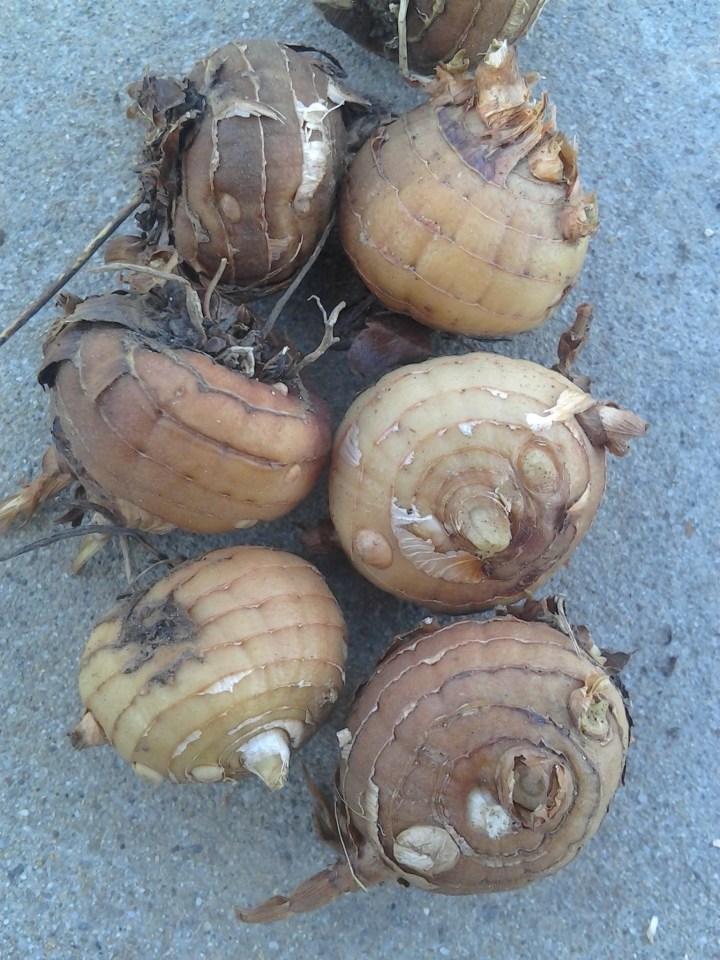 It might seem creepy to think about what spring bulbs are doing right now out in the garden. Like victims of a horror movie, they were buried in shallow graves last autumn. They were not dead though. They were undead but merely dormant. While no one can see what they are up to, they disperse roots and begin to push new foliage up to the surface of the soil. Some might bloom soon.
 Okay, so this is not really the time of year that they should be blooming. Torch lily, Kniphofia uvaria, should bloom in the middle of summer. However, without watering, naturalized plants bloom when the weather prompts them to. Some wait out the warm and dry summer weather to bloom as soon as they get dampened by the first rains. Others bloom in spring, before things get too dry.
 Known more as a medicinal herb, and by its Latin name, coneflower or Echinacea, is a delightful prairie wildflower that works just as well in refined home gardens. It blooms in summer and again in autumn, although autumn bloom can be inhibited if plants are not groomed of deteriorating stems from the previous bloom. Like related gaillardia and rudbeckia, coneflower is a nice cut flower.
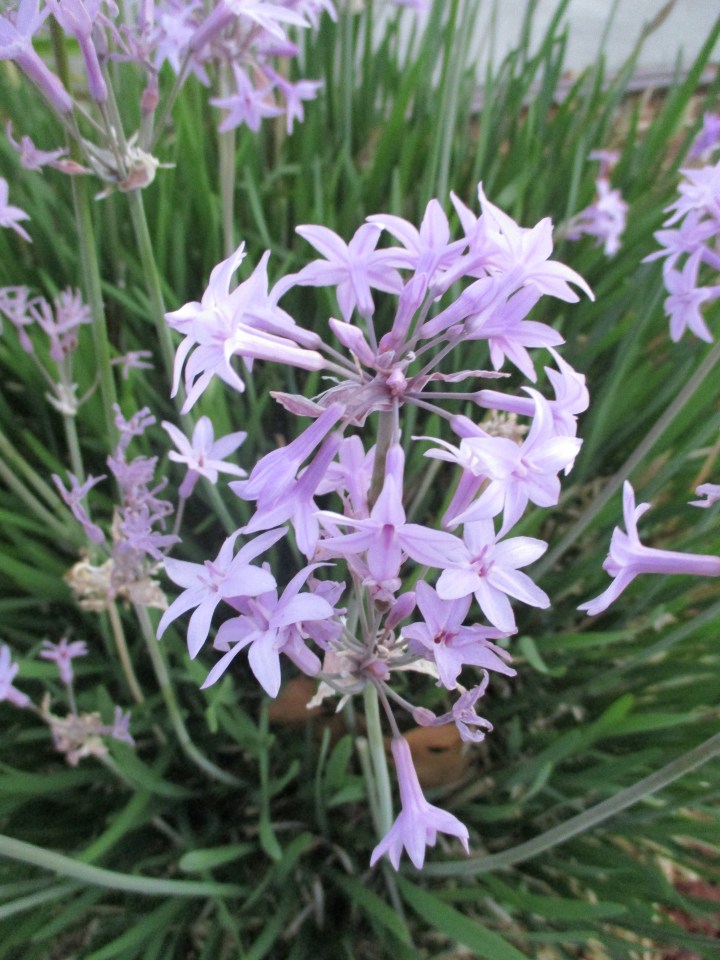 Some flowers are better left in the garden rather than cut and brought in. Society garlic, Tulbaghia violacea, looks like it would be an ideal cut flower, with nice bare stems. The aroma suggests otherwise. It smells something like a strongly aromatic combination of onion and garlic. Even in the garden, it might be a good idea to keep it at a distance. Deer and rabbits do not mess with it.
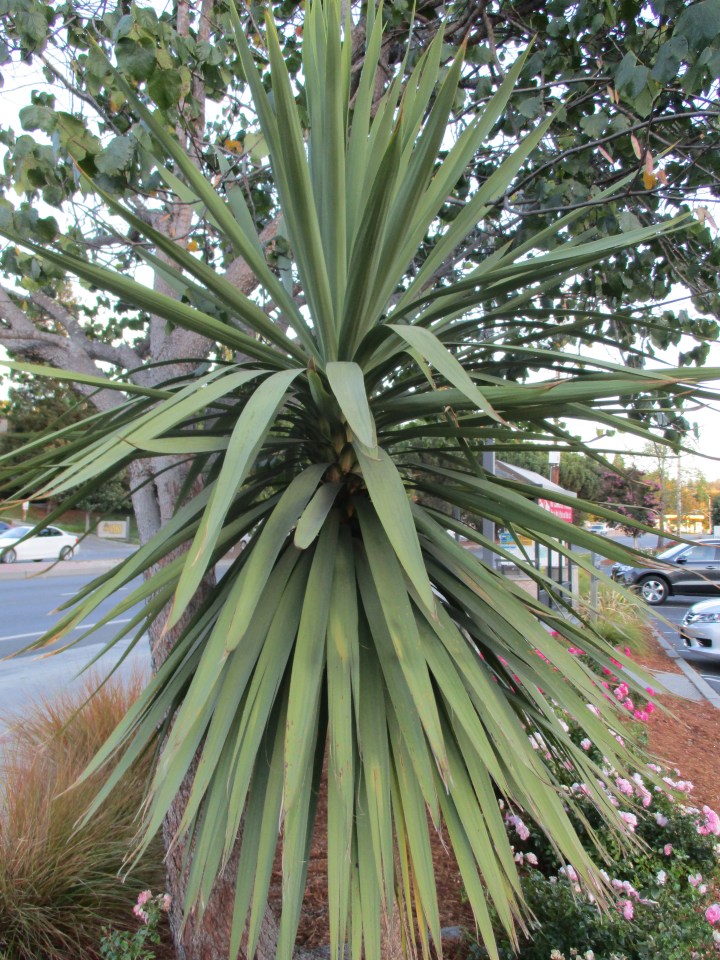 Dracaena palm, Cordyline australis, is not a palm at all. It is more closely related to yuccas. (Incidentally, a few yuccas are also inaccurately known as palms as well, but that is another story.) The simple specie that grows taller than a two story house is rare nowadays. It develops a high branched canopy of evergreen olive drab foliage. The three inch wide leaves are about three feet long.
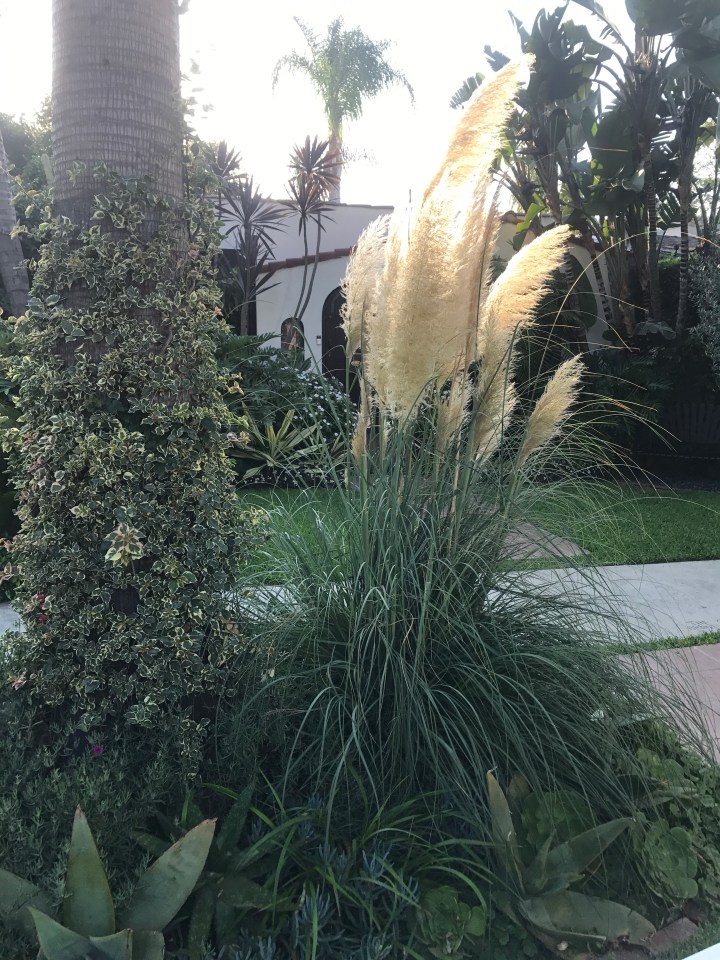 Modern garden varieties of pampas grass found in nurseries are generally non-invasive. Their flowers are described as ‘sterile’, and therefore unable to produce seed. What that really means is that they are exclusively female, and unable to produce seed without male pollinators. However, they have the potential to be pollinated by naturalized pampas grass, and sow a few hybrid seed.
 Tony Tomeo