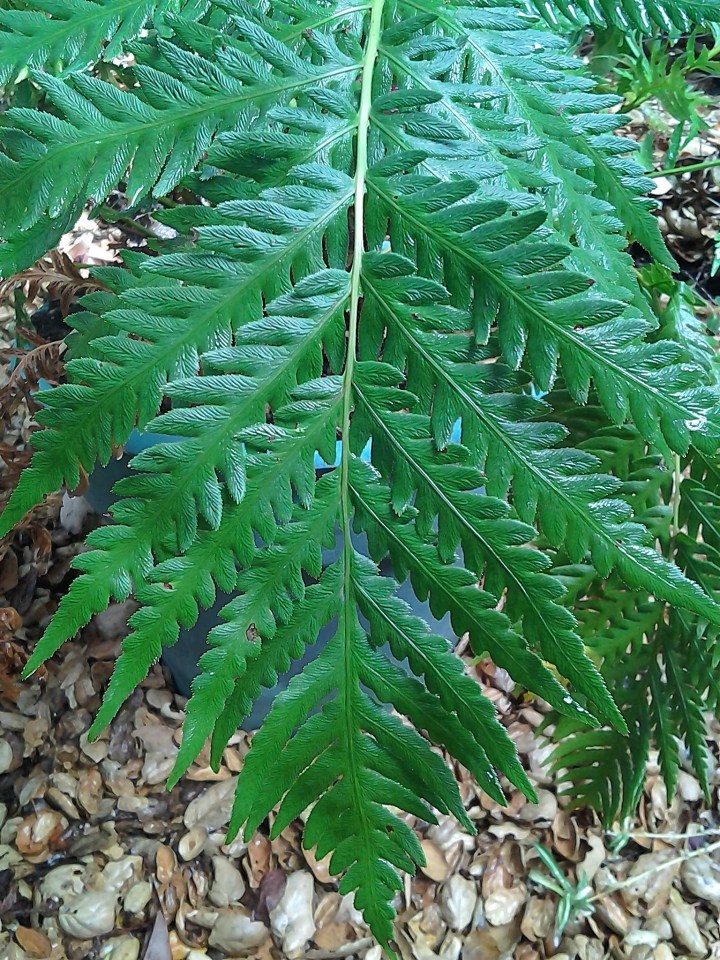
Phlox

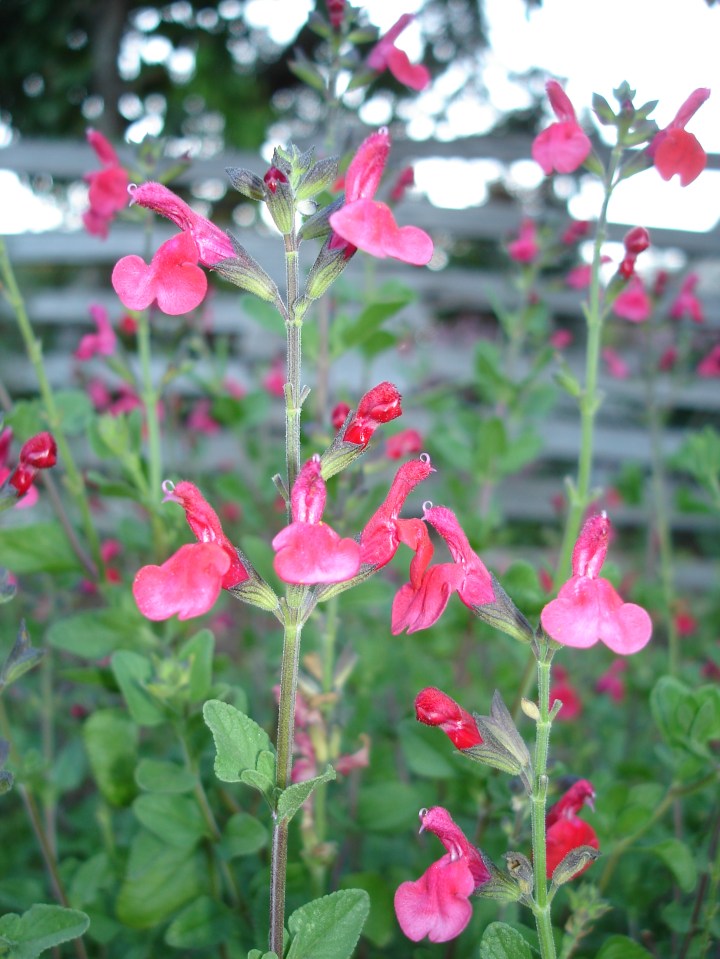
80815Those outside California sometimes envy our ideal climates and soils. More of a variety of plants can be grown here than in most other places in America. There are not many plants that can be grown elsewhere that will not grow here. However, phlox, Phlox paniculata, is an example of a plant that can do well here, but for some reason or another, is much more popular everywhere else.

Phlox is native to much of the eastern half of North America, and has naturalized in other areas where it escaped cultivation in home gardens. Locally, it needs to be watered regularly to bloom on time in late summer. It is quite happy out in the open but might prefer a bit of partial shade in the afternoon here where summers are warm and dry. Powdery mildew can sometimes be a problem.

Bloom can be various hues of pink, purplish pink, red or white. The inch wide flowers are neatly arranged on conical terminal panicles about four to six inches wide. Blooming stems stand almost three feet tall and spread almost as wide. The somewhat narrow leaves are about four inches long. Phlox is mostly grown from seed, and can be propagated by division of perennial basal growth.

New Guinea Impatiens

70802Good old fashioned busy Lizzie is hard to find nowadays, if it can be found at all. The nasty mildew that kills it so quickly might not be prevalent everywhere, but happens to be a serious problem where most of the bedding plant farms are located. Now, the formerly uncommon New Guinea impatiens, Impatiens X hawkeri, which is somehow resistant to the mildew, is becoming popular.
The two specie have distinct personalities though. Busy Lizzie dazzles with cheery cartoonish colors, and bloom profuse enough to almost obscure the light green foliage. New Guinea impatiens has bigger and bolder flowers of white, pink, red, magenta, lavender, purple, apricot and reddish orange, but does not try to hide its rich green, bronze, purplish bronze or gold variegated foliage.

New Guinea impatiens are more expensive, and are not available in cell packs like most other bedding plants are. They are most popular in four inch pots. They do well in pots and tolerate partial shade, but want rich soil and regular watering. Mature plants can get more than a foot wide, and might get as tall if crowded. Although grown as annuals, they can survive as short term perennials.

Nierembergia

70726

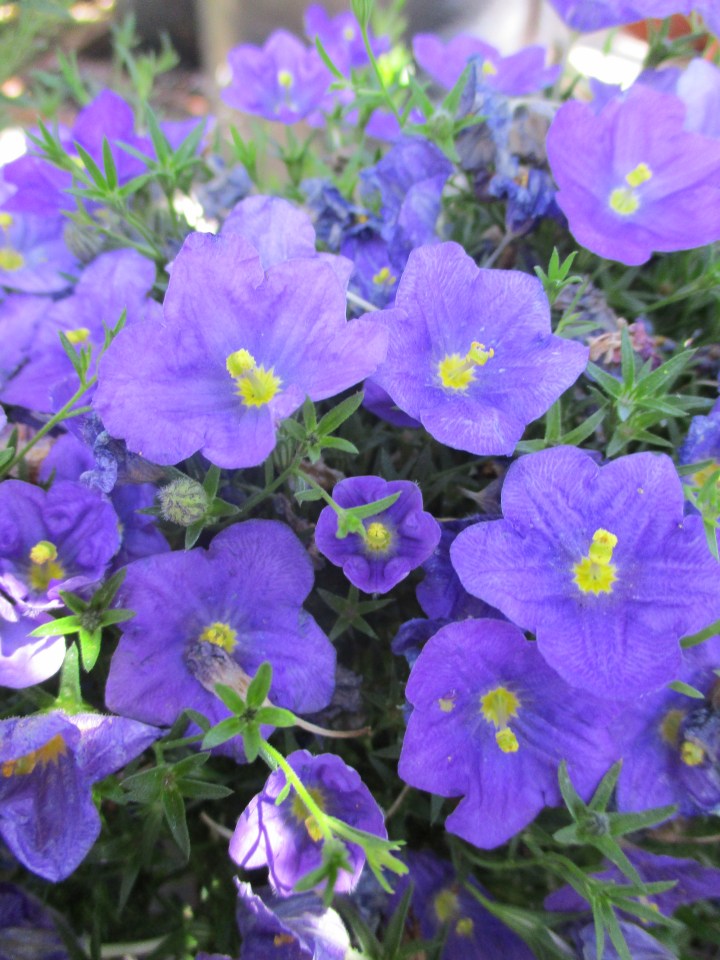
When first created by Chrysler, the Imperial was considered to be so close to perfection that fancy colors were unnecessary. It was originally only available in black or white, and later red, like the Chrysler Imperial rose that was named for it. It took a while for other colors to become available. Perhaps perfection is the same reason why nierembergia is only blue or white, or maybe purple.

Nierembergia is most popularly grown as a warm season annual for color from the middle of summer to autumn. It can get half a foot high and a foot wide. As a perennial, it has the potential to get twice as high and wide after its first year, but it lasts only a few years, and looks rather shabby through cool winter weather. The small flowers are evenly dispersed over the finely textured foliage, lacking only on the shaded sides of the densely rounded plants.

Because it gets a bit deeper than most other annuals, nierembergia is a nice transitional plant between lower annuals that might cascade over the edge of a planter in front, and higher or more upright perennials or shrubbery that might obscure a foundation behind. It can work alone too, but does not cascade from planters, big pots or hanging baskets.


‘Big Blue’ Sea Holly

70719This one is no fun to handle. It is just as prickly as it looks. Yet, it is the spiny foliage and blooms that make ‘Big Blue’ sea holly, Eryngium X zabelii ‘Big Blue’, so appealing. The knobby blue thistle flowers are centered on prominently flaring grayish blue bracts that look like metallic snowflakes. The intricately lobed grayish foliage contrasts splendidly with just about any darker green foliage.
Bloom begins with summer and continues almost to autumn. The first flowers are solitary on strong stems. As they fade, sideshoots from these original stems continue to bloom with smaller but more abundant flowers. They are excellent cut flowers, fresh or dried. However, cutting the first solitary flowers with long stems removes some of the sideshoots that would otherwise bloom later.

Mature plants can get three feet tall and half as wide. Shade, even part shade, causes irregular growth that can be quite weedy. Although perennial, ‘Big Blue’ sea holly might live only a few years.

Contrary to the appearance of the bristly thistle like foliage and flowers, sea holly is in the Umbelliferae family, which means that it is more closely related to celery and carrot than it is to artichoke!

Garden Bloggers’ Bloom Day July 15 – Summer Weather Has Arrived


While so many of us in the Northern Hemisphere were contending with unusually warm weather, our weather here had been unusually mild. The weather only recently became warm for the past two weeks or so. It did not get unusually hot here like it did in so many other regions, but the warmth developed suddenly enough to damage many of the flowers that were blooming at the time. This included many of the new perennials that we happened to be installing at the time. Consequently, there were not nearly as many flowers to get pictures of as there had been in May, and some of the flowers in these pictures show damage from the sudden change in the weather. I am sorry that I neglected to participate in Bloom Day in June.

These pictures were taken at work, on the Santa Cruz County side of the Santa Cruz Mountains above Los Gatos, closer to Felton. The climate is more coastal than the chaparral climate of the Santa Clara Valley, although both are within USDA Zone 9.

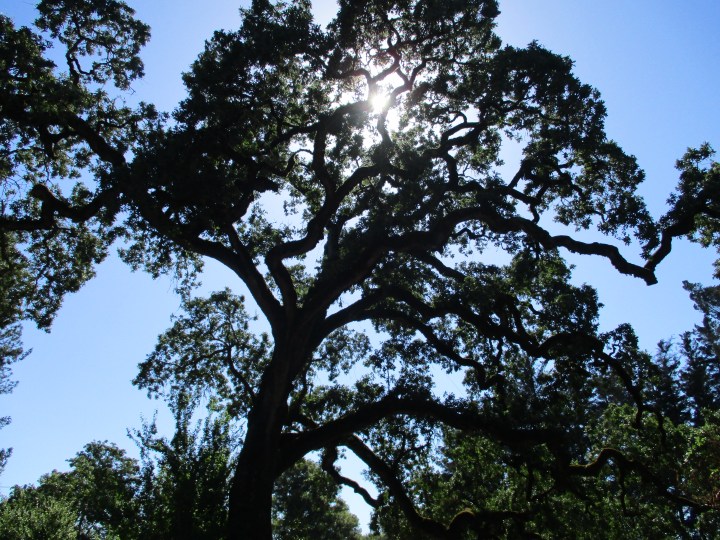
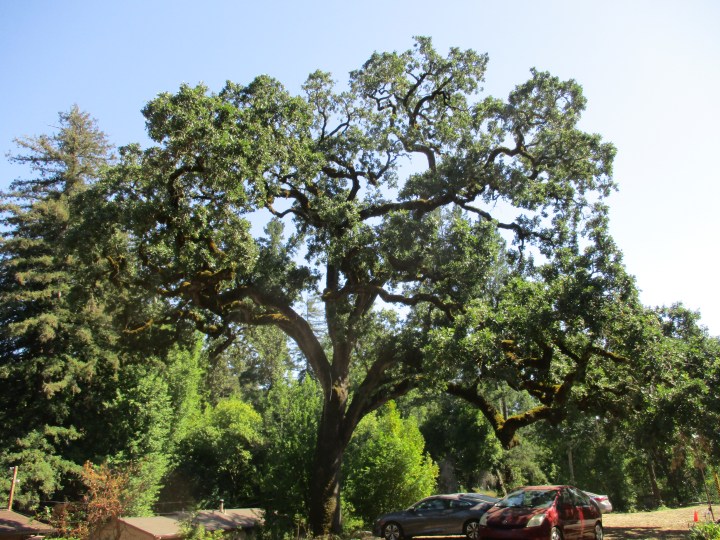
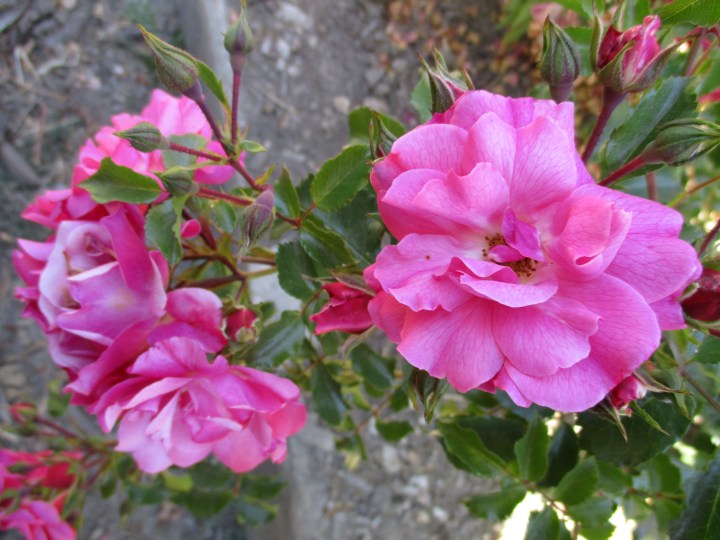
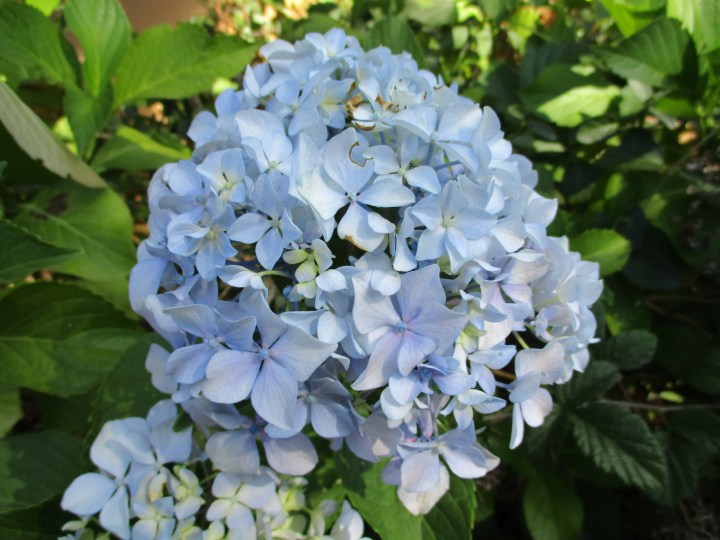
Carpet Roses are the lowliest of all roses, but they happen to be more functional for more landscape applications than other roses are. These got pruned back to a few canes over winter, and will get trimmed for confinement about now, but really do not need any more work than that. They bloom profusely in a few phases. They are only looking tired now because of the weather.7bd1Hydrangea are finishing in most other areas here. These are odd ones. They are more exposed to harsh weather conditions than others, but are somehow lasting later than those that are more sheltered. They are blue instead of pink, but are not in what would be considered acidic conditions within redwood forests. Nor were they fertilized to be blue. No one is complaining.7bd2Yarrow was planted just before the weather changed. Once established, it does remarkably well in the endemic soil and climate.7bd3Yarrow unfortunately got roasted by the sudden warmth. These yellow (or ‘golden’) flowers are getting quite crispy already.7bd4Coneflower was likewise planted just before the weather changed, and likewise got roasted. These happen to be some of the best at the moment.7bd5Valley Oak probably qualifies as appropriate for Bloom Day because it really is blooming right now. You just can not see it. The dust is everywhere. I really like this grand and sculptural tree. The valley oak happens to be the biggest oak in North America, and it also happens to live here, on the outskirts of groves of coastal redwoods, which are the tallest trees in the World.7bd6Valley Oak is so excellent that I had to get another picture of it from another angle. The first picture was looking about south toward the midday sun. This is looking almost to the east, perpendicularly to the other picture. The cars in the foreground are much closer than they seem to be. The trunk of the tree is significantly wider than it seems to be in relation to the cars.7bd7Garden Bloggers all over America and in other countries can share what is blooming in their gardens on the fifteenth of each month on “Garden Bloggers’ Bloom Day”, hosted by Carol Micheal’s May Dreams Garden at http://www.maydreamsgardens.com

Coreopsis

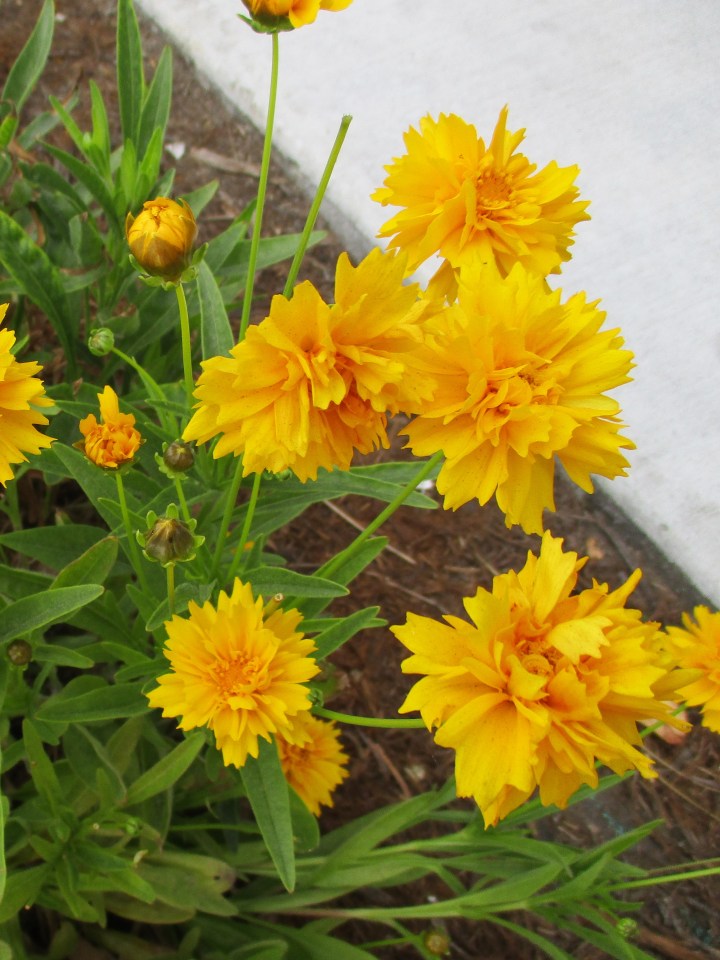
80718It is a common theme. Coreopsis was a much simpler group of only a few specie and cultivars in the 1980s. There are now too many hybrids and cultivars to keep track of. They have been bred so extensively that they do not produce viable seed like the old fashioned types that can self sow so nicely, and were more closely related to the unimproved specie that would be found in the wild.

Breeding did more than expand the range of floral color and form. It combined the more impressive flowers with the resiliency of the toughest of perennial specie. Because they are sterile, some of the modern hybrids may not need to be deadheaded like more traditional types. Although tougher modern hybrids can capitalize on the sustainability fad, they can not proliferate and naturalize.

Coreopsis blooms in summer and autumn. The small daisy like flowers can bloom yellow, orange, red or pink, but traditional bright yellow is still the favorite color. Most cultivars are less than two feet tall and wide. A few can get nearly twice as tall. The most compact cultivars are only about half a foot tall. Coreopsis wants good sun exposure, and will bloom less and likely mildew if shaded.

‘Mystic Spires Blue’ Salvia

70705Once it gets started in late spring, ‘Mystic Spires Blue’ salvia has potential to bloom until autumn. It only needs older floral spikes pruned away as they fade (deadheading) to stimulate new bloom. If it gets overworked and lanky without deadheading, it can be cut back in the middle of summer to start a new bloom cycle all over. It can get more than three feet tall and almost three feet broad.

Butterflies and hummingbirds really dig the small rich purplish blue flowers that are tightly packed into the upper foot or so of the floral spikes. These floral spikes tend to lean away from the center of the plant, with the tallest on top leaning collectively in one direction or another. They look like they would be good cut flowers, but they might start to drop their older flowers after only a few days.

The deep green foliage is technically evergreen, but it does not matter. All growth should be cut back to just a few inches above the ground in winter. ‘Mystic Spires Blue’ salvia likes richer soil and a bit more water than what drought tolerant salvias want. Yet, like most salvias, it grows more efficiently as #1 (1 gallon) plants planted as winter ends, than #5. Warm and sunny exposure is best.


Coneflower

80704The native American coneflower, Echinacea purpurea, of the Midwestern prairies has been popular within its native range longer than anyone can remember, and has become more popular in the West as extracts of echinacea became a fad in herbal medicine several years ago. Modern garden varieties and cultivars have been bred and hybridized for larger and more colorful flowers.

Coneflower has developed from a sturdy but relatively simple prairie wildflower into a flashy and potentially garish perennial, with white, pink, red, orange, yellow, purplish pink or pale green daisy (composite) flowers as wide as three or even four inches. The fat and bristly rust-colored centers become more prominent as the outer petals (ray florets) fold downward to form a domed cone.

The sturdy upright stems can get taller than three feet and wider than two feet, although some garden varieties are more compact. The somewhat raspy basal foliage is full and fluffy, but becomes progressively sparser higher up the stems. Some rare cultivars bloom with double flowers. New growth replaces the old annually, and with plenty of sunlight, blooms through the warmth of summer.

Annuals Just Might Be Perennials

70614thumbAnnuals come and annuals go. There are cool season annuals for winter. There are warm season annuals for summer. Really though, there are all sorts of annuals that are not annuals at all. Most are some sort of perennial that has the potential to last longer than a single season. Only a few popular ‘annuals’ would necessarily die after blooming and producing seed, within a single year.

To be clear, true annuals last only a single year. They probably germinate from seed early in spring, and grow quickly. They then bloom in spring or at least by summer, and subsequently produce seed. Once their seed has matured and been dispersed, their job is done. They finally die in late autumn or winter. Annuals from deserts are even faster because of the harshness of the weather.

Many large-flowered sunflowers are true annuals. They are finished once their seeds mature. They will not bloom again. Even if they wanted to, they would not survive through winter. Petunias should be annuals, because they also die over winter. However, it is possible for them to survive winter in a semi-dormant state, and regenerate and bloom again the following spring and summer.

Realistically, it is not practical to salvage petunias for a second year. It is easier and more efficient to plant new ones. Yet, it sometimes happens, particularly in mixed plantings where old plants can get cut back while cool season annuals dominate in winter. Alternatively, lanky old stems can get buried with only their tips exposed. These tips might grow as new plants the following spring.

Cyclamen are cool season annuals that have been dieing back for summer. They usually get removed by now. However, in mixed plantings, some of their fat tubers can survive through summer to regenerate next autumn. For what they cost, they are worth salvaging! Primrose, chrysanthemum, impatiens and the various fibrous begonias are all worth salvaging through their off seasons.

Fibrous begonias may not know what their off season is. Those that bloomed through winter might be looking tired by now. If pruned back, they could regenerate as warm season annuals. Those planted in spring might look tired by the end of summer. If pruned back early enough in autumn, and protected from frost, they might grow enough before winter to work as cool season annuals. Cutting them back and waiting for regeneration may not be much more effort than replacing old plants with new ones, and is less expensive.

Souvenir

P80609KNurseries are full of plants for sale. That is their business. They sell plants, and whatever plants need. With a bit of money, it is easy to purchase plants to compose an exquisite landscape. That is important to landscape professionals who make a business of composing landscapes to beautify the environments in which they work.

Those of us who enjoy home gardening might also purchase plants that we want for our garden. Yet, our home gardens are more than mere landscapes that are designed to simply beautify. The might also produce flowers for cutting, fruits and vegetables. Some might produce firewood. Gardens are usable spaces for active lifestyles. They are spaces for us to grow whatever we want to grow.

I buy almost nothing for my garden. The last item I purchased was a ‘John F. Kennedy’ rose, and I only did so because it was easier than growing one from scratch, and it is my favorite hybrid tea rose. Almost everything else was grown from seed, cutting, division or even as entire plants taken from somewhere else. They all have stories. My figs and quince are from trees that have been producing fruit in the Santa Clara Valley for generations. My great grandfather gave me my first rhubarb before I was in kindergarten. I found one of my pelargoniums in a neighbor’s trash heap when I was in junior high school. I found another in a creek where I grew citrus in Gilroy in the early 1990s.

My iris are from all over. My favorite are still those from the garden of my great grandmother https://tonytomeo.wordpress.com/2017/09/10/roots/. Two others came from and ‘incident’ back in college https://tonytomeo.wordpress.com/2017/09/12/the-colors-of-karma/ . I may grow as many a four white iris, not only because they are my favorite color, but because they came from important origins. The short white iris that I do not like much must stay because it came from my grandmother’s garden in Saint Helens. There is another tall iris that is not a pure white, but seems to be somewhat grayish, but it must stay too because it is the only iris I got from the historic home of a friend’s mother in Monterey. One of my favorite whites was supposed to be red, but must stay because it came from a friend’s home in Lompico . . . and because it is one of the prettiest. I have a purplish burgundy iris that I only recently learned was brought from the garden of a colleague’s grandmother in Placentia, a town in Orange County that really should change it’s name. It proliferated and was shared with the Felton Presbyterian Church, where it proliferated again, which is how I found some on a trash heap. They are a keeper now.

When they were all together in the same garden, I grew as many as fourteen bearded iris, with a few other types. Some of the redundant white bearded iris have been relocated to the garden parcel in Brookdale, just to keep the separate from similar cultivars. Not many have been added, although there does happen to be a group of mixed iris from the garden of a former client in Ben Lomond. I think I will keep them mixed because they are easier to keep track of as a single mixed group rahter than as several separate cultivars.

These pictures are a few weeks old, from when the iris were still blooming. The iris in the picture above came from the garden of a friend in the East Hills above San Jose. The flowers are the biggest of all the iris I grow. You can see how distinctive they are. The iris in the picture below, which is not a good picture, is ‘Blueberry Ice’. It was a gift from the Clara B. Rees Iris Society. It has stout stems to support the very wide flowers that are mostly white with a variable blue edge.P80609K+