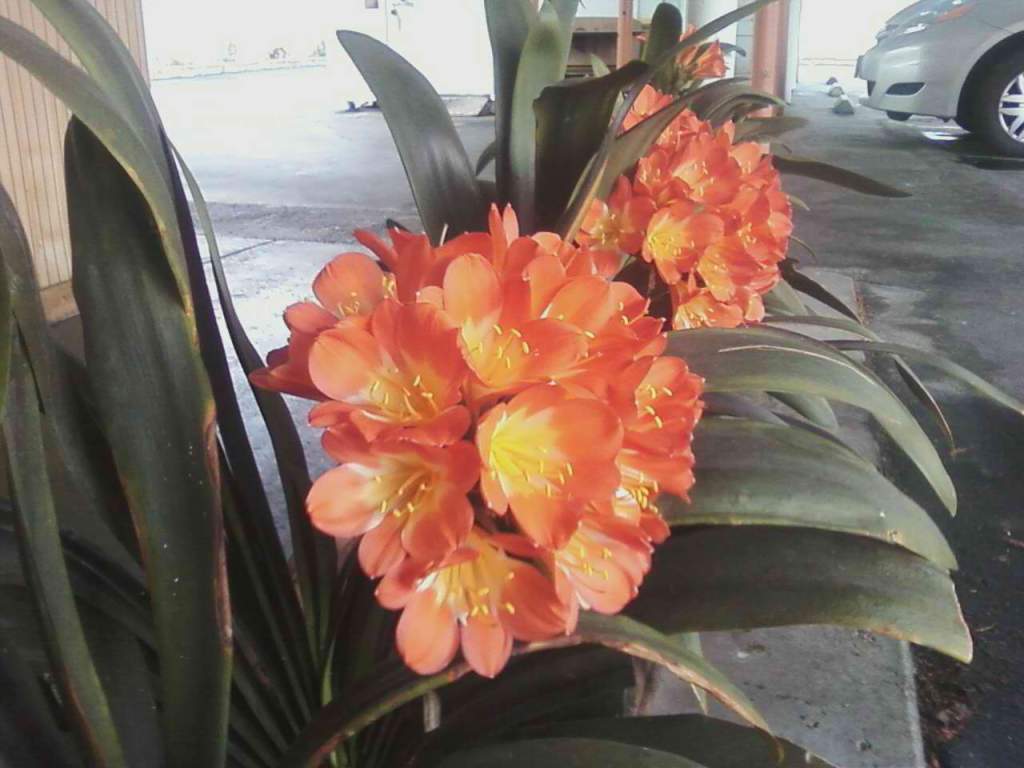
Kaffir lily may look like a bright orange lily of the Nile.
Not much more than a decade ago, Kaffir lily, Clivia miniata, was known almost exclusively for big rounded trusses of boldly bright orange flowers at the end of winter or beginning of spring. Relatively recent breeding has extended the color range to include some softer shades of orange as well as many shades of yellow and reddish orange. Solomone Hybrids are various shades of yellow. ‘Flame’ is brilliant reddish orange. Some varieties bloom earlier in winter. Others bloom later in spring.
Individual tubular flowers are actually rather small, but are clustered like hydrangea flowers on strong stalks that stand as tall as a foot and a half. Bright red berries sometimes appear after flowers fade. The rather rubbery foliage is deep green. The individual strap shaped leaves are rather wide and can be nearly a foot and a half long. Belgian and French hybrids have heftier flower stalks and wider leaves. Established plants do not like to be disturbed, but may get too crowded to bloom well if not dug and divided every few years or so.
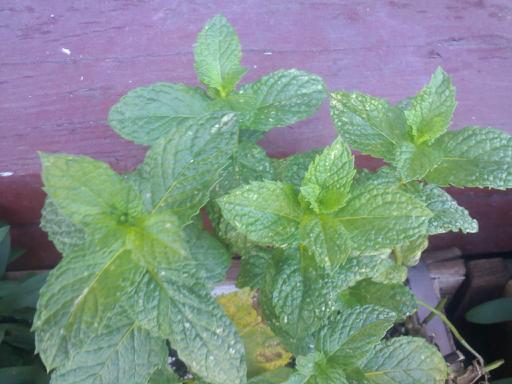
Mints have a sneaky way of migrating around a garden.
What most people who have grown the various mints remember about them is that they have a sneaky way of getting around the garden. They do not seem to be aggressive or weedy, but can be invasive with their subterranean stems nonetheless. That is why they are so commonly grown in pots, planter boxes or even pots sunken into the ground. Contained plants that get cut back at the end of winter every year look much better than unkempt plants that do what they want to anyway.
Once established, mint does not need any attention at all and only moderate watering. However, it performs much better with somewhat rich soil, regular watering and occasional grooming to remove old stems and spend flower stalks, (as well as getting cut to the ground in winter). Mints tolerate considerable shade or can be just as happy with full sun exposure.
Spearmint, Mentha spicata, is probably the most popular mint, with rich green serrate leaves that are a bit smaller than those of the second most common mint, peppermint. Minute pale blue flowers bloom in vertical trusses at high as two and a half feet. Most of the foliage stays lower, about a foot deep. The leaves can be used for flavoring fresh from the garden or dried. Like all mints, spearmint is very easy to propagate by division of rooted stems.
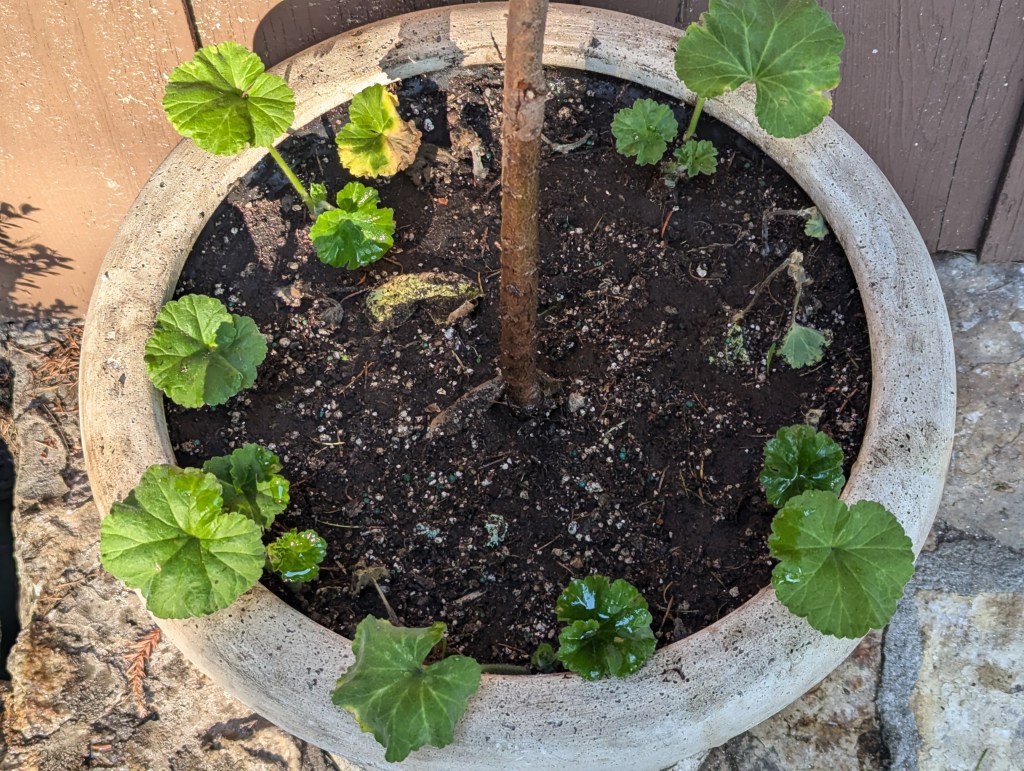
Horticulture involves many sticks. Almost all are pruning scrap. Very few become scions for grafting, like the stick of ‘Beurre d’Anjou’ pear that I wrote about last week. A few more become cuttings, like these white zonal geraniums, Pelargonium X hortorum. These cuttings were processed from scrap of the same that formerly inhabited their same pair of big pots. The original specimens performed well within their pots for a few years, but were about to become overgrown if they had been left to grow for another season. They could have been pruned back and left to regenerate. However, because small specimens of lemon cypress, Cupressus macrocarpa ‘Goldcrest’ were added to their large pots, it was easier and neater to simply remove them completely and replace them with eight cuttings in each of their two pots. These cuttings should grow nicely and perform well for a few more years. Then, they can either be cut back to regenerate, or replaced with cuttings processed from their own scrap after their removal. Such processes cost no more than a bit of time and effort. I have been doing the same with a weedier bright pink zonal geranium that I have been growing since I was in junior high school in about 1979. I acquired the original sticks from a neighborhood garden debris dump, and have been growing them ever since then. I brought them with me to every home that I lived in through college, and then brought them back here when I returned. I acquired a similarly weedy but orangish red zonal geranium in about 1993, and have been growing it since then also. Zonal geraniums are underappreciated for their simplicity, practicality and, most of all, their sustainability. Once they inhabit a garden, there is no need for them to ever leave.
Warm season annuals are more varied than cool season annuals for one simple reason. Spring and early summer are the best time for bloom. Afterward, there is plenty of time for seed to develop, prior to cool winter weather. Obviously, most flowers want to exploit this schedule. This includes wildflowers, particularly in regional chaparral or desert climates.
Wildflowers are in more of a rush to bloom for early spring here because summer is arid. They could be more susceptible to premature desiccation later. They last longer and can bloom later in home gardens with irrigation. Actually though, not all wildflowers bloom for early spring. Some bloom for autumn or winter. A few bloom for summer, generally briefly.
There is no explicit definition for wildflowers. Western redbud and the various ceanothus are technically native wildflowers. Yet, they grow as large shrubbery or even small trees. Most popular wildflowers are annuals. A few are biennials or perennials. Some perennial sorts must mature for more than a year before they bloom well. Some are very persistent.
Technically, wildflowers should be locally native, and observable directly within the wild. Realistically, this expectation is unrealistic. Many of the most colorful, like perennial pea, are naturalized exotic species. Most wildflower seed mixes include random species from elsewhere. Some are regionally specific, but to other regions and very different climates.
California poppy and various lupine are the most popular and familiar native wildflowers. Douglas iris, yarrow and clarkia are about as practical for cultivated home gardens. Bush poppy and monkey flower more appropriate to rustic landscapes beyond home gardens. Many wildflowers need aggressive maintenance, such as cutting back after their season.
Seed of most annual and perennial wildflowers prefers to be in a garden by late autumn. It can then settle in through cool and rainy winter weather to grow and bloom about now. With watering after the winter rainy season, several might start now to bloom for summer. Some of the more sustainable species can disperse seed for another wildflower season.
Not many summery bulbs provide as much immediate gratification as Canna. They grow very fast as soon as the weather begins to warm at the end of winter. They could become a bit too invasively vigorous for some situations. Canna are almost too easy to propagate by division. They probably perform better with annual thinning, preferably while dormant.
Dormant canna rhizomes are now available from nurseries. Potted specimens should be available a bit later. Canna, though, might be as available from friends or neighbors who grow too many. They crave frequent irrigation, and can inhabit riparian situations such as ponds. Although they are not too discriminating about soil, the prefer organically rich soil.
Canna foliage is about as lush and striking as its bloom. It can be green, various shades of bronze or variegated with white, yellow or bronze. Flowers can be thin and ribbony, or big and billowy. Floral color is various hues of yellow, orange, red, pink, or rarely creamy white. Flowers are commonly spotty or blotchy. Some canna grow higher than eight feet. Dwarf cultivars bloom splendidly without growing taller than two feet.
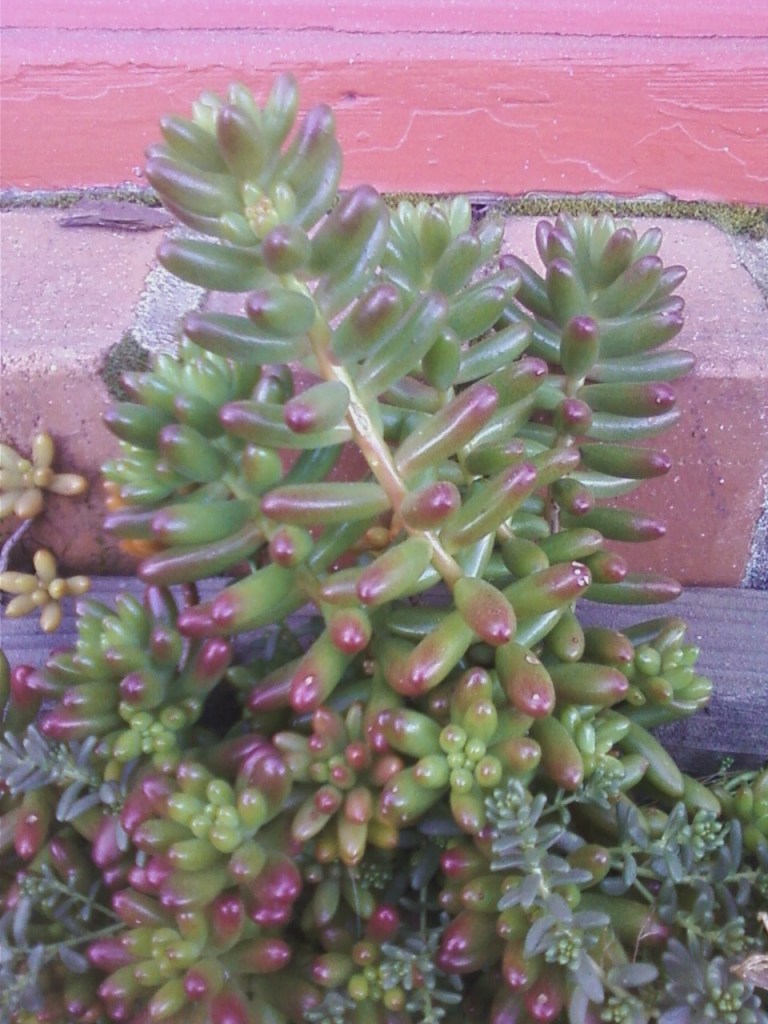
If it appears to be related to burrow’s tail, it is because pork & beans is the same genus.
The tender succulent foliage of pork and beans, Sedum rubrotinctum, is as squishy as it appears to be, so is safest where it will not be disturbed. Although it sprawls around without getting much deeper than six inches, it does not fill in reliably enough to be a real ground cover over a large area anyway. It can instead add color and texture in small doses between larger plants or stones. It is a nice addition to urns of mixed perennials, rock gardens and dish gardens. It propagates very easily from stem cuttings or even leaves that break off, so can be tucked into gaps in stone walls.
The plump three quarter inch long leaves resemble jelly beans more than pork and beans, since they are green where shaded. More exposed foliage is more bronzy red or brown, especially at the tips. Small clusters of tiny yellowish flowers are held above the foliage on reddish brown stems in spring.
Strelitzia nicolai, is giant bird of Paradise. Unlike the more familiar bird of Paradise, with basal foliage and its distinctive orange flowers, this species develops several tall trunks and less colorful but interestingly large white flowers. We recycled several into one of the landscapes here from a home garden in Morgan Hill about two years ago. Originally, they were three somewhat mature groups, with rather tall trunks. Then, they were divided into individual trunks and pups. Ultimately about sixteen were installed into the landscape, with a few spare pups canned as spares, just in case some of the others do not recover from their division. I predicted that those with tall trunks would not last long before replacing themselves with basal growth, and then shedding their unusually tall trunks. Not only are they not developing basal growth yet, but their upper foliage on top of their lanky tall trunks is actually growing and developing into new foliar canopies. They sort of look like silly palm trees that are getting less silly as they continue to grow. I mean that they actually look rather appealing, and probably look more appealing to those who do not know what they should look like. They seem to be pretending to be faux palm trees. I can do nothing about their behavior, and even if I could, I would not. I want to see what they do next. I suspect that they will eventually perform as expected. I also suspect that, because they are already so tall, that, for as long as they retain it, their upper foliage will never be as lush as it would be if lower. That is normal for the species, and how those who maintain such specimens know when to cull the taller trunks by cutting them to the ground.
Coral bell foliage is as pretty as its delicate flowers for which it is named.
Even though their delicate trusses of tiny hanging flowers on one or two foot tall wiry stems make good cut flowers and attract hummingbirds in spring and early summer, coral bells, Heuchera micrantha, is more often grown for its colorful foliage. Contrary to their common name, the flowers (of this species) are more often pale or greenish white anyway. Their foliage can be all sorts of shades of green, gold, tan, brown, bronze, and purplish. The rounded and lobed leaves have somewhat raspy tomentum (hairs) and can be about two and a half inches wide. ‘Ruffles’ has more ruffled and deeply lobed leaves. ‘Palace Purple’ is a very popular cultivar with distinctive deep bronze or purplish foliage.
Mature plants can be divided in spring to make more plants every few years or so. Where protected from frost, division can be done in late autumn. Coral bells can also be propagated by cuttings. Rich soil and good exposure are preferred; but partial shade is best in warm spots.
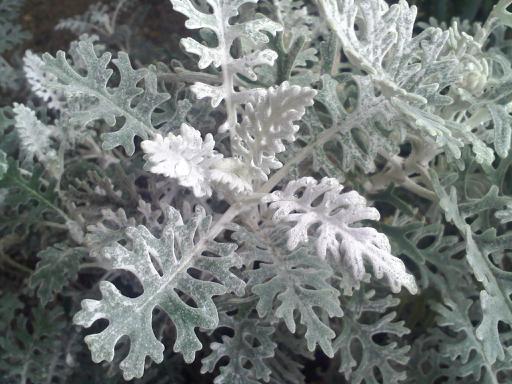
Such silvery foliage contrasts exquisitely with bronze foliage.
The relaxed trusses of small yellow composite (daisy-like) flowers of dusty miller, Senecio cineraria, can bloom at any time except when winter gets too cold. They are still blooming now. Yet, who cares? Dusty miller is grown more for its fuzzy white foliage than for bloom. It actually looks best and fluffier if occasionally shorn and pruned to remove blooming stems before they bloom. Individual leaves are intricately lobed. Mature plants get taller and wider than two feet. Dusty miller likes full sun exposure, good drainage and moderate water. Too much water causes rot and discoloration.
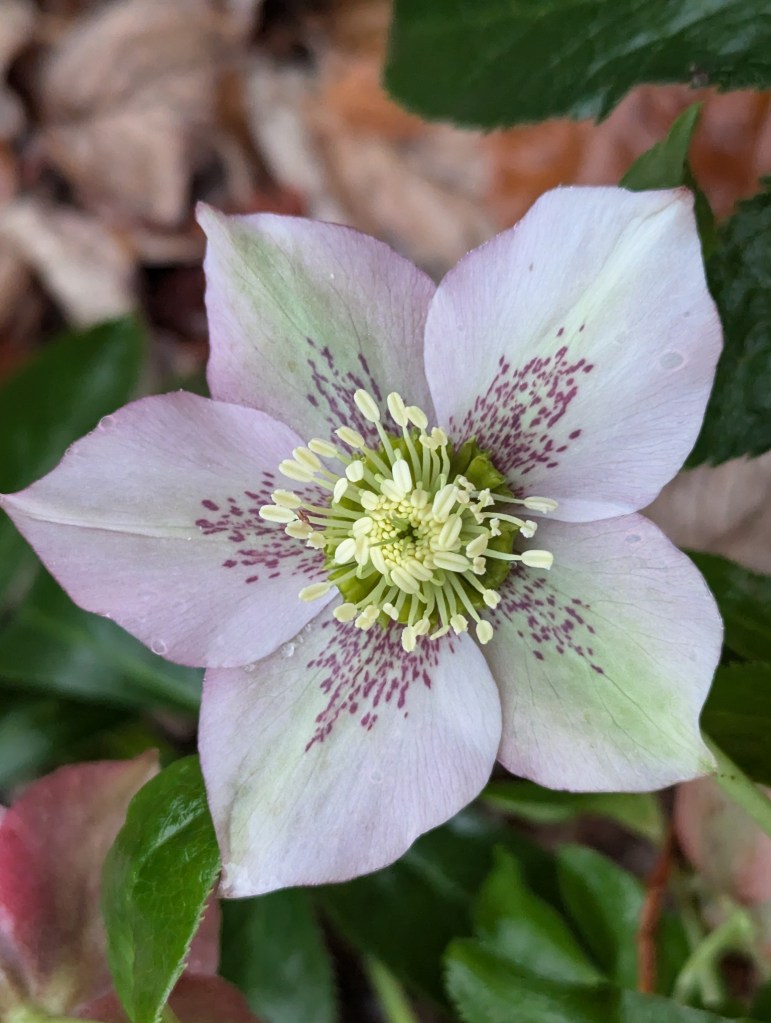
Where winters are too cool or damp for much else to bloom, hellebore are more popular. The most popular are Helleborus X hybridus, which are hybrids of a few similar species. Most are direct descendants of Helleborus orientalis. They are more resilient to frost than to arid warmth during summer. Actually, that is very likely why they are less popular here.
Locally, hellebore are useful for cool, damp or partly shady situations. However, they are not as substantial as ferns. Also, they can get a bit wimpy as the weather warms through summer. Although evergreen, they shed some of their older yellowing foliage. They grow most during late autumn, winter and perhaps early spring. They crave richly organic soil.
Floral color is typically subdued but interesting. Most common hellebore flowers are pale pink or almost grayish white with spots. Alternatively, they can be rusty red, maroon, pale green, yellow, gray or almost black. Some exhibit more or less spots, blotches, stripes or picotee edges. Double flowers are rufflier than single flowers are. All hellebore are toxic, and for some, can cause dermatitis.




 Tony Tomeo