The thick clumps of evergreen grass-like foliage of mondo grass, Ophiopogon japonicas, make a nice lumpy ground cover for small spaces. Because it is rather tolerant of shade, and actually prefers partial shade to full sun, it works nicely under Japanese maples or highly branched overgrown rhododendrons. It gets only about half a foot deep. Narrow stems with small pale purplish blue flowers that bloom in summer are not too abundant, and are generally obscured below the foliage, but can actually get taller. ‘Silver Mist’ is variegated with white.
New plants are easily produced by division of large clumps. Overgrown or tired looking clumps can be shorn down at the end of winter, before new growth begins. Slugs and snails can be problematic.
While it seems that anything can be found online, it is baffling to see what can not be found online. Horticultural concerns seem to be particularly lacking. Perhaps those who enjoy horticulture innately dislike the internet. Perhaps they are merely too busy in their gardens to bother getting online too much.
‘Pele’s Smoke’ has been one of the more popular cultivars of sugarcane for home gardens for quite a while, but I can not determine how wide its canes are. Eucalyptus pulverulenta and Eucalyptus cinerea seem to have traded their names since the 1980s, but now, no one seems to know which is which, or if either ever was the other. No one can explain how seed from sterile banana cultivars are available online. Anyone can say anything. There is no accountability.
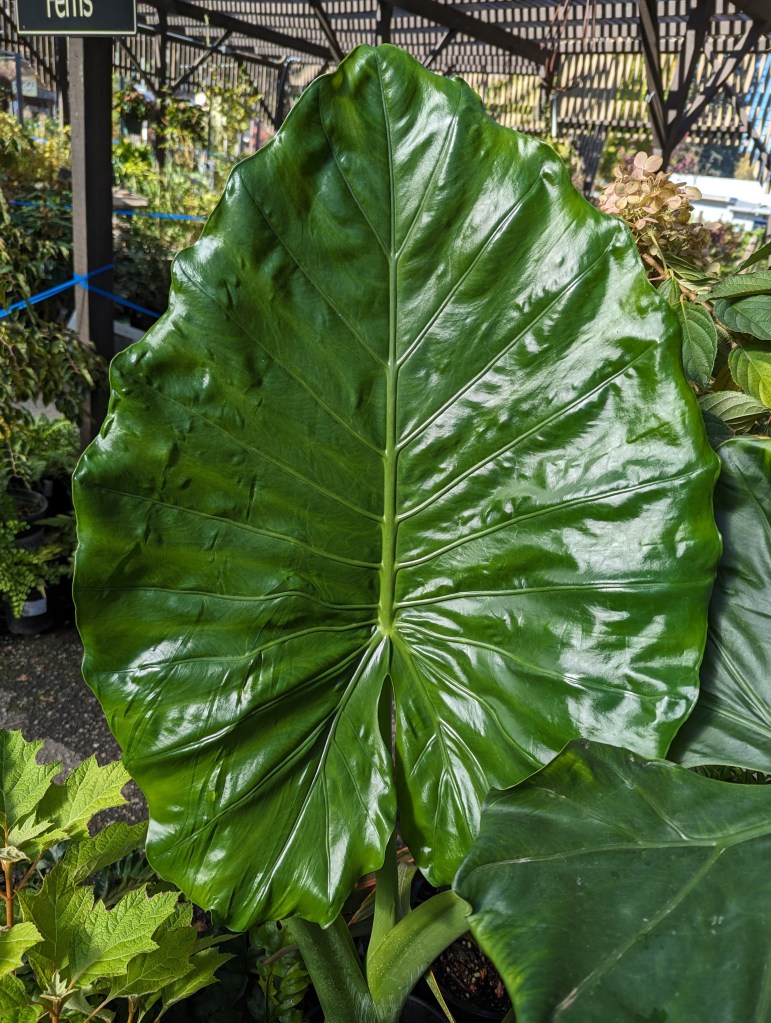
Alocasia and Colocasia are as baffling now as they were when I mentioned the difficulty with choosing between the two about a month ago. I am still inclined to procure Colocasia gigantea for a riparian landscape at work. However, I am now inclined to also procure Alocasia macrorrhiza. Both are quite appealing. I think that I would like to grow both within the same landscape so that I can compare them later. It would be easier than trying to compare vague information about them that I can find online. Realistically, since I would grow them from corms, both are quite inexpensive. If necessary, I can later relocate whichever is less appealing than the other.
This would not be my first occasion of not relying on the internet. I am working with ‘Pele’s Smoke’ sugarcane presently, and will be pleased with it regardless of how it behaves. I grow both Eucalyptus pulverulenta and Eucalyptus cinerea; although by mistake, since I procured one because I thought it was the same as the other. All of the cultivars of banana that I grow were procured as pups or plugs, since I do not trust seed. Ultimately, I will be pleased with both Alocasia and Colocasia.
Cyclamen are too expensive to be as disposable as they are.
Cyclamen persicum is a popular cool season annual. It is known simply as cyclamen here because it is the only common cyclamen that is available. It might be known as florists’ cyclamen where other species are available. Red and white are the most popular colors because cyclamen are associated with Christmas. Cyclamen can alternatively bloom with various tints and shades of pink, salmon pink and purplish pink. Some bloom with two-toned color or picotee margins. Cyclamen really is a delightful perennial.
Yes, perennial. Like many garden annuals, cyclamen is actually a perennial. It can survive in the garden for many years. It merely goes dormant through warm summer weather, and then resumes growth as weather cools during autumn.
Not only is it a perennial, but it is an expensive perennial. It is too expensive to be so disposable. So-called ‘landscapers’ do not mind. Disposable annuals are lucrative for them. Besides, even where cyclamen can perform as a perennial, it is not colorful throughout the year, and even in season, it is not as colorful as it is for its first season away from the nursery that it originally grew in.
Other species of Cyclamen that are available within other regions are becoming available here as well. Their bloom is sparser, with only light pink or blushed white flowers. They are grown as perennial wildflowers that bloom for autumn or winter, when not much else blooms. Although not as garish as common florists’ cyclamen, they are appreciated for their perennial performance.
The few florists’ cyclamen that we install at work bloom somewhat reliably only until spring. Because they were grown within ideal greenhouse conditions, they do not adapt immediately to landscape conditions. By spring, many are already beginning to rot. Those that survive their summer dormancy may become perennial.
Candelabra tree is a big and strikingly weird succulent.
The weirdly sculptural succulent stems of candelabra tree, Euphorbia ingens, dark green but devoid of any real foliage, are striking in the right situation. These stems resemble those of unrelated cactus, with longitudinal ridges topped with spines. Although botanically interesting, the minute greenish yellow flowers that bloom in autumn and winter on the ridges of the upper portions of the upper segments are not much to look at. Deep red seed capsules that turn purple as they ripen sometimes develop in milder climates after the flowers are gone, but are almost never seen locally.
Good exposure is preferred. Candelabra tree are better structured and more prominent standing alone away from other larger trees and shrubs. Cool winters and occasional frosts limit their height to not much more than fifteen feet; and unusually cold frost can actually kill big specimens back severely. However, in sheltered areas and milder climates, candelabra tree can get twice as tall. Soil should drain very well and get dry between watering. Regular watering can cause rot, particularly in dense or rich soil.
The main problem with candelabra tree is the remarkably caustic latex sap, which can be dangerous to children, chewing dogs or even those who need to prune the stems. Fortunately, candelabra tree needs very little attention, and only needs to be pruned where the stems get in the way or start to lean against fences or roofs. The caustic sap prevents insect problems.
‘A’ or ‘co’? What is the better prefix for ‘locasia’? There are certainly differences between the two, but information regarding such differences and characteristics is confusing and potentially misleading. It is amazing how much less information is available now that so much more information is so much more available than it has ever been before.
Alocasia generally develops big leaves that point upward. Colocasia generally develops big leaves that point downward. Alocasia prefers a bit of partial shade. Colocasia prefers more direct sunshine. Alocasia generally has more colorful leaves. Colocasia generally has bigger leaves. Of course, these are generalizations, and some species of each of these two genera seem to be species of the other genus.
Colocasia gigantea supposedly develops the biggest leaves and can get twenty feet tall. Alocasia macrorrhiza supposedly is the biggest of its genus and can get fifteen feet tall. It is difficult to know what to believe.
One the edge of a pond at work, we would like to grow whichever of these massive perennials develops the biggest leaves. If we grow Alocasia, we can put it in a partially shaded situation. If we grow Colocasia, we can put it in a sunnier situation nearby. If we grow Alocasia, we can put it a short distance from the edge of the pond. If we grow Colocasia, we can put it right at the edge of the pond. We only need to know which cultivar of which species of which genus we should grow.
I am inclined to grow Colocasia gigantea. We have a few months to decide, since we do not want to plant it during autumn or winter. We recently acquired this Alocasia odora. Also, another similar but unidentified perennial that seems to be a Colocasia must be relocated from another disproportionately compact landscape.
Annual dahlias are expected to be, as their designation implies, annual. In other words, they grow in the spring, perhaps from seed, bloom through summer, and then succumb to frost during their first winter. Some are likely grown from cuttings or division of nursery stock tubers, in order to be ready for spring earlier than seedlings. Regardless, they are not expected to survive for more than one year.
Most other dahlias are expected to be perennial. That is how their expense is justified. Most are sold while they are merely dormant tubers, and are generally more expensive than annual dahlias. Some, especially the trendy sorts, are significantly more expensive.
‘Cafe au Lait’ was a trendy dahlia a few years ago, and is still trendy. We procured one at work. It performed somewhat well for the first season, and was then dug and stored for winter. It did not perform well for the second season, and was then dug and stored again, but did not survive through winter.
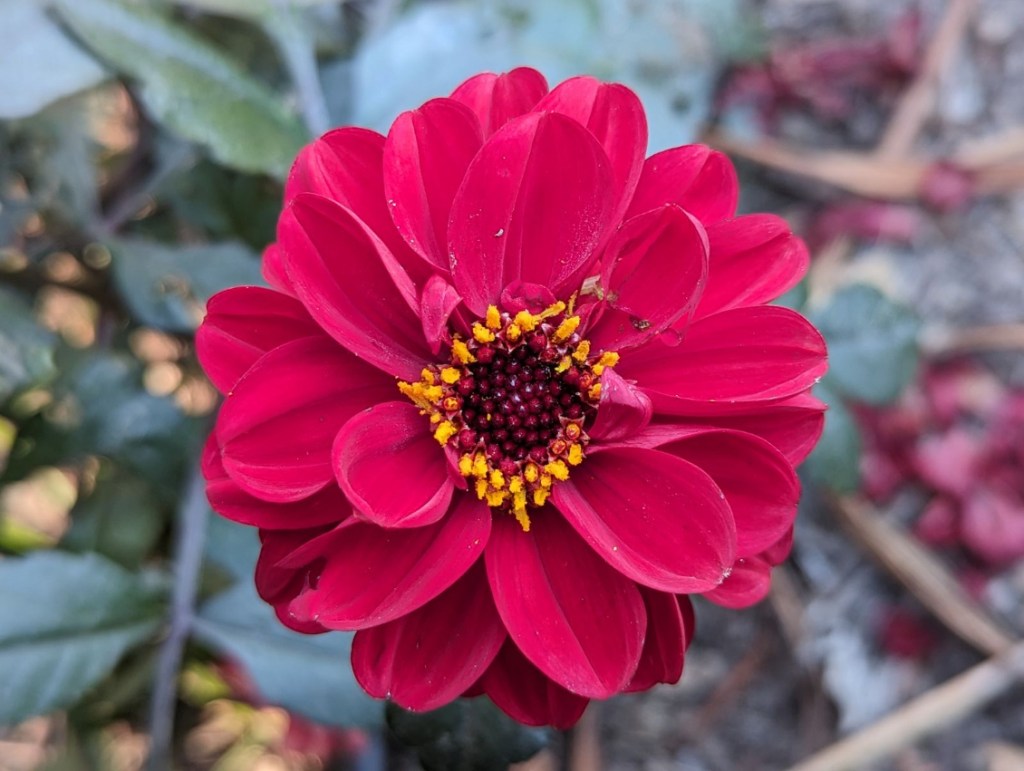
Four smaller annual dahlias were procured in conjunction with the single ‘Cafe au Lait’ dahlia. They were relatively inexpensive, but delightfully colorful. They bloomed nicely around the larger ‘Cafe au Lait’ dahlia. They were also dug and stored for winter after their first season, although we knew that we should likely merely discard them. One had actually divided into two. These annual dahlias bloomed better than ‘Cafe au Lait’ for their second season, and then again, were dug and stored for winter. Unfortunately, three, including one that divided during the previous winter, did not grow for long after last spring. However, two of the original four annual dahlias continue to bloom, and will be dug and stored as they succumb to frost this winter. These annuals have been more perennial than the perennials.
They can be quite a surprise when they bloom for late summer. The tops of their dormant bulbs previously seemed to be dead at the surface of the soil. Then, suddenly, their bare floral stems emerge to bloom without foliage. That is why Amaryllis belladonna is naked lady. Foliage grows a bit later in summer or autumn. It shrivels during late spring warmth.
Naked lady flowers stand about two feet tall, on simple green or brown stalks. Their mild fragrance is easy to miss. A profusion of bloom is only slightly fragrant during humid and warm weather. Their vividly pink color more than compensates. Fleshy seed that mature now that flowers are deteriorating are perishable. They prefer almost immediate sowing.
After naked lady flowers imitate lily flowers, their leaves will imitate lily of the Nile leaves. Naked lady and lily of the Nile are related, but neither are related to lily. The strap leaves of naked lady are more fragile than those of lily of the Nile. If damaged, they can lay flatly for quite a while. After defoliation during spring, dormant bulbs are conducive to division. It might delay bloom for that year.
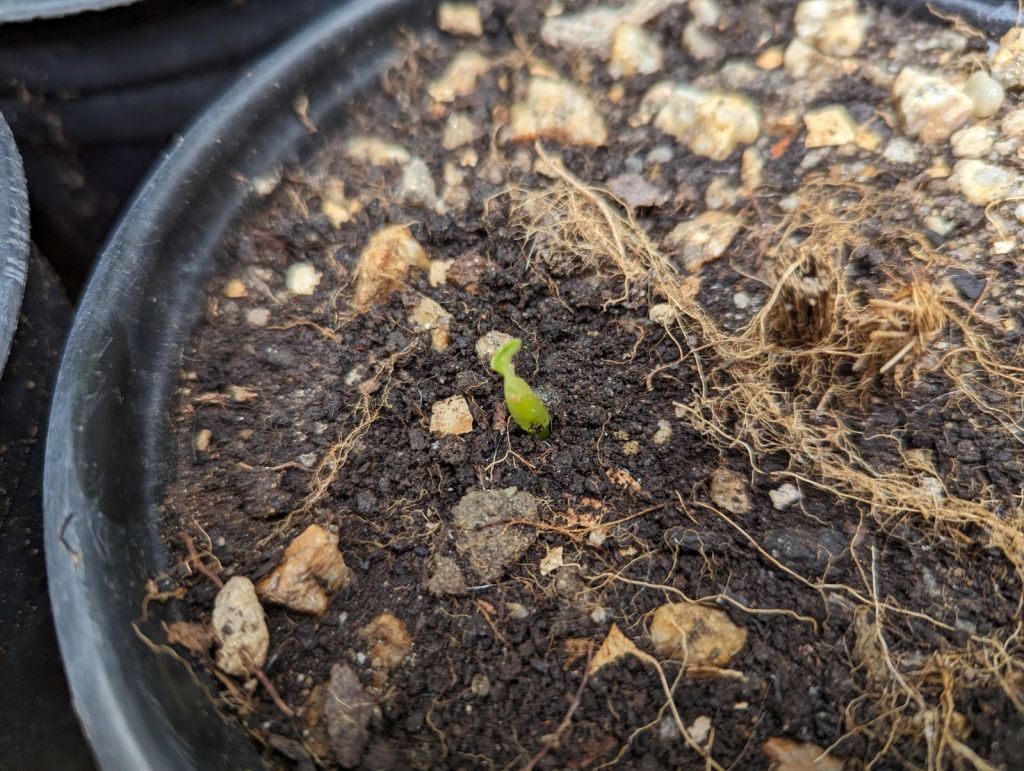
Sixteen of the twenty-four mixed dinnerplate dahlias that I did not expect favorable performance from have survived! Only eight have failed to exhibit any indication of viability. Two thirds are growing. Only one third is not.
I am impressed. I expected less than half to survive. They arrived in embarrassingly shabby condition. I canned all of them regardless, including several that were obviously completely necrotic. I wanted to give all a chance to survive before discarding any. Those that were obviously completely necrotic are among those that have not exhibited any indication of viability. However, I am not ready to discard any yet. Although I still believe that some are completely necrotic, a few others may not be. As I dump any that do not at least try to grow prior to winter, I will inspect their tubers for any indication of viability, no matter how minor.
The survivors will be pampered. I want them to generate as much vegetative growth prior to frost as possible. That should sustain the regeneration of their wimpy tubers so that they will be ready to grow next spring. I am aware that even the healthiest may not survive winter if their tubers are inadequate.
Those that survive through winter are likely to grow and bloom as if they were always healthy. In a few years, they could be ready for division. Perhaps after a few more years, I will regret the procurement of so many.
In this mild climate, it is not necessary to dig dahlia tubers for winter. We only do so because it has become a habit, and perhaps to relocate the dahlias.
Dinnerplate dahlias are certainly not my favorite type, but they are more appropriate to the landscapes that they will inhabit than they types that I would prefer.
This is the most vigorous of the sixteen survivors.
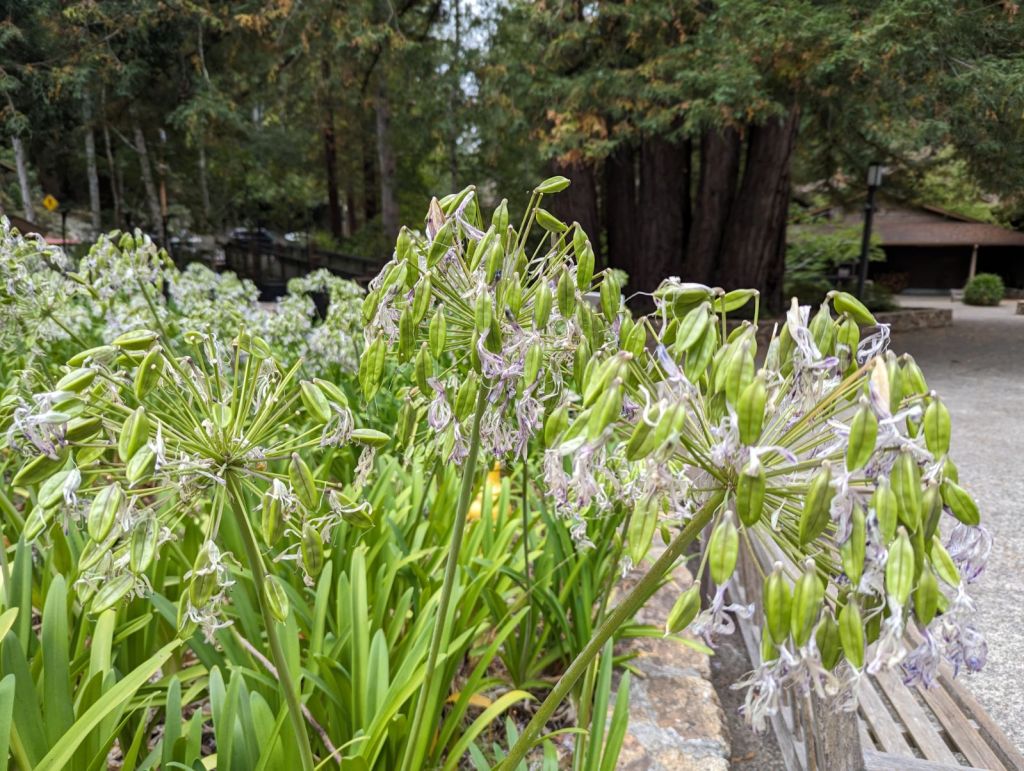
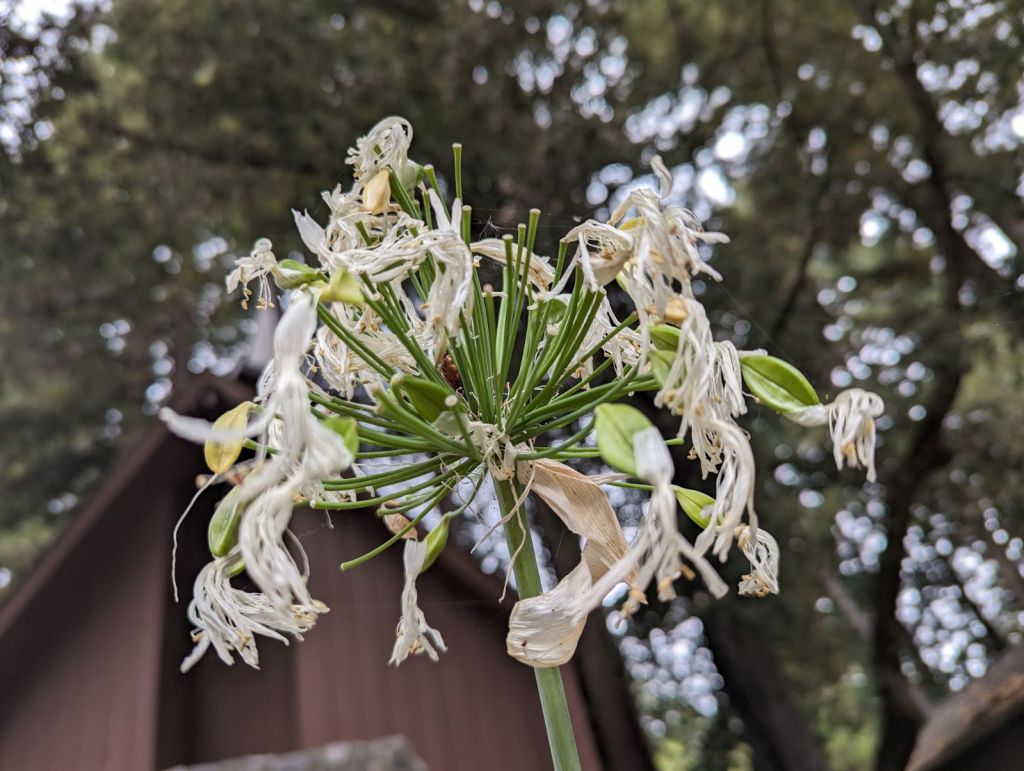
Three of these six are naked ladies, Amaryllis belladonna. Two of these six bloom white. Three of these six need deadheading. Three qualify as two categories. Two qualify as one category. One qualifies as none. None qualify as three. Alternatively, three are lily of the Nile, Agapanthus orientalis, two bloom blue, two bloom pink, and three do not yet need deadheading.
1. 1 – dead but neither naked nor white. Lily of the Nile, with few exceptions, is in need of deadheading at this time of year. All but one cloned colony here are mixed blue varieties.
2. 2 – white and dead but not naked. This deteriorating floral truss is one of merely three that bloomed within the one cloned colony of white lily of the Nile. This colony is young.
3. 0 – not naked, white or dead. This is the lowest score because bloom deteriorates a bit slower in the shade. Blue lily of the Nile could score no more than a single point anyway.
4. 2 – naked and dead but not white. This is the common naturalized naked lady here. It bloomed annoyingly bright pink, but is not the brightest pink. It should be deadheaded.
5. 1 – naked but neither white nor dead. This is a brighter pink naked lady that is not yet in need of deadheading because it blooms a bit later. It has slightly stouter brown stems.
6. 2 – naked and white but not dead. This is merely one of three highest scores, but is my favorite! I had wanted a white version for a long time. It seems to bloom late like #5, but blooms on a green stalk like #4. Its primary bulb already generated four pups, so will be relocated to a more prominent location to develop as a colony. It will not bloom much if split annually, but will multiply most efficiently by such technique. I want more of them!
In eastern North America where it grows wild as a native, garden phlox, Phlox paniculata, is modest but classic perennial that gets more than four feet tall with pinkish lavender flowers from late summer through early autumn. Modern garden varieties are mostly somewhat more compact with pink, red, light purple or white flowers. Many have fragrant flowers; and some have flowers with lighter or darker centers. Butterflies and hummingbirds dig them all.
Locally, garden phlox probably looks best with slight shade or among other lush plants, only because humidity is so minimal. Otherwise, it would be just as happy out in the open. In well watered gardens with rich soil, it sometimes self sows a bit, but rarely naturalizes continually enough to revert to a more natural (wild) state like it can in gardens on the west coast of Oregon and Washington. Garden phlox can be propagated by division of mature plants either after bloom in autumn or in spring.







 Tony Tomeo