Six on Saturday: Are We There Yet?

As expected, the second half of my vacation was delayed. Then, very unexpectedly, all of our delays worked out. Rhody, Carson and I left exactly on time. Then, as unexpectedly, and just an hour from our first destination at Brent’s Jungalow, we were diverted to our final destination near Buckeye near Phoenix in Arizona. The explanation is as tedious as the additional six hour drive, at night and partially through Los Angeles style traffic. We are here now but got almost no pictures yet. We stopped only briefly in San Luis Obispo, where Brent and I were in school from 1985 to 1990, and where a few of our friends live.

1. From his shelf in back, through the dirty windshield, and through the dirty window of a cafe, Rhody stared impatiently at me as I tried to enjoy a bit of coffee the day before we left. ‘Hot Lips’ Salvia microphylla to the left is the only vegetation visible in this picture.

2. Wile E. Coyote also stared at me impatiently, at the end of the same day, as I finished a last task prior to leaving. I can not identify the vegetation that is visible in this picture. I suspect that the tree to the left and above is a common Pacific willow, Salix lasiandra.

3. The hills have eyes. I have no idea what the pair of shrubs at the center of this picture are. I only know that they have not changed since I arrived at Cal Poly in 1985. I got this picture right outside of my classmate’s office in the Alan A. Erhart Agriculture Building.

4. Also right outside of my classmate’s office, several specimens of unidentified eucalypti were recently installed. I recognize none of them. This specimen exhibits remarkably big leaves for the genus. These trees are very close to where I first met Eucalyptus torquata.

5. Barrel cactus, Echinocactus grusonii, dies ugly. It looks like something out of a horror movie, or like it consumed a horror movie. I suspect that this and several other similarly imploded carcasses decayed because of automated irrigation that is intolerably frequent.

6. Is this good or bad landscape design? I typically prefer uniformity and symmetry, but this seems to be excessive. Several rotting specimens, mostly to the right, are disrupting the symmetry, but also leaving voids. I got this random picture as I left San Luis Obispo.

This is the link for Six on Saturday, for anyone else who would like to participate: https://thepropagatorblog.wordpress.com/2017/09/18/six-on-saturday-a-participant-guide/

Unused Azalea Pictures

Contractions are awkward for me. I certainly could use them if I want to, I just prefer not to. It is a pointless habit that I should be more comfortable with breaking sometimes.

Another habit that I should indulge in less is the use of six different cultivars of the same species for my ‘Six on Saturday’ posts. I have done it for camellias, rhododendrons, roses, flowering cherries, bearded iris, African daisies and a few other species, including various annuals. I refrained from featuring six azaleas simultaneously for yesterday morning, although I did feature three bearded iris, which comprised half of the ‘Six on Saturday’. I should remember to limit azaleas to three pictures, or preferably two or one, if I feature them on ‘Six on Saturday’ later, as they continue to bloom.

These two pictures of azaleas were omitted from my ‘Six on Saturday’ post yesterday because, as the theme implies, such posts are limited to six pictures. Perhaps I should have used one or both of these pictures instead of one or two pictures of bearded iris. It is too late now.

The first azalea above is variegated. Its leaves resemble those of variegated andromeda. I do not remember what cultivar it is, although the label remains attached to at least one specimen. At least three specimens inhabit the same landscape together. They are blooming better this spring than they have in the past, perhaps because, annually, they are bigger and more established than they were for their previous season.

Relative to the many azaleas here, the second azalea below is nothing special. I like this particular picture because it happens to show a bee visiting the bloom. My pictures tend to be more technical than artistic. Perhaps I should try to include a bit of wildlife sometimes.

Six on Saturday: Mix It Up

Six pictures can not represent all that is blooming now. I did not even try. Nor did I post six pictures of six different cultivars of the same species, as I typically do with camellias, azaleas, rhododendrons, flowering cherries, roses, or other flowers that we grow several cultivars of. I posted three pictures of bearded iris, but I could have procured more than six if I wanted to. I likewise could have posted more than six pictures of different African daisy. I tried to mix it up a bit more than I typically do, as I did with the snakeroot here.

1. Persicaria bistorta, snakeroot and (likely) Iris ensata ‘Variegata’, variegated Japanese iris from Tangly Cottage Gardening are happy on the edge of the pond. The Japanese iris is barely visible at the center. The rest of it is on the edge of another stream. Naturalized exotic Nasturtium officinale, watercress to the upper right shows how close the water is. I thought that there were two cultivars of snakeroot, but found three labels for ‘Superba’, ‘Firetail’ and ‘Dimity’. I can segregate their copies later, but will likely leave these mixed.

2. Clivia miniata ‘Variegata’, variegated Natal lily from Brent’s Jungalow tried to bloom, but this happened before I took a picture. Its cultivar is unidentified, but it is variegated.

3. Osteospermum ecklonis, African daisy blooms too generously for anyone to take all its flowers. About six cultivars inhabit this particular landscape with a few more in another.

4. Iris X germanica, bearded iris are blooming so tall that some should be staked. There are too many cultivars in the Iris Bed to take pictures of, so I will show only these three.

5. All cultivars of the primary Iris Bed are unidentified. At least three that were relocated from the forest are likely feral. One is pale white. This pale yellow looks like Tweety Bird.

6. All of the iris here, like the iris in my garden, have history. This iris is from the former home of an respected colleague. He brought it to me before the garden was demolished.

This is the link for Six on Saturday, for anyone else who would like to participate: https://thepropagatorblog.wordpress.com/2017/09/18/six-on-saturday-a-participant-guide/
Six on Saturday: Surprise!

Even annual bloom can be surprising after a few or many months without it. Perhaps an unexpected bloom is more surprising. Familiar wildlife might be surprising when it does something unexpected. Unexpected or unplanned ‘wildlife’, even if domesticated, is a bit of a surprise. Ultimately though, the major surprise is the fifth of these Six. The first two pictures are from Brent’s garden, not here.

1. Persea americana, avocado fruit ripens in the tree above Brent’s office for quite a few months. The tree rarely lacks fruit completely. These spiral stairs are from the roof deck. This squirrel saw Brent taking a picture of it taking its avocado down, so took it back up.

2. Hippeastrum papilio, butterfly amaryllis was left at Brent’s garden by a neighbor who relocated. It is as perennial here as it is there; so I want a copy. Brent did not know what it was until, after two years or so, it surprised him with bloom. Brent takes bad pictures.

3. Malus X (floribunda?) ‘Prairie Fire’ flowering crabapple bloomed spectacularly. It is a relatively modern cultivar from 1982, but is surprisingly old fashioned. I grew up with a tree that was a decade or so older than I am, but it bloomed with a similar reddish pink.

4. Cymbidium orchid of an unidentified cultivar was left by a colleague who only wanted it off his porch. It gets only watering, but blooms annually, and surprisingly abundantly. I should eventually divide it, but I am hesitant to interfere with such a reliable specimen.

5. Koi met an unfortunate demise two winters ago as someone who was unaware of their presence drained their pond. However, a neighbor inquired about two small fish that he saw in the pond soon afterwards. More recently, the same neighbor inquired about this. It seemed to be about a foot and a half long, with a slightly smaller and darker associate.

6. Koi are supposedly schooling fish. Two do not qualify as a school. So, now they have a few more friends to go to school with. These tiny koi should be able to evade their larger classmates, who might otherwise eat them. Actually, I doubt that the larger koi are large enough to eat them anyway. This is not something that I expected to be contending with.

This is the link for Six on Saturday, for anyone else who would like to participate: https://thepropagatorblog.wordpress.com/2017/09/18/six-on-saturday-a-participant-guide/

Six on Saturday: Double Whammy!

Rhody, Carson and I are back from vacation. Now I see that I did not get many pictures

1. If this looks like the same major stockpile of vegetation from Skooter’s Garden (Tangly Cottage Gardening) that I posted a picture of last week, it is because it is. The difference is that it is here at home now. Goodness, it will be a busy week of division and plugging.

2. Cerinthe seed are in the pill bottle to the lower right of the previous picture. So is that obstinate pill to the left. I should have tried cerinthe by now, and this is my justification.

3. Poinciana and esperanza seed from Crazy Green Thumbs are the second of my double whammy! They were likely in my mail before we left on vacation, but we left town before the Post Office was open. Shamefully, they will be my second attempt for both species. It is a long and embarrassing story. This particular poinciana is more commonly known as dwarf poinciana, Caesalpinia pulcherrima. This particular esperanza is more commonly known as yellow bells, Tecoma stans. ‘Esperanza’ means ‘hope’, which I have enough of.

4. My vacation was scheduled to be as late in winter as possible but prior to the bloom of apple trees because I intended to prune eleven apple trees while still dormant. All eleven trees are pruned, and their formerly fresh detritus is gone. Sweet Brown would approve.

5. Bonsai stock is what my Pa grows on his farm where the pruned apple trees and other old fruit trees live. Goodness, I really should have stayed later, and taken more pictures.

6. Star magnolia performs very well in the Pacific Northwest. I rarely see them any more than five feet tall locally. This is an awkward picture because I took it from a moving car.

This is the link for Six on Saturday, for anyone else who would like to participate: https://thepropagatorblog.wordpress.com/2017/09/18/six-on-saturday-a-participant-guide/
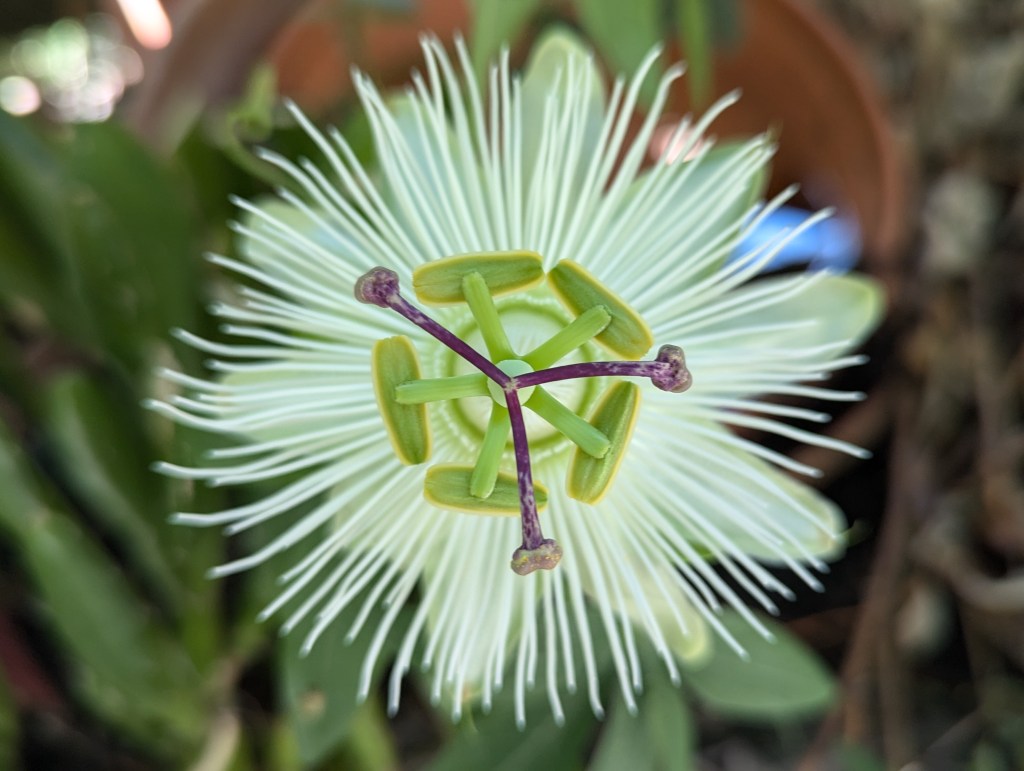
Six on Saturday: Vacation

Rhody, Carson and I are finally on vacation in Western Washington. As usual, departure was delayed. Now that we are here, and not at work, I have not been taking pictures like I should have been. Consequently, I am deficient of pictures for Six on Saturday. Four of these six, or two thirds, are not even relevant to horticulture.

1. Sasquatch, who is also known as Bigfoot, is a celebrity of the Pacific Northwest; and is a species that is commonly considered an individual. This was in Canyonville in Oregon.

2. Portland in Oregon is the City Of Roses. This is its South Waterfront district, south of Downtown. Incidentally, most roses prefer the climates of San Jose to those of Portland.

3. Rhody enjoys rest stops. They allow him to renew his ownership of Oregon. This is the Toutle River Rest Area, on northbound Highway 5, north of Castle Rock in Washington.

4. Ferns are common within the coastal climates of the Pacific Northwest. I do not know what this fern is. The pine may be a Japanese red pine. It is in Raymond in Washington.

5. ‘Black Gamecock’ Louisiana iris is to the left within the big box to the right. It was the priority, to replace what the gophers ate last year. There is more now than then! The rest of this vegetation is a dozen or so additional perennials from Tangly Cottage Gardening! I will get individual pictures of some of them as I process them when I get back to work. The unidentified variegated foliage to the far right seems to be variegated Japanese iris.

6. Skooter approves of my exploitation of his garden. He must know that I intend to take better care of his Louisiana iris than I did last year. He was on a sunny porch at the time.

This is the link for Six on Saturday, for anyone else who would like to participate: https://thepropagatorblog.wordpress.com/2017/09/18/six-on-saturday-a-participant-guide/
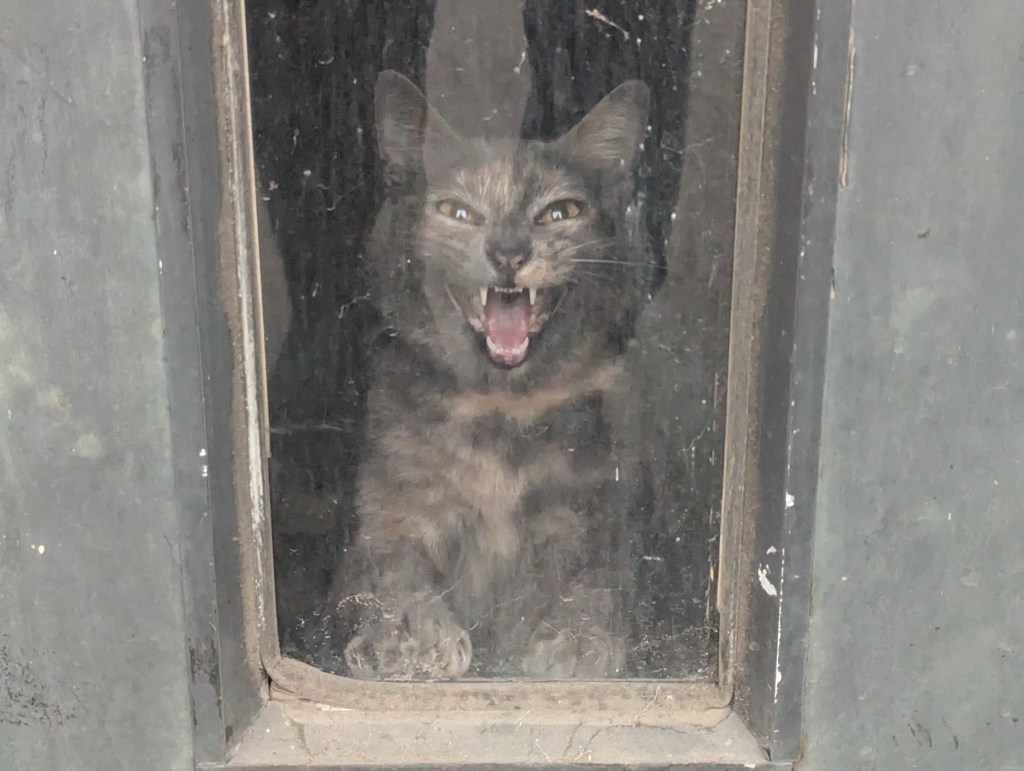
Six on Saturday: 6 X

Rhody, Carson and I are still here. We should be in Washington now. We were supposed to leave at about midnight between last Tuesday and Wednesday. Now, we plan to leave at about midnight between Sunday and Monday, and stay in the Pacific Northwest for as long as initially planned. I wrote about the delay earlier. It is why I posted no pictures of our trip yet. Instead, there are three ‘X’s and three eXotics, although the last might really be an undocumented native species. The first three ‘X’s are between generic and specific names of three interspecific hybrids. By next week, I should get six pictures from Oregon and Washington. Incidentally, the Official State Flower of Washington was nicely named after Rhody.

1. Prunus X subhirtella, winter flowering cherry was featured for the garden column last week, or later in some papers. This picture was not used. I did not want it to go to waste.

2. Pelargonium X hortorum, zonal geranium is nothing special, but I happen to like this red too much to discard it after it was clobbered by a car. I can only hope it was a Buick.

3. Freesia X hybrids, freesia is likewise nothing special, but got my attention just after I mentioned feral freesia in the garden column. It is misplaced but too colorful to be feral.

4. Vinca major, greater periwinkle is an aggressively invasive naturalized exotic species. Less pretty aggressively invasive naturalized exotic species would replace what I remove.

5. Allium triquetrum, wild onion is supposedly another aggressively invasive naturalized exotic species. It is so established that I had always considered it to be a native species.

6. Thuja plicata, Western red cedar is supposedly a naturalized species, but could be an undocumented native species. No one seems to know; but it is not aggressively invasive.

This is the link for Six on Saturday, for anyone else who would like to participate: https://thepropagatorblog.wordpress.com/2017/09/18/six-on-saturday-a-participant-guide/

Six on Saturday: Shabby Spring II

Some of these Six are leftovers from last week. Some might have been late last week, and are a week later now. African daisy and calla bloom somewhat randomly, so technically, may not qualify as late. Likewise, candelabra aloe does not bloom quite as randomly, but is not always punctual either. I should be more observant of bloom schedules. Evergreen clematis and bridal wreath spirea are more likely to be blooming late. I am more certain that flowering quince should have bloomed earlier. Only calla and candelabra aloe were grown here. The others were originally acquired from nurseries many years ago, so I can not gloat about growing them. Incidentally, Rhody and I will leave for Washington early Wednesday morning, so my next two ‘Six on Saturday’ posts should be from there.

1. Clematis armandii, evergreen clematis bloomed while I was not looking. This picture is from last week. Bloom lasted a bit longer than expected, but is presently deteriorating.

2. Osteospermum ecklonis, African daisy also bloomed last week, but of course, is rarely without bloom. It blooms a bit more profusely in phases between now and late summer.

3. Aloe arborescens, candelabra aloe typically blooms for late winter. These vivid orange flowers are resilient to wintry weather, and contrast splendidly with blue California lilac.

4. Zantedeschia aethiopica, calla grows wild within a portion of one of the landscapes. It could do the same elsewhere if we were to relocate some of it, which is why we rarely do.

5. Spiraea prunifolia, bridal wreath spirea seems to be blooming late. I do not know for certain because I do not remember when it typically blooms. Foliage develops afterward.

6. Chaenomeles speciosa ‘Double Take Orange’ flowering quince also develops its foliage after bloom. I am more certain that it is blooming late. It typically blooms with forsythia.

This is the link for Six on Saturday, for anyone else who would like to participate: https://thepropagatorblog.wordpress.com/2017/09/18/six-on-saturday-a-participant-guide/
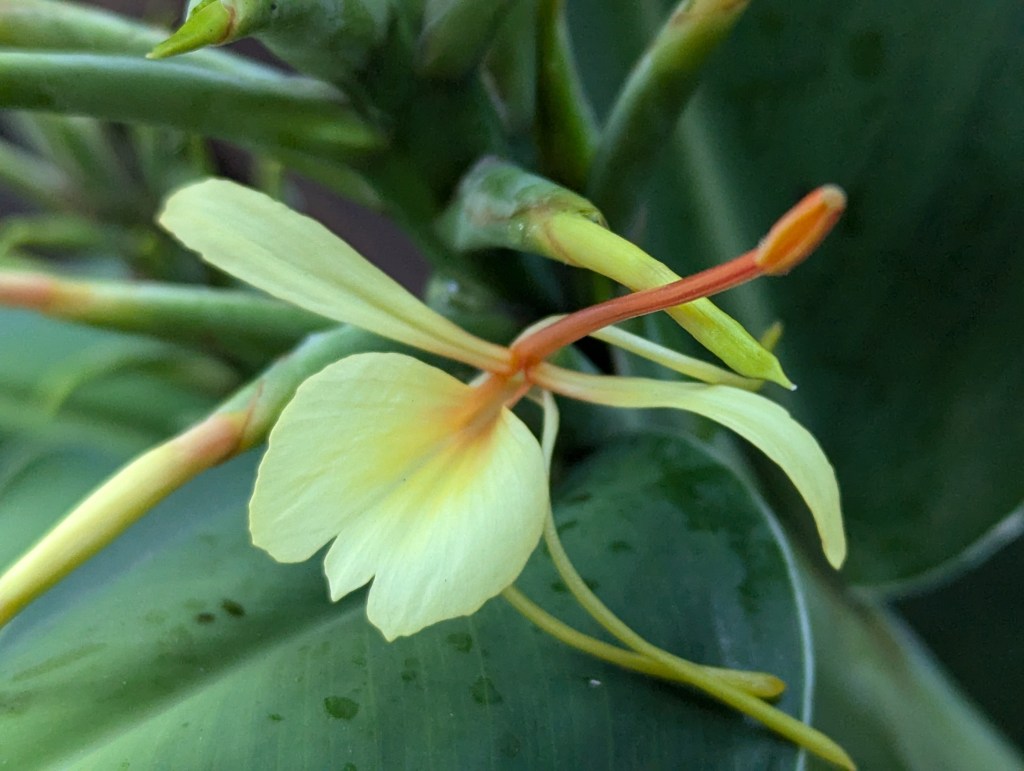
Six on Saturday: Shabby Spring

This should have been done earlier. While most who participate in Six on Saturday have been posting pictures of early spring bloom, I have been posting less colorful pictures of dormant corms, their barely visible new spring growth, some windmill palm foliage and a sliced weirdly yellow beet. Some of the few flowers that I posted pictures of were oddly pallid, which was sort of why I thought they might be interesting. Now that I am posting floral pictures, early spring flowers are beginning to deteriorate. The first two are rather shabby. The third has not been quite right for a few months. I should have found fresher flowers.

1. Eucalyptus cinerea or pulverulenta, florist silver dollar got an identity crisis. I learned it as cinerea. I am now told that it is pulverulenta. Regardless of its name, bees enjoy it. We thought we added another tree of the same species nearby, but it is the other species.

2. Tecomaria capensis, cape honeysuckle really was prettier earlier. Its bloom is not too profuse, but it is distinctly orange. Goodness, I really should have taken a better picture.

3. Rosmarinus officinalis, rosemary is badly infested with mites, but blooms regardless. It is right across the road from the silver dollar, and just as popular with the honeybees.

4. Lavandula stoechas, Spanish lavender is the only lavender that self sows here. It does not become invasive though. Its bloom may be blue, pink, white or, obviously, lavender.

5. Tulbaghia violacea, society garlic is one of my least favorite of perennials. It stinks! It is not so much to look at either. It has been here for many years though, and will not die.

6. Grevillea rosmarinifolia, rosemary grevillea seems as popular with hummingbirds as rosemary and silver dollar is with bees. Hummingbirds are prettier than this odd bloom.

This is the link for Six on Saturday, for anyone else who would like to participate: https://thepropagatorblog.wordpress.com/2017/09/18/six-on-saturday-a-participant-guide/
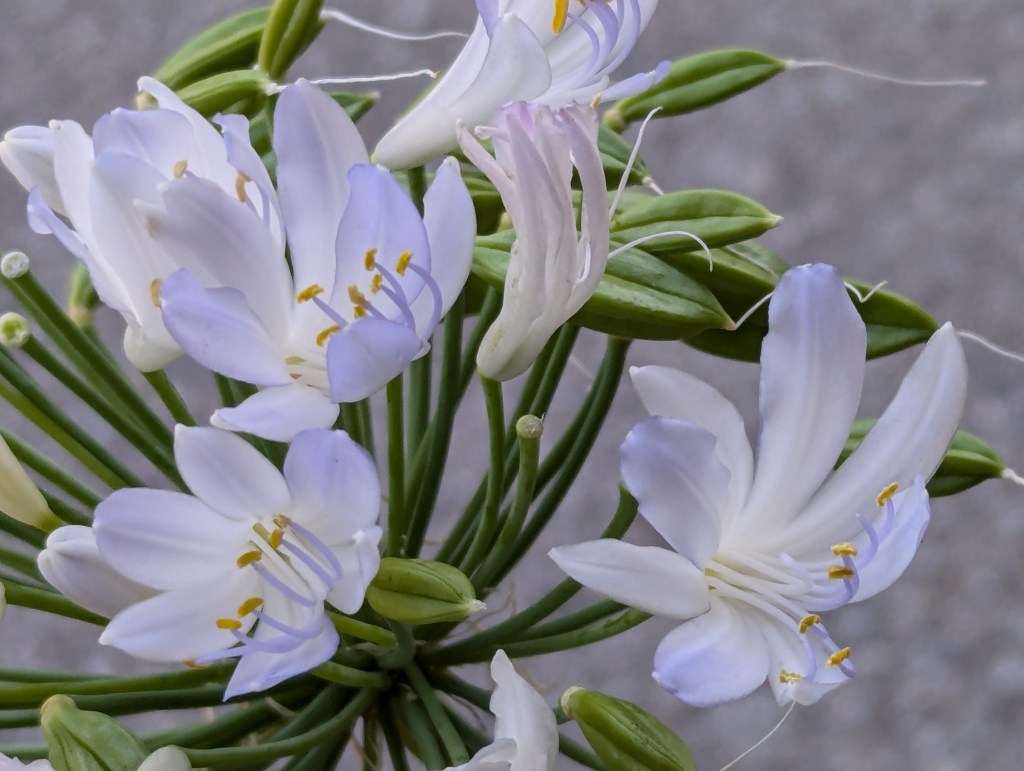
Six on Saturday: Winter to Spring

Spring is beginning to express itself. Only one of my six thinks that it is still winter. After a mild winter, I expected this sooner.

1. Colocasia gigantea ‘Thailand Giant’ elephant ear is the only one of these six to remain dormant. I still must determine if two will go directly into a landscape or get canned like the other two next week. I actually purchased these corms, but do not feel guilty about it.

2. Alocasia macrorrhiza ‘Borneo Giant’ elephant ear is another guiltless purchase. It has a very similar name and is from a similar region as the ‘Thailand Giant’ elephant ear, but grows from smaller rhizomes rather than fat corms. It is already generating new growth.

3. Musa acuminata ‘Double Mahoi’ banana was one of several items that I brought back from Los Angeles last year. After taking several small pups from it, I gave the original to a neighbor. Then, all the pups seemed to die! Now I am pleased that they are recovering.

4. Actinidia deliciosa, fuzzy kiwifruit cuttings are generating foliage. I hope that they are also generating roots. They are a male pollinator for a female cultivar that grew last year from a single pruning scrap that an associate here neglected to remove from his pickup.

5. Platycerium bifurcatum, staghorn fern looks weird as it extends new foliage. Actually, it always looks weird, which is its primary allure. I am concerned that such fresh foliage can be damaged by cold rain. It likes rain and humidity but in conjunction with warmth.

6. Viburnum tinus, laurustinus is the only floral feature of these six. I am not so keen on it, but am learning to appreciate it because its early spring bloom is popular where harsh weather through winter inhibits other bloom. It is simple white, without any pink blush.

This is the link for Six on Saturday, for anyone else who would like to participate: https://thepropagatorblog.wordpress.com/2017/09/18/six-on-saturday-a-participant-guide/