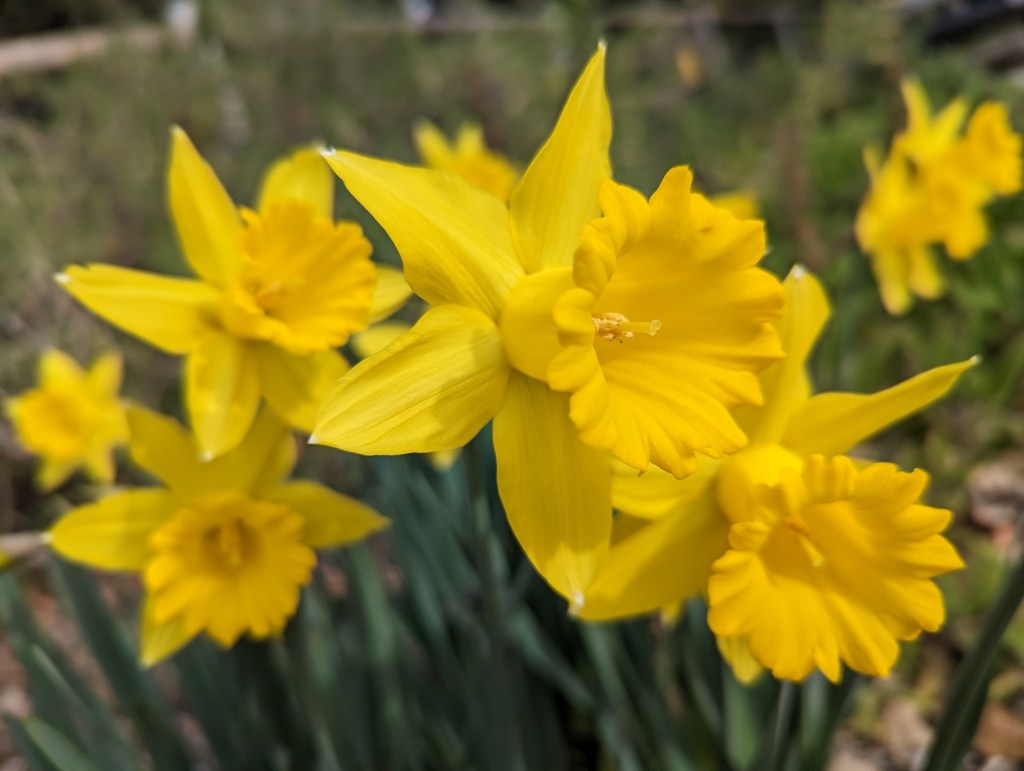
Six on Saturday: Return To Work

Much has changed during the previous two weeks while Rhody, Carson and I were in the Pacific Northwest on vacation. The previously incessant rain suddenly stopped when we left. Canned and potted plants were consequently in need of irrigation after we returned. The weather is splendid now. Delayed bloom is now making up for lost time. Vegetation is growing like weeds, and much of it is, particularly beyond refined landscapes. Work is about as behind schedule as it always is. I got all but the last of these six pictures at work this week. Pictures of vacation are not transmitting from the telephone to the computer. Perhaps I will share some next Saturday. I did not take many.

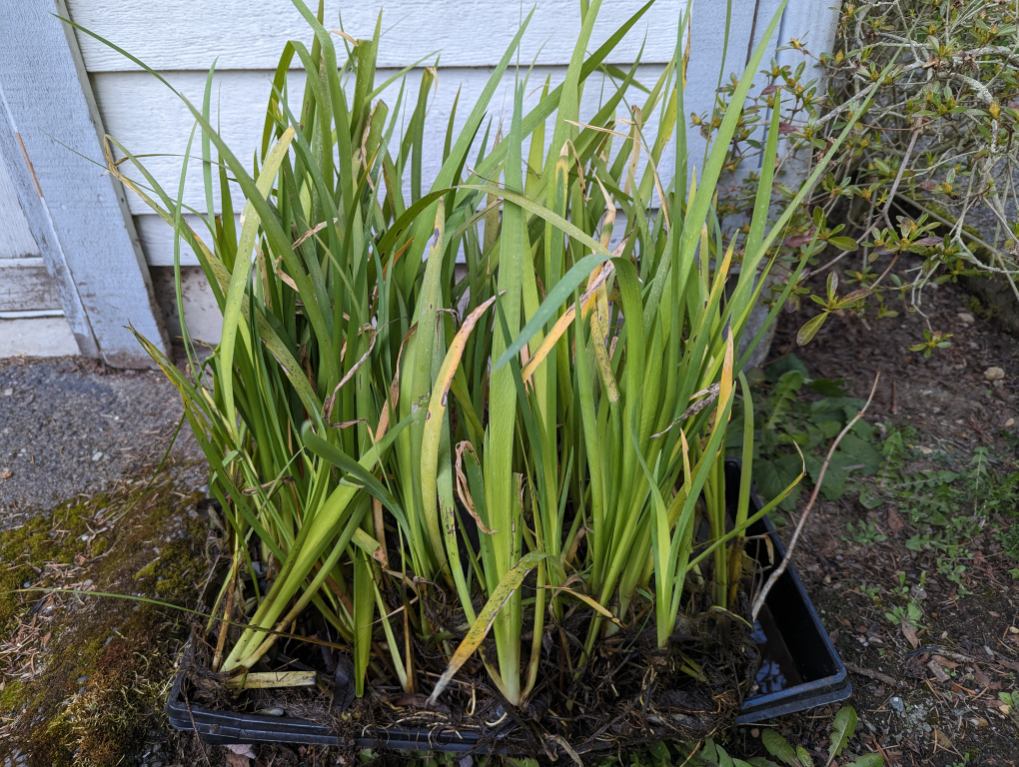
1. Iris X louisiana ‘Black Gamecock’, Louisiana iris is a gift from Skooter’s Family. There is enough for this closely spaced row on fifty linear feet of the edge of the drainage pond.

2. Rumex occidentalis, dock is a prolific native that inhabits another portion of the edge of the drainage pond. It is pretty but may later be replaced by multiplying Louisiana iris.

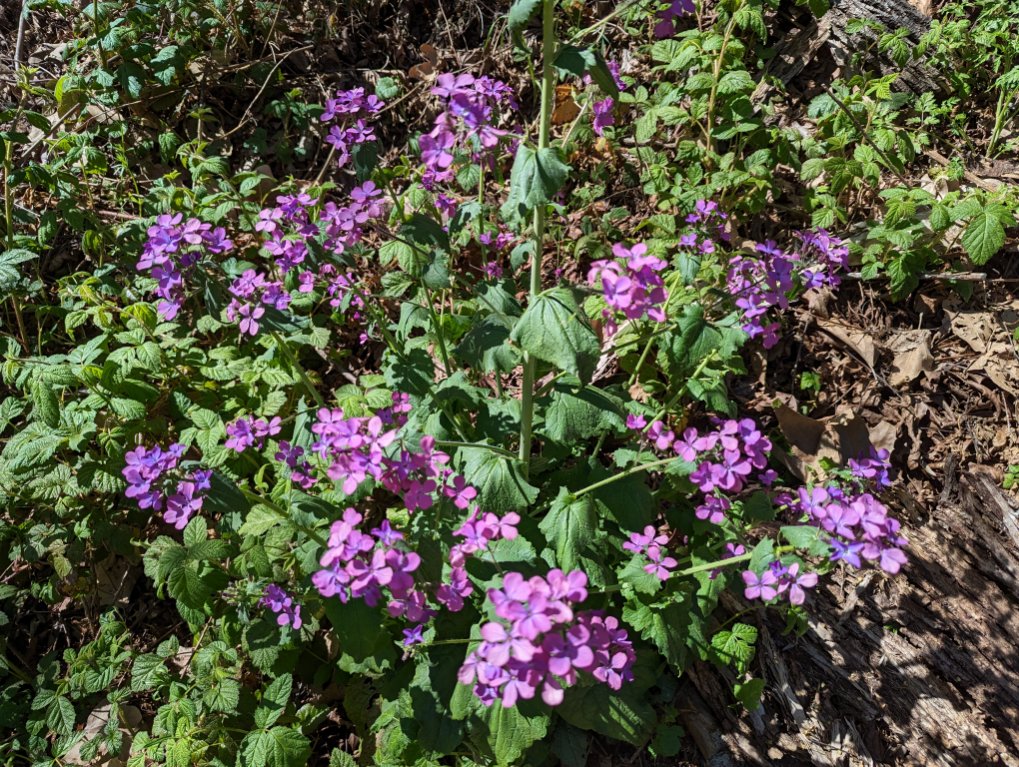
3. Lunaria annua, money plant seems to be naturalized, but only because someone who retired from here used to collect and disperse its seed. We try to continue this tradition.
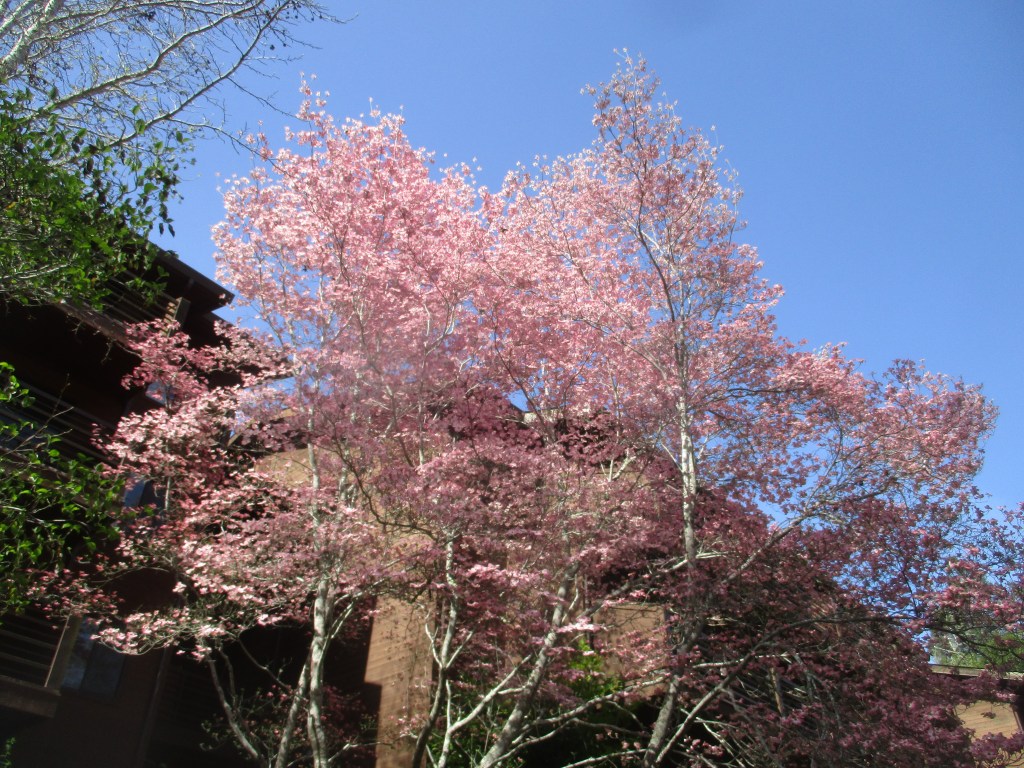
4. Cornus florida, flowering dogwood is late but spectacular. It does not perform as well within the arid chaparral climate of the Santa Clara Valley, just a few miles to the North.
5. Malus ‘Prairiefire’, flowering dogwood is about as spectacular. I believe that it blooms about now naturally though. I do not know what its species is, which is why it is omitted.

6. Rhody enjoyed the Pacific Northwest but not getting his picture taken. This was taken just before we left the farm near Poulsbo where I pruned several abandoned apple trees.

This is the link for Six on Saturday, for anyone else who would like to participate: https://thepropagatorblog.wordpress.com/2017/09/18/six-on-saturday-a-participant-guide/

Six on Saturday: Camellia japonica

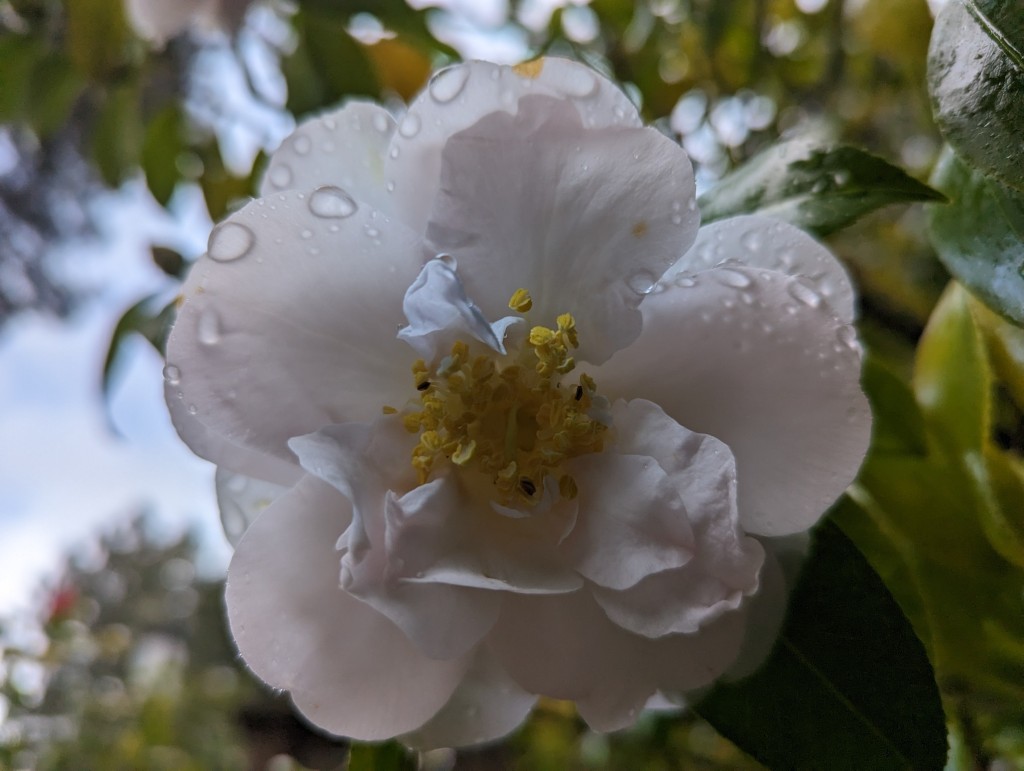
All but the first of these six are Camellia japonica. They bloomed late this year, likely as a result of the exceptionally wintry winter. Also, these pictures are more than two weeks old. They likely finished blooming by now. I do not know because I am not there. Rhody, Carson and I are still on vacation in the Pacific Northwest. As these Six on Saturday post at midnight, we will begin our trip home. Pictures of our vacation would be appropriate, but are not processed yet. Besides, I do not take many pictures. Also, although these few pictures are now outdated, I did not want to waste them. These five camellias and single flowering cherry demonstrated commendable diligence by blooming after such a wintry winter.

1. Double white flowering cherry is obviously not a Camellia japonica, but happens to be my favorite of our several flowering cherries here. The tree is in rough condition though.

2. Frilly white camellia with a relatively modest staminate center may be the prettiest of the white camellias here, but does not look so pretty in this shaded picture after the rain.

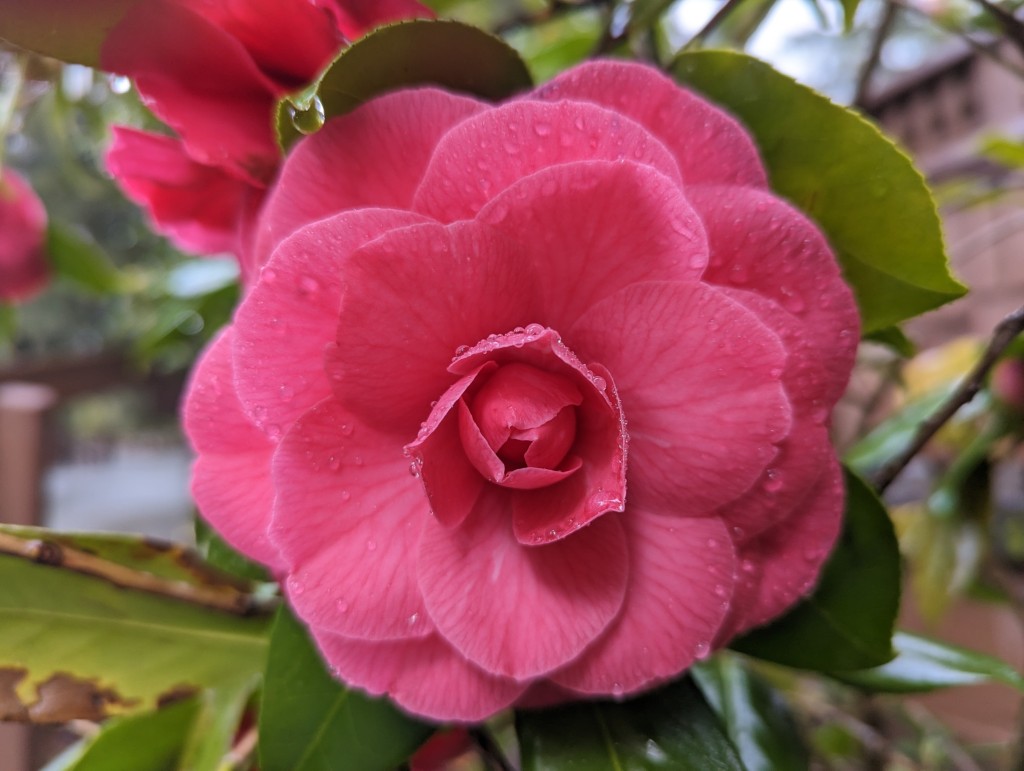
3. Pinkish watermelon red camellia blooms with variable floral form. Some flowers seem to be of peony form. Some seem to be of anemone form. I have no idea what form this is.

4. Very pallid pink camellia seems to be almost white. Whiter white or pinker pink could be prettier, but its pastel color seems to be very appropriate to its distinctive floral form.

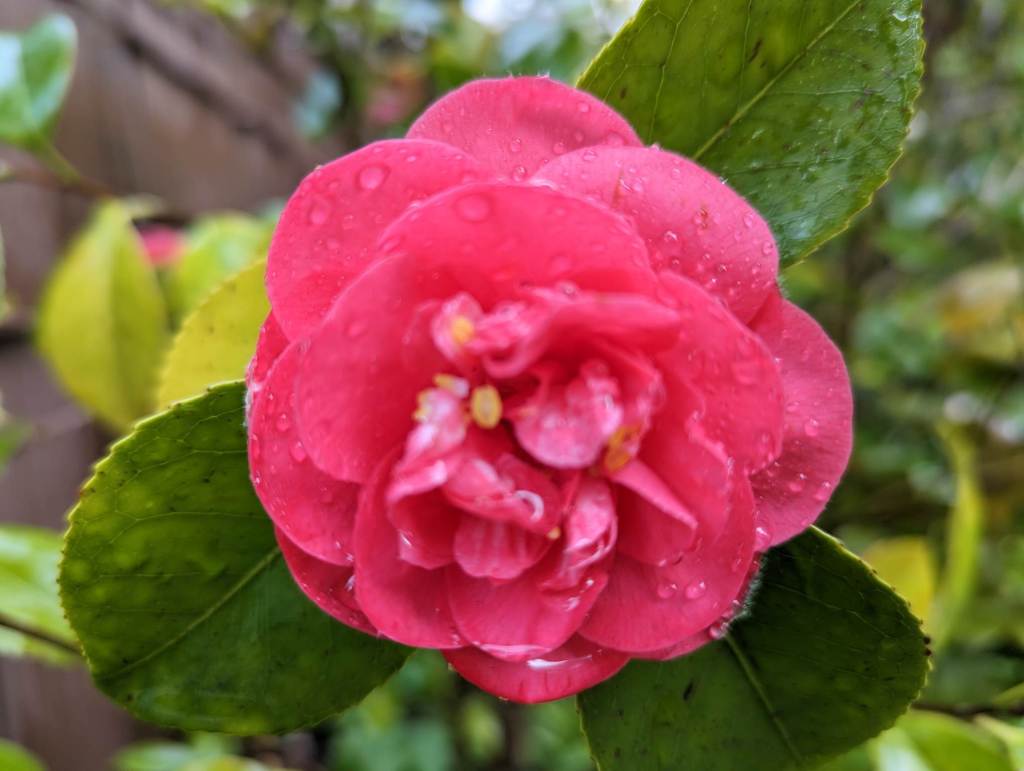
5. Pinkish watermelon red camellia resembles the color of #3 now, but normally blooms deeper red. Perhaps the unusually harsh weather last winter somehow altered the color.

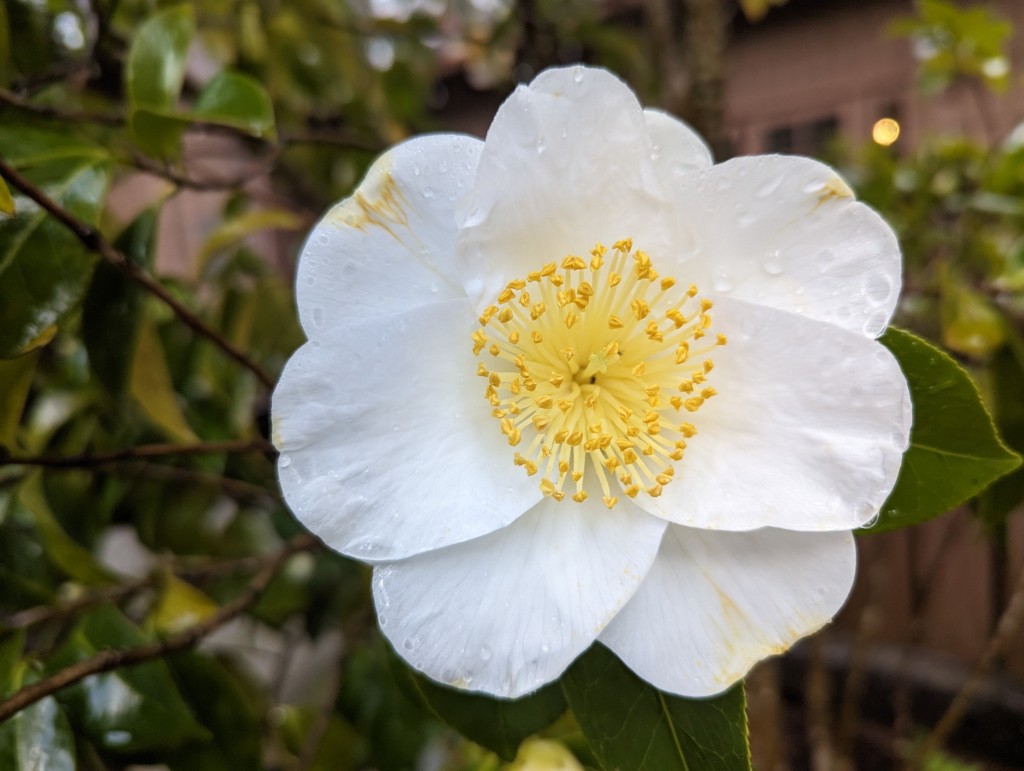
6. Single white camellia with a prominently staminate center looks like a sunny-side-up egg. Camellia blight around the edges proliferated during the exceptionally rainy winter.

This is the link for Six on Saturday, for anyone else who would like to participate: https://thepropagatorblog.wordpress.com/2017/09/18/six-on-saturday-a-participant-guide/
Six on Saturday: Skooter Approved

Rhody, Carson and I finally left on vacation. Although this trip was planned a year ago, it was delayed weekly since February. I had intended to leave prior to March. I finally realized that the timing would never be convenient, so left anyway, after midnight on Wednesday morning. We arrived in Ilwaco on Wednesday night, and went to Skooter’s Garden at Tangly Cottage Gardening in the morning. Of course, we stayed later than intended, ate cookies with coffee, and arrived in Silverdale later than we should have on Thursday night. The first four of my Six here are gifts from Tangly Cottage Gardening, so are approved by Skooter. The last two were at the Port of Ilwaco.

1. Canna ‘Stuttgart’ is tall and elegant, with small peachy orange flowers and irregularly white variegated foliage. I requested a copy of it shortly after leaving without it last year.

2. Iris X Louisiana ‘Black Gamecock’ is the most popular Louisiana iris, with dark purplish blue bloom. I requested some of it when it was removed from Skooter’s Gaden. This colony will divide into many individual rhizomes. I expect to get significant mileage from them, and I know they will multiply efficiently.

3. Iris unguicularis, Algerian iris was s surprise. It was split after my arrival, directly from a healthy colony within Skooter’s Garden. I had been impressed with the sky blue bloom, but could not justify trying it. Now, no justification is necessary. We will likely put much of it within the Blue Garden. I know that this colony is not very impressive in this picture, but the rhizomes are the important parts.

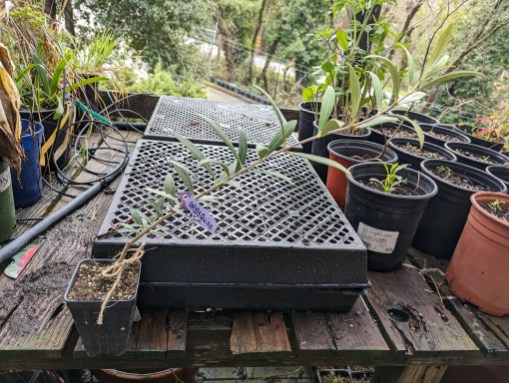
4. Sambucus racemosa, red elderberry grows wild in Skooter’s Garden. I had been wanting this for a while, but did not think to request it last year. I requested it this year, so got four good wild seedlings.

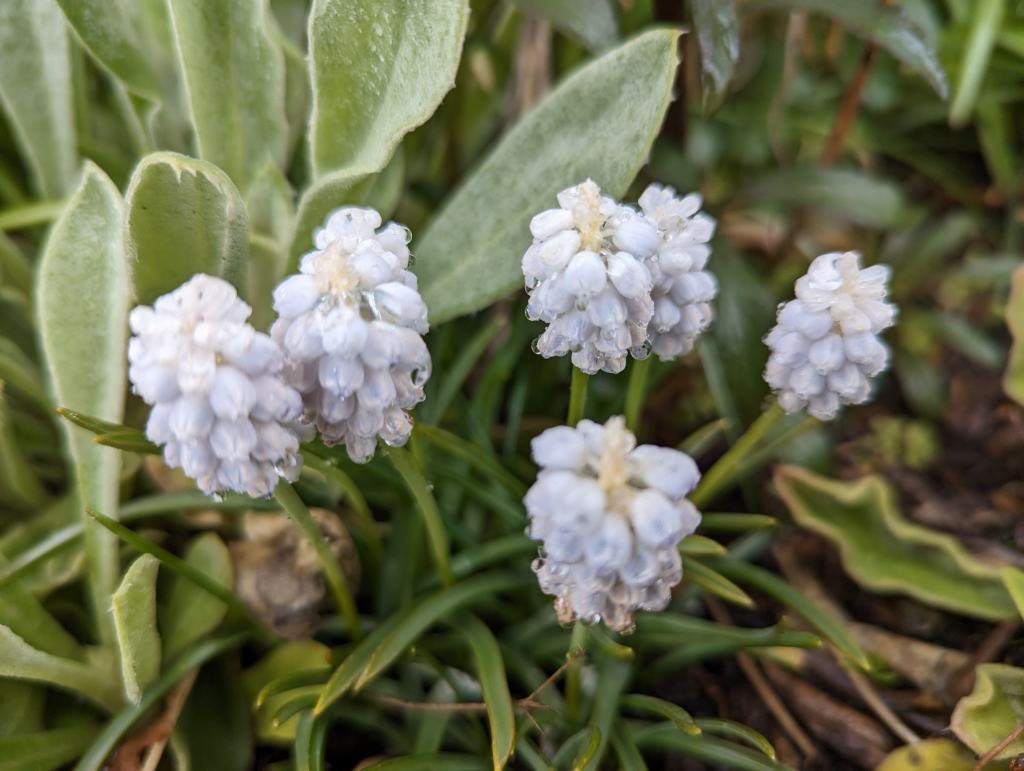
5. Muscari armeniacum ‘Album’, white grape hyacinth inhabits the landscapes at the Port of Ilwaco. I got copies of this last year because I had been wanting it for a while. I know that blue is the most traditional color for grape hyacinth, but white is my favorit color. It may go into the White Garden at work.

6. Muscari armeniacum, grape hyacinth is quite abundant at the Port of Ilwaco. I did not request any of it because I already have a small colony of it for my own garden, and I do not want any others to mingle with them, regardless of how similar they seem to be.

This is the link for Six on Saturday, for anyone else who would like to participate: https://thepropagatorblog.wordpress.com/2017/09/18/six-on-saturday-a-participant-guide/

Six on Saturday: No EMail

Modern technology annoys me. Firstly, the electronics industries are what destroyed the idyllic culture of the Santa Clara Valley. Secondly, it complicates things. If I try to rely on it as the rest of society does, it does not function. It is a long story, so to be brief, I could not download pictures that I sent from the telephone. These six are random, but became available

1. Monstera deliciosa, Swiss cheese plant is in Brent’s garden, four hundred miles away. He wanted to get it into the Canyon News, but sent me this uselessly shabby image of it.

2. Billbergia nutans, queen’s tears was blooming well enough for ‘Six on Saturday’ three weeks ago and is blooming a bit more now. Perhaps I should have taken a better picture.

3. Olea europaea ‘Arbequina’, olive trees were gifts for participants at a conference here. This is one of several surplus that we acquired. It is a little but exemplary rooted cutting.

4. Viola tricolor, Johnny jump up demonstrates that some plants that enjoy more wintry weather than they typically experience here perform well after the atypically wild winter.

5. Tulipa X gesneriana, tulip is not reliably perennial here. I therefore would not bother to grow it. This one came with my iris from the old garden, and got planted only because I could not bear to discard it while it was still alive. It somehow survived and bloomed! As if that were not impressive enough, It bloomed again this year! I will take better care of it now, and I hope that it establishes. I have no idea what it is, or where it came from.

6. Crazy weather finally relinquished spring to more appropriate weather this last week. This was the last hail. I can not remember so much incessant rain within a single season.

This is the link for Six on Saturday, for anyone else who would like to participate: https://thepropagatorblog.wordpress.com/2017/09/18/six-on-saturday-a-participant-guide/
Six on Saturday: Lenten Rose?!

Lenten rose does not perform well here. Perhaps it prefers more of a chill during winter. Perhaps it prefers more humidity. I do not know. Some were added to the landscapes at work sometime in the past, and naturalized. Because no one knows when this happened, it is impossible to know which if any are original, and which are naturalized feral plants. Until recently, only one specimen bloomed unexplainably well annually. Now, after very unusually wintry weather, Lenten rose is performing unusually well. Although not quite as impressive as it is in other climates, we are impressed locally. These pictures are more than a week old, but are still relevant, since the Lenten rose continues to bloom. I do not know what to expect. They never performed like this before.

1. Helleborus argutifolius, Corsican hellebore is the only simple species of Helleborus in the landscapes here. All the others are simple Lenten rose hybrids or their feral progeny.

2. Helleborus X hybridus, Lenten rose typically does not perform well here. The climate is likely too mild. This specimen, which is likely feral, performs unusually well annually.

3. Grayish lavender seems to be the most common color here. Lenten rose is performing unusually well this season. Perhaps they appreciated the unusually cool wintry weather.

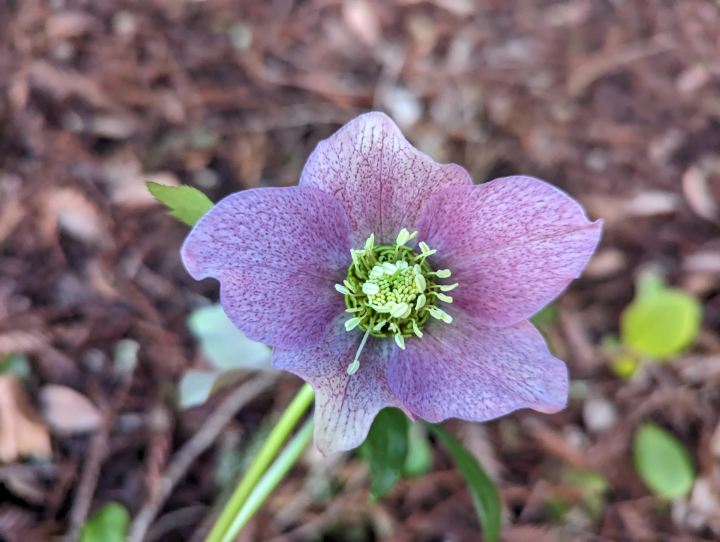
4. Darker grayish purple is not as common here. Regardless of this unusually impressive bloom, hellebore are still prettier in pictures from other climates of more wintry winters.

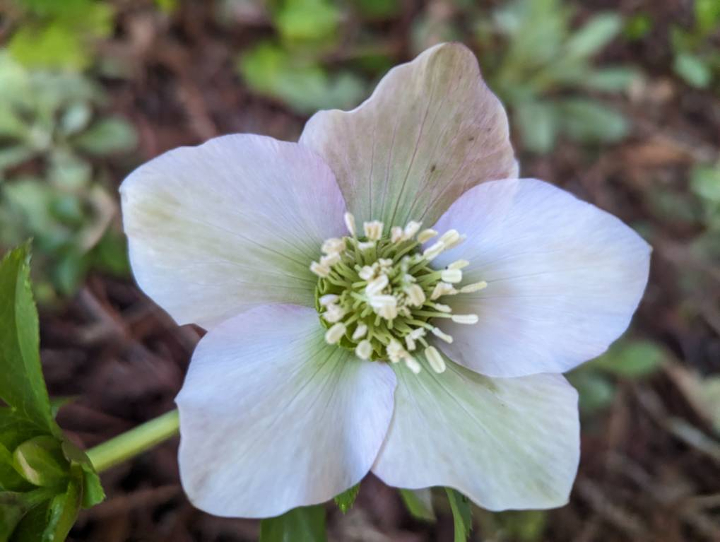
5. White, of course, is my favorite. Only two bloom convincingly white, but the other is a bit spotty and blushed. I might have split a few copies if they typically bloomed this well.

6. Rhody does not cooperate for pictures. If I remember correctly, this picture was taken immediately prior to the picture from last week with his tongue out. It could be cropped.

This is the link for Six on Saturday, for anyone else who would like to participate: https://thepropagatorblog.wordpress.com/2017/09/18/six-on-saturday-a-participant-guide/
Six on Saturday: Snow, Rain, Wind, Frost, Etcetera

Etcetera is the important part here We must adhere to a schedule. As mentioned earlier, this winter generated the only snow for most regions here since 1976, and more flooding since 1982. By local standards, this winter was severe. It seemed to continue longer than it should have, as if to delay spring and the chores that come with it. I managed to prune a disfigured lemon tree, perhaps more than I wanted to, but effectively so. It was a good reminder of what time of year this really is. The weather is presently pleasant. More rain is expected for tomorrow, Tuesday and Wednesday. However, it is not expected to be as torrential as it had been. No more frost is expected.

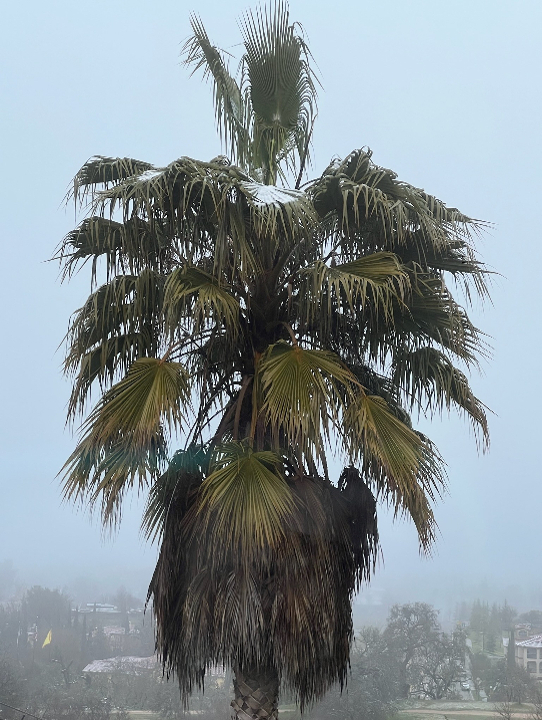
1. Snow looks silly on top of a Mexican fan palm, Washingtonia robusta. This was weeks ago and hundreds of miles to the south, but is amusing nonetheless. Brent sent it to me.

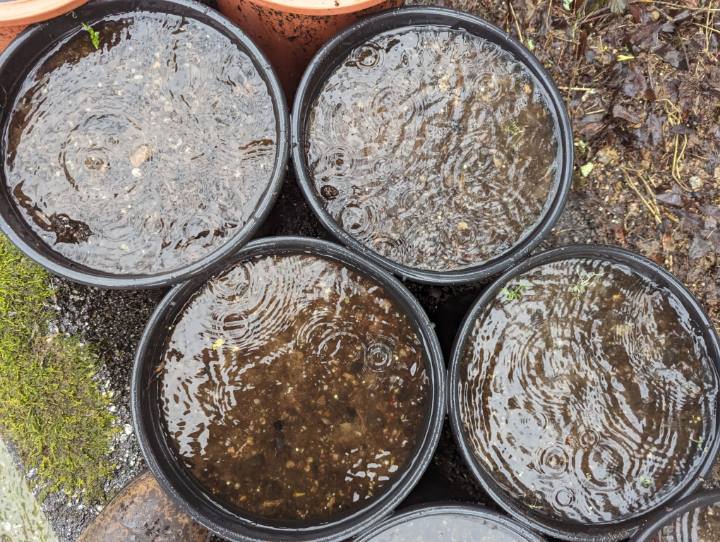
2. Rain fell faster than it could drain through the recently canned Canna. Their drainage holes are likely in the middle of the bottoms of these cans, rather than around the edges.

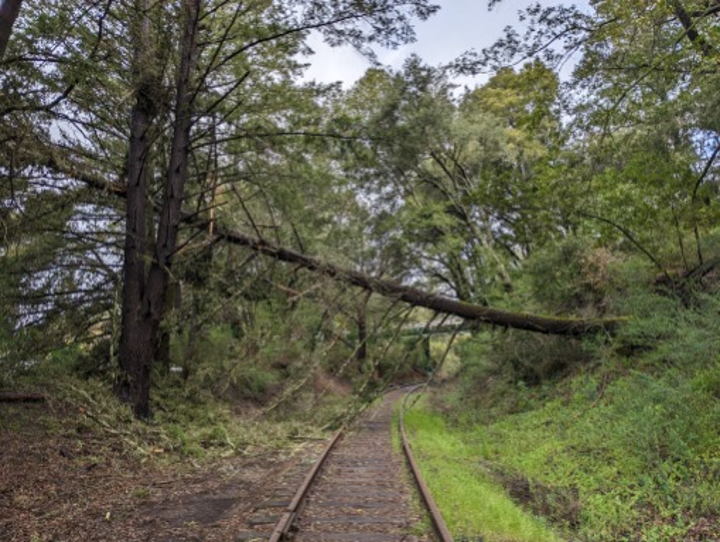
3. Wind blew limbs and trees down all over. Then, after it stopped blowing, this Douglas fir, Pseudotsuga menziesii, fell across the Roaring Camp Railroad behind the barn here.

4. Frost should be done for the year. So, I pruned the structurally compromised Eureka lemon, Citrus limon ‘Eureka’, and processed a few of the scraps into ungrafted cuttings.

5. Lemons were another byproduct of pruning. Most are not yet completely ripe though. Several ripe lemons are always available, but the primary phase should ripen about now.

6. Rhody has been a good sport through all the unusually wintry weather this winter. He is pleased to get outside more now. We got a similar but cuter picture for next Saturday.

This is the link for Six on Saturday, for anyone else who would like to participate: https://thepropagatorblog.wordpress.com/2017/09/18/six-on-saturday-a-participant-guide/
Six on Saturday: Canna From Heaven

The weather was major news here again. After the only snow for most regions here since 1976, and the most flooding since 1982, torrential rain and more flooding was predicted for yesterday. Fortunately, the rain was not torrential enough to cause flooding. Prior to the rain, I was trying to plant what needed planting so that it would get soaked in well. I split and planted some overgrown Kaffir lily, and split and canned way too many canna. Flowering quince and queen’s tears provide a bit of floral color for this ‘Six on Saturday’.

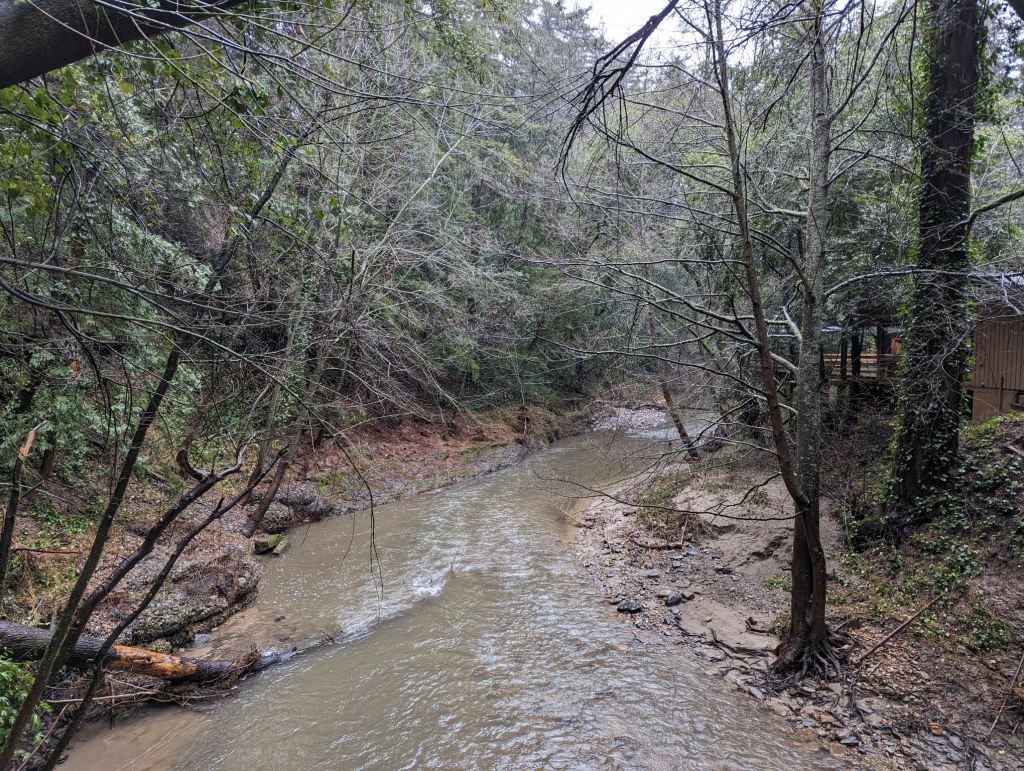
1. Zayante Creek flowed under the deck to the right of this picture as 2022 became 2023. This was Thursday, a few hours before another flood was predicted, but did not happen.

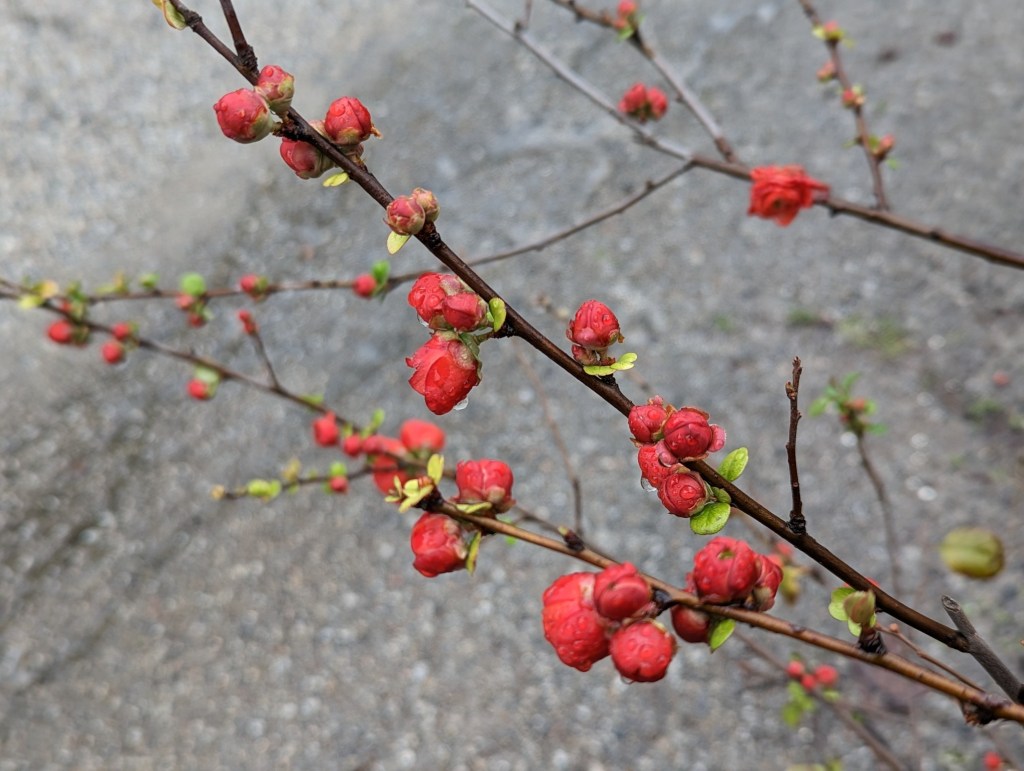
2. Chaenomeles speciosa ‘Double Take Orange’, flowering quince, like many early spring and late winter flowers, got delayed by the very unusually cool and rainy wintry weather.

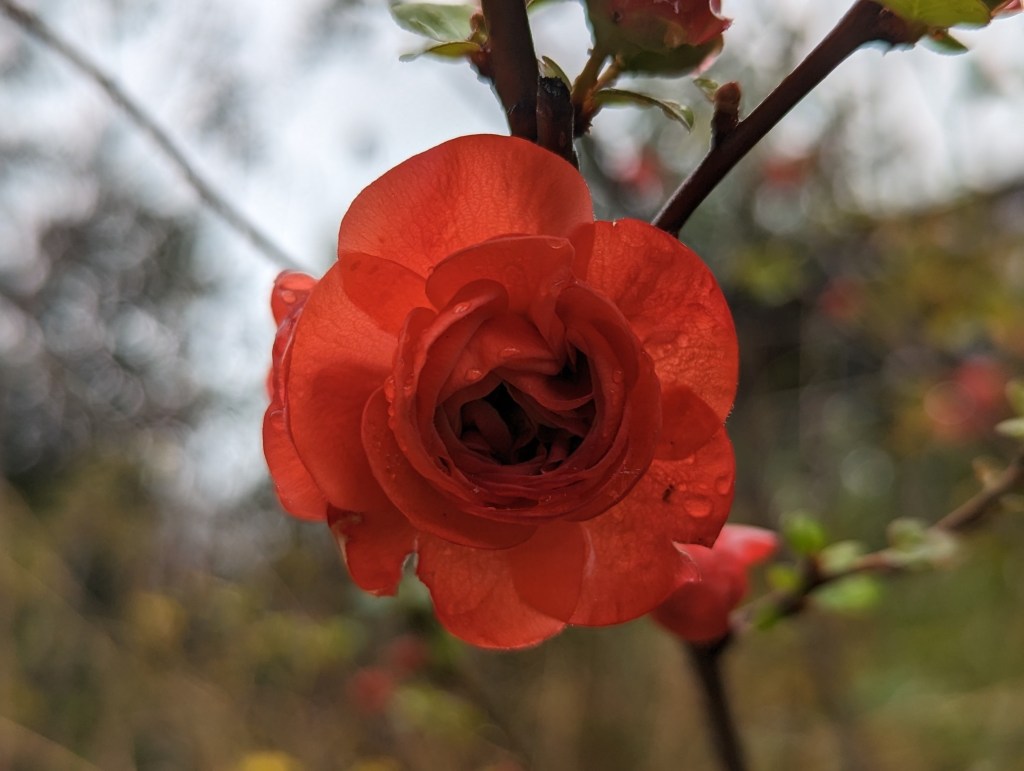
3. Chaenomeles speciosa ‘Double Take Orange’, flowering quince is a modern cultivar of a traditional flower. I am none too keen on modern cultivars, but I am fond of tradition.

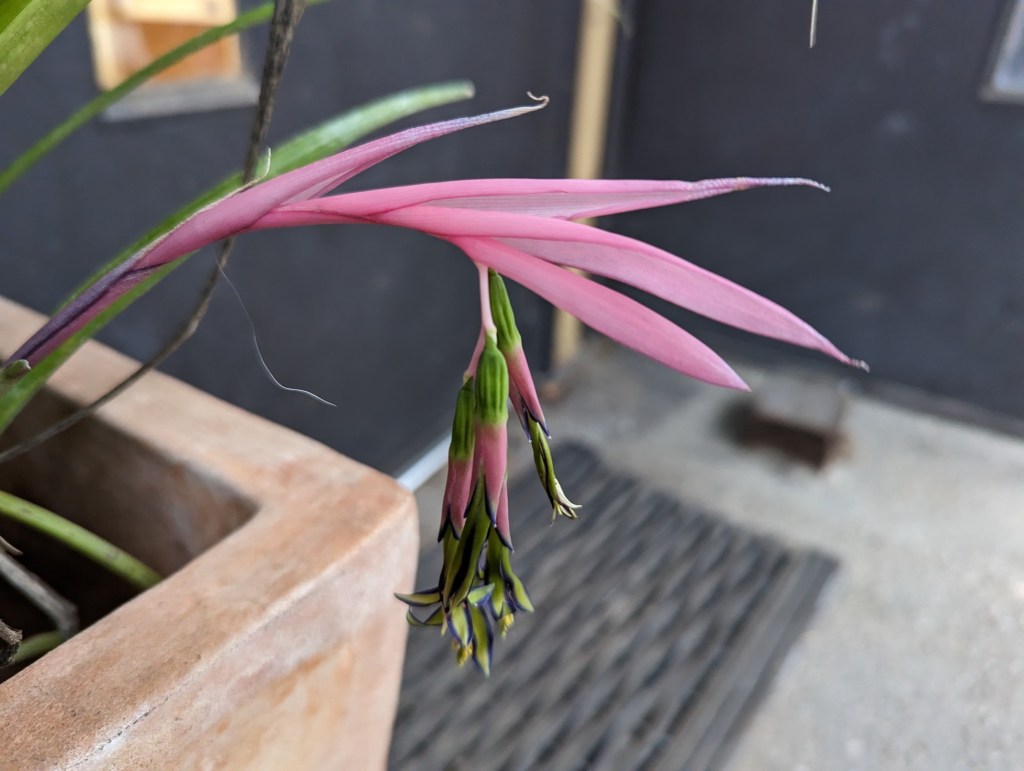
4. Billbergia nutans, queen’s tears is an unimpressively palid and grassy bromeliad that blooms with these sillily pendulous flowers. Actually though, these silly flowers are cool.

5. Clivia miniata, Kaffir lily was recycled from another landscape, rather than Craigslist. It was crowded within a planter box, so now has more room to grow and be happy here.

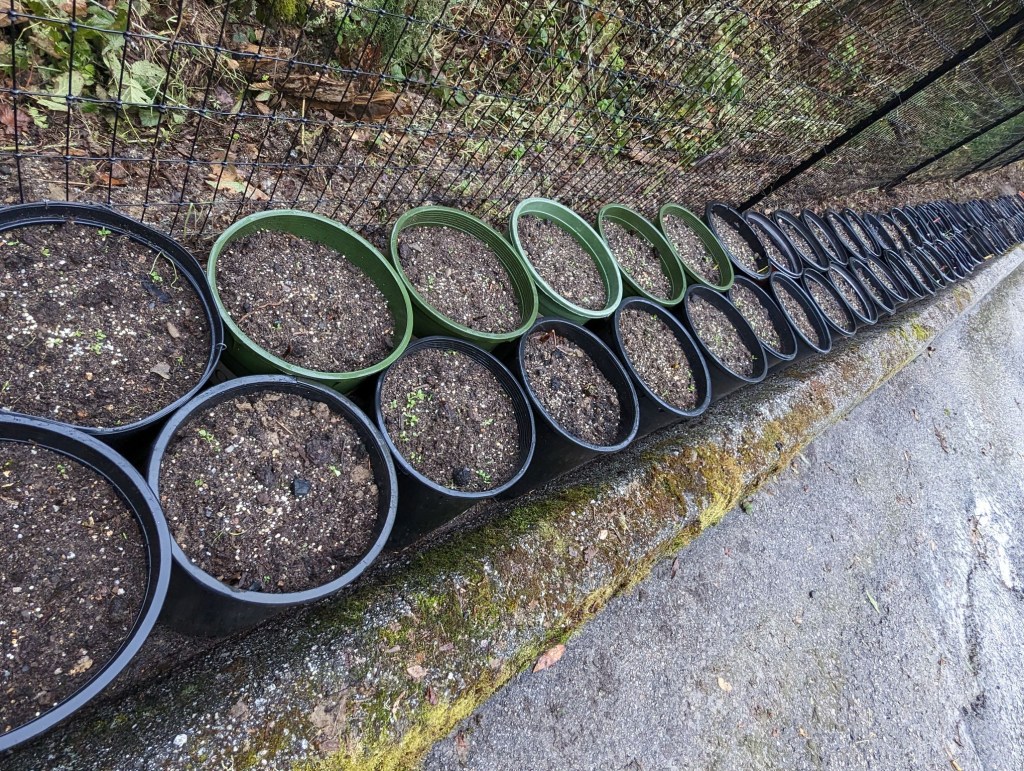
6. Canna of various cultivars has become excessive! There are eighty-eight #5 cans of it! At least a dozen more are expected later! Most cans contain enough rhizomes for at least two cans; merely because there were not enough empty cans when I split and canned the dormant rhizomes. I should field grow them somewhere else. At least they will be pretty for this summer.

This is the link for Six on Saturday, for anyone else who would like to participate: https://thepropagatorblog.wordpress.com/2017/09/18/six-on-saturday-a-participant-guide/
Six on Saturday: Aspen

Aspen are not native here like they are around Aspen in Colorado. Common cottonwood is. While bare, it almost resembles aspen, and really seems to be a species from a climate with colder winters. Actually, all of my Six this week seem to be from colder climates. All but #1 and #2 are native however.

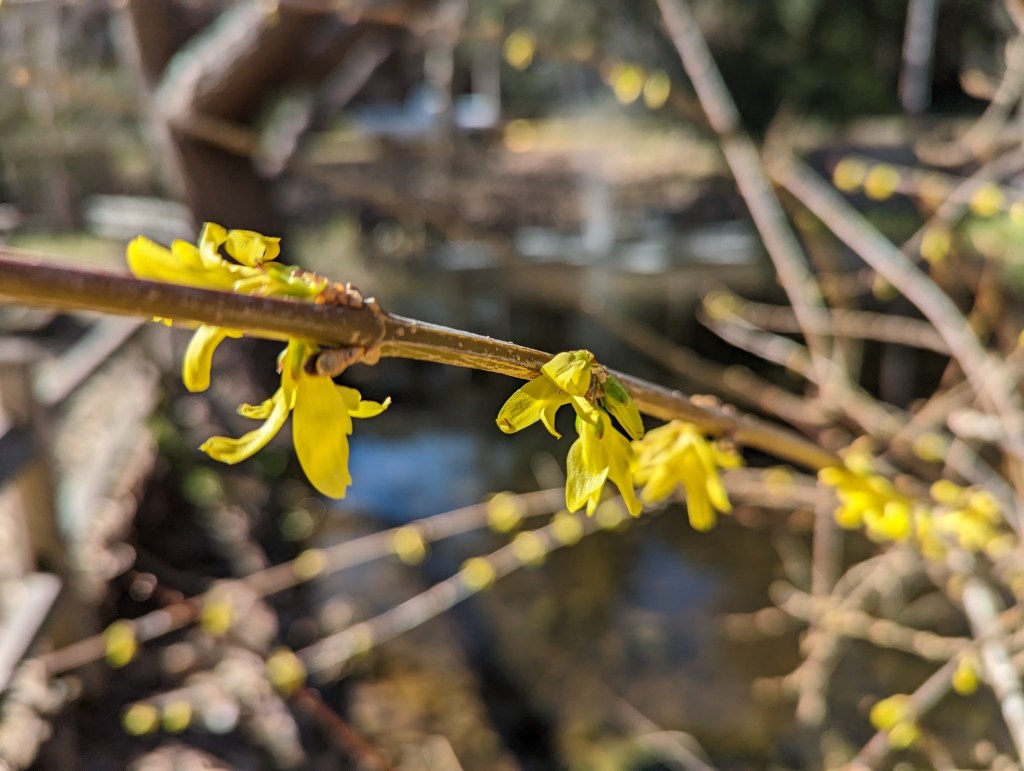
1. Forsythia X intermedia, forsythia looks like it belongs in a colder climate where it can bloom as the snow melts. Only a few inhabit our landscapes, and they are blooming late.

2. Leucojum aestivum, summer snowflake blooms whenever it wants to here. I had been wanting some for here when a few mysteriously appeared near a ditch of the main road.

3. Corylus californica, beaked hazelnut is native, but also looks like it should bloom like this as the snow melts in a colder climate. The nuts are rare and tiny, but richly flavored.

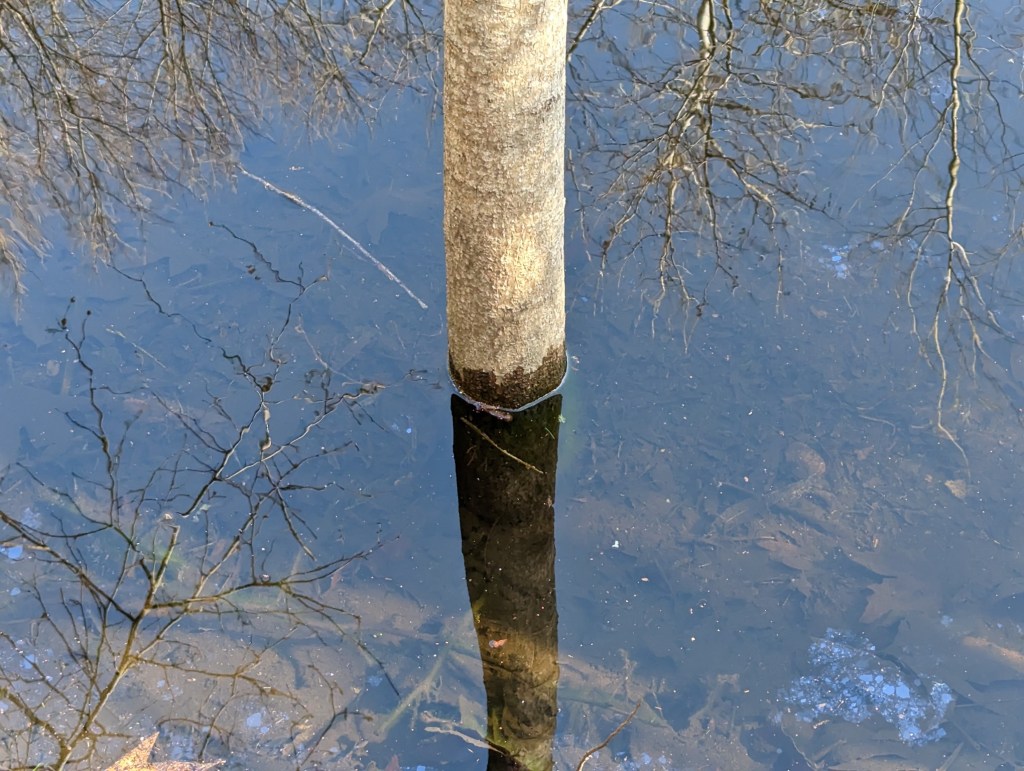
4. Populus deltoides, cottonwood grew as a small colony from roots of a tree that got cut down. This colony got thinned. This stump is under water that reflects a remaining tree.

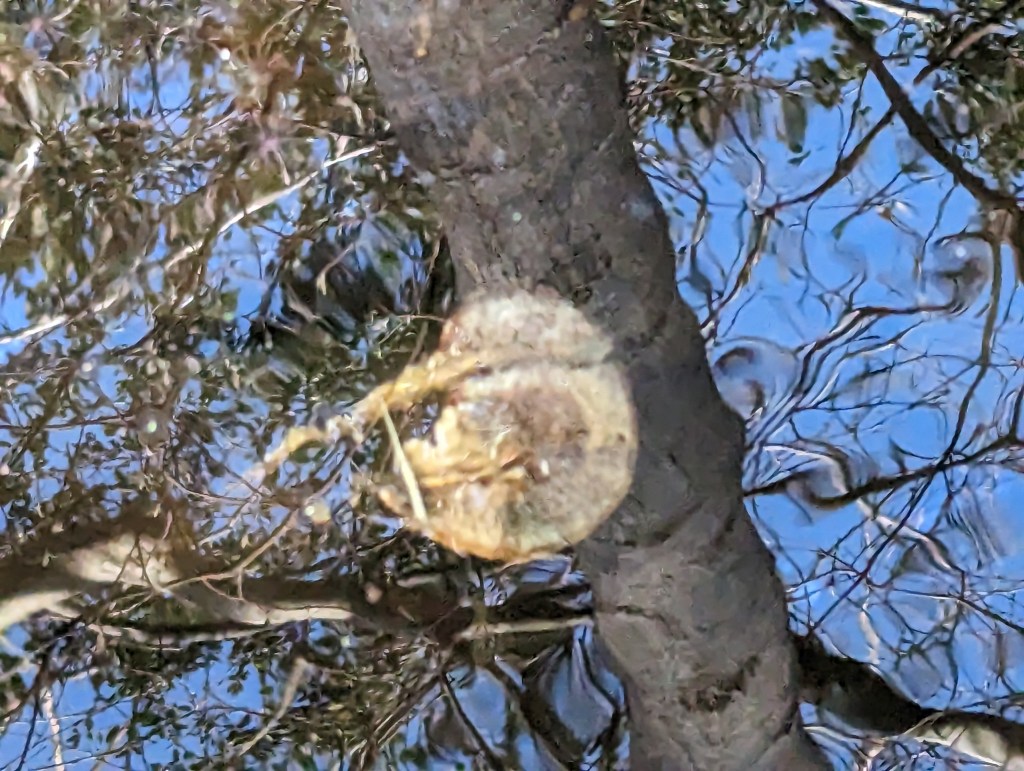
5. This is that reflected tree, which is the only one of seven remaining trees that is out in the water. Its colony grew before the formerly drained pond filled more than a year ago. Platanus racemosa, California sycamore is reflected to the lower left and the upper right and, I believe, Salix lasiandra, red willow or shining willow is reflected to the upper left.

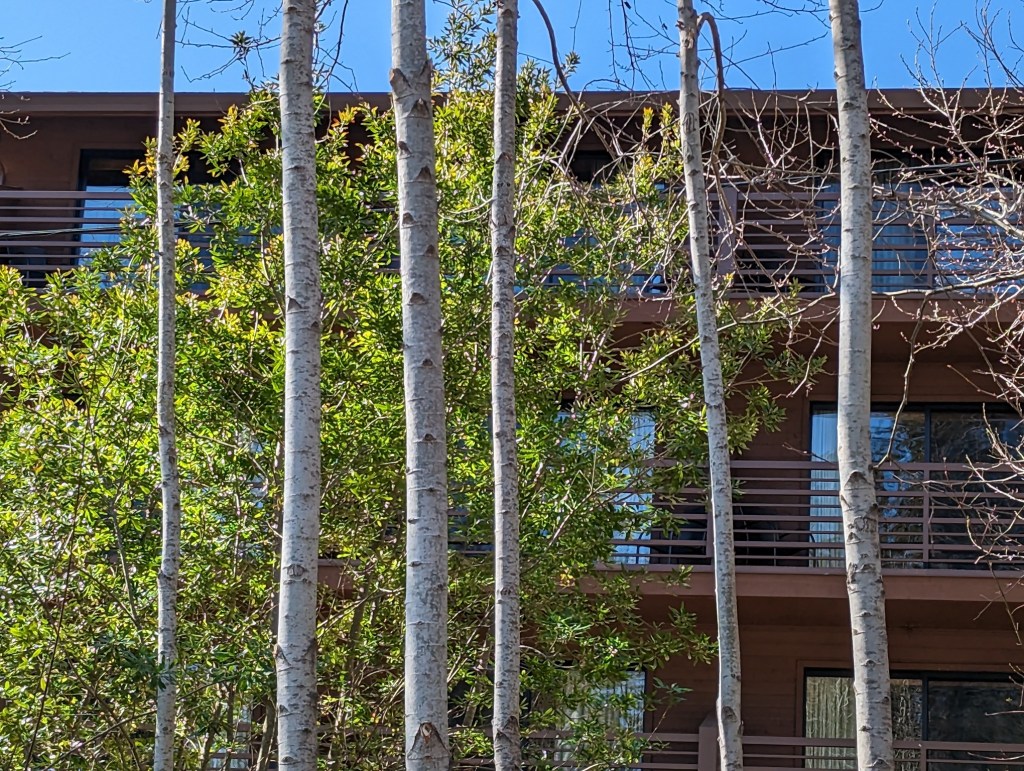
6. These are the other six cottonwood trees. The seventh is beyond the right edge of this picture, where more twigs of California sycamore are visible. Myrica californica, Pacific wax myrtle is in most of the background to the left, with a lodge building farther behind. Such elegantly straight trunks of common cottonwood seem to resemble those of aspen.

This is the link for Six on Saturday, for anyone else who would like to participate: https://thepropagatorblog.wordpress.com/2017/09/18/six-on-saturday-a-participant-guide/

Six on Saturday: SNOW?!

Snow is extremely rare here. It falls every few years in my neighborhood, which is about 1,500 feet above sea level, but this is nearly nine hundred feet lower. For the Santa Clara Valley, just over the Santa Cruz Mountains, it has not snowed since 1976. A forecast that included a possibility of snow was quite a surprise. Actual snow early Thursday morning was more of a surprise. It resumed overnight and into Friday morning with thunder and lightning. Of course, almost all of it melted, so that it was no more than two inches deep. I can understand why those who contend with it regularly during winter dislike it. Yuck! Rhody stayed inside all day.

1. Clivia miniata, Kaffir lily is the most recent and shameless acquisition from Craigslist. Someone in Santa Clara wanted them thinned, so I got a trunkload, totally without guilt.

2. Clivia miniata, Kaffir lily really was justified! More than two dozen split and groomed shoots are a bit more than enough and very appropriate for this shaded and narrow bed.

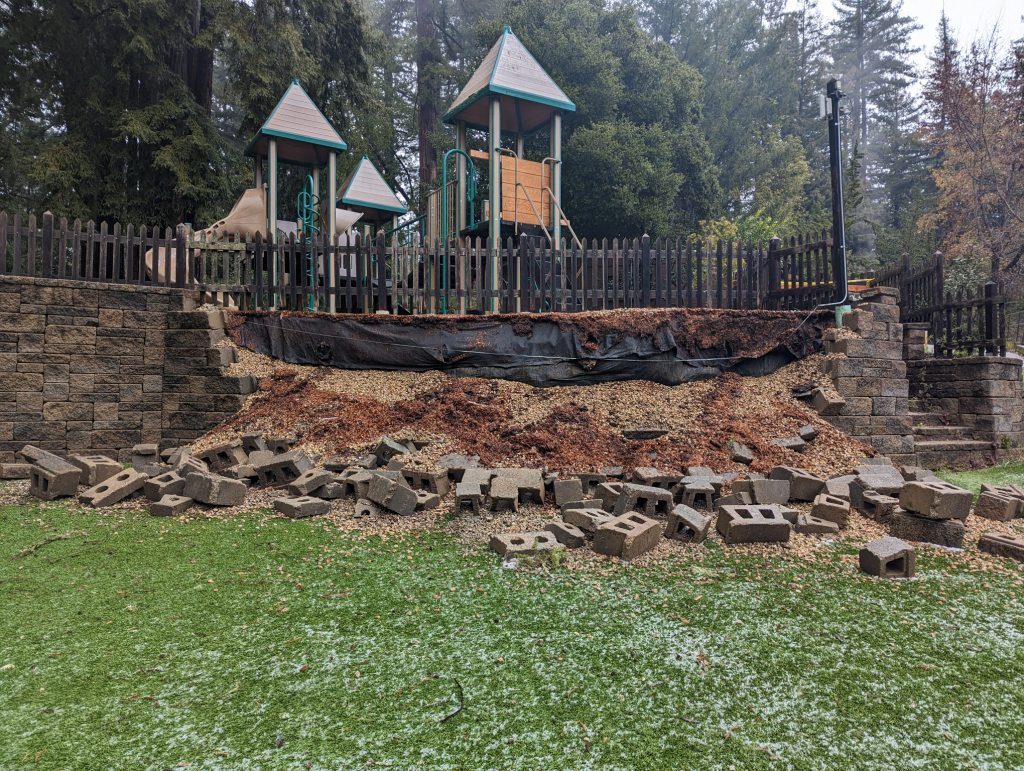
3. Jericho was not the inspiration for this landscape. It merely succumbed to all the rain. The upper few courses of stone got hastily but futilely removed as the wall began to lean.

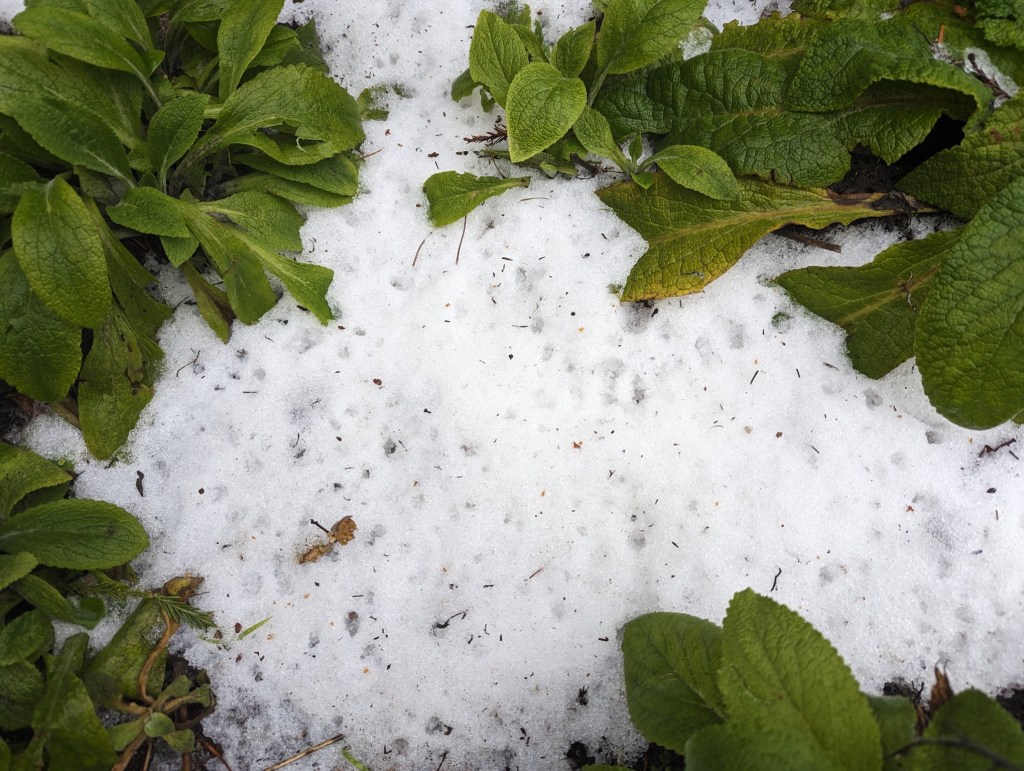
4. Digitalis purpurea, foxglove does not do much now, and is merely incidentally to this strange picture anyway. Snow from Thursday and Friday is the major development here.

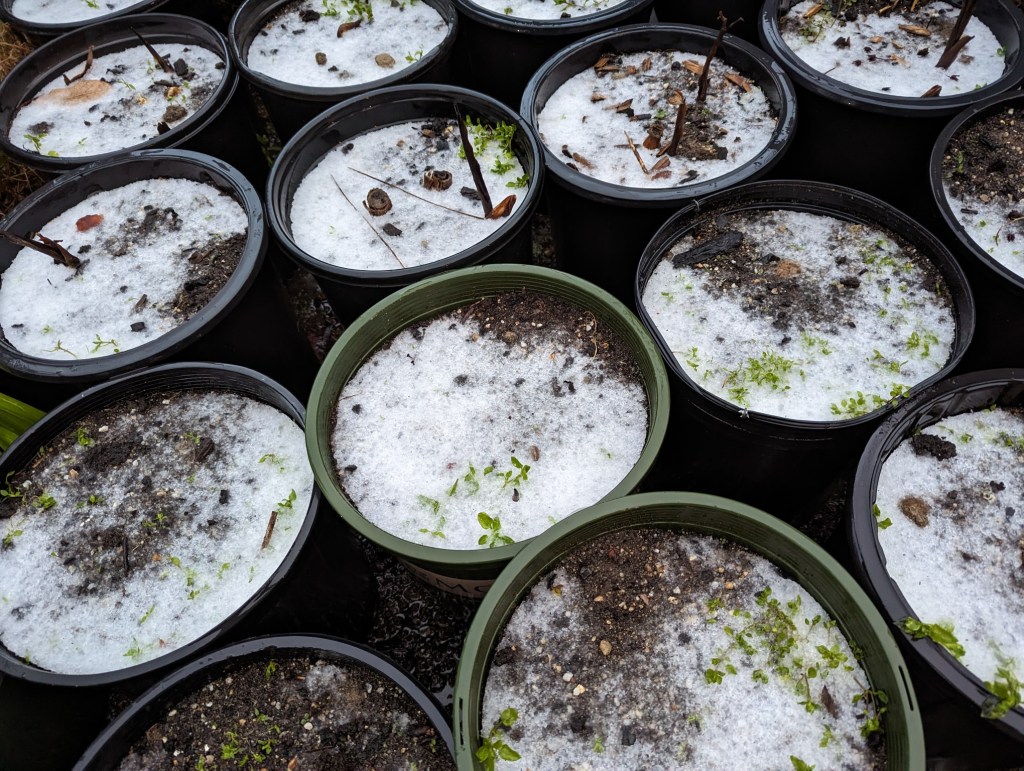
5. Canna is likewise incidental to this picture of what seems to be snow, but may merely be hail, which remained after the snow mostly melted. Canna are still dormant anyway.

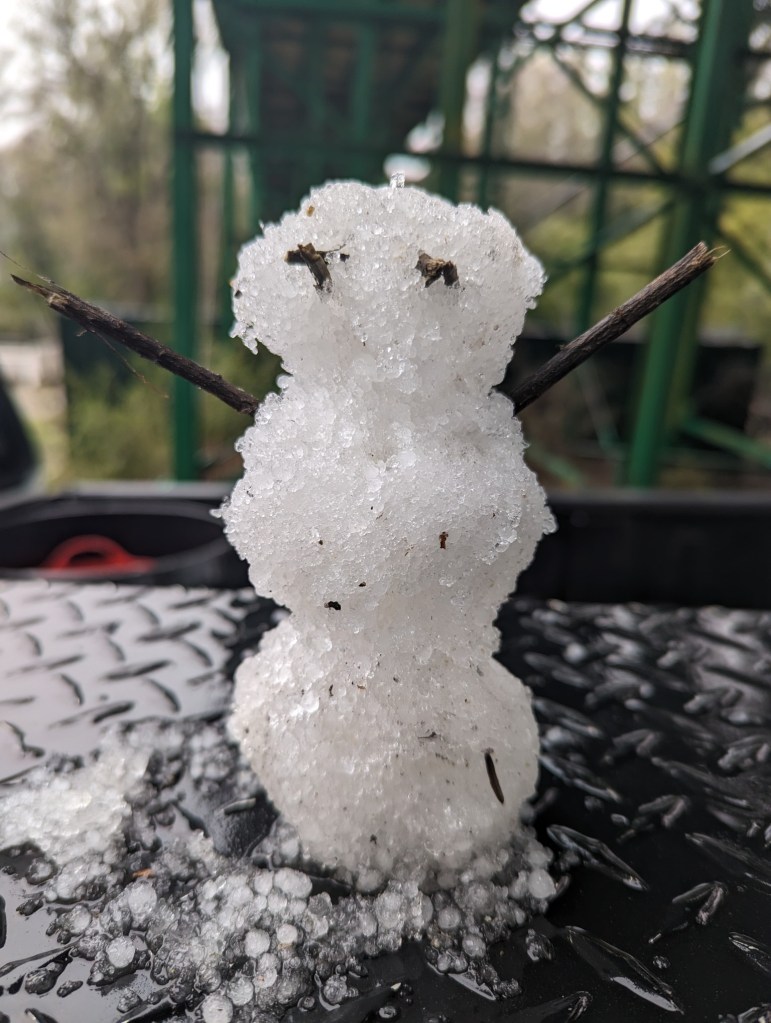
6. Snowman of three handfuls of slush and sticks is here just so that I can brag about the snow here. However, I find that snow is cold, wet and icky. I can see why it is unpopular.

This is the link for Six on Saturday, for anyone else who would like to participate: https://thepropagatorblog.wordpress.com/2017/09/18/six-on-saturday-a-participant-guide/

Six on Saturday: Narcissism

That is such an objectionable word. Perhaps that is why so many of us prefer to describe narcissus as daffodils or paperwhites. Both bloom at work, and as much as I prefer white bloom, I do not maintain favorites in this regard. I enjoy paperwhites for their whiteness as well as their fragrance. However, I enjoy classic yellow daffodils, such as ‘King Alfred’, because they are so traditional. All are blooming late this year. So is winter daphne. The weather has been cooler than it typically is, but only for the past month or so. It seems to me that if chill were to enhance bloom, it would have needed to begin somewhat earlier. Also, it seems to me that narcissus do as they please.

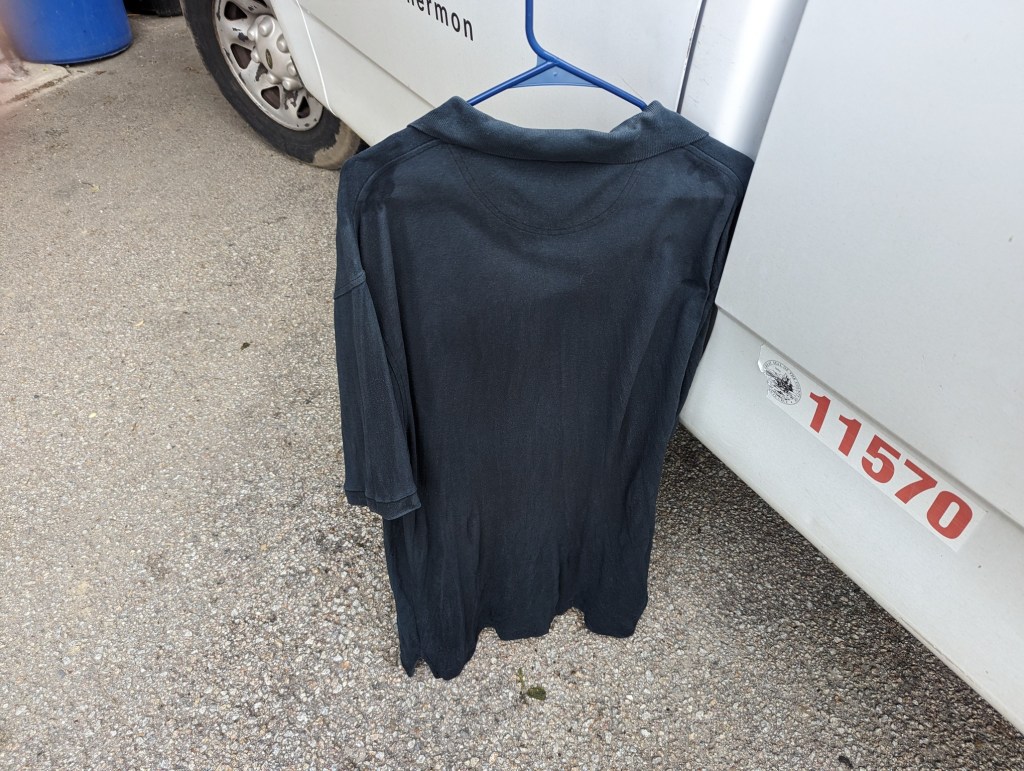
1. Frost is generally minor and uncommon here. However, a wet jersey that was hung to drain overnight froze solid enough to lean against this pickup. Its hanger is not hanging.

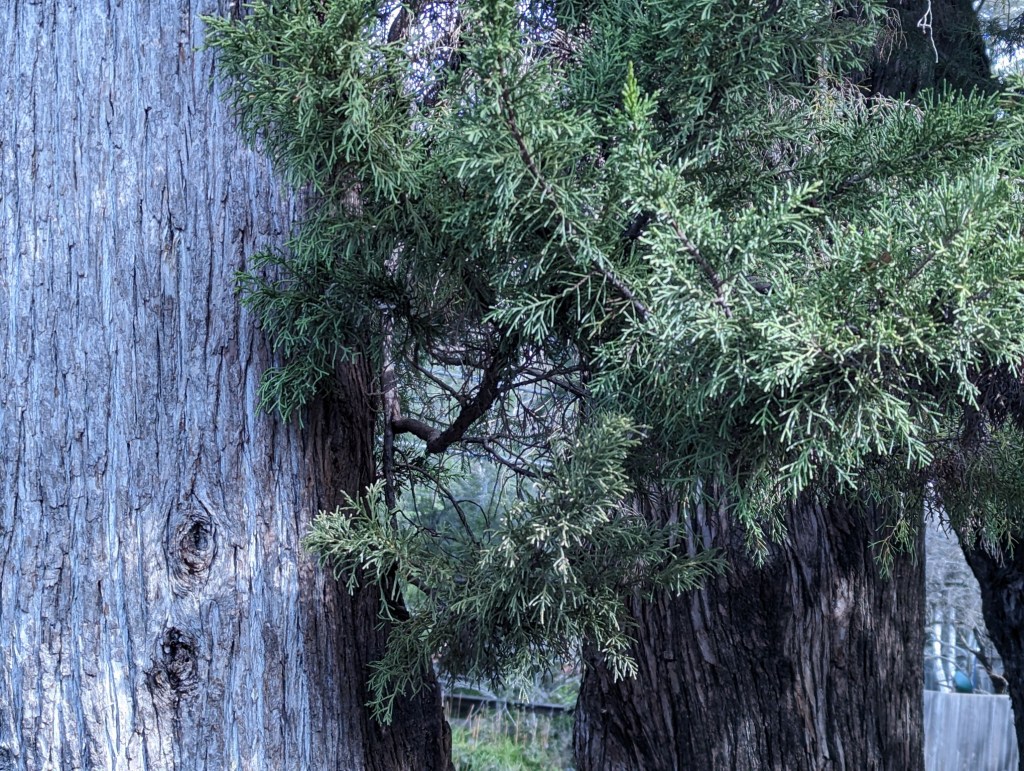
2. Cupressus macrocarpa, Monterey cypress is nothing special, but I happen to be fond of its foliage and bark. This is a hedge that never got hedged, but grew as crowded trees.

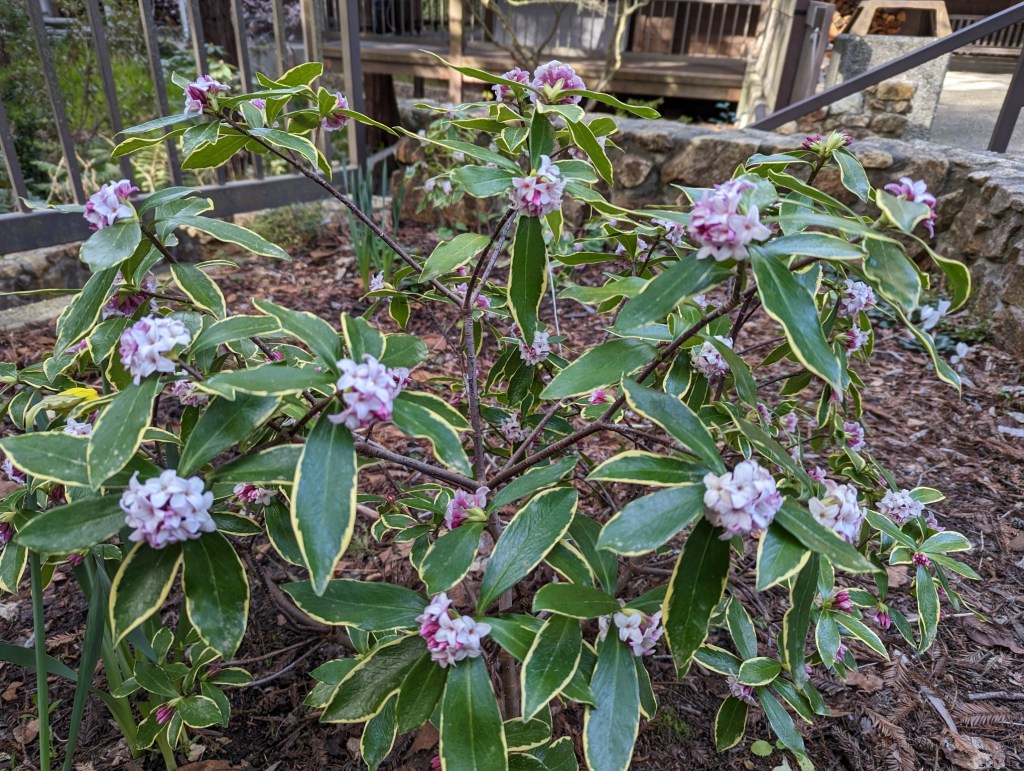
3. Daphne odora ‘Marginata’, winter daphne is still blooming! It blooms slowly through winter, but should be finished by now. Furthermore, it blooms remarkably well for here.

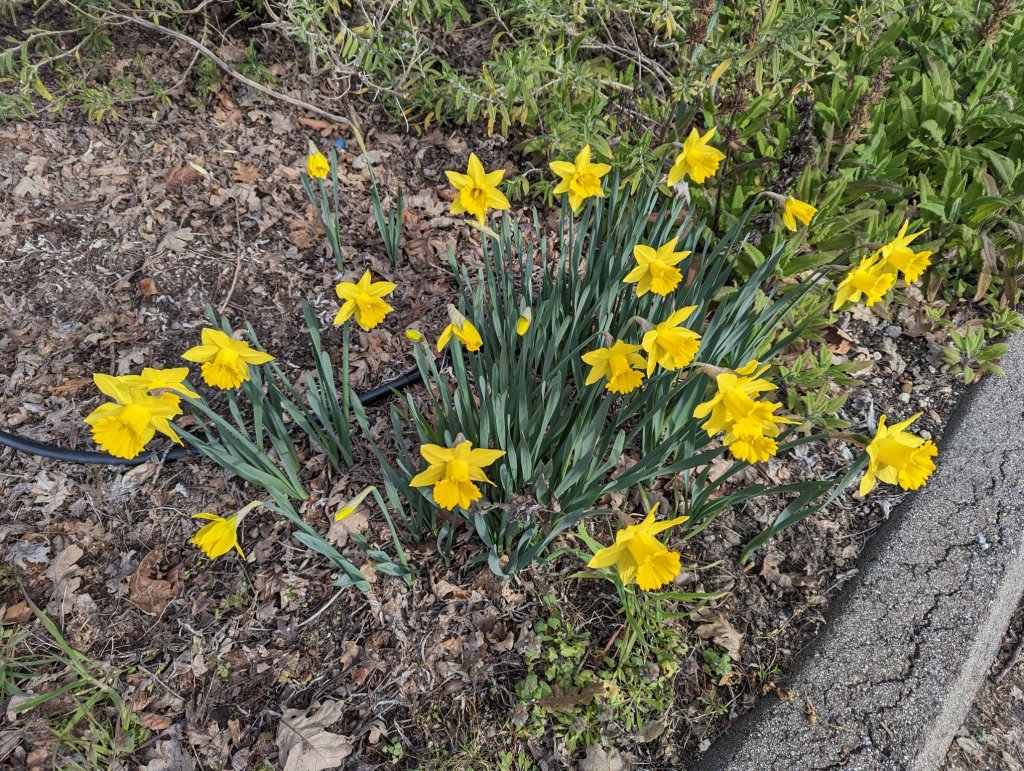
4. Narcissus grows wild in soil that was dumped on the perimeter of our industrial yard over the years. No one sees them there, so I collect some to bring into our meeting room.

5. Narcissus are much more abundant within the landscapes where they belong. Several sporadic colonies are sparsely naturalized. However, several new bulbs bloom only once.

6. Narcissus are even prettier close up. I consider these to be daffodil, although I do not know what the distinction is. They are blooming late, and more are beginning to bloom.

This is the link for Six on Saturday, for anyone else who would like to participate: https://thepropagatorblog.wordpress.com/2017/09/18/six-on-saturday-a-participant-guide/