Six on Saturday: Vanity


These are five of the pictures of camellias from Nuccio’s Nursery in Altadena that I said last week I would share this week. I will share five more immediately afterward in a second ‘Six on Saturday’ post. I am not certain if there is a rule against doing so, but no one seemed to mind when I did the same to share an over abundance of autumn foliar color last autumn. You can find the second post here: https://tonytomeo.com/2019/03/30/six-on-saturday-vanity-ii/

Brent Green, my colleague who I sometimes mention within the context of my articles, typically in a rather unflattering manner, took these pictures nearly two weeks ago. He lives and works nearby, in the Los Angeles region.

Brent takes horrible pictures. He always has. He was wasting my film on bad pictures such as these in 1986. I told him just before he took these pictures that I really wanted GOOD pictures. These are what I got.

Also, Brent is VERY vain. Back in 1986, when we were roommates in Fremont Hall at Cal Poly in San Luis Obispo, he often had me go get the car to meet him at the bottom of the stairs because he was in that much of a hurry to do whatever he happened to be doing at the time. It might have been getting close to a week since he last got his Grace Jones flat top do done. Perhaps his clothes were getting close to three months old, so he needed a new batch. It was always a rush. The problem was that there was a mirror in our dorm room. I would wait in the red zone at the bottom of the stairs with the engine running for several minutes before going back up to the top floor and most of the way down the long hall to our room to find him staring at himself in that mirror. When I told him that we needed to leave NOW before the car got ticketed, he would still need to add some more Sta-Sof-Fro to his do . . . and stare some more. He had hair back then.

Yes, this is relevant here. Anyway, these are the camellias:

1. Chandleri Elegans or Francine – What do they see off to the right? Why is one cowering behind the other? This picture should have been centered, and wider than tall, or horizontal rather than vertical.P90330
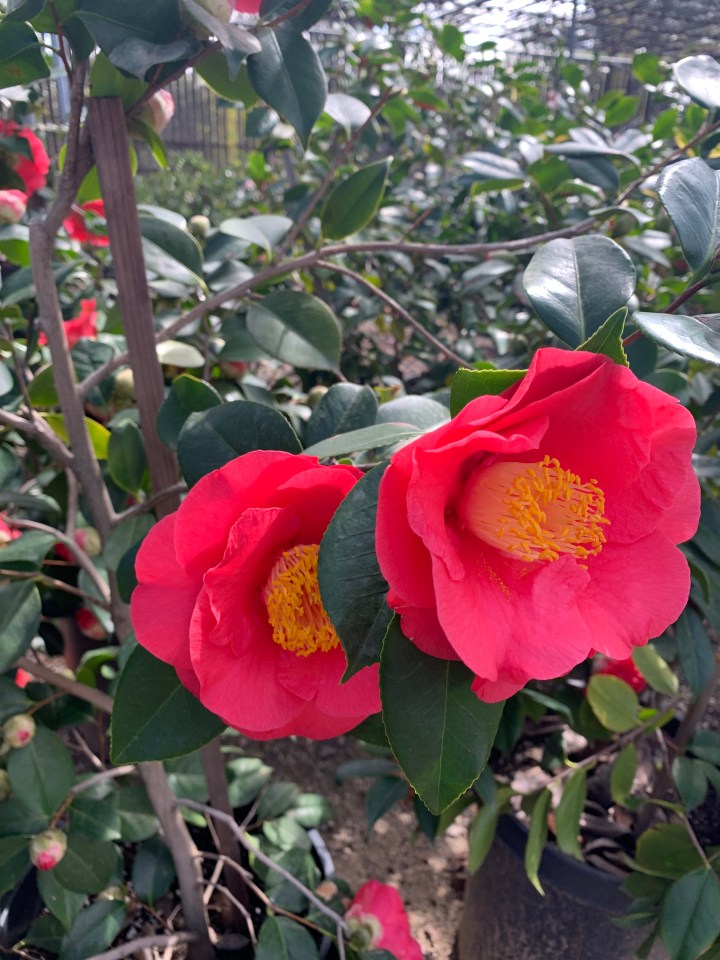
2. Rosette – What is so interesting off to the left that the flower can not look at the camera? Is this supposed to be a picture of the flower low in the picture, or the gravel beyond it?P90330+

3. Red Devil – There are a lot of distracted flowers here. What is this one looking at on the ground? Is the gravel that interesting? Perhaps the vinyl cans are. This one should be centered too.P90330++

4. Demure – This one looks like an album cover from the 1970s; pale, distracted, and off center against an industrial background. It could be a bad picture, or it could be artistic.P90330+++
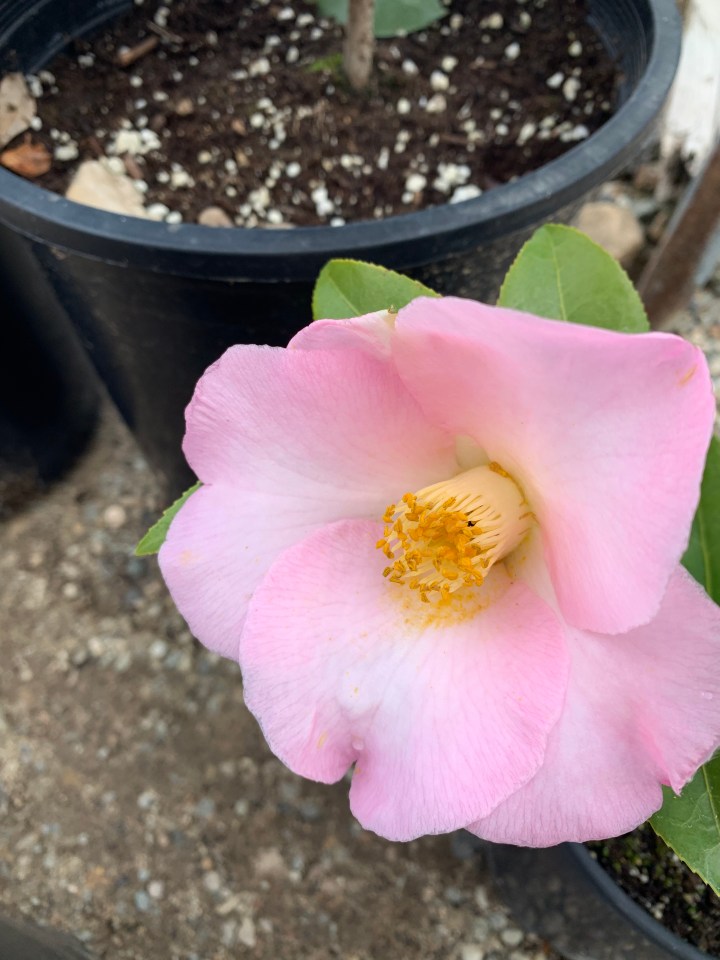
5. Tata – This one looks like a teenager with bad acne looking down before jumping off the high dive.P90330++++

6. Brent Green – The only good picture of the bunch.P90330+++++

Now . . . how did Brent take such bad pictures of flowers that he could so easily aim the camera at properly, AND take such a perfect selfie without being able to see the picture as he took it? Could it be VANITY?!?

This is the link for Six on Saturday, for anyone else who would like to participate:

https://thepropagatorblog.wordpress.com/2017/09/18/six-on-saturday-a-participant-guide/

Six on Saturday: Presbyterian Horticulture


Subjects for more than just a few of my illustrations are found in the simple landscape of Felton Presbyterian Church. Until the last year or so, I had been able to participate in more of the seasonal work days, when we do most of the maintenance of the landscape, as well as a few other chores. No one seems to mind that I am Catholic.

The biggest and best trees, including the big coast live oak, Quercus agrifolia, out front (which I should have gotten a picture of) are native, and were there before the site was developed. Smaller trees of the same species have appeared since then. Also, a nice big catalpa, Catalpa speciosa, appeared right out front, just to the south of the big coast live oak. Otherwise, most of the landscape is an odd mix of what various parishioners contribute to it.

1. Naked lady, Amaryllis belladonna, bloomed late last summer, just before the foliage started to develop in autumn. They are blooming again! Now I know where fake roses come from.P90323

2. Breath of Heaven, Coleonema pulchrum, has a name that is more appropriate to a Church than ‘naked lady’. The flowers are tiny, and not very impressive, but are pretty against the very finely textured foliage.P90323+

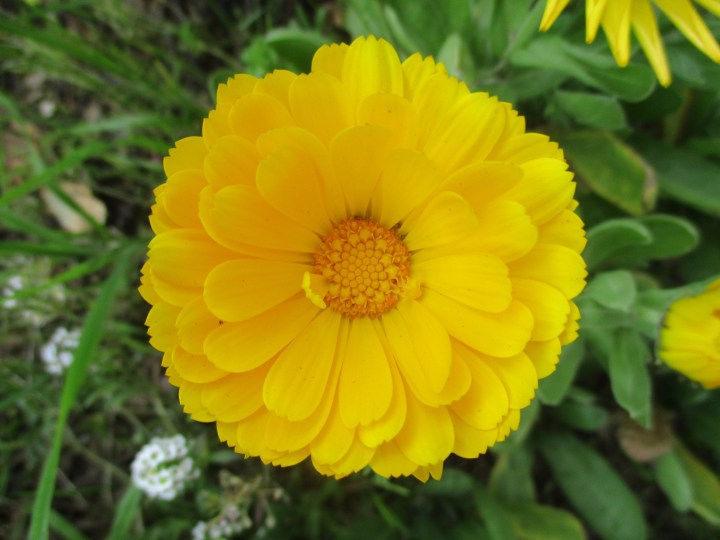
3. Pot marigold, Calendula officinalis, has been modestly naturalized here for years. There are just enough to be pretty, without being invasive. Goodness! Naked ladies and pot!P90323++

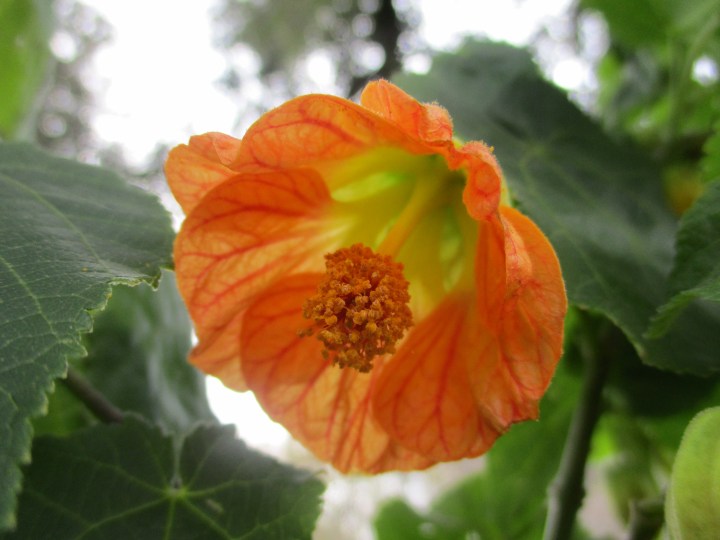
4. Flowering maple, Abutilon spp., was contributed by a parishioner who has many growing wild and blooming in a variety of colors at here home in the same neighborhood where I work. She gave us many of the same.P90323+++

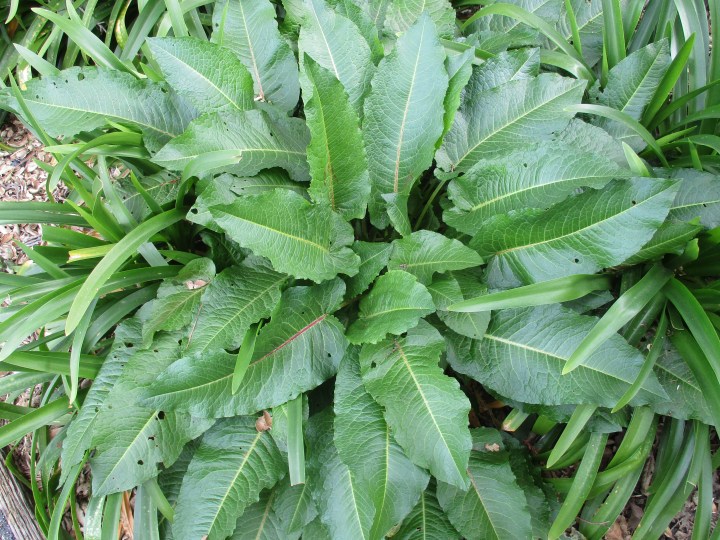
5. Dock, Rumex crispus, has a cool name, but is really just a weed. I have been trying to kill this one for years! It will not die. The root is mixed with tree roots. Now, it looks so fat and happy that I sort of want to leave it.P90323++++

6. Lichen (which I can not identify with a Latin name) on the limbs of the crape myrtle featured last week got noticed enough for it to get a close up picture this week. I don’t understand the allure. I’m not lichen this one.P90323+++++

Since I did not use any of the pictures of camellias from Nuccios’ Nursery in Altadena that Brent sent to me (that I mentioned last week), I will try to share them next week, even though they finished blooming already.

This is the link for Six on Saturday, for anyone else who would like to participate:

https://thepropagatorblog.wordpress.com/2017/09/18/six-on-saturday-a-participant-guide/

Six on Saturday: Picture Dump


No topic. No excuse. I just have these few pictures that I have no other use for. Some are sort of interesting, depending on perspective. Some are weird. #5 is just plain unsightly.

I considered sharing six pictures of camellias from Nuccios’ Nursery in Altadena that Brent sent to me, but I did not want to totally dismiss these pictures. Besides, Brent takes really lame pictures. I might share them next week just so we all can see how lame they are. I believe that most are different from the camellias at work that I shared pictures of last year, but I really do not know.

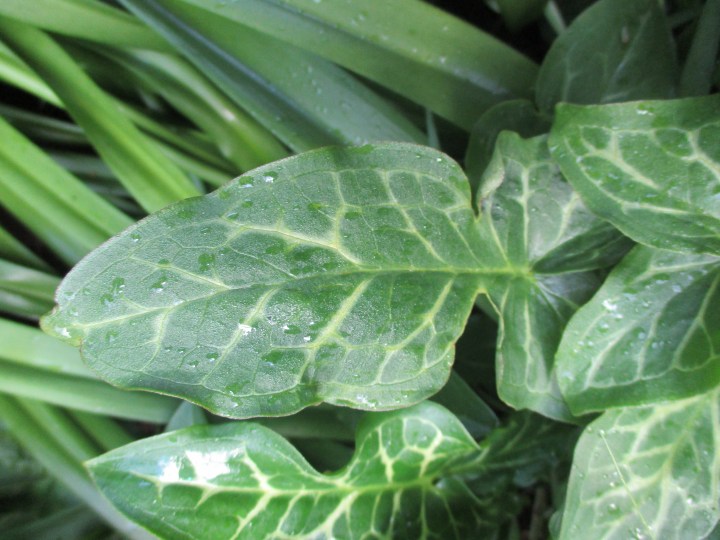
1. Arum italicum, which is also known simply as Italian arum, is something that I had always dismissed as a naturalized and sometimes invasive exotic species. In other words, I thought of it merely as a weed. Then, I noticed others using the foliage with cut flowers. It never occurred to me how pretty it is. I am not sure if this is the real deal, but it is what grows here. Some of the garden varieties that others have shared pictures of are more intensely variegated. It seems to me that another species that is not variegated might live here too, but I can not remember where I saw it.P90316

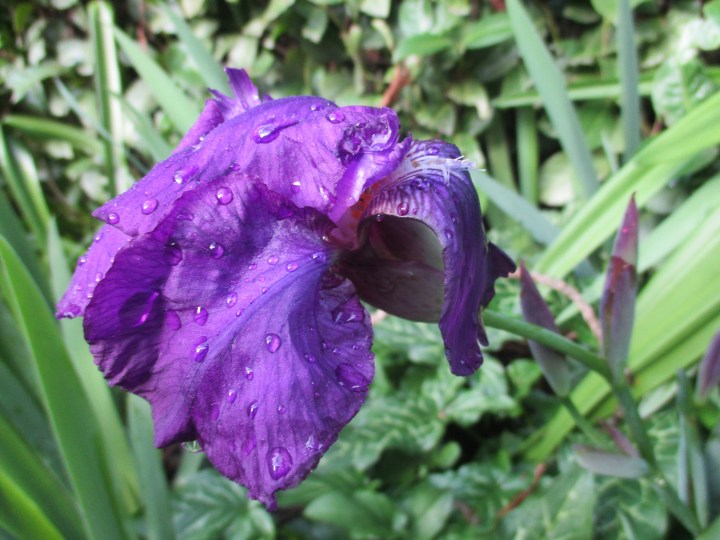
2. It never rains in Southern California. This is not Southern California. Besides, contrary to popular belief, it really ‘does’ rain in Southern California. Anyway, the incessant and abundant rain has been damaging a few of the spring blooming flowers, although most are doing quite well. This odd bearded iris bloom seems to be melting. Those that bloomed immediately afterward are doing just fine. The stems seem to me to be unusually slim for bearded iris, but I am no expert.P90316+

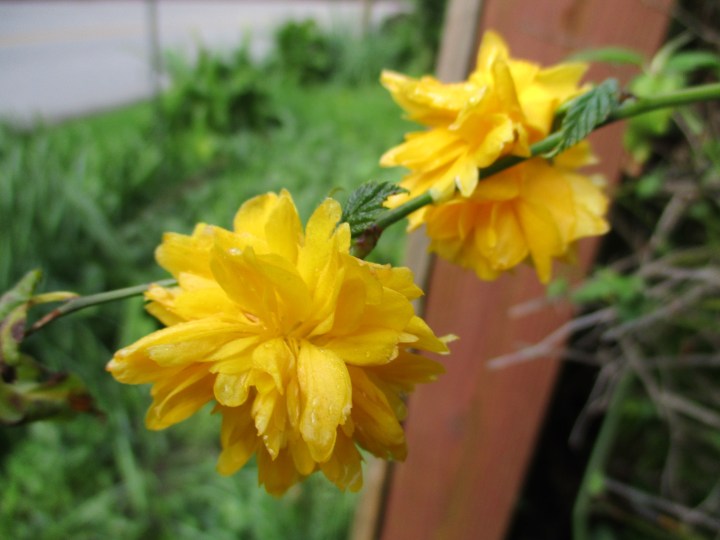
3. WHAT IS THIS?!? I believe it to be Kerria japonica, which is also known simply as Japanese kerria. . . . sort of like Arum italicum, which is also known simply as Italian arum. I thought it was something completely different until it bloomed. I will not say what I though it was, because my assumption was about as lame as Brent’s camellia pictures, and we can’t have that.P90316++

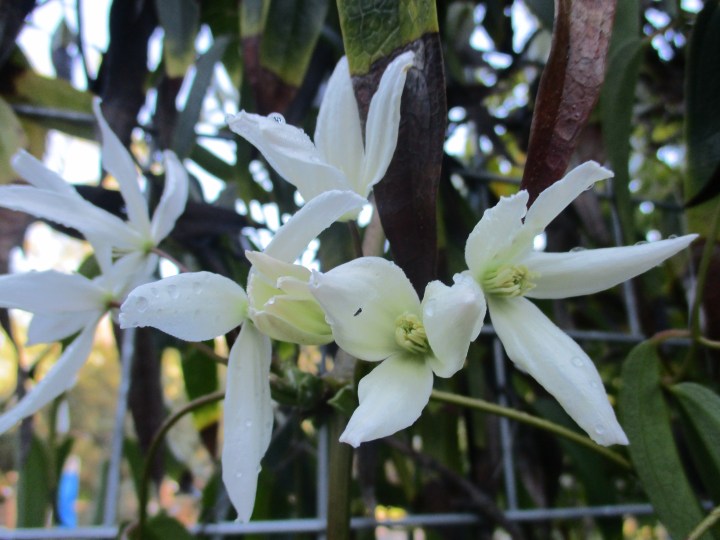
4. Clematis armandii, which is also known simply as Armand clematis (I bet you didn’t see that one coming.) is more popularly know here as evergreen clematis. It grows like the weed that it is, and climbs into the lemon tree that it is next too. It always seems to be very vigorous and healthy, but many of the leaves have crispy tips. Those at the top of the picture are about half dead! The vine does not get any fertilizer, although it probably reaches where other plants are fertilized. The damage is attributed to the water.P90316+++

5. Lagerstroemia indica, which is NOT also known simply as Indian lagerstroemia, is the familiar crape myrtle. Some might disdainfully spell it without the first ‘e’. I am none to keen on it either. Actually, I am none too keen on its overuse! It is everywhere, and very often in situations that it does not belong in. This one is under larger trees, so does not get enough sunlight to bloom well. Prior to pruning, it was more disfigured than it is now. Since it can not grow as tall as it would like to be, it should be pollarded annually. As it matures and develops knuckles, some of the superfluous stems can be removed. As much as I dislike crape myrtle in bad situations, I want this tree to be pollarded properly. ‘Crape murder’ is unacceptable! There are MANY in the region that are indiscriminately hacked by so-called ‘gardeners’, who leave nasty stubs and unsightly stubble.P90316++++

6. Eureka lemon originated as a ‘sport’, or mutant growth, of Lisbon lemon. The only difference between the two is that Lisbon lemon produces all fruit within a limited season, while Eureka lemon produces a bit less within the same season, and then continues to produce a few additional fruit sporadically throughout the year. Lisbon lemon works well for orchards that produce lemons for lemon products. Eureka lemon is better for home gardens, where it is always happy to provide lemons whenever they are desired. I got this picture of a single ripening fruit because there are not many others on the tree right now. That means the tree is doing its job; and people who work here are using the lemons.P90316+++++

This is the link for Six on Saturday, for anyone else who would like to participate:

https://thepropagatorblog.wordpress.com/2017/09/18/six-on-saturday-a-participant-guide/
Not My Style

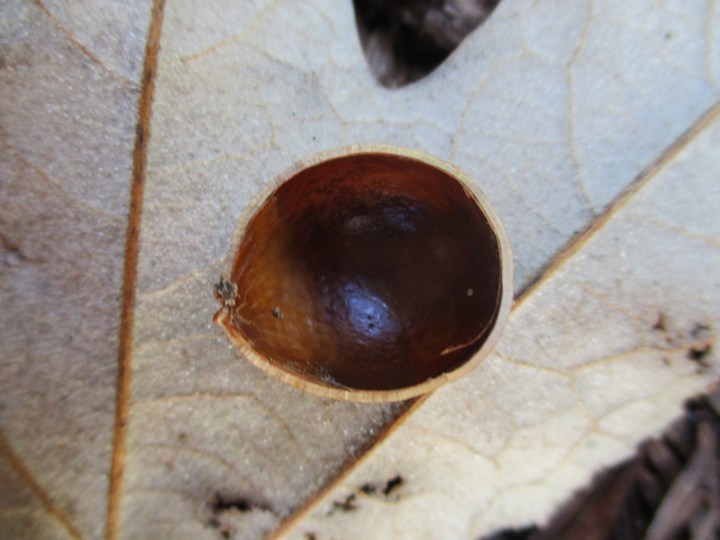
P90202KThere is no shortage of artistic pictures online and within the context of gardening blogs. Some really are fascinating. I particularly like those that show the weather in far away and mythical lands like Colorado, Chicago, North Carolina, Australia, Oklahoma, New Zealand, Austin, and South Africa. Then there are the cats, dogs, hens, horses, pigs, and a few others that are not so entertaining. The close ups of flowers, fruits, leaves, mushrooms and any variety of odds and ends are amusing if they are not immediately recognizable. Yet, all these pictures are not my style. I am not the artistic sort.

I will try though. This shiny chestnut brown acorn half shell just looked like something that I should get a picture of. It was just laying there on the big sycamore leaf as if it were on display. The interior is even shinier and more richly colored than the exterior, although I did not turn it over to confirm. I am just guessing from my experience with other acorns.

The sycamore that provided the leaf is a California sycamore, Platanus racemosa.

I could not identify the species of the oak that provided the acorn. I am pretty certain that it is not from a coast live oak, valley oak, black oak or tanoak; respectively, Quercus agrifolia, Quercus lobata, Quercus kelogii or (Notho)Lithocarpus densiflorus. There are not many other options. I suspect that it could be from a canyon live oak or Shreve oak; respectively, Quercus chrysolepis or Quercus parvula ‘Shrevei’. Neither produces acorns that are typically as round as this one was.

Nor could I identify the species of squirrel, rat, raccoon, crow or whatever unknown animal dropped it.

Well, perhaps this is why I am not the artistic sort. I am instead the technical sort.

Six on Saturday: Rhody


Everyone loves Rhody. Regardless of how interesting I like to believe my articles are, nothing gets as much attention as the few illustrations that are photo bombed by Rhody. There are not many good pictures of Rhody, and it is difficult to get good pictures of him. He is too active, and when I try to get him to be still for the camera, he looks sad. I suppose that part of the problem is that I am not very proficient with taking pictures of him in action, rather than while he is trying to cooperate for a posed picture. These pictures are not exactly horticulturally oriented. Except for a few background bits, the only horticultural subjects are a big California sycamore that does not fit into the picture, a dead box elder that is mostly gone, and an uninteresting lawn.

1. Rhody is an expert of meteorology. He is looking to the gray sky and predicting rain. He will want to get inside before it arrives.p90119

2. Rhody is also an expert of arboriculture. After inspecting this big California sycamore, he concluded that the ‘bark’ is ‘ruff’. He happens to be particularly fond of dogwoods.p90119+

3. Rhody is stumped. He is wondering where all the firewood from this dead box elder went. It is within a protected riparian zone where deteriorating trees were to be cut down and made safe, but otherwise left on site.p90119++

4. Rhody occasionally inspects his big lawns to evaluate their maintenance, and perhaps find sticks or balls left by trespassing dogs.p90119+++

5. Rhody found the maintenance of this lawn to be satisfactory.p90119++++

6. Rhody is finished with his work and is getting ready for the incoming storm.p90119+++++

This is the link for Six on Saturday, for anyone else who would like to participate:

https://thepropagatorblog.wordpress.com/2017/09/18/six-on-saturday-a-participant-guide/
Windows Of Heaven

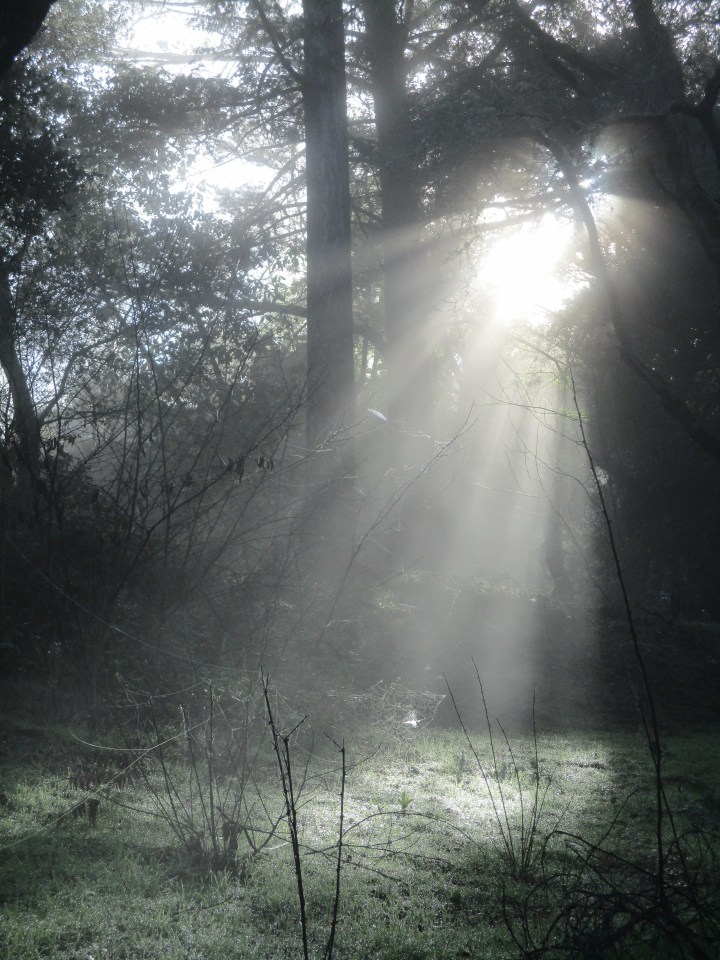
P81229KOr . . . a close encounter of the third kind. Let’s just go with the former rather than the latter.

I am no photographer. The pictures that I post are merely illustrations for articles from my gardening column, and other articles. This picture just happened to make itself available while I was getting the first of the six pictures of the earlier ‘Six on Saturday’ post. The location is nothing special. It is not really out in the forest like it seems to be. A lodge building of six suites is directly to the left. A big ‘housekeeping’ building is to the right. There is a road in the background above, as well as below, from where the picture was taken.

Even the flora in uninteresting. The most prominent straight trunk in the middle is that of a young Douglas fir. The slightly leaning trunk with upward reaching branches to the right is some sort of cypress. There are a few nice small coast live oaks to the left. Most of the other trees to the right are black locusts that I really should cut down. The small shoots in the foreground are watersprounts from black oak saplings that were already cut down. There are some California bay trees in there somewhere, probably off in the background to the very far left.

The deteriorated colony of oak root rot fungus, Armillaria mellea, that was described too graphically in the earlier post was located in the foreground of the lodge building to the left. https://tonytomeo.com/2018/12/02/the-humongous-fungus-among-us/ . There was not much left of it then, so there would be even less now. . . fortunately.

Well, isn’t this way more information than necessary? I should have left this (too artistic for my ability) picture with just the title.

Six on Saturday: Shrooms


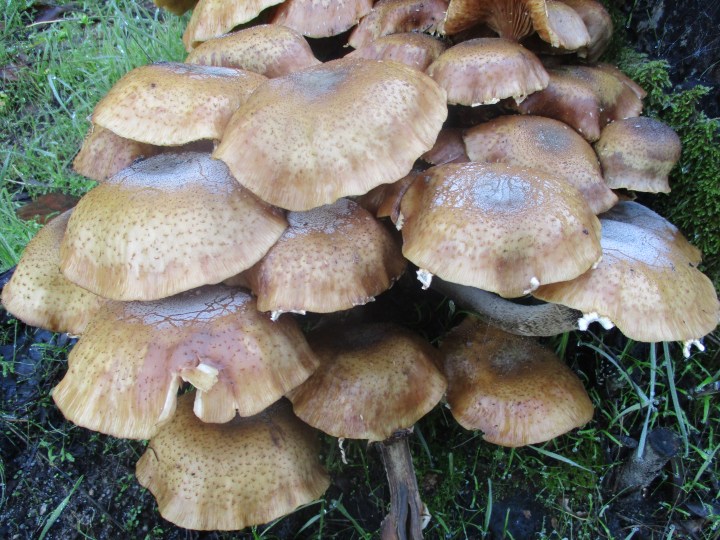
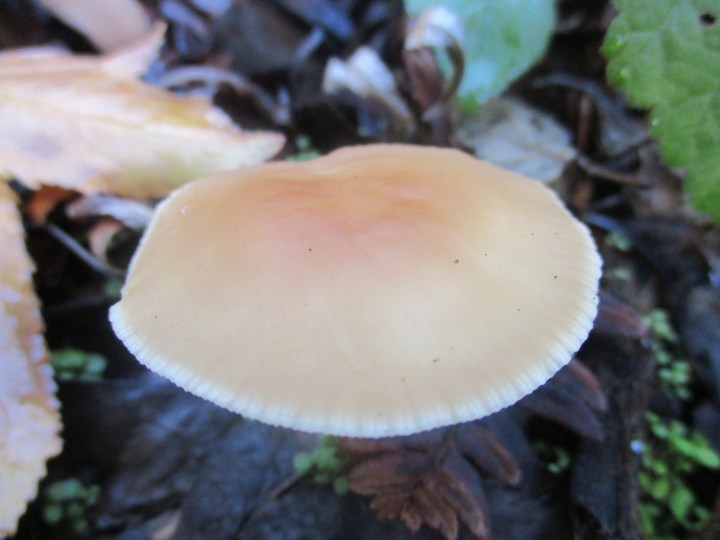
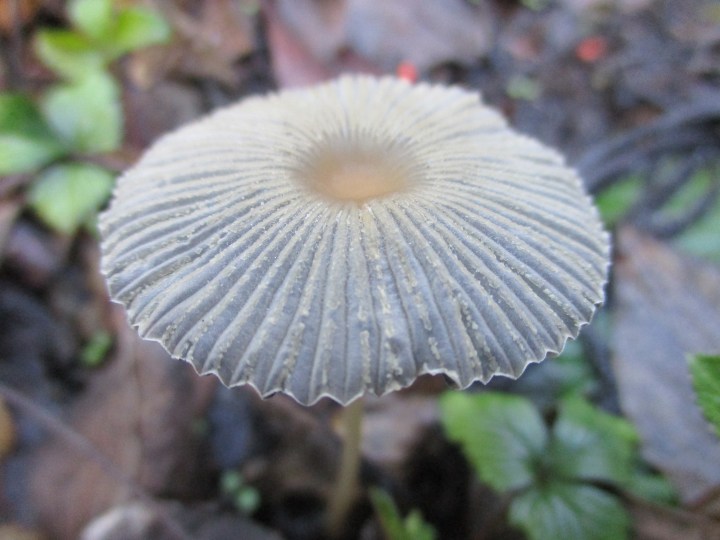
It is unlikely than any of these are related to ‘shrooms’ or ‘magic mushrooms’, the psychedelic mushrooms Psilocybe cubensis; but this is Santa Cruz County. I would not know one if I saw one. I think that #4 looks like pancake; and #6 looks like a strawberry. All except #1 were found within only a few feet of each other. They showed up immediately after the rain, in spot that had been dry all summer.

If #1 looks familiar, it is because it is the dreaded oak root rot fungus, Armillaria mellea. It was was at an adjacent building where another less developed colony of the same was featured in ‘The Humungous Fungus Among Us’, https://tonytomeo.com/2018/12/02/the-humongous-fungus-among-us/ . The colony that was featured earlier developed into mushrooms just like those shown here, but by the time these pictures were taken, had deteriorated into a sloppy puddle of chunky goo from a bad 1980s horror movie. It looked like someone ate a bucket of chocolate covered olives, and threw up. To make matters worse, the whole mess was shimmering with the squirming of maggots, and exuded an aroma that was appropriate to visual aspects of the situation. Wow! I am grossing myself out, and I experienced it already.

When I compare picture #1 of the more developed colony of oak root rot to the earlier picture of the less developed colony. I sort of wonder if some of these other pictures are redundant to each other. Could #4 be a more developed form of #3? Could #5 be the deteriorating phase of #2? Well, I don’t know. I am just a horticulturist, not a mycologist.

1.)81229

2.)81229+

3.)81229++

4.)81229+++

5.)81229++++

6.)81229+++++

This is the link for Six on Saturday, for anyone else who would like to participate:

https://thepropagatorblog.wordpress.com/2017/09/18/six-on-saturday-a-participant-guide/
Six on Saturday: Bits and Pieces

There were no major projects this week that were interesting enough to get six pictures of. The best that I could do was get six random pictures of random features of the landscapes. I do not actually do much to cultivate flowers, but they happen to be components of the landscapes. Most are perennials that bloom on their own. Of course, I do not mind taking credit for them.

Some blooms started late while the weather was mild, but were then accelerated as the weather suddenly warmed. It seemed that several different types of flowers needed to be deadheaded at the same time. Zonal geraniums and lily-of-the-Nile are two of the most reliable perennials that bloom on schedule no matter what. Zonal geraniums bloom sporadically most of the time, and only bloom more while the weather is warm. Lily-of-the-Nile may start a bit early or a bit late, but is always in full bloom on the fourth of July. The blooms even look like exploding fireworks. More than two weeks later, their flowers are still in full color but will slowly start to fade. Phlox was a surprise for us.

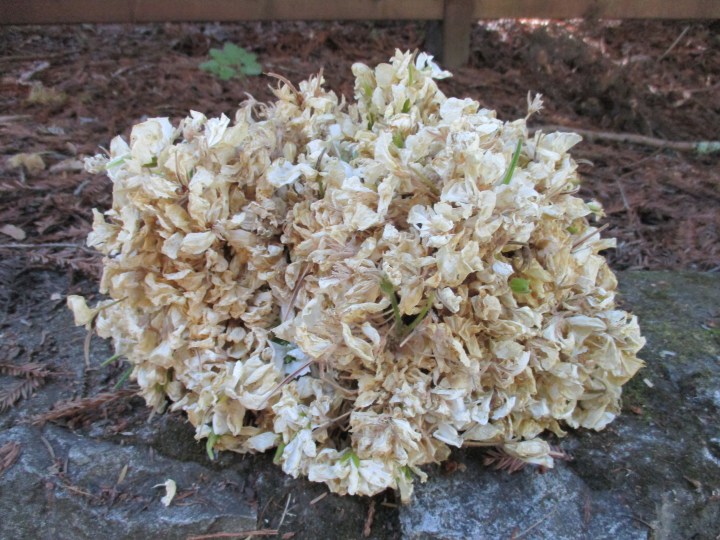
1. Can you guess what this bloom is?P80728

2. You can probably guess that this is phlox. It sure had my colleagues and I perplexed. We had never seen anything like it. Phlox is uncommon here. I would even say it is rare. No one knows why. It just is. I got a picture of it a few years ago only because I was intrigued by it in a neighboring landscape. It took a bit of effort to identify it, although I sort of suspected that it was phlox. It did not look quite like this phlox, and was lower to the ground. No one knows how this one got into the landscape. We suspect it arrived with the ‘fertilizer’ that the horses make for us.P80728+

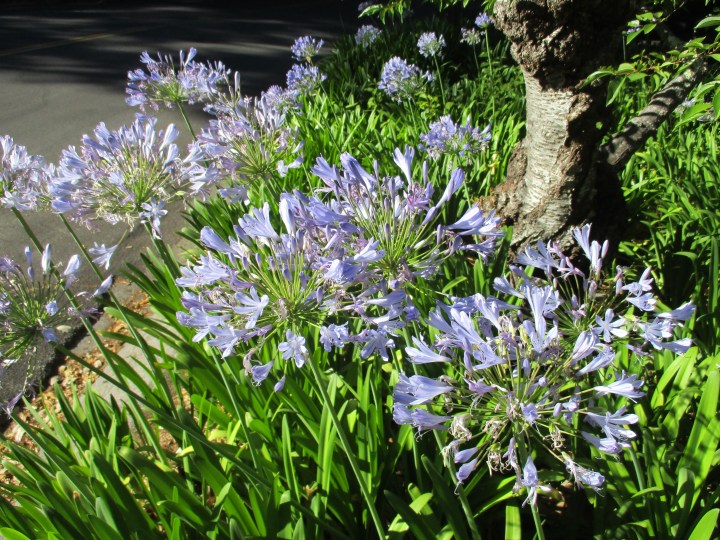
3. Lily-of-the-Nile is still one of my all time favorite summer blooming perennials. I do not care how cheap and common it is. It is one of the first perennials I divided while I was in junior high school. I grew more than eighty new plants from a single old plant that needed to be removed. It was the old fashioned sort, with big blue flowers and big flabby leaves, perhaps bigger than these. I also like the white ones with the same big flowers and leaves, of course, because they are white. All the fancy modern cultivars are nice too, but not as excellent as the originals. I do like seeing the very pale blue ones in other gardens.P80728++

4. This zonal geranium has these small but cheery cherry red flowers, but it is really grown for the weirdly variegated foliage that is blurry in the background. I think that these flowers would look better against simple green foliage. There is another zonal geranium in another part of the landscape, with small peachy pink flowers and foliage that is variegated only with white. I am none too keen on the flower color, and I am not often too keen on variegation, but the foliage of that particular zonal geranium really looks sharp.P80728+++

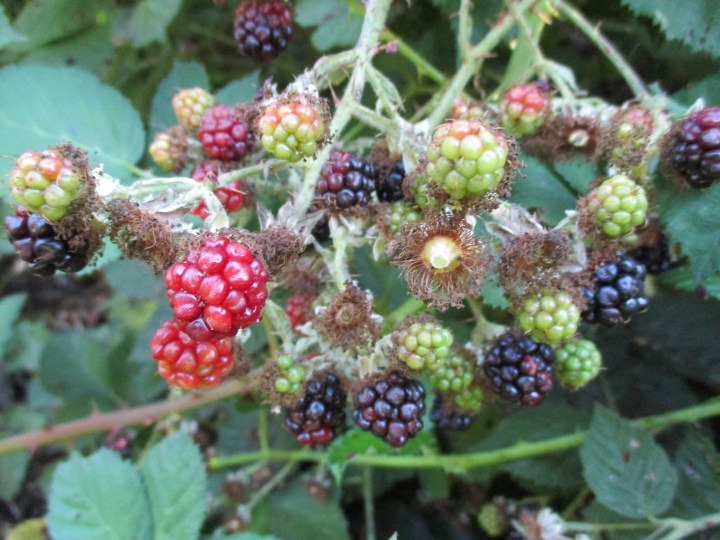
5. Himalayan blackberry is one of the worst and most invasive of the exotics weeds here. It develops huge canes that arch over and drop on top of other plants in the landscape. The wickedly sharp prickles (technical term for their thorns) are tortuous when trying to remove the canes. Even picking their berries is nasty business! There are a few berries ripening now, and they happen to be pretty good, but they are sooooooo not worth it.P80728++++

6. Chips needed to be dispersed into the newly landscaped areas that are partially visible in the background of this picture. These chips were free. They are made of recycled wood waste. For our purposes, they are sufficient. However, they include a few large chunks of wood and bits of metal. The chunk of metal in this picture is a short section of rebar. Some of the chips have paint on them. Some seem to be bits of old furniture. It makes one wonder where some of this material came from.P80728+++++

By the way, the bloom in the first picture #1 is merely a fist full of deadheaded white zonal geranium flowers all pressed together. White zonal geraniums do not readily drop their faded blooms like other zonal geraniums do, so they need to be deadheaded.

This is the link for Six on Saturday, for anyone else who would like to participate:

https://thepropagatorblog.wordpress.com/2017/09/18/six-on-saturday-a-participant-guide/

Horridculture – Rose Colored Glasses

P80711

This article reminded me of a sore subject from back in about 1986 that continues today: https://wordpress.com/read/blogs/7890212/posts/4888 You should probably take a look at it before you continue.

Back when my colleague and I were roommates in the dorms at Cal Poly in San Luis Obispo, we noticed how badly the photographs in bare root catalogs had been modified to enhance color. Years before modern digital editing, colored film was cut out to any desired shape and placed over a photograph to produce a new photograph with enhanced color. We looked at pictures of flowering crabapples with canopies that were entirely bright pink, including the stems, leaves and everything associated with the canopy of the tree. We could easily see the outline of the bright pink film that had been placed over the original photograph. It was done with blue fescue, hydrangeas, azaleas, callas and really just about anything that could benefit from a bit of enhanced color.

It certainly did not dissuade us from our interest in the plants that had been photographically enhanced. We liked them anyway. The poor quality of the enhancements that would be laughable by modern standards seemed to be more acceptable back then; like the idealistic pictures of the food available from popular fast food establishments. I mean, we all know that the food does not look like ‘that’ but it probably tastes like ‘that’ looks.

Three decades later, modern technology of digital editing of photographs (if they are still known as ‘photographs’) has improved the technique of color enhancement significantly. Most pictures in catalogs are now enhanced to some degree, not to be deceptive, but to eliminate minor glitches that might distract from the rest of the image, and perhaps to enhance color that is slightly compromised by the exposure at the time the picture was taken.

But of course, there are some images that are blatantly inaccurate and deceptive.

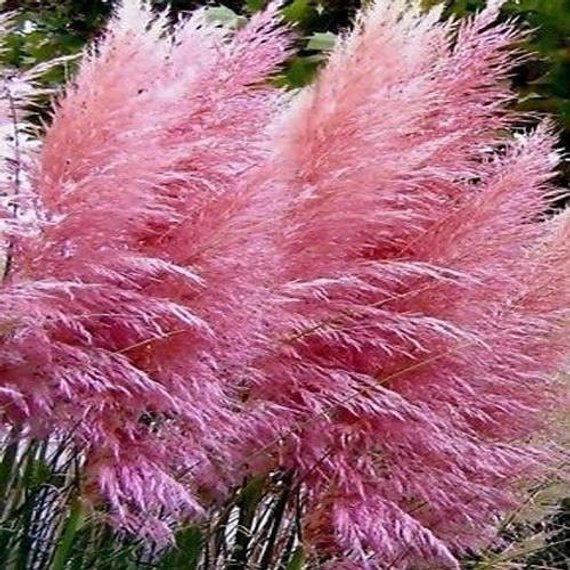
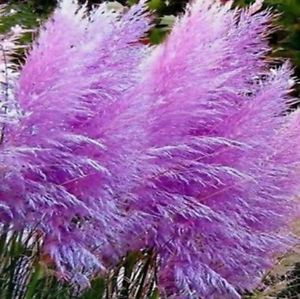
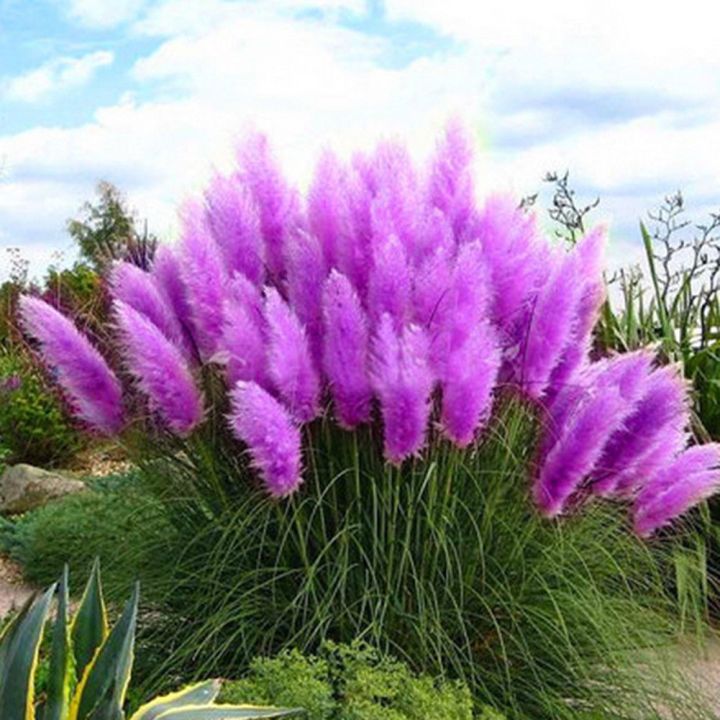
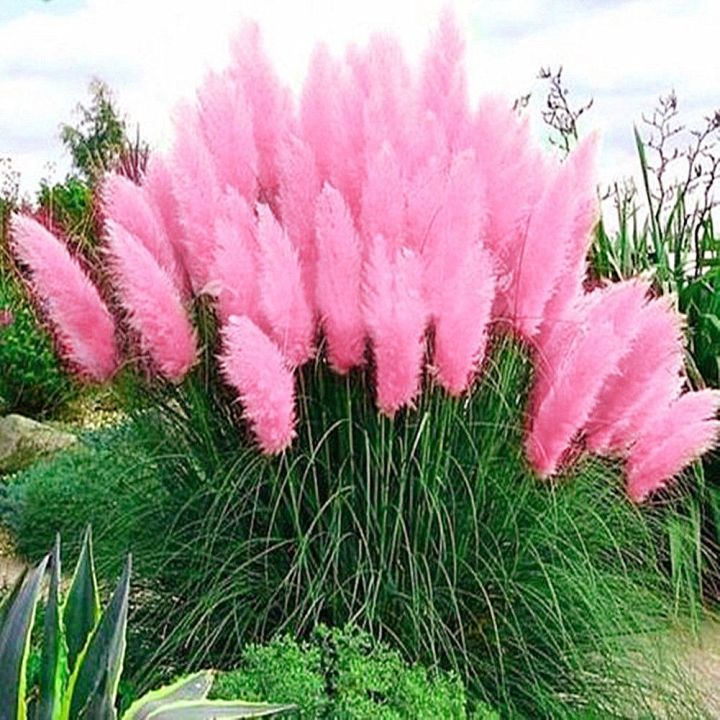
My colleague down south tells me that pink pampas grass can be about as peachy pink as cantaloupe is. It could possibly be more pink in other regions. I have never seen it more than simple pinkish tan here. I know of no one who has confirmed that it can be as bright cotton-candy pink as it is in the picture above. Is it inaccurate and deceptive? I do not know. I do not really care. If I wanted pink pampas grass, I would purchase it anyway, and just try to not be too disappointed when it blooms tan.P80711+This picture above is certainly interesting as well. It is such an appealing color. What is more interesting it that it is the exact same picture as the picture on top, but is merely a different color. I have never heard of a pampas grass doing that! It must be quite common though. Online, there are a few pictures of other pampas grass doing the exact same thing. These two below, for example, are the exact same picture in two different colors, and with slightly different proportional modification.P80711++P80711+++As amusing as these pictures are, they are not as downright KRAZY as the rainbow rose in the article that I posted a link to above is. It is certainly worth taking a look at.
Six on Saturday: Nursery Rhyme


I wish we had one. There is no rhyme and only a few disjointed reasons for what happens at the small storage nursery at the maintenance shops. This is nothing like acres of production nursery full of rhododendrons, azaleas, camellias and such. Nor is it like the retain nurseries that sell the rhododendrons, azaleas, camellias and such. This is merely a small yard where we store a few plants that get removed from landscapes, and plants that were recently procured from a nursery but have not yet been planted.

It is like the nursery version of the wood shop, with its collection of new lumber and old recycled lumber that gets used on the historic buildings. The plumbing shop contains all sorts of new plumbing and fixtures, as well as many old fixtures that might someday be useful. The landscape shop, which is separate from the nursery, is #7 of about twelve specialized shops used by the maintenance staff. The nursery might seem to be the most dysfunctional of the several shops, but only because plants are dynamic and need maintenance . . . and because, without necessary maintenance, a few have deteriorated, died or conversely thrived and made themselves at home.

Newly procured plants like #5 and #6 are easy to work with. They come in with a plan, and generally leave within a week or two as they get installed out somewhere in the various landscapes. Recycled plants like #1 and #2 were removed from the landscapes either because they were in the way of something, or because they proliferated too much, but could someday go back into other landscaped areas. Then there are a few plants like #3 and #4 that stay long enough to disperse roots through the bottoms of their cans and into the ground, essentially planting themselves on the spot because they got tired of waiting for a new home.

1. Peruvian lily was so prolific at the Post Office that many needed to be pulled. They were canned to be installed elsewhere, but no one wants to put them into a situation where they might proliferate like they did at the Post Office. Besides this pink, there is also peachy pink and yellow. All are the tall types that were originally grown fro cut flowers, rather than the lower mounding home garden varieties. Consequently, they need to be staked or caged like tomatoes so that they do not lay on the ground.P80623
2. Chrysanthemum was grown as annuals in a few various locations, but when they were removed to relinquish their space for more seasonable annuals, a few were canned. It is not always easy to discard certain perennials just because their time is up. The problem is that, although they look so good in the nursery, and bloom in spring instead of autumn, they do not get cycled back into the landscape. When new color is needed, it is often purchased and planted before the old stock is considered.P80623+
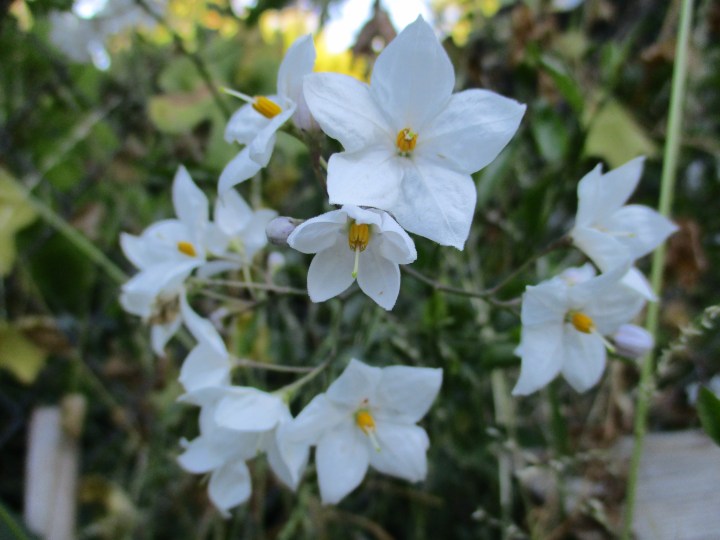
3. Potato vine has been growing like a weed on the cyclone fence and shade structure for so long that no one knows where it came from. I do not even know where the vines originate from. I would guess that somewhere under the overgrowth, the main canes emerge from the remains of a #1 can that the roots split apart years ago. This vine lives here now. Even if we had a spot for it, relocation is not practical. If it gets too overgrown, it might get cut back.P80623++
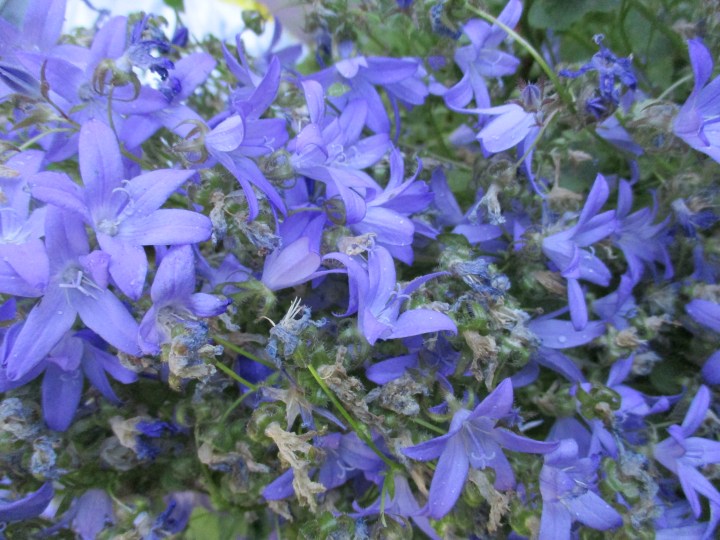
4. Campanula was probably in a 4” pot that got set into the #15 can of a ‘Black Lace’ elderberry and forgotten about. It might have been recycled, or it might have been something new that never got installed. Before the elderberry was relocated, the campanula had spread into the cans of other trees, so like the potato vine, it lives here now.P80623+++
5. Cone flower is easy. I just arrived from a nursery, and will be installed into a landscape in just a few days.P80623++++
6. Yarrow came with the cone flower, and will be planted nearby in the same landscape at about the same time.P80623+++++

This is the link for Six on Saturday, for anyone else who would like to participate:

https://thepropagatorblog.wordpress.com/2017/09/18/six-on-saturday-a-participant-guide/