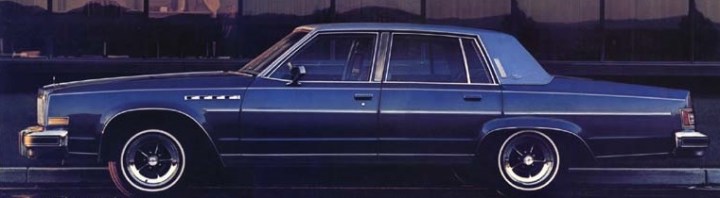
 For my exquisite 1979 Electra, planned obsolescence did not work out so well. It was probably a grand Buick for that time, and one of the last with tail fins! It was elegant. It was big. It was steel. It was made to last ten years or 100,000 miles . . . and that was it. Seriously, as much as I enjoyed that car, it did not want go to much farther than it was designed to go. It limped along for almost 20,000 miles more, but was not happy about it, and was really tired and worn out by the time it went to Buick Heaven.
Planned obsolescence used to mean something completely different in landscaping. Yes, we all know what it means now; that many of the so called ‘sustainable’ modern cultivars last only a few years so that they need to be replaced sooner than older cultivars. What it used to mean is that fast growing plants were used to get a landscape established quickly, while more desirable but slower plants took their time growing. As the more desirable plants matured, the fast growing plants could be removed.
For example, a large condominium complex was landscaped primarily with Norway maples and flowering pears. These trees would eventually grow to be proportionate to the buildings and the spaces that they shade. To provide shade sooner, and to help the landscape look established by the second summer, common cottonwoods were incorporated into larger areas. Their placement was not as important as it was to the maples and pears, but was strategic enough to avoid the other trees and buildings as long as possible. The intention was to allow the cottonwoods to be the prominent trees in the landscape only temporarily, but to remove them as the maples and pears matured. It was a practical technique used by landscape designers for as long as anyone can remember.
Sadly, few modern ‘gardeners’ understand this concept. The cottonwoods did not get removed when they should have been. They overwhelmed and crowded the other trees, and caused them to be disfigured as they grew. The cottonwood roots broke pavement and ruined lawns. Then, after all the damage and destruction, . . . the cottonwoods died, like cottonwoods do. Now the landscape is shaded by healthy but distorted maples and pears. The plan did not work very well.
Now, such planned obsolescence is simply impractical for trees. Even if those maintaining landscapes were reliable enough to follow through with such plans, modern tree preservation ordinances would prevent them from getting permits to remove temporary trees. Planned obsolescence can work with smaller shrubbery and perennials in home gardens, but those of us who use the technique must follow through with our plans so that things do not get too crowded.
 Tony Tomeo