
This neatly sliced prickly pear is too silly to rant about. There is another just like it. Two others were not sliced, as if, after the first two, someone realized that there was more to the roadside meadow than combustible dry grass. The prickly pear were put out there just last winter. They each extended only a single pad half a foot or so above grade, so were obscured by the grass.
Realistically, the damage is minimal and tolerable here. The priority of the crew who performed the vegetation management was to cut down all the combustibles. They did an efficient job of it. They did not expect to encounter anything that had been intentionally installed out there, or even any desirable vegetation. Besides, this prickly pear will recover as if nothing happened.
Unfortunately, damage caused by weed whackers is rarely so innocuous. Weed whackers are one of the most commonly misused horticultural power tools, and are very often used by those who are not aware of how to use them properly. They are easy enough to operate that minimal consideration is given to the potential for damage that they can cause. It is a bad combination.
Because weed whackers are often and improperly used to cut tall grass that is too close to trees for lawn mowers to cut, they commonly strip off bark and cambium from young tree trunks. A tree can not survive without its cambium, and quickly dies if too much is stripped away from the base of its trunk. That is why it is very important to pull weeds from around trees instead.
For now, there is nothing to do for the two sliced prickly pear. The bud to the upper right corner of the pictured specimen is beginning to develop into a new pad.
 Dog days of summer are no time for a dogwood to bloom. It should be slowing down and getting ready for autumn. Plump floral buds start to develop, but then wait dormant as foliage turns color and falls away. Only after winter dormancy, just prior to the emergence of new foliage, floral buds bloom spectacularly. September is either half a year too early or half a year too late.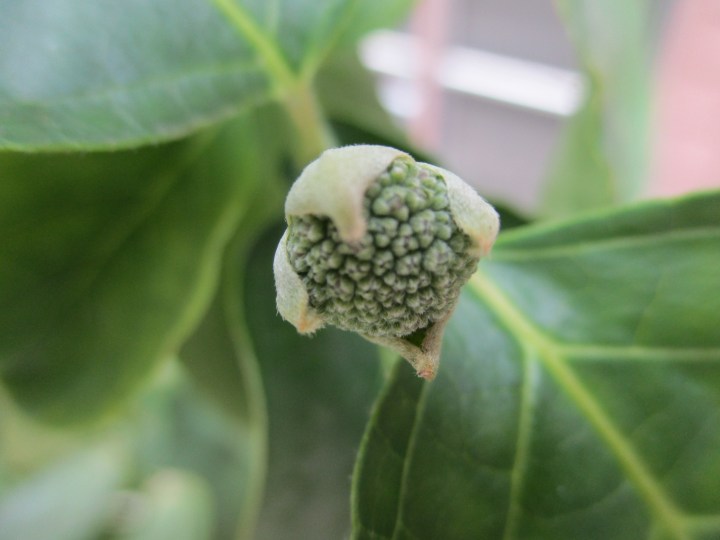
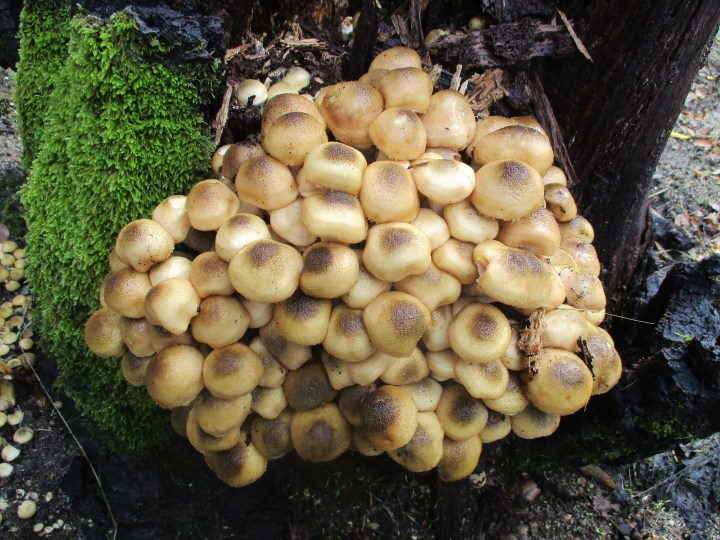 It is not easy for wild trees to adapt to a refined landscape. After a lifetime of adapting to their native environment and dispersing their roots to where the moisture is through the dry summers, they must adapt to all sorts of modifications such as excavation, irrigation and soil amendment. Newly installed plants grow into a new landscape while some mature trees succumb to disease and rot.
 Tony Tomeo