Autumn Fever

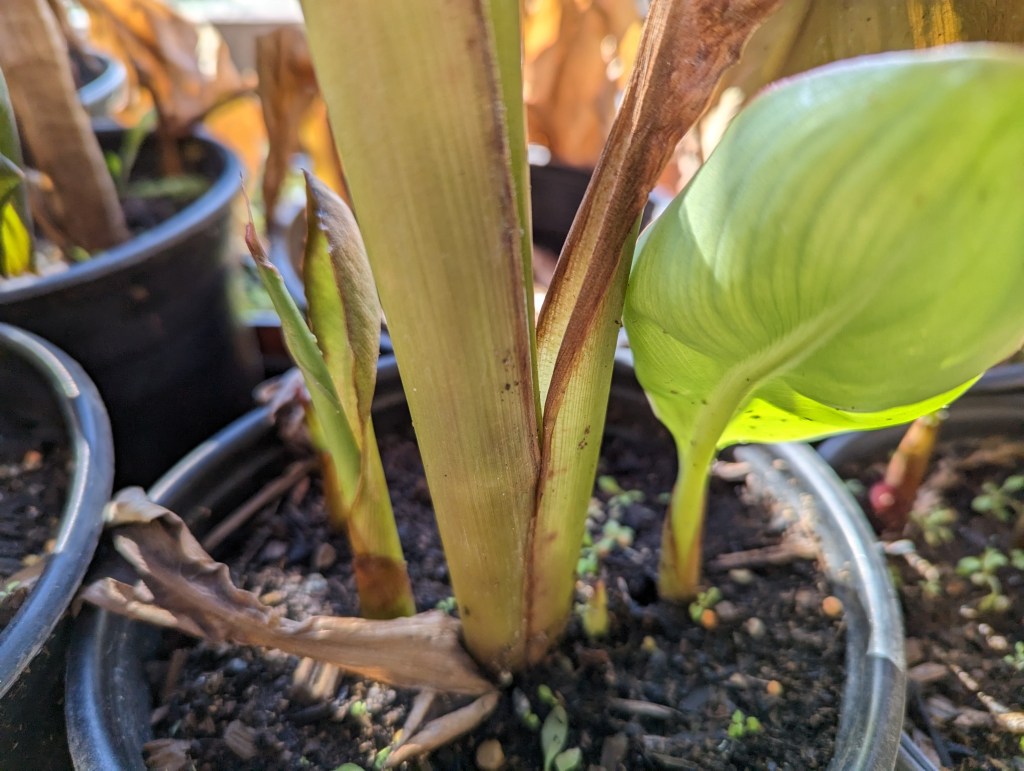
‘Purple Ribbon’ sugarcane has been growing like a weed, but should go into the garden.

Autumn is the time for planting. So is winter. It is difficult to resist new acquisitions for the garden. However, there is already so much in the nursery that needs to be planted into the garden that I should not consider acquiring more.

I like to think that I purchase almost nothing for the garden. I grow just about everything that I want to grow from bits and pieces from other gardens. I purchased sugarcane, though, because I could not find any of a cultivar that I wanted in another garden. Now that it has been growing like a weed here, I returned to the online catalogue of one of the nurseries that sells sugarcane to see what else I want.

Planting Justice grows and sells many fruit and vegetable plants that I want to purchase. Because the primary nursery is in Oakland, only about an hour and a half away, I could purchase directly, rather than by delivery. My wish list from them includes medlar, yacon, currant, sunchoke, lingonberry, moringa, kangaroo apple, raisin tree, earth chestnut, chestnut, cinnamon vine, tree collard, sea berry, aronia and highbush cranberry. The twenty items that I want cost only $316, but are contrary to my tradition of purchasing almost nothing for the garden. Fortunately and unfortunately, I will most likely refrain for another year, when I expect the garden to be refined enough to accommodate them.

Soil Amendment Might Be Overkill

Excessive soil amendment may be unnecessary.

Planting should not be complicated. The primary objective is to settle formerly contained roots into the ground safely. It includes motivating roots to disperse into surrounding soil. This might involve disruption of constricting or congested roots. It may involve addition of fertilizer. Soil amendment such as compost is likely useful to entice root growth outward.

For almost all substantial woody plants and most large perennials, this is only temporary. Their roots disperse faster than their original soil amendment decomposes. They require no more soil amendment incorporated into their soil afterward. Such incorporation would damage their dispersing roots. This could defeat the original purpose of soil amendment.

For such substantial plants, soil amendment only provides a transition into endemic soil. Without it, roots may be tempted to continue to grow within their original potting medium. If endemic soil is less appealing to them, they might lack motivation to disperse outward. Soil amendment mixed with their endemic soil provides them the motivation they require.

Mulching with soil amendment over the surface of the soil is a different procedure. Since it requires no incorporation into the soil, it severs no roots below the surface. Yet, it helps retain moisture and insulates the soil. As it decomposes, mulch adds organic nutrients to the soil. For established plants, mulching is a noninvasive technique with a few benefits.

Vegetable plants and annuals enjoy soil amendment more than more substantial plants. Proportionately, they consume much more of the nutrients that the amendments provide. Yet, they do not inhabit their soil long enough to crave more than they start with. Addition of amendment during their replacement damages no roots. It provides for the next phase.

Soil amendment is available either bagged or in bulk from nurseries and garden centers. Home garden generated compost is less expensive, since it costs nothing but effort. The process of composting is involved, but it utilizes otherwise useless garden detritus. Many home gardens generate more compost than they may use. Neighbors sometimes share.

Cane Berries

Thorny stems complicate pruning.

The fruits of summer are still a few month away. The work necessary to produce them needs to get done now though. Just like bare root trees, bare root raspberry canes get planted while dormant in winter, and later require intensive specialized pruning to keep them in control and to promote abundant production. Canes that are already established need to get pruned now and every winter.

New plants should be planted about two or three feet apart, and then cut back so that only a single bud is visible above ground. Root barriers should keep them from venturing under fences and into neighbor’s gardens, particularly since south or west facing fences are ideal spots to grow raspberries. Alternatively, raspberries can be planted in sunken #15 cans (15 gallon nursery pots), with or without the bottoms cut off. Cans should be buried up to their rims because any exposed black vinyl collects warmth from the sun, which is uncomfortable for the roots within. Mulch should insulate the soil until new foliage provides shade.

The few new canes that should develop during the next few months should be able to support their own weight, but may be easier to work with if tied to a fence or trellis. The popular everbearing types, like ‘September’, ‘Heritage’, ‘Summit’, ‘Golden Summit’ and ‘Fallgold’ may produce fruit on top of their new canes by autumn. The tops of these canes should get cut down as low as fruit developed during the following winter. The remaining lower portions of canes that did not produce fruit in the first year should produce fruit by the second summer, and should be pruned to the ground as the fruit finishes.  

As the spent canes get removed, about five to ten of the best new canes should be selected and tied in place if desired. All other canes should be cut to the ground. Like the canes of the previous year, the selected canes should develop fruit on top in autumn and get pruned as they finish in winter, and then develop more fruit down low before getting pruned out during the following summer. This process should be repeated annually.

‘Willamette’, ‘Tulameen’ and ‘Canby’ are traditional summer bearing raspberries. They do not produce in their first year, and will need to be pruned to about five feet tall during the following winter. As these canes develop fruit, many new canes emerge below. Every winter afterward, about five to ten of the new canes should be selected and pruned to about five feet as spent canes and unneeded canes get cut to the ground.

Installing Bare Root Cane Berries

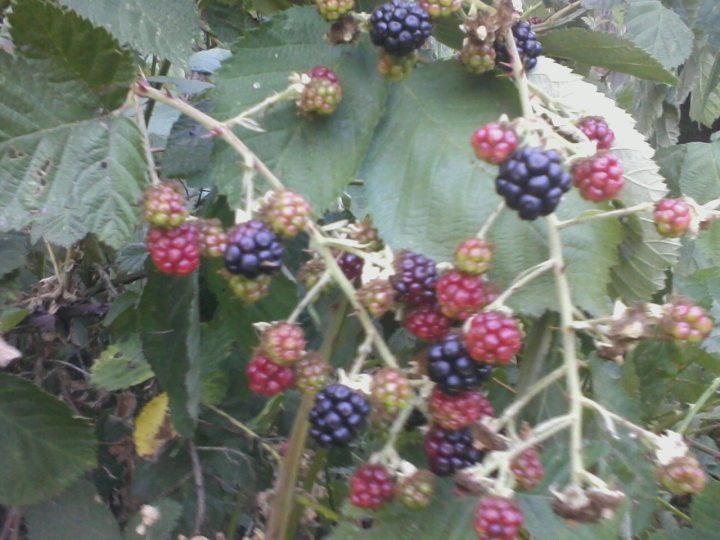
Blackberry canes are not at all “low maintenance”!

The fruits of summer are still a few month away. The work necessary to produce them needs to get done now though. Just like bare root trees, bare root raspberry canes get planted while dormant in winter, and later require intensive specialized pruning to keep them in control and to promote abundant production. Canes that are already established need to get pruned now and every winter.

New plants should be planted about two or three feet apart, and then cut back so that only a single bud is visible above ground. Root barriers should keep them from venturing under fences and into neighbor’s gardens, particularly since south or west facing fences are ideal spots to grow raspberries. Alternatively, raspberries can be planted in sunken #15 cans (15 gallon nursery pots), with or without the bottoms cut off. Cans should be buried up to their rims because any exposed black vinyl collects warmth from the sun, which is uncomfortable for the roots within. Mulch should insulate the soil until new foliage provides shade.

The few new canes that should develop during the next few months should be able to support their own weight, but may be easier to work with if tied to a fence or trellis. The popular everbearing types, like ‘September’, ‘Heritage’, ‘Summit’, ‘Golden Summit’ and ‘Fallgold’ may produce fruit on top of their new canes by autumn. The tops of these canes should get cut down as low as fruit developed during the following winter. The remaining lower portions of canes that did not produce fruit in the first year should produce fruit by the second summer, and should be pruned to the ground as the fruit finishes.  

As the spent canes get removed, about five to ten of the best new canes should be selected and tied in place if desired. All other canes should be cut to the ground. Like the canes of the previous year, the selected canes should develop fruit on top in autumn and get pruned as they finish in winter, and then develop more fruit down low before getting pruned out during the following summer. This process should be repeated annually.

‘Willamette’, ‘Tulameen’ and ‘Canby’ are traditional summer bearing raspberries. They do not produce in their first year, and will need to be pruned to about five feet tall during the following winter. As these canes develop fruit, many new canes emerge below. Every winter afterward, about five to ten of the new canes should be selected and pruned to about five feet as spent canes and unneeded canes get cut to the ground.

Six on Saturday: el Catedral de Santa Clara de Los Gatos II

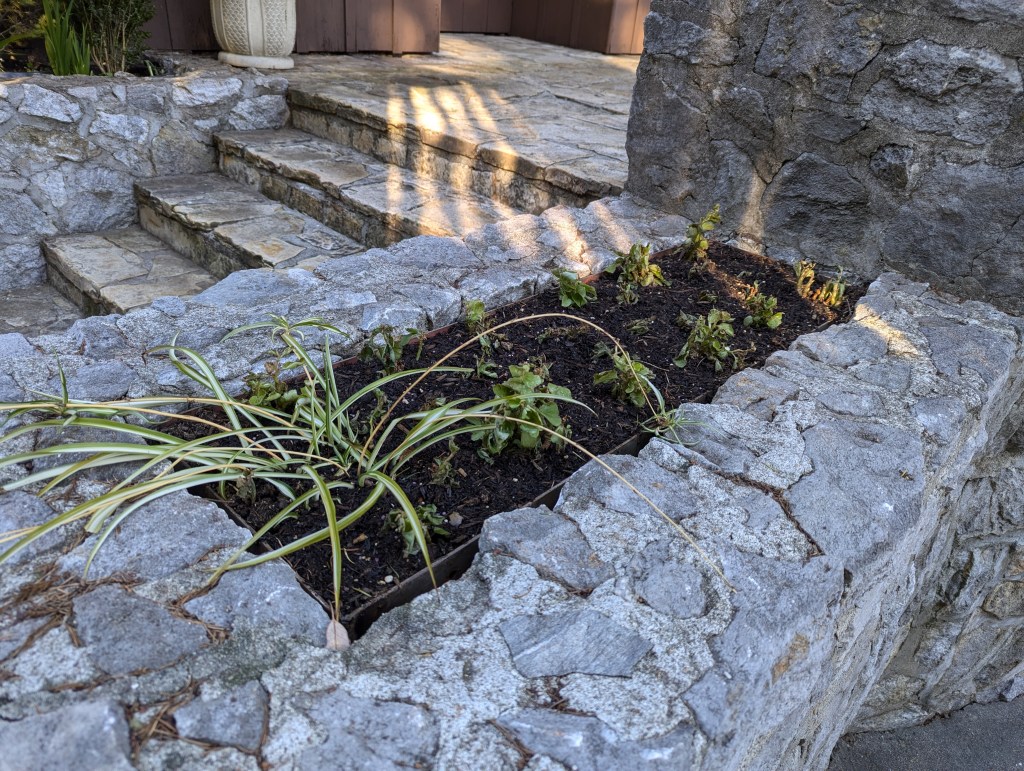
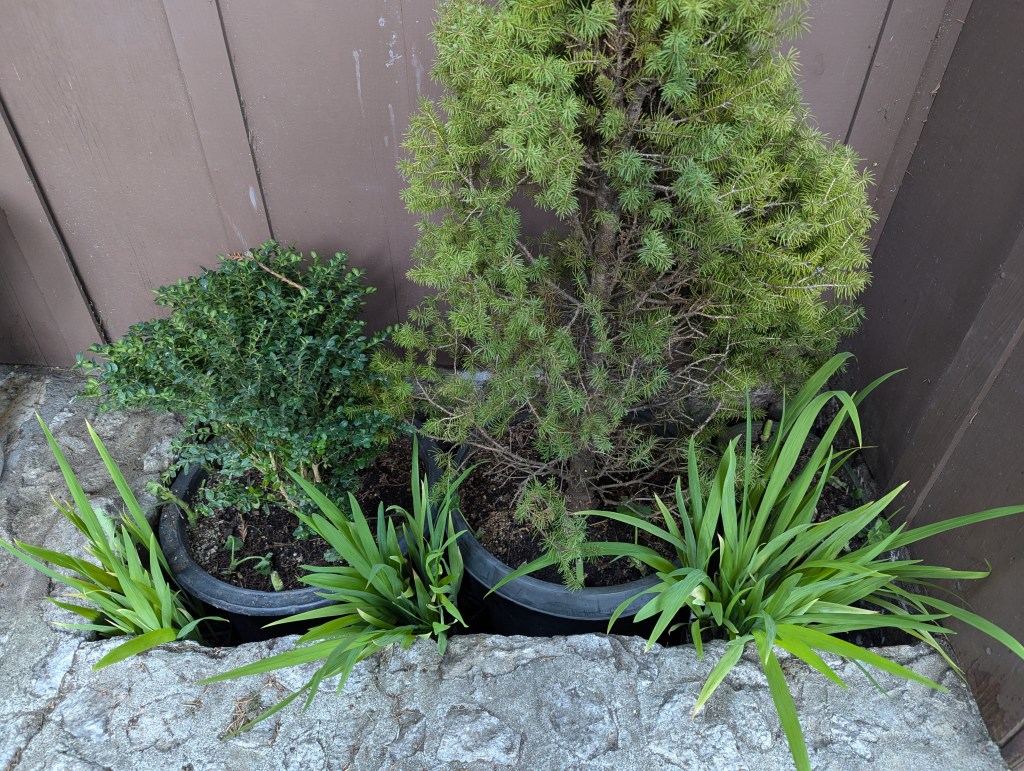
El Catedral de Santa Clara de Los Gatos is merely the Mount Hermon Memorial Chapel, which is a more proportionate name that does not trivialize its Memorial status. I prefer it to seem grander than it is. Also, I maintain a strict standard for its minimal landscape. All of its flowers bloom exclusively white. However, most of its flowers have been rather pekid because of aggressive invasion of consumptive redwood roots into irrigated areas. Because I can not stop the encroachment, I removed the soil from four primary planters. Within the front pair of planters, I suspended customized planter boxes. Within the rear pair of planters, I suspended a few nursery cans that contain new plants. Redwood roots can not reach into these planters or cans. The recycled vegetation still looks shabby, but should perform better than ever for this summer.

1. Chlorophytum comosum, spider plant, with Begonia X semperflorenscultorum, wax begonia, are icky through winter, but should perform better than ever by spring without aggressive redwood roots. Their planter within their planter is visible at the front corner.

2. Picea glauca var. albertiana ‘Conica’, dwarf Alberta spruce, and Buxus sempervirens, English boxwood, are within #15 cans within their planters. Crocosmia X crocosmiiflora are in 4″ pots. It is trashy, but is for their own protection from aggressive redwood roots.

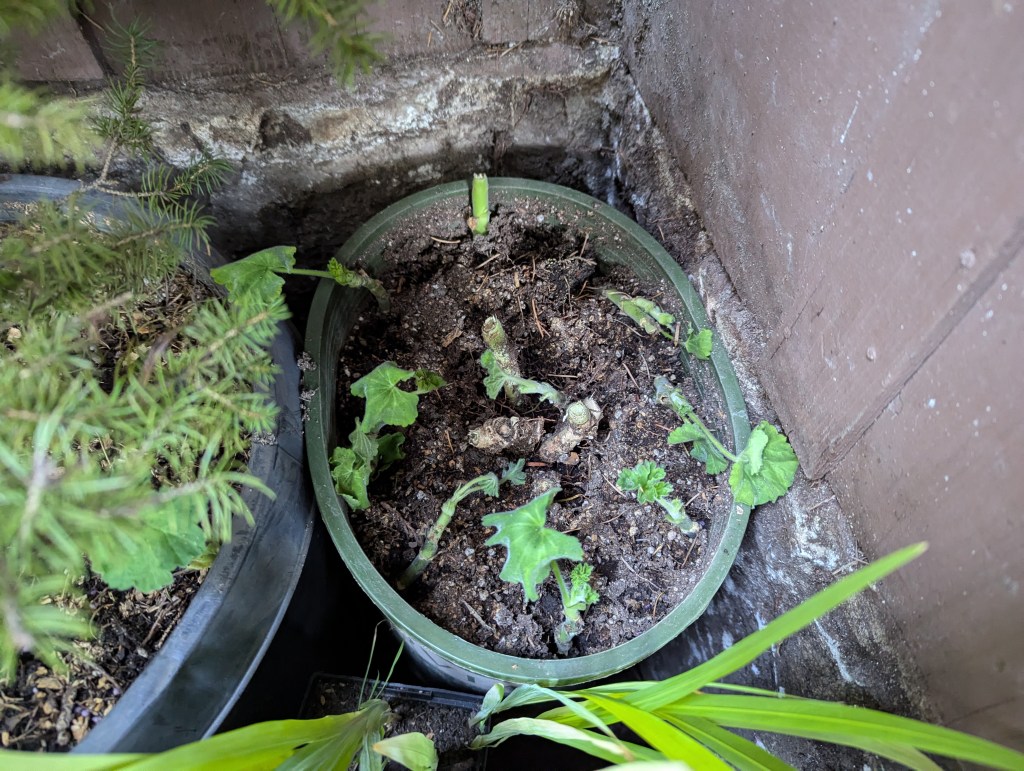
3. Pelargonium X hortorum, zonal geranium, within a #5 can that is obscured to the far right of the items described above, is merely cuttings from what was here prior. They, as well as several more within the cans of the other items, should grow to obscure the cans.

4. Pelargonium X hortorum, zonal geranium, that was here prior to this renovation was abundant enough to provide many more cuttings that we could utilize. These few should obscure these bare bases of a pair of lemon cypress, Cupressus macrocarpa ‘Goldcrest’.

5. Collectively, it should look sharp for summer. The Crocosmia X crocosmiiflora is just temporary until the zonal geranium grows to replace it. I do not want their bright orange bloom within this exclusively white garden. Everything in this new landscape is recycled.

6. It only looks puny from across the road because the stone wall is so big and ominous. It will be prettier as the zonal geranium and wax begonia begin to bloom for late spring. The cypress may not conform to a white garden, but their color is foliar instead of floral.

This is the link for Six on Saturday, for anyone else who would like to participate: https://thepropagatorblog.wordpress.com/2017/09/18/six-on-saturday-a-participant-guide/

Staking Helps Keep Trees Straight

Binding can interfere with trunk development.

Planting trees often involves staking. Until they disperse new roots, many new trees rely on stakes for stabilization. Their stability is limited by the initial confinement of their roots. Nursery stakes and their associated binding provide different support. They merely direct straight trunk growth. In a home garden, nursery stakes subordinate to landscape stakes.

This process is different for different trees. Small palm trees need no staking at all, either in nurseries or home gardens. Spruce trees are too stout to need support after they grow beyond their nursery stakes. Camphor trees may need both types of stakes concurrently. Landscape stakes maintain their stability as nursery stakes maintain their trunk integrity.

Typically though, landscape stakes completely replace nursery stakes of most trees. For adequate stability, they must extend into undisturbed soil below excavated soil. For most trees with bare trunks, such staking should reach lower limbs. Some trees need only one stake. Some, particularly those with large canopies, may need a pair of opposing stakes.

Straps that attach trees to their landscape stakes need proper installation also. They are more durable than nursery binding, but must not be too restrictive. They should only hold trees upright without interfering with their natural development. Straps should be as high as practical on their respective stakes. Additional ties may be needed to prevent bowing.

Some old fashioned straps are strips of old tires with bailing wire at each end. Others are simple bailing wire through bits of old hose. Modern straps are more refined and diverse to facilitate staking for diverse subjects. They should cross over between the stakes and the trees they support to limit abrasion. Short nails may attach them firmly to their stakes.

Staking should be as unobtrusive as possible. Trunks that can move somewhat freely in mild wind are studier than those that can not. Binding for trees that initially require it with staking should be as loose as practical. Incremental loosening might be safer for weakly limber trunks. Without loosening, tight binding might harmfully constrict trunk expansion.

Planting Should Not Be Complicated

Soil amendment should not be excessive.

Autumn and winter are generally the best seasons for planting. Most vegetation is either less active than during other seasons, or dormant. It is therefore more complaisant to the distress of planting procedures. Weather is cooler and wetter than during other seasons. It is therefore less stressful to vulnerable vegetation recovering from planting procedures.

Nonetheless, planting continues throughout the year. Seasonal vegetables and annuals are seasonal at various times. Planting after any lingering chill or potential frost of winter is safer for several species. Also, planting commonly happens whenever it is convenient for whomever does it. Many species are most tempting whenever they happen to bloom.

Generally, this is no problem. Planting while vegetation is active during warm weather is riskier but feasible. It should preferably happen after the warmest time of day. Weather is likely cooler after three in the afternoon. Unusually hot weather justifies delay for another day. Once planted, thorough soaking settles comforting wet soil around vulnerable roots.

Realistically, most planting techniques and concerns are the same regardless of season. The processes only have more potential to be more stressful now than during dormancy. A few species are actually dormant during summer or even spring. Several spring bulbs, such as narcissi, are now ready for division or relocation. Bearded iris rhizomes are also.

Soil amendment helps new plants to feel more comfortable within their new situations. It encourages them to extend roots from their original media into surrounding soil. It should not be excessive though. Contrary to overly popular belief, it is unnecessary below roots. New plants can sink detrimentally below grade if amendment or loose soil below settles.

Stakes for trees that need them must extend past roots and into solid soil below. Binding nursery stakes should be loosened or removed if possible. Binding, which initially keeps trunks straight, can later interfere with trunk development. All new plants need systematic watering through dry seasons until they disperse roots. Most appreciate a layer of mulch, to retain moisture and insulate.

Six on Saturday: Brief Winter

Winter is the busiest season here. There is no more to do during winter here than here is anywhere else, but there is a bit less time in which to do it all. Dormant pruning must be done prior to the last frost, and the first bloom. Planting should be done prior to the last rain, especially for small plants and seedlings such as most of these. Even after the most torrential weather since 1982, winter weather here can not maintain dormancy for long. Even if it would do so for more species, canna may not cooperate. I suspect that some of its ancestral species were familiar with frost without winters in the tropical Andes. They survive frost, but are too eager to grow immediately afterward.

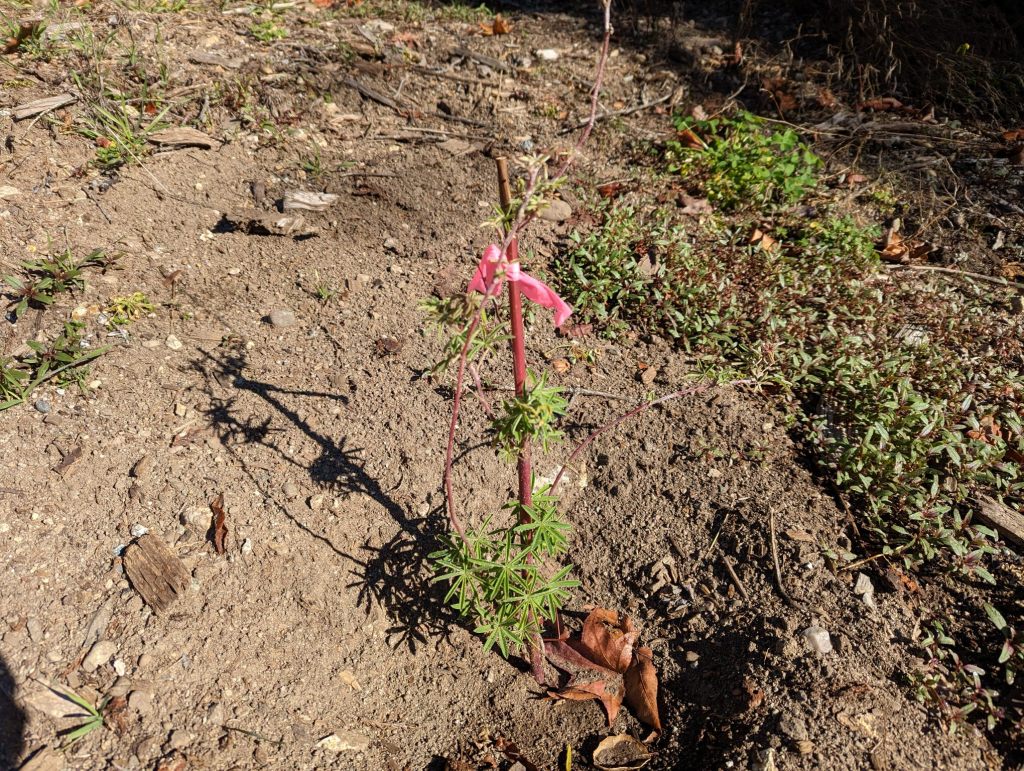
1. Lupinus arboreus, bush lupine is a gift from a local nursery that grows native species. They were getting too mature to be marketable. We got a dozen. They grow wild nearby.

2. Lantana camara, lantana is coppiced annually after getting a bit frosted, but prior to regeneration. This unexpected seedling was also coppiced, but relocated in this process.

3. Canna indica, canna does not seem to know what winter is. It survives frost, but tries to regenerate immediately after experiencing it, instead of waiting for the end of winter.

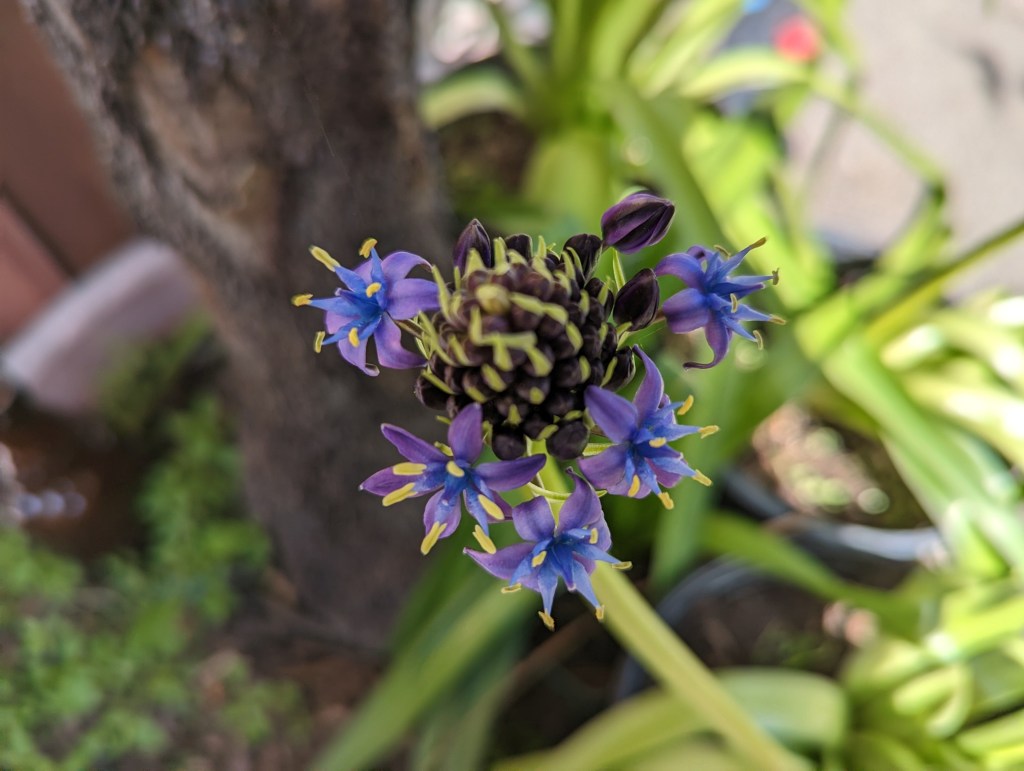
4. Scilla peruviana, squill seems like it should be just as familiar with winterless frost in Peru, near the Equator, but is actually a Mediterranean species. Three are blooming late.

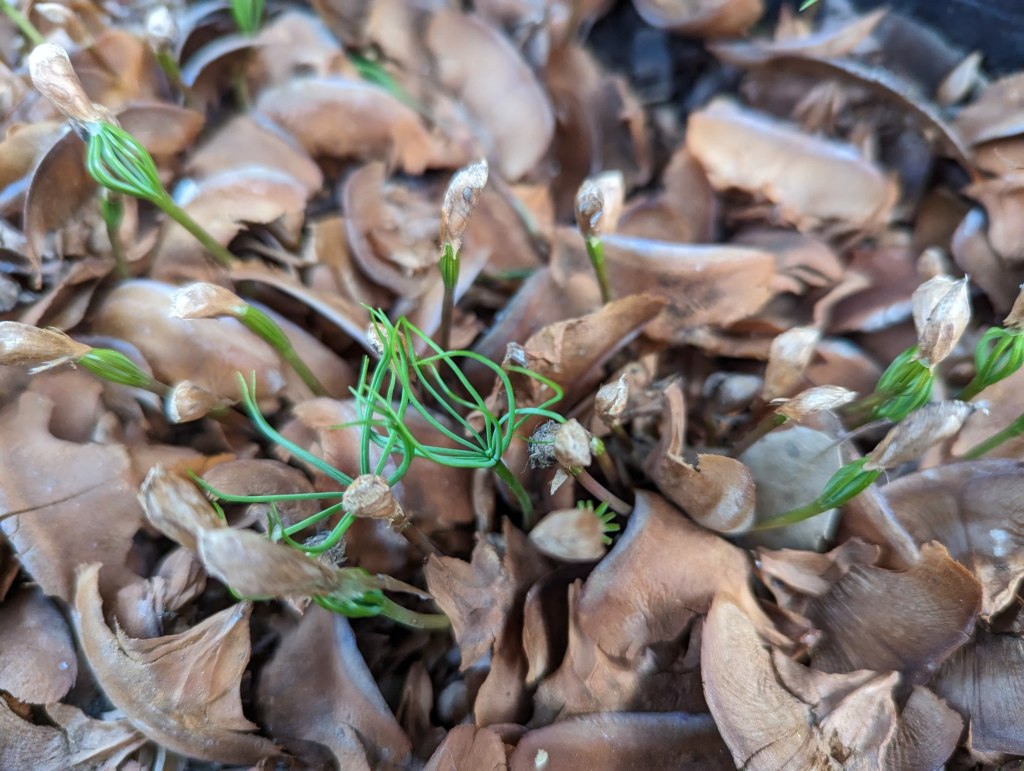
5. Amaryllis belladonna, naked lady generates too many seed. I again made the mistake of collecting some two seasons ago. What now? These actually get put out while foliated.

6. Cedrus deodara, deodar cedar is as prolific, but without my intervention. I pulled and plugged several a few years ago, but most of them were killed by weed whackers anyway.

This is the link for Six on Saturday, for anyone else who would like to participate: https://thepropagatorblog.wordpress.com/2017/09/18/six-on-saturday-a-participant-guide/

Bare-Root Stock Arrives For Winter

Bare roots might fail to impress.

Spring is overrated. It is obviously the best season for planting warm season vegetables and bedding plants. It is the most colorful season with more flowers in bloom. There is so much more to gardening though. Most plants prefer autumn planting. Some prefer winter planting. That is why this present bare-root season will be so relevant all through winter.

Dormancy is an advantage to stressful procedures such as planting. Spring bulbs prefer autumn or early winter planting while they are most dormant. For the same reason and to avoid late frost, summer bulbs prefer later winter planting. It should be no surprise that so many deciduous woody plants likewise prefer dormant planting during bare-root season.

Bare-root season is simply when bare-root stock becomes available for planting through winter. Unlike more familiar canned (potted) stock, bare-root stock lacks the medium that it grew in. Their roots are literally bare. Most bare-root stock awaits purchase at nurseries with its roots resting within damp sand. Roots of some are bagged within damp sawdust.

Bare-root stock is innately more practical than typical canned stock. It is significantly less expensive. It is much less cumbersome, and therefore easier to transport from nurseries. Planting is easier within much smaller planting holes. Formerly bare roots disperse new roots into their garden soils more efficiently than crowded formerly canned root systems.

Deciduous fruit trees and roses are the most popular of bare-root stock. Most of such fruit trees are stone fruits and pomme fruits. Stone fruits include almond, apricot, cherry, plum, prune, peach and nectarine, as well as their unusual hybrids. All stone fruits are species of the genus, Prunus. Pomme fruits include apple, pear, Asian pear and perhaps quince.

Fig, pomegranate and persimmon trees should also be available. So should grapevines, currants, gooseberries, blueberries and various cane berries. Strawberries, rhubarb and asparagus are perennials that are available bare-root. Except for almond, most nut trees, including English walnut, pecan, filbert or chestnut, may be available only by mail order. Most mail order catalogs are online now.

Six on Saturday: Before Winter

Autumn is the season for planting. For portions of the landscapes that lack irrigation, we must wait until the beginning of the rainy season. By the time the rainy season ends next spring, new plants should be outfitted with irrigation, or sufficiently established to need none. Now that the weather got rainy, as well as windy and messy, planting is facilitated by a sale at one of our suppliers. We normally do not purchase much, but the prices were too good to ignore. I did not get enough pictures, so added random pictures, such as the shabby bearded iris foliage. The important details of #5 are difficult to distinguish.

1. Scout at least tried to cooperate for a picture, which is more than Rhody does. He just does not know how to cooperate. He was too wiggly to get a picture that was not blurred.

2. Cedrus atlantica ‘Glauca Pendula’, weeping blue Atlas cedar is an oddly limber trophy tree that my colleague here had wanted for a while, but could not justify procurement of.

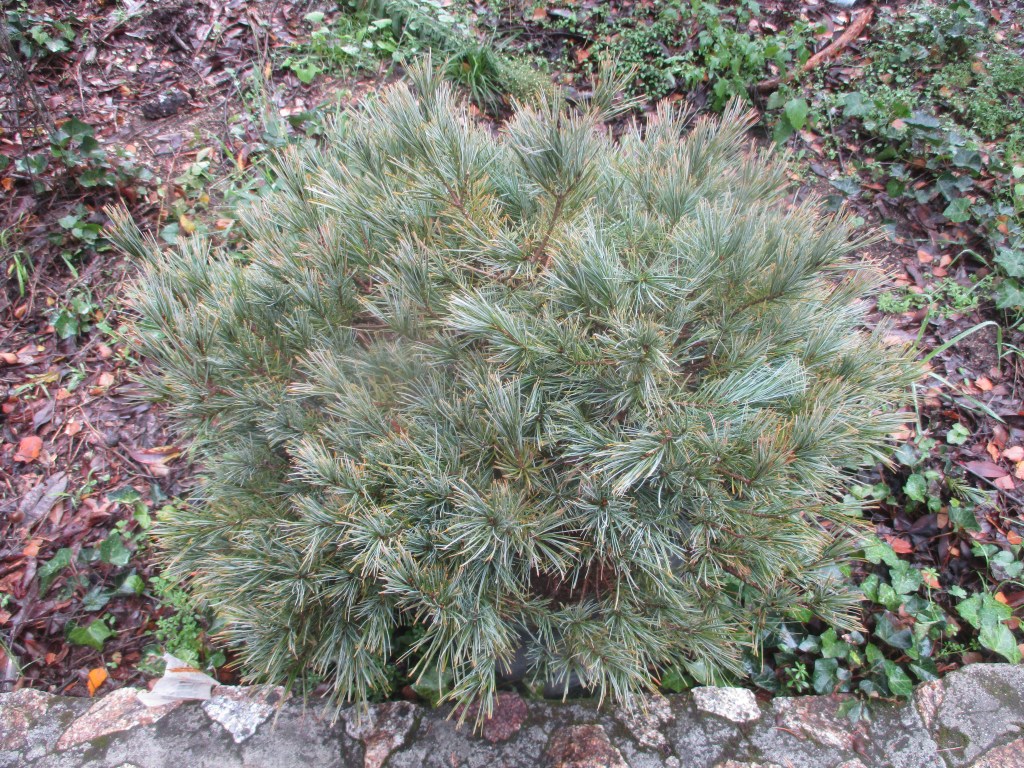
3. Pinus strobus ‘Nana’, dwarf Eastern white pine was not planned, but like the weeping blue Atlas cedar, was unusually affordable. There are eight in a row. Mugo pine are next.

4. Iris X germanica, bearded iris start growing prior to shedding old foliage of last year, so now look shabby. This is the pallid white and potentially feral iris in the new iris bed.

5. Wind is messy! Those two diagonal trunks just above and to the right of the middle of this picture were not diagonal earlier. Those headlights to the lower left are on a bridge.

6. Rain is messy also! This is a spillway of a drainage pond at work. While the sycamores and other deciduous trees continue to defoliate, it can get partially clogged and flooded.

This is the link for Six on Saturday, for anyone else who would like to participate: https://thepropagatorblog.wordpress.com/2017/09/18/six-on-saturday-a-participant-guide/

These four pictures below are not affiliated with the Six on Saturday above, but at the request of one of his most enthusiastic fans, were added to compensate for the lack of a picture of Rhody, the star of my blog. I had assumed that he was being uncooperative with my attempts to get a good picture, but he reminded me of what his fans really want to see. Can you guess what the last picture shows?