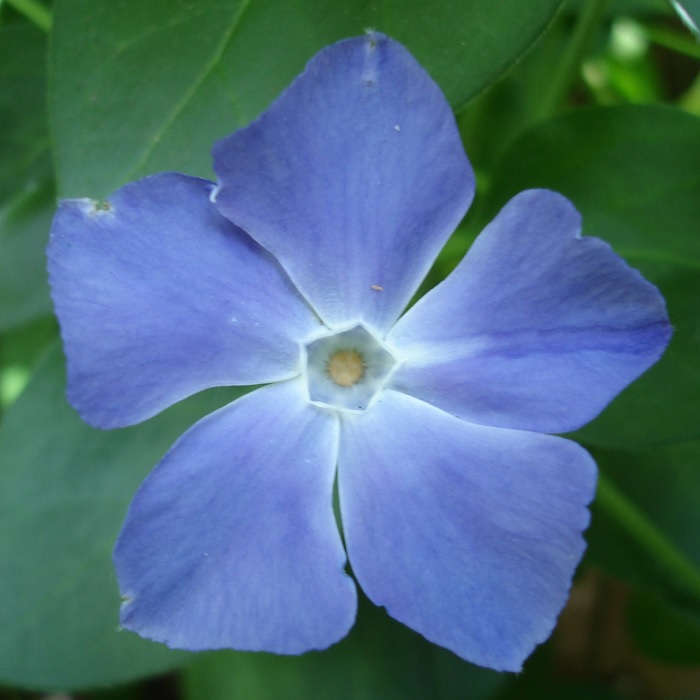
If the Latin name of dwarf periwinkle is Vinca minor, it is logical that large periwinkle should be Vinca major. Large periwinkle is more commonly known simply as periwinkle or common periwinkle, although it is not as common as dwarf periwinkle is, at least in landscapes. In some regions, it has naturalized as an invasive weed.
Some might accurately say that periwinkle is shabbier than the relatively neat and dense dwarf periwinkle. Others might say that it is just rustic or informal. The wiry stems stand less than a foot tall before they bend over from their own weight. Fallen stems can root where they touch the ground, and grow into new plants over winter.
The evergreen foliage is rich green, and a bit darker than the top of a billiard table. The simple paired leaves are about an inch and a half to two inches long. The slightly purplish blue flowers are about an inch and a half wide, with five petals each. Bloom is sporadic, but almost continuous, except for a lapse through winter.


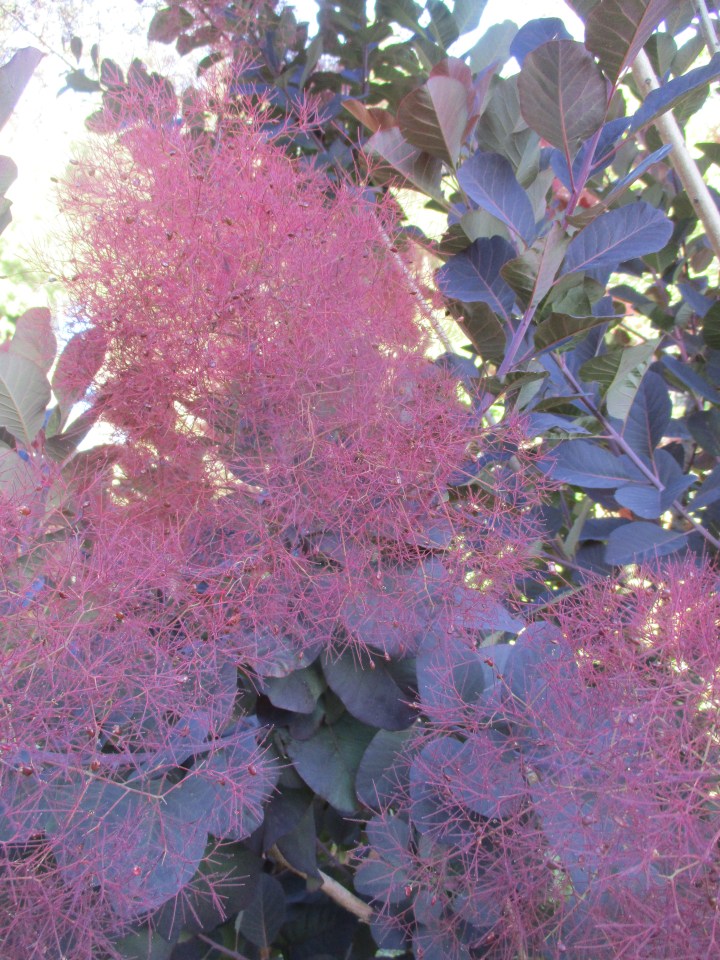 Cliche is barely avoidable regarding smokebush, Cotinus coggygria. It provides rich foliar color from spring until autumn, with uniquely billowy bloom through summer. Then, it provides exquisite fall color until winter. Then, it provides sculptural form of bare stems until spring. Smokebush ‘has it all’. . . almost. All the spectacle distracts from a lack of floral fragrance. Will anyone ever notice?