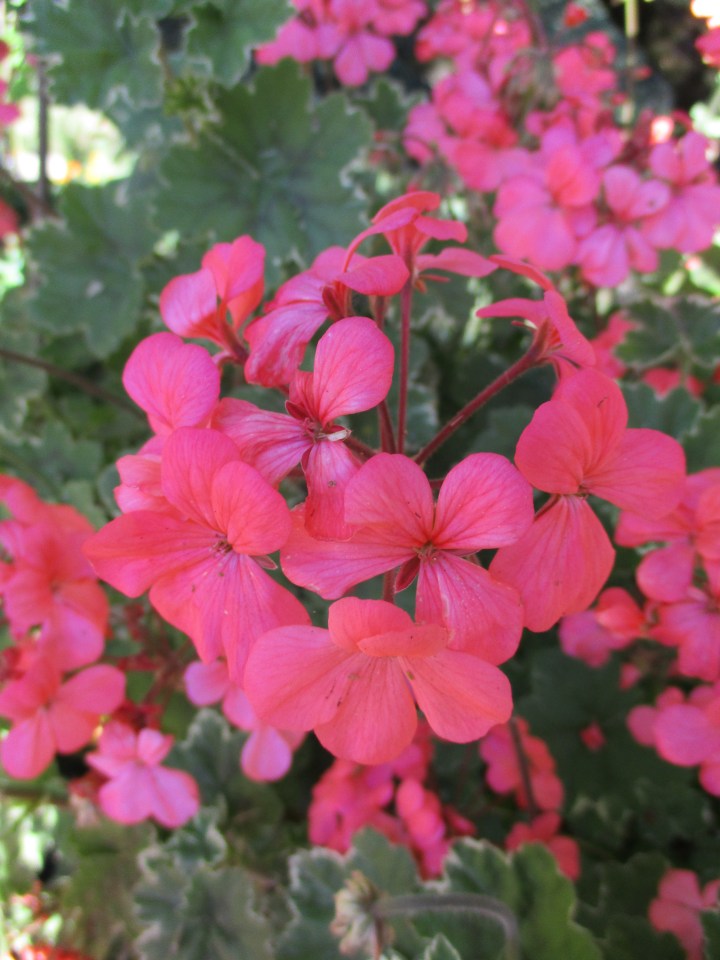
 New and improved is not always better. Modern garden varieties of zonal geranium, Pelargonium X hortorum, with bigger, fuller and more profuse blooms, are more colorful than the relatively weedy classic varieties, but they are considerably more demanding. In fact, because they are so unhappy through winter, they are often grown as warm season annuals instead of as perennials.
They are certainly worth growing though, and are reasonably easy to propagate from cuttings. Flowers can be red, pink, white, peachy orange or almost purple. Bloom is almost continuous. Each rounded dark green leaf might be adorned with a darker halo about halfway between the center and the outer margin. Mature plants do not get much more than three feet tall, and not much wider.
Old varieties might get twice as tall, with smaller blooms, and lighter foliage.
 Colorado is another state that was able to designate one of the most excellent wildflowers of North America as the Official State Flower because it happens to be native there. Rocky Mountain columbine, Aquilegia caerulea, however, did not contribute as much to the breeding of the many modern hybrid varieties of columbine as did common European columbine, Aquilegia vulgaris.
 Compared to extensively bred garden varieties, wild roses are not much to look at. Their tiny flowers do not get much wider than two inches, and may not get much wider than those of blackberry, with only about five petals. Flower color ranges only between pale luminescent white and pale pink. Bloom is typically rather brief in mid spring. Only a few healthy specimens bloom again later.
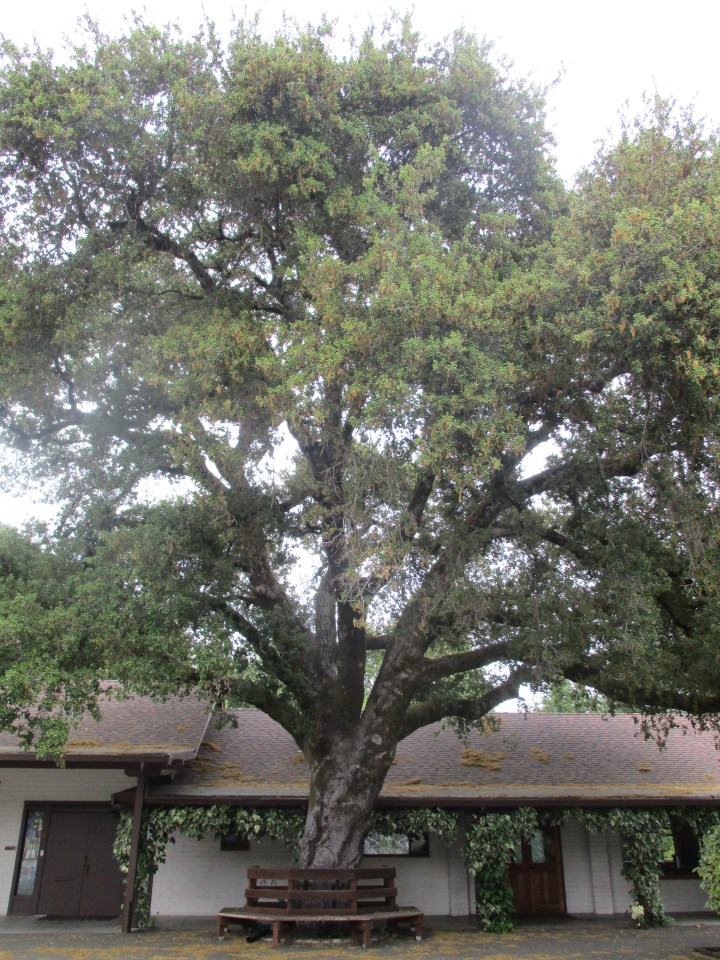 The valley oak of the Sacramento Valley, San Joaquin Valley, and coastal valleys to the west, is the grandest oak of North America. Within the coastal half of that range, and extending down past San Diego, the coat live oak, Quercus agrifolia, is a nearly comparable second grandest. The biggest subjects may be as tall as seventy feet, and nearly as wide, with trunks wider than ten feet!
 Window boxes were supposedly invented in Venice to contain aromatic plants that repelled mosquitoes (and probably because garden space was so minimal in Venice). Hanging plants like nasturtium and ivy geranium are traditional window box plants because they do not obscure scenery or sunlight. Scented geraniums are also popular because they are be so strongly aromatic.
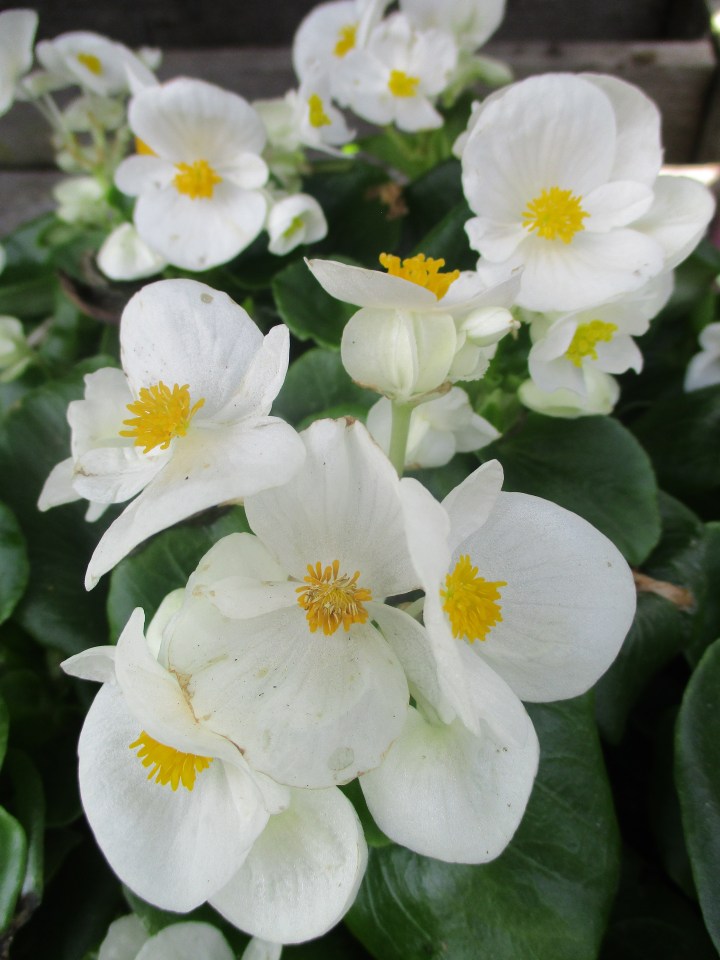 Oh, how breeding complicates things. Many years ago, there were only six basic types of wax begonia, Begonia semperflorens-cultorum, with three choices for floral color, and two choices for foliar color. Bloom was white, pink or red. Foliage was either green or dark bronze. Although these choices have not changed, some modern hybrids are difficult to distinguish from other species.
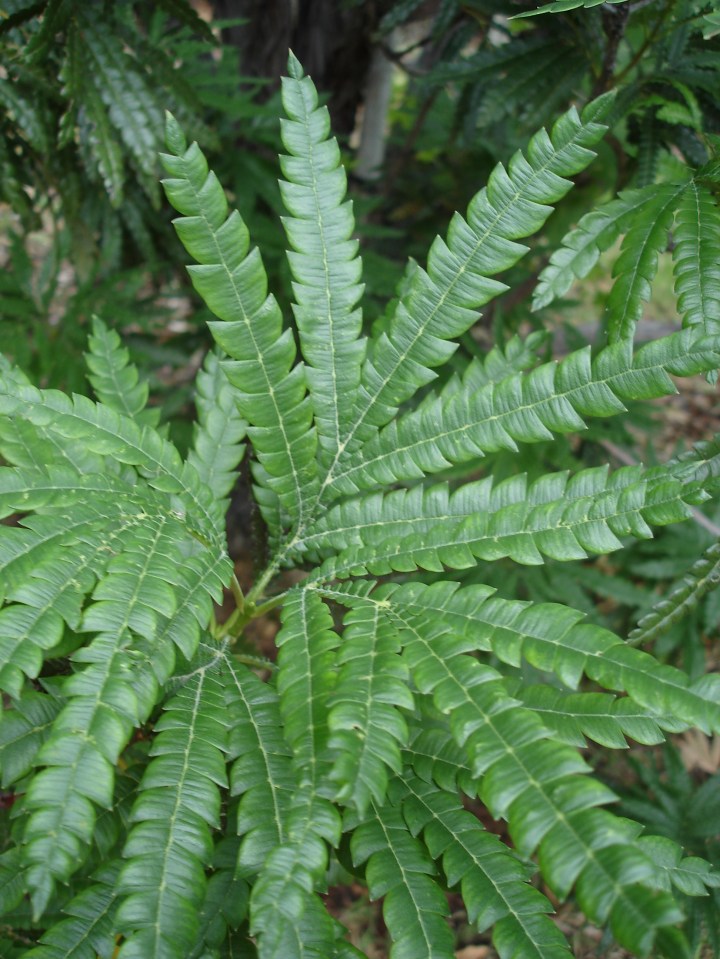 A few years ago, it was known as Santa Catalina Island ironwood. However, the rare subspecies native to Santa Catalina Island lacks the distinctively angular foliar lobes of the Santa Cruz Island ironwood, Lyonothamnus floribundus ‘aspleniifolius’. The evergreen compound leaves are about five inches long and four inches wide with three or five narrow leaflets, and look like chicken feet.
 Do they seem to be early this year? Clustered bellflower, Campanula glomerata, typically waits until the end of spring to bloom. Once the initial and most prolific bloom phase finishes, sporadic bloom should continue almost through summer. Blue is their most popular and traditional color. White is their second most popular option. Bluish purple and purplish pink are still somewhat rare.
 Agaves are innately tough and undemanding. The main reason that they are not more popular in home gardens is that they are outfitted with nasty foliar spines. The worst of these spines are the distal tips of the large succulent leaves. Most agaves are also armed with shorter recurved spines on the margins of their leaves. Gardening with such well armed perennials can be dangerous.
 There is something about the delicately intricate bloom and foliage of bleeding heart, Lamprocapnos spectabilis (formerly Dicentra spectabilis) that suits informal woodland gardens splendidly. Not only to they look like natural companions to small coniferous evergreens, but they are also quite tolerant of the acidic foliar debris, and to some extent, the shade that most conifers generate.
