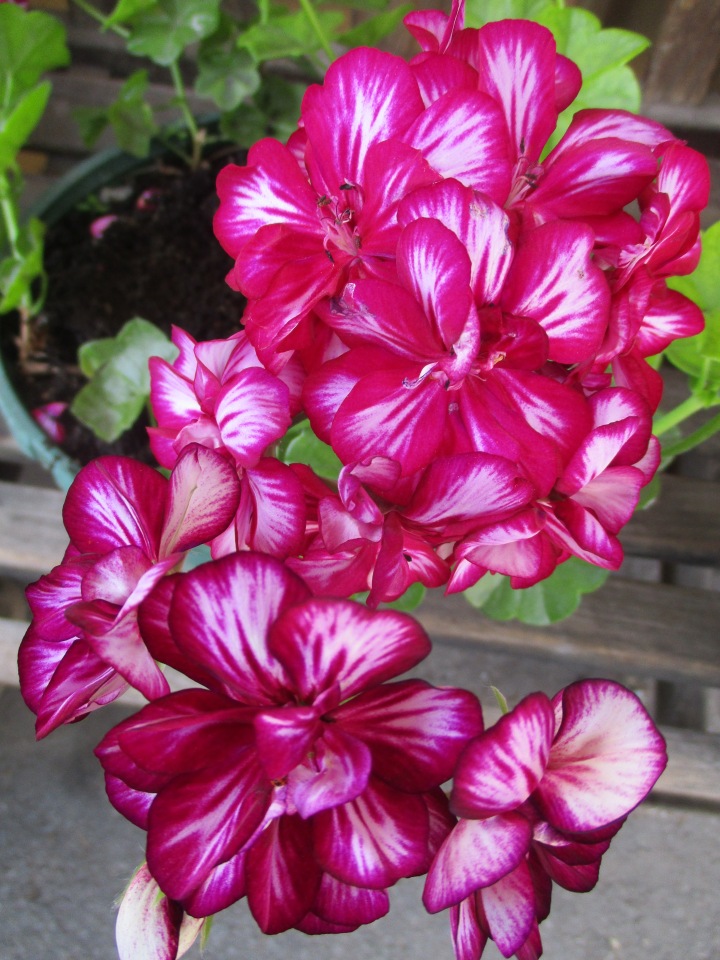
 This is one of the more traditional perennials for old fashioned window boxes, not only because it cascades downward to avoid obstructing associated windows, but also because, back before window screens were commonly available, the aromatic foliage was purported to repel mosquitoes. Ivy geranium, Pelargonium peltatum, is splendid for hanging pots and retaining walls as well.
The best bloom is usually later in summer or in early autumn, but sporadic bloom can continue almost throughout the year. The flowers are very similar to those of more common zonal geranium, but perhaps more abundant. The slightly more extensive color range goes beyond hues of white, pink, red and peach, to include rich burgundy, pinkish lavender and candy striped red with white.
The rounded and lobed light green leaves are rather succulent, so are easily damaged. Some cultivars have slight foliar halos (semicircular zones of darker color around the centers of the leaves) almost like those of zonal geraniums, but not quite as prominent. The thin and nearly succulent stems are easy to root as cuttings. Although fragile, they can sprawl or cascade as much as six feet.
 This is one of those warm season annuals that we do not hear much about. Verbena looks something like lantana, but rather than maturing into a nice shallow ground cover or low mounding shrub with a bit of staying power, verbena lasts only until frost next autumn. The blooms are a bit larger. The leaves are a bit greener. They stay lower than a foot, and get only a few inches wider than tall.
 This is an extreme bloomer! Cineraria, Pericallis X hybrida, blooms with composite flowers, which means that each small daisy flower is really a whole bunch of minute flowers clustered together to look like a single flower. As if this were not impressive enough, a whole bunch of these composite flowers are clustered together on top of each big wide floral truss. They are not easy to ignore.
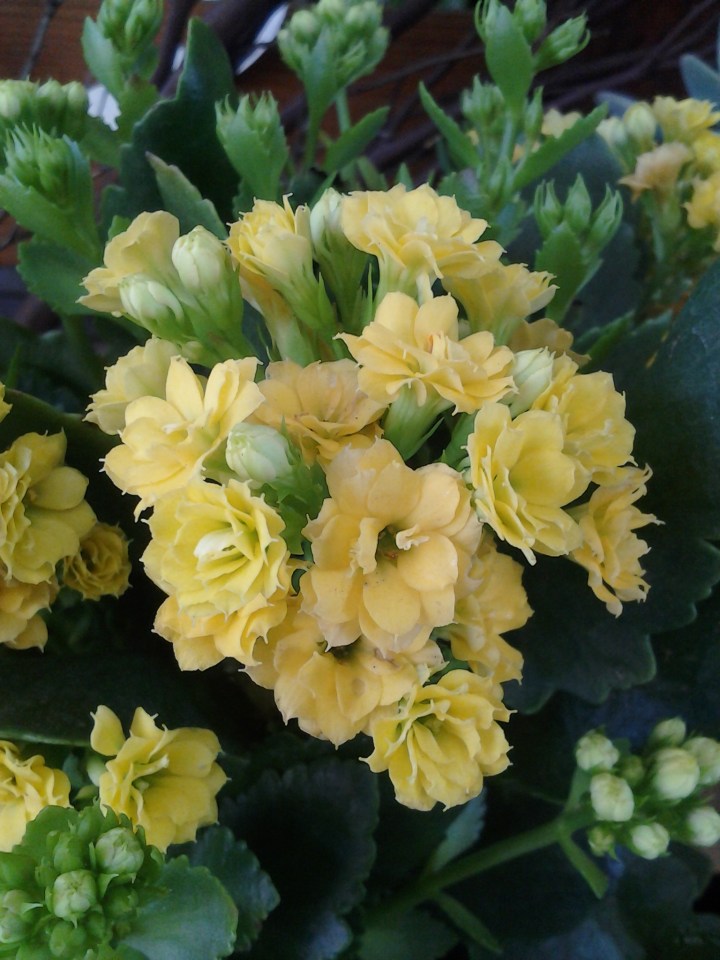 It seems like such a waste that so many of the prettiest blooming plants are generally regarded as temporary. They are grown in the most synthetic of environments, forced into bloom, sold at their prime, and kept as potted plants just long enough to finish their bloom cycle. When their bloom deteriorates, they typically get discarded, or planted out into the garden where they rarely survive.
 Tony Tomeo