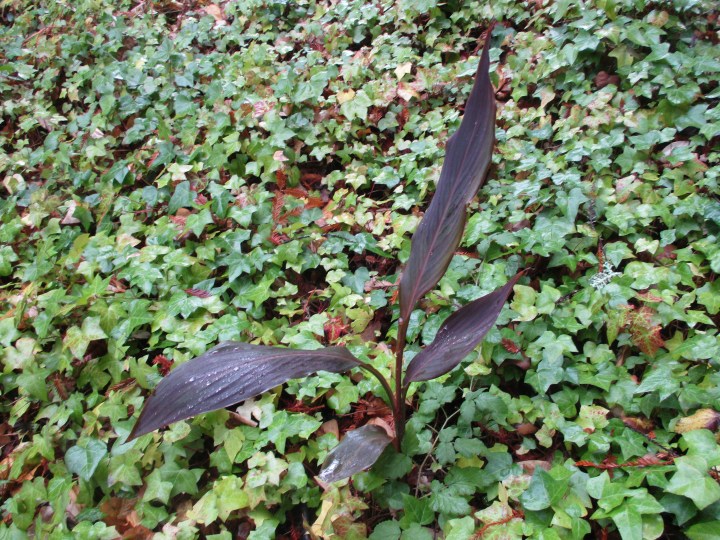
There is quite a bit of open space in some parts of the landscapes. It is not as if the landscapes are lacking much. There just happens to be a few spots where a bit more could be added. This expanse of healthy English ivy was already appealing, but lacked interest.
There is also quite a bit of spare plants out and about in the landscapes. It is not as if there is anything wrong with spare plants. There just happens to be too many of them. These cannas got overgrown and crowded within their original colony in another landscape, so needed to be divided and thinned out.
We are not a so-called ‘landscape’ company, which profits from the removal of some plants, and the installation of others. There is no incentive to dispose of as much vegetation as we could bill a client for. Nor is there any incentive to install as many new and expensive plants as we could fit into any available space. It is not a ‘business’.
To the contrary, it is in our own best interest to exploit resources that are already available to us. For example, when we thinned out these crowded cannas from one situation, we reassigned them to other situations where they could grow and become assets to their new landscapes. Also, viburnums that were removed from one site were reassigned as hedges in other situations.
We will be doing more of this sort of reassignment now that the weather is cooler and rainier, and the plants that will get relocated are dormant. Carpet roses that must be removed from the boundary of a playground because they are too thorny will be relocated to a broad roadside, where they can grow wild. They will be replaced with lily-of-the-Nile that is crowded elsewhere.
 Autumn is a time for planting partly because it is when many plants are beginning their winter dormancy. They are, or will soon be, less active than they would be at any other time of year. Some may not start to grow again until after winter ends. Others will want to secretly disperse their roots through the rainy winter weather, while merely appearing to be dormant from above the soil level.
 California flora is remarkable. It all does what it must to live comfortably in every ecosystem, climate and geographical region here.
 Why do we all think we need a greenhouse? Some of us may rely on them for sheltering plants through cold winters. Some of us grow seedling late in winter, for an early start in spring. For some of us, greenhouses are where we grow plants that would not be as happy out in the natural climate. There is a multitude of uses for a greenhouse; but really, how many of us need one?
 Jocular reference was made to ‘The Grapes Of Wrath’ on our our backward version on the way to


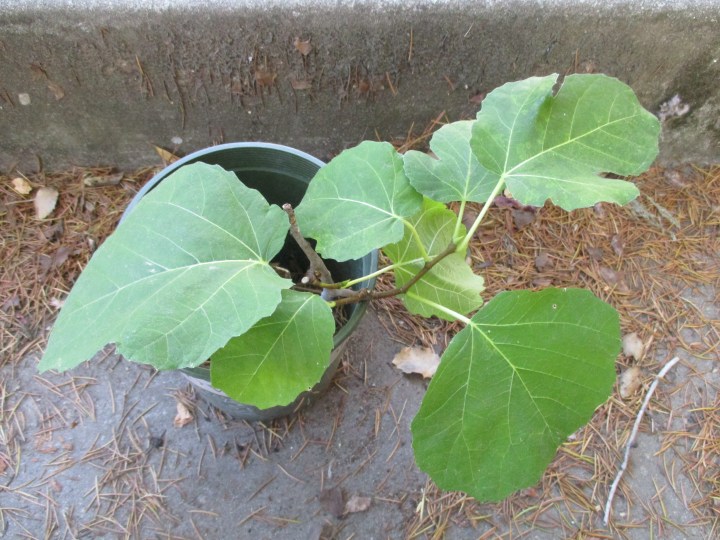
 Just like anything else that gets planted in the garden, new perennials seem to be so cute and innocent. They get even better as they mature. Some grow and spread to impressive proportions. Then . . . some perennials get to be too large. Some get overgrown enough to obscure their own appealing characteristics or other plants. Others get crowded enough to inhibit their own bloom.
 Autumn is for planting; and for good reasons. It is the beginning of dormancy for almost all plants, including evergreens. It precedes cool and rainy weather that inhibits desiccation until new roots are able to disperse sufficiently to sustain new plants. Some plants need to be in the garden in time for winter chill in order to initiate bloom. However, not everything should get planted in autumn.
 The dark bronze and variegated varieties of tree houseleek, Aeonium arboreum, are so much more popular than the simple species, that the simple species with plain green foliage is now rather rare. The succulent stems do not stand much more than three feet tall. They get about as broad, and can get even broader as lower stems develop roots and grow into new plants. The succulent rosettes of foliage of well watered plants can be fragile to handle. Mature plants can bloom in spring with unusual conical trusses of yellowish or chartreuse flowers.


 Tony Tomeo