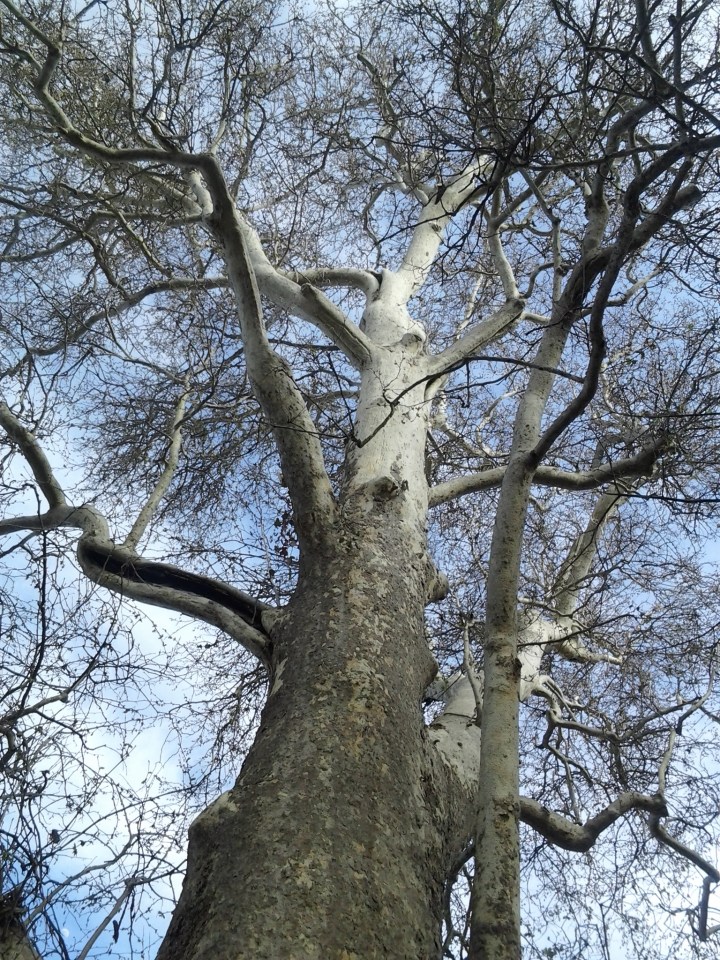
 Before the storms of winter get here, it might be a good time to make arrangements to get some help for big trees that need it. Smaller trees that can be reached from the ground may not need anything that we can not do ourselves. It is the big trees that have grown beyond our reach that may need professional help if they have problems. They are unsafe for us DIY garden enthusiasts.
Once late autumn and winter weather patterns start, storms can break limbs and destabilize trees. Identifying problems and executing necessary remedies can limit such damages before they happens. Disproportionately heavy or structurally deficient limbs can be pruned to reduce weight and wind resistance. Obtrusive limbs can be pruned for clearance from roofs and anything else.
Trees are the most significant and influential features of our gardens. They shade and extend their limbs over our homes and gardens. Not only can they cause serious damage by dropping limbs or falling, but they can also change how our home and garden are affected by their shade. They are worthy of proper maintenance, even when it is necessary to procure the services of an arborist.
An arborist is a horticulturist who specializes in arboriculture, which is the horticulture of trees. Arborists are essentially tree physicians, who evaluate the health, stability and structural integrity of trees, and make recommendations for maintenance, or to repair problems. Most municipalities require an ISA Certified Arborist report in order to issue a permit to remove an unsalvageable tree.
The ISA is the International Society of Arboriculture. Certified Arborists have passed an examination of their arboricultural expertise, and maintain their credentials by continued involvement with ISA educational seminars, classes and workshops. More information about the International Society of Arboriculture and local certified arborists can be found at the website, www.isa-arbor.com.
Arboriculture is not the sort of thing that gardeners should be expected to perform. It is completely different from the sort of mowing, shearing and pruning that they do. Sadly, much of the damage that arborists find in trees was caused by improper arboricultural procedures. Arboriculture also has the potential to be very dangerous to someone who lacks adequate training and equipment.
 There seems to be some discrepancy about the correct spelling of crape myrtle, Lagerstroemia indica. Many of us spell it as ‘crepe’ myrtle, thinking that crepe is the thin colorful paper that the flowers resemble. It is actually a rolled up thin French pancake. The thin paper is actually spelled as ‘crape’. Of course those of us who dislike the commonness of crape myrtle might omit the ‘e’.
 There are certain disadvantages to gardening in such a perfect climate. We can not grow things that require significant chilling in winter. Nor can we grow things that require prolonged heat in summer. Seasons change so gently that it is easy to get behind schedule. It is already late summer, whether it seems like it or not. What we do not do in the garden is as important as what we do.
