Knowing When To Prune What

Flowering plum trees can be pruned later, after bloom.

Maybe the weather took the surprise out of camellias this year. It has been so warm and pleasant that such big and colorful flowers are almost expected. Even if crocuses and narcissus did not bloom much too early, they are likely finishing a bit early because of the warmth and minimal humidity. Daffodils are not far behind. Hopefully, lilies and tulips will not be too confused. Pansies, primroses, stock, Icelandpoppies, ornamental cabbages and kales actually seem to enjoy the odd weather.

It was such a rush to prune everything that needs to be pruned in winter! Roses are already being outfitted with new foliage. Plum trees are already blooming, and will be followed by apricots, cherries, peaches and the rest. It was actually easy to get carried away, and prune things that should not yet be pruned.

Many of the flowering trees that are related to fruiting trees seem like they should be pruned. However, the rules are different, since they do not need to support the weight of fruit. Pruning only compromises bloom. Flowering cherries, flowering (purple leaf) plums and shrubby flowering quinces should instead be pruned after bloom finishes, and only if necessary. As flowering crabapples finish bloom, minor pruning probably will be necessary.

Lilacs, forsythias and spireas should be pruned by ‘alternating canes’, which means that older canes get cut to the ground as they get replaced by new canes. If done just after bloom, new canes develop through the following summer, and will be ready to bloom the following spring.

Quite a few trees, shrubs and vines likewise want specialized treatment. Fat flower buds of deciduous magnolias make it obvious that pruning should be delayed. Azaleas should probably make their intentions to bloom more obvious. Hydrangeas can be groomed of deteriorated flowers and dead stems, but plump canes from last year will bloom this year. Maples, birches and elms will continue to bleed if pruned now, so should wait for summer.

Pruning Roses During Winter Dormancy

Pruning now promotes better bloom later.

Contrary to what the pleasant weather suggests, it is still winter. Most plants are resisting the temptation to break dormancy prematurely. They must know that the days are still short, regardless of the weather. Most plants are surprisingly proficient with scheduling. Nonetheless, dormant pruning should happen sooner than later. This includes pruning roses. They have been ready for a while.

Technically, roses are ready for pruning as soon as they begin to defoliate. Also technically, rose pruning can be as late as the buds of the bare stems remain dormant. Later pruning is preferable in some regions where pruning wounds are susceptible to pathogens. Such delay is riskier here where mild weather can disrupt dormancy prematurely. Wounds are less vulnerable to pathogens.

Pruning roses is about as important as pruning deciduous fruit trees. Without adequate pruning, rose plants become too overgrown to perform properly. Crowded stems are unable to elongate as they should. Diseases and insects proliferate in congested foliage, and damage bloom. Specialized pruning concentrates resources into fewer but significantly more vigorous stems and flowers.

Although the technique may seem to be drastic, pruning roses is not very complicated. Hybrid tea, grandiflora and floribunda roses should retain only three to six of their most vigorous canes. The canes should be only about two feet tall, and cut just above a healthy bud. If possible, they should be canes that grew during the previous year, from bottom to top. Older canes should be removed.

Pruning roses of other classifications may be slightly different. Some types may retain more canes. Climbing types likely retain old canes for several years before replacement. Carpet roses and other ungrafted roses can be cut nearly to the ground, leaving no canes at all. Tree roses are like bush types, but on top of short trunks. New canes grow from their graft unions on top of the trunks.

Of course, potentially vigorous sucker growth that develops from below the graft union of any grafted rose must go.

Six on Saturday: HAPPY NEW YEAR!

2021 was already a popular year before it got started. Many wanted 2020 to end, as if all the unpleasantries of last year would end with it. To me, the first day of this year seemed to be just like any of the few last days of last year. That is not necessarily bad. There was quite a bit of good last year, even with all of the unpleasantries. Many of us see examples of it in our gardens.

Well, these pictures happen to be from yesterday, the first day of January and 2021.

1. Eucalyptus sideroxylon, red ironbark, is the first tree I planted in 2021, on New Year’s Day. It died back last spring, and regenerated with shrubby growth, so got pruned to a single trunk.

2. It should be glad to be out of its can, and into a new home. It originated as a root sucker of a tree that had been cut down. It came up with roots when I pulled it, so could not be discarded.

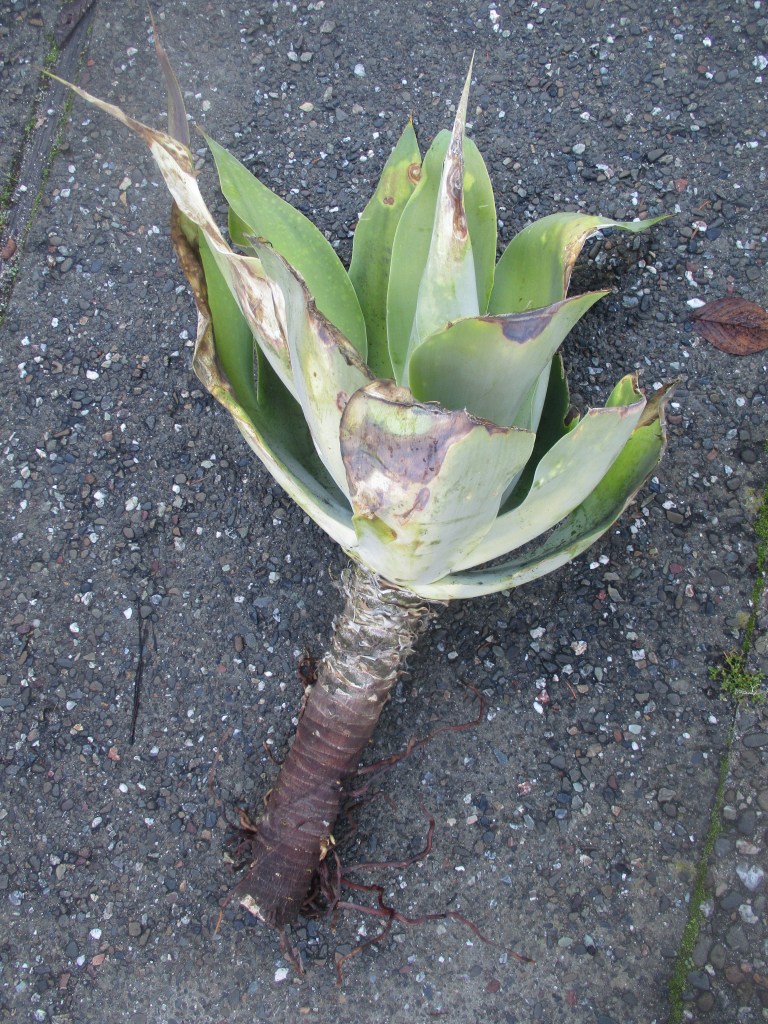
3. Agave attenuata, foxtail agave, got run over on Pacific Avenue in Santa Cruz. It was not crossing the road, but just minding its own business in a median. I could not leave it there like that.

4. It should be happy here. Adventitious roots are already developing on the trunk. A small section of the base of the trunk was cut off and canned so that new pups could mature separately.

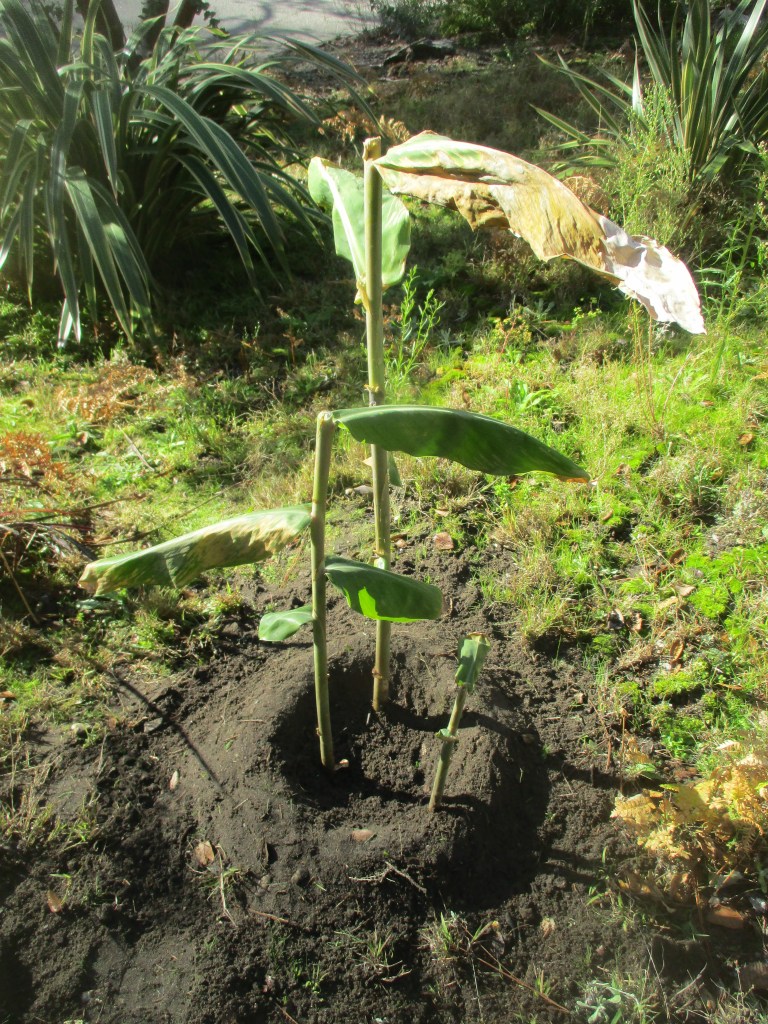
5. Hedychium gardnerianum, Kahili ginger, originated from a neglected landscape near where the red ironbark eucalyptus originated from. Foliage from last year will shrivel through winter.

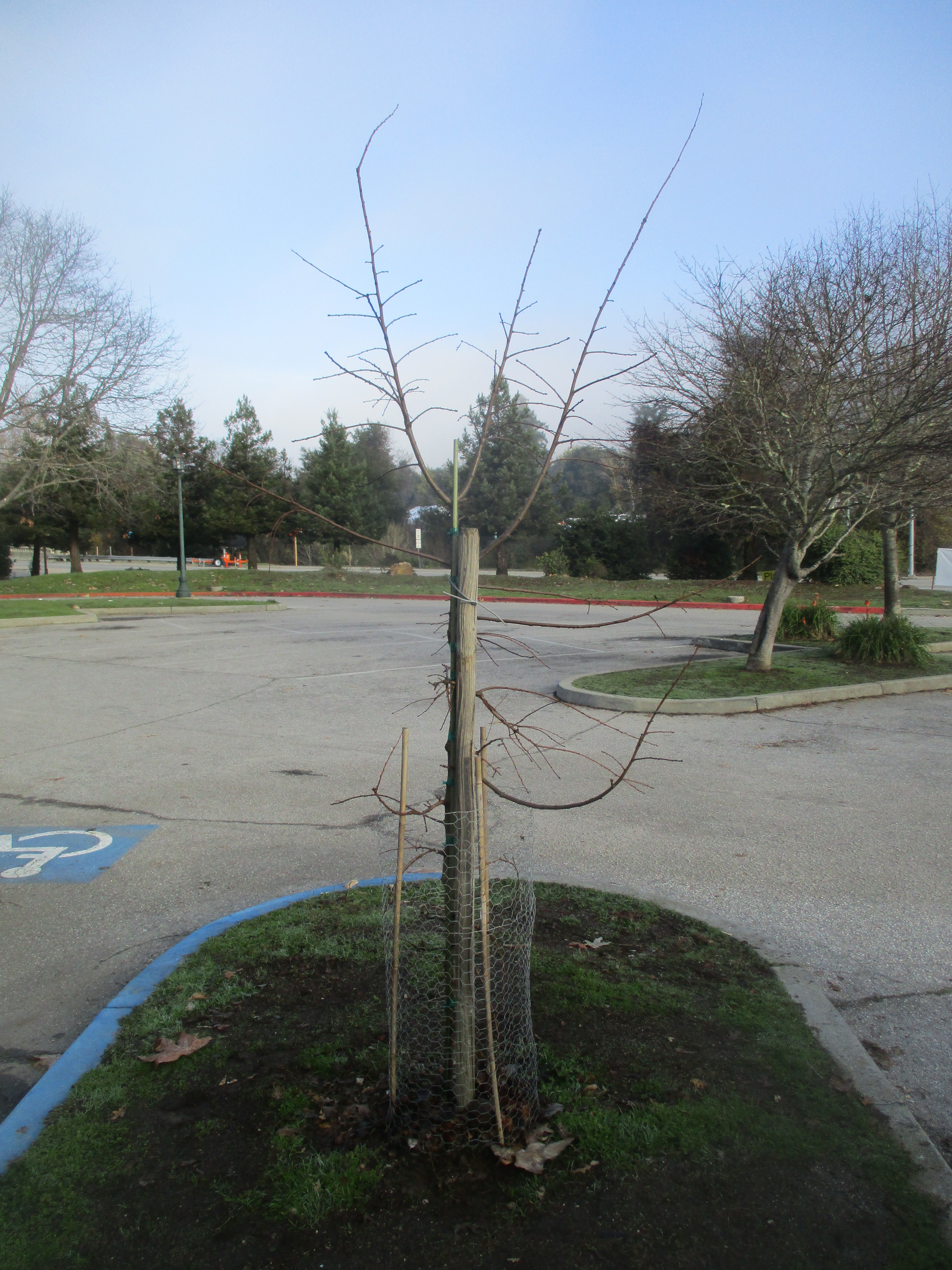
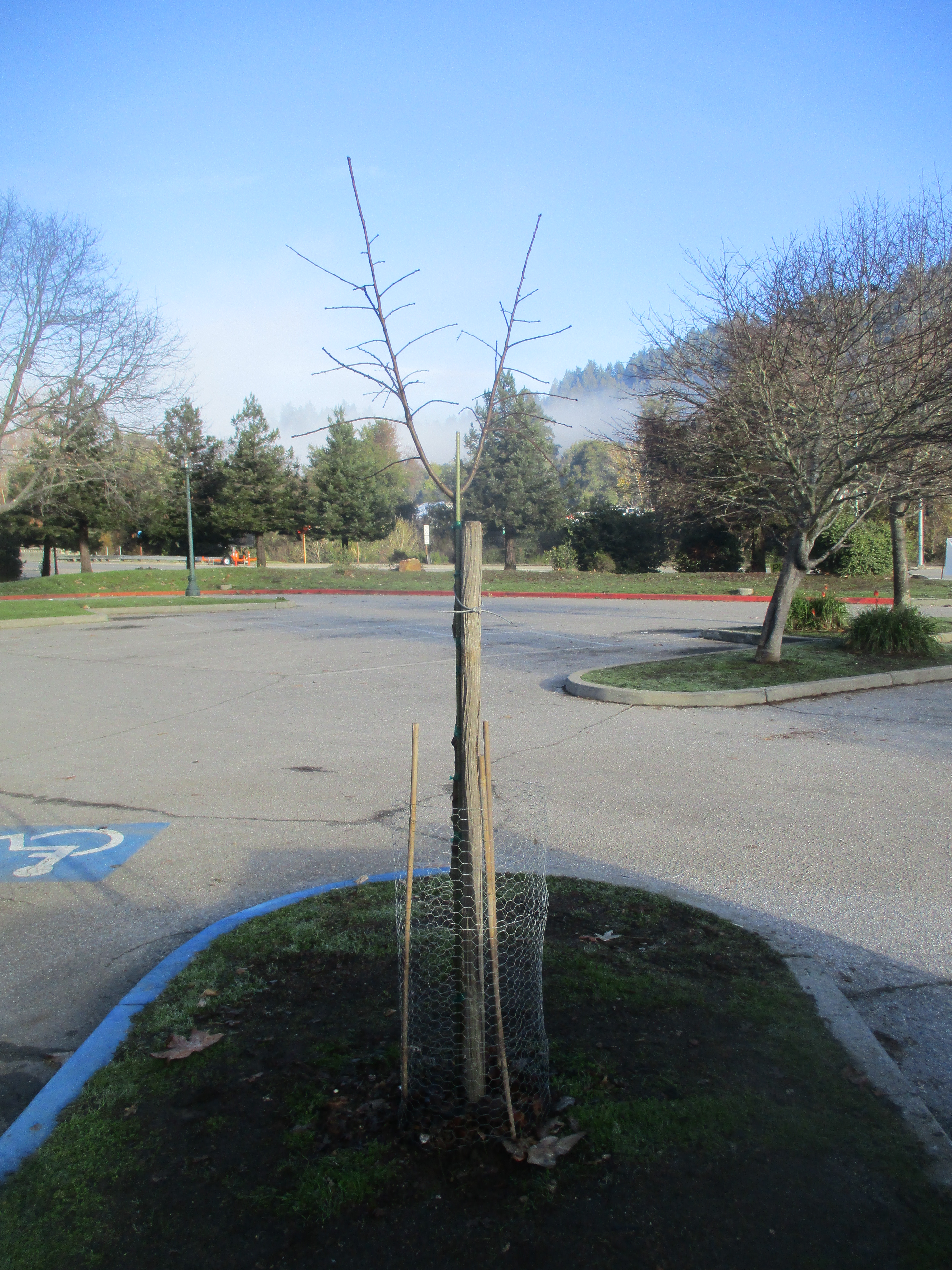
6. Quercus lobata, valley oak, is the Memorial Tree, and is the first tree that I pruned in 2021. It is developing well. I will return to stabilize the lodgepole stake, and adjust the binding stake.

This is the link for Six on Saturday, for anyone else who would like to participate:

https://thepropagatorblog.wordpress.com/2017/09/18/six-on-saturday-a-participant-guide/

Deciduous Fruit Trees Need Pruning

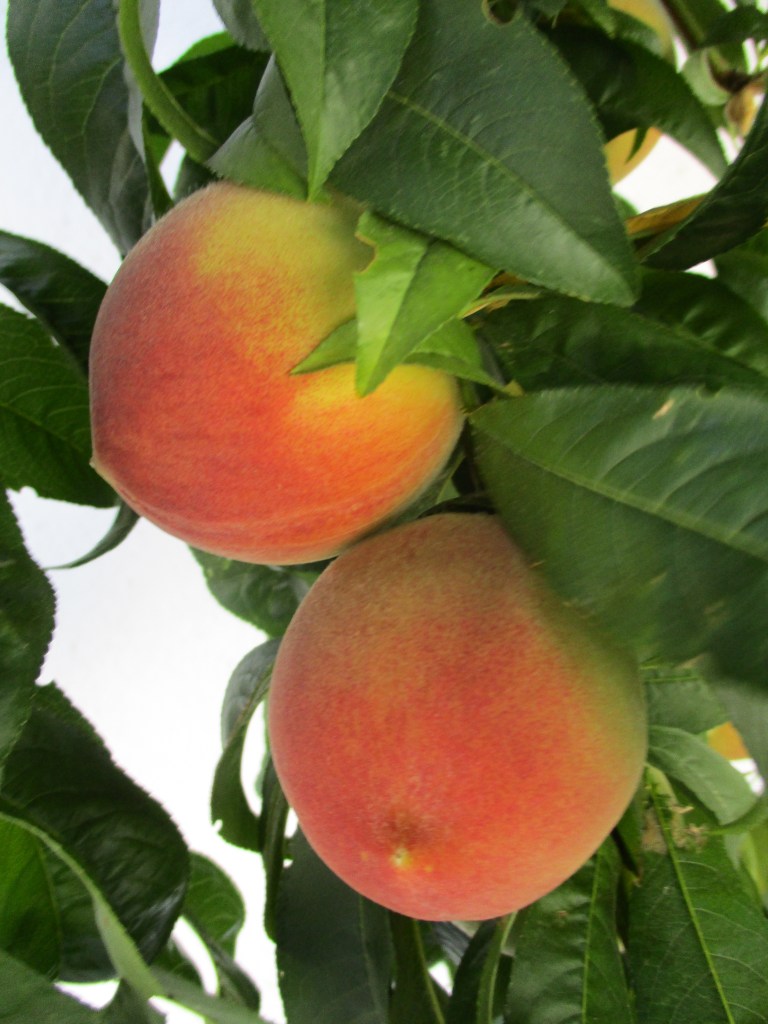
Prune now for better peaches later.

Many plants should get most of the pruning they need while they are dormant in winter. Such pruning is less stressful because it happens while plants are naturally sedated. Some plants that need aggressive pruning during their winter dormancy may need no other pruning until the following winter. Most deciduous fruit trees conform to this category. Their pruning is rigorous and specialized.

The innately aggressive pruning that deciduous fruit trees require may seem to be brutally unnatural, but is very justifiable. It is necessary to compensate for unnatural production. After centuries of selective breeding, most deciduous fruit trees produce more fruit than they can support. Their fruit is unnaturally abundant, unnaturally bulky, or both. Such improvement has distinct consequences.

Unlike their wild ancestry, many modern deciduous fruit trees would not thrive for long without intervention. The weight of their fruit eventually breaks and disfigures limbs. Such breakage exposes sensitive bark to sun scald, and leaves wounds open to decay. Insect and disease pathogens proliferate in deteriorating growth. Furthermore, messy excess and unreachable fruit attracts vermin.

Pruning improves the structural integrity of deciduous fruit trees so that they can support their fruit. It also concentrates resources into fewer fruits of superior quality, rather than allowing production of inferior surplus. Invigorated vegetative growth is more resilient to pathogens. Proper pruning removes dead, dying, damaged and diseased growth, the ‘four Ds’, as well as unreachable growth.

The main categories of deciduous fruit trees are stone fruits and pomme fruits. Stone fruits are of the genus Prunus. They include peach, nectarine, apricot, plum, prune, cherry, their hybrids, and almond. (Almonds are the ‘stones’ of their fruits.) Pomme fruits are apple, pear and quince. Peaches need more aggressive pruning than cherries, simply because their fruits are so much bigger.

Pomegranate, persimmon and fig also need specialized pruning while dormant through winter.

Prune Fruit Trees While Dormant

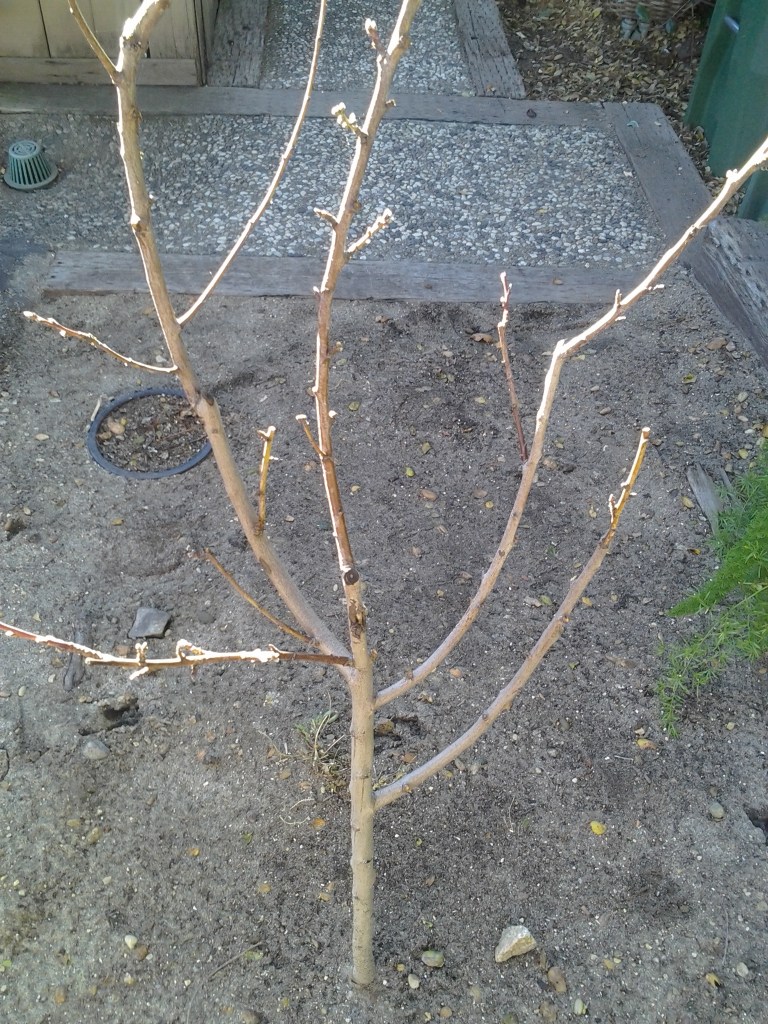
Dormant fruit trees should be pruned aggressively.

After centuries of breeding for abundant production of unnaturally large fruit, deciduous fruit trees have become dependent on specialized pruning while they are dormant through winter. Without pruning, most eventually become overgrown and overwhelmed by their own fruit. The weight of excessive fruit disfigures and breaks limbs. Pathogens proliferate within distressed foliage, crowded fruit and surplus fruit that falls to the ground.

Pruning not only improves the structural integrity of the limbs, but also limits the production and weight of the fruit that will be produced. Limiting production concentrates resources, so that there are fewer, but considerably better fruits, instead of too many inferior fruits. Concentrating the growth of the fewer new stems that develop in spring promotes vigorous growth that is more resistant to pathogens. Ideally, pruning also limits the height of fruit trees, so that much of the fruit develops closer to the ground.

Peaches, nectarines, apricots, plums, prunes, and cherries are all relates ‘stone’ fruits (of the genus Prunus), so require various degrees of similar pruning. Peach trees produce the heaviest fruit, so need the most aggressive pruning. Cherries trees produce significantly lighter and smaller fruit, so get pruned relatively minimally. Almonds (which are actually the ‘pits’ of a similar type of stone fruit) get shaken from their trees, so there is no advantage to keeping production close to the ground.

The ‘four Ds,’ which are ‘Dead, Dying, Diseased and Damaged’ stems should be pruned out first. Then the vigorous stems that grew last year should be thinned and cut back, but not removed completely. They are the stems that will bloom and develop fruit the following year. Pomme fruits, such as apples, pears and quinces, develop on similar newer stems that should likewise be pruned down, but many also develop on lower ‘spur’ stems that elongate so slowly that many spurs may never need to be pruned.

Most young deciduous fruit trees will need more pruning each year as they grow. Fortunately, pruning becomes more familiar with experience. Because pruning fruit trees is so specialized and important, it is worth studying more thoroughly.

Winter Is Time For Pruning

Pomegranate trees appreciate major specialized pruning.

Plants are unable to migrate to warmer climates for winter like so many migratory birds do. They are immobile for their entire lives. Only potted plants can move to more sheltered situations when the weather gets too cool for them. Some get to live inside as houseplants. Otherwise, they all must contend with seasonally changing weather. Most are impressively efficient with how they do so.

Most that do not adapt efficiently to cool winter weather are tropical species. Tropicals that are native to high elevations can tolerate cold weather. However, many of the familiar tropical species are from low elevations where they never experience cold weather. Frost damages or kills them. Warm season annuals do not tolerate cool weather either. They just die at the end of their season.

Otherwise, almost all other plants go dormant through winter, at least to some degree. Even evergreen plants, which may not seem to go dormant, grow much slower during winter, or do not grow at all. Deciduous plants are much more obvious about their dormancy, because they defoliate. While bare, they are less susceptible to damage from wintry weather. Dormancy is like hibernation.

This is why winter is the best time for pruning most plants. While dormant, they are less susceptible to distress associated with pruning. Some plants expect some degree of damage from wintery weather during their dormancy anyway. They wake in spring, with no idea of what happened while they slept, and resume normal growth. Winter pruning conforms quite naturally to their life cycles.

There are, of course, a few exceptions. Citrus and avocado should not be pruned during winter. Such pruning stimulates new growth, which is sensitive to frost. Maple and birch should have been pruned earlier. They bleed annoyingly if pruned late into winter. Flowering trees that produce no fruit, such as flowering dogwood and flowering cherry, should be pruned after bloom, late in spring.

Deciduous fruiting trees, such as apricot, cherry, plum, peach, apple and pear, require specialized pruning during winter.

Dormancy And Defoliation Are Advantageous

Kahili ginger is finished blooming, and should get cut back once the foliage succumbs to frost.

Many plants are deciduous in autumn and winter, which means that they defoliate or die back, and then refoliate or regenerate in spring. Many others are evergreen, which simply means that they are always foliated through all seasons. What many people do not realize is that evergreen plants replace their foliage just like deciduous plants do. They just do not do it in such distinct phases of defoliation, dormancy and refoliation.

Tropical plants like cannas and some of the various begonias really have no need for formal defoliation, since they are from climates that lack winter. In the wild, they continually and systematically shed old stems as they produce new stems. Locally, they tend to shed more than they grow during late autumn and winter. The large types of begonias tend to keep their canes for so many years that it is not so obvious. Where winters are colder, cannas freeze to the ground, only to regenerate from their thick rhizomes as winter ends.

Zonal geraniums may seem rather tired this time of year for the opposite reason. They expect late autumn weather to include frost that would kill them back to the ground where they would stay relatively dormant until warmer weather after winter. Just because their foliage is instead evergreen through winter does not mean that it should be. It lingers and often becomes infested with mildew and rust (fungal diseases) that proliferate in humid autumn weather.

However, zonal geraniums need not be pruned back just yet. Even if they eventually get damaged by frost, pruning should be delayed so that the already damaged older foliage and stems can shelter the even more sensitive new growth as it emerges below. They can get cut back after frost would be likely.

Evergreen pear can get very spotty once the warm weather runs out because the same damp and cool weather that inhibits its growth also promotes proliferation of the blight that damages and discolors the foliage. The damaged foliage eventually gets replaced as new foliage emerges in spring, but will remain spotty and discolored until then. Photinia does not get as spotty, but holds blighted foliage longer into the following summer. Ivy can be temporarily damaged by a visually similar blight.

New Canes Replace Old Canes

50916thumb
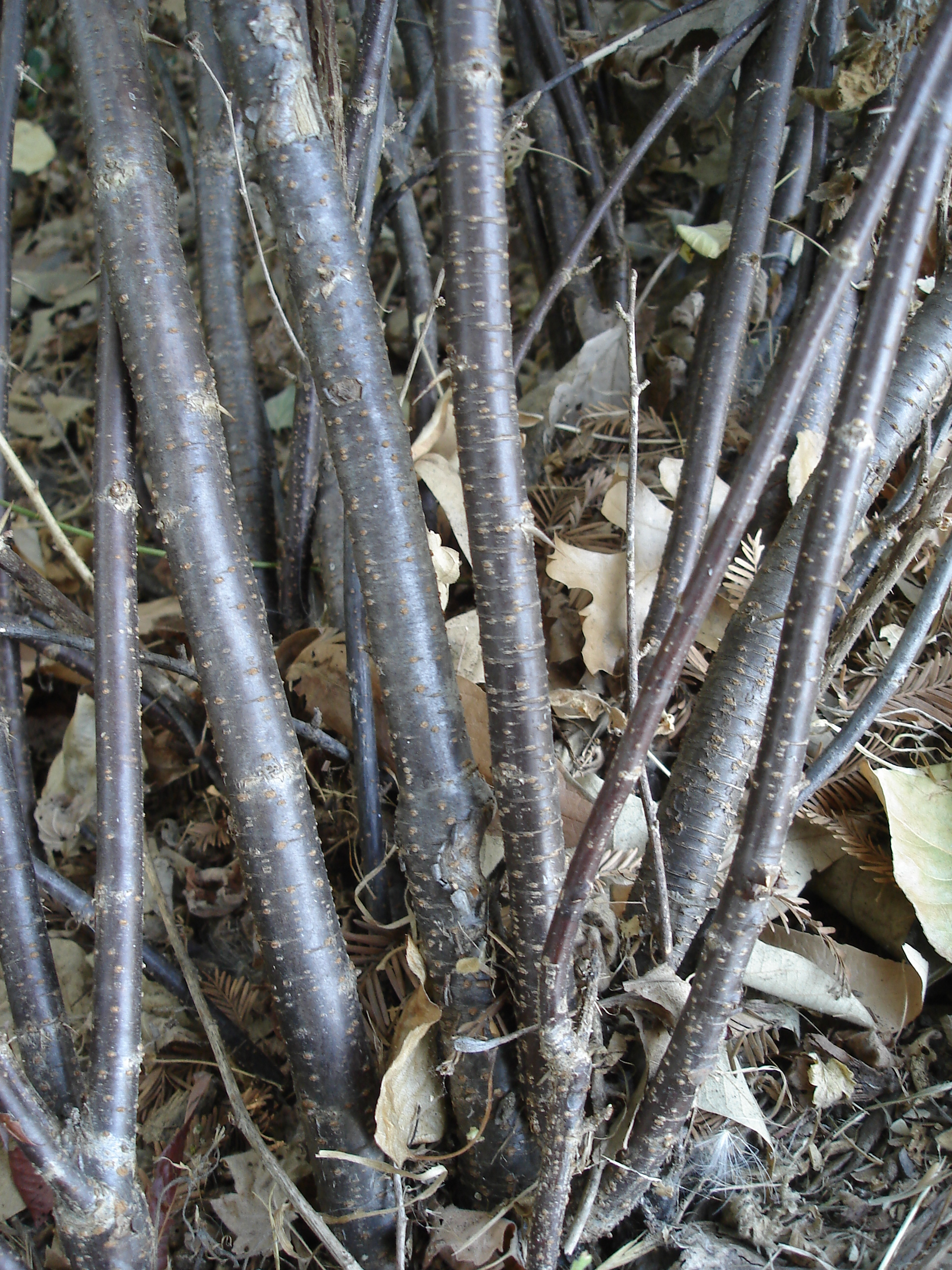
Well groomed canes are not overgrown.

Heavenly bamboo, or simply ‘nandina’, is one of those many plants that almost never performs like it should. The intricately lacy foliage is so appealing while plants are young, and changes color with the seasons. The red berries can be comparable to those of holly. Unfortunately, healthy plants grow, and then ultimately get shorn into globs of disfigured leaves and stems.

The same abuse afflicts Oregon grape (mahonia), mock orange (philadelphus), forsythia, lilac, abelia and all sorts of shrubby plants that really should be pruned with more discretion. Their deteriorating older stems should be pruned to the ground as new stems grow up from the roots to replace them. It is actually not as complicated as it seems.

This pruning process, known as ‘alternating canes’, prunes the plants from below. It is a standard pruning technique for maximizing production of blackberries, raspberries and elderberries. It is similar to grooming old stalks from bamboo and giant reed, even if it does not prevent them from spreading laterally.

The deteriorating older stems, or ‘canes’, are easy to distinguish from newer growth. Old canes of Heavenly bamboo and Oregon grape become heavy on top, and flop away from the rest of the foliage. Old canes of mock orange and lilac get gnarled and less prolific with bloom. Aging abelia and forsythia canes become thickets of crowded twigs.

The newer stems are likely a bit lower, but are not so overgrown. Since the foliage is not so crowded, it is displayed on the stems better. Their blooms or berries are more abundant. By the time new growth becomes old growth, there will be more newer growth right below it. In fact, the regular removal of aging canes stimulates growth of new canes.

This is the time to prune Heavenly bamboo and Oregon grape, just because the oldest foliage is as bad as it will get after the warmth of summer. Mock orange, forsythia and lilac should get pruned while dormant through winter, but are commonly pruned just after they finish bloom early in spring. Abelia should probably wait until spring because new growth can look sad through winter.

Mature Trees Need Professional Help

50902thumb
Arboriculture is specialized horticulture of trees.

Arborists are horticulturists who are specialized with the horticulture of trees, which is known as arboriculture. In urban gardening, they are not as familiar as gardeners who mow lawns and tend to the annuals, perennials and shrubbery that are close to the ground; but they should be. The trees that arborists maintain are the most significant features in most landscapes.

Bad annuals or poorly tended lawns can get unsightly, but are not too hazardous. However, a tree can be extremely hazardous if it becomes unstable or develops structural deficiency. Falling trees or limbs are very dangerous, and can cause all sorts of damage to anything within reach. Arboriculture is therefore the most important horticulture in home gardens with trees.

Sadly, many trees are severely damaged by improper pruning, which is often performed by those hired to prune them. Some get pruned too severely, or get pruned in the wrong season. Others do not get pruned aggressively enough. Either way, many get structurally compromised so that they drop limbs as they mature. Some trees get damaged too severely to salvage.

This is precisely why arboriculture should be done by qualified arborists. Unfortunately, finding such an arborist may not be as easy as it would seem to be. The industry is notoriously overrun with ‘hackers’, who are unfamiliar (and often unconcerned) with what trees need, and how trees respond to improper pruning.

The International Society of Arboriculture, or ISA, certifies arborists who pass an exam of arboricultural expertise. ISA certified arborists maintain their certification with regular involvement with the ISA, which involves arboricutural seminars and classes, as well as networking with other professional arborists. Certified arborists can be found at the website of the ISA at isa-arbor.com.