What a nasty job! We know this sedge, or whatever it is, as ‘razor grass’ because it cuts like razors. It is difficult to pull from the rocky creek bottom and bank with the creeping stolons still attached. The creek is mucky. The water is wet. The gloves I wear to avoid getting slashed obviously get just as mucky and wet.
It was such a miserable job last autumn that we postponed most of it for winter. I figured that I could wait for the dangerous foliage to die back, and then just pull up the stolons below the dead foliage. It might have been a good idea, if only we had returned to actually execute our plan. By the time we got back, new foliage was already maturing.
I was so dreading returning to this job, but then found that the fresh new foliage was not nearly as dangerous as the more mature foliage that we pulled late last summer and autumn Furthermore, the new rosettes had not dispersed their roots quite as firmly as expected. They were suspiciously easy to pull, with the stolons still attached. Dead old rosettes seemed to be completely necrotic and decayed. It was too easy.
I expect at least a few new rosettes will develop later. There were likely some down under the muck that were not up when I was there. I also expect that some will grow from bits of stolon that were left behind. However, nothing has been seen in the past three weeks or so since we did this. (I would have shared these pictures sooner, but there were other pictures to share instead.)
Speaking of other pictures to share, there are six more on my secondary ‘Six on Saturday‘ post. I did not want to save them for later because they are almost irrelevant to horticulture, but I did not want to delete them without first sharing either.
1. Sedge, or whatever it is, is difficult to handle, and is even more difficult to handle when trying to separate the stolons from the stones on the bank of the creek.
2. It did not take long to fill each of these plastic bins. I did not leave any foliage hanging over the edge, because I did not want to get cut when picking up the bins.
3. These bins can be used as a flotation device. Actually, it was rather annoying that they kept floating away until they got filled. It was a nice day to be in the creek.
4. This acorus grass was mostly overwhelmed by the sedge, or whatever it is. I should have gotten a ‘before’ picture. It looks great now, and is happy in the muck.
5. While pulling sedge, I found these two knees developing from the roots of one of our two bald cypress. This particular tree was supposed to be a dawn redwood.
6. I also noticed that the montbretia was blooming more than it normally does down in the deep shade. It is a voracious weed too, but inhibits even worse weeds.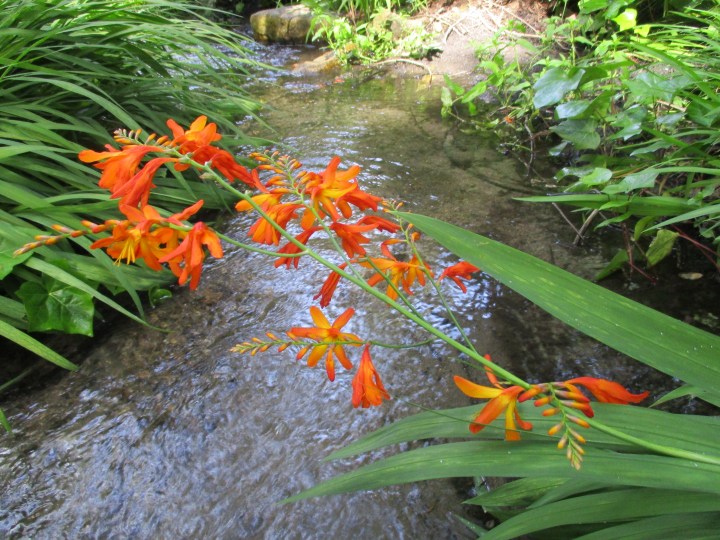
This is the link for Six on Saturday, for anyone else who would like to participate:
https://thepropagatorblog.wordpress.com/2017/09/18/six-on-saturday-a-participant-guide/
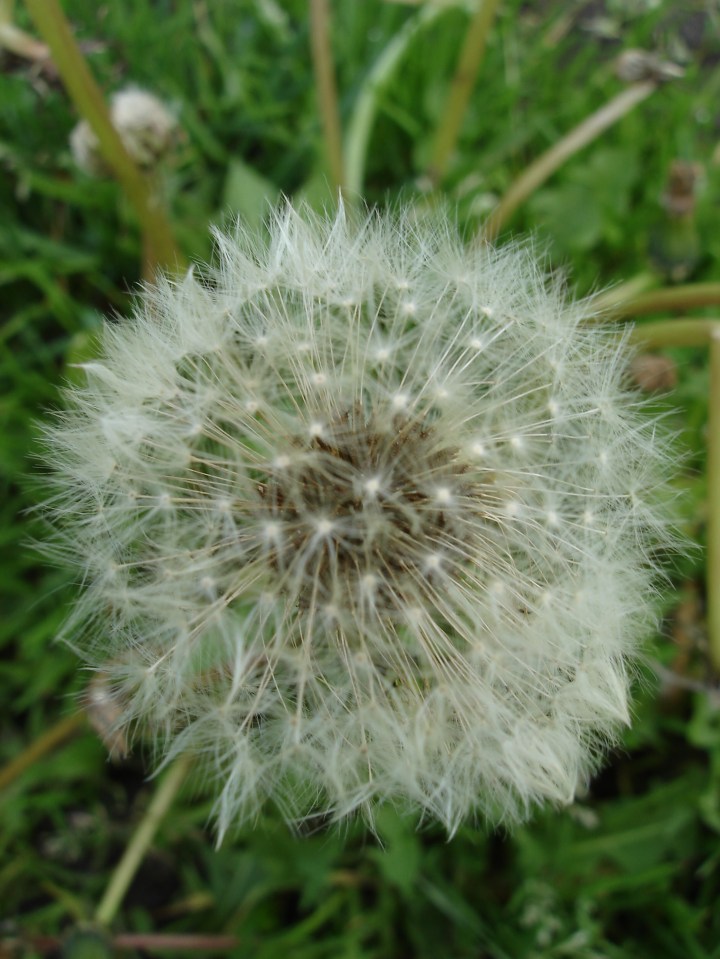 Spring brings out the best and the worst in the garden. While warm season annuals and vegetables are getting established, so are a variety of weeds. Just like other annuals and perennials, they respond to the changing weather. Cool weather and moisture stratified their seed through winter. Warming moist soil prompts germination. Warm and sunny spring weather promts rapid growth.
 Tony Tomeo