 Among pines, firs, redwoods and most excurrent trees (with central leader trunks), stubs or stumps of limbs that were shed are common and more apparent than they are among decurrent trees (which branch into many main limbs). The older lower stubs slowly but eventually decay and fall away as the trunks compartmentalize (heal over) where they were formerly attached.
However, wild trees are rarely completely without such stubs. As the older lower stubs are shed, newer stubs develop higher up. The worst of their stubs get pruned away only when more refined landscapes are developed around such trees, and they get pruned accordingly. If the trees get groomed regularly every few years or so, not many new stubs get a chance to develop.
When pruning out viable limbs, they must be cut cleanly from the trunk or supporting limb, without stubs. Since they do not deteriorate slowly before falling away, the trunk or supporting limb has no time to start the process of compartmentalizing (healing) over where such limbs were attached. Cutting away cleanly eliminates as much obstruction to that process as possible.
Pruning necrotic stubs from trunks of excurrent trees is not quite so important because the trunks have a tendency to start the process of compartmentalization as such stubs are decaying, and can actually constrict and crush stubs if they do not fall away efficiently enough. Nonetheless, necrotic stubs get pruned out when trees are groomed, just because they are unappealing.
So, no matter what, stubs should not be left when pruning. It is not complicated. It is actually easier to control a saw when it is up against a tree trunk or main limb. Yet, many who do not know better, and many who really should, more often than not, leave trees looking like this fir tree.
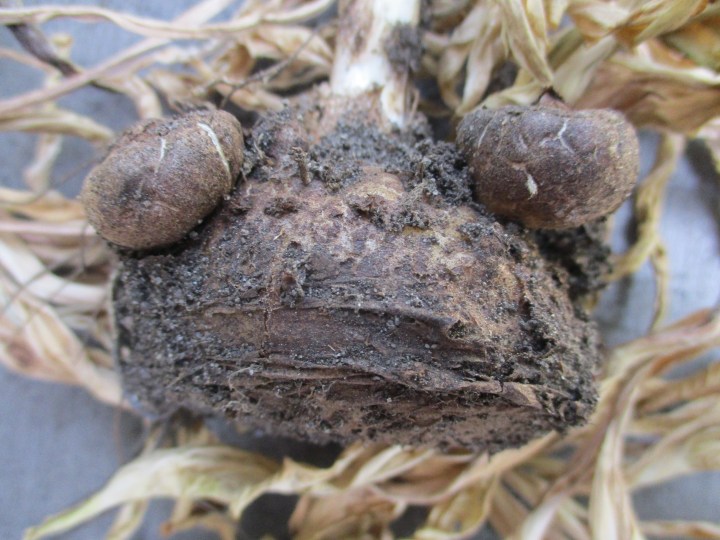 Wednesday is my day to rant. However, I neglected to get out to find a picture or even a topic to rant about. Instead, I found this ugly little . . . what I believe to be a dormant rhizome. It looks more like a tuber or a tuberous root, and very well could be. Someone at work brought it from his home garden, where countless more naturalized and became aggressively invasive.
 We arborists happen to like trees. That is why we are arborists. Most of us also understand that trees are not appropriate for every situation, or where they are not appreciated. There is no point in planting a tree where it will just get cut down by someone else who does not like it. We want trees to be happy. We also want those who live with them to be happy with their trees.
 Growing fruit trees is quite a bit of work. While producing, some of the fruit trees need nearly as much attention as annual vegetable plants in the vegetable garden. Then, while dormant, they need meticulous and specialized pruning. Some fruit trees get damaged by insect or disease infestation, or severe weather. Some fruit can get taken by wildlife. Yet, for most of us, the reward of fresh fruit is worth all the hard work that goes into growing it.
 Many municipalities enforce tree preservation ordinances. Whether we agree with them or not, these ordinances are designed to preserve significant trees that are assets to the community. For the greater good, local governments have made it their business to limit what we can do with our own trees on our own properties. There are many advantages. There are many disadvantages. We arborists see it all.
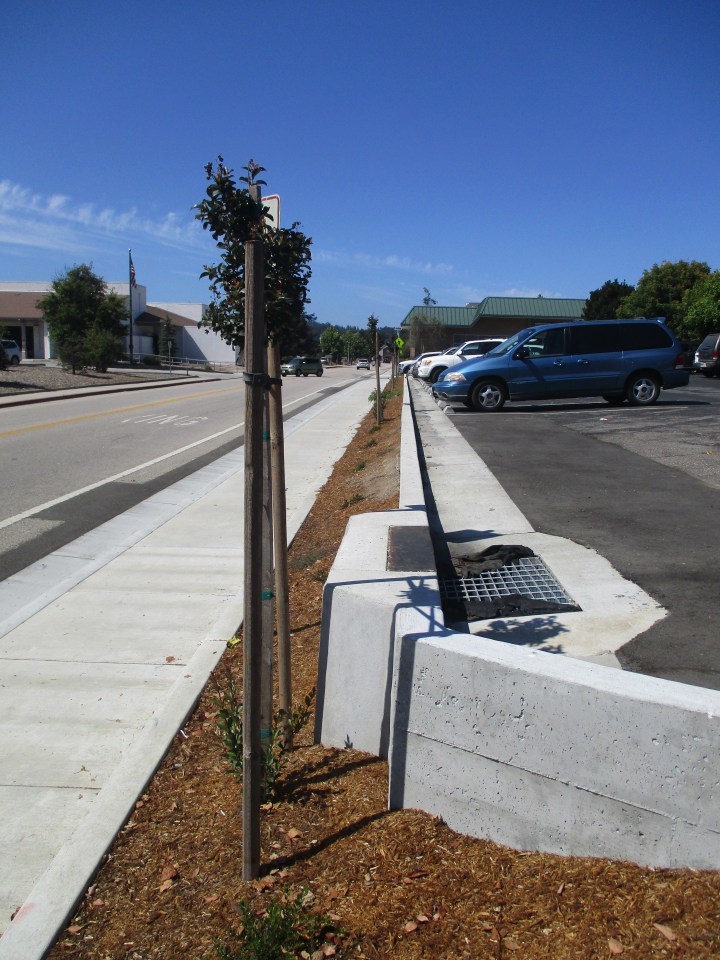
 What a waste of space! What a waste of water! What a waste of time for the mow-blow-and-go ‘gardener’ who charges money to mow and edge it, but are too inept to suggest planting something that might actually be pretty, or shade the parking lot. There are a few of these between parking spaces marked for ‘compact’ cars, because it is cool to discriminate against full size cars that can not pull far enough forward to get out of the way.
 There are mixed emotions about tree removal permits that so many municipalities need to issue in order for a ‘heritage’ tree to be cut down legally. Most of us want to believe that in America, we have certain rights to do what we want to on the properties that we own. Obviously, that makes the most sense. However, if it were that simple, many more prominent trees that are collective assets to the larger communities would be removed.
 The easier name is ‘dawn redwood’. I just used the big and fancy Latin name because that is how landscape designers with something to prove say it. If the big name does not impress clients, an explanation of how rare it is, and that it is one of only a few deciduous conifers, will likely do the job. Even back when it was still a fad, I got the impression that was its main function; to impress clients.
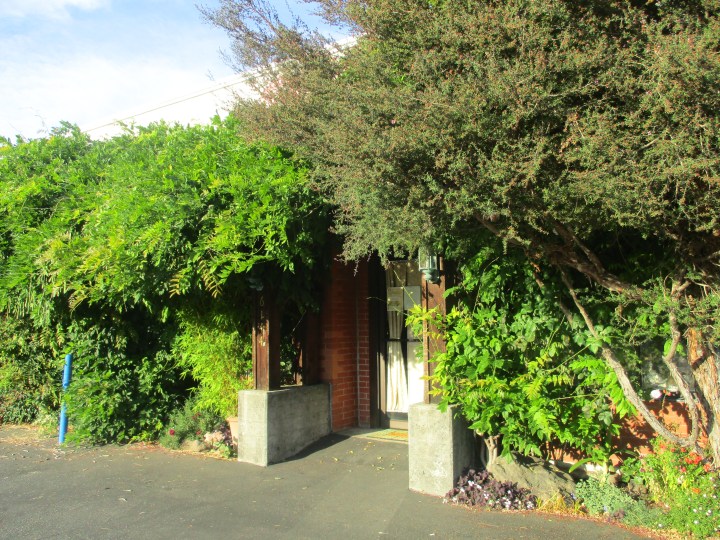 A well designed landscape should be an asset, not a liability. It should beautify and enhance the function of outdoor space, while harmonizing with associated indoor spaces. In order to continually do so, even a very well designed landscape requires maintenance so that it does not become so overgrown that it becomes unsightly and obstructive.
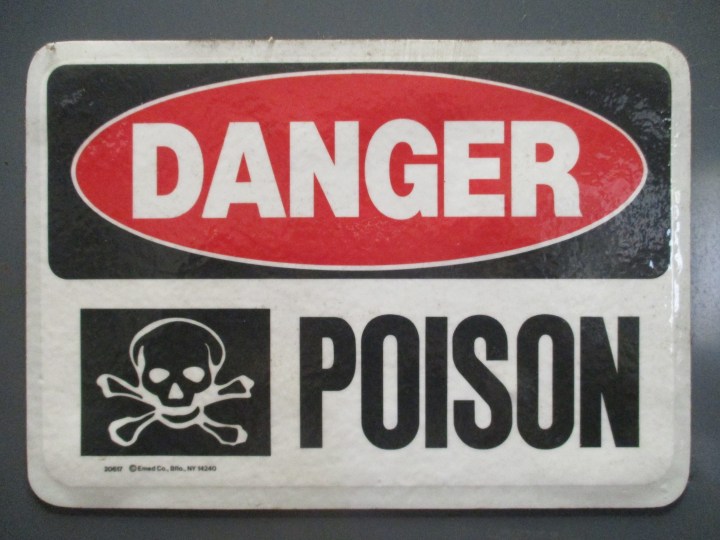 ‘Cide’ as a suffix that designates something to be killed. ‘Insecticide’ kills insects. ‘Miticide’ kills mites. ‘Molluscicide’ kills molluscs such as snails and slugs. ‘Herbicide’ kills herbaceous plants, which are presumably weeds. These examples and other chemicals that kill things that are considered to be pests are collectively known as ‘pesticides’. Many are potentially useful in the garden, since that is where so many familiar pests are problematic.
 Tony Tomeo