
The biggest, tallest and oldest trees in the World are all native to California. The biggest trees are the giant redwood, Sequoiadendron giganteum. The tallest trees are the coastal redwood, Sequoia sempervirens. The oldest trees are the bristlecone pines, Pinus longaeva. The biggest and the tallest are two of only three specie of redwood in the World, and except for a few coastal redwood that live barely north of the Oregon border, both are endemic only to California. Most of us know that the coastal redwood is the state tree of California. However, some believe that California is the only state with two state trees, which are the two native specie of redwood.
This gives arborists from California serious bragging rights.
Most of the arborists whom I work with are very familiar with the coastal redwood. Not only is it the most prominent tree in the Santa Cruz Mountains, but it is also a common tree in landscapes of the Santa Clara Valley.
The other two specie are not nearly so common. Neither perform well in landscape situations, and certainly not locally. Even if they did, the giant redwood gets much too bulky to fit into urban landscapes, and the bristlecone pine is a bit too irregular for refined landscapes. Because they both live in somewhat remote regions within California, some very experienced arborists have never seen either of them in the wild. Of course, it is not something we talk about much.
I still have not seen bristlecone pine in the wild. The only specimens I have ever seen were bonsai stock that had not yet been cultivated as bonsai specimens.
In the late 1990s, I had not seen giant redwood in the wild either. I had only seen the unhappy specimens that were planted on the sides of roads between San Jose and nearby towns during the Victorian Period before the urban landscape had become so inhospitable to them. One of my respected colleagues who had seen many of the more interesting trees of California in his travels had not seen them either.
Fortunately, it was nothing that a good old fashioned road trip could not fix. Without much planning at all, we drove out to Sequoia National Park and met with the General Sherman Tree. There was too much snow to get very far, so we did not get similarly acquainted with the General Grant Tree farther up the road. It was one of the most compelling horticultural trips of my lifetime, right up there with going to see the native California fan palm, Washingtonia filifera, outside of Palm Springs, or the Joshua tree, Yucca brevifolia, outside of Palmdale. I know that the picture above is not a good picture of my colleague with the General Sherman Tree. It is from a time when cameras still used film. Getting pictures transferred to a compact disc was merely an option back then. The sepia toned picture below is even older, but it is not mine.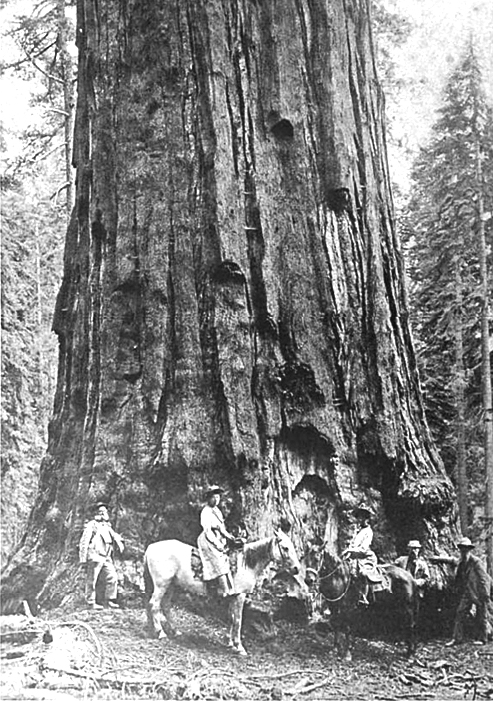


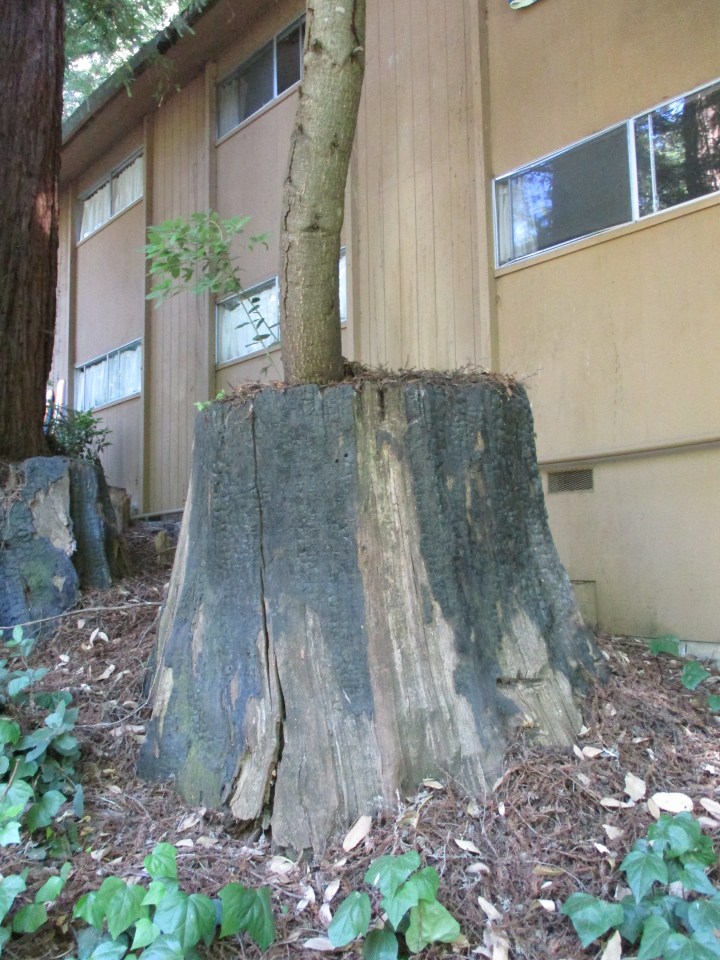


 2. These two bigger stumps are just a short distance uphill and across the small creek. Old stumps are more often single, but surrounded by multiple trunks that emerged from the roots. Because almost all of the trees here had been harvested about a century ago, there are now many more secondary trunks per area than there would naturally be. It is not much of a problem yet, but these trunks will likely become more crowded as they mature.
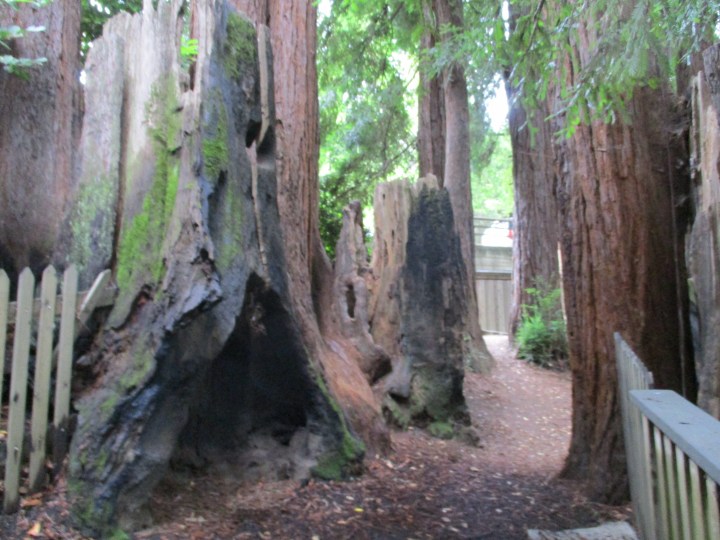 3. These are the same two stumps from the other side. This trunk coming up from within is likely from the same original root system. All trunks that develop from the same root system are genetically identical, so they look very similar from a distance. Some genetically identical groves can be quite broad, and include many trunks.
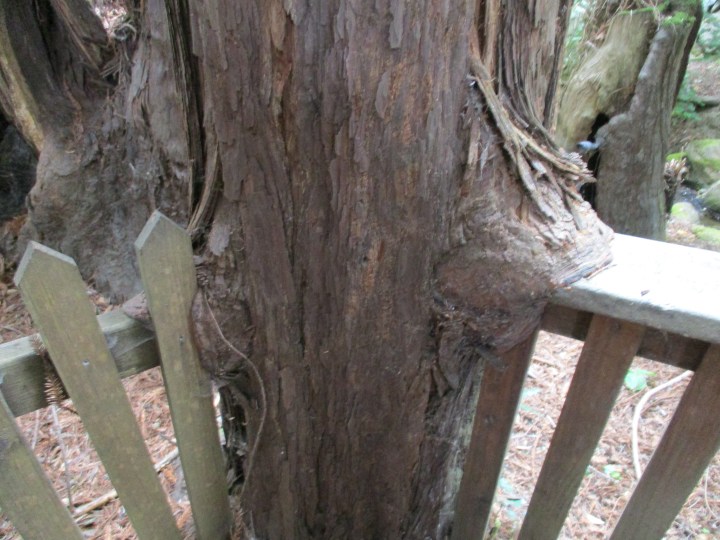
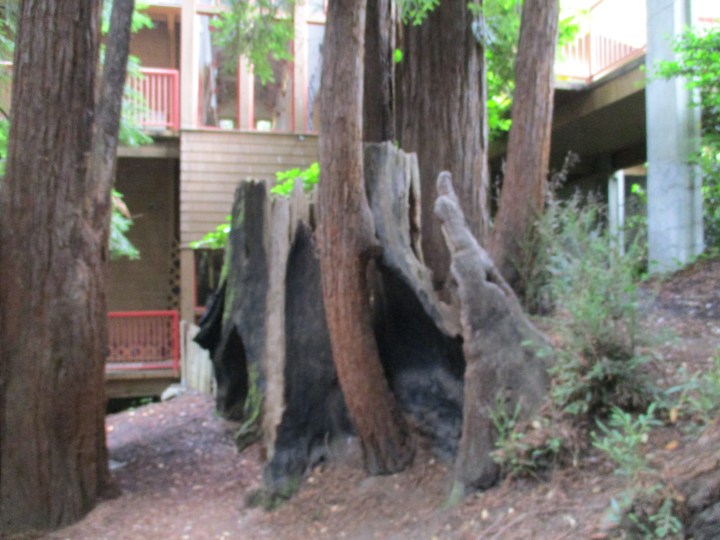 4. This small coastal redwood trunk is not happy about the fence that is nailed to it.
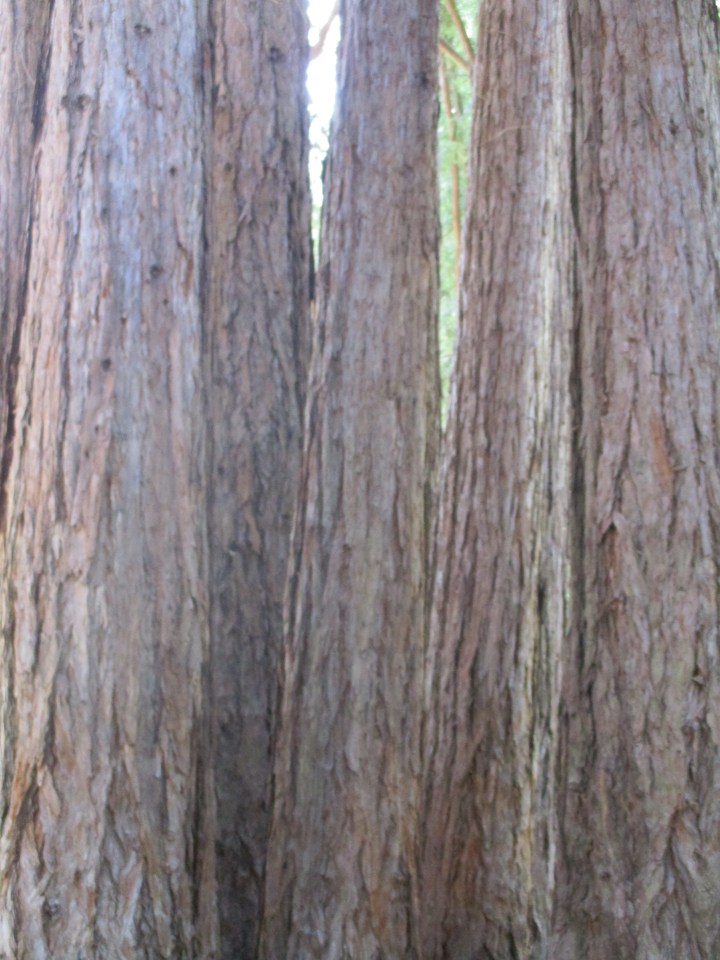
 5. This is more what you expect coastal redwoods to look like. It is impossible to determine from this picture if these trunks are genetically identical secondary trees that emerged from the same root system, but their proximity to each other suggests that they likely are.
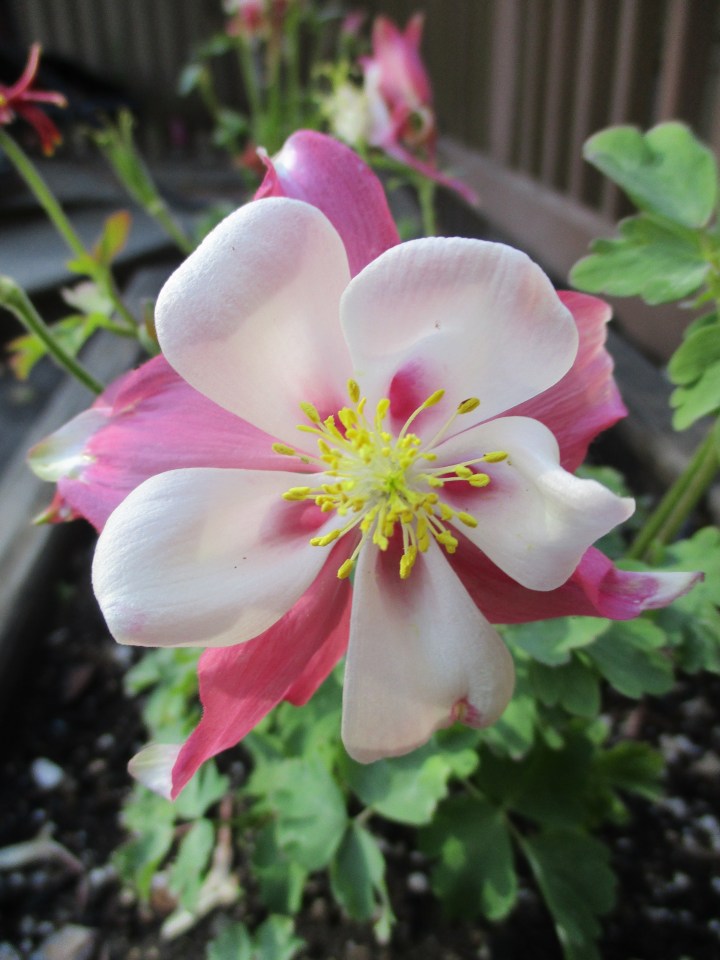
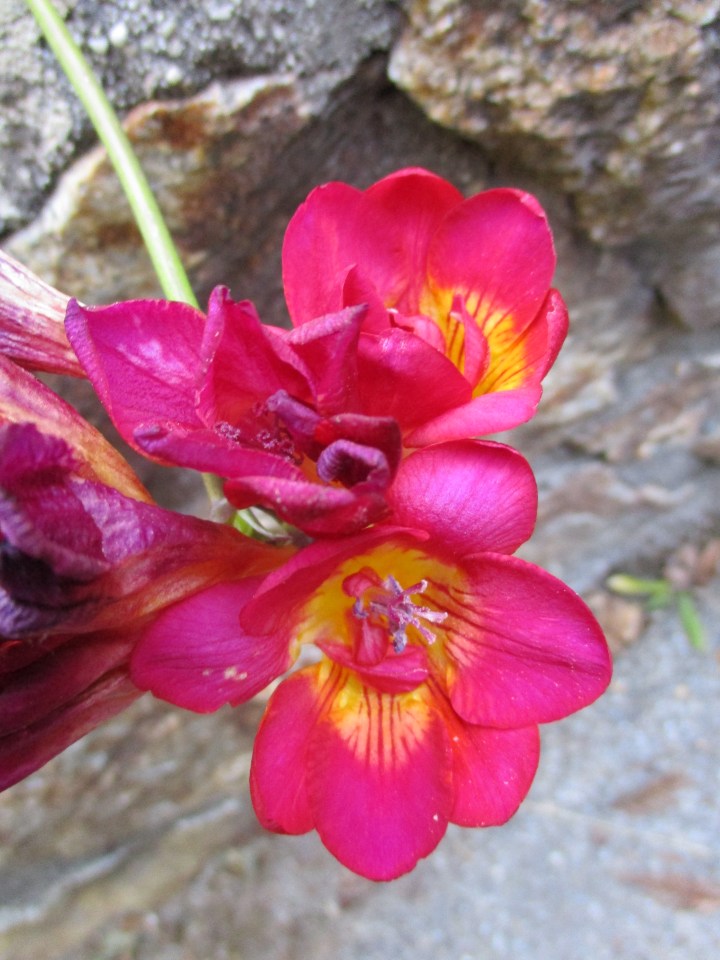
 6. This epiphyllum is the flower that I promised to those who expressed a concern than my Six on Saturday lacked adequate bloom. I shared a picture of this same epiphyllum earlier, but it has continued to bloom.


 This is the link for Six on Saturday, for anyone else who would like to participate:
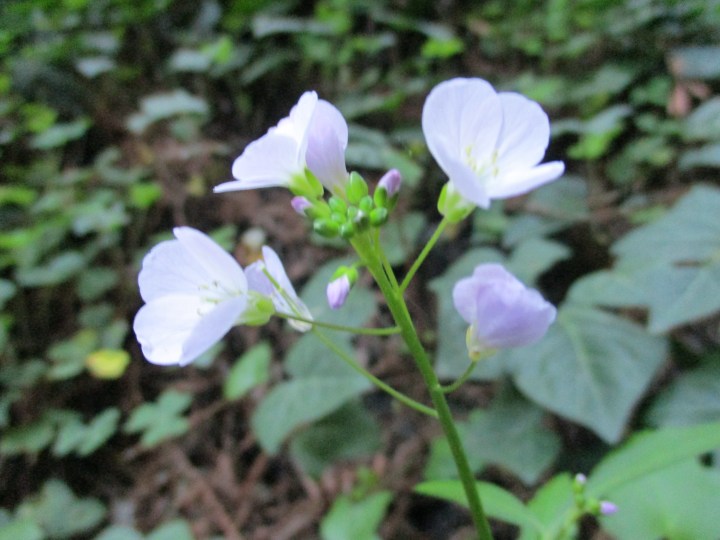 There are so many big trees in the Santa Cruz Mountains that keep most of us looking up. It is easy to miss much of the understory plants that grow on the forest floor.
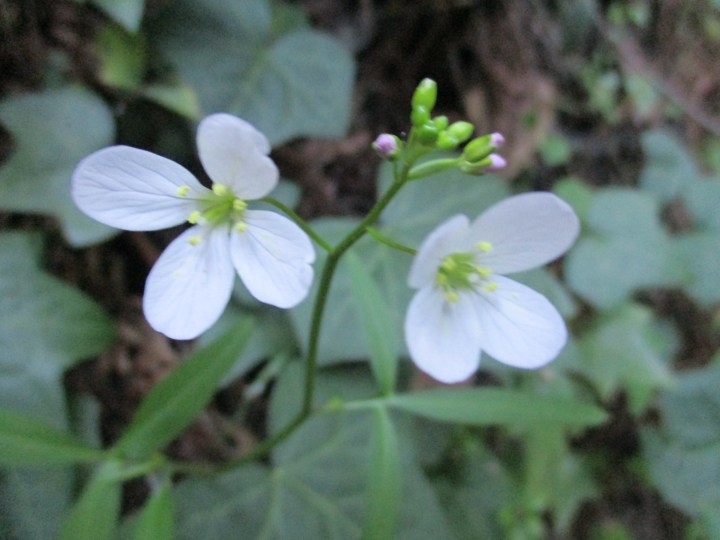 The flowers were not completely white. They were very pale hues of pink. The wood sorrel in the last picture was slightly more pinkish than the unidentified cruciferous (of the family Cruciferae) flowers of the first two pictures. Pale flowers, particularly those that seem to be adorned with barely perceptible patterns, are typically those that use infrared and ultraviolet color to attract pollinators that can see such color. If that was their intention, they would not look so bland to the pollinators whom they prefer to attract.

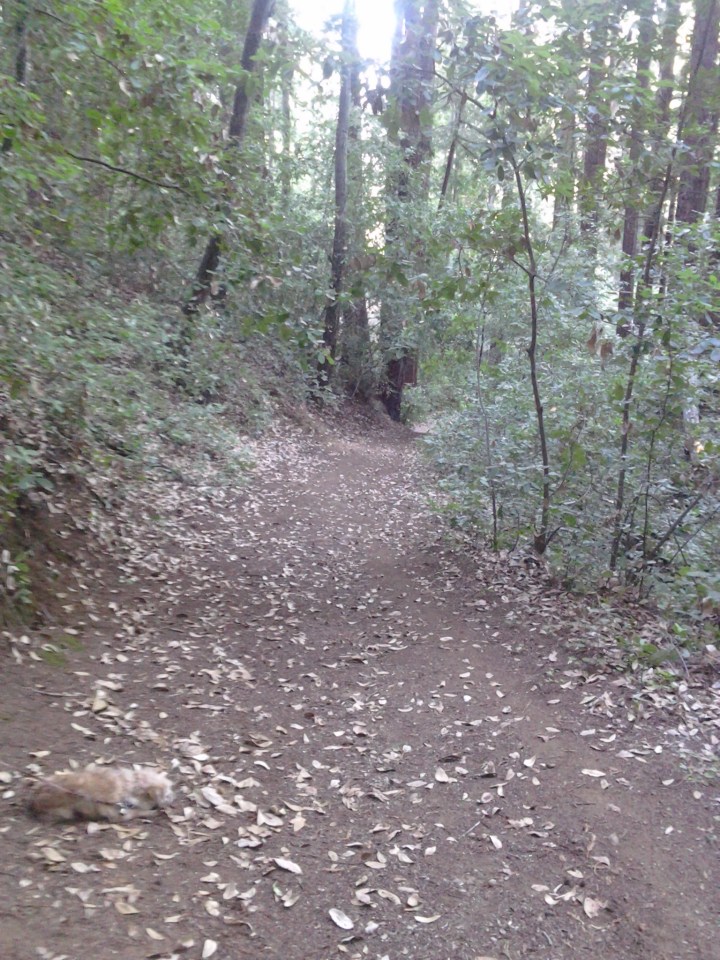
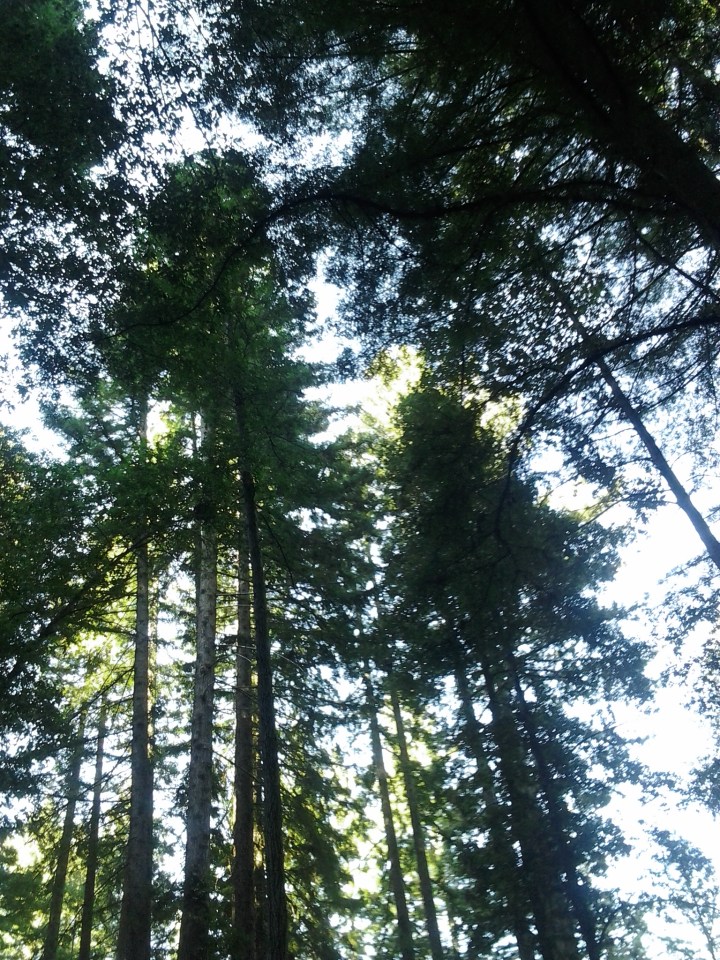
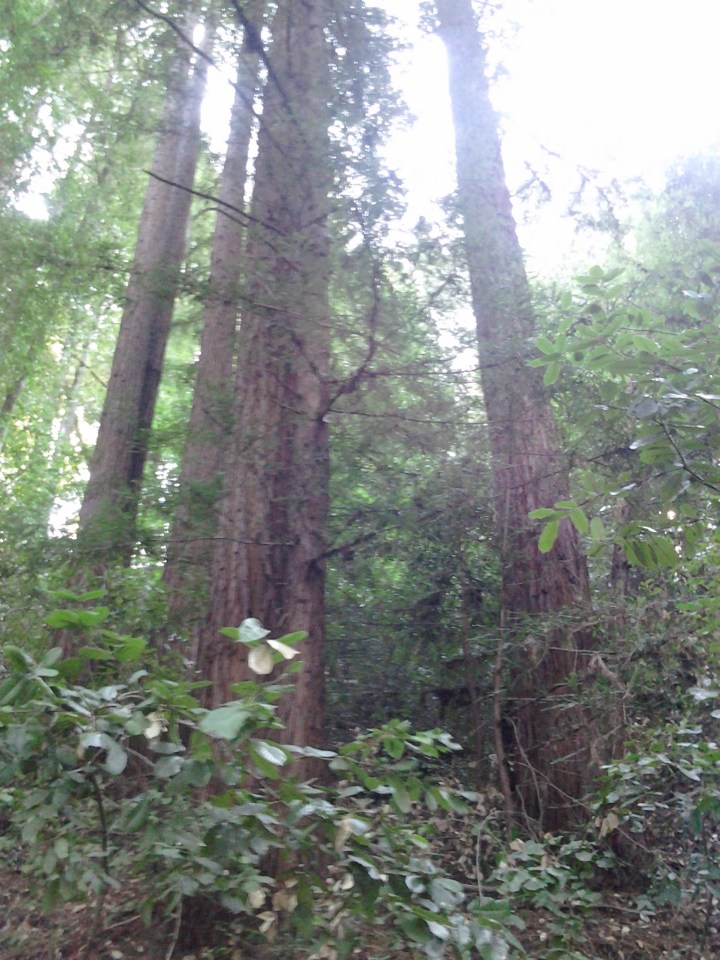

 It is hard to beat redwoods. Seriously! There are only three specie, which are now three different genera; but one is the biggest tree in the world, one is the tallest tree in the world, and the third is one of only a few conifers that are deciduous. The biggest and the tallest are both native to California. The deciduous redwood is from China.
