It has been a while since I posted a sequel to anything like I used to do so commonly. I am only doing it now because I do not have six pictures that fit a particular theme. There are not six different camellias or six different rhododendrons blooming at the same time. There is not a new landscape with six different newly installed plants to show off. Instead, I merely found a few amusing or silly pictures from work for this week. I sort of like #5 because it is interesting even to those of us who are familiar with it. I will actually elaborate a bit more on that later at noon.
I know these Six on Saturday posts do not fit with my other articles, but hey are fun for those us who participate. You can see other Six on Saturday posts by other writers at the link at the bottom of the page. You might even want to give it a try and participate yourself.
1. This might look like a signs at the Generic Aroboretum, or the Arboretum for the Horticulturally Disinterested, but the signs really refer to buildings that are named after trees. Almost all of the buildings in the neighborhood are names after flora of some sort.
2. Woodpecker pantries are often constructed in old coastal redwood trees with soft bark. It seems silly to me; but it must be effective. Otherwise, woodpeckers would not put so much effort into stocking them. Woodpeckers deposit single acorns into the holes bored into the bark, in order to store the acorns for later. Some of these holes are very old, so have stored several acorns over several years. At lest one woodpecker guards the pantry from squirrels while the other woodpeckers are out and about collecting acorns. Such pantries are typically in trees that are isolated from others, so that squirrels can not enter from other trees, and then raid the pantry from above. The only access to the squirrels is from the ground. This panty does not seem to be active at the moment, but discarded acorn shells at the base of the tree indicate the it was active in recent history.
3. Coastal redwood trees are very efficient at regenerating from stumps of harvested trees. This tan oak wanted to give it a try too. It did not really regenerate from the stump of course, but merely grew from an acorn in the detritus that collected on top of the stump, and rooted into the rotted wood. The fractures visible at the bottom of the stump are caused by expanding tan oak roots.
4. Which of these things does not belong here? Do you remember that from Sesame Street? Blue hydrangeas are not common here, although we have quite a few that are fertilized to be blue. I thought that these looked silly together because they are so similar in color.
5. Albino coastal redwoods are so fascinating. The white foliage can not survive without chlorophyll, so must remain attached to the original green tree that produced the white mutant growth. This takes a bit of explanation, so I will write a bit more about this about noon.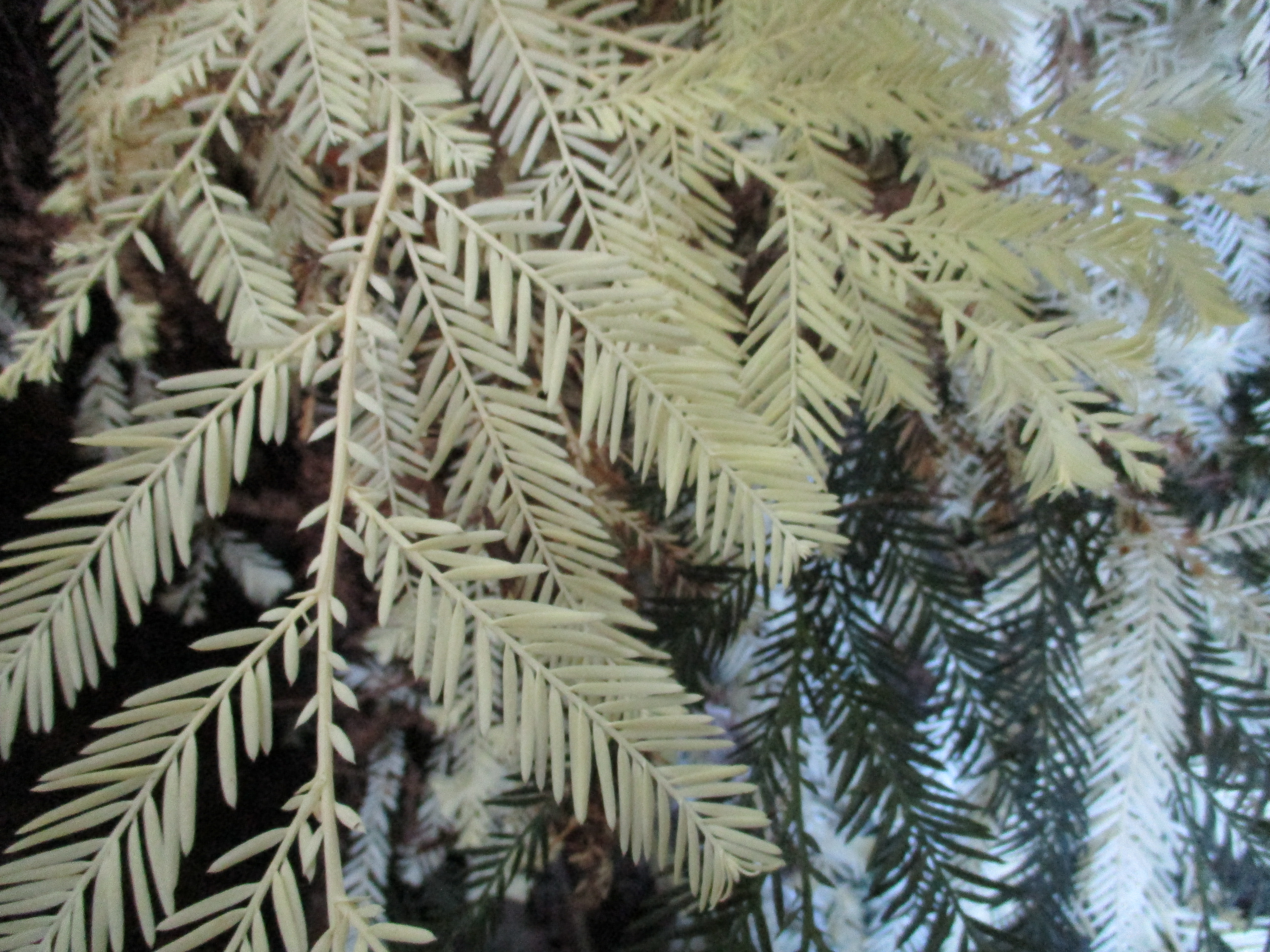
6. Finally, we have two silly looking tiny weds that grew in a crack in the big rock that I wrote about earlier in Rock Concert. https://tonytomeo.com/2018/04/07/six-on-saturday-rock-concert/ They are not much to look at, but this looks like one of those artistic pictures that other writers take.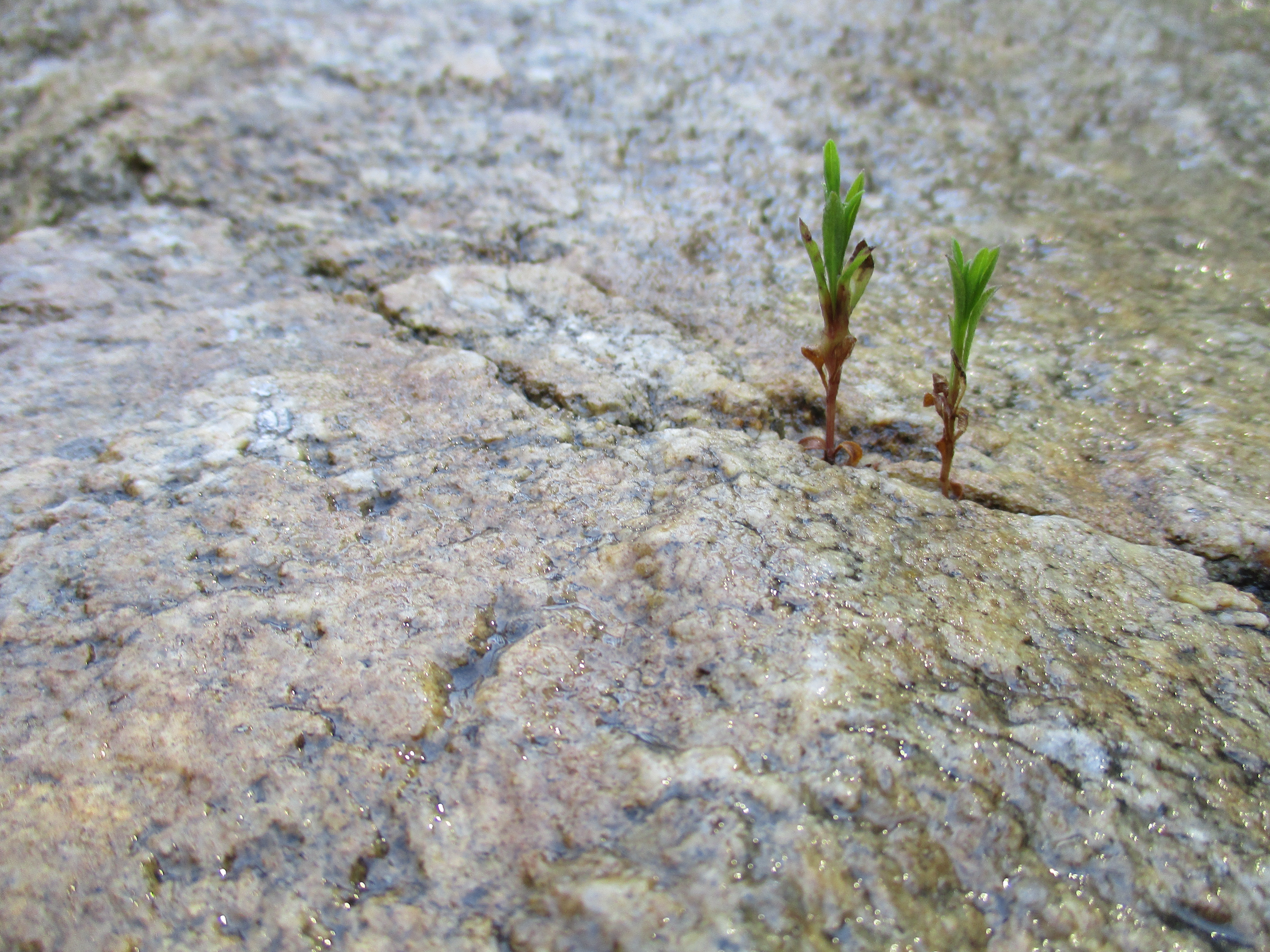
This is the link for Six on Saturday, for anyone else who would like to participate:
https://thepropagatorblog.wordpress.com/2017/09/18/six-on-saturday-a-participant-guide/
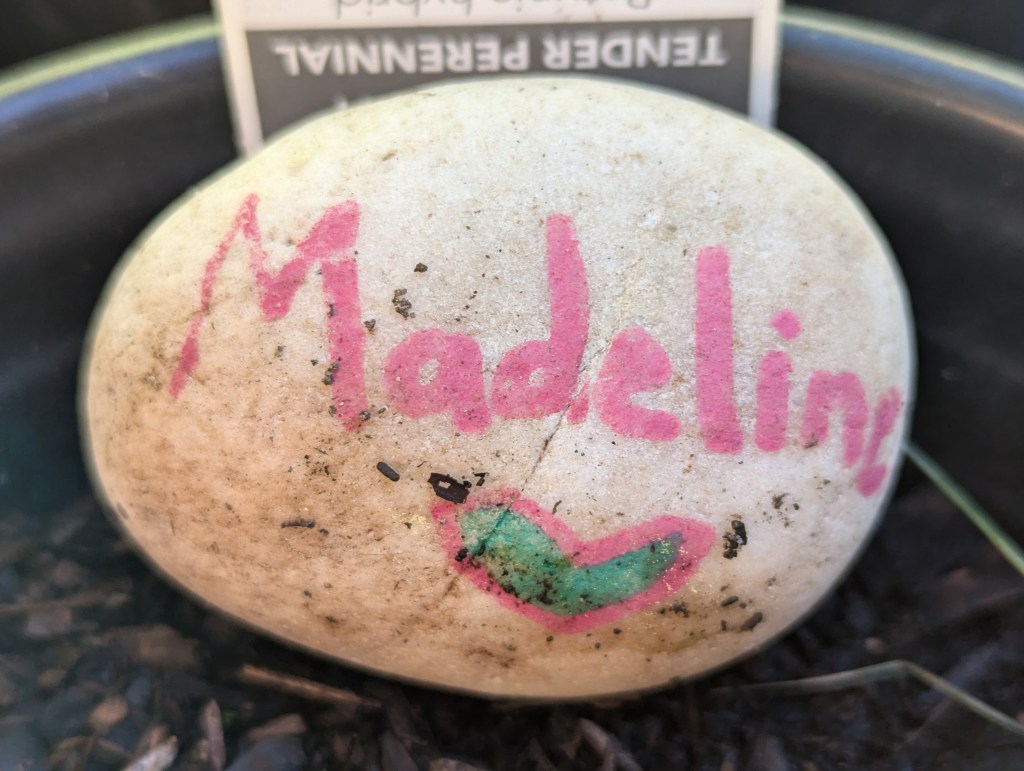




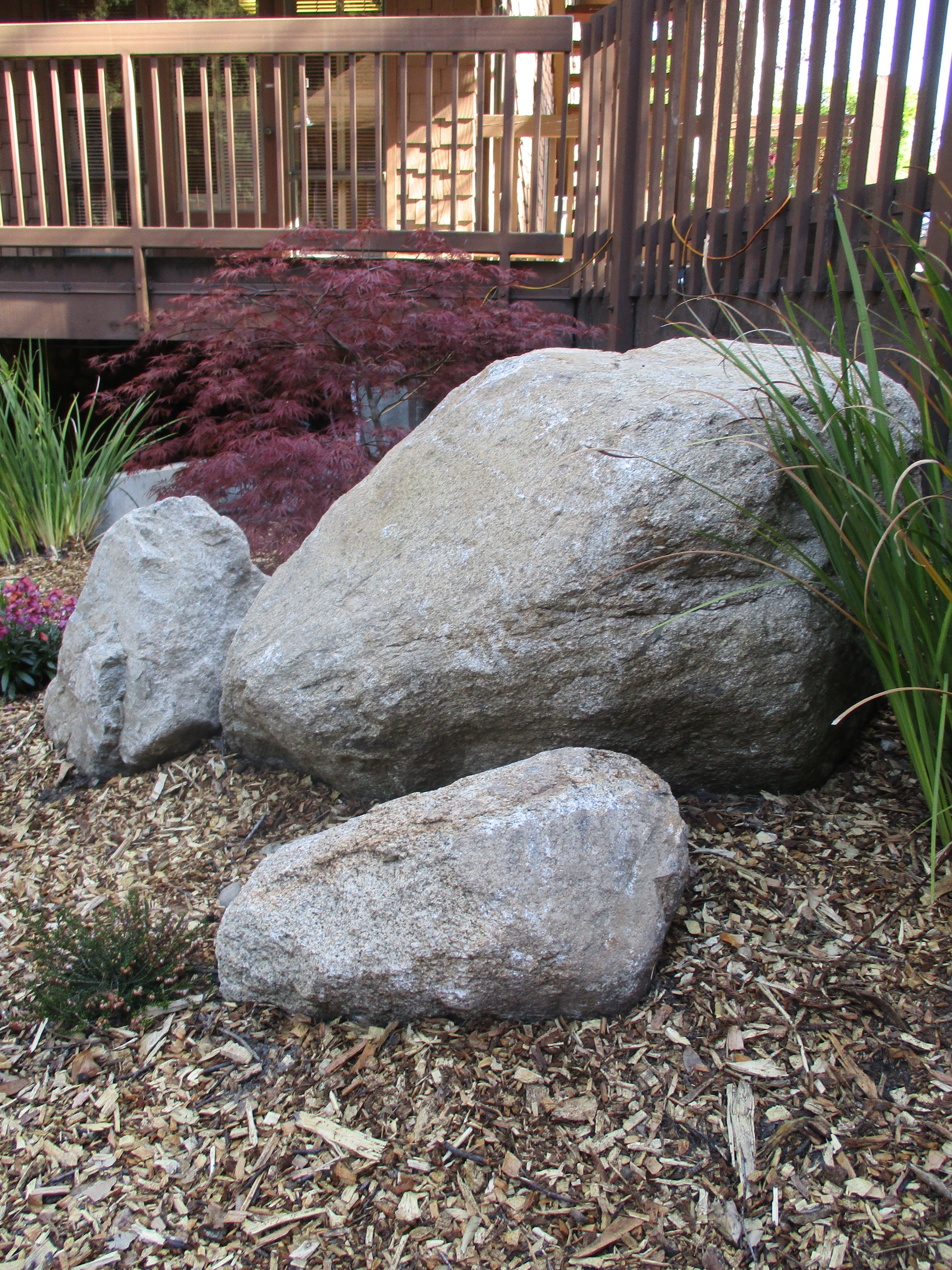 It is hard to say why boulders and sculptural stone are sometimes incorporated into American landscapes. A long time ago, boulders were only left in landscapes if they were to big and heavy to move out of the way or break apart. Early American landscapes were designed to express dominance over nature by replacing as much of it as possible with unnaturally organized landscapes.
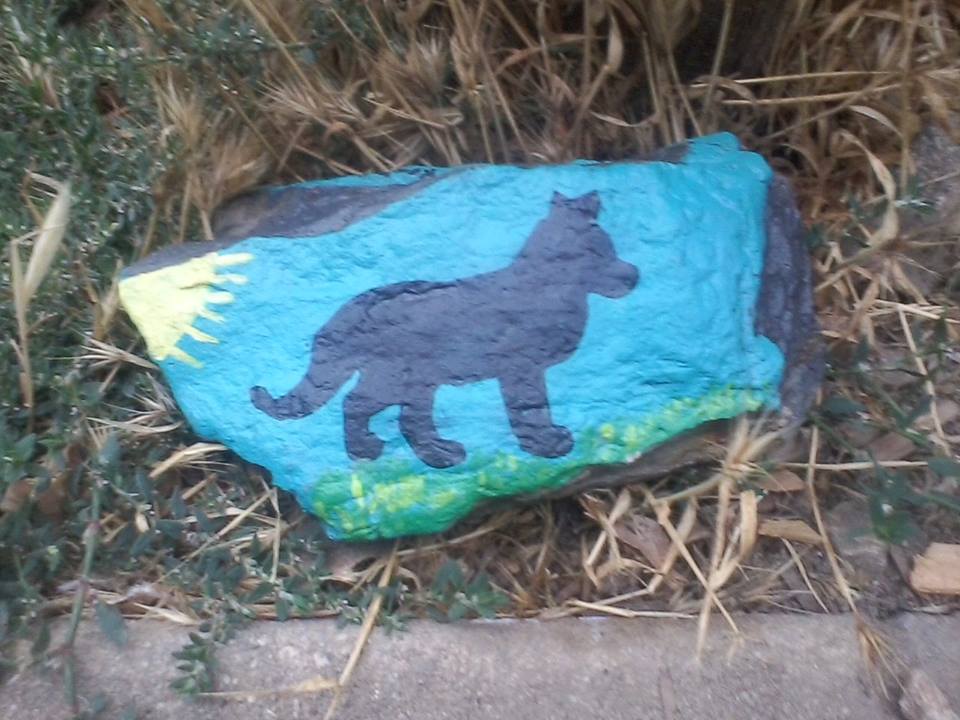 This has very little to do with gardening; but like I said in the description of this blog, anything goes when it comes to the ‘Elaborations’ category. Anyway and furthermore, I do not like to write about garden sculpture, garden art, or any of those knick-knack fads that involve putting more than plants and the necessary infrastructure to sustain them into the garden. I do happen to like certain tasteful garden statuary, like Saint Francis, or Saint Fiacre (the rarely seen ‘real’ patron saint of gardening) or any of the saints; but only if I have a suitable space for them. This is nothing like that; but is just excellent enough that I wanted to mention it.
 Tony Tomeo