
Agave americana is a tough perennial that is naturally endemic to harsh desert climates. It not only survives, but is happy in awful heat and dry air without shade. However, a specimen that lived in my garden for about two years succumbed to sunburn and moderate heat in less than a day.
The problem was that it had been growing in a rather shady spot since it arrived. There was enough ambient sunlight to sustain it, but no direct exposure to sunlight. The typically stout steely blue leaves were consequently elegantly elongated and slightly twisted, but well adapted to their particular environment. This would not have been a problem, except that I dragged the plant out to relocate it.
In only a few hours, the leaves were roasted by exposure to sunlight. They melted and laid limp like steamed asparagus. Only the unfurled leaves in the middle remained turgid. By the next morning, the scorched leaf surfaces were already turning ashy white. Now, the desiccating foliage lays flat with slightly curled blackening edges, around the surviving meristem (terminal bud in the middle), like an angry starfish road kill taking its last gasp.
The good news is that the new foliage that eventually develops from within the presently unfurled middle leaves should adapt to the environment where the plant gets relocated to, even if the first leaves to open are not quite adapted. The bad news is that the damaged foliage cannot be salvaged, and will need to be cut before planting. I will put the plant deeper in the ground than the level it had been growing at so that the leaf stubs will be buried.
Just as people can get sunburned, plants that are sheltered can succumb to sunscald when they suddenly become too exposed. It does not always result from the particular plant getting moved, but sometimes happens when nearby plants or features change. For example, foliage of Japanese maples that have grown as understory plants to larger shade trees is susceptible to foliar sunscald if the larger trees get removed or pruned significantly. Replacing old large picture windows with more reflective windows to keep the interior cooler may reflect enough glare to the exterior to temporarily scald sensitive ferns. Aggressively pruning English walnut, avocado or silver maple trees in summer may expose sensitive bark of main limbs enough to cause bark scald.
Damage to foliage may linger as long as the foliage does, but is typically as temporary as the foliage is. Deciduous plants will drop the damaged foliage in autumn, and replace it with more adapted foliage in spring. Bark scald though can be a serious problem, since the bark is not so easily replaced in a year. One of my great grandfather’s old English walnut trees got sunscald on some main limbs when the tree was pruned for clearance from a room addition in about 1950, and remained damaged when the tree was removed about half a century later. The scalded bark decayed decades ago, exposing inner wood to decay.
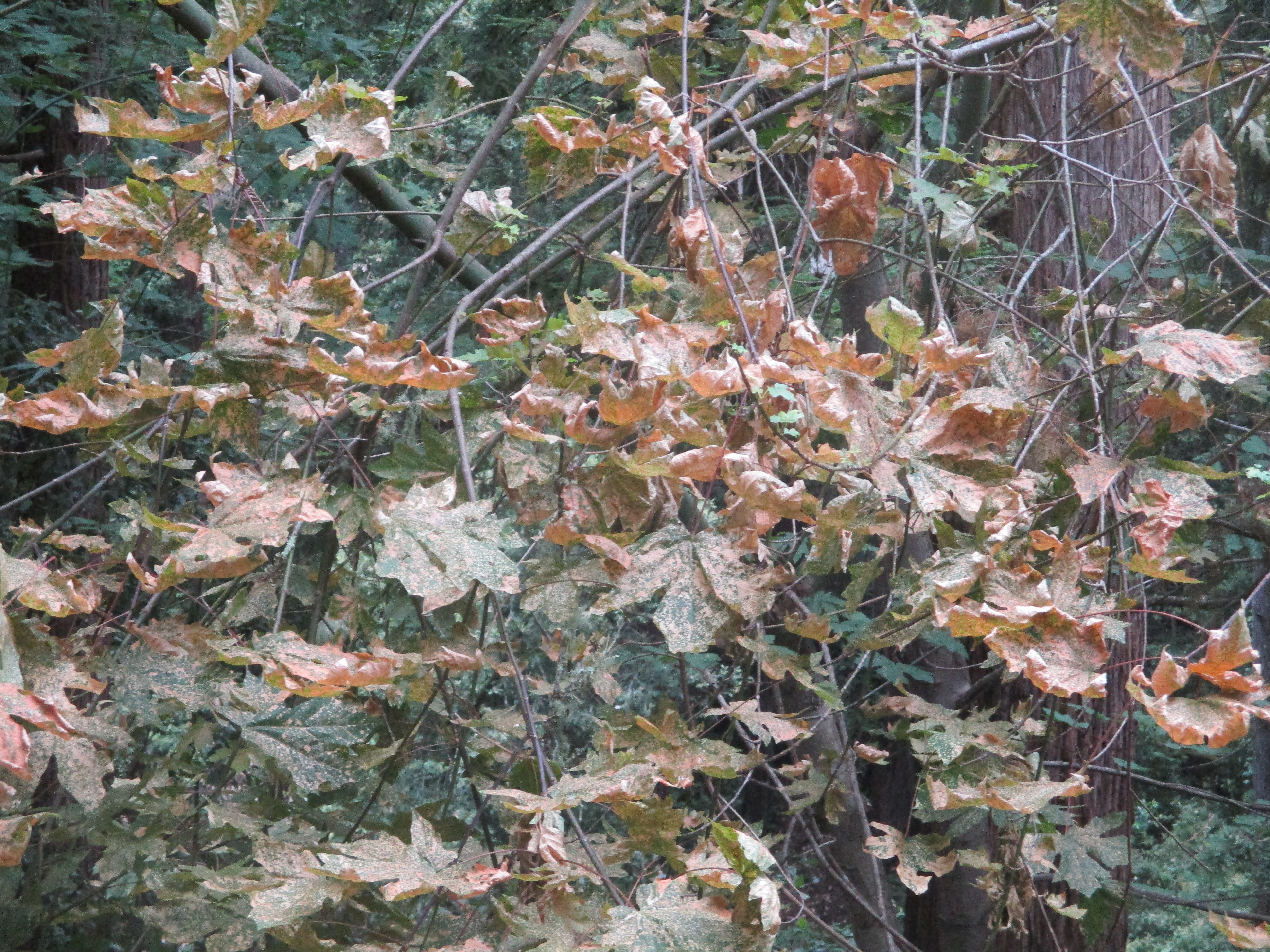

 Severe summer weather is something that we think that we do not need to contend with. It only rarely gets as unbearably hot here as it does elsewhere, and when it does, it usually gets breezy by evening, and somewhat cooler overnight. Aridity, or the lack of humidity, is another advantage, at least for us. The plants in our gardens are affected by warm weather very differently than we are.
 Tony Tomeo