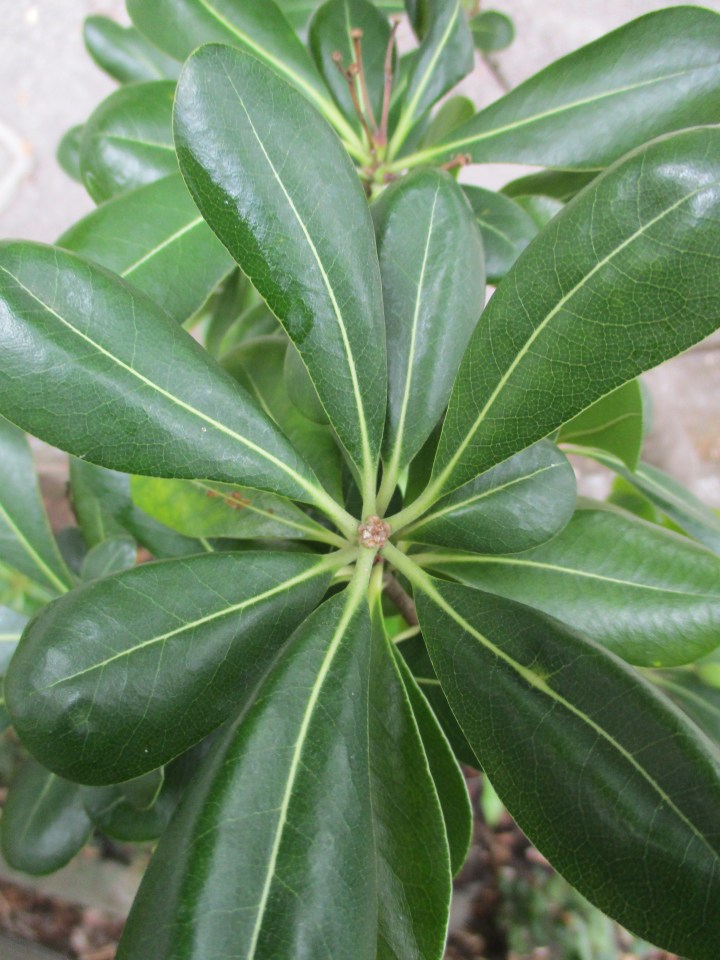
 A surplus of common names seems to be a common theme for many plants that we thought we knew the names of. The simple Pittosporum tobira, which might be known here by its Latin name, might instead be known as mock orange, Australian laurel, Japanese pittosporum, and Japanese cheesewood. Its native range is about as diverse, including Greece, Japan, Korea and China.
Back in the 1990s, the compact cultivar known as ‘Wheeler’s Dwarf’ was common enough to be as cliché as tam junipers were in the 1950s. There are actually a few other dwarf and variegated cultivars that do not share that reputation. Most are low, dense and mounding. ‘Variegata’, although not a compact dwarf, grows slower and stays smaller than the unvariegated straight species.
Otherwise, Pittosporum tobira gets about ten feet tall and wide. It can eventually get significantly taller, especially if lower growth is pruned away to expose the sculptural trunks within. If shorn as a hedge, it should not be shorn so frequently that the dense foliage is always tattered. Leaves are delightfully glossy and convex. Small trusses of modest pale white flowers are sometimes fragrant.
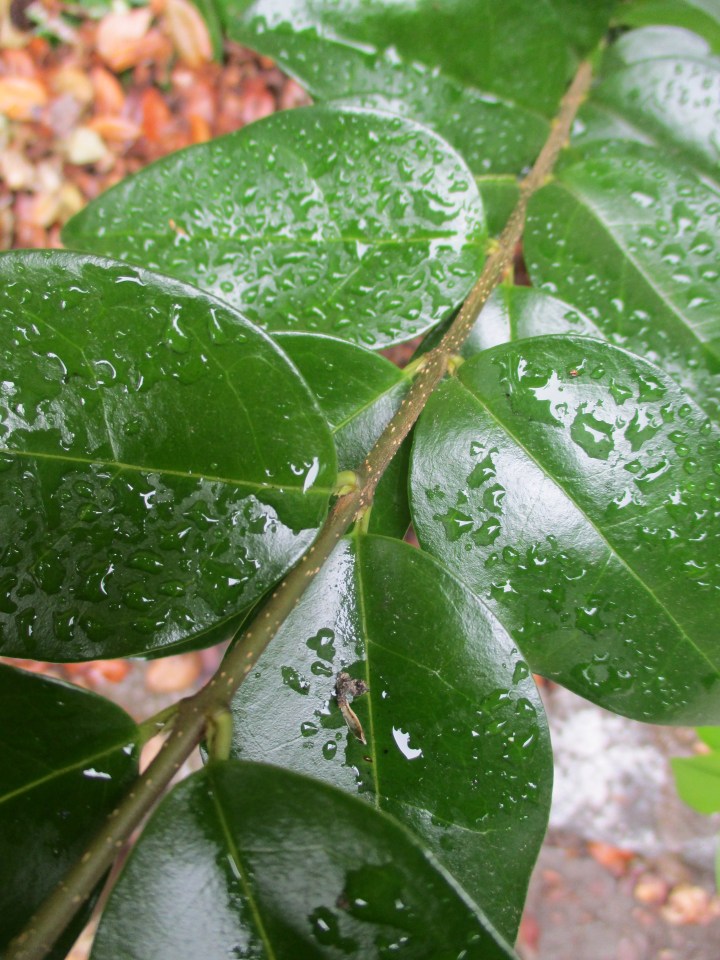 Here on the West Coast, privets had traditionally functioned like hollies had in the East. They are conducive to shearing into the big formal hedges that were popular during the Victorian period. Since then, as gardening space became more limited, the common glossy privet became less popular than the more compact and complaisant waxleaf privet, Ligustrum japonicum ‘Texanum’.
 Pretty soon, as autumn weather starts to get cooler, some deciduous plants will develop brilliant color before defoliating for their winter dormancy. Throughout the rest of the year, evergreen plants with gold, silver, bronze, bluish, purplish, reddish or variegated foliage are more colorful than common green foliage is. A few deciduous plants with colored foliage turn different colors in autumn.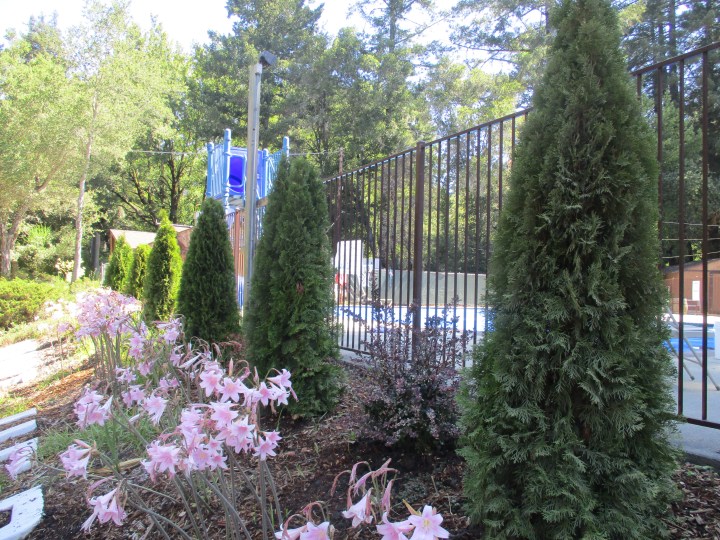
 If good fences make good neighbors, what about hedges? If only it were that simple. There are all sorts of evergreen hedges to provide privacy, obstruct unwanted views, disperse wind, define spaces, or muffle noise. They can do much of what fences do, and muffle sound better. The problem is that they are composed of living plants, shorn into submission and very unnatural shapes.
 Tony Tomeo