
There is significant traffic right outside. It is one of the three busiest roads around. No one here really minds, because we are mostly too busy with something else while we are here. We are accustomed to it as part of the ‘scenery’. The noise sometimes makes it necessary to shout to each other, or take a telephone call somewhere else, but is not too much of a bother otherwise.
However, the scenery that those in the traffic see from the road might be slightly less than appealing. Industrial buildings surrounded by pavement, building materials, work vehicles and all sorts of associated items are all that are in here. Next door, there is a herd of dumpsters! It is a view worth obscuring. Bay trees and box elders that used to screen the view are too tall now.
I should have planted these five Arizona cypress in a row along the road last autumn. If I were to plant them now, I will need to water them occasionally until next autumn, not that I would mind. After their first winter, they would be happy on their own. They would start to obscure the view within only a few years, and unlike box elders, would stay evergreen through winter.
They really should have been planted a long time ago. They have been in the same cans for so long that the medium within has decomposed and collapsed. Without staking, their lean trunks became disfigured in confinement. They really would not have needed to be staked if they had been planted sooner and been able to grow more vigorously. Fortunately, they should recover.
A Monterey cypress will be planted at the low end of the row next Saturday, even if these Arizona cypress are not planted until autumn. I will explain later.
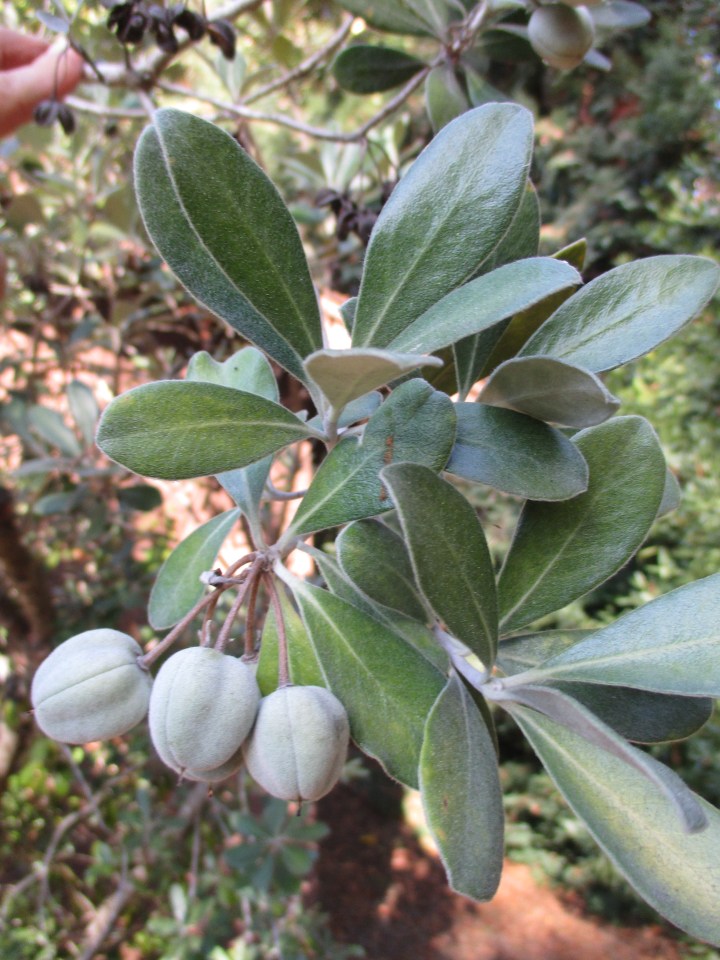 Of all the popular pittosporums in Western landscapes nowadays, the karo, Pittosporum crassifolium, is certainly not one of the most familiar. It might have been one of the earliest to have been popularized here though. Because of its resiliency to coastal climates, it was a common hedge in San Francisco during the Victorian Period. With minimal watering, it did well farther inland too.
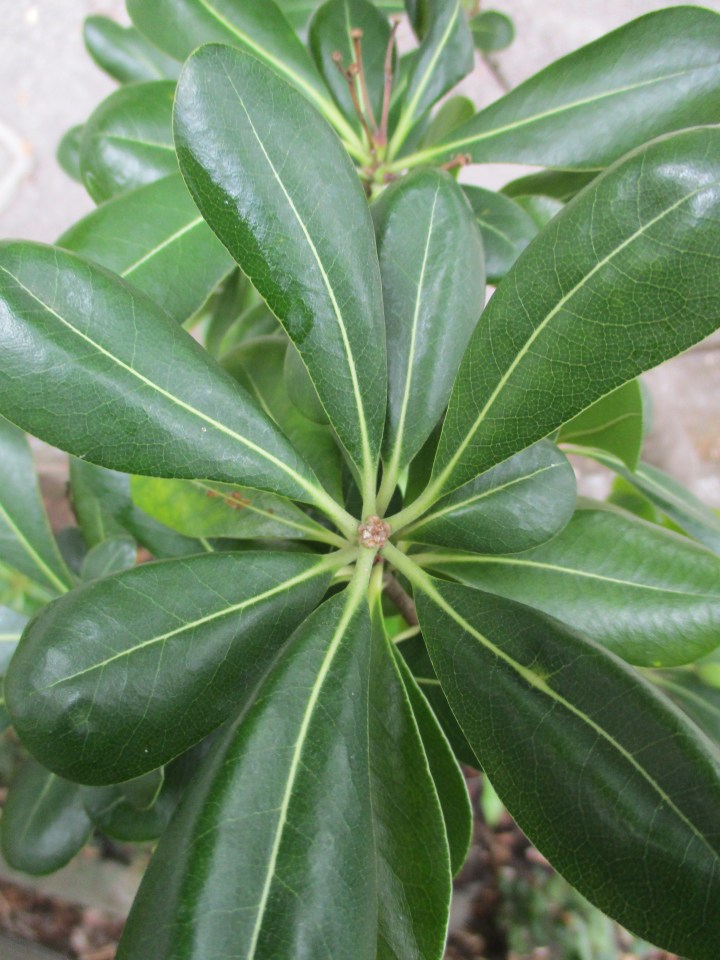 A surplus of common names seems to be a common theme for many plants that we thought we knew the names of. The simple Pittosporum tobira, which might be known here by its Latin name, might instead be known as mock orange, Australian laurel, Japanese pittosporum, and Japanese cheesewood. Its native range is about as diverse, including Greece, Japan, Korea and China.
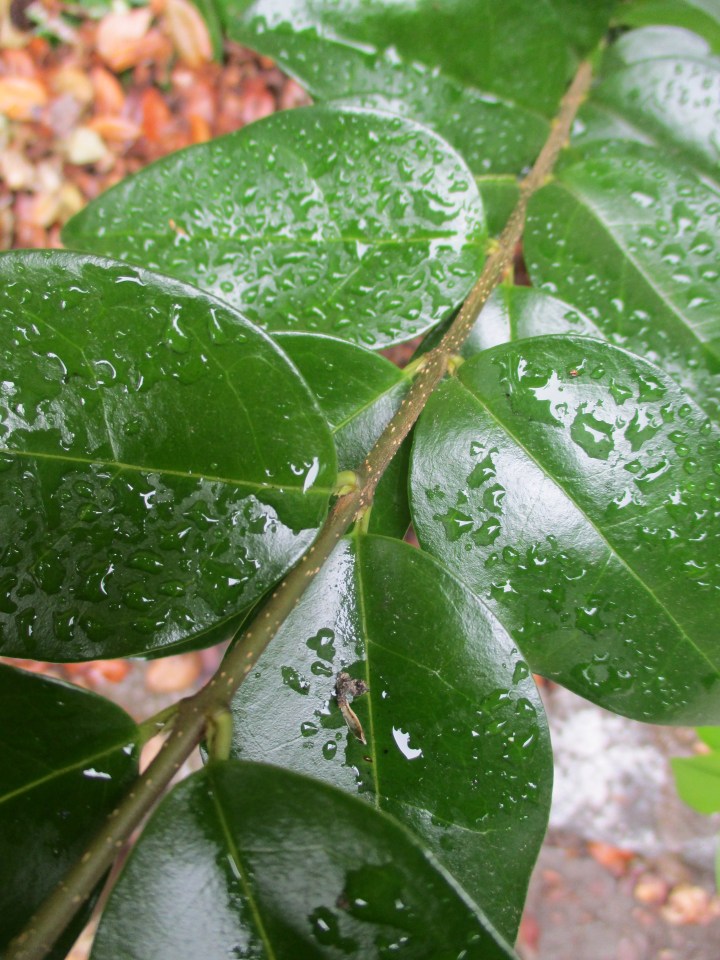 Here on the West Coast, privets had traditionally functioned like hollies had in the East. They are conducive to shearing into the big formal hedges that were popular during the Victorian period. Since then, as gardening space became more limited, the common glossy privet became less popular than the more compact and complaisant waxleaf privet, Ligustrum japonicum ‘Texanum’.
 Pretty soon, as autumn weather starts to get cooler, some deciduous plants will develop brilliant color before defoliating for their winter dormancy. Throughout the rest of the year, evergreen plants with gold, silver, bronze, bluish, purplish, reddish or variegated foliage are more colorful than common green foliage is. A few deciduous plants with colored foliage turn different colors in autumn.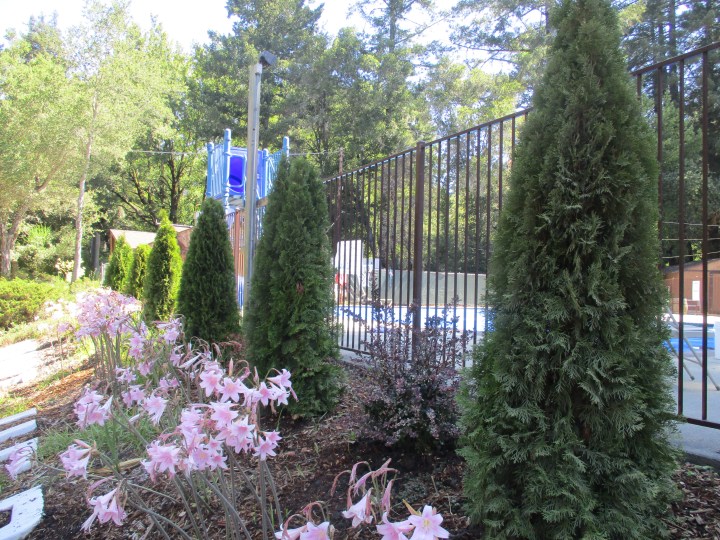
 If good fences make good neighbors, what about hedges? If only it were that simple. There are all sorts of evergreen hedges to provide privacy, obstruct unwanted views, disperse wind, define spaces, or muffle noise. They can do much of what fences do, and muffle sound better. The problem is that they are composed of living plants, shorn into submission and very unnatural shapes.
