There will be no more bragging about how late the nice summer weather continued into autumn here. Foliage and berries are already coloring for autumn. During this past week, there were a few other unexpected discoveries in the garden, and one that was not in the garden.
1. Pampas grass is an old fashioned cut flower that was popular when I was a kid in the early 1970s. It lost popularity as the style of floral design became less informal and more refined. The pampas grass plants that produce the blooms were beginning to be recognized as seriously invasive exotic specie at about the same time. Those that produce the biggest and most billowy white blooms are not as invasive as those that produce the leaner pinkish tan blooms. Well, I could write another article about pampas grass; but presently, I only need to say is that I did not expect to see these big billowy pampas grass flowers up above and in the background of this big floral display that was left at work from a wedding there last Saturday.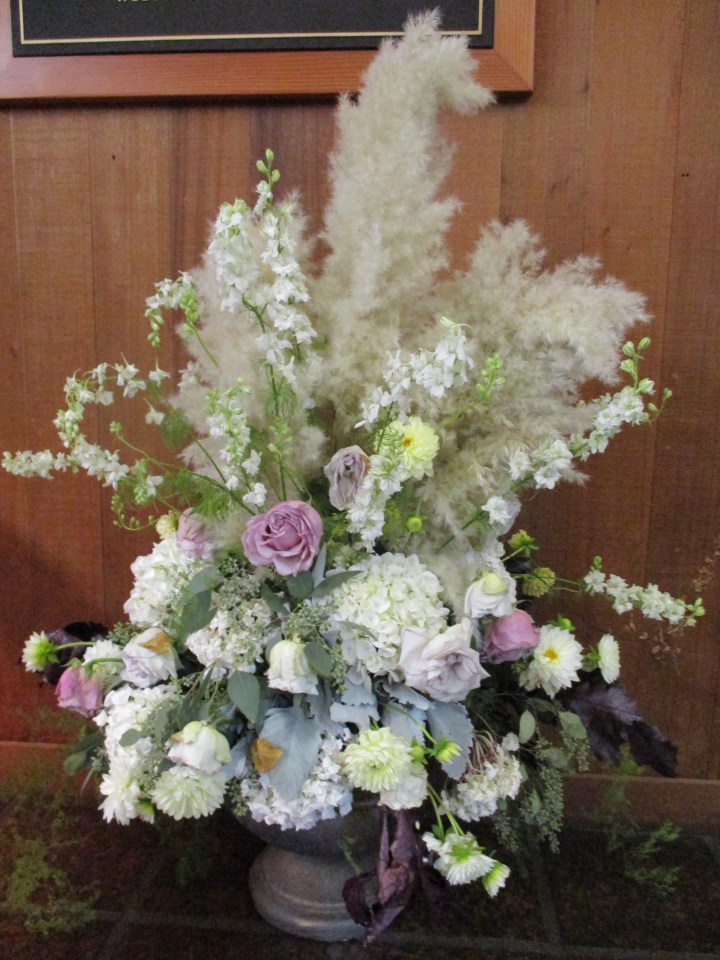
2. Red hydrangea is too modern for my taste. Deep blue or deep purple are no better. I believe that hydrangeas should be white or pastel hues of pink or blue, or perhaps lavender. You can’t improve on perfection. I did not expect to take a liking to this rich maroon hydrangea.
3. Dogwood foliage, as well as other foliage that colors in autumn, should develop color later here in our mild climate that in most of America. I did not expect to find such bright red foliage on a dogwood tree already.
4. Cotoneaster berries should likewise develop color as they ripen a bit later than they do elsewhere. I did not expect to find such ripe red cotoneaster berries already.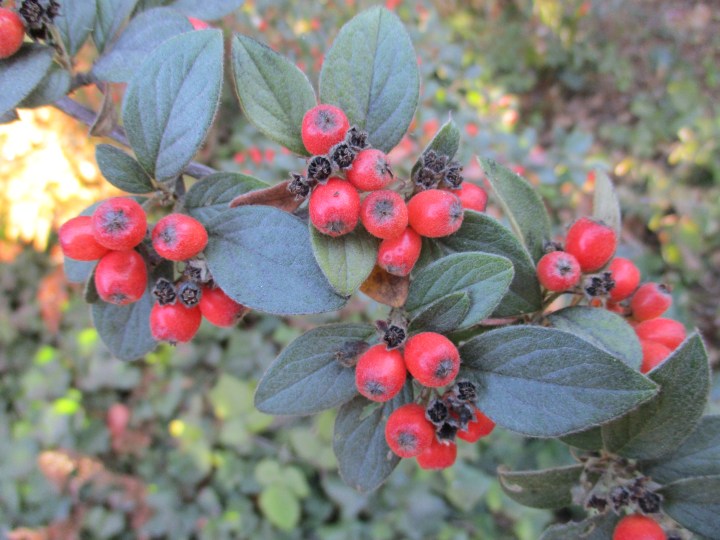
5. Star magnolia was in rough condition after being relocated over summer. It was in an area that was in the process of being landscaped, so the relocation could not have been delayed until after defoliation in autumn or winter. The little magnolia initially seemed to tolerate the process rather well, but about two weeks later, started to wilt and discolor in warm weather. Subsequent defoliation was a slow process that continued into the end of summer. Axillary buds swelled slightly, as if the tree was getting ready for premature autumn dormancy. That was what I was hoping for. I did not expect the now seemingly happy little star magnolia to develop a second phase of new foliage that it will now need to shed later in autumn.
6. Apples ripen at various times. Some cultivars finish as early as late July. Others are just finishing now, and might hang on the trees until early November! These apples are from an old tree on a vacant parcel that I do not get to very often. I intend to prune the tree over winter so that it can be renovated and cultivated as such a distinguished old tree should be. I will be recycling this picture tomorrow, and writing more about it. You will understand why if you read that article. Because I do not know what cultivar this tree is, I did know what to expect from it, but after ignoring it for a while, I did not expect that there would be so many apples remaining.
This is the link for Six on Saturday, for anyone else who would like to participate:
https://thepropagatorblog.wordpress.com/2017/09/18/six-on-saturday-a-participant-guide/
 Gardening is not always fun. After diligently tending to warm season vegetables through spring and summer, it eventually becomes necessary to pull them up to relinquish space for cool season vegetables that grow through autumn and winter. It likely would be less unpleasant to wait for them to succumb to frost, but by that time, it would be getting late for the incoming vegetable plants.
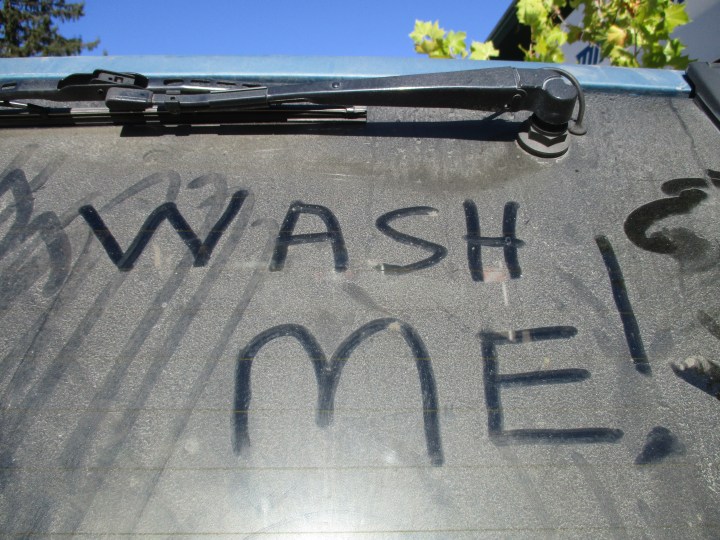 For the first time since last winter, a few raindrops were heard on the roof early last Monday morning. It was over by the time I realized that the odd and unfamiliar noise really was that of raindrops. By the time the sun came up, everything was dry. I do not even know if these few raindrops could be considered to be the first rain of the season. There were a few similar raindrops on my windshield a while back, but they were dismissed as such; merely a few random raindrops rather than a confirmed rain shower.
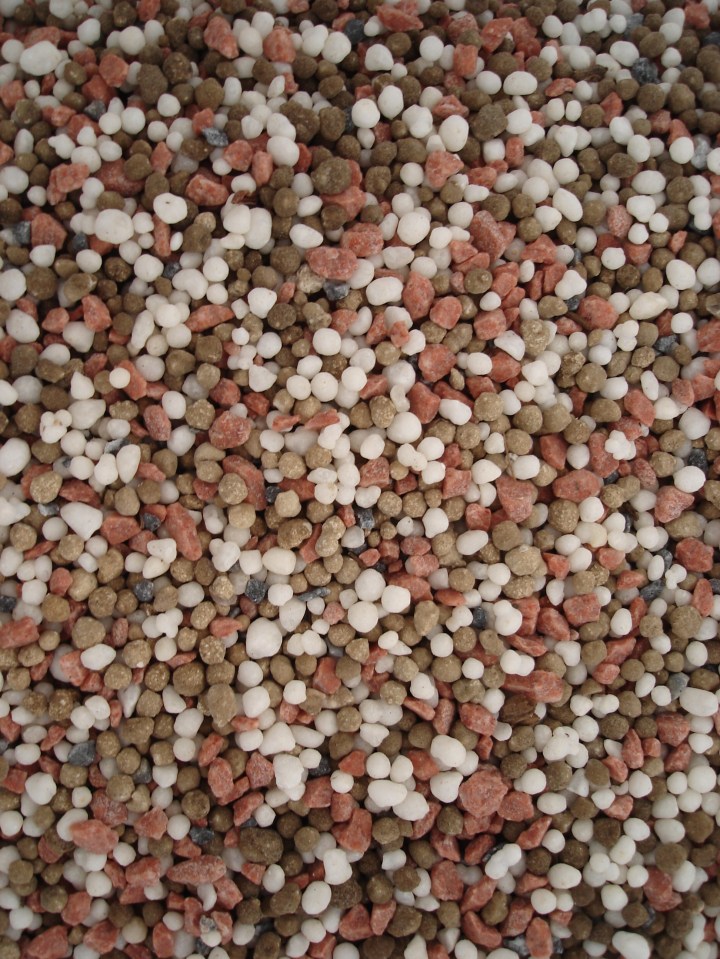 No more fertilizer! . . . almost. The main exception is turf that might need a bit of fertilizer if it must stay green through the coldest part of winter, but that is another topic for later. Otherwise, most plants start to go dormant through autumn, and should be as dormant as they get by the middle of winter. Fertilizer later than now could be as logical as espresso just before trying to get to sleep.

 Something that I neglected to consider about the first year anniversary of this blog is that what was new is now old. The articles from my weekly gardening column that were new when posted last year are now a year old. That necessitates an adjustment to scheduling.


 No mater how much work we put into our roses to sustain bloom all through the season, and not matter how successful we are with that endeavor, the first spring bloom is always the best. Some roses continue to bloom in floriferous phases afterward, while others bloom sporadically but continually; but there is nothing like the first bloom phase. The last blooms are just waiting for autumn.





 Tony Tomeo