Cool Season Vegetables For Autumn

Tomatoes need warmth to be productive.

Warm season vegetables will be productive until autumn. Several will produce until frost. Those that grew slowly during mild weather through last spring are performing well now. Summer does not end until later in September. Summery weather may not end until a bit later. Several climates never get frost. Yet, cool season vegetables are now seasonable.

This does not require productive warm season vegetables to relinquish their space. Most should stay until they finish. It only means that it is likely too late to grow any more warm season vegetables. Also, it is time to start growing any cool season vegetables that grow from seed. Transitioning between seasons begins prior to the actual change of seasons.

It is most efficient to sow seed for most vegetables directly into the garden. However, It is more practical to plug seedlings of some big vegetables somewhat later. Because only a few cabbages are adequate, there is no need to sow many of their seed. Instead, two six packs of seedlings may be sufficient. They are not very much more expensive than seed.

This applies to broccoli, cauliflower and many other large cool season vegetables. Their plugs or seedlings are available from nurseries while seasonable. Alternatively, they are easy to grow in cell packs or flats, from seed, in a home garden. This technique is useful for quantities that are expensive in cell packs. Also, more varieties are available as seed.

Of course, it is not much more effort to sow their seed directly into a garden. The problem with doing so is that warm season vegetables are not yet done. Sowing seed below and between them is an option, but interferes with later cultivation. Any relinquished space is necessary for smaller cool season vegetables. These really should grow only from seed.

Baby lettuces and small greens must be too numerous for plugging. Therefore, they must grow from seed. Peas are both too numerous and too sensitive to transplant for plugging. Transplanting damages cool season vegetables that are roots. Therefore, it is necessary to sow seed for beet, carrot, radish, turnip, and parsnip directly. Some can wait a bit later. Most cool season vegetables comply with phasing.
Six on Saturday: Better Late Than Never

As I explained earlier, unusual weather has interfered with the growth and bloom cycles of many species. Winter weather was exceptionally wintry. Spring and summer weather was exceptionally mild until only recently. Many flowers bloom precisely on schedule, as if oblivious to the unusual weather. Many flowers bloom significantly later than normal. Lily of the Nile seems to be about a month late. So does garden phlox, although I do not remember if it bloomed simultaneously with lily of the Nile last year. Nor do I remember when butterfly gladiolus bloomed. Hybrid gladiolus seemed to bloom right on schedule, so are finished.

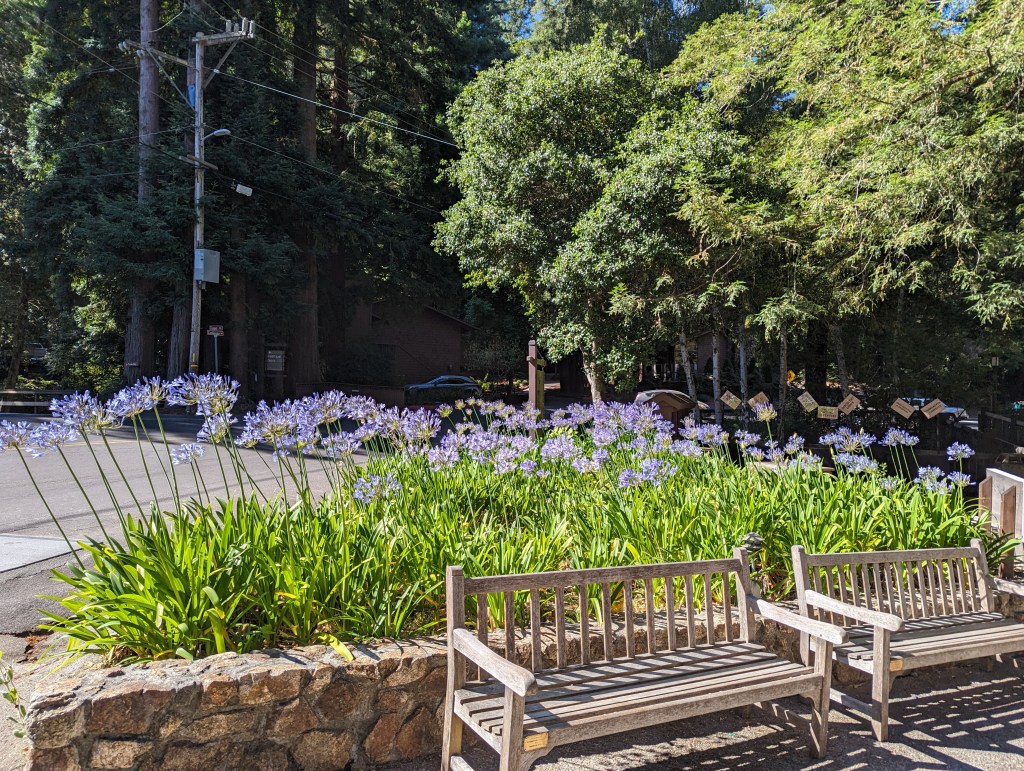
1. Agapanthus orientalis, lily of the Nile should have been blooming like this more than a month ago, and at least for Independence Day. Some buds are only beginning to open.

2. Agapanthus orientalis, lily of the Nile does not bloom abundantly in the shade, but it blooms grandly. This picture can not show that this one floral truss is about a foot wide.

3. Agapanthus orientalis, lily of the Nile, although genetically variable, had always been exclusively blue within all of the landscapes here. This is the first of three white blooms! I grew the originals in the early 1990s, but needed to relocate their herd a few years ago.

4. Phlox paniculata, garden phlox seems to be even more delayed than lily of the Nile is. I can not be certain though, since I got acquainted with its seasons only a few years ago.

5. Gladiolus X hortulanus, hybrid gladiolus was not so delayed, so bloomed precisely on schedule, and now needs deadheading. I am pleased by how many are reliably perennial.

6. Gladiolus papilio, butterfly gladiolus is Skooter approved, and is from Tangly Cottage Gardening! I do not know if it was delayed, because I am still getting acquainted with it.

This is the link for Six on Saturday, for anyone else who would like to participate: https://thepropagatorblog.wordpress.com/2017/09/18/six-on-saturday-a-participant-guide/

Warmth Accelerates Garden Activity.

Spring was mild and started late. Summer if now getting started.

Just like the moon is always either waxing or waning, but is really only full or new for the brief moments in between, the seasons are always flowing from one to the next. Even though it is not yet half way through summer, plants in the garden are already planning for autumn. Summer has been mild, but still warm enough for most plants to do what they need to do by this time of year.

If weeds were not pulled when they should have been in early spring, they really should be pulled now. They have already started to sow their seed for the next generation that will grow at the end of next winter. The ground has dried and hardened since early spring, so pulling weeds will take a bit more effort. That is the punishment for procrastinating.

Weeds that are still somewhat fresh and green may not have dispersed all of their seed yet. If pulled soon enough, their next generation may not be so prolific. Those that have dried have likely dispersed their seed already. Their progeny will be back by next spring.

Pulling out the roots of annual grasses is not as important as getting the roots of perennials like thistles. Heck, they are annuals, so will die at the end of the season anyway. Getting their seed in the priority now. Some people are satisfied with simply pulling the seeded tops off of annual weeds, and leaving the lower portions to die out naturally.

Most fruit trees finish their production sometime during summer. Small fruit like cherries finished some time ago. Larger peaches, although related to cherries, may still be ripening into August. They should be picked as they ripen, not only to get the most use out of them, but also to avoid sharing with unwelcome rodents, birds and other annoying wildlife. The ground under fruit trees should be cleaned of any fallen fruit that might otherwise rot and perpetuate disease. Apples and pears ripen later and into autumn.

Warm season vegetables should be picked as they mature to promote continued production. Leaving extra zucchini on the plants inhibits production of new zucchini, while the old zucchini grow into tough and insipid baseball bats. Leaving extra tomatoes both inhibits new tomatoes and also makes a mess of rotting fruit.

Warmth Accelerates Early Spring Bloom

Deciduous fruit trees should remain dormant.

Unseasonable warmth and dryness has been great this winter. Such weather is often an advantage of this locally mild climate. Chill never gets too harsh. Rain does not continue for too long. However, even by local standards, the weather has been unusually dry and warm for quite a while. Although appealing to people, it can get disruptive horticulturally.

Obviously, a lack of rain eventually becomes a lack of moisture. Some evergreen plants, potted plants, ground cover plants and lawns may already need watering. Although rain, or lack thereof, does not affect availability of water from municipal sources, it determines when irrigation with such water becomes necessary. It will be sooner than later this year.

Obviously, warmth accelerates this process. It draws moisture both from intact evergreen foliage and the soil below. (Dormant deciduous plants still do not lose as much moisture without foliage.) Unseasonable aridity (minimal humidity) and wind intensify the effect of unseasonable warmth. Desiccation is not the worst consequence of the weather though.

Unseasonable or premature warmth might stimulate premature spring bloom and growth. This can be very disruptive for plants that rely on sustained chill to maintain their minimal dormancy requirements. Peonies that are marginal where they normally experience their minimal chill requirements might be dissatisfied with inadequate chill through this winter. 

Even for plants that do not require much or any chill, premature bloom can be vulnerable to normal aspects of wintry weather if and when it resumes. Flowering cherry trees might bloom during sustained warmth. Such bloom would be quite susceptible to damage from resuming winter rain. Resumed chill might stall premature magnolia bloom until it molds. 

Prematurely developing fruit, accelerated by unseasonable warmth, is also vulnerable to resumption of wintry weather. Heavy rain, which is still possible through the remainder of winter, can dislodge freshly pollinated flowers, or small fruit as it begins to develop. More developed fruit is vulnerable to rot or mold during cool and damp weather prior to spring.

Chill Helps Plants Distinguish Seasons

Spring bulbs know what chill means.

The Santa Clara Valley was formerly famous for stone fruit orchards. The San Fernando Valley was formerly famous for citrus orchards. The Wenatchee Region of Washington is still famous for apple orchards. Many variables influence which agricultural commodities grow or grew in each region. Of these, one of the more obvious is temperature and ‘chill’. 

Citrus could not be productive in the Wenatchee Region because it could not survive the chill of winter there. Although productive in home gardens of the Santa Clara Valley, it is not quite as productive as it is where winter is warmer in the San Fernando Valley. Citrus appreciates warmth but not chill. Many tropical and subtropical plants feel the same way. 

However, many of the numerous cultivars of apple that are so famously productive in the Wenatchee Region would be unproductive in the Santa Clara Valley. Only a scant few of these might produce relatively meagerly in the San Fernando Valley. Unlike citrus, which dislike chill, apple trees need chill for production. Some cultivars need more than others.

Chill regulates the schedules of many plants that are originally endemic to climates with cool winters. It confirms the occurrence of winter, which is a convenient time to finish one annual cycle and begin another. Some plants require only a minimal chill. Those that are from climates with harsh winters require coercion by more significant and sustained chill.  

One of the primary reasons that spring bulbs are available for planting early in autumn is that some benefit from spending winter in a cool and damp garden. Although, most bulbs are chilled prior to marketing. Some previously chilled spring bulbs bloom splendidly for their first season, but then bloom unsatisfactorily if chill is inadequate for them afterward.

Most plants that need more chill than they can get locally are simply not available locally. Some are available online though. A few locally popular plants that are marginal for mild climates get confused by the seasons. This is why some flowers such as torch lily, bloom randomly or out of season. Daphne and some late winter flowers may be blooming now, and could get damaged by frost later.

Late Summer Bloom Until Frost

Some flowers bloom at odd times.

Seasonal changes keep gardening interesting. Like colors of a rainbow, seasons are not as distinct as their dates on a calendar imply. Each evolves into the next. Spring evolves into summer. Late summer is presently evolving into autumn. It happens like red evolves into orange on a rainbow. It is amazing that plants can monitor the changes so precisely.

Even if plants could monitor calendars, they would not. They are too busy monitoring the daily duration of sunlight. That is how they identify primary seasonal changes. Of course, they monitor the weather also. That is how they know more precisely when to react to the seasonal change. Plants are aware that it is now late summer, and they know what to do.

Most but not all plants bloom during spring or summer, so finish by late summer. By now, they prefer to prioritize seed production. Some continue to produce fruit to entice animals who eat it and disperse its seed within. However, some plants prefer to bloom late. Some bloom during autumn or winter. Some are so late that they are early during the next year.

Therefore, there is more to provide floral color through late summer and into autumn than cool season annuals and late blooming perennials. Butterfly bush, plumbago, bee balm, lion’s tail, Saint John’s wort and various salvia are now blooming for late summer. Some might continue into autumn. Oleander and euryops might bloom sporadically until winter.

Strangely, some flowers that bloom for late summer or autumn are from tropical climates. Because equatorial or tropical climates are not as cool during winter, or may lack winter, shortening days are not such a deterrent to bloom. However, many tropical plants bloom sporadically, rather than profusely within a particular season, and may be unpredictable.

Princess flower, mandevilla, hibiscus and angel’s trumpet may bloom at any time prior to winter chill, but may not. Those that do so may not repeat the process annually. Fuchsias are a bit more reliable for late bloom with flowers that are generally more interesting than colorful. Blue hibiscus looks more tropical than it is, with potential for late summer bloom.

Seasonal Changes Keep Gardening Interesting

Oleander continues to bloom into autumn.

Gardening is work. The extent of such work is proportionate to the techniques and scale of the gardening. Substantial gardens likely need substantial work. Fruit trees, roses and vegetables need more specialized work than lawns and wildflowers. Seasonal changes demand a strict schedule. It never ends. It is ironic that so many enjoy gardening to relax. 

In some climates, gardening is less work through the harshest of winter weather. No one wants to be outside in harsh weather anyway. That is no excuse here, where the garden remains active throughout the year. Perhaps that is a disadvantage of such mild climate. Furthermore, seasonal changes, regardless of how mild or slow, are reliably continuous.

Another month of summer remains. That may seem like enough time to stay on schedule for summer gardening, and maybe take some time to relax. However, it is already time to begin preparation for autumn gardening. Gardening should progress as efficiently as the seasons do. Seasonal planning facilitates this process. It will be autumn in only a month. 

Warm season annuals and bedding plants are still in season. Most will remain in season until cool weather in autumn or perhaps the first frost. Nonetheless, cool season annuals for autumn begin to grow from seed about now. If started early enough, they will be ready for planting into the garden at the proper time to replace their warm season counterparts.

The same applies to vegetables. Many warm season vegetables can produce until frost. A last phase of corn should still have time to mature. In the meantime, some cool season vegetables can begin to grow from seed. Broccoli, cabbage and larger types can start in cell packs or flats. For direct sowing, root vegetables may need to wait for garden space.

Some of the many plants that bloom through most of summer bloom less later in summer, even though the weather remains conducive to bloom. Some prefer to divert resources to seed production as the days get shorter. Old fashioned oleander with fragrant bloom can get shabby with seeds. Modern sterile types lack fragrance, but bloom until cool weather. It is a good time to collect seed from formerly seasonal flowers.

Six on Saturday: Frozen II

Contrary to popular belief, there is a bit of chill during winter here. I was surprised by how many were surprised by my pictures of slight frost last week. The stone fruit that used to grow in the Santa Clara Valley could not have produced without adequate chill. Some deciduous trees color well for autumn, and all defoliate. We do not use much firewood, but some of us use some.

It may not look much like autumn to outsiders. Nonetheless, I find the local climate to be more than satisfactory for what I grow. In some regards, I find it to be ideal. Rhody just stays in by the stove.

1. Sycamores are trashy. Because of anthracnose, they dropped leaves in spring. They dropped more after the Fire. Now they are defoliating for winter. A bulldozer is used for all the leaves.

2. Bald cypress colors well by simple local standards, even if it is merely orangy brown. Bald cypress is rare here, perhaps because of the climate, or perhaps because of its buttressing roots.

3. Dogwood fruit is messy through winter. Surprisingly, wildlife is not particularly interested in it. I should make jelly with it for competition at the Harvest Festival next year (if it happens).

4. FreeBay is how we refer to small piles of bay firewood left on roadsides for neighbors to take away. Vegetation management has become a priority, and generates firewood as a byproduct.

5. Canna behave as outsiders expect them to here. They try to continue blooming until they eventually get frosted. The minor frost they experienced so far was insufficient to stop them yet.

6. Minor frost seems to evaporate as readily as it thaws when exposed to sunlight. This sure looks like autumn. I somehow sort of believe that this is what autumn looks like in other regions.

This is the link for Six on Saturday, for anyone else who would like to participate:

https://thepropagatorblog.wordpress.com/2017/09/18/six-on-saturday-a-participant-guide/

Springtime On Time

P00405
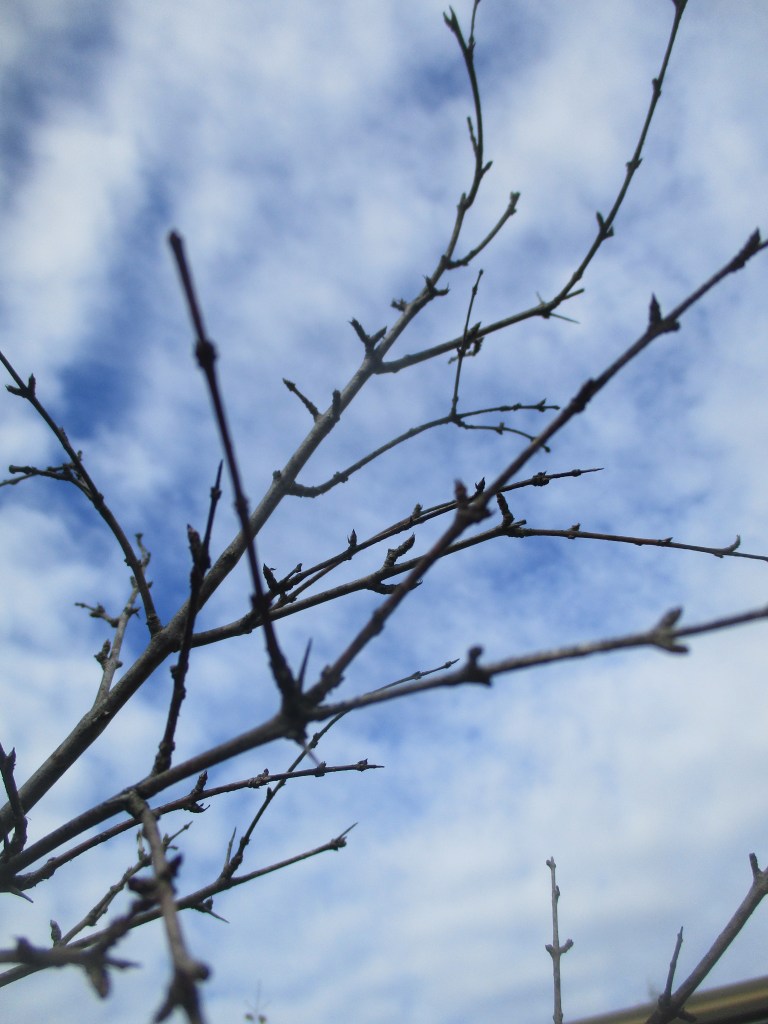
According to these maples, spring is right on time.

Seasons in the Santa Clara Valley are not very distinct. They are not much more distinct in the Santa Cruz Mountains above. Hot weather in summer does not last for more than a few days, and usually cools off somewhat at night. Winter is never very cold, with light snow rarely falling only on the tops of the highest peaks.

Some believe that summer is our only season, with a few days of ‘not summer’. I would say that it is more like springtime all the time, with a few warm days, a few cool days, and a few rainy days. In many ways, it is great for gardening. However, it can be limiting for species that prefer more warmth in summer, or a good chill in winter. It can also be rather boring.

The vast orchards that formerly occupied the Santa Clara Valley were fortunately satisfied with the mild climate here, and actually enjoyed it. They got just enough chill and just enough warmth, but just as importantly, they appreciated the aridity. Late rain and humidity can ruin the same sorts of fruits in other climates.

Even without much distinction between seasons, springtime in the Santa Clara Valley was spectacular before the orchards were exterminated. A long time ago, tourists came to see it like the fall color of New England. Many or most tourists witnessed it while the weather where they came from was more like late winter. Natives considered the timing to be right on schedule.

However, the schedule did not coincide with what we learned about seasons in kindergarten. We cut out colored leaves from construction paper in autumn, even though there was not much fall color. We cut out snowflakes from white paper in winter, even though most of us had never seen snow. By the time we started cutting out flowers, most spring bloom was already done.

Norway maples always seemed to know what time of year it was. Schwedler maple, which is a darkly bronzed cultivar of Norway maple, was a common street tree in the Santa Clara Valley back then, particularly in tract neighborhoods that were build in the middle of the 1950s. Some disliked how it stayed bare and seemed to be dead after other trees bloomed and foliated.

To some of us, the reddish new growth of the Schwedler maples was what let us know that it really was springtime. Of course, we were done with all our spring planting by then, as allowed by the local climates. Also, the bloomed out orchards were already foliating. The maples just let us know that winter was completely finished and would not be back for several months.

Five young feral Norway maples at work are doing that splendidly right now. They lack the bolder color of the Schwedler maples, but they make the same statement. The bloom of the flowering cherries is exquisite, but not as convincing as the foliation of the maples.

Daylight Saving Time

Apologies for the lapse of posting articles as typically scheduled at midnight here for this morning and yesterday morning. The article that had been scheduled for yesterday morning posted an hour earlier, at 11:00 p.m. on Sunday night. The article that had been scheduled for this morning posted an hour earlier, at 11:00 p.m. last night. I neglected to adjust the schedule on Sunday for Daylight Saving Time.