Ecclesiastes 3: 1

P80207There is a time for everything, and a season for every activity under the Heavens:

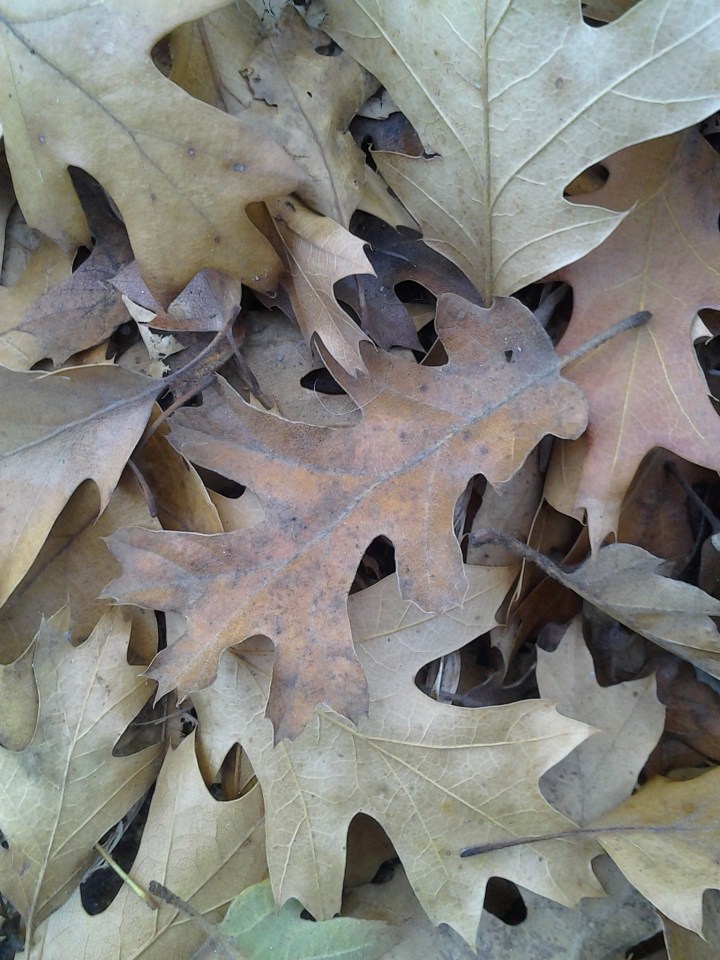
Verses 2 through 8 continue to list a few examples of more specific activities that happen at specific times. If there were more examples, autumn foliar color would probably be cited as well. After all, autumn foliar color happens in . . . well, . . . autumn.

Perhaps it was omitted for brevity. Of course, there is the possibility that it was omitted to avoid confusion. If it had been cited, it might have been described simply as ‘foliar color’ rather than ‘autumn foliar color’. Some foliage colors earlier if distressed. Some foliage does not color until frosted. Some might even delay color until it is in the process of getting replaced by new foliage. Then there are the many sorts of evergreen foliage that do not color at all, or at least in a manner that is visible or notable from outside. Shedding browned or blackened dead foliage, particularly that which is obscured by new foliage, does not count.

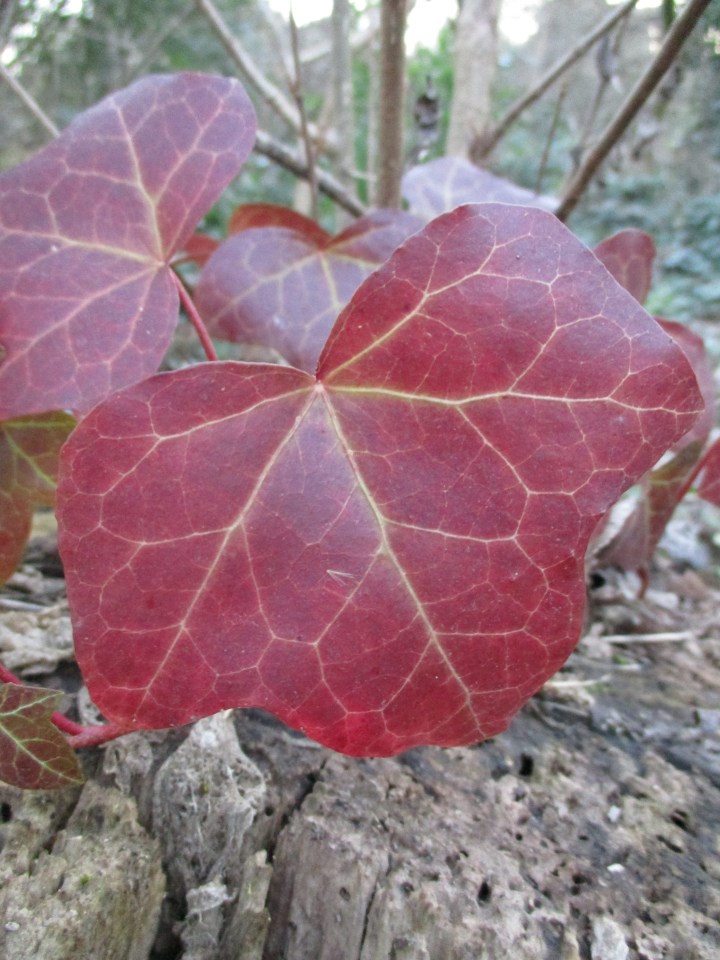
This English ivy foliage is the sort that should not color at all. Old leaves should whither and deteriorate once obscured by new foliage. Perhaps the vine is concentrating resources elsewhere while abandoning this section. Perhaps the entire vine is deteriorating. From this picture, it is impossible to determine why this colorful foliage is exposed.

Perhaps this is the time to just appreciate nice autumn foliar color wherever and whenever we get it, even if it is on English ivy in winter. As the flowering cherries try to convince us that it is spring, that would be just fine too. This can be the time for autumn, spring, and maybe even winter if it ever arrives, all at the same time.
Too Late For Pie

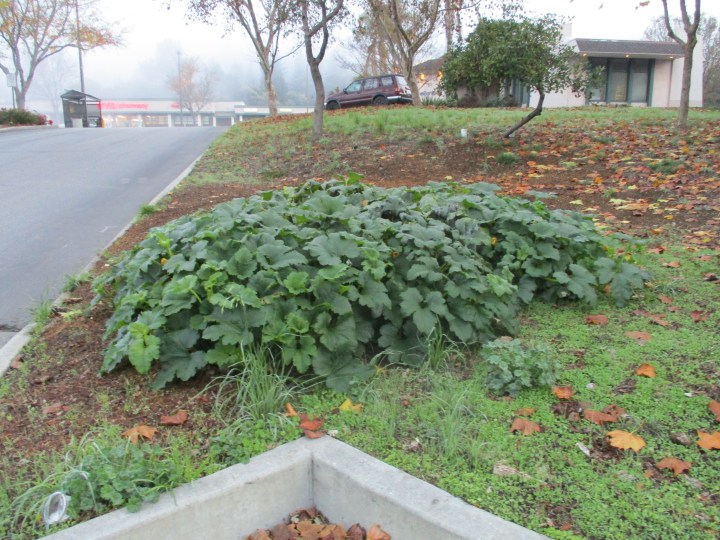
P71203Just a few feet downhill from where the old valley oak had lived for centuries (https://tonytomeo.wordpress.com/2017/09/11/goodbye-to-an-old-friend/), a pumpkin vine appeared shortly after the big oak stump was ground out. That was in late September, so was much too late for it to do much; or so I thought.
The vine grew very quickly! It is hard to say if it got water from a leaking pipe. A valve manifold that is visible in front of the stump in the original picture is completely obscured by the foliage of the vine in the second picture. With all the heavy work that was done right on that spot, it would have been very easy for a pipe or exposed valve to get damaged. (Water from a previously leaky pipe or valve could have contributed to the demise of the tree, by promoting the development of excessively heavy foliage that caused the large limbs to break and fall.)

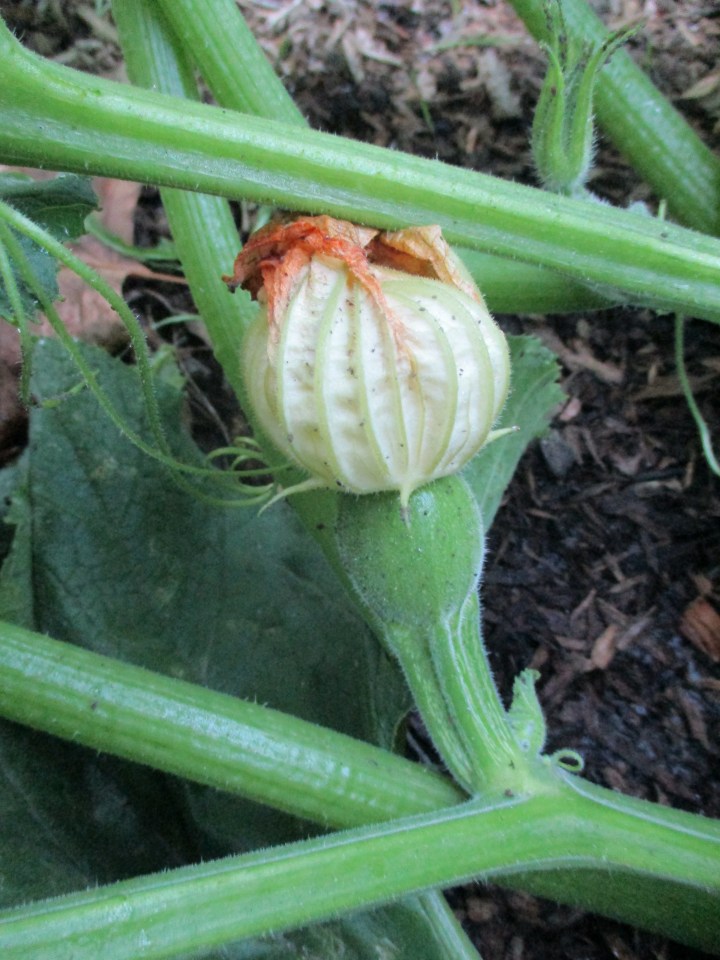
Despite the vigor and size of this remarkably healthy pumpkin vine, no fruit developed. Only a few undeveloped fruit can be found now, and the weather is getting too cool for it to mature. The foliage and flowers are already starting to succumb to mildew and decay, and will eventually get frosted. If there is any fruit obscured by the foliage, it will become visible when the foliage collapses.

Regardless, the pumpkin vine really seemed to have fun while it had the chance. How many of us get to grow pumpkin vines this big through an entire growing season? It got plenty of sunlight, and must have been getting water from somewhere. The soil is good there. As you can see in the picture, it had plenty of room to grow.

What is so special about that spot? If there is not a water leak that needs to be repaired, what else could be grown there next year?!P71203+

Why Autumn Is Also Fall

71011thumb.jpgThe calender says that it is now autumn. The weather does not necessarily agree. Some of the trees are dropping their leaves. However, the leaves are not falling because the weather is getting significantly cooler. The leaves got cooked during that weird heat wave a few weeks ago. If the weather can be this confusing here in our very mild climate, it must be really crazy everywhere else.

It is hard to make sense of what trees are dropping leaves in response to the earlier heat. Coast live oak, which normally tolerates heat quite well, was really annoyed by the heat in some areas. Cottonwood and other poplars are expressing their discomfort too, but that is to be expected from them. Sycamores, which are normally sensitive to weather anomalies, are not overly concerned.

All this means to us, the janitors of our trees, is that some of us might be raking leaves earlier than expected. These leaves will not be the nice colorful sort that we like to see in autumn. Those will come later. It is still too early to know how the weather will affect autumn color. All we know so far is that some trees will have less foliage for coloring. Sweetgums are hinting at a colorful autumn.

Leaves should be raked as they fall. However, because no one wants to clean the eave gutters any more than necessary, they can be cleaned only a few times, or maybe only once if trees shed efficiently. They are easiest to clean before the rain starts and the wet leaves start to decay. Unfortunately, most deciduous trees continue to drop their leaves well into the rainiest part of winter.

Lawns and shallow or dense groundcovers really do not like to be shaded by fallen leaves for too long. To perform through winter like we expect them to do here in our mild climate, they want as much sunlight as they can get while the days are shorter and the sun is lower on the horizon. Besides, fungal pathogens like mildew and rot, are more likely to proliferate under damp fallen foliage.

Finely textured leaves under low shrubbery and coarsely textured groundcover that ‘eats’ fallen leaves is a nice mulch, so does not need to be raked. If it can not be seen, and is not too abundant, it is probably not a problem. The exceptions are fallen leaves of roses, grapes, cane berries, deciduous fruit trees, and any plants that are susceptible to diseases that overwinter in fallen leaves.

Heat Lingers With Indian Summer

70920thumbIt is still too early to say if, or for how long, warm Indian Summer weather will linger into what should be autumn. This last spell of unseasonable heat (in California) was merely a heat wave. Of course, at the time, there was nothing ‘mere’ about it. It was downright hot! It was weirdly humid too. As uncomfortable as it was for us, the humidity made the unseasonable heat more tolerable for some plants.

Heat has a nasty habit of drying things out. Humidity does the opposite, although not quite as efficiently. Many plants might have been seriously desiccated if the weather had gotten so warm without the humidity. A cooling breeze might have made things more comfortable for us, but likewise would have been more uncomfortable for plants by enhancing the desiccating effect of heat.

So, again, we disagree with our plants. One thing we all agree on is that this last heat wave was unseasonable, and came at a time when summer should be on the downhill side toward autumn. Some evergreen plants are producing foliage designed for cooler weather. Worst of all, many of the gardening procedures that get done this time of year are in anticipation of cooling weather.

Not too long ago, pruning and shearing of hedges and other evergreens was an important topic. The objective was to get it done one last time before autumn. If done too late, new growth develops slowly through the cool winter weather, and is more susceptible to discoloration and frost damage. Now, the problem is that some of the fresh new foliage was scorched by the heat!

Also, fertilizer should have been applied one last time before autumn. Later application stimulates new growth so late in the season that it is sensitive to frost through winter. Just like pruning, the fertilizer stimulated new growth that might have been damaged by the heat. So, proper pruning and application of fertilizer to limit frost damage may have left plants more susceptible to scorch.

Just like with frost damage, scorched foliage should not necessarily be pruned away immediately. If not too unsightly, it might be best to leave it alone. Some evergreen plants will not replace it until next year anyway. Deciduous plants will shed it when convenient. Large leaves like those of philodendron and banana, may deteriorate so badly that pruning them away is the best option.

Never Forget the Valley of Heart’s Delight


The Santa Clara Valley really was as idyllic as the natives say it was. It was excellent for us kids, as well as for our parents who raised us here. That is why it is also know as the Valley of Heart’s Delight.

Every autumn, the orchards would turn soft yellow. Cherry orchards got a bit more orange. Apple and pear stayed greener later. The foliage still smelled sort of fruity. Leaves would start to fall with the first breezes and cool autumn rain. There was still mud here back then. It was real orchard mud; not the sort that happens because a gardener waters the lawn way too much.

By winter, the foliage on the ground smelled earthy. . . very earthy. It might have been slippery to walk on. The upper stems of the bare trees reached upward as if they were not expecting to be slowed down by the change in the weather. The trees seemed to watch each other getting pruned, and then point and laugh at each other when it was all done. Debris piled on the edges of the orchards burned fast, and then smoldered for a few days, with a narrow wisp of almost sweet smelling smoke.

Spring made you think the whole world was in bloom! It was billowy white bloom. Apricot was the best, but cherry ad almond were brighter white. Prune seemed to be very slightly blushed. It was all white, but different flavors of white. It was so soft and fragile. The fragrance was surprisingly simple, sort of fruity, and . . . perfect. Apple and pear bloomed later, giving the illusion that bloom lasted a long time. However, each type of orchard bloomed only for a short time. Let’s be honest; apple and pear did not smell quite as good as the rest; and some described them less graciously than those of us who were kids back then. Walnut and fig, well, they were always the odd ones anyway.

Summer smelled like fruit. It was everywhere. It smelled sort of grassy at first while the fruit was developing. By the end, it smelled way too ripe. Finally, it smelled like wine and toasted soil. The soil here really was great. It was grey and heavy. Summer was warm but only rarely hot. Mustard grew under the trees, and then wilted down just before getting cut.

We were all raised with horticulture, whether we realized it or not, or whether we liked it or not. We all got peanut butter and jelly sandwiches in our lunchboxes because our mothers had to get rid of the apricots somehow. Fudge at Christmas was overloaded with walnuts. Mom’s apple pie was not revered here like everywhere else in America. It was our culture. It was everywhere.

Even though almost all of us were natives, and most of our parents were natives, and some of our families had been here for several generations, the horticulture was imported from all over the place. Apricots, cherries, prunes, peaches, almonds, walnuts, figs, pears, apples; there was just about every fruit tree imaginable. They came from Turkey, France, Italy, Spain, Greece, England, Persia . . . really anywhere and everywhere. Our ancestors brought their horticultural expertise from Italy, Spain, Japan, Oklahoma, Portugal, Mexico and who knows where else. It all came here and somehow got mixed together to make the Valley of Heart’s Delight, our own distinct culture within the Santa Clara Valley.

Flowers Might Be Getting Scarce

70830thumbIt makes sense for flowers to bloom in spring. Winter is too cool, windy and damp for both flowers and the insects that pollinate many of them. By summer, successfully pollinated flowers have faded, are busy making seed to disperse in autumn. Some plants produce fruit to get birds and other animals to disperse their seed. There are certain advantages to blooming early in the spring.
Native plants that are endemic to chaparral climates are quicker with bloom, so that they finish before the air gets too arid. Desert plants might bloom for less than a week. Some tropical plants might bloom whenever they want to because they do not understand the concept of seasons, but they are not the prominent plants in our gardens. Therefore, flowers get scarce this time of year.
Besides the few perennials and annuals that bloom as long as the weather stays warm, there are not many plants that bloom reliably so late in summer. Belladonna lily, which is also known as naked lady, might be one of the flashiest, as its bright pink flowers bloom on top of bare stalks before the low basal foliage develops. It was actually dormant through the warmest part of summer.
Billowy and bold pampas grass flowers bloom this time of year, but are uncommon. The boldest type of pampas grass is too big and difficult to manage for home gardens. The smaller type has dingy tan flowers, and is so invasive and weedy that it is unavailable in nurseries. Those of us who have it in our gardens did not plant it. Other grasses with nice late flowers are not very colorful.
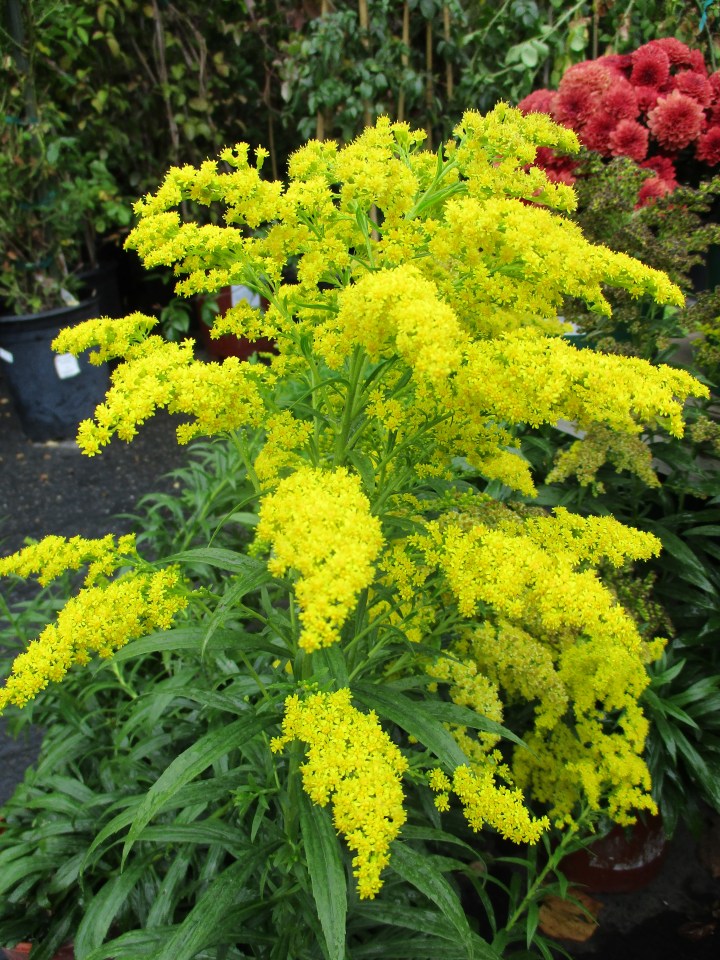
Russian sage has become one of the more popular late blooming perennials. More traditional Japanese anemone, goldenrod, lion’s tail and showy stonecrop all seem to have lost popularity over the years. Mexican blue sage should bloom best late in summer, but often finishes sooner than expected. Yarrow often blooms later than expected, until summer ends. Marigold, blanket flower and some sunflowers bloom until frost. Chrysanthemums, whether grown as annuals or perennials, are just beginning late in summer.