Vaccinium

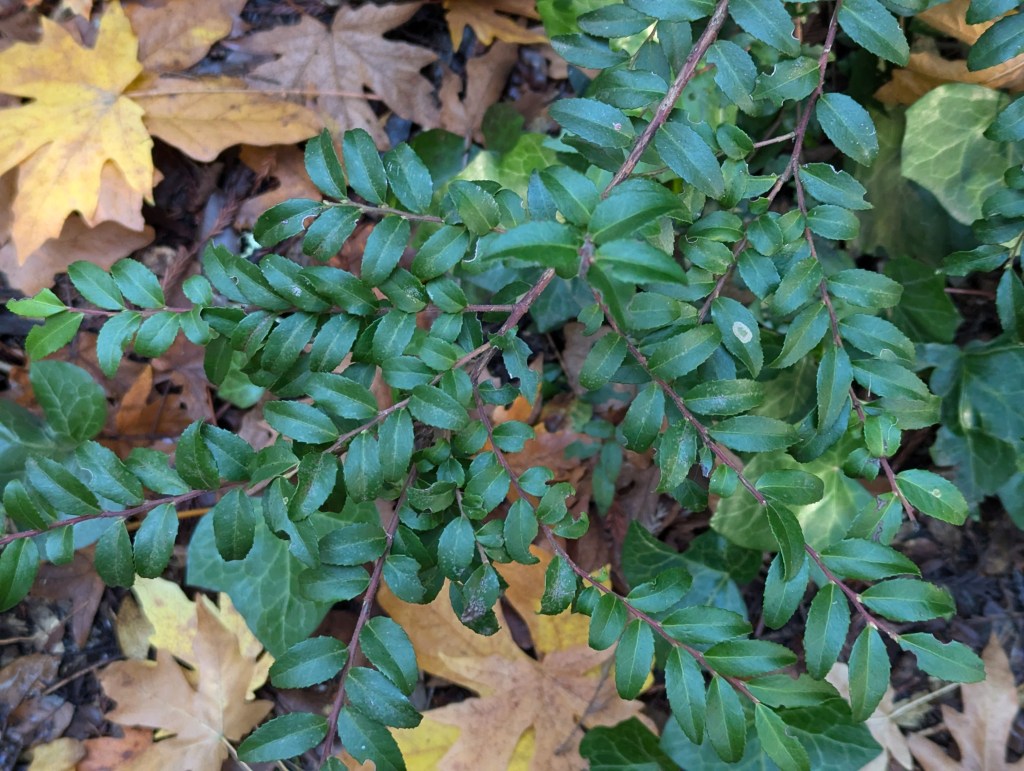
Vaccinium ovatum, California huckleberry

Cranberries have been elusive. I know of no one who grows them here. Furthermore, I am told that no one grows them here because they do not grow here. I am not convinced. They grow well in portions of western Oregon. Some of the riparian climates here are not too different from climates there. I am determined to try growing cranberries, even if I can grow only a few. Just this year, I procured seed that should vernalize through winter. If they grow, they will be comparable to those that grow wild within their native range, rather than a cultivar.

Blueberries were uncommon decades ago. I can remember, when I was a kid, being told that no one grows them here because they do not grow here, just like I am told in regard to cranberries. Well, nowadays, blueberries, although still uncommon, are not rare, and are actually somewhat popular among those who want to grow them. I grow a few only because I acquired them from a garden that they needed to be removed from. Otherwise, I would prefer to try cranberries. I can not complain about the blueberries, though. They are still here after a few years because they are reasonably productive.

Huckleberries, or at least one species of huckleberry, are native. Although quite rare within home gardens, and more typically grown as an alternative to boxwood rather than for berries, they can produce a few berries. They might be more productive if cultivated more for berry production than merely for aesthetic appeal. I have collected enough berries from wild colonies of huckleberry to make jelly, which is encouraging. It is also encouraging that the native huckleberry is Vaccinium ovatum, which is the same genus as both blueberry and cranberry. I wonder how different their cultural requirements are.

Which Mesquite?

Prosopis velutina, velvet mesquite?

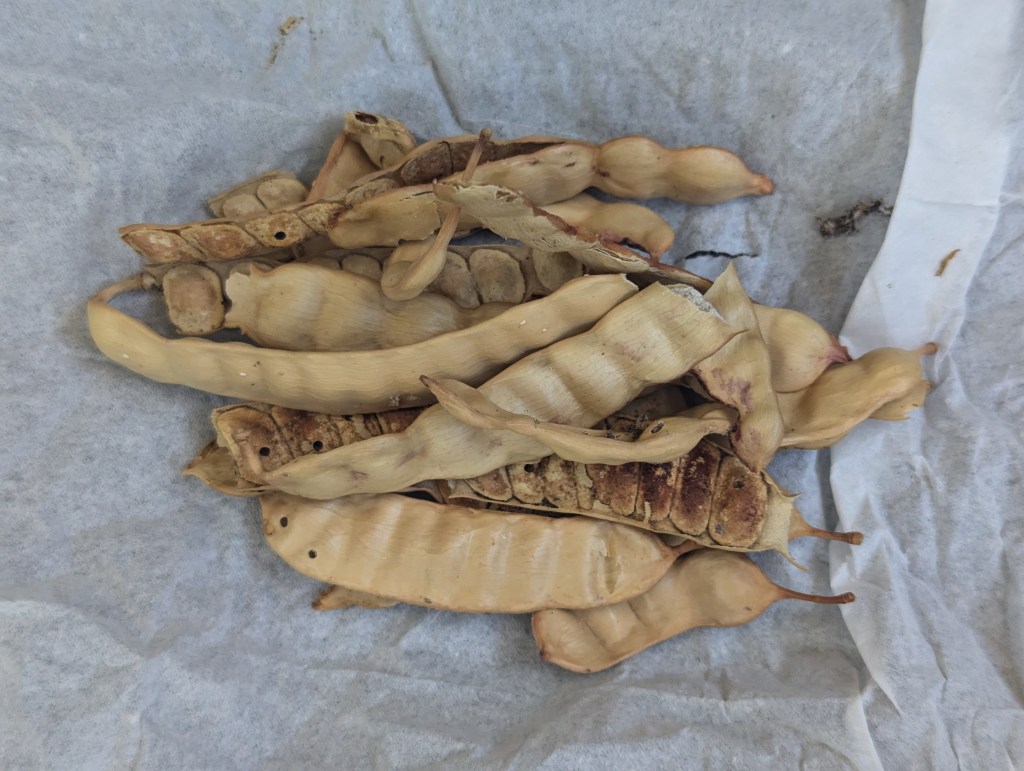
Prosopis velutina, velvet mesquite is supposedly the most popular mesquite within landscapes, such as the landscape in Surprise in Arizona in which I encountered this mesquite. This particular specimen conforms to the description of the species. However, both Prosopis glandulosa, honey mesquite, and Prosopis pubescens, screwbean mesquite, are also somewhat popular within landscapes, and, except for the distinctly twisted beans of screwbean mesquite, both are visually similar to velvet mesquite. All three species are native to the region of Surprise. Because beans that I collected from below this particular specimen were merely somewhat warped, rather than distinctly twisted, I doubt that this specimen is a screwbean mesquite. Also, because the leaflets are relatively short with relatively rounded tips, I doubt that this specimen is a honey mesquite. Therefore, I suspect that this really is velvet mesquite. Although I would prefer to grow honey mesquite, I would be quite pleased to alternatively grow velvet mesquite, or realistically, any mesquite that is useful for smoking. I do not smoke enough vegetables or meats to be so discriminating about the sources of the smoke involved. Besides, if I were so discriminating, I could purchase honey mesquite seed online. For now, I will grow the seed that I collected from below this particular mesquite tree, regardless of its species. The handful of beans that I collected must contain several seed. I have no idea of how many of them will be viable, but will find out. Some of the beans have small holes in them from larval insects who undoubtedly ate some or all of the seed within, but I collected them regardless, merely because they were available. Because the seed are difficult to separate from their beans, I may not bother. I suspect that they will germinate and grow through their bean pods as the pods decay under a shallow layer of medium. Scarification of seed supposedly accelerates germination, but there is no rush. I do not even know where to plant any seedlings that might eventually grow. Although no mesquite are native here, velvet locust, as well as the other two species that this could possibly be, are surprisingly native to nearby counties. Because they are also native to harsh desert climates, I suspect that they prefer the drier and warmer of local climates. I therefore intend to grow them in exposed ridgetop areas with well drained and perhaps somewhat sandy soil.

Wintry Berries Are Already Colorful

Most wintry berries are bright red.

Seed of most vegetation here finishes developing by late autumn to be ready for winter. It wants to germinate while soil is damp, and before it gets dry after spring. Some needs to vernalize with a bit of chill to be ready to germinate prior to spring. Some offers incentive to birds or other wildlife to disperse it. It develops within colorful fruits and wintry berries.

Both migrating and overwintering birds enjoy wintry berries while other food gets scarce. Squirrels and other wildlife are likely to indulge as well. Seed within such fruit is resilient to digestion. In fact, many of such seed germinate better after digestion softens their hard exteriors. For them, digestion by their vectors is comparable to vernalization by weather.

This is why wintry berries are so colorful. They want to be visually appealing to birds and other vectors who disperse their seed. Their vectors need no more persuasion than that. They instinctively recognize a free meal when they see it. While they eat well, vegetation which feeds them benefits from dispersion of its seed. It is a mutually beneficial situation.

Birds and wildlife are not exclusive beneficiaries of ripe wintry berries. Many people who enjoy gardening appreciate their vibrant color. Such color is particularly appealing where floral color is deficient during winter. Many who enjoy gardening instead prefer any birds who eat such berries. Unfortunately, wintry berries will not last long after birds find them.

Wintry berries are already developing color, a month or so before the beginning of winter. Some may become more prominent as autumn foliar color eventually diminishes. Almost all wintry berries are bright red, but some are rusty red, orange or even golden. Greenish pittosporum berries are not so prominent. Elderberries are uncommon in home gardens.

Firethorn is the most prominent of wintry berries here. Various cotoneasters are likely the second most prominent, with rustier red color. Toyon berries are more colorful than those of cotoneaster, but are less common. English hawthorn can retain its berries longer than its deciduous foliage, but is rare. Because they lack pollination, most hollies are fruitless.

Six on Saturday: Weeding & Pilferage

Pilferage annoys me. I certainly do not want to annoy anyone else with it. Fortunately, I only want to pilfer weeds that should be removed from their landscapes anyway. Several of these six were unwanted feral seedlings, which technically qualify as weeds. Seed that was not removed could have grown into more feral seedlings if I had left it. Although the red yucca pup was not a weed, it was crowded. Ocotillo was a gift, so was neither a weed, nor pilfered. Now, I have even more to grow.

1. Hesperaloe parviflora, red yucca produces quite a bit of seed. I found some which the gardeners neglected to deadhead. I wrapped it too neatly to unwrap to get a picture of it.

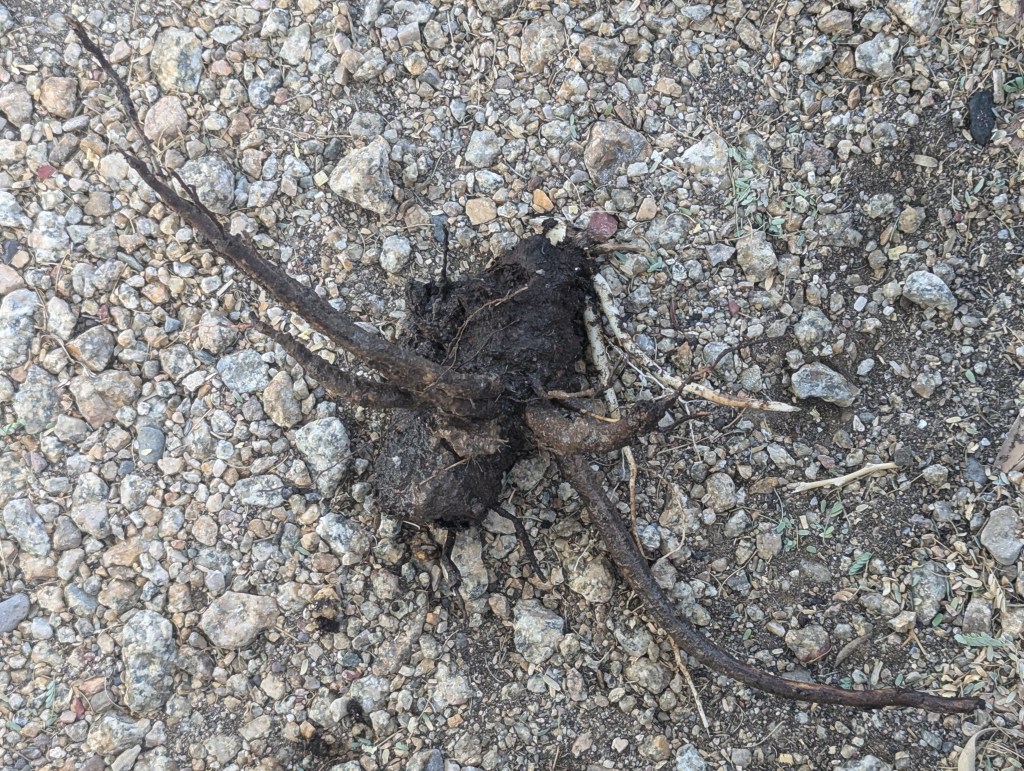
2. Hesperaloe parviflora, red yucca should be easier to grow by division. Unfortunately, this one shoot that I managed to divide is almost totally rotten from excessive irrigation.

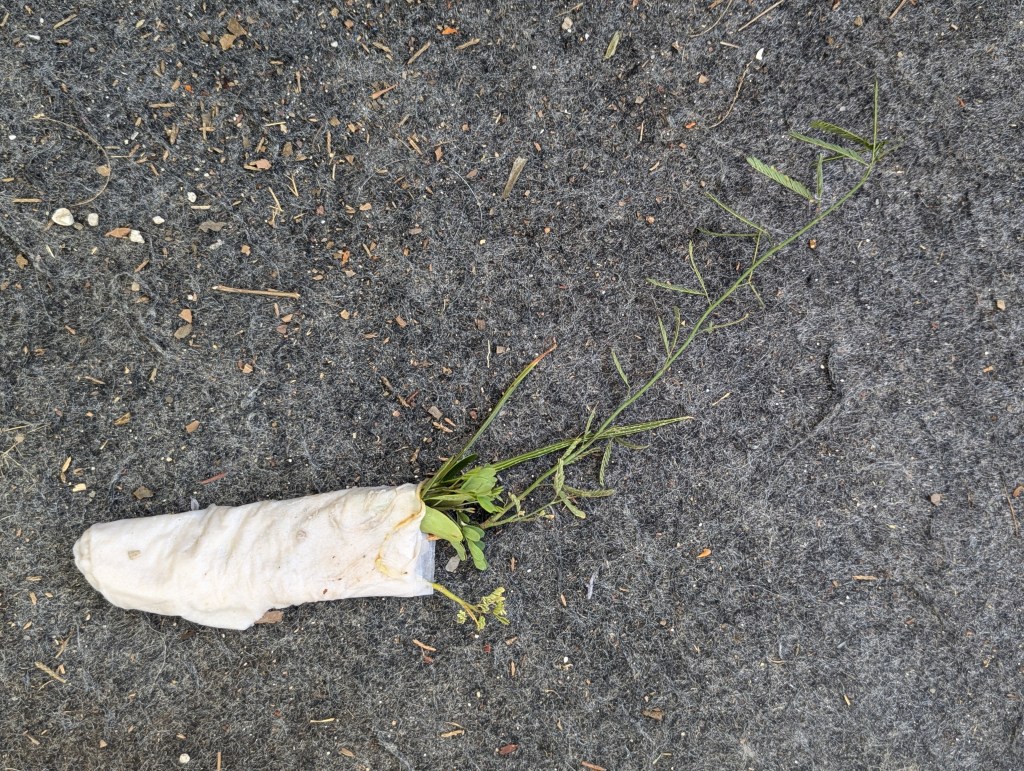
3. Calliandra californica, Baja fairy duster is the only species in this bundle of seedlings that I can identify. It is the biggest one which extends to the upper right. The bundle also includes seedlings of both or either Parkinsonia florida, blue Palo verde and or Prosopis velutina, velvet mesquite, as well as a single seedling of an unidentified species of palm.

4. Parkinsonia florida, blue palo verde is easier to identify when it larger than seedlings. However, because I am unfamiliar with it, I am still uncertain if these are actually them.

5. Prosopis velutina, velvet mesquite left these seed pods on the ground. Small holes are from insect larvae that ate some of the seed within. A few viable seed would be adequate.

6. Fouquieria splendens, ocotillo was a gift, so was not pilfered. This cane is about three feet long, so can become several cuttings when I determine how long cuttings should be.

This is the link for Six on Saturday, for anyone else who would like to participate: https://thepropagatorblog.wordpress.com/2017/09/18/six-on-saturday-a-participant-guide/

Dried Flowers Were Formerly Fresh

Some faded bloom retains striking form.

All sorts of flowers bloom through autumn as well as winter. Honeysuckle still exudes its richly sweet summery fragrance. Honestly though, most flowers bloom for spring or early summer. They finished a while ago, and are now going to seed. Even flowers that bloom repeatedly do so less now. This is when floral design can get creative with dried flowers.

Straw flower, statice and globe amaranth are among the most familiar of all dried flowers. While still fresh, they already seem to be dry. They do not seem to change much as they dry. They neither fade nor wilt very much. Only their stems sag. If they hang upside down as they dry, their stems remain straight as they stiffen. Their foliage is likely unimportant.

Rose and hydrangea are among less conventional dried flowers that actually look dried. They fade and shrivel, but somehow develop a distinct visual appeal. Amaranth, celosia, lavender and globe thistle fade and wilt only somewhat. Because amaranth stems curve downward anyway, they need not hang to dry. Lavender stems can dry before collection.

Pampas grass and cattails are big and bold dried flowers that were popular in the 1970s. Hairspray should contain dislodged fuzz that otherwise escapes pampas grass bloom. It can also prevent cattail bloom from bursting to disperse its fuzz. Cattails typically grow in marshes, where they are difficult to reach. Pampas grass foliage inflicts nasty paper cuts.

Some dried flowers are better dried than fresh. Some are mere by products of bloom that deteriorated earlier. Dried floral trusses of lily of the Nile, without their seed capsules, are quite striking. So are dried floral spikes of New Zealand flax and some yuccas. They are merely deadheading debris otherwise. Even dried queen Anne’s lace is worth recycling.

Dried flowers do not necessarily need to be of floral origin. Dried bird of Paradise leaves develop weirdly twisty form. Colorful deciduous leaves can be as colorful in the home as in the garden. So can firethorn and cotoneaster berries. Twigs of ‘Sango Kaku’ Japanese maple and red twig dogwood provide color with form. These are only obvious examples. There are many more to experiment with.

Off Color

Borage can bloom pink, although it should fade to blue.

Borago officinalis, borage blooms almost exclusively with blue flowers. Those that bloom with white flowers are a naturally rare variant, although a slightly less than natural white blooming variety is available. Although white is my favorite color, I wanted to grow the more common sort that blooms with blue flowers merely because, to me, blue seems like the more natural color for the species. Besides, white borage flowers look rather bland. Actually, I am not much more impressed with blue borage flowers, but wanted to grow borage just to see what all the fuss was about. Though they were not expected to be viable, I was pleased that someone shared some expired seed with me. Because I expected none of them to grow, and expected that even less than none would grow if I delayed sowing them until after winter, I tossed the seed into the cans of other plants in the recovery nursery. I figured that if one or a few grew, I could pull them up and can them separately. Only a few days later, they all seemed to be germinated and growing! I extracted and plugged them into one more six-pack than a full flat of cells, which is forty-two seedlings! The problem is that summer is over, and borage does not overwinter well, even here. I am pleased with them nonetheless, and am confident that some can survive with shelter. I figured that with so many seedlings, that one or more might possibly bloom with white flowers. I noticed floral buds a while ago, so was watching for my first borage bloom. I was not expecting this! What is weirder is that all are blooming like this. Apparently, it is normal for borage to bloom with pink flowers that fade to blue during autumn.

Money Plant

Money plant becomes more prominent after bloom.

As their coarse, foot wide basal clumps of foliage turn yellow and start to die down, the solitary two foot tall stalks of money plant, Lunaria annua, develop open clusters of flat, inch wide seedpods that resemble coins. The thin outer casing and seeds within fall away as soon as these coins ripen, leaving tan, tissue paper thin discs that are ideal for dried flower arrangements. Seeds self sow reliably enough to naturalize where conditions are right, but not aggressively enough to be noxiously weedy. Money plant does not need good soil, and wants only a bit more water than related mustard and wild radish. Their small, purple or white flowers that bloom in spring look like radish or mustard flowers but are not as colorful.

Gathering Seed To Grow Later

Variegation is generally nontransferable by seed.

Deadheading, or the removal of deteriorating bloom, is contrary to the purpose of bloom. It conserves resources for subsequent bloom or vegetative growth. It neatens associated vegetation. Deadheading is certainly justifiable. However, it eliminates most seed before it can develop. Seed is the priority of bloom. Gathering seed can be a good compromise.

Techniques for gathering seed are as variable as bloom and subsequent seed. For some popular annuals and perennials, it is as simple as deadheading. Their seed develops as fast as their bloom deteriorates. Seed is easy to shake from dried stems of rose campion, campanula and columbine. Cut stalks of lily of the Nile must dry for their seed to mature.

Gathering seed from vegetable fruits can be a bit more complicated. Some are mature as soon as their containing fruits ripen. For example, seed from ripe chile peppers are ready for drying and storing immediately. However, zucchini must mature too much to be edible for its seed to finish developing. Furthermore, squash seed is likely to not be true to type.

This is often a consequence of cross pollination from other varieties of the same species. Progeny of very different parents inherit genetic qualities of both parents. Similarly, many extensively bred varieties exhibit reversion. Their progeny can be more similar to distant ancestors than direct parents. Reversion may be progressive through a few generations.

Reversion is less likely among hybrids only because most hybrids are sterile. Gathering seed from them is generally either futile or impossible. Some hybrid canna develop seed capsules that contain no viable seed. Seedlessness is an advantage of seedless hybrid watermelon. Viable seed of the few hybrids that could produce it is wildly unpredictable.

Most mutations, such as variegation or dwarfism, are not inheritable. Seed of variegated Kaffir lily therefore grows into unvariegated specimens. Some seedlings mature through a juvenile phase prior to bloom. This is why avocado seedlings grow so lean without fruit in their first few years. Ultimately, gathering seed is most practical for simple wildflowers, annuals, perennials and some vegetables.

Winter Vegetables Are Starting Now

Several cool season vegetables are roots.

Winter bedding plants are a reminder. They become in season at about the same time as winter vegetables. Therefore, as pansies replace petunias, turnips may begin to replace okra. As for bedding plants, it is a slow process that can continue until frost. Some winter vegetables start earlier than others. Some summer vegetables produce later than others.

For example, young okra plants that started late can continue to be productive until frost. There is no need to replace them until then. Instead, older okra plants that started earlier also finish and vacate their space earlier. Early phases of turnip seed can use this space as it becomes vacant. Then, later phases of turnip seed can replace later phases of okra.

Winter vegetables, or cool season vegetables, do grow slower than summer vegetables. In that regard, spring and summer warmth is an advantage. Consequently, recovery from delays is not as easy for them. More winter vegetables than summer vegetables are true vegetables. In other words, they are not fruit that contain seed. Many are distended roots.

This is why most winter vegetables should grow directly from seed. Root vegetables are susceptible to disfigurement from transplanting. Also, most usually grow in quantities that are impractical for transplanting. Most winter vegetables that are practical for transplants grow big above ground. This includes small groups of broccoli, cauliflower and cabbage.

Because broccoli, cauliflower and cabbage are so big, only a few of each are necessary. One or two cell packs of seedlings may be sufficient. They may not cost much more than packets of seed. Also, they are immediately ready for transplant. Seed must start growing earlier, in cells, flats or in their gardens. However, more varieties are available from seed.

Beet, carrot, radish, turnip and parsnip are roots that must grow from seed. Baby lettuces grow from seed because they are so numerous. Hedding lettuces can grow from seed or seedlings. So can peas and cucumbers, but they are more likely to grow best from seed. Successive sowing or planting prolongs production time of almost all winter vegetables. Subsequent phases begin production as their preceding phases finish.

Yucca whipplei Seed

Yucca whipplei seed is likely more rare in cultivation than in the wild.

Yucca whipplei, which is now known as Hesperoyucca whipplei, should not be so difficult to procure. It is the most common species of the genus within the next few hundred miles south of here, and was quite common in the hills around San Luis Obispo, where Brent and I studied horticulture at California Polytechnic State University (Cal Poly). I should have taken pups from wild specimens within the region, but I know of no one with wild specimens within their gardens. I can only see them from a distance, and, although within view, they are far enough away to necessitate quite a hike to get to. I never bothered to procure pups from specimens that I encounter directly in the Santa Monica Mountains north of Beverly Hills because they might be a different variety, or related to such a variety. Contrary to dramatic bloom, seed of the species is supposedly rare because the larvae of its very specialized pollinating moth devour almost all of the seed that develops from successful pollination. (The moth pollinates a flower only to provide seed for its larvae to eat.) Seed should be even more rare here because the specialized pollinating moth has no business so far from the natural range of its sustaining species. Somehow, a specimen that bloomed at work produced these few seed capsules. Someone else besides the specialized pollinating moth apparently took interest in its bloom. Although I have no idea what variety of Yucca whipplei the particular specimen is, I am pleased with the seed, and will try to grow them if they are viable when their capsules dry. (I hope that removal from their deteriorating stalk does not compromise their development.) Furthermore, I will get at least one pup from the original parent now that it will generate a litter after its monocarpic bloom. It is likely the variety that I want and am most familiar with anyway, because that particular variety happens to be the most common. Of course, I will procure a pup from a wild specimen within the region of San Luis Obispo if I ever get the opportunity to do so, just in case it is any different from what is growing and now blooming here.