Renee’s Garden Seed

‘Alaska’ is a popular variegated variety of nasturtium that is available from Renee’s Garden Seed.

There is no shame in growing nasturtiums. We all know how easy they are to grow, and that they can even naturalize. Some of us even consider them to be weeds. Some of us even know them as ‘dago pansies’! Yet, they are colorful, have an abundance of appealing foliage and never seem to have a bad day. Anyone who doubts this should look at Renee’s Garden Seed Catalogue online at www.reneesgarden.com.

Renee’s Garden Seed Catalogue is like a wine list of the finest nasturtiums, even though it also includes many of the more traditional types. ‘Buttercream’ is a new nasturtium this year that blooms with semi-double cream colored flowers! Pale yellow ‘Moonlight’ and bright scarlet ‘Spitfire’ are two climbing nasturtiums that get several feet tall.

Even those of us who primarily want to get vegetable and herb seeds will want to try some of the many unusual flowers, as well as some of the more traditional flowers that are available from Renee’s Garden Seed Catalogue. Besides nasturtiums, there are also many different kinds of sweet peas, sunflowers and morning glories. ‘April in Paris’ is an intensely fragrant sweet pea with large pale yellow flowers that become blushed as they mature. ‘Royal Flush’ is a new sunflower with bi-colored flowers in combinations of gold, dark red and brown. ‘Mailbox Mix’ morning glories have both clear blue and white flowers.  

Mixed seeds may not seem like a good idea for those of us who like organized gardens; but Renee’s Garden color coded vegetable seed mixes have a distinct advantage. The seeds of different varieties within a mix are dyed different colors so they can be separated if desired. It is like getting a few packets of different seed within each mix. Individual packets of seed typically contain more seeds than necessary anyway. (Not all mixes are color coded.)

(Outdated information has been omitted from this recycled article.)

Weeding Season

Weeds pull up relatively easily while the soil is still damp from winter rain.

My garden may lack the sort of ‘riot of color’ that landscapers like to promote to achieve the other popular cliché of a ‘tranquil garden retreat’, but is the victim of a different kind of violence. The desirable plants and undesirable weeds are about as compatible as the terms ‘riot’ and ‘tranquil’ are. Recently, the weeds have been gaining ground in the ongoing battle between the two. In another heroic effort to help the plants that I want in my garden, I will soon venture onto the battlefield to do what I can to defeat the weeds. The native sky lupine, California poppy, California fescue and some sort of native iris would otherwise be displaced by the invading oat grass, oxalis, burclover and sowthistle.

Different weeds invade other areas. Perennial weeds like nutsedge, dandelion, Bermuda grass, bindweed and brambles (blackberry) are among the worst in most areas. Annuals like purslane and spruge can be just as troublesome though. I really dislike the various twining vetches, even though they are good for the soil. Pampas grass, giant reed, blue gum eucalyptus, black acacia and Acacia dealbata are the largest weeds and the most difficult to battle.

All of the weeds that I need to contend with pull out easily while the soil is still damp from winter rains. If I do not pull them now though, they will be difficult to pull as the soil dries. Broom, the nastiest weed in my garden, comes out relatively easily now, but is ridiculously hard to pull from dry soil. Brambles and poison oak also come out easier now like the rest of the weeds, but are of course always difficult to handle.

Sometimes, if I do not have enough time to pull all the weeds in an area, I at least like to keep them from spreading if possible. If I cut annual oat grass down with a weed whacker before it blooms and sets seed, it is unable to reproduce to replace itself before it dies at the end of its season. This also works for sowthistle. Dandelion is perennial, so does not die at the end of its season, but will not spread so aggressively without its flowers or seed.

This has not worked so well with other weeds. Spurge sets seed before I catch it. Yellow oxalis and nutsedge reproduce more profusely by offsets than by seed. Bermuda grass is a creeping perennial that does not mind if it loses its seed. Burclover and bindweed are so low to the ground that pulling them is the only option. Broom and the various weed trees may initially be deprived of their seed, but are harder to pull when they regenerate after getting cut back.

Regardless of what it takes, this is the best time of year to get weeds under control. Later in the season, they will have had time to set seed or get more established. As the soil dries and gets baked by the sun, pulling weeds, or in some cases, digging them, becomes more difficult.

Deadheading Can Enhance Bloom

Without deadheading roses divert resources from continued bloom to fruiting and seeding.

It takes quite a bit of effort for flowers to bloom. It takes even more effort and resources for pollinated flowers to produce seed and the fruiting structures that contain the seed. If the seed of certain aggressive plants get dispersed, we need to put even more effort into pulling up the seedlings. It just never seems to end!

Removal of deteriorating flowers, commonly known (even by those of us who missed that generation) as ‘deadheading’, can eliminate so much of this extra work. Not many plants benefit from deadheading; but most that do are really grateful for it. Others that do not care one way or the other simply look better without their deteriorating flowers.

It is of course impossible to deadhead large flowering trees or vast areas of ground cover. Regularly shorn hedges should never need deadheading because they never get the opportunity to bloom or develop fruit. Plants that are appreciated for the ornamental quality of their fruit should of course not be deadheaded.

Most roses get deadheaded as they bloom because the development of their fruiting structures, known as ‘hips’, takes enough resources to compromise subsequent bloom. Removal of these hips therefore promotes bloom. Only the few types of roses that are grown for their showy hips should not get deadheaded. Phlox, daisies, zinias, dianthus and all sorts of plants with long continual bloom seasons likewise benefit from deadheading.

Some types of iris that produce seed perform better with deadheading, not because they will bloom again during the same season, but because they can divert resources to vegetative growth (like rhizomes and foliage) that will sustain bloom during the following year. Most bearded iris (that do not produce seed) and lily-of-the-Nile do not seem to care if they get deadheaded, but are generally more appealing without their finished flower trusses.

Four o’ clocks can not be deadheaded without also removing developing flowers, so can only be allowed to bloom and throw their invasive seed all over the garden. It is easier to pull their seedlings later. We have a bit more control over crocosmia. Even though they do not need to be deadheaded, they are less invasive and more appealing without their scraggly brown stalks and seed capsules.

Six on Saturday: Crazy Green Thumbs

Esperanza and poinciana seed sent to me by Crazy Green Thumbs at the end of last year were finally sown! Actually, they were sown two weeks ago, but I somehow deleted their pictures before sharing them here. Consequently, there is not much to see now. After the failure with the esperanza seed that The Shrub Queen sent to me previously, I am intent on growing these properly. Esperanza is more popularly known as yellow bells, and may alternatively be known as yellow elder, yellow trumpetbush or Ginger Thomas. I have no idea who Ginger Thomas is, or why she is relevant. Poinciana is more correctly known as pride of Barbados, and may alternatively be known as Mexican bird of Paradise, red bird of Paradise, peacock flower, dwarf poinciana, flos pavonis, flamboyant de jardin or ‘ohai ali’i. I know it as poinciana only because I have never encountered real poinciana here.

1. Tecoma stans and Caesalpinia pulcherrima seed were sent from Texas during the last few days of last year by Crazy Green Thumbs. I finally put them out only two weeks ago.

2. Tecoma stans seed are not much to look at while under a thin layer of damp media. Of course, they look totally awesome to me. There were too many seed for separate cells.

3. Caesalpinia pulcherrima seed are about as fascinating after getting sown. Since there are not as many seed, they got separate cells, which are almost discernible in the picture.

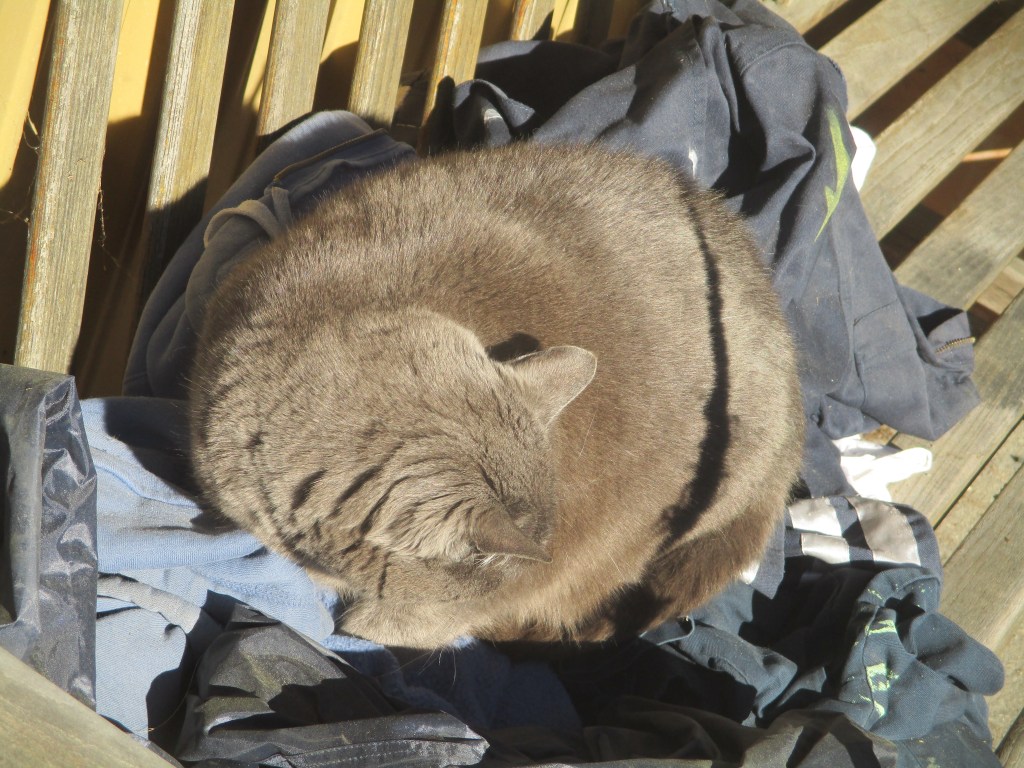
4. Darla the kitty has mistaken seeded flats for litter boxes in the past. Boundless forests are apparently inadequate. Upside down flats should protect the freshly sown seed flats.

5. Callicarpa americana seedlings from Woodland Gnome of Our Forest Garden arrived last September. There were nine in six cells. I separated these three ‘subdued’ seedlings.

6. Darla hates me. I can not get close enough to get a good picture of her. This picture is zoomed in from a safe distance. She needs to keep her distance from the seeded flats. 

This is the link for Six on Saturday, for anyone else who would like to participate: https://thepropagatorblog.wordpress.com/2017/09/18/six-on-saturday-a-participant-guide/

My niece loves Reneesgarden.com!

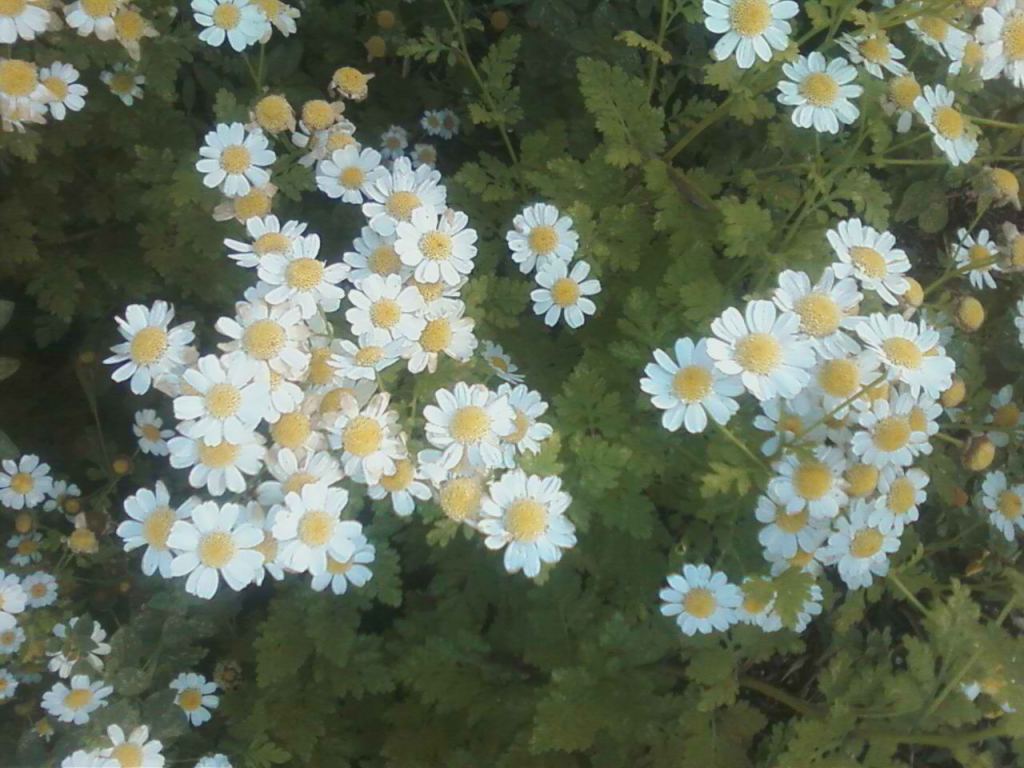
My neice finds seeds for most of her favorite vegetables, flowers and herbs, like this prolific chamomile, at Renee’s Garden.

Even after a few years of trying most of the seeds available from Renee’s Garden Seed catalog, my niece still wants to grow them all every year. Sadly, her compact garden and landscape designer father who thinks he owns it can not accommodate all the seeds that she wants. She is therefore forced to limit selection to her favorites and those that she has not yet tried.

‘Cupani’s Original’ and ‘Perfume Delight’ are still her favorite sweet peas because they are so very fragrant. The big softly blushed pale yellow flowers of ‘April in Paris’ are a close second. Although not as fragrant, I wanted her to try ‘Electric Blue’ for its shaggier darker green foliage and smaller but refined deep blue flowers.

Perhaps as a strategy for an alliance, my niece’s oppressive father planted ‘Buttercream’ nasturtiums, which was a new variety with semi-double cream colored flowers. She rebelled with the brilliant red shades of ‘Copper Sunset’. The softer orange shades of ‘Creamsicle’ was a diplomatic compromise.

Both could agree on the soft lavender and pink shades and white of ‘Gulf Winds’ alyssum, the rich deep pinks of ‘Mountain Garland’ clarkia, and the traditional ‘Mrs. Scott Elliot’ columbine, since all three are so complaisant with mixed annuals and perennials. Taller and more vigorous cosmos got their own space. ‘Dancing Petticoats’ provided a mixture of cheery pink shades. ‘White Seashells’ looked sharp against the deep green privet hedge.

Since utilitarian vegetable plants are inconsistent with such a designer landscape, my niece grew vegetables that are as flashy as foliage plants. I suggested richly colored ‘Scarlet Charlotte’ chard, with a bit of ‘Italian Silver’ that exhibits distinctive white petioles and veins. She went for the more colorful ‘Garden Rainbow’, ‘Neon Glow’ and ‘Bright Lights’.

Some (but not all) of Renee’s Garden vegetable seed mixes have a distinct advantage of color coding. The various seeds withing these mixes are dyed with different colors so they can be planted separately if desired. Since seed packets usually contain more seeds than are actually needed, vegetable seed mixes are a practical way to get fewer but enough of a few different types of seed in single packets.

More varieties of seeds are available from the online catalog of Renee’s Garden Seed at www.reneesgarden.com than at retail nurseries. Yet with so many fun varieties to try, the retail seed racks certainly have more selection than any garden really needs. If it were at all possible to try them all, my neice would have figured out how to do it already.

Tradition

P00419
Lunaria annua is known more for coin shaped seed pods than bloom.

Money plant, Lunaria annua, which some may know as ‘honesty’, is honestly not a wildflower here. It is neither native nor naturalized. Yet, it seems to grow wild on roadsides, in drainage ditches, and around the perimeters of some of the landscapes. It certainly produces enough seed to naturalize. It just would not have done so in this climate without a bit of intervention.

Many years ago, someone who maintained the landscapes here started sowing seed for money plant. I do not know if he was the first to sow the seed, or if he collected it from plants that someone else grew. He collected seed annually to disperse randomly by simply tossing it out wherever he though it might happily grow into more money plant.

Since money plant wants a bit more water than it gets from annual rainfall here, it was happiest where it is most often seen now, in roadside drainage ditches and on the perimeters of irrigated landscapes. It somehow competes effectively with other seemingly more aggressive vegetation. In the more favorable situations, it self sows, but can not perpetuate indefinitely.

The horticulturist who dispersed the seed for so many years retired a few years ago. Consequently, there has been a bit less money plant annually since then. It certainly tries to naturalize, but was rather scarce last year.

We could not allow it to go extinct just yet. We collected some of the seed from the plants that bloomed last year. I dispersed a few where I thought they would be happy without being obtrusive in the landscapes. I gave most of the seed to a neighbor who happens to enjoy tossing random seed into random (but hopefully suitable) spots where wildflowers would be nice.

It is such a delightful tradition that is worth continuing.

Naturalizing Within Constraint Of Cultivation

90508thumbPampas grass, blue gum eucalyptus, giant reed, broom and Acacia dealbata are some of the best examples of the worst naturalized exotic species. They were imported for a variety of reasons or by accident, and now proliferate aggressively in the wild. With few of the pathogens they contend with in their respective native homelands, they have unfair advantages over locally native flora.
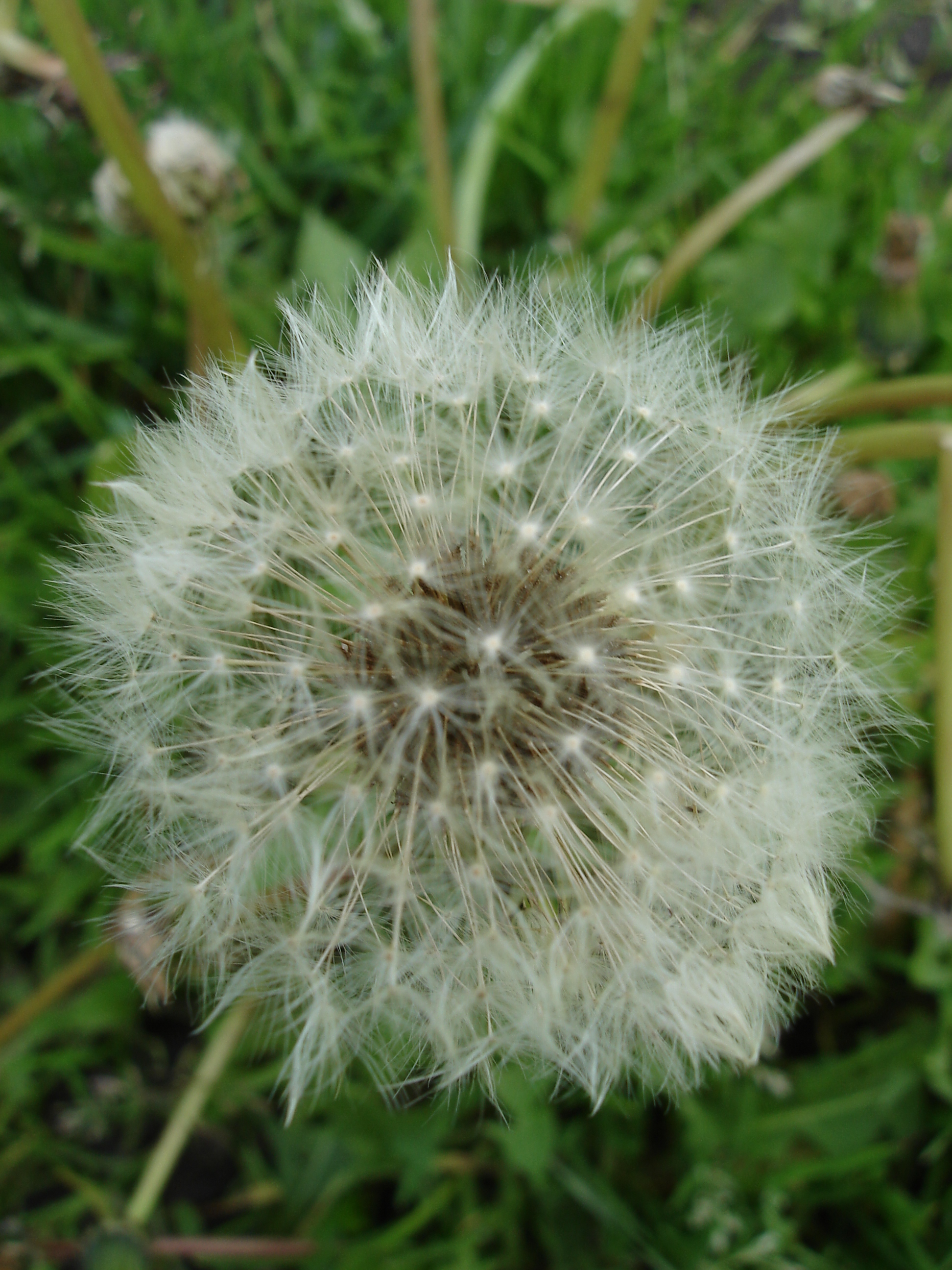
Such naturalization is a serious problem for native fauna as well. Monarch butterflies that swarm to the bloom of blue gum eucalyptus are amazing to observe, but are being distracted from native flora that rely on them for pollination. Both native and exotic rodents proliferate unnaturally within the protection of thickets of naturalized English ivy, and consume too many seed from other plants.

Fortunately, there is a difference between naturalization and sustainability. Many exotic yuccas can survive quite nicely in chaparral regions without irrigation or other intervention, but are unable to disperse seed and truly naturalize without the particular species of moth that are their exclusive pollinators in their respective native homelands. Cultivars of pampas grass are ‘supposedly’ sterile.

Some plants that seem to naturalize do not proliferate or migrate enough to become aggressively invasive or truly naturalized. That is why daffodil can be planted on roadsides to bloom annually, and hopefully multiply somewhat, but does not spread far from where initially planted. In fact, it is unfortunately less likely to naturalize, and more likely to slowly diminish through several years here.

Many plants that proliferate within the cultivation of our home gardens and landscapes will not migrate far from where they they get regular watering. Even after fancier and more colorful varieties revert to their most basic feral forms, they are delightful weeds that are more often left to bloom wherever they appear. Those that appear where they are not wanted are easy enough to eradicate.

These include sweet alyssum, forget-me-not, four-o’-clock, campion, cosmos and nasturtium.

Pull Weeds Before They Seed

60323thumbSpring brings out the best and the worst in the garden. While warm season annuals and vegetables are getting established, so are a variety of weeds. Just like other annuals and perennials, they respond to the changing weather. Cool weather and moisture stratified their seed through winter. Warming moist soil prompts germination. Warm and sunny spring weather promts rapid growth.

There are all sorts of weeds. A few are big trees like bluegum eucalyptus and shamel ash. Some are substantial shrubbery, like privet and cotoneaster. Pampas grass and giant reed are big grassy perennials. The most familiar and prolific weeds are annuals or small perennials, like foxtail, burrclover, purslane, bindweed, sowthistle, pimpernel, spurge, crabgrass and Bermudagrass.

It is best to pull weeds as soon as they are big enough to grab onto. It will take more effort to pull them as they disperse their roots, and as the soil gets drier through spring. Unwanted shrubbery and tree weeds should be pulled like any other weed because they are likely to regenerate from roots if merely cut down. Once they recover and grow more, they will be much more difficult to pull.

Many small grassy weeds can be cut down low with a weed whacker, instead of pulled out completely. In some situations, low cut or mown weeds are better than bare soil. Some types of weeds will neither bloom nor disperse seed if mown. However, many types adapt to mowing by merely blooming and seeding lower. Dandelion and foxtail are notorious for their defiance to mowing.

Weeds are very efficient and creative with the dispersion of their seed. It is impossible to prevent seeds from coming into the garden from the outside. Yet, it is still best to inhibit the production and dispersion of seed from within the garden. Spurge and oxalis bloom and disperse seed in secret before they seem to be mature enough to bloom. Other weeds have taller or more prominent blooms that can be cut down before producing seed, even if the weeds are not actually removed completely.

The Bad Seed

P80818KThis salvia would probably look badder without it. Yes, that’s badder and not better. I mean, if all these slightly unsightly seeded stems were cut back, then the even more unsightly deteriorating foliage below would be more prominent. When one looks at it that way, the bad seed suspended above does not seem all that bad.
It is doubtful that the ‘gardeners’ who ‘maintain’ this site put that much thought into it. They are, after all, the same who ‘maintain’ the firethorn that is pictured in this article from June 27 (The Wrong Plant In The Wrong Place https://tonytomeo.com/2018/06/27/horridculture-the-wrong-plant-in-the-wrong-place/ ). There were probably too busy botching something else to notice that this salvia is in need of botching as well.

There is some unpruned black sage nearby that displays similar but smaller seeded structures on more irregular and arching stems, rather than vertical stems that stand upright. They too are somewhat appealing in a weirdly sculptural sort of way. They might stay like that until winter, when they will likely get pruned back as they deteriorate in the weather.

Sunflowers are commonly left after bloom just because finches and other seed eating birds like them so much. They do not get cut down until the birds are finished with them. To many, this is the main reason for growing sunflowers.

Another excuse to be lazy about deadheading spent blooms is that many will provide seed that can be collected for the next season, or merely allowed to self sow and naturalize. Leaving open pollinated vegetables out to go to seed is a common practice. For example, the last few radishes to be pulled might just be left to bolt, bloom and go to seed. Cosmos tends to throw its seed whether we want it to or not.

The Good Weed

P80616KOnce in a while, a stray seed of a plant that would normally be considered to be an invasive exotic species happens to grow in a spot where it happens to fit. Those of us who regularly pull up unwanted feral seedlings, are typically skeptical. We probably pull up many such seedlings merely because we do not trust them, or because we do not want them broadcasting their seeds elsewhere in the neighborhood. In our region, Acacia dealbata, blue gum eucalyptus, black locust, pampas grass, broom, poke berry and Himalayan blackberry get no consideration; and their seedlings should be removed as promptly as they are discovered. English ivy does not get much more consideration, but every once in a while, it happens to wander into a situation where it is allowed to stay.

Catalpa is one that we are not quite sure about. It is an exotic species that happens to disperse unwanted seed at times, but is not invasive enough to warrant prompt removal of all seedlings. Many seedlings appeared in the area several years ago, and most were removed because of where they were. However, if any other seedlings have appeared since then, they have been discreet enough to remain unnoticed. It was as if there was a very specific mating season. Catalpa had not been invasive prior to that, and has not been invasive since.

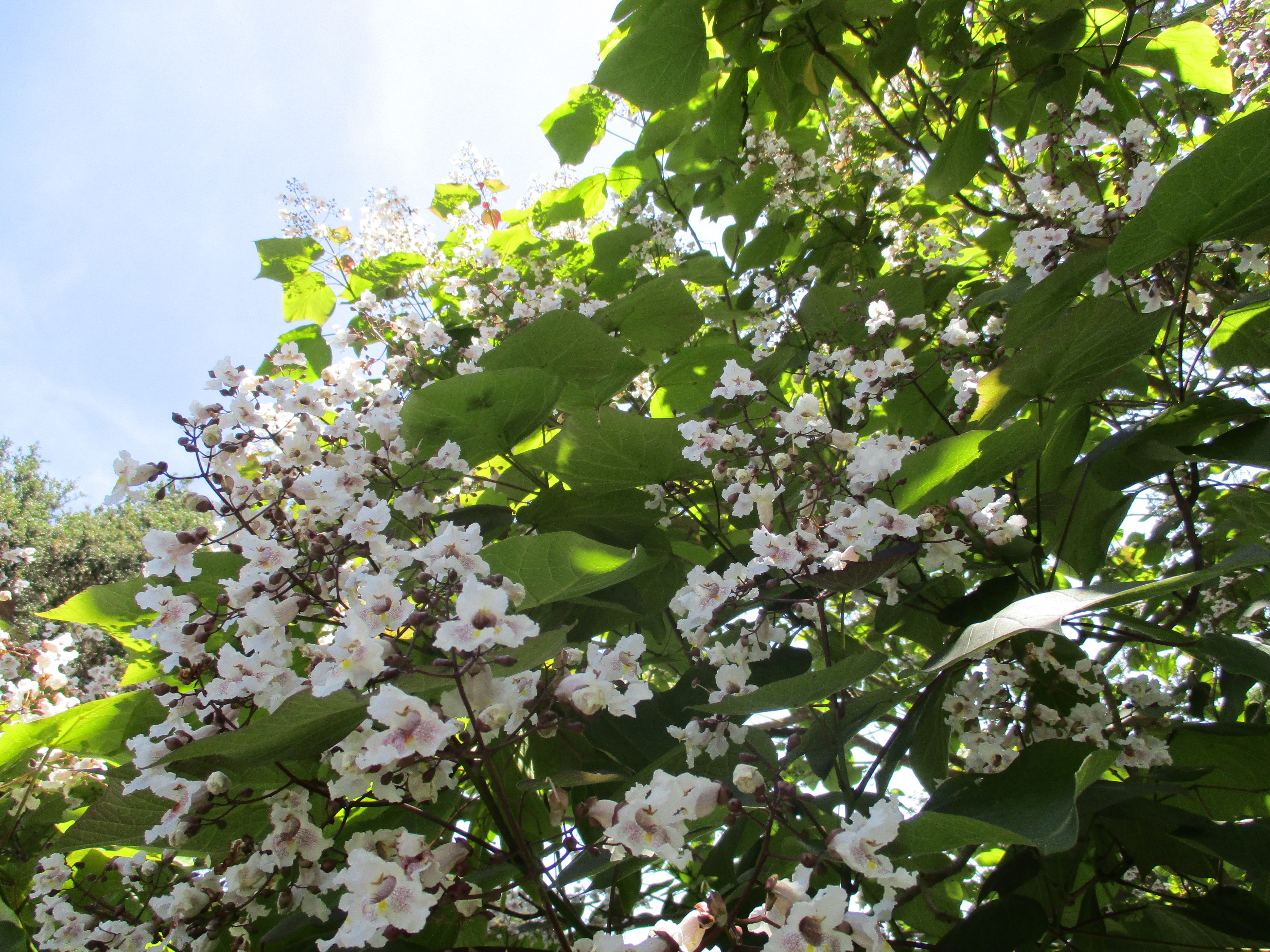
Two of the feral catalpa seedlings appeared on the edge of the parking lot at the Felton Presbyterian Church. One became disfigured and distressed, and finally died before being removed. The other just happened to be in the middle of a parkstrip, and in a location where a good sized shade tree had room to grow. Because no one could find a good reason for removal, it stayed. After only a few years, it is now a good sized and very well structured shade tree that blooms nicely this time of year. It may not last long, since catalpas are short lived, but for now, it is a nice component to the landscape. This weed gets a happy ending.