 Ferns tends to be . . . well, ‘ferny’, with divided or intricately lobed foliage. Staghorn ferns and bird’s-nest ferns are the more familiar of the rare exceptions. Staghorn ferns have two types of simple undivided fronds, and both types lack rachi. Bird’s-nest ferns have weirdly simple fronds that, although equipped with prominent rachi, lack any distinctive division or lobes that make ferns ‘ferny’.
Asplenium nidus is the more familiar of the bird’s-nest ferns, although none of them are common. It is usually grown as a potted houseplant, and is sometimes grown in rich and well watered soil in sheltered atriums. In the wild, it typically grows as an epiphyte, attached to the trunks or limbs of trees, where it collects rain and organic debris that fall from above into its flaring smooth foliage.
Fronds of mature bird’s-nest fern are commonly about two feet long and four inches wide, and can be twice as long and wide in ideally warm, humid and sheltered situations. They are arranged in neat funnel shaped rosettes. Partial shade is best. Bright ambient light is not a problem, but keeps foliage lower and more dense. Direct sunlight can easily scorch foliage. Frost kills entire plants.
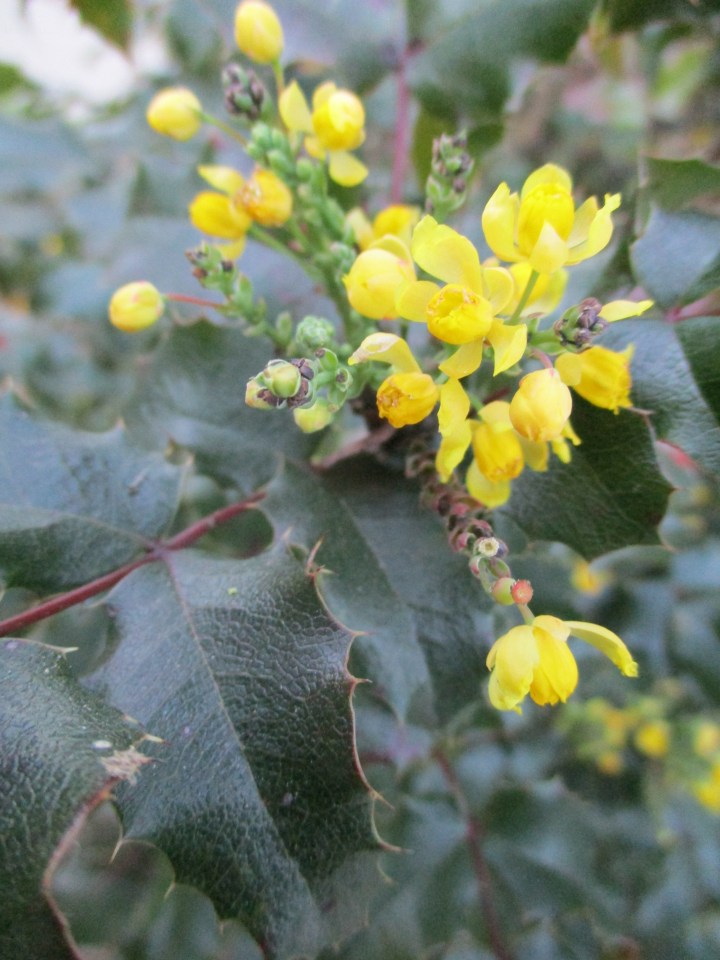 Oregon has good taste. Douglas fir, one of the most useful of timber trees in America, was selected as the state tree. Oregon grape, Mahonia aquifolium, was designated as the state flower. Although the tight clusters of tiny bright yellow flowers that bloom about now may not be as flashy as other state flowers, they contrast handsomely against the glossy and deep dark green foliage.
