White Alder

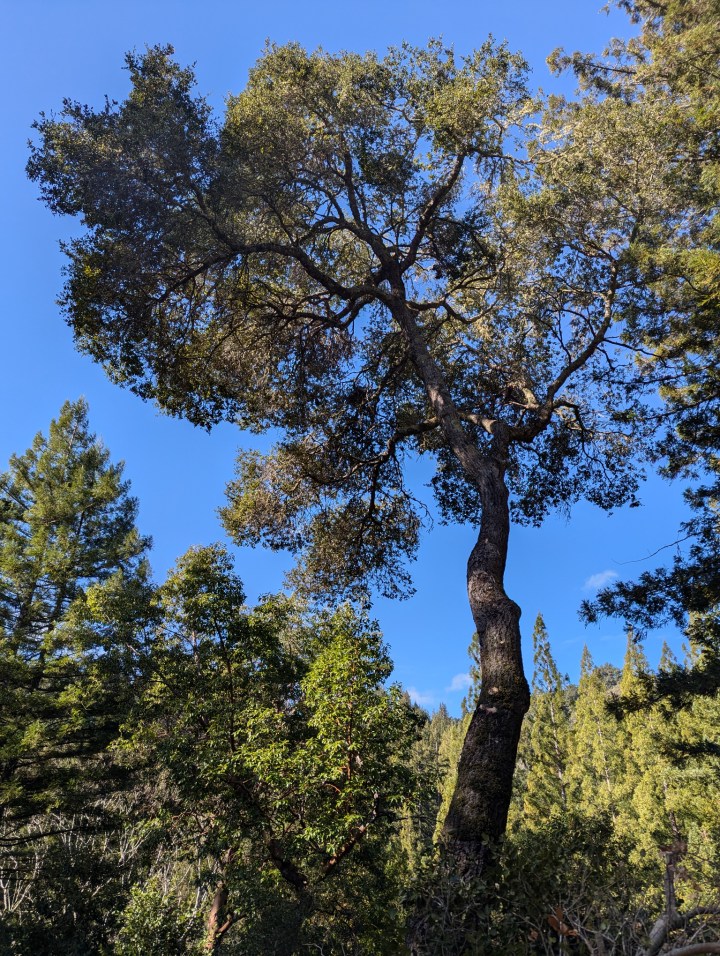
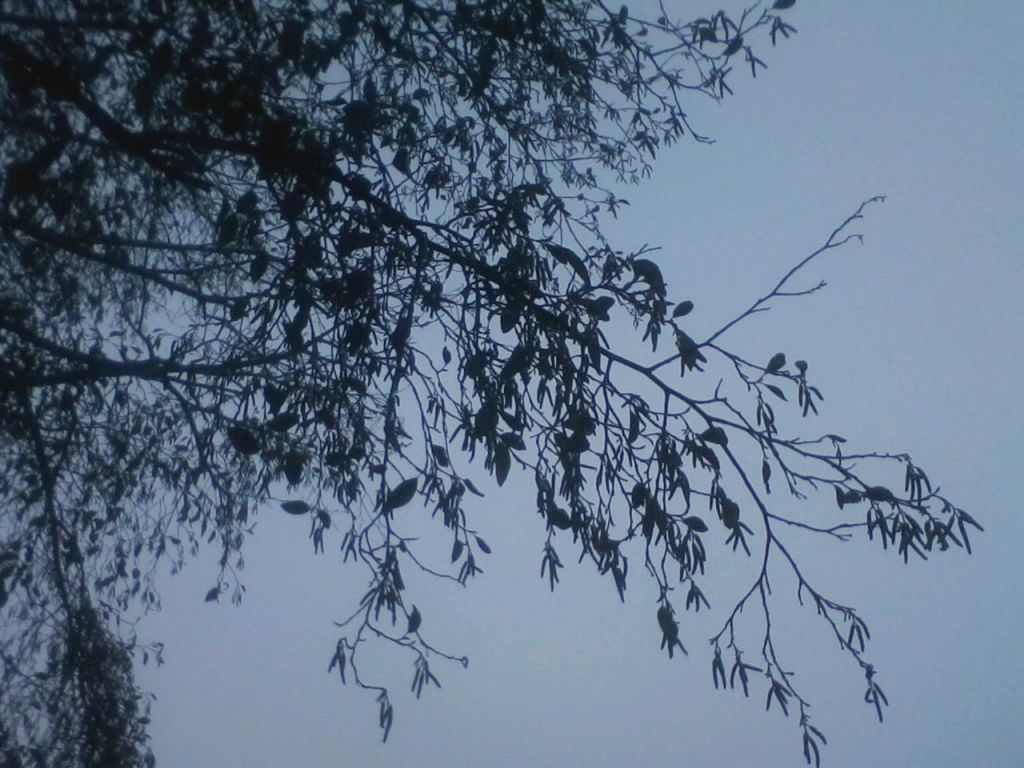
White alder has a distinctive silhouette.

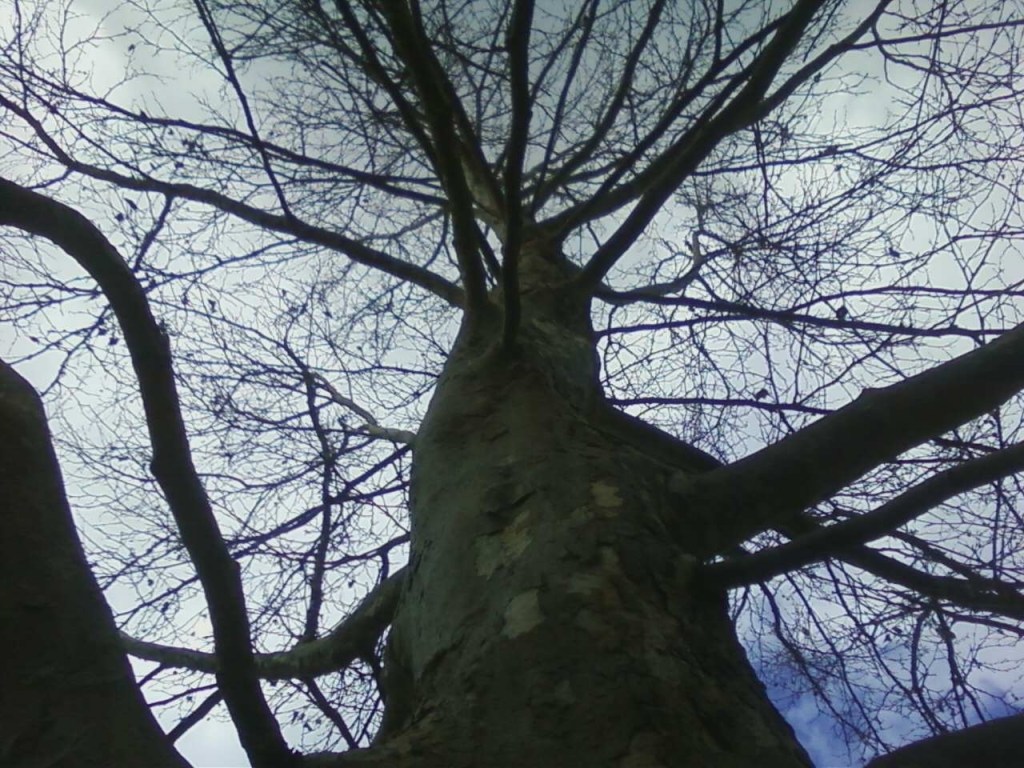
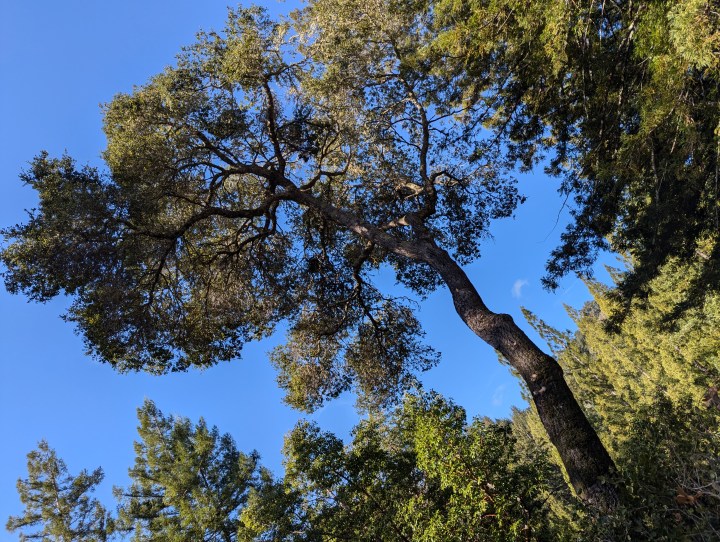
During the summer, the native white alder, Alnus rhombifolia, is a nice shade tree that looks bigger than it really is. By late winter, the bare deciduous canopy has an appealingly picturesque silhouette. This time of year is actually when white alder is typically less appealing, with dead foliage that provides no interesting fall color, but lingers until knocked down by rain or late frost. Yet, even now, it sometimes surprises with these funny looking floral structures that are interesting both in the early winter landscape, and with cut flowers.

In past decades, white alder was an ´expendable’ tree that was put into landscapes for quick gratification while slower but more desirable trees matured. By the time the desirable trees matured, the alders were removed to make more space for the desirables. This technique was practical because, like many fast growing trees, alders do not live very long, so start to deteriorate after about twenty five years anyway. However, alders often live longer than expected.

Mature alders are usually less than fifty feet tall where they are well exposed. They can get at least twice as tall where shaded by other trees or big buildings. Their plump trunks with mostly smooth silvery gray bark make them seem larger than they really are though. Too much water promotes buttressed roots which can displace pavement.
European White Birch

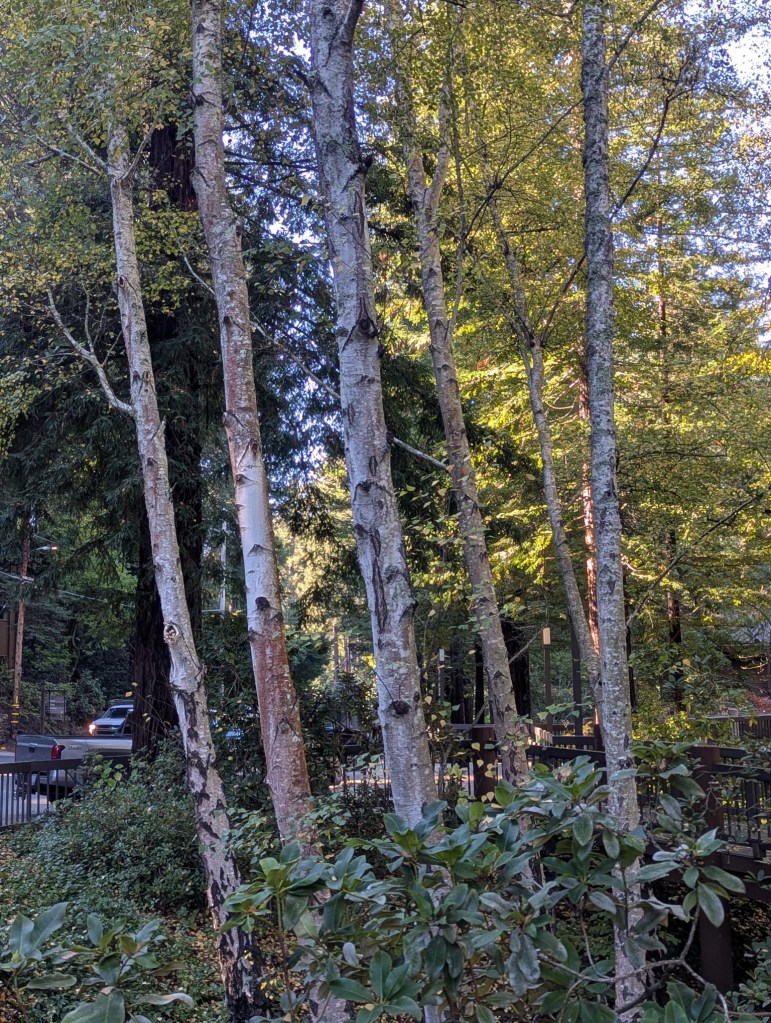
European white birch exhibits elegant trunks.

European white birch, Betula pendula, is a team player. It usually inhabits landscapes in groups rather than singly. Some trees have two, three or more trunks. After all, its primary allure is its strikingly white trunks. Because its foliar canopies are not overly broad, a few can fit into limited space. It is an informal and relaxed tree with nicely pendulous growth.

Mature European white birches are not much more than fifty feet tall here. They can grow taller where winters are cooler. Their slender trunks are mostly less than a foot and a half wide. They generally lean with prevailing winds and away from shade. Their smooth and white bark develops rough and black furrows with age. Their little leaves are deciduous.

European white birch appreciates regular irrigation, so should perform well within lawns. It produces only moderate shade. ‘Laciniata’ has intricately lobed foliage and a narrower form. ‘Youngii’ is so pendulous that it needs staking to stand upright. It can not grow very tall. ‘Purpurea’ has bronzed foliage and somewhat tan trunks, but has become very rare. European white birch might self sow.

Honey Locust

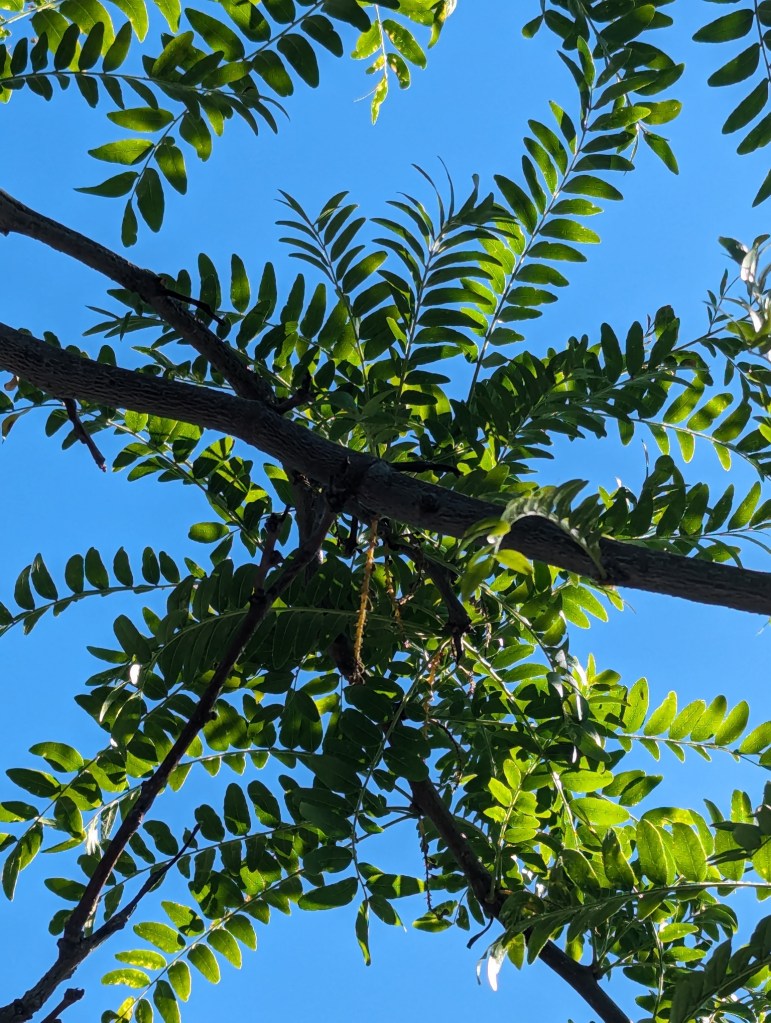
Honey locust is not too shady.

Where it grows wild in the eastern half of North America, honey locust, Gleditsia triacanthos, may not seem like it would be such an appealing shade tree. It is too thorny and messy to make many friends. As it matures and grows nearly seventy feet tall and half as broad, the thorny stems stay overhead and out of the way. However, a larger canopy makes more messy and sometimes unsightly foot long seed pods.

Modern cultivars of the thornless form Gleditsia triacanthos inermis are friendlier and not so messy. Mature trees only grow about half as tall as wild trees. Their main problem is their buttressing roots, which can displace pavement, but stay tolerably low for lawns. Honey locust is actually a good shade tree for lawns (if minor buttressing is not a problem) because it makes just enough shade without getting too dark for a lawn or other shade tolerant plants below. Pods are rare.

The big eight inch long leaves are bipinnately compound, which means that each leaf is divided into smaller leaflets, which are also divided into even smaller leaflets that are about half an inch long. Although individual leaves are actually quite large, the collective foliage is pleasantly delicate and lacy. This foliage turns yellow early in autumn and disintegrates as it falls, leaving minimal debris to rake. New foliage develops somewhat late in spring, along with inconspicuous flowers.

Shade Trees

Trees are the most substantial components of a landscape.

Shady characters inhabit some of the best gardens. Actually, most of the best gardens have some sort of shade tree. There are so many to choose from for every sort of garden. Some stay small and compact enough to provide only a minimal shadow for a small atrium. Others are large enough to shade large areas of lawn.

Like every other plant in the garden, shade trees should be selected according to their appropriateness to particular applications. Favorite trees are of course welcome, but should be placed in appropriate locations where they will be less likely to cause problems later. For example, those of us who like silver maples should only plant them where they will not crowd other trees, and if there is sufficient area to accommodate them when mature. Southern magnolias are bold shade trees, but create too much mess for infrequently raked lawns, and create too much shade for many other plants around them.

Shade trees near to the home should be deciduous if possible. This means that they will drop their leaves to be not so shady when it would be good to get more sunlight through winter. Honey locust, red oak, Raywood ash, tulip tree and many varieties of maple (except Japanese maple) are some of the best. Silver maple gets a bit too large for small gardens, but is an elegant shade tree for large lawns. Japanese maple and smoke tree are small trees that fit nicely into an atrium or a small enclosed garden.

Evergreen trees also make good shade trees, but should be kept farther from the home if possible, in order to avoid shading too much through winter. Besides, most evergreen trees are messier than deciduous trees so are not so desirable over lawns, patios or roofs. Camphor tree and several of the well behaved eucalypti are delightful shade trees where their litter will not bother anyone. Mayten tree is a smaller tree for more confined areas. Strategically placed evergreen shade trees can also function to obscure unwanted views.

Every shade tree creates a specific flavor of shade. Honey locust makes just enough shade for summer weather without making the garden too dark for other plants and lawn grass. Silver maple is a bit shadier. The shade of redwood and Southern magnolia (when mature) though, is so dark that not many other plants want to get close to them.

Remember that appropriate shade trees may be in the garden for decades or even centuries. It is best to select them accordingly so there will be fewer problems in the future.

London Plane

London plane is more common than it should be.

Not many arborists or horticulturists are fond of the unremarkable but very popular London plane tree, Platanus X acerifolia. It soon gets too large for many of the tight situations it gets planted in, more than thirty feet broad and more than forty feet tall. Although it is among the most common of street trees, it can produce aggressive buttressed roots that displace sidewalks and curbs. Fuzz (tomentum) from the leaves is irritating to the skin or if inhaled.

Older trees that were planted prior to the development of disease resistant varieties are very susceptible to anthracnose and mildew, and are likely to infect other susceptible plants. Infected trees often get their foliage late in spring (after earlier new foliage shrivels and falls), or defoliate by late summer. Otherwise, the slightly raspy eight inch wide leaves seem sickly as they turn grungy yellowish brown in autumn.

Landscapers use London plane trees too commonly merely because they are so reliable. They tolerate most soils, smog, severe exposure (such as reflected glare from pavement) and a bit too much watering. Modern varieties are not quite as susceptible to disease. ‘Yarwood’ has large rounded leaves that are resistant to mildew. ‘Bloodgood’ is less susceptible to anthracnose. ‘Columbia’ is less susceptible to both diseases.

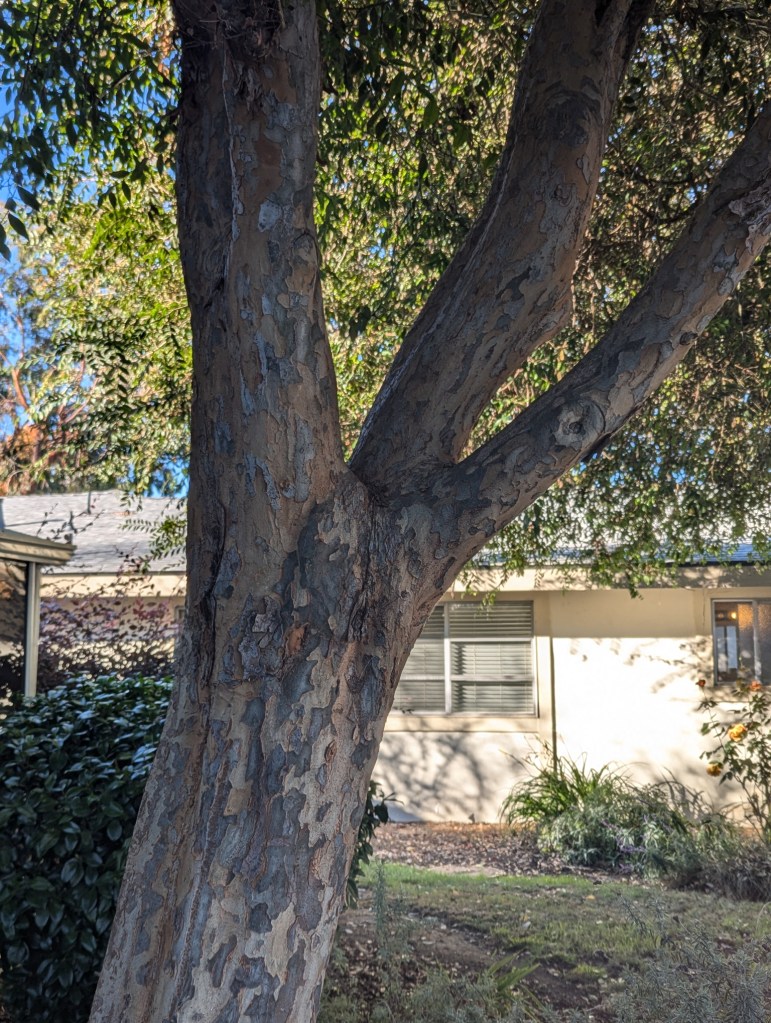
Large limbs and trunks with mottled gray and tan bark are rather sculptural while bare through winter. London plane happens to be conducive to annual pollarding, which makes the limbs even more sculpturally gnarly, and produces more vigorous growth with larger leaves that are less susceptible to disease.  

Tree Selection

Some trees grow too large for urban situations.

Trees are the most significant components of the landscapes that they inhabit. They get larger than all other plants, and live for decades or centuries. Because inappropriate trees have such potential to cause such serious problems, and can be so difficult and expensive to remove, it is important to select trees that are appropriate to each particular application.

Size and form of trees when they mature are important considerations. Crape myrtles are small to midsized trees that fit nicely into tight spots, but are too dinky to be good street trees. London plane trees are more proportionate as street trees, but eventually displace sidewalks and curbs with their aggressive buttressed roots. Chinese elms can be good street trees, but need to be pruned regularly to maintain clearance. Red maples are a better choice because they get large enough without getting too big, have complaisant roots, and are easily pruned for adequate clearance.

Other features in the area can limit tree selection. Poplars and willows have aggressive roots that invade septic systems or old unsealed iron or terra cotta sewer pipes. Queen palms eventually reach utility cables, but can not be pruned to go around them. Any good shade tree can provide too much shade over solar panels. Partial shade from large trees or structures is a problem for most other trees, but is actually preferred by a few ‘understory’ trees like vine maples, Japanese maples and dogwoods.

Trees that are expected to provide shade through summer should probably be deciduous, like red oaks or silk trees, to allow warming sunlight through during winter, particularly close to the home. However, trees that should obscure unwanted views should be evergreen, like Southern magnolias or arborvitaes.

Some trees that need more attention than others are only appropriate where they will get the attention they need. Mexican fan palms are easy to care for while young, but eventually grow out of reach and need to be groomed by professional arborists. Of course, every tree is limited to particular climates. Various ficus trees that are common in nurseries in San Diego will not survive even a mild frost, which is why they are not available in San Jose.

Chinese Elm

Chinese elm is sculptural and textural.

Dutch elm disease became a serious problem for American elms in the 1930s. However, it did not reach California until half a century or so later. Chinese elm, Ulmus parvifolia, is not very susceptible to the disease, but is a vector. In other words, it can survive infection to share it with other species of elm. Consequently, it became unavailable by the 1980s.

Some mature specimens of formerly common Chinese elm still inhabit older landscapes. Younger specimens in newer landscapes are mostly ‘Drake’ Chinese elm. They are a bit more upright, with more symmetrical form. More importantly, they are not vectors of Dutch elm disease. Other cultivars that are also resistant are rarely available at local nurseries.

Classic and formerly common Chinese elm can eventually grow more than fifty feet high. Some can grow thirty feet wide to shade an entire urban front lawn. Some cultivars might grow nearly as high, but are generally not quite as broad. Their blotchy gray and tan bark adorns curvaceous limbs. Their small deciduous leaves are not very colorful for autumn. They can be copious, messy and quite tedious to rake.

Honey Locust

Honey locusts produces delightfully dappled shade.

Within its native range, wild thorny honey locust, Gleditsia triacanthos, is a nasty tree! Its wicked thorns are typically as long as four inches but can be twice as long. Some branch into many thorns or thick clusters of thorns. Thickets of many trees can be impenetrable. Female trees produce a messy abundance of brown pods that are about half a foot long.

Fortunately, its cultivars are much more docile. Most are exclusively male, so produce no pods. Old fashioned cultivars that might produce pods as they mature are now rare. More importantly, cultivars are thornless. That is why their common name is now honey locust rather than thorny honey locust. They are as remarkably resilient as the simpler species.

Most cultivars of honey locust grow no taller or wider than fifty feet here. Some grow only half as tall. Some of the more popular cultivars are brightly yellowish green for spring. At least one is ruddy bronze for spring. The finely textured foliage provides dappled shade. Leaves are pinnately and bipinnately compound, and turn yellow for autumn defoliation. Individual leaflets are less than an inch long, so can be difficult to rake.

Carob

Carob eventually develops gnarly branch structure.

John the Baptist survived in the Wilderness of Judah by eating locusts and honey. These locusts could have been large orthopteran insects, such as grasshoppers. However, they were more likely fruits of locust trees, such as carob, Ceratonia siliqua. Both possibilities are both nutritious and kosher. The insects got their name from resemblance to the fruit.

That was almost two millennia ago, and more than seven thousand miles away. Carob is much more popular than grasshoppers here and now. Unfortunately though, within home gardens, the fruit is more of a mess than an asset. Male trees are not messy like females, but produce objectionable floral fragrance. Monoecious trees are both messy and stinky.

Mature trees develop broad canopies that are generally less than thirty feet high. Trunks and main limbs eventually become sculpturally gnarly. Densely evergreen foliage is very shady. Pinnately compound leaves are olive drab, glossy and four to seven inches long. Female orchard cultivars should be fruitless without a pollinator, but are rarely available. Besides, it is impossible to know if a male tree is within pollination range.

Norway Maple

Most other Norway maples are cultivars.

The botanical name of Norway maple, Acer platanoides, means ‘maple like a sycamore’. It resembles Platanus X acerifolia, which means ‘sycamore with maple foliage’. Platanus X acerifolia is London plane (‘sycamore’), which serves similar purposes. Norway maple lacks the irritating foliar tomentum of London plane. It has more aggressive roots though.

Norway maple was likely never a fad, but was common as a street tree during the 1950s. It naturalized as in invasive exotic species in parts of the Pacific Northwest. It is not such a nuisance locally. Most domestic trees are sterile or almost sterile cultivars. If their roots were more complaisant, they could have been ideal street trees. Their shade is splendid.

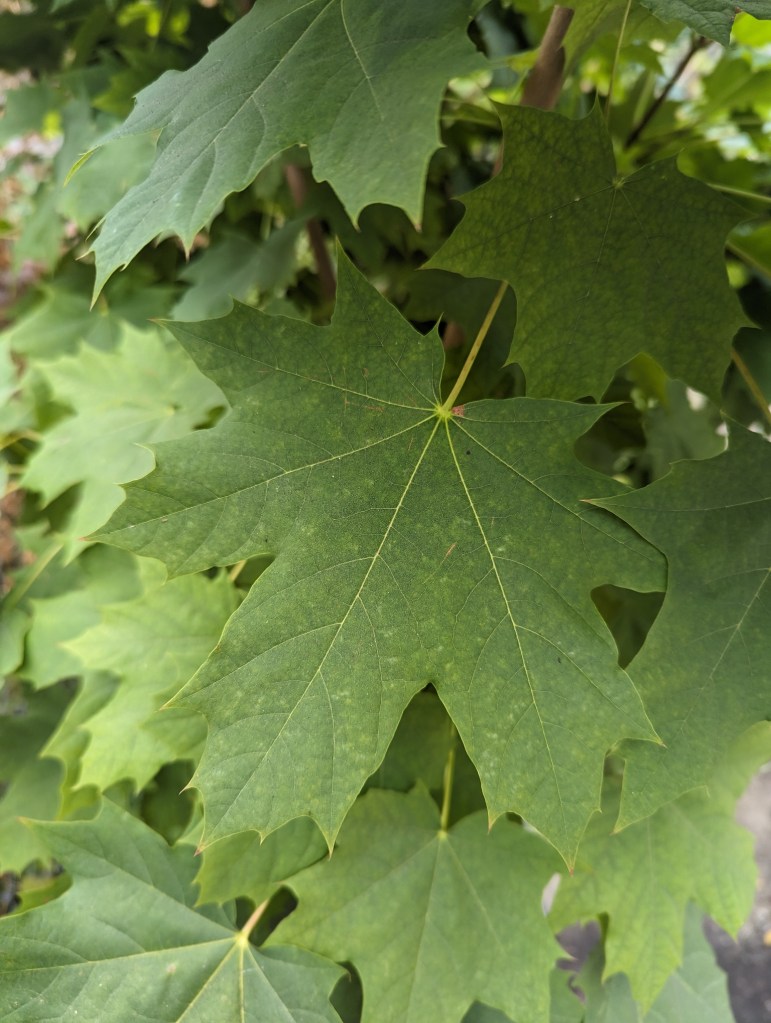
‘Schwedleri’, with bronzed foliage, was likely the most popular cultivar originally. Modern cultivars are darker bronze, golden, variegated or simple green. Their deciduous foliage is not so impressive for autumn though. It turns somewhat brownish yellow. The palmate leaves are about five to nine inches wide. Defoliation is efficient. Refoliation is quite late. Not many Norway maples get more than forty feet tall within the mild climates here.