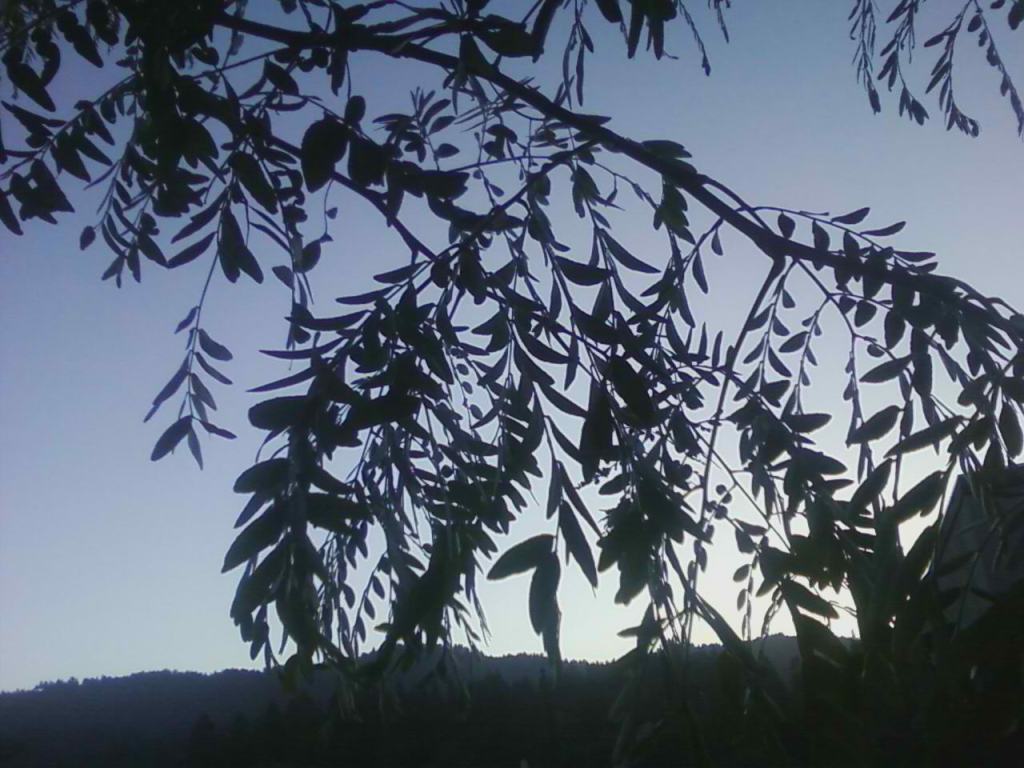
Where it grows wild in the eastern half of North America, honey locust, Gleditsia triacanthos, may not seem like it would be such an appealing shade tree. It is too thorny and messy to make many friends. As it matures and grows nearly seventy feet tall and half as broad, the thorny stems stay overhead and out of the way. However, a larger canopy makes more messy and sometimes unsightly foot long seed pods.
Modern cultivars of the thornless form Gleditsia triacanthos inermis are friendlier and not so messy. Mature trees only grow about half as tall as wild trees. Their main problem is their buttressing roots, which can displace pavement, but stay tolerably low for lawns. Honey locust is actually a good shade tree for lawns (if minor buttressing is not a problem) because it makes just enough shade without getting too dark for a lawn or other shade tolerant plants below. Pods are rare.
The big eight inch long leaves are bipinnately compound, which means that each leaf is divided into smaller leaflets, which are also divided into even smaller leaflets that are about half an inch long. Although individual leaves are actually quite large, the collective foliage is pleasantly delicate and lacy. This foliage turns yellow early in autumn and disintegrates as it falls, leaving minimal debris to rake. New foliage develops somewhat late in spring, along with inconspicuous flowers.

