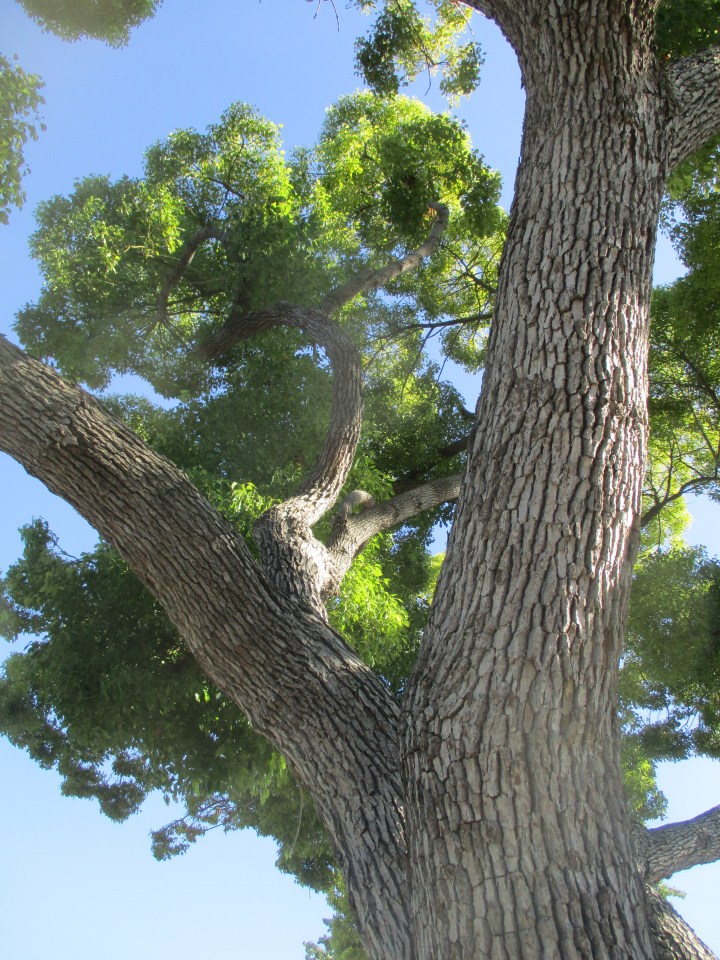
The best camphor trees, Cinnamomum camphora, are in parks and other spacious landscapes. Such trees have sufficient room for their broad canopies. Although they do not grow rapidly, they eventually get quite large, and perhaps too massive for confined urban gardens. Some of the older local trees are nearly fifty feet tall, and nearly as broad. They have potential to get much bigger.
Camphor trees excel as shade trees. Their light green or perhaps yellowish evergreen foliage is quite dense. Shade of groups of trees or large trees with low canopies inhibits the growth of lawn grass. Also, roots are likely to eventually elevate lawn or other features that are close to the trunks. Foliar canopies are billowy, but can be lopsided, especially in windy or partly shaded situations.
Trunks and main limbs of camphor trees are rather stout, and can be rather sculptural. Trees should be pruned for clearance while young. Otherwise, obtrusively low limbs can become prominent components of the canopies. The tan bark is distinctively checkered. It darkens handsomely with rain. All parts of camphor tree are quite aromatic. Frass from spring bloom can be slightly messy.


 One might surmise that a tree that is resilient enough to be the state tree of Texas is not too discriminating. If it can take the heat and humidity of the Lone Star State, it can make it anywhere! However, pecan, Carya illinoinensis, actually prefers heat and humidity, and is bored with the mild local climate. The nuts and the mess that comes with them are actually less abundant than they would be in the Gulf Coast States. The deciduous foliage is not quite so colorful in autumn.
 Several native species and varieties of poplar are known collectively as cottonwood. Not many are actually planted. They just have a sneaky way of appearing in well watered parts of the garden that are as damp as the riparian areas that they naturally inhabit. Only Fremont cottonwood, Populus fremontii, gets planted, rarely, and only in big spaces that can accommodate its grand scale.
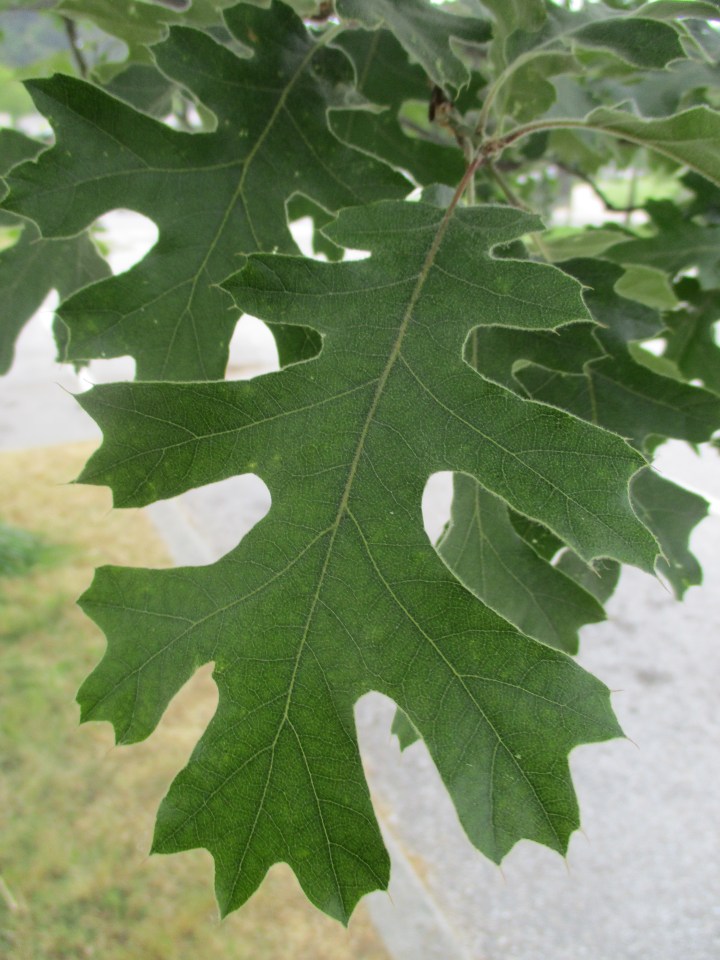 Oak, which might seem to be obvious to many of us, was identified by the Arbor Day Foundation as the People’s Choice for American’s National Tree. We certainly like our redwoods and exotic palms in California. Quaking aspen and blue spruce are probably favorites in Colorado. Sugar maple must be the most popular in Vermont. Yet, everyone appreciates the mighty American oaks.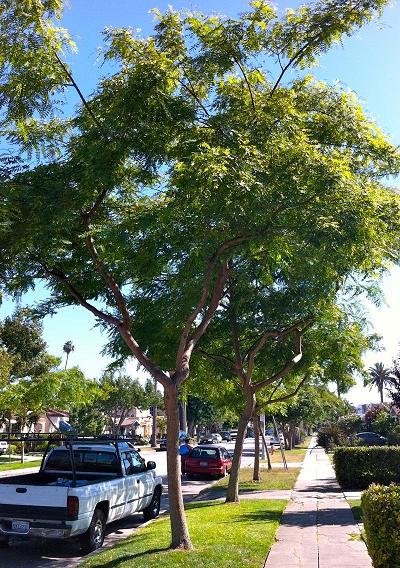
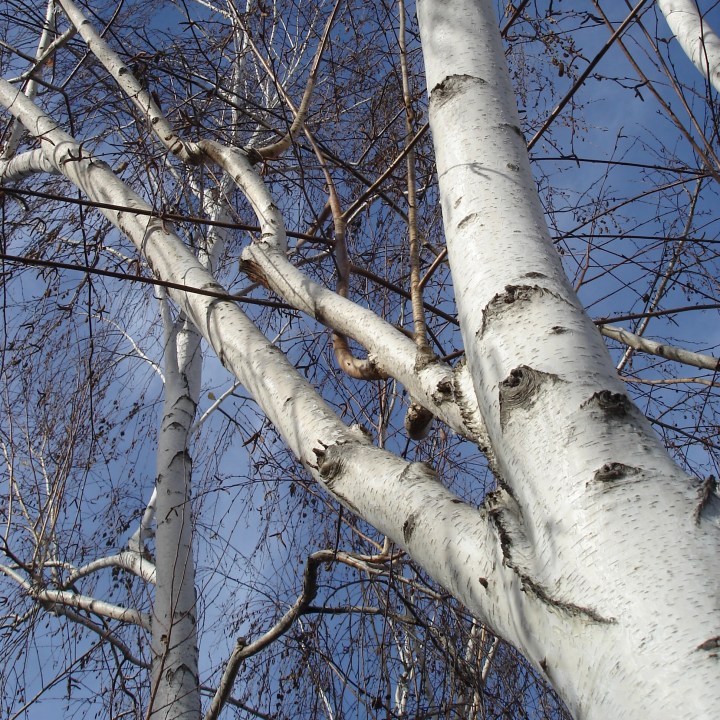 It may not be the biggest or best deciduous shade tree, but European white birch, Betula pendula, is famous for tall and elegant white trunks with wispy pendulous stems. It is a very informal tree that typically leans in one way or another, but is somehow right at home in refined landscapes. It is rarely alone, since it is usually planted with two or more friends, and sometimes in groves.
