Microclimates Are Distinct From Climates

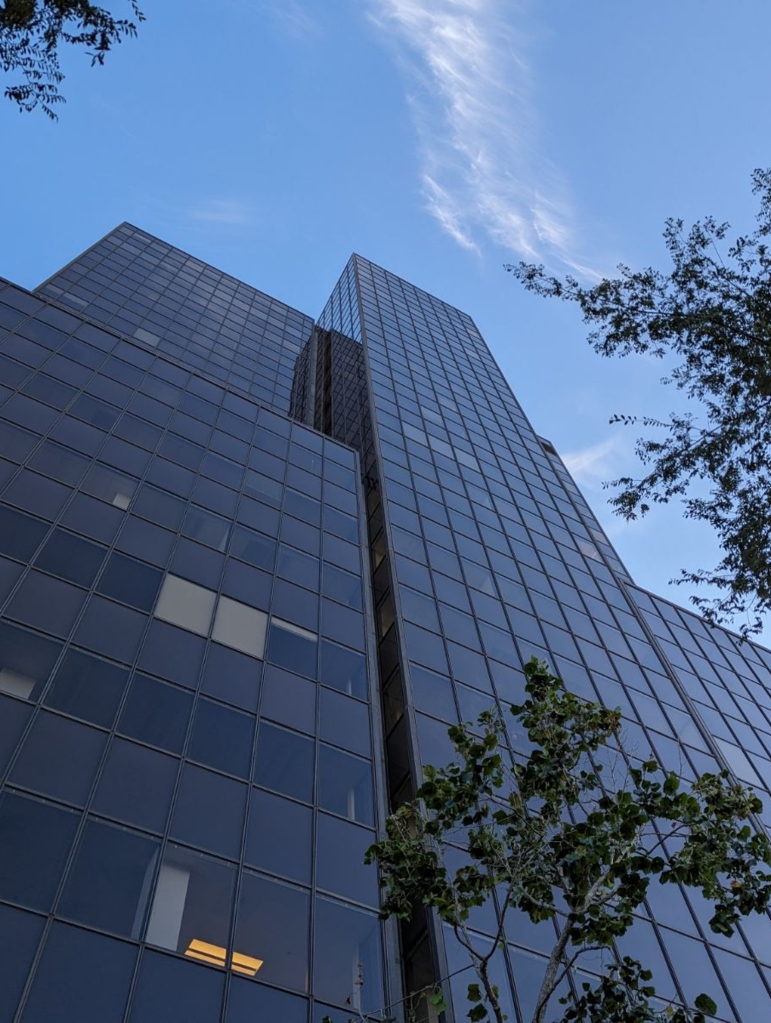
Larger buildings inevitably produce larger microclimates.

Climates and geology are why cinema and television industries are so established here. Cinema evolved in Niles before relocating, with the evolution of television, to Hollywood. The diversity of local climates, geology and associated scenery was the primary appeal. Farmers of all sorts had already been exploiting such climates as well as microclimates.

Climate is a regionally prevalent pattern of weather. Mediterranean or chaparral climates are prominent locally. Coastal, desert and alpine climates occupy other relatively nearby regions of California. Variations of geology influence weather, which determines climate. This comprises mountains, valleys, various altitudes and proximity to the Pacific Ocean.

Microclimates, as their designation suggests, are small climates within big climates. With such a mix of climates here, microclimates might be difficult to distinguish. Some climate zones of steep coastal hillsides are very narrow, for example. Yet, if they are distinct from those for higher and lower elevations, they are climates. Microclimates are even smaller.

For microclimates, exposure is as relevant as endemic climates. Such exposure can not change climate, but modifies its influence. For example, large eaves and warm walls can provide localized shelter from frost. Southern slopes of hilly terrain are likely a bit sunnier and warmer than northern slopes. Buildings and fences shade garden area to their north.

Many microclimates, such as those that involve terrain or forest shade, are natural. They are generally less dynamic than unnatural microclimates. Forest shade changes only as fast as associated trees grow or die. Only major disruption, such as fire or timber harvest, accelerates such slow change. Terrain may not change significantly for millions of years.

Unnatural microclimates are more dynamic and unpredictable. Taller modern homes and fences shade more within adjacent gardens. Skyscrapers can extend their shadows into gardens a few blocks away. Conversely, some can reflect sunlight to adversely increase heat and glare. Expansive and unshaded pavement likewise increases ambient warmth.
More Bad Design

blindfolded house

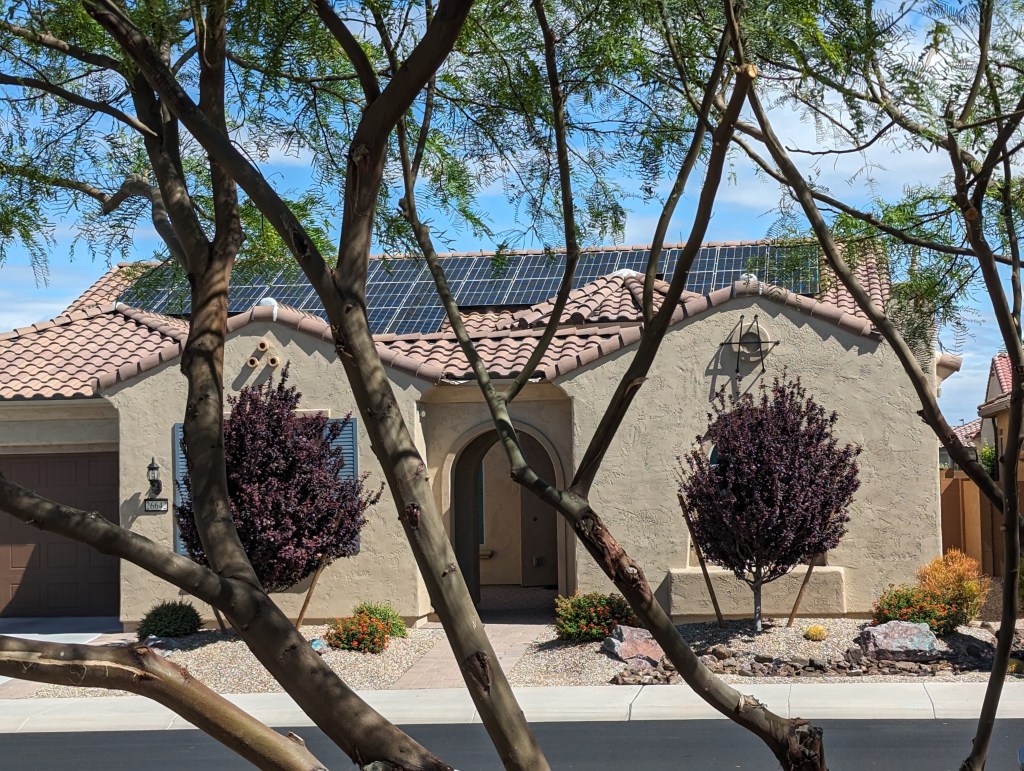
The landscape in front of the home across the road from where I am staying in Arizona is weird. Like many of the landscapes here, it is simple, with only a few small shrubs and stone surrounded by gravel, but also includes this silly pair of purple leaf plum trees. They are pruned into symmetrically round form. The pruning keeps their canopies nicely dense with strikingly bronzed foliage. What makes them so weird is their location. Within the climate here, shade is an asset. However, these trees are not allowed to make much shade. The natural form of these small trees could frame the facade of this house nicely. However, they clash with it defiantly. With their profuse spring bloom and rich foliar color, these trees might enhance the scenery from within the windows. However, they subjugate it and exclude any other scenery, and likely exclude a bit too much sunlight without providing significant cooling shade through summer. I am certainly no landscape designer, but in my opinion, this landscape looks odd. The vegetation is of good quality and quite healthy. The stone and gravel is neatly arranged. The facade of the home is quite appealing. The problem is that the assemblage of the landscape relative to the home is awkward. The tree in the foreground is one of the first three mesquite trees that I ever met when I pruned them up for clearance last year. It and the specimen next to it are also awkwardly placed in front of their home, although the third is in a better situation next to the garage. That is precisely why these three trees were pruned up for clearance, and why they will be pruned higher as they grow. They already provide a bit of shade, and will provide more as they grow.

Shade Tolerant Species Genuinely Shine

Some species actually prefer partial shade.

Home gardens are getting shadier as bigger modern homes occupy smaller modern lots. Bigger homes make bigger shadows. So do their bigger fences that compensate for their minimal proximity to each other. Less space within their smaller gardens extends beyond their shade. Consequently, shade tolerant species have become more popular than ever.

Also, small trees have become more popular than large trees for small modern gardens. However, more of them are evergreen to partially obscure obtrusively close homes. Their shade lasts throughout the year, and is likely darker than that of deciduous trees. It could be too dark in some situations even for shade tolerant species. Even they need sunlight.

Realistically, shade tolerant species merely require a bit less sunlight than most species. No real vegetation can survive without any sunlight. Like it or not, artificial turf can be the most practical option for the shadiest of lawns. Some potted plants can cycle around the garden, to take turns in shade and sunlight. If so, they may not need to be shade tolerant.

Most shade tolerant species perform differently with shade than with better exposure. For example, some rhododendrons that tolerate shade bloom better with more sunlight. Most species with colorful or variegated foliage are more colorful with more sunlight. Likewise, sunlight enhances autumn color for some deciduous species. Shade is merely tolerable.

Also, some shade may be dynamic. Garden space below deciduous trees can be shady for summer, but sunny for winter. Below high evergreen trees, sunlight might get through at a lower angle through winter. Major pruning or removal of vegetation can improve sun exposure if necessary. Many shade tolerant species are adaptable to such modifications.

Most shade tolerant species are understory species. They naturally live below canopies of higher vegetation. Some have big leaves and dark foliar color to maximize absorption of sunlight. Ferns are famously tolerant of shade, although tree ferns can reach above it. Kaffir lily, cast iron plant and hosta tolerate shade also. Rhododendron, azalea, camellia, andromeda and hydrangea tolerate shade as well, but need a bit of sunlight to bloom.

‘Borrowing’

This particular situation is both too compact and too shady for these items.

Yellow and purple ‘Karma’ iris did not work out so well. To be brief, Brent and I ‘borrowed’ rhizomes of pink bearded iris after their bloom, and prior to their removal and disposal, but they bloomed yellow and purple for the following spring. Apparently, we ‘borrowed’ the wrong rhizomes, and were victims of ‘karma’ that was appropriate for the manner in which we ‘borrowed’ them.

Of course, that experience has never dissuaded me from ‘borrowing’ what I want to grow in my own garden. I am a horticulturist. I can grow just about anything that will grow here from seed, cutting or other sources of propagation material. Some is from situations from which it must be removed anyway. Some is from greenwaste piles. Some is from seed or cuttings that I find while out and about. I purchase almost nothing from nurseries.

Much of what we grow for the landscapes at work is recycled from other landscapes at work. This particular portion of a landscape is in front of a residential staff cabin. The Australian tree fern and elephant ears were installed here by a former resident who no longer resides here. Unfortunately, this situation is both too confined and too shady for them. Not only do the leaves extend over the adjacent walkway and steps, but, in response to the shade, they also grow larger and therefore more obtrusive than they otherwise would be. Because it would be impractical for them to remain within this landscape, I am not at all hesitant about recycling them into other landscapes. I am merely waiting for cooler and rainier winter weather, when they will be more conducive to relocation. The elephant ears should be dormant. I know which landscape the fern will relocate to. The elephant ears may remain canned for propagation.

Fern Foliage Is Softly Bold

Ferns provide distinctive and bold foliage.

Ferns are foliar perennials. They provide neither floral color nor fragrance. They provide neither fruits nor vegetables. With few exceptions, they provide no shade. The very few that are deciduous are not impressively colorful for autumn here. Ferns can not grow as hedges. Nor can they become lawns. They exclusively provide distinctive fern foliage.

They do so splendidly! Most produce the sort of distinctively lacy fern foliage that ferns are famous for. Some exhibit even more finely textured and airy foliage. A few exhibit a relatively coarse foliar texture. Almost all ferns are rich and deep green. Some are lighter or slightly yellowish green. A rare few are silvery gray, or display an intricate silver lining.

Almost all ferns that are popular within home gardens are evergreen. Most benefit from occasional grooming to remove deteriorating old foliage. Some produce new growth on top as old growth lies down below. Several grow most lushly after removal of all foliage prior to their growing season. A few deciduous types of fern defoliate for their dormancy.

Ferns do not develop stems or trunks like most other vegetation does. They sprawl over the ground with rhizomes, which are fleshy stems. Rhizomes grow only in length, but not in diameter. Tree ferns grow upward as their rhizomes deteriorate below. Roots that grow through the deteriorating rhizomes form what seems to be trunks. Fern roots are fibrous.

Leaves of ferns are fronds. Such fronds of most ferns divide into pinnae, which are like smaller leaflets. Pinnae of some ferns divide into even smaller pinnae. Rachi are central stalks that suspend the pinnae within individual fronds. Ferns reproduce by spores, so lack flowers. Most ferns propagate efficiently by division of preferably dormant rhizomes.

Because of their fibrous root systems, ferns are complaisant to confinement within pots. Most ferns are naturally understory vegetation, so are innately tolerant of partial shade. Ferns that tolerate aridity as well as shade and confinement are delightful houseplants. Most ferns are very tolerant of relocation, although some must replace foliage to adapt.

Physics of Exposure

Pavement reflects glare and enhances harsh exposure, which can roast small plants.

How can so many colorful annuals and perennials be so surprisingly happy in the many large pots on the sidewalks in front of downtown shops? Downtown does not seem like it should be so comfortable to them, with all the concrete, glass, stucco and all sorts of other reflective surfaces to enhance the harsh exposure. Yet, the buildings and street trees instead provide a bit of shade to soften exposure and hold in a bit of ambient humidity. Some areas are even too dark for many plants.

Exposure is as important to selection of appropriate plants as climate and soil (or potting media) are. Plants that need full sun exposure will not perform like they should in partial shade. Those that want partial shade may get roasted by too much sunlight.

Walls, fences, and windows to the north can enhance the harshness of exposure by reflecting glare. To the south, they can conversely limit exposure with shade. Such structures to the west increase morning warmth but provide shelter from afternoon heat. To the east, these features are not so advantageous, since they shade morning sun, but enhance afternoon heat. Pavement adds to glare without providing any shade.

As if this is not confusing enough, there are  many more factors to consider. Coarsely textured or darkly colored surfaces do not reflect glare as severely as smooth or lightly colored surfaces do. Broad eaves, like those that adorn classic ranch style architecture, not only add more shade, but also limit reflected glare from walls below. Taller buildings, like two story Victorian houses, create more shade than single story Spanish colonial houses with flat roofs. Even shade trees are variable, ranging from the dark evergreen shade of Southern magnolia, to the light deciduous (absent through winter) shade of silk tree.

Most plants do well within a significant range of exposure, between full sun and partial shade. A few, like agaves, yuccas, oleanders and most eucalyptus, are resilient to harsh exposure, but would not survive significant shade, and would look tired in even partial shade. Even fewer, like ferns, fuchsias, impatiens and Japanese aralia, tolerate darker shade (although none survive in complete shade), but would get roasted if too exposed. Shade, reflected glare, and anything that might affect exposure must be considered in the selection of appropriate plants for each particular application.

Kaffir Lily

Kaffir lily brightens a shady situation.

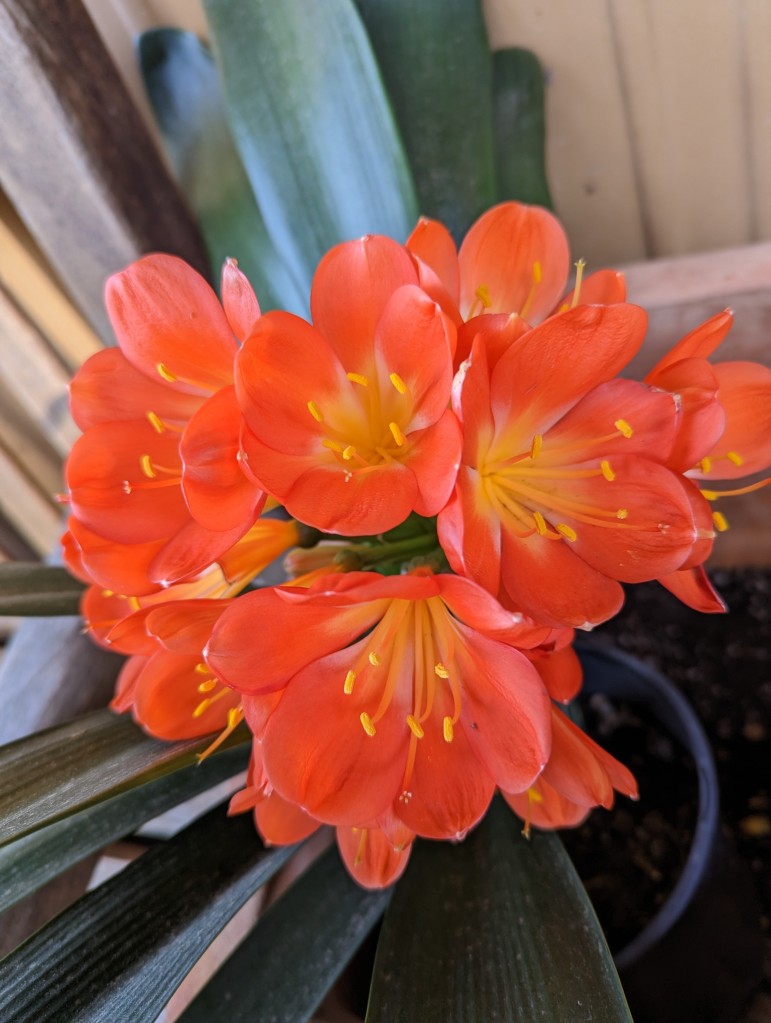
Kaffir lily, Clivia miniata, and lily of the Nile seem to be similar but are very different. Both develop densely evergreen mounds of arched strap shaped leaves. Both bloom with many funnel shaped flowers in spherical umbels on upright stems. Even their thick and rubbery rhizomes and roots are similar. However, they are related neither to each other nor to lilies.

Kaffir lily bloom is rich orange, fiery orangish red or yellow. This is opposite of the pastel blue or white floral color range of lily of the Nile. While lily of the Nile requires abundant sunlight, Kaffir lily tolerates significant shade. Kaffir lily leaves and bloom are more stout and less pliable than those of lily of the Nile. Kaffir lily foliage is generally darker green.

Individual leaves of Kaffir lily can be three inches wide and about a foot and a half long. Mounding growth of old colonies can get more than two feet high. Bloom hovers barely above the foliage. A few round and bright red berries can develop after bloom. Individual seeds within each berry may be genetically variable. All parts of Kaffir lily, particularly the rhizomes, are toxic.

Shade Imposes Limitations On Gardening

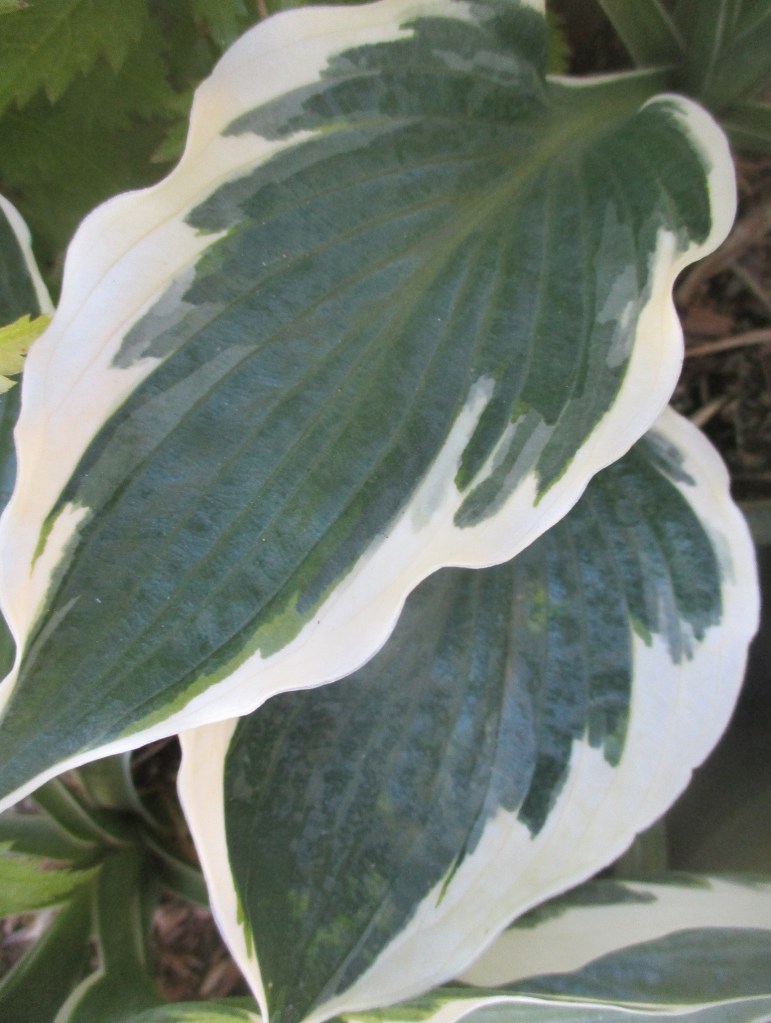
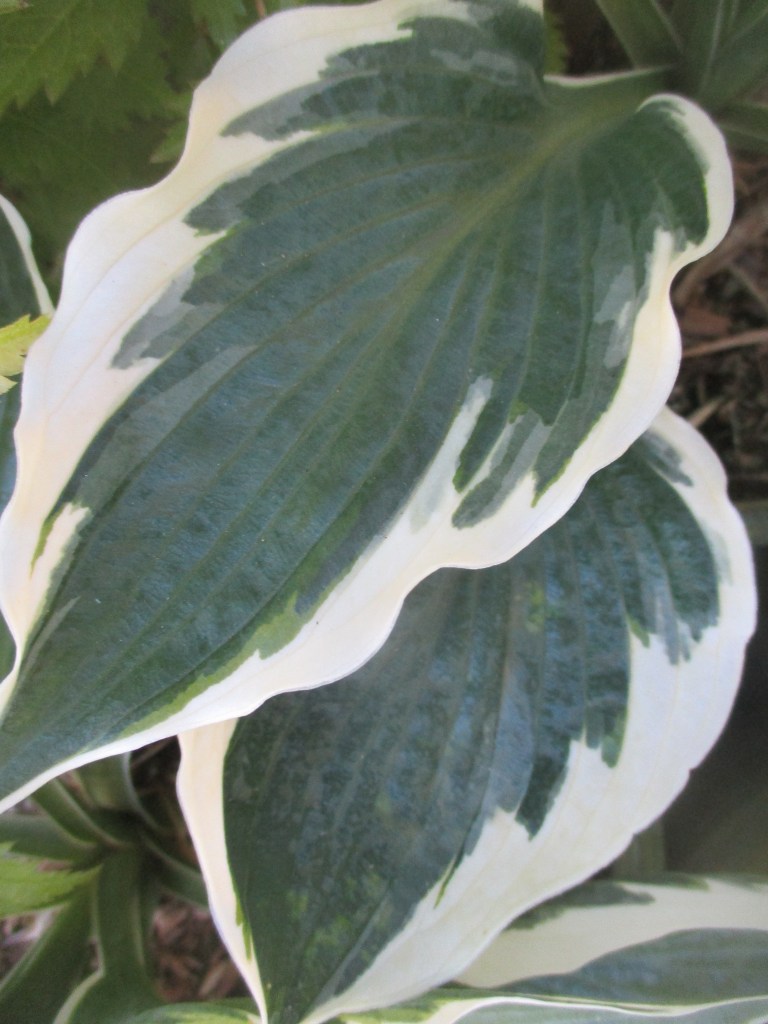
Hosta is tolerant of moderate shade.

Home gardens are becoming shadier. Modern homes are taller to fit closer together. Modern fences are taller to compensate. Densely evergreen trees and large shrubbery compensate more. Taller homes and fences, and denser vegetation, shade more of their smaller modern parcels. Not much sunlight can reach the soil of modern home gardens.

Portions of a garden that are too shady for gardening are not necessarily useless. During warm weather, patios, sheds and workspaces are cooler with shade. Koi generally prefer shade to sun exposure most of the time. Compost piles and woodpiles need no sunlight. Such utilization of shady areas leaves more sunny areas available for actual gardening.

Deciduous trees that let warming sunlight through for winter are less practical nowadays. They do not always obscure undesirable scenery as trees in modern landscapes should. Warming winter sunlight is not so useful to energy efficient modern homes anyway. It is useful for gardening though. That is why smaller evergreen trees are now more practical.

Such trees or large shrubbery can do what they must without creating too much shade. If they get only high enough to hide nearby windows, they should not shade solar panels. Nor should they fill eavestroughs with debris. Perhaps more importantly, they allow more sunlight through than larger trees would. Lower vegetation appreciates what it can get.

Some plants tolerate more shade than others. Some of the most tolerant are understory species. They naturally live within the partial shade of larger plants. Many have big dark green leaves to maximize sunlight absorption. Fern are familiar shade tolerant plants, but have finely textured foliage. Coleus and hosta have exquisitely colorful variegation.

Because most plants enjoy sunlight, the selection of plants for shade is limited. Rhododendron and azalea have a reputation for tolerance of shade. However, too much shade inhibits their blooms. Camellia and hydrangea tolerate a bit more shade, with less inhibition. Cast iron plant is a famously shade tolerant foliar perennial. Kaffir lily tolerates almost as much shade, and blooms splendidly.

Made In The Shade

Hosta happen to tolerate a bit of partial shade.

Modern gardens are shadier now than they ever have been. Ranch houses that were popular through the middle of the last century had those classic big eaves that shaded wide margins close to the homes. Prior to that, tall Victorian houses made big shadows. Modern houses though are even bigger. To make matters worse, lots and garden spaces are smaller and surrounded by ominously tall fences; so there is less space that is not shaded by something sometime during the day.

This is why small trees, sometimes known as ‘micro-trees’, are so popular. They are all that fit into some small gardens without creating too much shade for other plants. Large shrubbery, like some of the larger types of pittosporum, and some of the smaller types of podocarpus, often function quite nicely as small scale trees. Where not too shaded, pineapple guava and New Zealand tea tree are just as effective. They only need to be allowed to develop upper canopies with adequate clearance, while their lower limbs get pruned away, instead of getting pruned to stay down low as shrubbery typically does.

Camellia, hydrangea, aucuba, Japanese aralia, Oregon grape and Heavenly bamboo (Nandina spp.) are appealing shrubby plants for shady locations. Camellias and hydrangeas of course provide impressive blooms during their respective bloom seasons. Camellias also have the advantage of excellently glossy dark green foliage all year;  but hydrangeas are bare and need pruning in winter. Oregon grape and Heavenly bamboo, which are actually related, are more subdued but look more woodsy in bloom, and sometimes provide interesting berries afterward. Aucuba and Japanese aralia do not need showy flowers because their foliage is so bold. Japanese aralia has bigger and bolder leaves, but common types of aucuba are spotted with gold.

Balsam (Impatiens spp.), which is already one of the most popular warm season annuals that is beginning to get phased in as the weather gets warmer, is not quite as colorful in the shade as it is with better exposure, but can be impressive nonetheless. Cyclamen takes shade as well, but will actually be getting phased out through late spring and summer. Cyclamen is actually a perennial that can stay in the garden (if it is not in the way of anything else) to regenerate next autumn. As weather gets warmer in spring, caladiums and coleus can provide remarkably colorful foliage for shady spots through summer and early autumn.

Various types of ferns, although devoid of flower color, provide distinctive and often bold form and foliar texture. Australian tree ferns can actually get quite large and eventually function as small trees. Baby tears is a finely textured perennial ground cover that spreads as far as it has moisture. It can actually get to be invasive.

Good Neighbors Make Good Fences

Is privacy really worth big fences?

Good old fashioned suburbia will never bee the same. Bigger modern homes on smaller modern parcels leave little space for gardening and trees. What is not shaded by the taller homes is shaded by the taller fences, which are ‘needed’ for privacy since the homes are closer together. Building codes in most municipalities limit the height of fences, but lattice screens are often added on top for extra height.

Because lumber is not of the quality that it was when shorter light duty redwood fences were built decades ago, relatively expensive modern fences do not last nearly as long. They might last longer if they would get repaired instead of replaced when only the posts rot. Green technology seemed to work better before it became trendy.

Ironically, no one wants these bigger and bolder fences that are closer to home to be so prominent in the landscape. We try to obscure them with vines that can tear them apart, or shrubbery that can push them over. Watering these vines and shrubs accelerates rot in the posts.

Shrubbery intended to obscure a fence should not be so voracious that it wants to displace the same fence that it is intended to obscure. Some types of pittosporum work nicely because they support themselves without leaning against other features in their surroundings too much, even if they eventually get quite large. However, they do get quite thick, and can obscure a fence so well that no one would miss the fence if it were to get pushed over! A good hedge without a fence is sometimes a better option.

Many types of vines can be kept much closer to a fence than shrubbery can, but most tend to be more destructive. Star jasmine works nicely if allowed to climb a trellis directly in front of the fence, but should not be allowed to get between planks in the fence, or to get too intertwined in lattice. If it gets too fluffy, it can be shorn back like a light hedge.

Clinging vines like creeping fig can be very appealing on fences, and can be shorn like hedges, but will eventually necessitate the replacement of the fences that they climb. For those who appreciate such a tailored appearance, replacement of the affected fences every few years is a fair compromise.