
Mowers are for mowing lawns and shallow ground cover. Blowers are for blowing debris from pavement, decking and other flat surfaces. The names of these tools suggest these particular functions. Those of us who use such tools tend to be aware of their limitations. Why are simple concepts of shearing and the associated tools so difficult to understand?
‘Mow, blow and go’ gardeners are not so bad if they simply mow, blow and go. They tend to the two most significant but also least pleasurable tasks in the garden, and then leave before causing problems. Most are also qualified to add bedding plants or shear hedges. However, some will shear anything that is within reach of their powered hedge trimmers.
Shearing is for hedges or shrubbery that is strictly foliar. There are few exceptions. Such shearing should be performed properly, and only for the few plants that are conducive to it. The process promotes foliar density, but also generally inhibits bloom. For hedges that function as living fences in the background of more interesting plants, this is no problem.
Otherwise, shearing plants that are not conducive to it ruins appealing form, and inhibits or prevents appealing bloom. Privet and photinia perform well as shorn hedges because their dense evergreen foliage is their primary asset. Their bloom is actually undesirable. Their natural forms are unremarkable, but their shorn forms can be remarkably practical.
Frequent or untimely shearing prevents lemon bottlebrush and oleander from blooming. However, shearing immediately after a bloom phase stimulates new growth to bloom for a subsequent phase. New growth only needs an opportunity to mature and bloom before removal. Such potentially blooming stems need extra space to extend prior to blooming.
As practical as it is for hedges, shearing ruins the foliar texture of other plants. Heavenly bamboo is worthlessly shabby without its naturally intricate foliar texture. Juniper retains good color, but becomes boringly plain. Rhododendron and hibiscus become disfigured and can not bloom. Each of these plants and all others are discriminating about pruning. Few are agreeable to shearing.

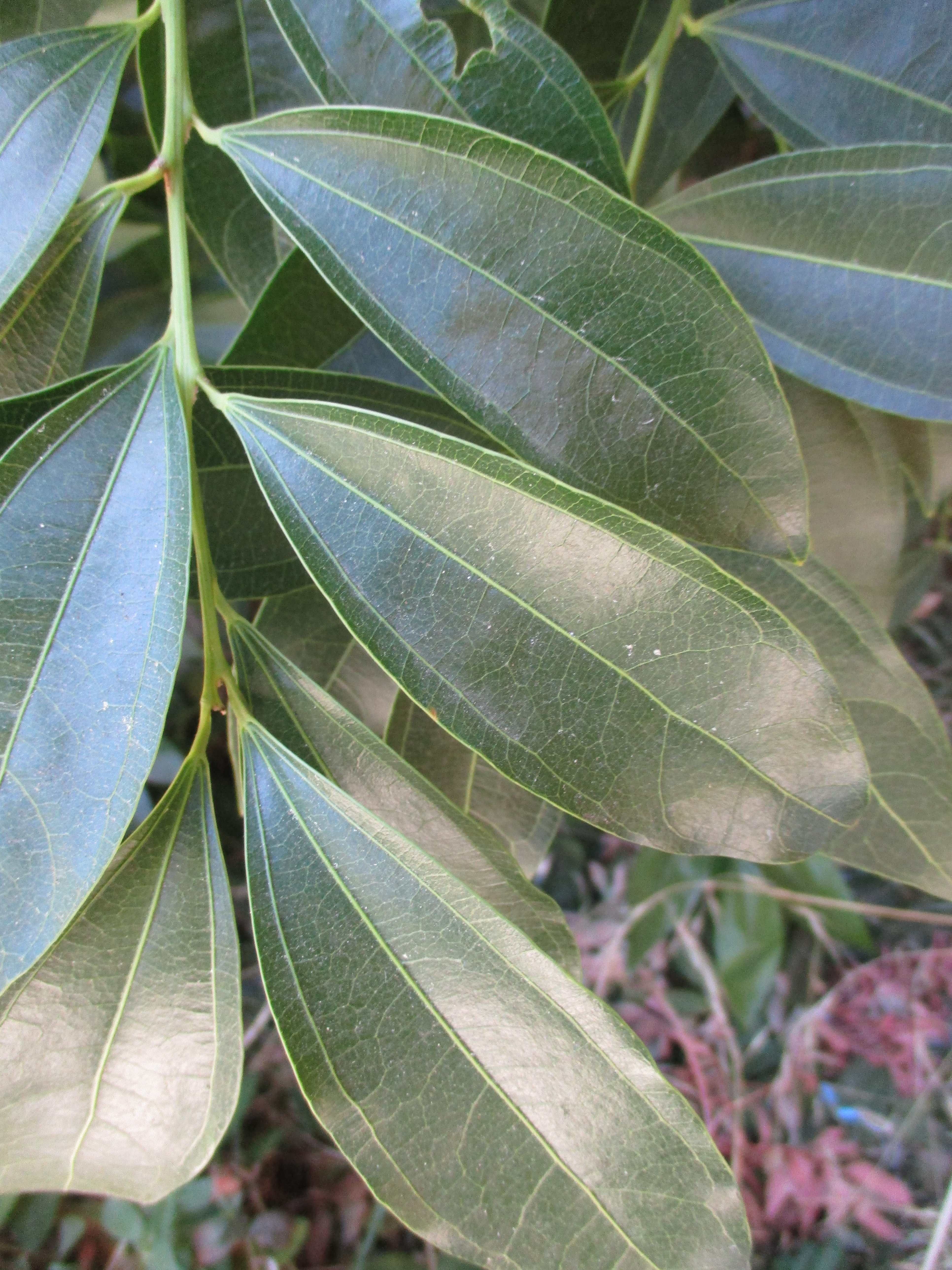 Pretty soon, as autumn weather starts to get cooler, some deciduous plants will develop brilliant color before defoliating for their winter dormancy. Throughout the rest of the year, evergreen plants with gold, silver, bronze, bluish, purplish, reddish or variegated foliage are more colorful than common green foliage is. A few deciduous plants with colored foliage turn different colors in autumn.
 Back when horticulture was still respected, a very long time ago, dense shrubbery with finely textured foliage, such as Japanese boxwood, could be purchased already shorn into cubes that only needed to be installed in a closely set row to become an ‘instant hedge’. For some small hedges composed of small plants that recovered efficiently from transplant, it actually worked reasonably well, even if they did not look so great at first. It also worked for a few larger shrubs that happened to transplant very easily, such as glossy privet. Tall arborvitaes happen to work exceptionally well as instant hedges, although the best spacing for them leaves temporary gaps in between.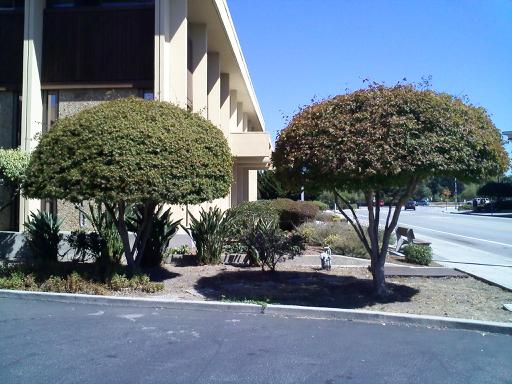
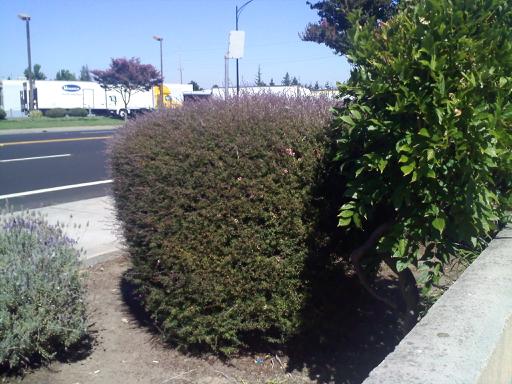
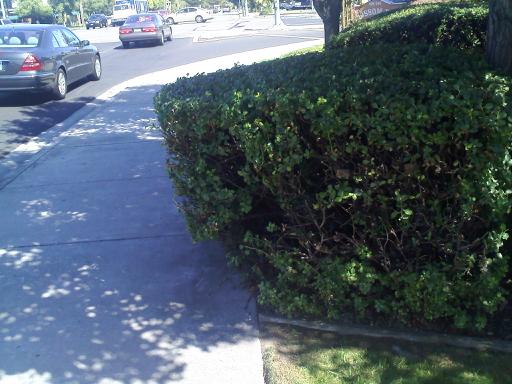
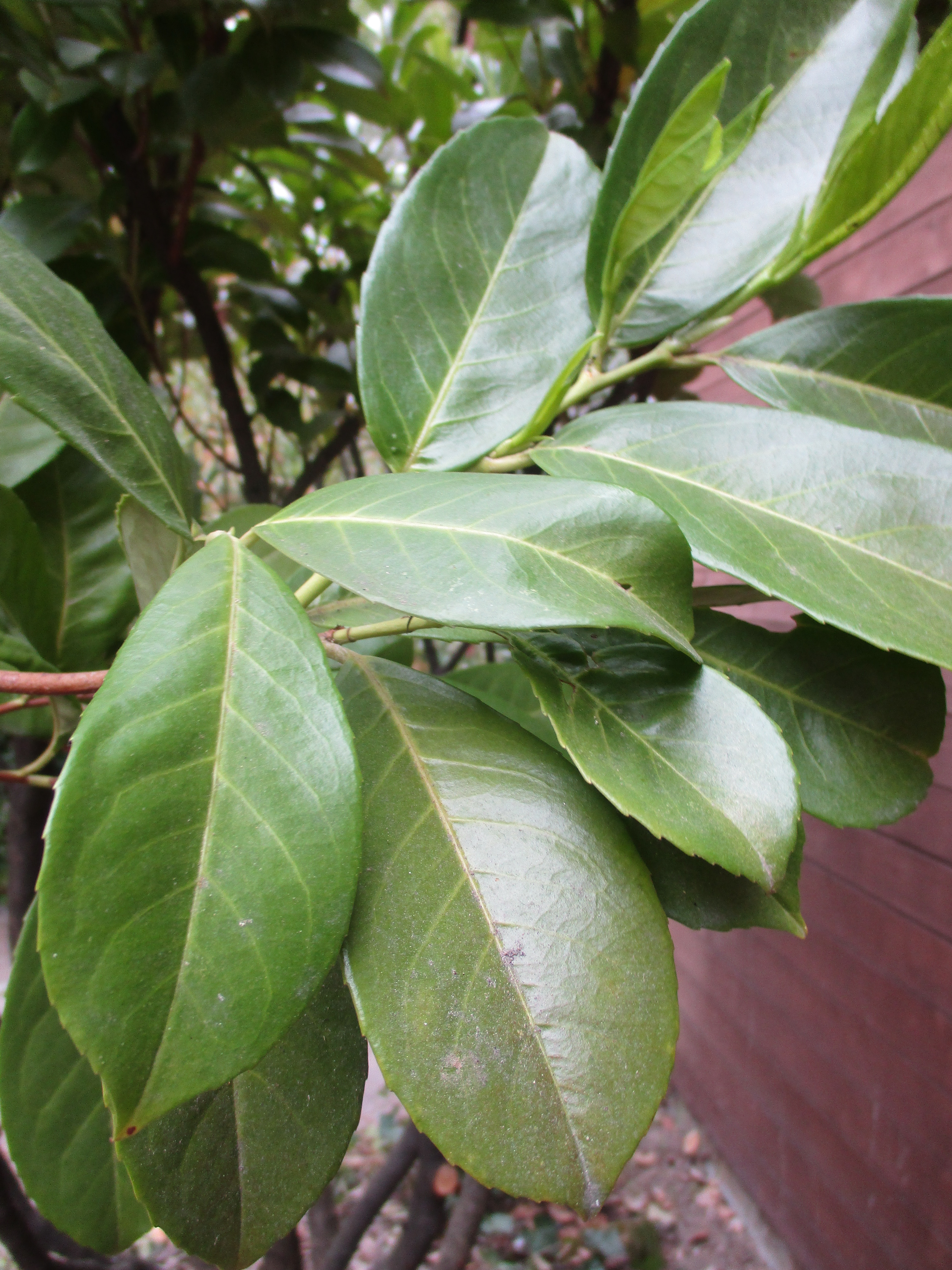 There is a reason why the most popular specie for frequently shorn formal hedges have small leaves and finely textured foliage. Technically, a formal hedge of cherry laurel, Prunus laurocerasus, can be shorn as well, but should be shorn only once or twice annually, and then allowed to fluff back out. Otherwise, the big leaves get shredded as quickly as they recover from previous shearing.
 Hedges are a complicated topic! Like lawns, they are among the more functional features of a landscape. They can be used to provide privacy within, obscure unwanted views beyond, or merely to separate a large landscape into cozier or more functional spaces. Except for hedges that are grown for spring flowers or autumn color, most hedges are evergreen with finely textured foliage.
 See what happens when the plants in the garden are happy? They do pretty things. It is now halfway through December and this honeysuckle is still blooming nicely. The cool weather has inhibited bloom somewhat, but has not totally prevented it yet. By the end of winter, this honeysuckle will get pruned back so that it can regenerate new growth to bloom through next year.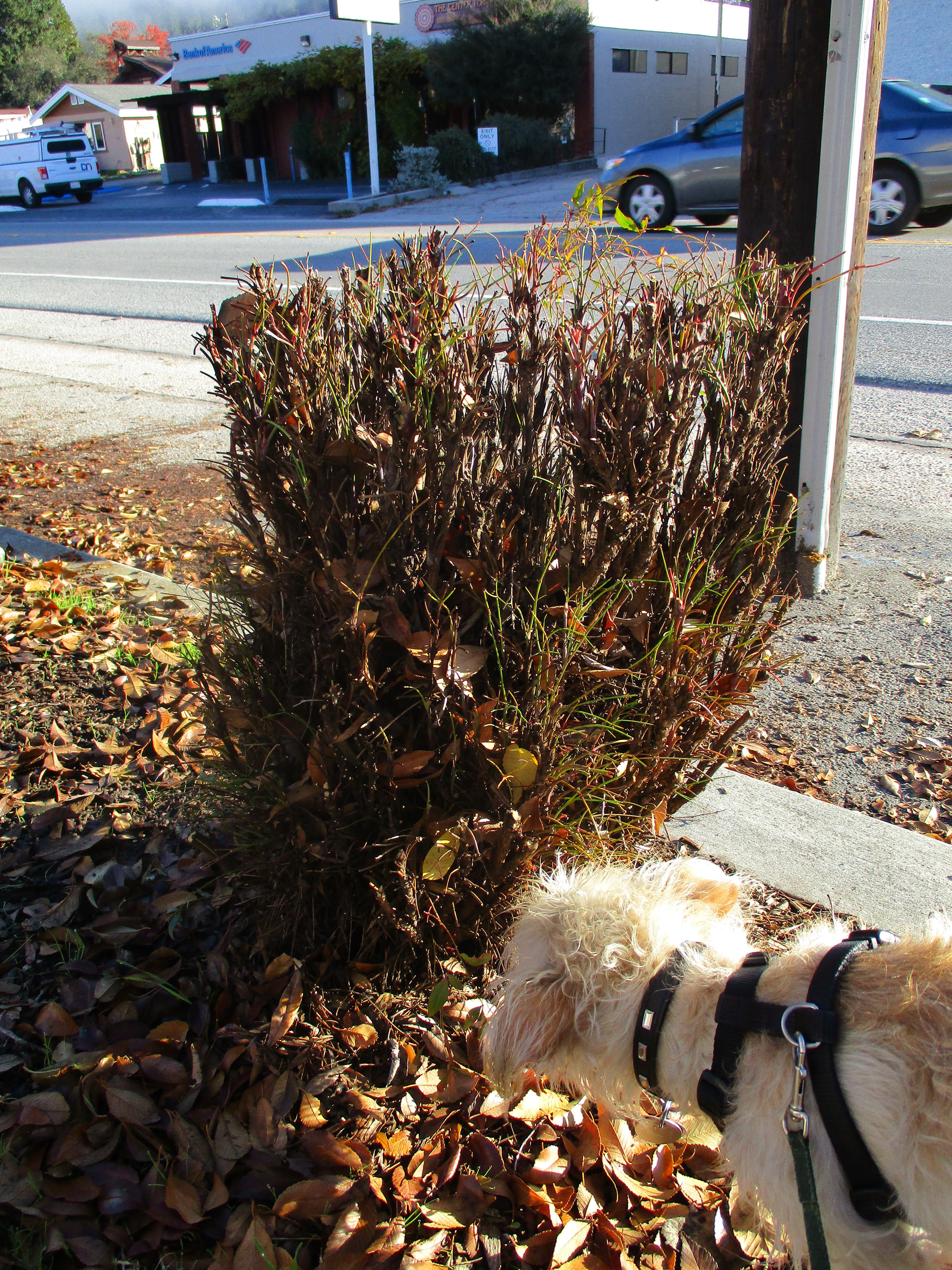
 Tony Tomeo