Off Color – Reversion

‘Siam Ruby’ banana started to display bronze foliar color before it seemed to revert to chartreuse.

Of the two dozen or so cultivars of banana here, ‘Siam Ruby’ is one of only two that are merely ornamental. It and ‘Zebrina’ produce fruit that is too seedy to be reasonably palatable. Both are instead grown more for their colorful foliage. ‘Siam Ruby’ develops bronze foliage with yellowish green spots. ‘Zebrina’ develops darker bronze or brown color mixed with more but darker green. Since their distinct foliar colors are their primary attributes, I was initially disappointed when ‘Siam Ruby’ seemed to revert to chartreuse green without any bronze foliar color. I was informed that it is typically chartreuse while very young or if shaded, but develops bronze foliar color as it matures with adequate sun exposure. However, I still suspect reversion because it started to display broad bands of bronze foliar color earlier, but became exclusively chartreuse green afterward. While inquiring about the potential for reversion with this particular cultivar, I learned that ‘Margarita’ originated as a reverted sport of ‘Siam Ruby’ with exclusively bright chartreuse foliage, just like the specimen of ‘Siam Ruby’ here that I suspect reverted. So, I may have indirectly acquired a fake copy of ‘Margarita’, which should contrast splendidly with the bronze foliage of both ‘Siam Ruby’ and ‘Zebrina’! The grower who sent the original pup of ‘Siam Ruby’ already sent a replacement. Now I want to see what the original pup does. If it recovers its bronze foliar color, there will be two copies of ‘Siam Ruby’ here. If it does not, I will consider it to be ‘Margarita’, which is still a rare cultivar. In a way, I sort of hope that it does not recover. A glitch such as this is a good excuse to try something that I would not try otherwise. Actually, we already have plans for it.

New foliage of ‘Siam Ruby’ banana is exclusively chartreuse green, without any bronze.

Khartoum

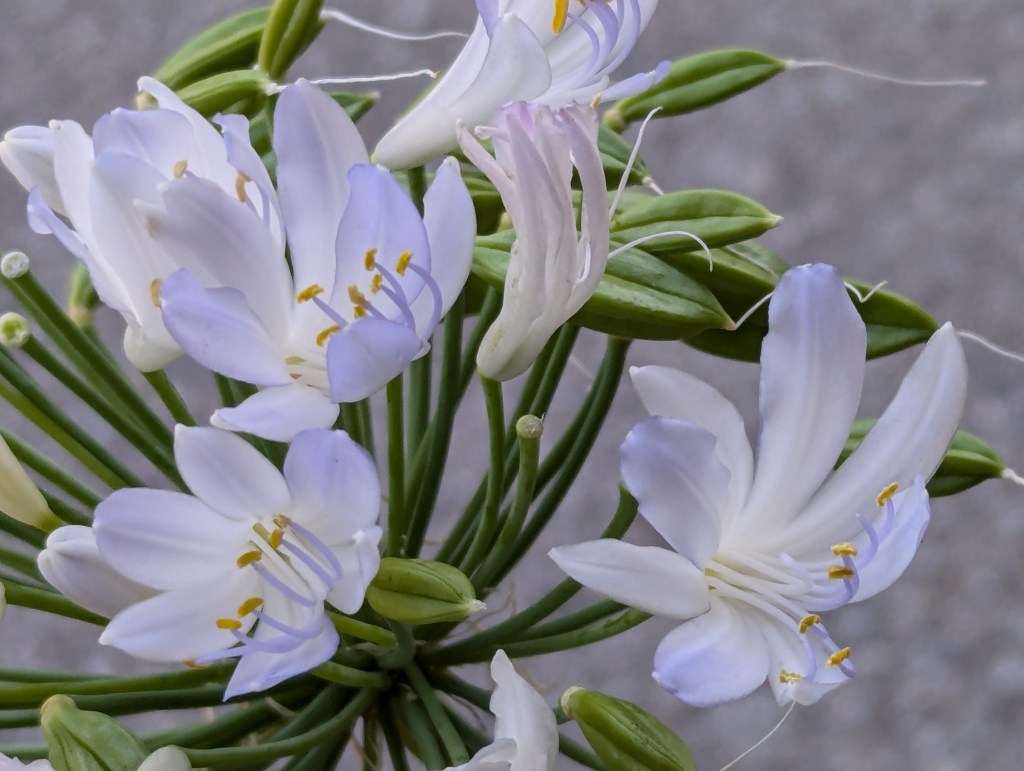
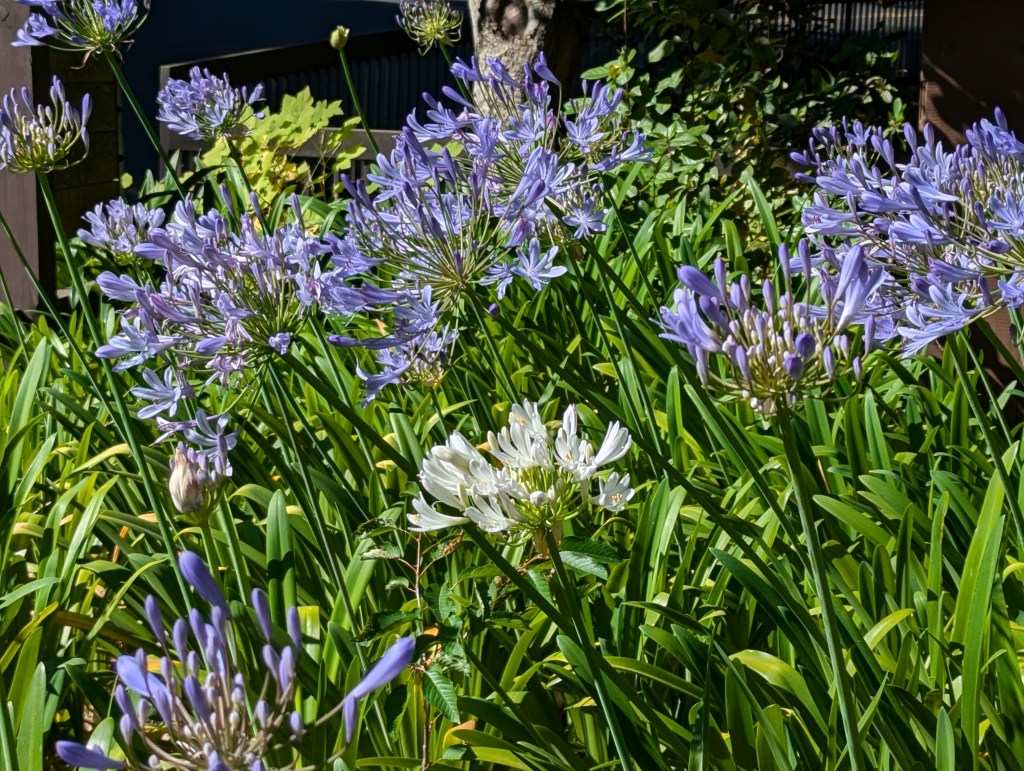
‘Khartoum’ (Agapanthus orientalis ‘Khartoum’) is a blend of Blue Nile and White Nile.

Khartoum is located where the Blue Nile River merges with the White Nile River to become the Nile River. Lily of the Nile, contrary to its name, is neither a lily nor native to any of the three Nile Rivers. It is in the Amaryllidaceae Family, and is native to Southern Africa. Coincidentally though, it naturally blooms either blue or white. It really seems like it should be native to at least two of the Nile Rivers, with those that bloom white inhabiting the floodplains of the White Nile River, and those that bloom blue inhabiting the floodplains of the Blue Nile River. Perhaps both should inhabit the floodplains of the primary Nile River. Like a few other species that bloom exclusively true blue or white, lily of the Nile sometimes exhibits sports, which are mutant growth, that bloom with the other of the two options. In other words, those that bloom blue sometimes produce a shoot that blooms white, and conversely, those that bloom white sometimes produce a shoot that blooms blue. As if genetically unstable, such sports may revert to their original floral color by the following season, and before they divide into several shoots that bloom prominently with aberrative floral color within their otherwise florally monochromatic colonies. When I noticed a single white bloom within an exclusively blue blooming colony, I did not want to wait for the following season to see what its intentions were. Then, as bloom faded and I separated it from the colony, I found that it was blushed with blue, as if already trying to revert. Because it is impossible to confirm its intentions, I canned it and set it aside to see what it does in the future. If blue, it can return to the landscapes with the random mix of blue lily of the Nile that has been accumulating as long as they have inhabited landscapes here. If white, it will be given to neighbors, because I want to maintain the genetic purity of the single white cultivar that is here. If it remains white with pale blue blush, it might get a separate but prominent position within a landscape.

Sports

This white lily of the Nile appeared this summer within this exclusively blue colony.

Horticulturally, a sport is a genetically variant growth. Although it is more common among extensively bred or genetically aberrative cultivars than simple species, the most basic of lily of the Nile can, on rare occasion, change floral color from blue to white or from white to blue, as I mentioned on the sixth of July. Unvariegated or ‘green’ sports are a more common annoyance among some cultivars with variegated foliage, such as popular cultivars of Euonymus japonica, since they grow faster with more chlorophyll, and can overwhelm the original and more desirable variegated growth. The yellow hybrid gladiola that I posted a picture of for Six on Saturday on the twenty-ninth of June could be a sport of an adjacent orange and yellow hybrid gladiola. I did not give it much consideration because I assumed it to be the first bloom that I noticed from one of a few bulbs that somehow survived for a few years longer than expected. Until last summer, the only hybrid gladiolas to survive from a mixed batch planted years earlier had been either purple or the aforementioned orange and yellow. However, now that the yellow bloom is gone, an equally unfamiliar orangish red bloom emerged from the same small colony of bulbs that had bloomed only orange and yellow. As their common name suggests, hybrid gladiolas are hybrids, so are innately genetically unpredictable, and therefore have potential to generate sports as they multiply. Although I do not know for certain that this new orangish red hybrid gladiola did not survive without blooming for the past few years, I sort of suspect that it and the new yellow hybrid gladiola are more recently developed sports of the original orange and yellow hybrid gladiola. I hope that both are as reliably perennial as the original.

This orangish red hybrid gladiola seems to be a sport of the orange and yellow hybrid gladiola.

Six on Saturday: Picture Dump


No topic. No excuse. I just have these few pictures that I have no other use for. Some are sort of interesting, depending on perspective. Some are weird. #5 is just plain unsightly.

I considered sharing six pictures of camellias from Nuccios’ Nursery in Altadena that Brent sent to me, but I did not want to totally dismiss these pictures. Besides, Brent takes really lame pictures. I might share them next week just so we all can see how lame they are. I believe that most are different from the camellias at work that I shared pictures of last year, but I really do not know.

1. Arum italicum, which is also known simply as Italian arum, is something that I had always dismissed as a naturalized and sometimes invasive exotic species. In other words, I thought of it merely as a weed. Then, I noticed others using the foliage with cut flowers. It never occurred to me how pretty it is. I am not sure if this is the real deal, but it is what grows here. Some of the garden varieties that others have shared pictures of are more intensely variegated. It seems to me that another species that is not variegated might live here too, but I can not remember where I saw it.P90316

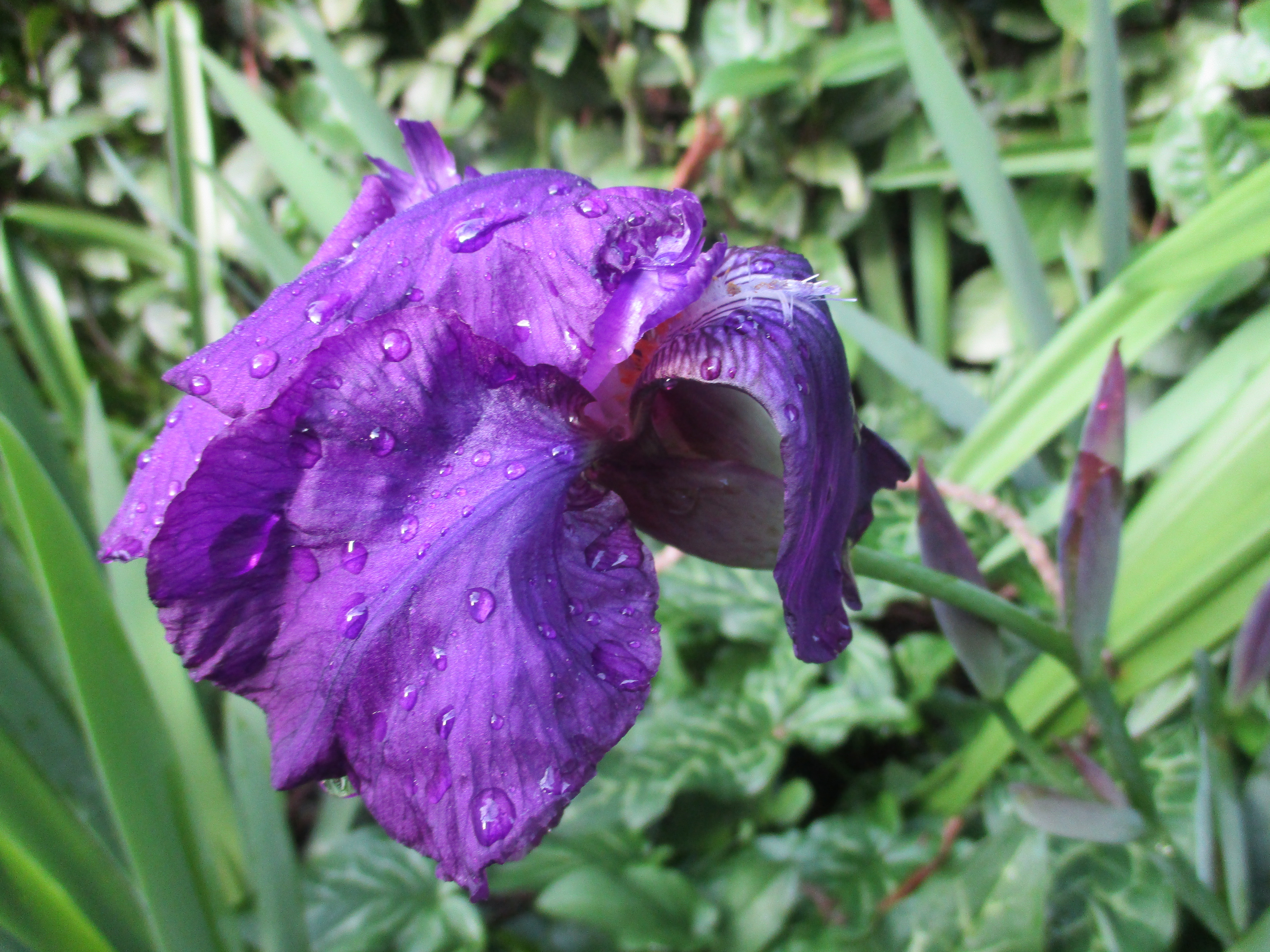
2. It never rains in Southern California. This is not Southern California. Besides, contrary to popular belief, it really ‘does’ rain in Southern California. Anyway, the incessant and abundant rain has been damaging a few of the spring blooming flowers, although most are doing quite well. This odd bearded iris bloom seems to be melting. Those that bloomed immediately afterward are doing just fine. The stems seem to me to be unusually slim for bearded iris, but I am no expert.P90316+
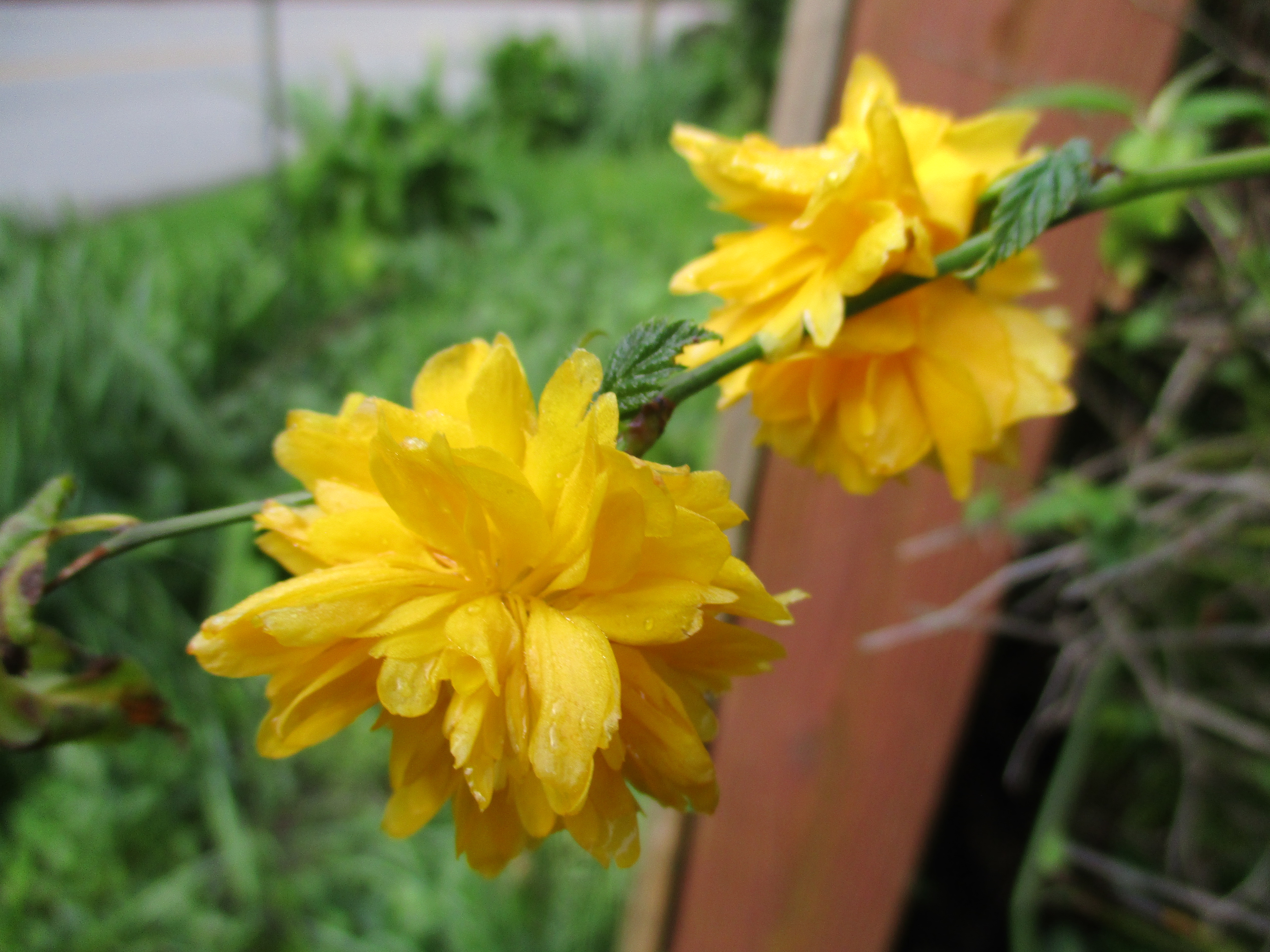
3. WHAT IS THIS?!? I believe it to be Kerria japonica, which is also known simply as Japanese kerria. . . . sort of like Arum italicum, which is also known simply as Italian arum. I thought it was something completely different until it bloomed. I will not say what I though it was, because my assumption was about as lame as Brent’s camellia pictures, and we can’t have that.P90316++
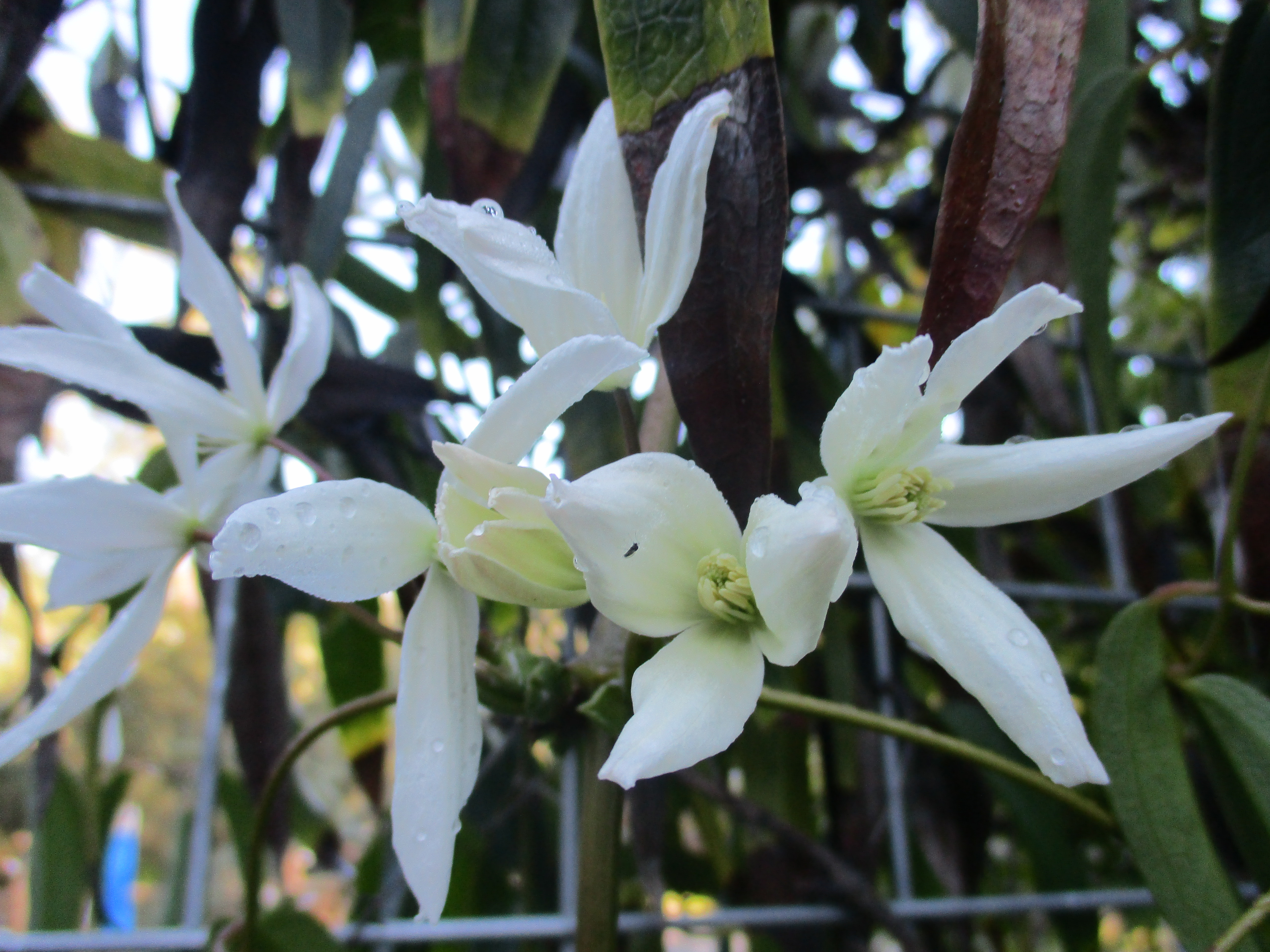
4. Clematis armandii, which is also known simply as Armand clematis (I bet you didn’t see that one coming.) is more popularly know here as evergreen clematis. It grows like the weed that it is, and climbs into the lemon tree that it is next too. It always seems to be very vigorous and healthy, but many of the leaves have crispy tips. Those at the top of the picture are about half dead! The vine does not get any fertilizer, although it probably reaches where other plants are fertilized. The damage is attributed to the water.P90316+++
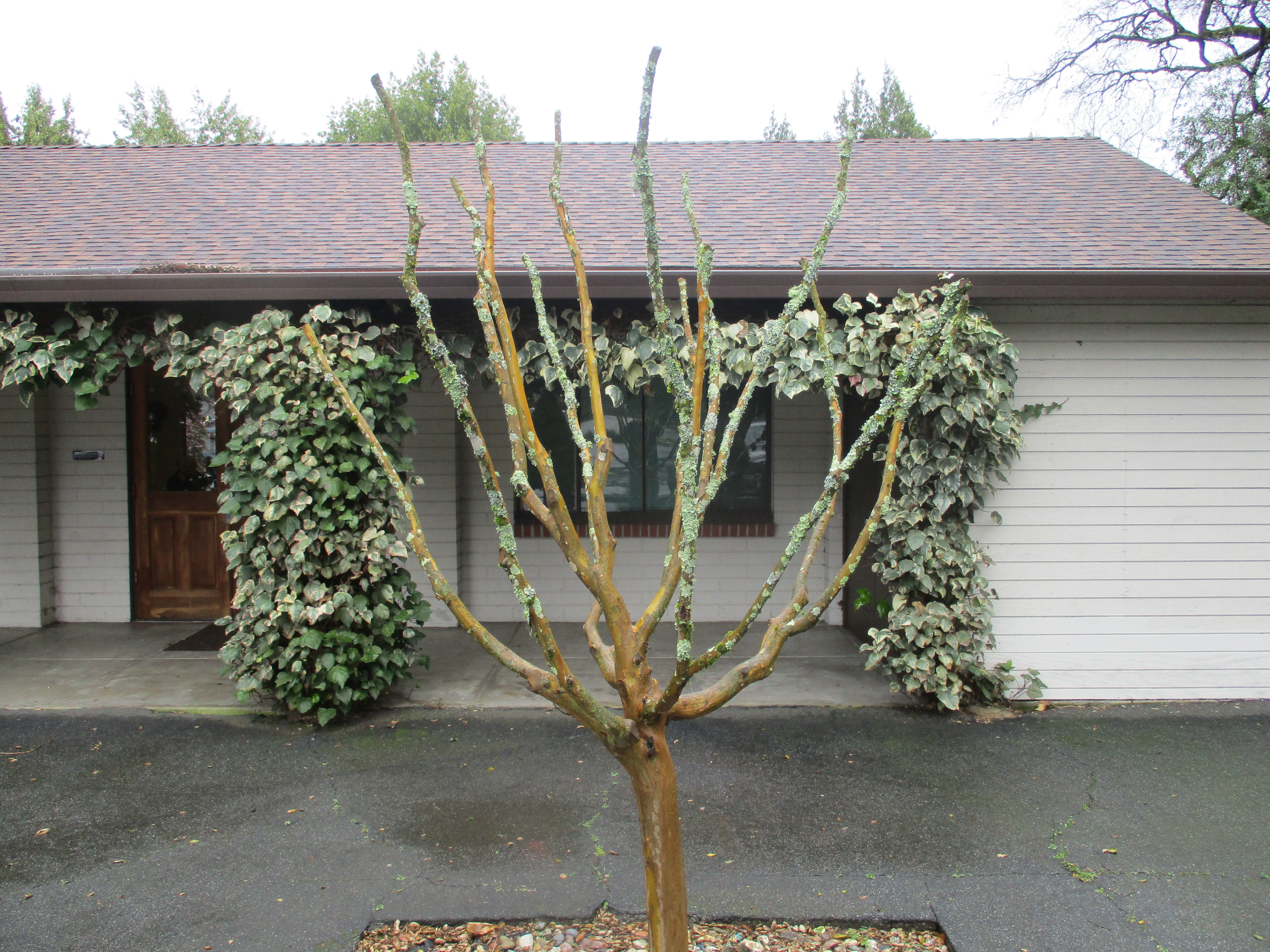
5. Lagerstroemia indica, which is NOT also known simply as Indian lagerstroemia, is the familiar crape myrtle. Some might disdainfully spell it without the first ‘e’. I am none to keen on it either. Actually, I am none too keen on its overuse! It is everywhere, and very often in situations that it does not belong in. This one is under larger trees, so does not get enough sunlight to bloom well. Prior to pruning, it was more disfigured than it is now. Since it can not grow as tall as it would like to be, it should be pollarded annually. As it matures and develops knuckles, some of the superfluous stems can be removed. As much as I dislike crape myrtle in bad situations, I want this tree to be pollarded properly. ‘Crape murder’ is unacceptable! There are MANY in the region that are indiscriminately hacked by so-called ‘gardeners’, who leave nasty stubs and unsightly stubble.P90316++++
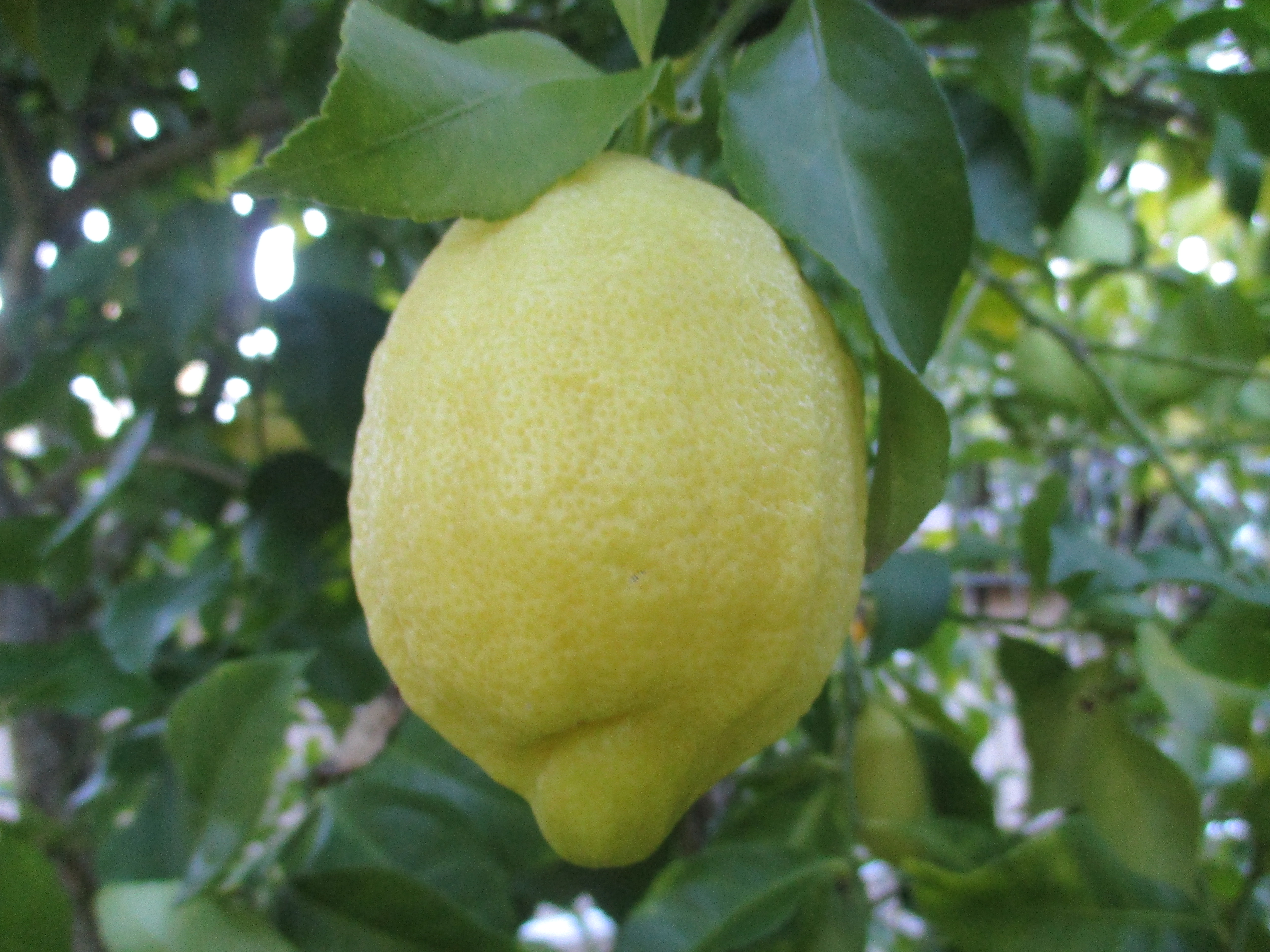
6. Eureka lemon originated as a ‘sport’, or mutant growth, of Lisbon lemon. The only difference between the two is that Lisbon lemon produces all fruit within a limited season, while Eureka lemon produces a bit less within the same season, and then continues to produce a few additional fruit sporadically throughout the year. Lisbon lemon works well for orchards that produce lemons for lemon products. Eureka lemon is better for home gardens, where it is always happy to provide lemons whenever they are desired. I got this picture of a single ripening fruit because there are not many others on the tree right now. That means the tree is doing its job; and people who work here are using the lemons.P90316+++++
This is the link for Six on Saturday, for anyone else who would like to participate:

https://thepropagatorblog.wordpress.com/2017/09/18/six-on-saturday-a-participant-guide/

Different Time Zones

P80901KIf the flower on the left is a four o’clock, is the flower on the right a five o’clock, or perhaps a three o’clock? Is one a.m. and the other p.m.? What about the flower of the same species that I featured twelve hours ago? What about those in another picture that I will share next Saturday?
Of course, only the colors are different; not the name . . . or the time.
What is odd about these two seemingly different flowers is that they are on the same plant. In fact, they are on the same stem, separated only by a few inches.
Four o’clocks can be odd that way. Individual plants typically bloom with exclusively pink, red, white, yellow or orange flowers. The shades and hues of these colors are variable, but are typically homogeneous throughout each entire plant.
Some plants bloom with flowers of one color that are spotted or variably striped with another. Their flowers are not as homogeneous as those that bloom with only one color, so some of their flowers might be uniformly one color or the other, without spots or stripes. Some plants bloom with a few different colors!
Distinctly bright pink (but not light pink) flowers seem to be the most fragrant and the least variable, typically devoid of spotting or striping. They may be more closely related to the wild species, as it would have been found in its natural range in the Andes, prior to breeding for more interesting colors. Perhaps, after enough generations, other four o’clocks would eventually revert to the same characteristically fragrant bright pink flowers, just like many varieties of nasturtium eventually revert to standard bright orange and yellow. It is hard to say now, while naturalized four o’clocks have yet to do so.

Albino

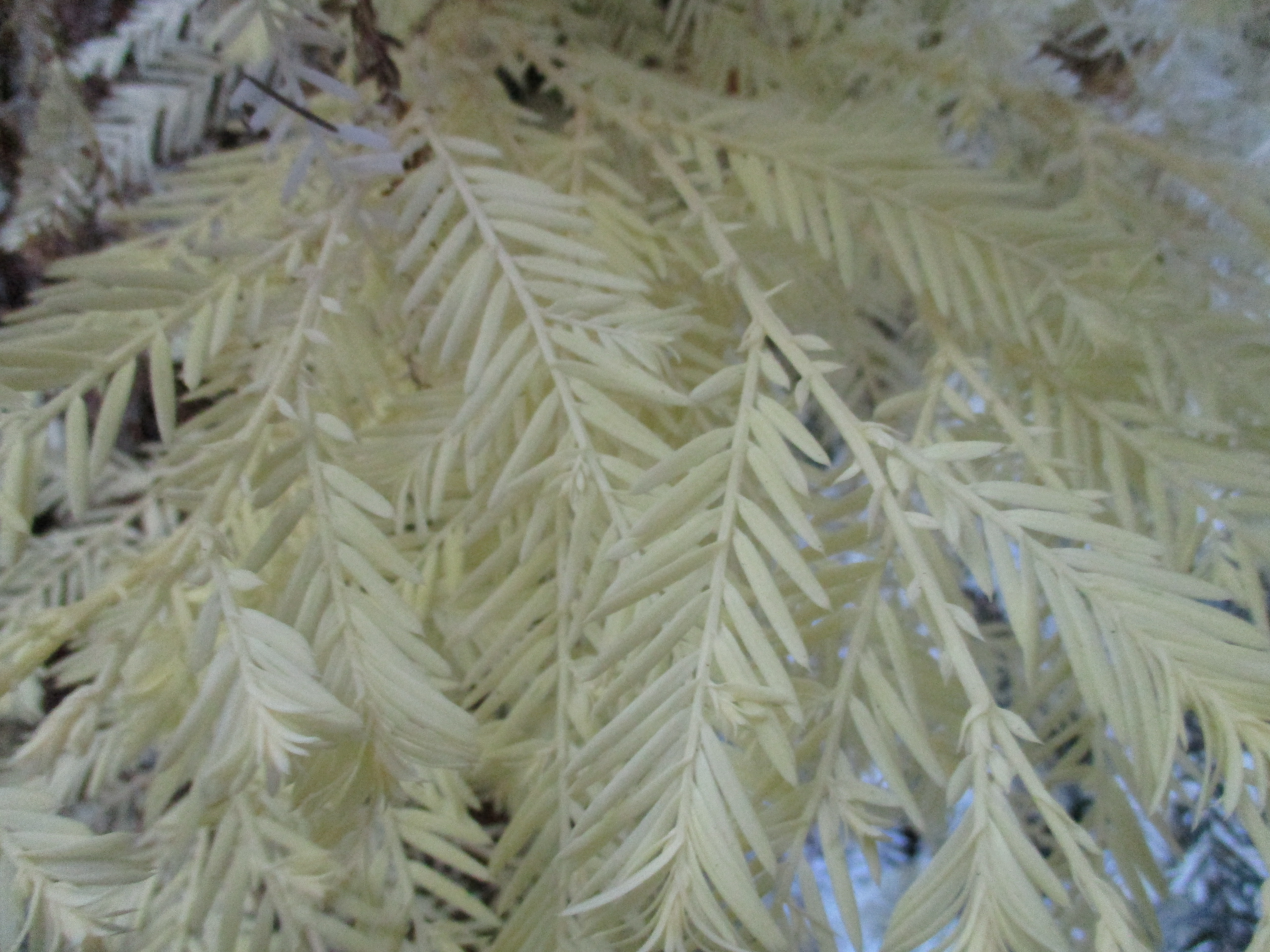
P80804KHow Italian! Red, white and green! A coastal redwood with a white albino sport (mutant growth) amongst otherwise deep green foliage. Actually, it is very Californian. Coastal redwood is endemic to California with only a a few north of the border on the extreme southern coast of Oregon.
Such sports are quite rare. Back in the late 1970s, an article in World Magazine mentioned that only five of these albino ‘trees’ where known to exist. There were actually more, even back then, but others were not documented. (They were WithOut Papers – WOP.) The specimen in the picture is at a home that is about a century old, so it was known about for a very long time, although not documented.
Albino foliage is a lethal mutation. It lacks chlorophyll, so can not sustain itself. It only survives because it originates as basal watersprouts that remain attached to the original green trees that produce and then sustain it. Attempt to graft albino grown onto other green trees has been unsuccessful.
Albino growth looks pretty in pictures, and is provides striking (although very perishable) cut foliage that is even more striking with black flowers, but does not make such a nice tree. It stays shrubby at the base of the originating tree, without developing distinct trunks or substantial branches. It does not shed old foliage as efficiently as green growth does, so always looks grungy. To make matters worse, albino foliage is more sensitive to frost, so gets killed back every few years or so, and then is slow to shed the dead foliage and stems.
Coastal redwood is one of the most fascinating trees in the World. It is the tallest, and among the biggest and oldest. It is no wonder that it is the state tree of California.