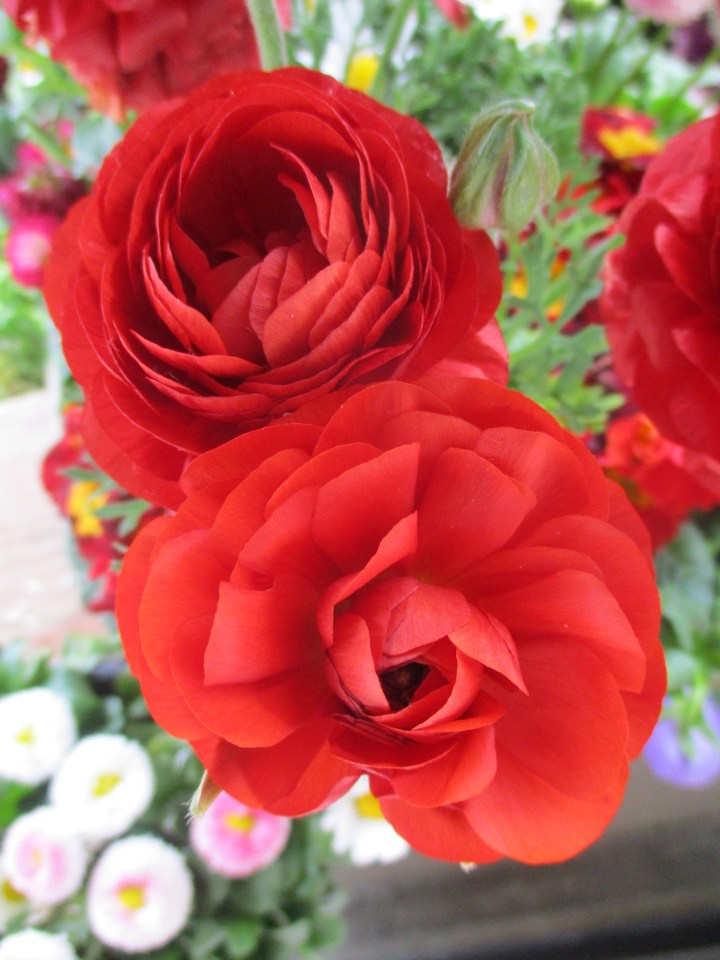
 Narcissus, daffodil, freesia, snowdrop, snowflake, grape hyacinth, various iris and most other early spring blooming bulbs and bulb like plants should be perennials. We plant them with the hope that the will survive after bloom to bloom for another season, and perhaps for many seasons. Some should multiply to provide more bloom over the years. Bloom is just part of their annual cycle.
Lily, crocus, hyacinth, tulip, anemone and ranunculus are not nearly as likely to bloom more than one year for a variety of reasons. Some prefer more chill in winter. Some dislike the long and dry summers. Some survive as perennials, but do not bloom again. However, in some special situations, they also can bloom annually. After spring bulbs, there will be a different set of summer bulbs.
So, what happens after bloom? After exhausting much of their stored resources on production of bloom and foliage, bulbs try to recover and regenerate resources for the following season. Most work to replace their exhausted bulbs with comparable new bulbs. They need foliage to do this, but eventually shed their foliage as their new bulbs go dormant for the following autumn and winter.
Of course, they all do this at different rates. Some smaller bulbs are surprisingly efficient, and shed their foliage as soon as the weather gets warm later in spring. It is amazing that they can store up so much in such a minimal time. Other bulbs shed slowly, as their deteriorating foliage lingers for a few weeks into summer. Foliage of summer bulbs that bloom later is likely to linger until frost.
Because it is essential to the regenerative process, deteriorating foliage can not be cut back prematurely. It is not always easy to hide either. In mixed plantings, it might be obscured by ground cover or other plants. Alternatively, warm season annuals can be planted over the area. Some of us braid daffodil leaves, but others believe that braids draw attention to the deteriorating foliage.
Those of us who still dig and store and perhaps chill marginal bulbs, must wait for complete dormancy.
 There are a few consequences to all this excellent rain. Gutters are flooding. Trees are falling. Mud is sliding. As much as we should be grateful for what we are getting while we are getting it, it is getting rather old. Clear and sunny weather that is forecast after today will be a welcome relief from all this muddy sogginess.
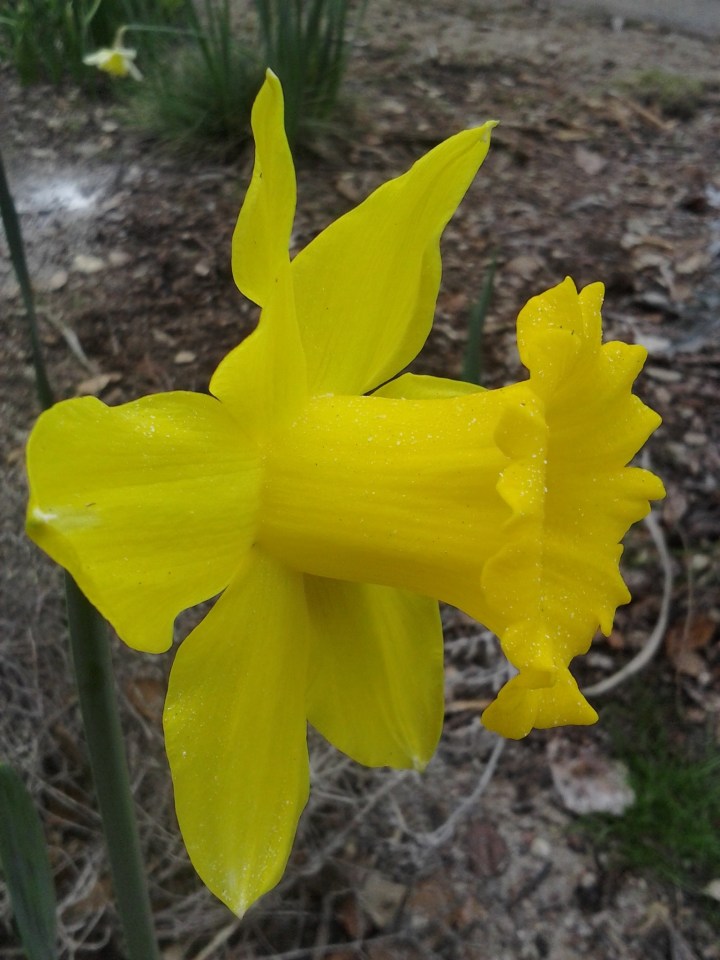
 Even with all the unusual breeds of daffodil and related narcissus that are available nowadays, the traditional big yellow types that resemble the classic ‘King Alfred’ daffodil are probably still the most popular, even if real ‘King Alfred’ are unavailable. Although all narcissus are daffodils, the term ‘daffodil’ typically refers to those with fewer but bigger and bolder flowers that lack fragrance.
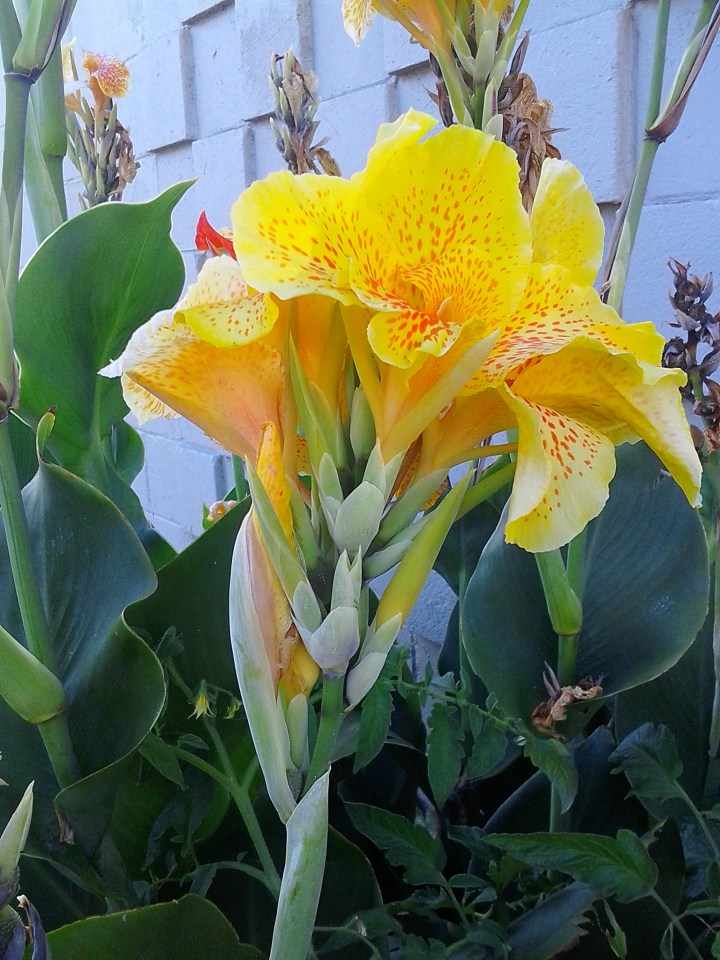 It was easy to forget about spring bulbs after they went into the ground so unceremoniously last autumn. They got buried without so much as proper funerals. Cool season annuals got planted over the grave sites of some, just because bare soil is not much to look at. They stayed silent out in the garden through the cool and rainy winter weather. It might have seemed like the perfect crime.
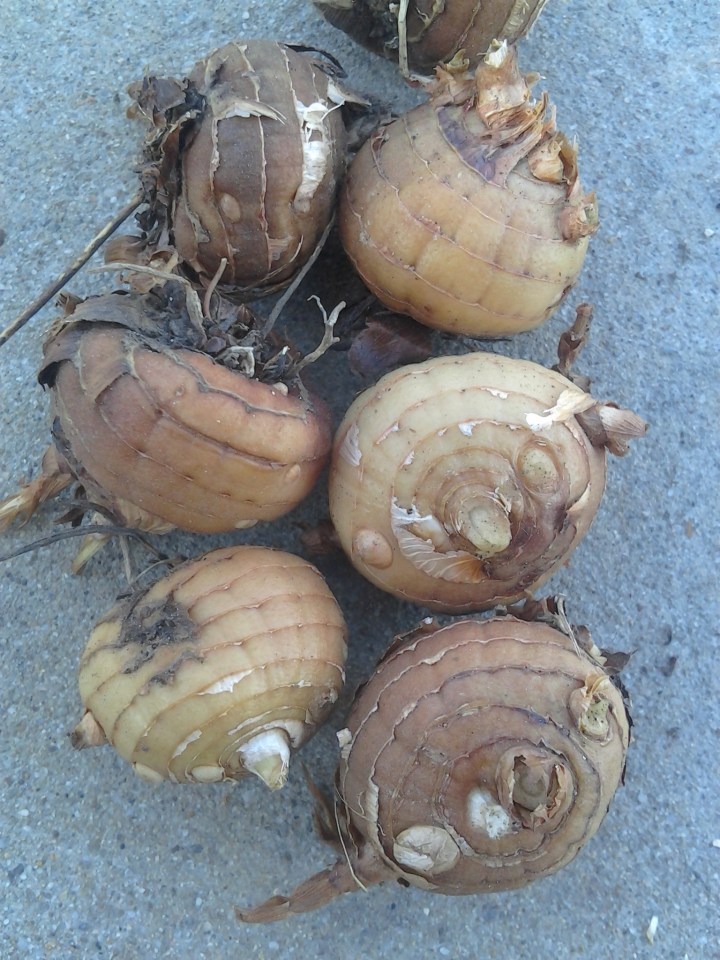
 They are certainly not much to look at now. They are even less interesting once buried out of sight in the garden. The big and colorful pictures on the boxes that they arrive in are probably a bit more spectacular than the flowers expected early next spring will actually be. Nonetheless, it will be amazing to see such flashy bloom emerge from seemingly lifeless bulbs that get planted now.
 After working so hard to bloom so impressively in spring or summer, bulbs redirect their efforts into saving up their energy for winter dormancy. That is why their fading foliage lingers after faded flowers get pruned away. The foliage eventually dries and deteriorates, leaving plumped dormant bulbs to overwinter underground. It is all their natural life cycle.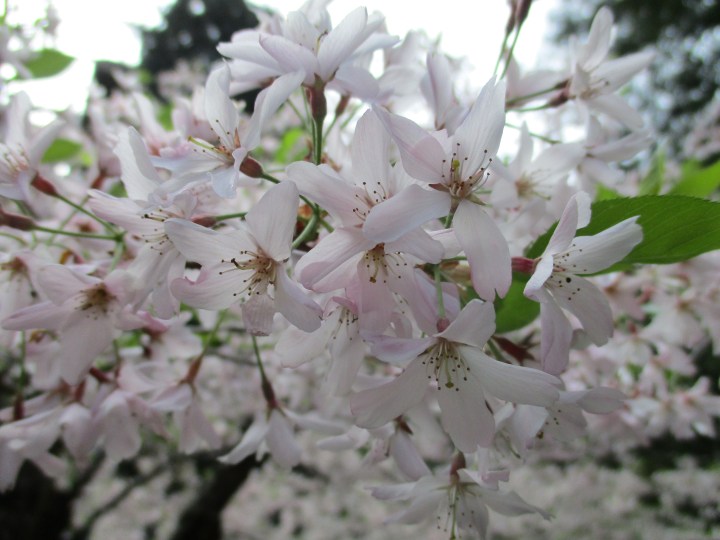


 Daffodils, freesias, lilies, snowdrops and the various early spring blooming bulbs and bulb like perennials will be finishing soon if they have not finished already, leaving us with the annual question of what to do with the foliage after bloom. The plants will not bloom again until next year, and the remaining foliage might be unappealing without bloom. Much of it slowly deteriorates into summer.
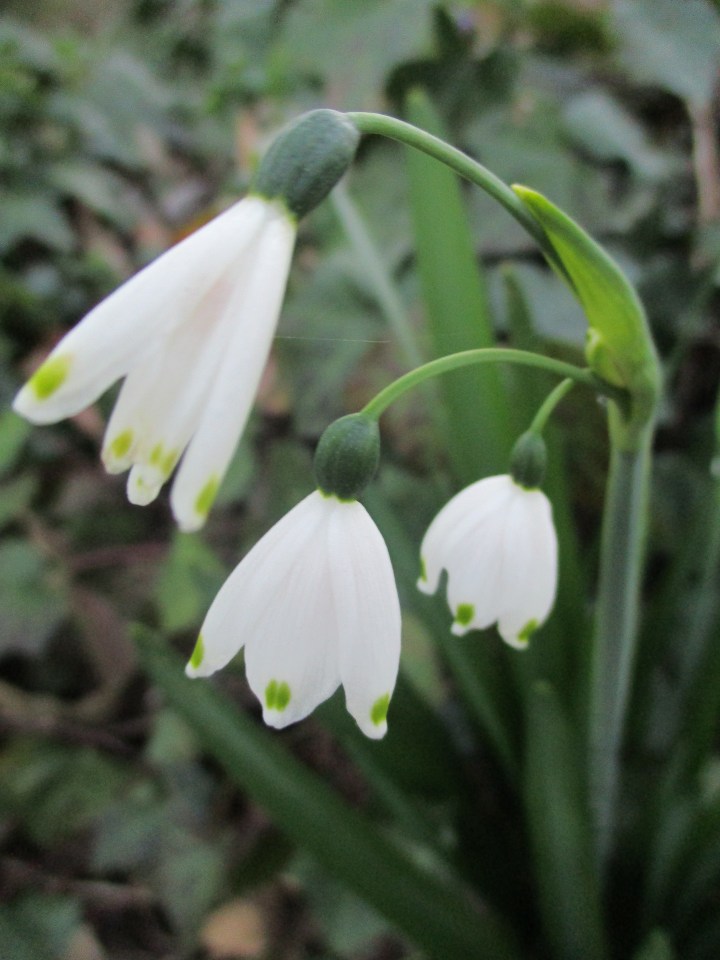 Where winters are more wintry, garden enthusiasts get to brag about their snowdrops as they emerge and bloom through melting snow. Diminutive white flowers against a backdrop of white snow may not look like much to us. We have more colorful flowers through winter, without the snow. Their kind of snowdrops, Galanthus specie, need more winter chill than they would get here anyway.
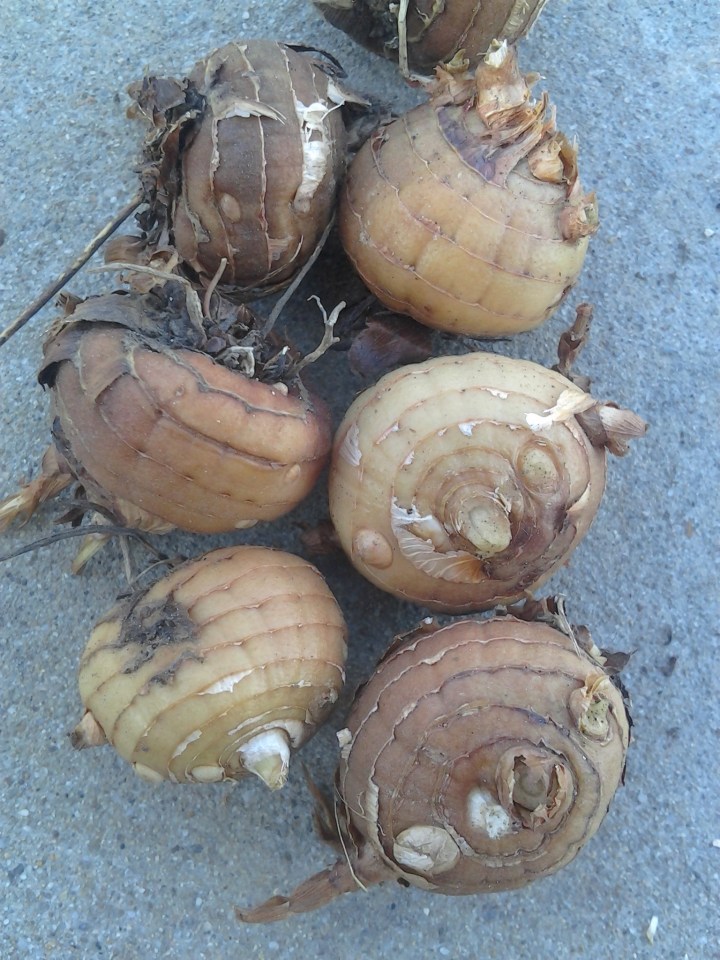 Of all the gardening chores, planting dormant bulbs is probably the least gratifying. All we do is dig a hole to the required depth and width, set a few unimpressively dormant bulbs with the correct orientation and spacing, and then fill the hole with the same soil that was removed from it. The process gets repeated until all the bulbs are planted. Soil amendment and fertilizer might be added.
 Tony Tomeo