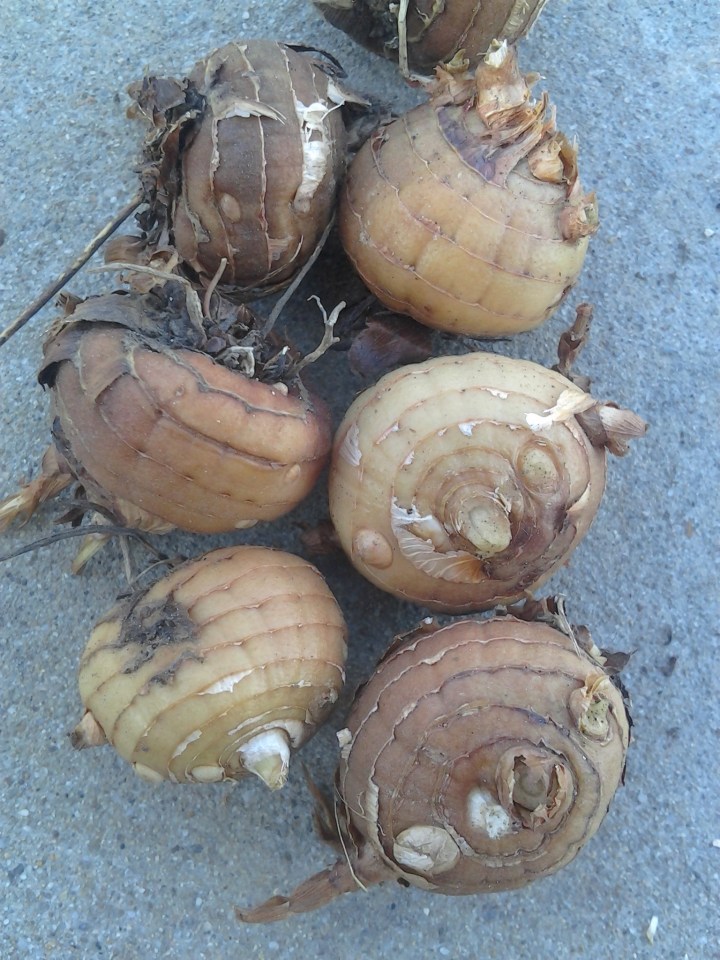
 Of all the gardening chores, planting dormant bulbs is probably the least gratifying. All we do is dig a hole to the required depth and width, set a few unimpressively dormant bulbs with the correct orientation and spacing, and then fill the hole with the same soil that was removed from it. The process gets repeated until all the bulbs are planted. Soil amendment and fertilizer might be added.
There is nothing to show for our efforts. When finished, only bare soil remains. We might want to plants flowering annuals or a light duty ground cover over the bulbs, or we might just spread mulch. If soil amendment is needed, it should be mixed into the soil at the bottom of the planting holes. Fertilizer can get dispersed over the surface of the soil after planting. There really is not much to it.
Planting bulbs is also a chore that is easy to forget about until it is too late. If we do not see them in nurseries, we might not think about daffodil, narcissus, hyacinth, grape hyacinth, freesia, tulip, crocus, lily, anemone, ranunculus, iris or other spring bulbs until we see them blooming next spring. Yet, this is when their dormant bulbs, corms, rhizomes, tubers and tuberous roots get planted.
Many types of bulbs become available in nurseries at the same time, and can be planted as soon as they become available. It might be too early to plant those that are not yet available. Gladiola, dahlia, allium, calla and canna are summer bulbs that will become available later because they likely should get planted later, although calla and canna do not seem to care when they get planted.
Daffodil, narcissus and grape hyacinth are probably the most reliable spring bulbs for naturalizing. Bearded iris is likewise very reliable, but needs to be dug, split and groomed every few years. Freesia and crocus may not naturalize as reliably. Lily, tulip, anemone, ranunculus and hyacinth are spectacular in spring, but are unlikely to naturalize because they prefer more of a chill in winter.
Some bulbs can be phased in their first year. For example, if freesia flowers are expected to last about a week, a second group of bulbs can be planted about a week after the first. A third group can be planted about a week after the second, and so on for a few weeks until the planting season ends. As the first group finishes bloom in spring, the second group begins to bloom, and so on.
 The popular wisterias that bloom so profusely before their new foliage appears in spring are Chinese wisteria, Wisteria sinensis. Others specie are rare. The impressively longer floral trusses of Japanese wisteria are not as abundant, and bloom late amongst developing foliage. American and Kentucky wisteria are more docile small vines, but their floral trusses are both short and late.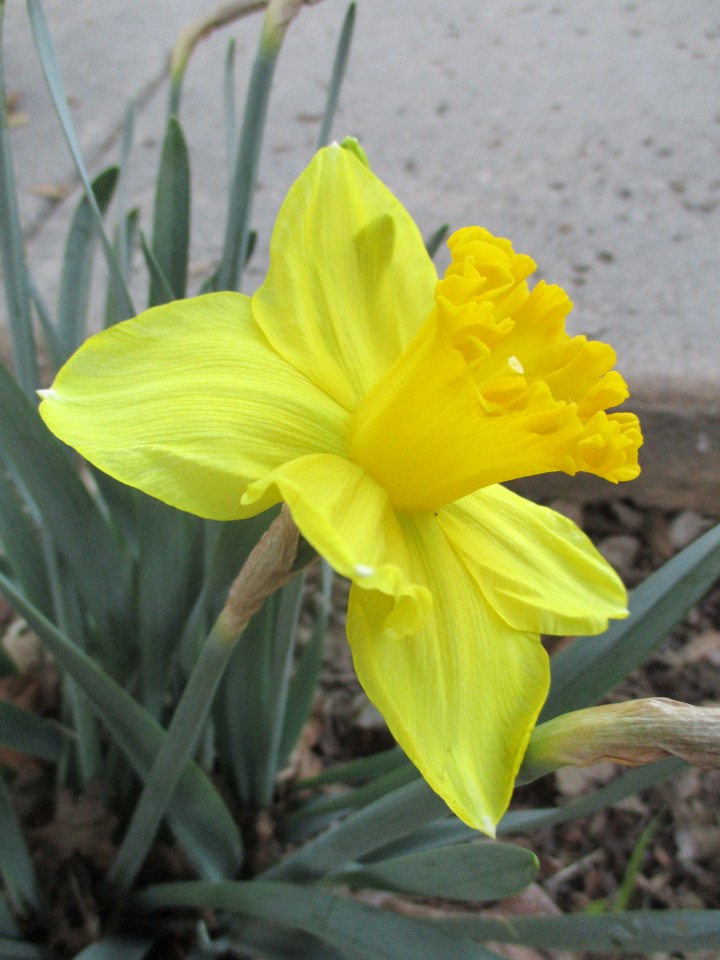


 Tony Tomeo